- The 1 Gutter Mistake That Causes Overflow (It's Not Clogs!) — Discover the often-overlooked culprit behind overflowing gutters during heavy rain and learn the surprising, easy fix most homeowners miss.
- The 1 Gutter Mistake That Causes Overflow (And How to Fix It in 20 Minutes) — Overflowing gutters during heavy rain are usually caused by a readily fixable clog, often due to a common cleaning mistake.
- The 1 Gutter Mistake That Causes Overflow (It's Not Clogs!) — Discover the most common, overlooked reason your gutters overflow in heavy rain, and learn practical steps to fix it for good.
- The 1 Mistake That Makes Deck Boards Warp (And the Easy Fix) — Discover the most common reason deck boards warp and how a simple, proactive fix can restore your deck's appearance and longevity.
- The 1 Gutter Mistake You're Making (And 3 Hidden Causes of Overflow) — Overflowing gutters in heavy rain are often a sign of a deeper issue than just debris, leading to potential foundation damage and costly re…
Roofing · Aging roof
| Project category | Roofing |
|---|---|
| Problem type | Aging roof |
| Trade required | Roofing |
| Urgency | Planned project |
| Safety risk | Low safety risk |
| DIY suitability | Pro recommended |
| Cost category | High cost |
| Typical timeline | Plan 4–12 weeks ahead for scheduling and material lead time |
| Contractor type | Licensed roofing contractor |
Repair option
Maintenance repairs to buy a season or two while you budget.
Replacement option
Planned replacement, which is almost always cheaper than a leak-driven emergency.
Common causes
- Normal weathering past the shingle service life
- Poor attic ventilation cooking the shingles from below
- Repeated repairs on the same slopes
Relevant tools:repair or replace roofproject cost estimatorhome improvement material prices
Published August 23, 2026Last updated August 23, 2026
Tools & materials you'll need
Affiliate links- AmazonSturdy extension ladder
- AmazonHeavy-duty work gloves
- AmazonGarden trowel or gutter scoop
- Amazon5-gallon bucket1
- AmazonGarden hose with spray nozzle
- AmazonSafety glasses
- AmazonPlumber's snake or downspout augerOnly if downspout is clogged
- AmazonLevel (preferably a long one)For checking gutter pitch
- AmazonGutter sealantFor minor leaks or seams
As an Amazon Associate FixlyGuide earns from qualifying purchases — at no extra cost to you. Prices and availability are accurate as of publication and subject to change.
Quick Answer
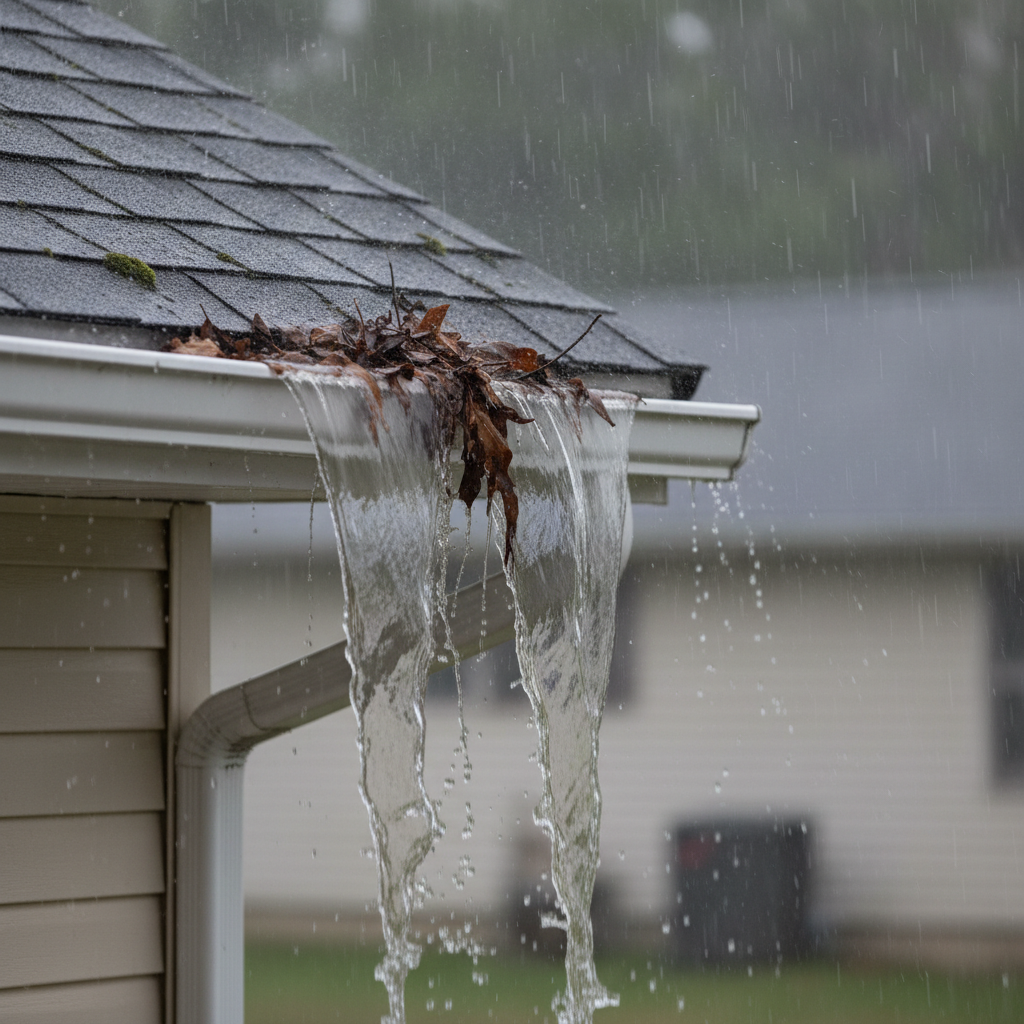
When your gutters stop guiding water and start dumping it over the edge during a hard rain, they’re usually telling you one thing: “I’m clogged.” Leaves, shingle grit, and the occasional bird nest are the usual troublemakers. They jam things up and stop water cold. But clogging isn’t the whole story every time. Sometimes the gutter pitch is off, or the system’s just too small for the amount of runoff your roof throws at it. Get it fixed quick, because that overflow isn’t just making a mess — it’s working on your foundation and chewing up your fascia.
The Problem
Alright, let’s call it what it is. The clouds open up, rain starts pounding, and instead of running cleanly into the downspouts, water’s pouring over the sides like a busted dam. That’s not a minor nuisance. That’s your house waving a big red flag.
Every gallon that spills out is soaking your beds, washing away soil around the foundation, and trying real hard to sneak into the basement or crawl space. I’ve seen homes in Brookhaven with thousands of dollars in water damage — rotted joists, cracked foundations, the whole ugly mess — all because nobody stayed on top of the gutters. It’s one of those problems you can usually prevent, and most of the time it isn’t even a nasty repair. But you’ve gotta figure out why it’s happening first.
How It Works
Think of your gutter system like a little water highway hanging off the edge of your roof. Rain hits the shingles, gravity does its thing, and the water runs down to the eaves. The gutters catch it, and they’re set with a slight slope — usually about 1/16 to 1/8 inch per linear foot — so the water heads toward the downspouts instead of sitting there getting ugly.
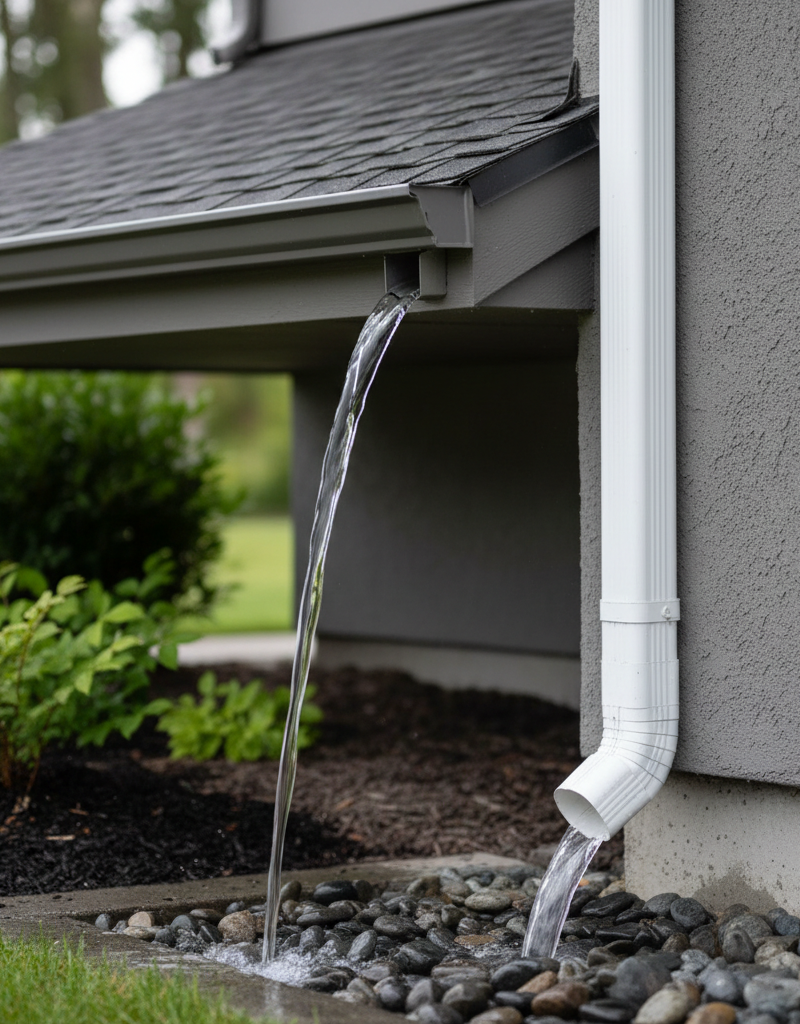
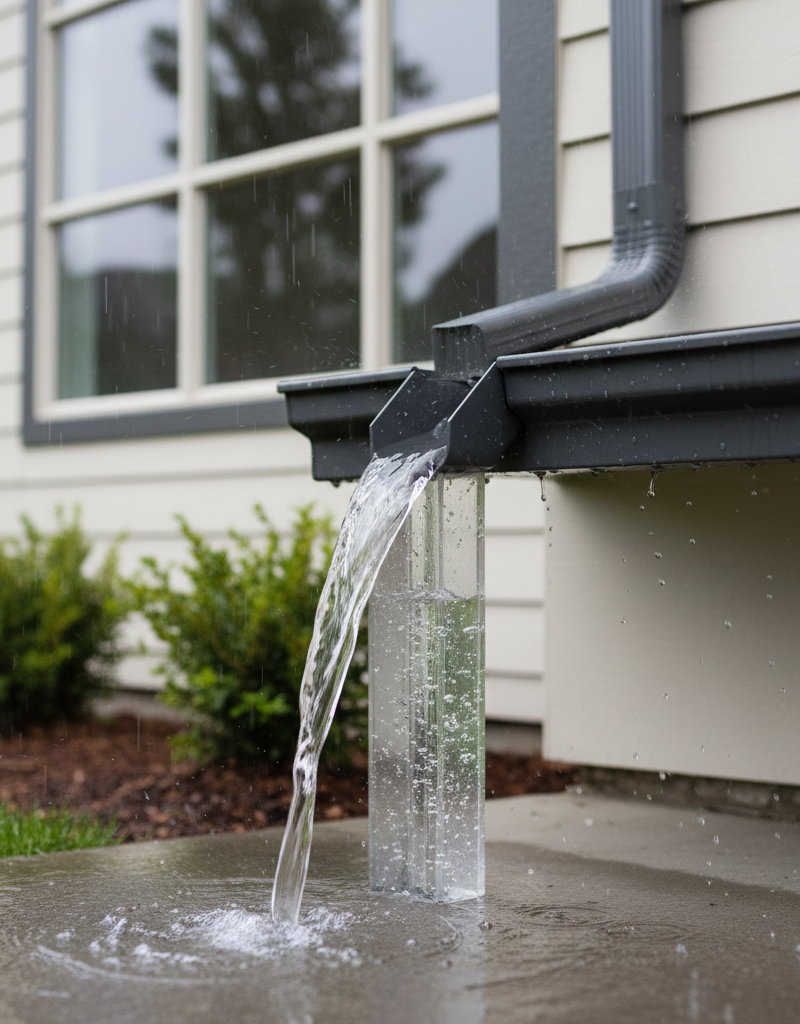
Those downspouts are the exit ramps. They carry the water down and away from the house, and ideally they dump it at least 5 to 10 feet from the foundation with an extender or an underground drain line. Simple setup. Roof collects, gutters gather, downspouts move it out. Nice and tidy.
But it only works if everything stays open. Leaves, pine needles, shingle granules, and even a random tennis ball can wedge in there and turn that flow into a dam. Water backs up, fills the gutter, and once it hits the top edge, it’s got nowhere to go but over the side.
If the gutters aren’t pitched right — maybe they’ve sagged over time — you get low spots where water pools. That standing water traps debris, and pretty soon you’ve got a choke point. Then there’s the fascia and soffits, which folks forget about until they rot. They’re holding the whole system up, and if moisture’s been hammering them for a while, the gutters can pull loose and the slope goes to heck. It snowballs fast.
Step-by-Step Fix
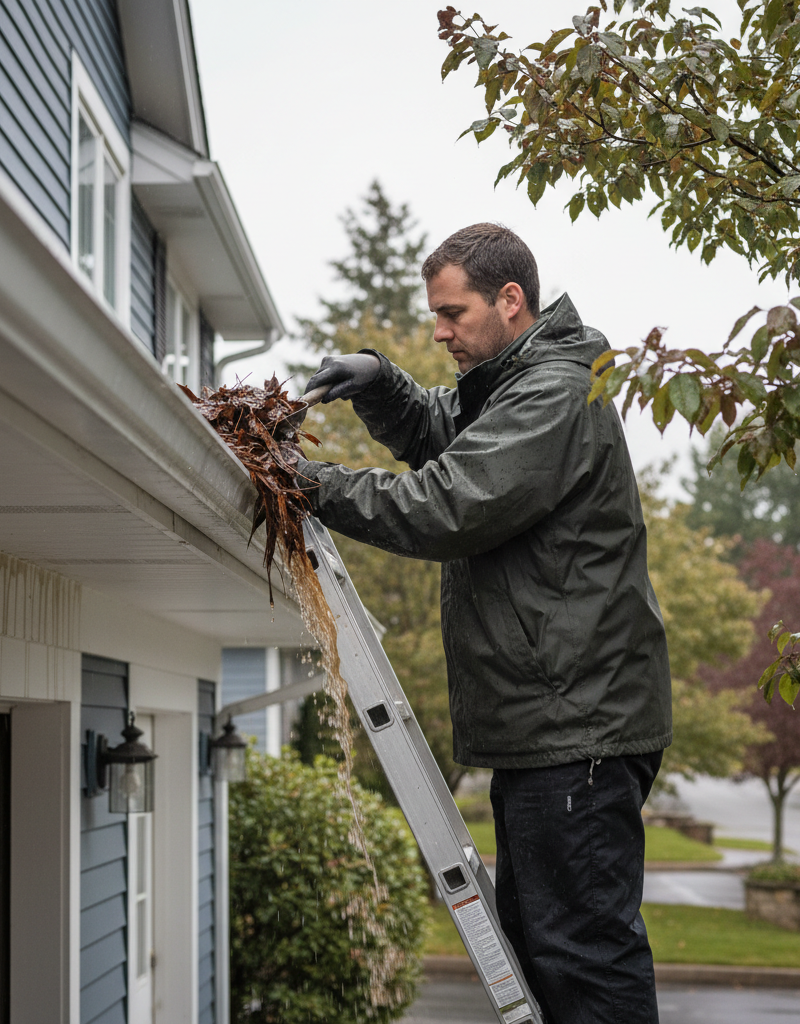
Alright, let’s get those gutters back to doing their job. Safety first, always. You’re gonna be on a ladder, so make sure it’s solid, sitting on level ground, and extended right. If I’m working a tall second story, I like having a spotter. Makes life easier. Makes me sleep better, too.
-
Assess the Situation – Visual Inspection
- Before you even touch the ladder, watch the gutters during a downpour if you can. See exactly where the overflow starts. Is it one section? A corner? A downspout joint? That tells you a lot. I’ve seen people guess wrong and spend an hour cleaning a section that wasn’t even the problem. Don’t be that guy.
-
Gather Your Gear – Tools and Safety First
- You’ll need a sturdy extension ladder, heavy-duty work gloves — trust me, gutter muck is nasty — a small garden trowel or gutter scoop, a bucket for the debris, and a hose with a spray nozzle. Eye protection isn’t optional; grit in the eye will ruin your day fast. If it’s a multi-story house, a ladder stabilizer’s a smart move.
-
Clear the Main Troughs – Hands-on Gunk Removal
- Climb carefully and start at one end of a gutter section. Scoop out the leaves, twigs, mud, and shingle granules with your gloved hands or the gutter scoop. Drop it in the bucket and keep moving down the line. Pay close attention to corners and the spots where the gutters meet the downspouts — that’s where the junk likes to pile up. I pulled a water heater in Frisco last month that had exactly this kind of “looks fine from the ground” problem; same story here. Hidden stuff always causes the headache.
-
Flush with Water – Testing the Flow
- After the visible debris is gone, run water through the gutter with your hose. Start at the high end and let it go. Watch it travel toward the downspout. It ought to move smoothly. If it slows down or pools, you may have missed a clog or got a sag in the run. If water still spills over at one spot, go back and check that section again.
-
Unclog the Downspouts – The Hidden Choke Point
- This is where the real mess often hides. If flushing the gutter doesn’t clear the downspout, you’ve got a blockage. First try blasting the hose full-force down from the top. If that doesn’t do it, grab a plumber’s snake and feed it down until you hit the clog, then work it through. If that still won’t move, or if there’s a clean-out near the bottom, open it and clear from there. Sometimes you’ve gotta break the downspout apart section by section if it’s packed solid. No magic trick. Just grunt work.
-
Check for Proper Pitch – Level it Out
- Once everything’s flowing, watch it again. If water’s still sitting there, the gutter might be pitched wrong. Gutters should slope about 1/16 to 1/8 inch for every 10 feet toward the downspout. Use a level on a long, straight board to check it. If it’s off, you may need to adjust the hangers. Sometimes screws back out, sometimes the fascia bows, and sometimes the whole run just sags a hair too much. You can usually fix that by moving hangers or adding a few more to coax the gutter back where it belongs.
-
Inspect for Damage – Holes, Cracks, and Loose Joints
- While you’re up there, look for holes, cracks, and seams that have pulled apart. Small holes can be patched with gutter sealant. Bigger damage might mean replacing a section. Make sure the seams are sealed tight and the gutter sections are fastened together well. Check the downspouts, too — they should be locked in solid to both the gutters and the house.
-
Trim Overhanging Branches – Prevention is Key
- Take a look up top. Got limbs hanging right over the roofline? Every wind gust shoves leaves, twigs, and seed pods straight into the gutters. Cutting those branches back, ideally by 6 to 10 feet, can cut way down on the junk getting into the system. And yeah, it helps keep squirrels and other critters from using the tree like a bridge to your attic.
-
Consider Gutter Guards (with caution) – Long-term Debris Management
- Gutter guards can help, but they’re not some miracle fix. You’ve got screens, micro-mesh, solid covers — a few different animals there. Micro-mesh usually does the best job with fine debris like pine needles and shingle grit, but even that needs cleaning now and then. The catch? Some styles can slow water entry during a heavy downpour, which means overflow over the top of the guard. Pick a style that fits the kind of trees you’ve got. I always tell folks, don’t expect them to be “set it and forget it.”
Common Causes
- Debris Blockages: Biggest offender, no contest. Leaves, shingle granules, pine needles, acorns, seed pods, dirt, and even toys or little branches can pack a gutter or downspout solid. It doesn’t take much — a small clog in the downspout can back up the whole run.
- Improper Gutter Pitch: Gutters don’t need to be dead level; they need a slight slope (1/16 to 1/8 inch per 10 feet) toward the downspouts so water can drain. If they sag or got installed too flat, water pools, debris settles, and you’ve got a clog factory.
- Undersized Gutters: Older homes or places that’ve seen heavier rain over the years can have gutters that are simply too small (often 4-inch) for the roof runoff, especially in a hard storm. A typical 5-inch K-style gutter can handle runoff from a 1,000 sq ft roof with about 2 inches of rain per hour. Bigger roofs or heavier rainfall might need 6-inch gutters or more downspouts.
- Damaged or Detached Gutters: Loose hangers, rotten fascia boards, or rough weather can pull gutters away from the house, change the pitch, or crack the metal. Once that happens, water starts escaping early and the whole setup gets goofy.
- Clogged Downspout Extenders/Drains: Even if the downspout itself is clear, the extender on the ground or the underground pipe it feeds into can still be blocked. Then the water backs up all the way to the gutter and overflows anyway.
Common Mistakes
- Ignoring the Problem: A lot of homeowners think, “Eh, it’s just a little overflow.” Nope. That little overflow keeps eroding the landscape, beating up the siding, and maybe undermining the foundation. You don’t want to wait until the basement’s wet to care.
- Cleaning Only Visible Debris: Folks will scoop the leaves out of the top trough and call it a day. Trouble is, the real blockage is often down in the downspout or even farther out in the drain line. Always flush it with water so you know it’s actually clear.
- Using a Pressure Washer Carelessly: Tempting, sure — but a pressure washer can wreck gutters, especially vinyl or aluminum, and strip shingle granules if you hit the roof. A regular garden hose with a decent nozzle is usually plenty and a lot safer.
- Neglecting Downspout Extenders: People forget the system doesn’t end at the downspout. If the extenders are pointed at the foundation or they’re clogged themselves, you’re just moving the problem around, not fixing it. Water needs to get at least 5 feet, preferably 10 feet, away.
- Climbing Unsafely: Using a shaky ladder or reaching too far is asking for trouble. Ladder falls are one of the big homeowner injury calls. Keep three points of contact and move the ladder instead of stretching like a fool.
Cost & Time Breakdown
| Task | DIY Cost | Pro Cost | Time |
|---|---|---|---|
| Gutter Cleaning (basic) | $0 (your time) | $150 – $300 | 1-3 hours |
| Downspout Unclogging | $0 – $30 (snake) | $100 – $250 | 0.5-2 hours |
| Pitch Adjustment/Re-securing | $5 – $50 | $200 – $400 | 1-4 hours |
| Minor Gutter Repair (sealant) | $10 – $25 | Included with cleaning | 0.5 hours |
| Gutter Guard Installation | $100 – $800+ | $500 – $2,000+ | 4-8+ hours |
Tips & Prevention
- Regular Cleaning: Clean your gutters at least twice a year — once in late fall after the leaves drop, and again in late spring to clear out winter junk and spring pollen. If you’ve got a lot of trees, you may need to do it more often. It’s money well spent on your home
Related Articles
Keep troubleshooting with these hand-picked guides from FixlyGuide:
- The #1 Gutter Mistake That Causes Overflow (It's Not Clogs!) — Discover the often-overlooked culprit behind overflowing gutters during heavy rain and learn the surprising, easy fix most homeowners miss.
- The #1 Gutter Mistake That Causes Overflow (And How to Fix It in 20 Minutes) — Overflowing gutters during heavy rain are usually caused by a readily fixable clog, often due to a common cleaning mistake.
- The #1 Gutter Mistake That Causes Overflow (It's Not Clogs!) — Discover the most common, overlooked reason your gutters overflow in heavy rain, and learn practical steps to fix it for good.
- The #1 Mistake That Makes Deck Boards Warp (And the Easy Fix) — Discover the most common reason deck boards warp and how a simple, proactive fix can restore your deck's appearance and longevity.
- The #1 Gutter Mistake You're Making (And 3 Hidden Causes of Overflow) — Overflowing gutters in heavy rain are often a sign of a deeper issue than just debris, leading to potential foundation damage and costly re…
- The 3 Hidden Reasons Your Gas Burner Won't Light (Beyond a Clog) — Before you call a technician, discover the most common culprits behind a gas stove burner that refuses to ignite and learn how to fix them…
Should you do this yourself?
Answer five quick questions before you start. Safety outranks savings every time.
Your experience with work like this
How high do you have to work?
Does the job involve any of these?
Will it need a permit?
Specialty tools
Free and instant. Educational guidance only — not a quote, inspection, or professional diagnosis.
What should this project cost?
Enter your project details for a realistic cost range before you call anyone.
Spot repairs commonly run $400–$1,800; full replacement typically $9,000–$18,000 for an average home.
- Regional adjustment
- National average
- Labor share (typical)
- ~$2,948
- Quotes to collect
- 3 written estimates
Educational estimate based on national averages — not a binding quote. Always confirm with written local estimates.
Fixly Project Decision Box
- DIY difficulty
- Professional Recommended
- Estimated time
- Inspection 1–2 hours · repairs 1–3 days
- Cost level
- High
Main tools / materials
- Binoculars for a ground-level look
- Flashlight for attic checks
- Moisture meter
- Roofing cement (temporary patch only)
When to stop and call a pro
- Active leak near lights, fans, or any wiring
- Sagging, bulging, or water-filled ceiling
- Steep, wet, or two-story roof — do not climb it
- Storm or hail damage you plan to claim on insurance
Need professional help?
Free roof assessment first — no phone calls until you ask for them.
Get Local Roofing HelpDecide what your roof needs
Two minutes of questions turns "something is wrong up there" into a clear next step.
- Repair or replace your roof?Answer 10 questions about age, leaks, and damage to get a clear next step.Open
- Compare contractor quotesScore up to four bids on price, warranty, licensing, and timeline.Open
- Get local estimatesSend one request and compare written estimates from vetted pros.Open
Free, no signup required. Estimates are educational guidance, not a quote or an inspection.
Get the print-ready PDF of this guide
A clean, ad-free, printable version you can keep on your phone or pin to the workshop wall. Free with a FixlyGuide account.
- Print-optimized layout
- Tools, materials & every step included
- Saved to your account
Frequently asked questions
How often should I clean my gutters?+
You should clean your gutters at least twice a year: once in late fall after all the leaves have fallen, and again in late spring to remove pollen, seeds, and spring debris. Homes surrounded by many trees may require more frequent cleaning, perhaps quarterly, to prevent blockages.
Can overflowing gutters damage my foundation?+
Absolutely. When water overflows, it saturates the soil directly around your foundation. This can lead to hydrostatic pressure against the foundation walls, causing cracks, water intrusion into basements or crawl spaces, and even shifting of the home's structure over time.
What's the best way to unclog a downspout?+
Start by flushing water down from the top with a garden hose. If that doesn't work, use a plumber's snake or a specialized downspout auger to break up the clog. If accessible, remove the bottom elbow of the downspout to clear debris directly, but always ensure the clog is completely removed.
Do gutter guards actually work?+
Gutter guards can significantly reduce the amount of large debris entering your gutters, extending cleaning intervals. However, no guard is entirely maintenance-free; fine debris like shingle grit or small seeds can still accumulate, and some types can even cause water to overshoot the gutter during heavy rain. Choose micro-mesh for best results but plan for occasional checks.
What is proper gutter pitch?+
Proper gutter pitch means your gutters aren't perfectly level; they should gently slope towards the downspouts at a rate of about 1/16 to 1/8 inch for every 10 feet of gutter run. This ensures that water flows freely and doesn't sit and collect debris, which causes clogs and encourages corrosion.
My gutters overflow at just one spot – what does that mean?+
An overflow at a single spot usually indicates a localized blockage, a section with improper pitch that creates a low spot where water pools, or a damaged section. Start by clearing any visible debris, then flush with water to identify if it's a blockage or a structural issue like sagging.
Can I fix gutter damage myself?+
Minor gutter damage, like small holes or separated seams, can often be patched with gutter sealant or a repair kit. However, if sections are severely bent, detached from the fascia, or extensively corroded, replacement of those sections by a professional might be necessary for a lasting fix.
When should I consider replacing my gutters?+
Consider replacement if your gutters are over 20 years old, show widespread rust or corrosion, have numerous leaks, are bent or dented beyond repair, or if they are consistently undersized for your roof and local rainfall. Frequent overflowing despite regular cleaning is a good sign it might be time for a system upgrade.
How far should downspout extenders direct water away from the house?+
Downspout extenders should ideally direct water a minimum of 5 feet away from your home's foundation, and preferably 10 feet or more. This helps prevent water from pooling near the foundation, reducing the risk of basement leaks and foundation damage.
What's the difference between 5-inch and 6-inch gutters?+
A 5-inch K-style gutter is standard for many homes, handling runoff from roofs up to about 1,000 square feet in moderate rainfall. A 6-inch K-style gutter has about 50% more capacity and is recommended for larger roofs, steep pitches, or areas with very heavy rainfall to prevent overflow.
Discussion
Loading comments…