- The 1 Gutter Mistake That Leads to $10,000 Roof Damage — Neglecting regular gutter cleaning is the leading cause of preventable roof damage, often resulting in costly repairs that could be avoided…
- The 1 Gutter Mistake That Leads to $10,000 Roof Damage — Learn the most common gutter-cleaning mistake homeowners make and how to properly maintain your gutters to prevent expensive roof damage.
- The 1 Mistake Homeowners Make Cleaning Gutters (And How to Fix It) — Discover the biggest gutter cleaning mistake that leads to costly roof damage and learn the right way to protect your home.
- The 1 Mistake Homeowners Make Cleaning Gutters (And How It Damages Your Roof) — Discover the crucial mistake homeowners make when cleaning gutters that leads to hidden roof damage, and learn the right way to protect you…
- The 1 Mistake Homeowners Make Cleaning Gutters (And How to Fix It) — Prevent costly roof damage by learning the most common gutter cleaning mistake and the correct way to maintain your home's drainage system.
HVAC · High energy usage
| Project category | HVAC |
|---|---|
| Problem type | High energy usage |
| Trade required | HVAC |
| Urgency | Planned project |
| Safety risk | Low safety risk |
| DIY suitability | DIY for experienced homeowners |
| Cost category | High cost |
| Typical timeline | Assessment within weeks; replacement planned off-season |
| Contractor type | Licensed HVAC technician |
Repair option
Duct sealing, insulation, and a tune-up before touching the equipment.
Replacement option
High-efficiency replacement sized by a load calculation, not a rule of thumb.
Common causes
- Aging, low-efficiency equipment
- Leaking ducts losing conditioned air
- Insufficient attic insulation
- Oversized system short-cycling
Relevant tools:project cost estimatorrepair or replace
Published August 20, 2026Last updated August 20, 2026
Tools & materials you'll need
Affiliate links- AmazonSturdy extension ladderCrucial for safety and reaching high gutters.
- AmazonWork glovesProtect hands from sharp debris and grime.
- AmazonSafety glassesEssential for eye protection from falling debris.
- AmazonGutter scoopPlastic, shaped to fit gutter profile.
- Amazon5-gallon bucketTo collect debris, can hang from ladder.
- AmazonGarden hose with spray nozzleFor flushing gutters and downspouts.
- AmazonPlumber's snake or downspout auger25 ft · If downspouts are severely clogged.
As an Amazon Associate FixlyGuide earns from qualifying purchases — at no extra cost to you. Prices and availability are accurate as of publication and subject to change.
Quick Answer
Look, I’ve seen this a hundred times. A homeowner calls me out for a leaky roof, and the first thing I check? The gutters. Nine times out of ten, they’re packed solid with leaves, shingle grit, and who knows what else. When gutters clog up, water can’t go where it’s supposed to. It backs up, spills over, and runs right down your fascia, behind your siding, or—worse—under your roof shingles. That’s how you end up with rotted wood, foundation trouble, and mold in the attic, all because of a few bucks worth of leaves.
The Problem
Your gutters aren’t just there to look tidy; they’re your home’s first line of defense against water damage. I think of ’em as a drainage system built into the house. They catch rain and snowmelt off the roof and move it away from the structure. But once they get jammed up—and trust me, they will—that whole setup falls apart. Water stacks up, finds the easiest way out, and starts sneaking into places it shouldn’t. You’ll see wood rot at the eaves, stained siding, washed-out landscaping, and a real threat to the roof decking and foundation. It starts small. Then it gets expensive in a hurry.
How It Works
Here’s how the roof and gutters are supposed to team up. Rain hits the roof, the shingles shed it down to the edge, and the gutters catch it. Those gutters are pitched just enough—you’ll want about a quarter-inch drop for every 10 feet of run—to send water into the downspouts. Then the downspouts move it away from the foundation, usually into a drainage system or out onto a splash block.
Now, once leaves, twigs, shingle granules, and the odd kid’s toy pile up—yep, I found a toy dinosaur in one once—that whole system bogs down. Water’s got nowhere to go. It pools in the gutter, and in winter that can freeze solid, which can lead to ice dams that lift shingles right off. More often, though, it just overflows. That overflow soaks the fascia boards—the trim behind the gutters—and the soffits, which are the undersides of your eaves. Those parts aren’t meant to stay wet. They rot. Then pests move in. Then the roof edge gets weak.
And if that water backs up under the shingles, now you’re into the roof decking—the plywood or OSB sheathing the shingles are nailed to. Once that stuff gets wet and stays wet, it softens up, molds, and stops holding nails worth a darn. That leaves the roof open to wind damage and leaks. I pulled a water heater in Frisco last month that had exactly this kind of mess overhead, and the ceiling damage told the whole story before I even touched a tape measure. A roof can collect hundreds of gallons in a good rain, so when the drainage fails, it’s like letting a waterfall run down the side of your house. And it doesn’t stop at the roof. Water can work its way down to the foundation, where it causes cracks, damp basements, and structural problems over time. Folks usually don’t realize how fast that chain reaction starts.
Step-by-Step Fix
Ready to clean those gutters out? Good. Here’s how I do it. Safety first, always.
-
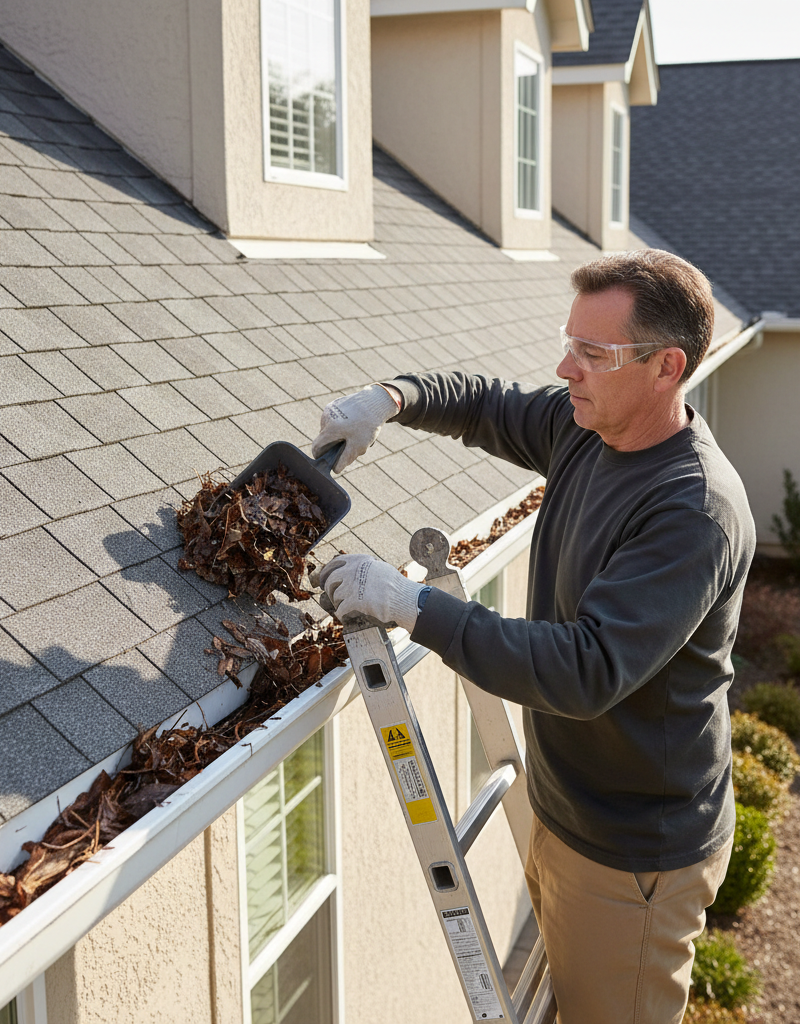
Gear Up Safely — Protect yourself before you even climb that ladder. You’ll want sturdy gloves—old leaves can hide sharp junk—and eye protection. A solid ladder is non-negotiable. Don’t mess with a wobbly old thing. Set it on firm, level ground. If the ground’s soft, throw a piece of plywood under the feet. And don’t lean the ladder against the gutters; they’re not built for that kind of load.
- Pro Tip: Have somebody spot you. Simple, but it can save your hide if the ladder shifts.
-
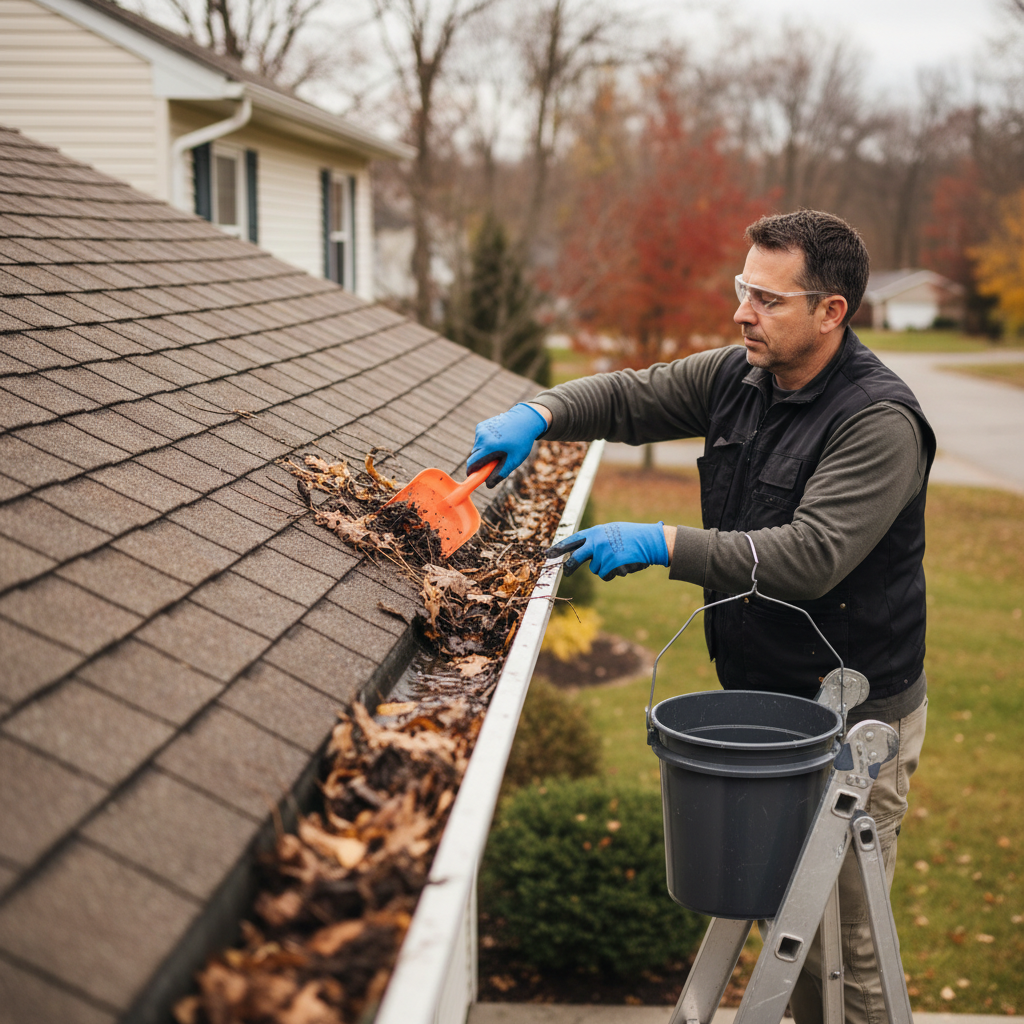
Clear the Bulk Debris — Get the big stuff out by hand. Start at one end of a gutter section. Reach in and pull out handfuls of leaves, twigs, and muck. I usually dump it into a bucket hanging from the ladder or onto a tarp spread below. Don’t try to shove it down the downspout. You’ll just make a new clog in a harder place.
- Gloves are key here: You don’t know what’s buried in that gunk. I once pulled a whole bird’s nest out of a gutter in Cherry Hill, complete with a few unhatched eggs. Nasty stuff. Hard to forget, though.
-
Use a Gutter Scoop — For the stubborn, packed-in crud. Once the loose junk’s out, you’ll probably find a layer of wet sludge glued to the bottom. A plastic gutter scoop is made for that. It follows the curve of the gutter and won’t scratch the metal like a trowel can. Work your way along and get it all out.
- Don’t forget the corners: Debris loves piling up where two gutter sections meet. Those spots get missed all the time.
-
Flush with Water — Test the flow and clear any minor blockages. Once the gutters are mostly clean, grab your garden hose. Start at the high end of each section and let it run. Watch the water move toward the downspout. If it slows way down or pools up, you’ve likely missed a little blockage somewhere.
- Check the downspout: Water should come out the bottom with some speed. If it’s just dribbling or barely moving, the downspout’s clogged.
-
Clear Downspout Clogs — Unjam those pipes. If a downspout’s blocked, try flushing it from the top with the hose first. Sometimes that’s enough. If not, grab a plumber’s snake or a downspout auger. Feed it down from the top until you hit the clog, then twist and push. You can also pull the elbow off the bottom and flush upward from there.
- Safety Note: Don’t stick your hand into a downspout or gutter unless you know what’s in it. You could get cut or bitten.
-
Inspect for Damage — Look for wear and tear. While you’re up there, give the whole setup a good once-over. Any loose hangers? Sections pulling apart? Holes or rust spots? Catch it early. Small holes can sometimes be patched with gutter sealant or tape; bigger problems may mean replacing a section.
-
Check the Pitch — Ensure proper drainage. After cleaning, watch how the water moves. If it still pools in spots, the gutters might not have the right pitch. Remember that 1/4-inch drop per 10 feet? If it’s off, you may need to re-hang part of the run or tweak the hangers to get the slope back where it belongs. A little fussy, sure, but it matters.
-
Consider Gutter Guards — Reduce future cleaning, but choose wisely. Gutter guards can save you some time, but they’re not all worth the money. Mesh screens do okay with big leaves, but they can still let through shingle grit and pine needles. Solid hoods do better, though debris can collect on top and still need cleaning of the guard. Do your homework. They cut down on maintenance, but they rarely wipe it out completely.
- Maintenance for guards: Even with guards, you
Related Articles
Keep troubleshooting with these hand-picked guides from FixlyGuide:
- The #1 Gutter Mistake That Leads to $10,000 Roof Damage — Neglecting regular gutter cleaning is the leading cause of preventable roof damage, often resulting in costly repairs that could be avoided…
- The #1 Gutter Mistake That Leads to $10,000 Roof Damage — Learn the most common gutter-cleaning mistake homeowners make and how to properly maintain your gutters to prevent expensive roof damage.
- The #1 Mistake Homeowners Make Cleaning Gutters (And How to Fix It) — Discover the biggest gutter cleaning mistake that leads to costly roof damage and learn the right way to protect your home.
- The #1 Mistake Homeowners Make Cleaning Gutters (And How It Damages Your Roof) — Discover the crucial mistake homeowners make when cleaning gutters that leads to hidden roof damage, and learn the right way to protect you…
- The #1 Mistake Homeowners Make Cleaning Gutters (And How to Fix It) — Prevent costly roof damage by learning the most common gutter cleaning mistake and the correct way to maintain your home's drainage system.
- The #1 Gutter Mistake You're Making (And 3 Hidden Causes of Overflow) — Overflowing gutters in heavy rain are often a sign of a deeper issue than just debris, leading to potential foundation damage and costly re…
Should you do this yourself?
Answer five quick questions before you start. Safety outranks savings every time.
Your experience with work like this
How high do you have to work?
Does the job involve any of these?
Will it need a permit?
Specialty tools
Free and instant. Educational guidance only — not a quote, inspection, or professional diagnosis.
Questions to ask before you sign
Ask every contractor the same questions and the cheapest bid stops looking cheapest. Check them off as you go — your progress is saved on this device.
Free, no signup. Bring this to every walkthrough so you compare bids on the same terms.
What should this project cost?
Enter your project details for a realistic cost range before you call anyone.
Service calls and common repairs run $150–$900; full system replacement typically $6,000–$12,000.
- Regional adjustment
- National average
- Labor share (typical)
- ~$1,935
- Quotes to collect
- 3 written estimates
Educational estimate based on national averages — not a binding quote. Always confirm with written local estimates.
Fixly Project Decision Box
- DIY difficulty
- Professional Recommended
- Estimated time
- Inspection 1–2 hours · repairs 1–3 days
- Cost level
- High
Main tools / materials
- Binoculars for a ground-level look
- Flashlight for attic checks
- Moisture meter
- Roofing cement (temporary patch only)
When to stop and call a pro
- Active leak near lights, fans, or any wiring
- Sagging, bulging, or water-filled ceiling
- Steep, wet, or two-story roof — do not climb it
- Storm or hail damage you plan to claim on insurance
Need professional help?
Free roof assessment first — no phone calls until you ask for them.
Get Local Roofing HelpGet help with your roof now
Stay off the roof. These free tools help you protect the house and reach the right professional fast.
- Emergency repair checklistThe first steps that limit damage before a pro arrives.Open
- Repair or replace your roof?Answer 10 questions about age, leaks, and damage to get a clear next step.Open
- Get local estimatesSend one request and compare written estimates from vetted pros.Open
Free, no signup required. Estimates are educational guidance, not a quote or an inspection.
Get the print-ready PDF of this guide
A clean, ad-free, printable version you can keep on your phone or pin to the workshop wall. Free with a FixlyGuide account.
- Print-optimized layout
- Tools, materials & every step included
- Saved to your account
Frequently asked questions
How often should I clean my gutters?+
Most homes need their gutters cleaned at least twice a year: once in late fall after all the leaves have dropped, and again in late spring to clear out any spring debris like seeds, pollen, and early growth. If you have lots of trees nearby, you might need to do it more often.
What happens if I don't clean my gutters?+
Ignoring your gutters leads to water overflowing, which can cause fascia rot, soffit damage, stained siding, foundation cracks, and even basement flooding. On the roof, backed-up water can seep under shingles, leading to damaged decking, mold, and costly leaks. It's a real domino effect of problems.
Can clogged gutters cause ice dams?+
Absolutely. If water can't drain through your gutters, it sits there and freezes, forming ice. As more snow melts from your warm roof, that water hits the frozen gutter and backs up, refreezing under your shingles and lifting them. This is how ice dams wreak havoc on your roof and can push water into your attic.
Are gutter guards worth it?+
Gutter guards can definitely reduce the frequency of cleaning, but they're not a 'set it and forget it' solution. Some types can still get clogged with shingle grit or fine debris, and some even allow debris to sit on top, which can still cause issues. Choose wisely, and plan on checking them periodically.
How can I tell if my gutters are clogged without climbing a ladder?+
The easiest way is during a rainstorm. If you see water cascading over the sides of your gutters instead of flowing out the downspouts, they're clogged. Stains on your siding below the gutters are another tell-tale sign. In dry weather, look for plants growing out of them.
What's the best way to clean downspouts?+
First, try flushing them with a strong stream from a garden hose from the top down. If that doesn't work, a plumber's snake or a specialized downspout auger can usually break up the blockage. Sometimes, you might need to disconnect the bottom elbow to clear it out.
What's the proper pitch for gutters?+
Gutters should have a slight slope, generally about 1/4 inch of drop for every 10 feet of length, towards the downspout. This ensures water flows consistently and doesn't sit stagnant in the gutter, which can lead to standing water and mosquito breeding.
Can damaged gutters lead to foundation problems?+
Yes, absolutely. When gutters overflow, all that water dumps directly around your home's foundation. Over time, this constant saturation can erode the soil, create hydrostatic pressure against the foundation walls, leading to cracks, leaks in your basement or crawl space, and even structural damage. It's a major cause of foundation issues.


Discussion
Loading comments…