- The 1 Mistake Homeowners Make Cleaning Gutters (And How to Fix It) — Discover the biggest gutter cleaning mistake that leads to costly roof damage and learn the right way to protect your home.
- The $20 Gutter Mistake That Leads to $5,000 Roof Damage — Neglecting your gutters is a common error that can lead to expensive roof repairs and compromised home foundations if not addressed promptl…
- The 1 HVAC Mistake Costing You Hundreds (and 2 Easy Fixes) — Discover the most common HVAC mistake homeowners make that leads to higher bills and breakdowns, plus two simple maintenance steps to preve…
- The 1 Reason Your AC Blows Warm Air (And It's Not What You Think) — A dirty air filter is often the overlooked culprit behind an air conditioner blowing warm air, hindering its ability to cool your home effi…
- The Hidden Reason Your AC Freezes — And Why Most Homeowners Get It Wrong — Discover the surprising truth behind why your outdoor AC unit is freezing up and the common mistake homeowners make when trying to fix it.
HVAC · High energy usage
| Project category | HVAC |
|---|---|
| Problem type | High energy usage |
| Trade required | HVAC |
| Urgency | Planned project |
| Safety risk | Low safety risk |
| DIY suitability | DIY for experienced homeowners |
| Cost category | High cost |
| Typical timeline | Assessment within weeks; replacement planned off-season |
| Contractor type | Licensed HVAC technician |
Repair option
Duct sealing, insulation, and a tune-up before touching the equipment.
Replacement option
High-efficiency replacement sized by a load calculation, not a rule of thumb.
Common causes
- Aging, low-efficiency equipment
- Leaking ducts losing conditioned air
- Insufficient attic insulation
- Oversized system short-cycling
Relevant tools:project cost estimatorrepair or replace
Published July 8, 2026Last updated August 17, 2026
Tools & materials you'll need
Affiliate linksAs an Amazon Associate FixlyGuide earns from qualifying purchases — at no extra cost to you. Prices and availability are accurate as of publication and subject to change.
Quick Answer
Neglected gutters are a silent hazard. The most common and damaging mistake homeowners make is allowing gutters to become clogged with leaves, twigs, and other debris. Clogged gutters prevent rainwater from draining properly, causing water to back up, overflow, and potentially infiltrate your roof, fascia, foundation, and surrounding landscape. Addressing this issue promptly through regular, thorough cleaning is crucial to avoiding thousands of dollars in repairs and extending the lifespan of your home's exterior.
The Problem
Rain gutters are your home's first line of defense against water damage, channeling rainwater safely away from your roof and foundation. However, when these essential systems are neglected, they can become a source of significant trouble. The most common issue homeowners face is utterly preventable: clogged gutters due to an accumulation of leaves, shingle grit, seeds, and other organic debris. This seemingly minor blockage can quickly escalate into a cascade of costly problems. When gutters are clogged, rainwater has nowhere to go but over the sides, often saturating the fascia board, overflowing into the soffits, and even backing up under roof shingles. This can lead to wood rot, compromised roof sheathing, damaged interior ceilings and walls, and even a cracked foundation due to hydrostatic pressure. Additionally, overflowing water can erode landscaping, create pathways for basement leaks, and foster mold and mildew growth in damp areas around your home. The underlying problem isn't just dirty gutters; it's a lack of consistent, proactive maintenance that leads to these destructive outcomes.
How It Works
To understand why proper gutter function is so critical, let's briefly review how the system operates. Your roof, sloped by design, directs rainwater downwards into a network of gutters installed along its eaves. These gutters are typically made of aluminum, copper, steel, or vinyl and are pitched at a slight angle—typically 1/16 to 1/8 inch per linear foot—towards downspouts. This subtle slope is essential, relying on gravity to carry water efficiently. Water enters the gutter through the open top, flows along this slight decline, and then funnels into vertical downspouts. Downspouts, often equipped with elbows, extend past the foundation, directing the water safely away, usually onto splash blocks or into underground drainage systems. Critically, the entire system relies on an unobstructed path. Any accumulation of debris—leaves, twigs, pine needles, shingle grit, or even small toys—can disrupt this flow. When debris builds up, it traps water, preventing it from reaching the downspouts. This standing water becomes heavy, straining the gutter hangers and potentially causing the gutters to sag or pull away from the fascia. More importantly, when the volume of water exceeds the gutter's capacity due to a blockage, it overflows. This overflow can saturate the fascia, rot the soffit, seep under roof shingles, and pool around the foundation. Over time, this constant exposure to water leads to deterioration of building materials, compromising your home's structural integrity and inviting moisture-related issues.
Step-by-Step Fix
1. Gather Your Gear – Safety first for working at heights.
Before ascending any ladder, ensure you have all necessary tools and safety equipment within reach. This minimizes trips up and down and keeps your focus on the task at hand. Check your ladder for stability and proper extension.
- Safety Note: Always use a sturdy ladder and have a spotter if possible. Never work on a ladder during strong winds or rain. Wear heavy-duty gloves to protect your hands from sharp debris, insects, and potential metal edges. Wear safety glasses to protect your eyes from falling debris.
2. Clear Large Debris Manually – Start with the obvious blockages.
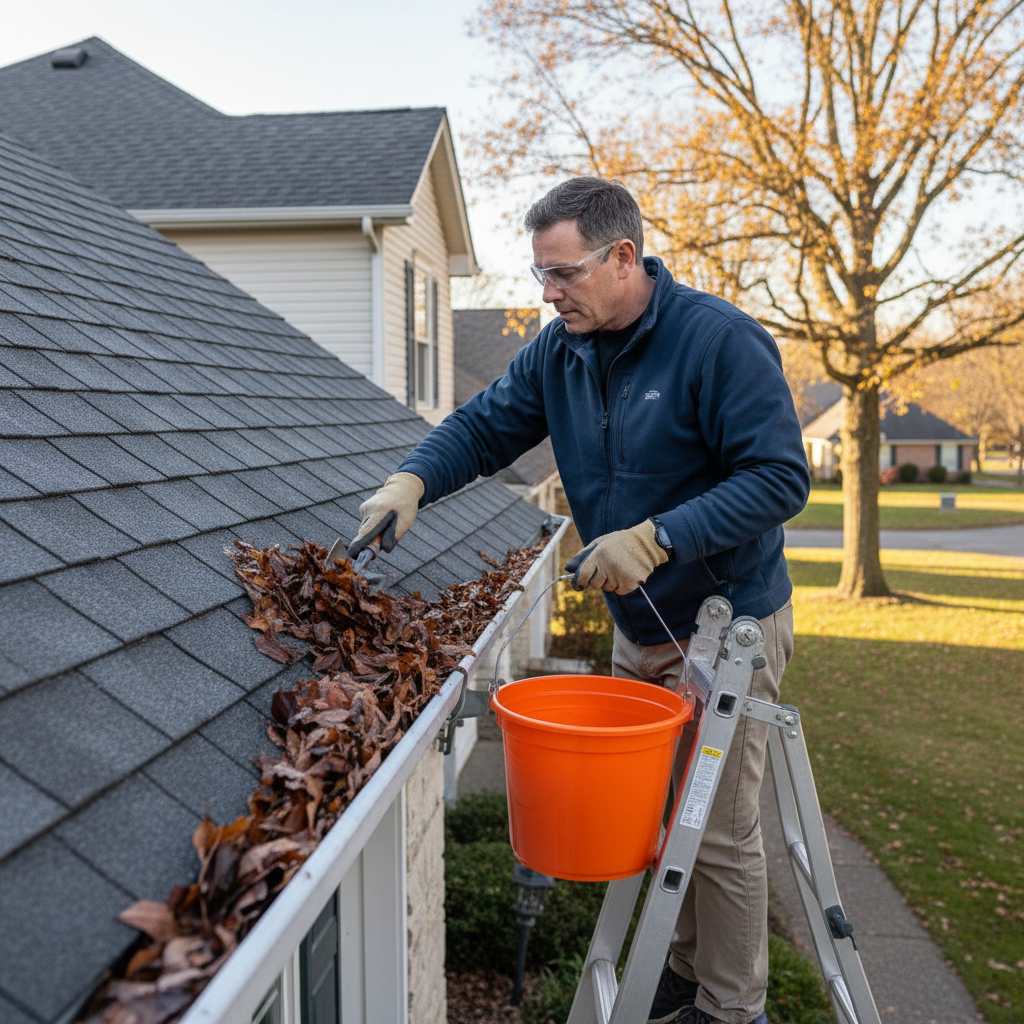
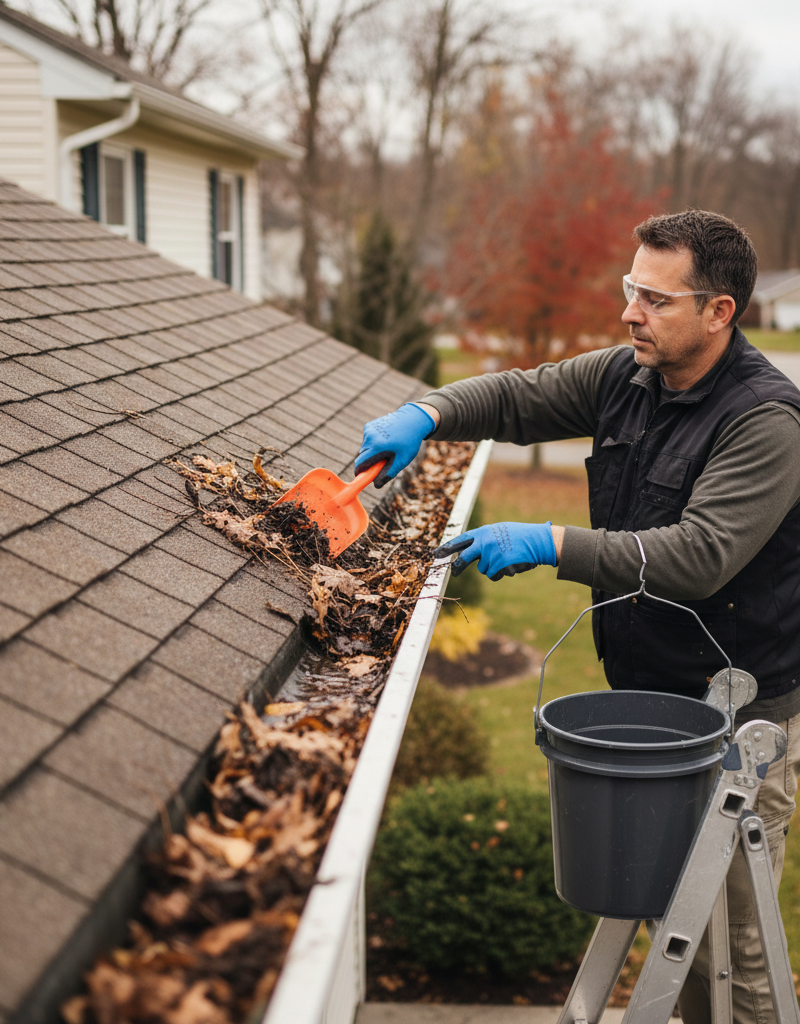
Beginning at one end of the gutter, use your gloved hands or a small garden trowel to scoop out large clumps of leaves, twigs, and other visible debris. Place the scooped-out debris into a bucket or tarp for easy disposal. Work your way along the entire length of the gutter. Pay close attention to areas near downspout openings, as these are common spots for severe clogs.
3. Flush the Gutters with Water – Test for proper drainage.
Once large debris is removed, use a garden hose with a strong nozzle to flush out any remaining dirt, shingle grit, and smaller particles. Turn the hose on and direct the stream down the gutter towards the nearest downspout. Observe the water flow. It should move freely and drain quickly through the downspout. If water pools or overflows, it indicates a remaining blockage.
4. Address Downspout Clogs – The most common hidden culprits.
If water isn't flowing freely through the downspout, you likely have a clog. First, try flushing the downspout from the top with the hose at high pressure. If this doesn't work, consider using a plumber's auger (snake) or a specialized downspout cleaning tool. Insert the auger from the top or, if your downspout has a removable elbow at the bottom, from there. Twist and push the auger to break up and clear the obstruction. You can also tap the side of the downspout gently with a rubber mallet to dislodge debris.
5. Inspect Gutter Condition – Look for damage or sagging.
While you're up close, take the opportunity to inspect the gutters themselves. Look for any signs of sagging, which indicates loose or damaged hangers. Check for rust spots, cracks, or loose seams. Any sections that are pulling away from the fascia board need to be resecured. Catching these minor issues early can prevent more significant problems down the road.
- If you find significant damage (large cracks, rusted-through sections, widespread sagging): Minor repairs like sealing small holes or reattaching a few hangers are DIY-friendly. However, extensively damaged or severely sagging sections may require professional replacement to ensure proper drainage.
6. Clean the Exterior – Maintain curb appeal and prevent grime buildup.
After the interior is clean and functional, you can clean the exterior of the gutters. Use a bucket of warm water mixed with a mild household detergent and a soft-bristle brush or sponge. This removes dirt, grime, and mildew buildup, improving your home's aesthetic and preventing long-term staining. A pressure washer on a very low setting can be used carefully, but avoid directing strong streams directly at the fascia or roof shingles.
7. Consider Gutter Guards – A preventive measure.
While not a fix, installing gutter guards can significantly reduce the frequency of future cleanings. There are various types, including mesh screens, reverse curve systems, and fine micro-mesh filters. Research which type is best suited for the type of debris common in your area (e.g., fine mesh for pine needles, larger screens for leaves).
8. Re-Check Drainage – Confirm complete success.
Once all cleaning and minor repairs are complete, run your hose into the gutters again to ensure water flows smoothly from beginning to end and exits freely through all downspouts, well away from your foundation. Confirm there are no leaks from seams or corners.
Common Causes
- Leaf and Debris Accumulation: This is, by far, the leading cause. Leaves, twigs, pine needles, seed pods (like
Related Articles
Keep troubleshooting with these hand-picked guides from FixlyGuide:
- The #1 Mistake Homeowners Make Cleaning Gutters (And How to Fix It) — Discover the biggest gutter cleaning mistake that leads to costly roof damage and learn the right way to protect your home.
- The $20 Gutter Mistake That Leads to $5,000 Roof Damage — Neglecting your gutters is a common error that can lead to expensive roof repairs and compromised home foundations if not addressed promptl…
- The #1 HVAC Mistake Costing You Hundreds (and 2 Easy Fixes) — Discover the most common HVAC mistake homeowners make that leads to higher bills and breakdowns, plus two simple maintenance steps to preve…
- The #1 Reason Your AC Blows Warm Air (And It's Not What You Think) — A dirty air filter is often the overlooked culprit behind an air conditioner blowing warm air, hindering its ability to cool your home effi…
- The Hidden Reason Your AC Freezes — And Why Most Homeowners Get It Wrong — Discover the surprising truth behind why your outdoor AC unit is freezing up and the common mistake homeowners make when trying to fix it.
- The #1 Gutter Mistake Worsening Your Roof Damage (And The Easy Fix) — Overflowing gutters in heavy rain are typically caused by blockages, incorrectly sloped sections, or undersized gutters, leading to potenti…
Should you do this yourself?
Answer five quick questions before you start. Safety outranks savings every time.
Your experience with work like this
How high do you have to work?
Does the job involve any of these?
Will it need a permit?
Specialty tools
Free and instant. Educational guidance only — not a quote, inspection, or professional diagnosis.
Questions to ask before you sign
Ask every contractor the same questions and the cheapest bid stops looking cheapest. Check them off as you go — your progress is saved on this device.
Free, no signup. Bring this to every walkthrough so you compare bids on the same terms.
What should this project cost?
Enter your project details for a realistic cost range before you call anyone.
Service calls and common repairs run $150–$900; full system replacement typically $6,000–$12,000.
- Regional adjustment
- National average
- Labor share (typical)
- ~$1,935
- Quotes to collect
- 3 written estimates
Educational estimate based on national averages — not a binding quote. Always confirm with written local estimates.
Fixly Project Decision Box
- DIY difficulty
- Professional Recommended
- Estimated time
- Inspection 1–2 hours · repairs 1–3 days
- Cost level
- High
Main tools / materials
- Binoculars for a ground-level look
- Flashlight for attic checks
- Moisture meter
- Roofing cement (temporary patch only)
When to stop and call a pro
- Active leak near lights, fans, or any wiring
- Sagging, bulging, or water-filled ceiling
- Steep, wet, or two-story roof — do not climb it
- Storm or hail damage you plan to claim on insurance
Need professional help?
Free roof assessment first — no phone calls until you ask for them.
Get Local Roofing HelpGet help with your roof now
Stay off the roof. These free tools help you protect the house and reach the right professional fast.
- Emergency repair checklistThe first steps that limit damage before a pro arrives.Open
- Repair or replace your roof?Answer 10 questions about age, leaks, and damage to get a clear next step.Open
- Get local estimatesSend one request and compare written estimates from vetted pros.Open
Free, no signup required. Estimates are educational guidance, not a quote or an inspection.
Frequently asked questions
How often should I clean my gutters?+
For most homes, cleaning gutters twice a year – once in late spring after tree pollen and seeds fall, and again in late fall after leaves have dropped – is sufficient. Homes surrounded by many trees or in areas prone to heavy storms might benefit from more frequent checks.
What happens if I don't clean my gutters?+
Clogged gutters lead to rainwater overflowing, which can damage your roof shingles, fascia boards, soffits, and even the foundation of your home. It can also cause basement leaks, create ideal conditions for mold and mildew, and erode landscaping.
Are gutter guards worth it?+
Gutter guards can significantly reduce the frequency of gutter cleaning by preventing large debris from entering. While they don't eliminate the need for maintenance entirely (fine grit can still accumulate), they can be a worthwhile investment for many homeowners, especially those with many trees.
Can I clean gutters myself or should I hire a professional?+
Many homeowners can safely clean their gutters with the right tools and precautions. However, if your roof is very high, steeply pitched, or you're uncomfortable working on a ladder, hiring a professional is a safer option. Professionals also have specialized equipment to handle tough clogs.
How do I know if my downspouts are clogged?+
The most obvious sign is water overflowing from your gutters during rain, even after the main troughs appear clear. You can also test by running a hose into the gutter; if water doesn't flow freely from the bottom of the downspout, it's likely clogged.


Discussion
Loading comments…