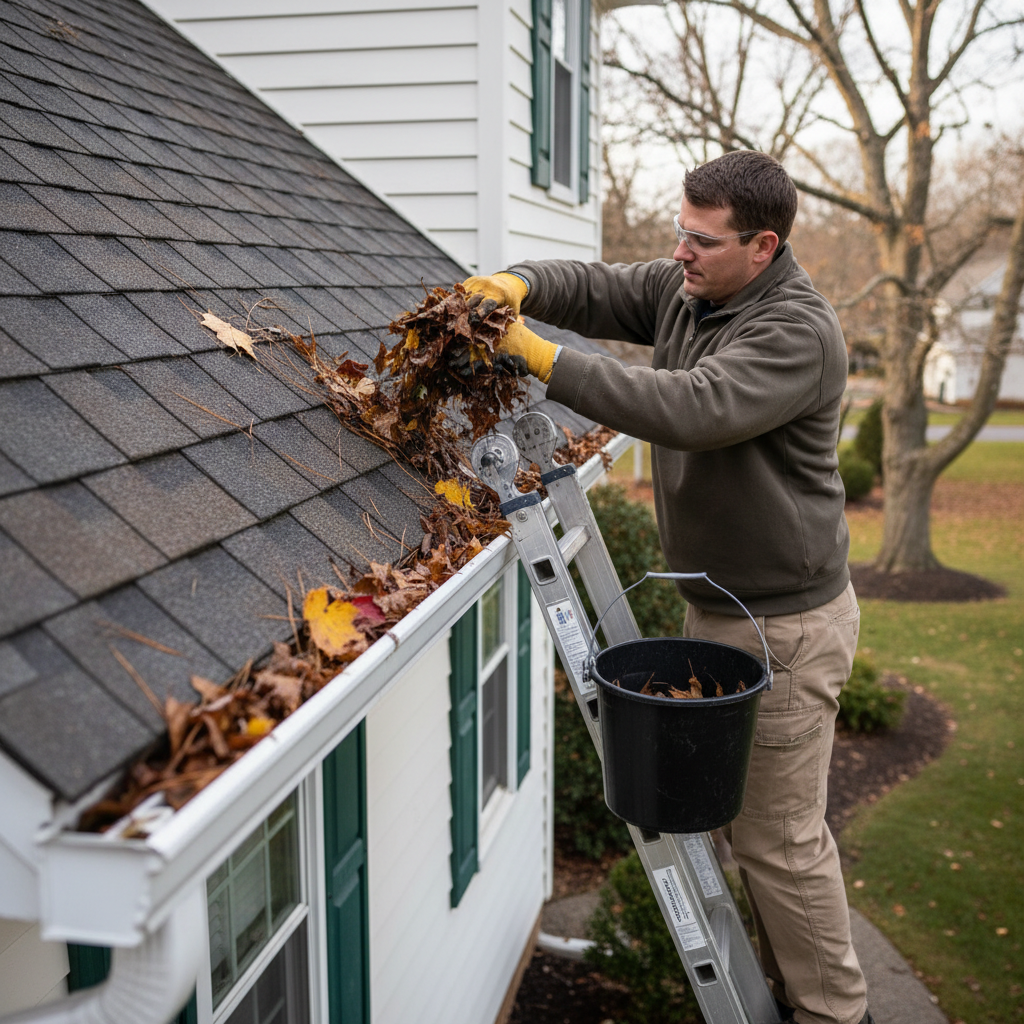
- Place the ladder on firm, level ground, fully extended and secured. Ensure it extends at least three feet above the gutter line. Have a spotter if possible. Never work alone if you're uncomfortable on a ladder.
- Wear sturdy gloves to protect your hands from sharp debris and grime.
- Wear safety glasses to protect your eyes from falling debris, especially when working overhead.
- A dust mask is also advisable, as mold, dust, and pollen can be stirred up.
- Avoid working in wet conditions or if the ground is soft, as this can make ladder use dangerous.
HVAC · High energy usage
| Project category | HVAC |
|---|---|
| Problem type | High energy usage |
| Trade required | HVAC |
| Urgency | Planned project |
| Safety risk | Low safety risk |
| DIY suitability | DIY for experienced homeowners |
| Cost category | High cost |
| Typical timeline | Assessment within weeks; replacement planned off-season |
| Contractor type | Licensed HVAC technician |
Repair option
Duct sealing, insulation, and a tune-up before touching the equipment.
Replacement option
High-efficiency replacement sized by a load calculation, not a rule of thumb.
Common causes
- Aging, low-efficiency equipment
- Leaking ducts losing conditioned air
- Insufficient attic insulation
- Oversized system short-cycling
Relevant tools:project cost estimatorrepair or replace
Published May 16, 2026Last updated August 17, 2026
Tools & materials you'll need
Affiliate links- AmazonSturdy extension ladderRated for your weight plus debris
- AmazonSafety glasses1 pair
- AmazonGutter scoop / small trowel
- AmazonGarden hose with spray nozzle
- AmazonBucket with hook attachmentTo hang on ladder for debris
- AmazonPlumber's snake / augerFor downspout clogs
- AmazonShop vacuum (wet/dry)Optional, for stubborn downspout clogs
As an Amazon Associate FixlyGuide earns from qualifying purchases — at no extra cost to you. Prices and availability are accurate as of publication and subject to change.
Quick Answer
The $20 Gutter Mistake That Leads to $5,000 Roof Damage is neglecting the simple, routine task of cleaning your gutters. This seemingly minor oversight can swiftly escalate into significant and costly problems for your roof, fascia, foundation, and landscaping. Clogged gutters prevent rainwater from draining properly, causing it to overflow, pool around the foundation, and even seep behind your siding or under your roof's edge, leading to rot, leaks, and structural compromise. Regular cleaning—at least twice a year—takes mere hours and minimal expense, yet it can save homeowners thousands of dollars in potential repairs.
The Problem
Homeowners often overlook their gutters until a visible issue arises, like a waterfall cascading over the edge during a storm or standing water accumulating around the foundation. This reactive approach is a costly mistake. The problem isn't just the water spilling over; it's the insidious damage occurring out of sight. When gutters are packed with leaves, twigs, shingle grit, and other debris, they cease to function as designed. Instead of channeling water safely away from your home, they become reservoirs. This trapped water can saturate the fascia boards, causing them to rot and creating entry points for pests. It can back up under your roof's edge, damaging roof decking, rafters, and even interior ceilings. Furthermore, persistently overflowing gutters will erode landscaping, undermine driveways, and, most critically, saturate the soil directly next to your home's foundation. Over time, this can lead to cracked foundations, bowing basement walls, and other structural nightmares that can cost tens of thousands to rectify. The hidden nature of much of this damage means small problems often become catastrophic before they're noticed, making proactive gutter maintenance not just desirable, but essential.
How It Works
Your home's gutter system is a critical, yet often unappreciated, component of its overall water management strategy. It’s designed to capture all the rainwater that falls onto your roof and channel it safely away from the house's foundation. Here's a breakdown of how it works:
Rain falls onto the roof, which acts as a vast collection surface. As the water flows down the sloped roof, it’s directed into the gutters, which are essentially troughs installed along the eaves. Gutters are intentionally sloped very slightly (about 1/4 inch for every 10 feet of run) towards the downspouts. This subtle pitch ensures gravity assists the water flow, preventing pooling along the gutter length. Once inside the gutters, the water travels horizontally until it reaches a downspout opening. Downspouts are vertical pipes that extend from the gutter to the ground, or often, to an extension that directs water further away from the house.
To prevent debris from entering and clogging the downspout, many systems have a “drain screen” or “leaf guard” at the downspout opening. However, these aren't foolproof and can still get clogged with smaller debris. The downspout's primary function is to provide a rapid, unimpeded vertical descent for the collected water. At the bottom, a downspout extension or splash block is essential. These components ensure that the water discharged from the downspout is carried several feet away from the foundation, preventing localized saturation. An improperly directed downspout will merely dump water right at the base of your home, defeating the entire purpose of the gutter system.
The entire system relies on clear, unobstructed pathways. When leaves, shingle grit, pine needles, and other organic matter accumulate in the gutters, they block the flow. This causes water to back up. If the blockage is severe, water will overflow the gutter's edge, undermining landscaping and eroding soil. Even more critically, the standing water in a clogged gutter will eventually find its way behind the gutter, saturating the fascia board—the wooden trim piece that the gutter often attaches to. This continuous dampness promotes wood rot, making the fascia soft and prone to further damage. In severe cases, water can even wick up under the shingles and compromise the roof decking and structural components below, leading to leaks inside your home. A functional gutter system is a home's first line of defense against water-related damage.
Step-by-Step Fix
1. Safety First: Ladder Placement and PPE—Before you even think about climbing, ensure your ladder is stable.
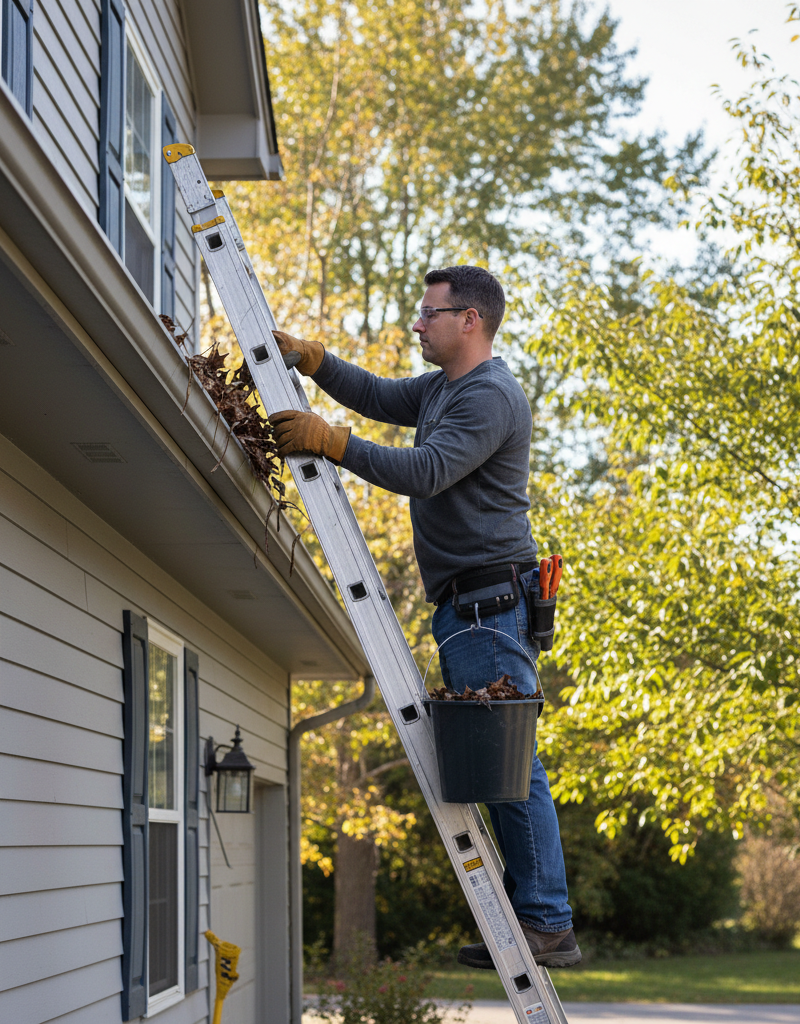
*   **Place the ladder** on firm, level ground, fully extended and secured. Ensure it extends at least three feet above the gutter line. Have a spotter if possible. Never work alone if you're uncomfortable on a ladder.
*   **Wear sturdy gloves** to protect your hands from sharp debris and grime.
*   **Wear safety glasses** to protect your eyes from falling debris, especially when working overhead.
*   **A dust mask** is also advisable, as mold, dust, and pollen can be stirred up.
*   **Avoid working in wet conditions** or if the ground is soft, as this can make ladder use dangerous.
2. Clear Large Debris by Hand—Start removing the bulkiest material first.
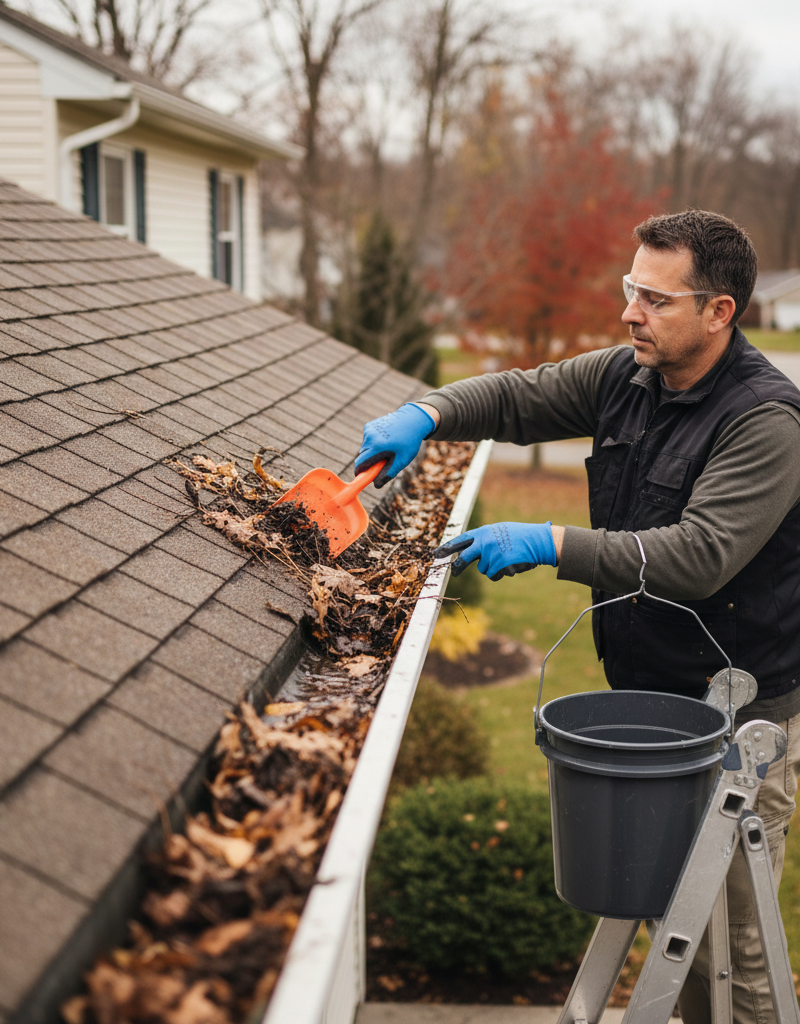
*   **Scoop out leaves, twigs, and pine needles** using your gloved hands or a small gutter scoop. Work from one end of the gutter to the other, placing debris into a bucket attached to your ladder or a tarp on the ground below.
*   **Be thorough** but gentle to avoid damaging the gutter itself or dislodging splash guards.
*   **If you encounter particularly matted or packed debris**, you may need to break it up first with a trowel or a stiff brush.
3. Flush with a Garden Hose—Confirm water flow and identify stubborn clogs.
*   **Once major debris is cleared**, use a garden hose with a strong nozzle setting to flush water through the gutter. Start at the opposite end from the downspout and work towards it.
*   **Observe the water flow**. It should move freely towards and down the downspout.
*   **If water pools or overflows**, there's likely a blockage in the downspout or further along the gutter section. This needs to be addressed immediately.
4. Unclog Downspouts—Restore vertical drainage.
*   **If a downspout is clogged**, try flushing water directly down it from the top. If this doesn't work, you'll need a stronger approach.
*   **Use a plumber's snake** (flexible auger) to feed down the downspout from the top. Twist and push the snake to break up the blockage.
*   **Alternatively, disconnect the downspout** from the elbow near the ground (usually held by a few screws) to access blockages from below. You can often clear these with a hose or by hand.
*   **For very stubborn clogs**, a powerful shop vacuum in
Related Articles
Keep troubleshooting with these hand-picked guides from FixlyGuide:
- The #1 Mistake Homeowners Make Cleaning Gutters (And How to Fix It) — Discover the biggest gutter cleaning mistake that leads to costly roof damage and learn the right way to protect your home.
- The #1 Gutter Mistake That Leads to $10,000 Roof Damage — Learn the most common gutter-cleaning mistake homeowners make and how to properly maintain your gutters to prevent expensive roof damage.
- The #1 Dryer Heating Culprit Homeowners Miss (And the Cheap Fix) — Your dryer's not heating? Often, the culprit is a hidden component that's easy and inexpensive to replace if you know where to look.
- The #1 Mistake Homeowners Make Installing a Smart Thermostat (and How to Fix It) — Avoid the most common pitfall when installing a smart thermostat yourself and ensure a smooth, energy-efficient setup.
- The #1 Mistake When Your Oven Isn't Heating (and the $0 Fix) — Fix your oven not heating to the correct temperature by understanding a common overlooked issue and simple troubleshooting steps.
- The 3 Hidden Reasons Your Gutters Fail in Heavy Rain (It’s Not Just Leaves) — Overflowing gutters during heavy rain often stem from a few common, yet overlooked, issues beyond simple leaf clogs, leading to potential s…
Should you do this yourself?
Answer five quick questions before you start. Safety outranks savings every time.
Your experience with work like this
How high do you have to work?
Does the job involve any of these?
Will it need a permit?
Specialty tools
Free and instant. Educational guidance only — not a quote, inspection, or professional diagnosis.
Questions to ask before you sign
Ask every contractor the same questions and the cheapest bid stops looking cheapest. Check them off as you go — your progress is saved on this device.
Free, no signup. Bring this to every walkthrough so you compare bids on the same terms.
What should this project cost?
Enter your project details for a realistic cost range before you call anyone.
Service calls and common repairs run $150–$900; full system replacement typically $6,000–$12,000.
- Regional adjustment
- National average
- Labor share (typical)
- ~$1,935
- Quotes to collect
- 3 written estimates
Educational estimate based on national averages — not a binding quote. Always confirm with written local estimates.
Fixly Project Decision Box
- DIY difficulty
- Professional Recommended
- Estimated time
- Inspection 1–2 hours · repairs 1–3 days
- Cost level
- High
Main tools / materials
- Binoculars for a ground-level look
- Flashlight for attic checks
- Moisture meter
- Roofing cement (temporary patch only)
When to stop and call a pro
- Active leak near lights, fans, or any wiring
- Sagging, bulging, or water-filled ceiling
- Steep, wet, or two-story roof — do not climb it
- Storm or hail damage you plan to claim on insurance
Need professional help?
Free roof assessment first — no phone calls until you ask for them.
Get Local Roofing HelpGet help with your roof now
Stay off the roof. These free tools help you protect the house and reach the right professional fast.
- Emergency repair checklistThe first steps that limit damage before a pro arrives.Open
- Repair or replace your roof?Answer 10 questions about age, leaks, and damage to get a clear next step.Open
- Get local estimatesSend one request and compare written estimates from vetted pros.Open
Free, no signup required. Estimates are educational guidance, not a quote or an inspection.
Frequently asked questions
How often should I clean my gutters?+
For most homes, cleaning gutters twice a year – once in the spring after tree budding and once in late fall after leaves have fallen – is sufficient. Homes surrounded by many trees may require more frequent cleaning.
What happens if I don't clean my gutters?+
Uncleaned gutters lead to clogs, causing water to overflow and potentially damage your roof, fascia boards, siding, windows, and foundation. It can also lead to basement flooding and landscape erosion.
Can I install gutter guards to avoid cleaning?+
Gutter guards can reduce the frequency of cleaning by keeping out large debris, but they do not eliminate the need for maintenance entirely. Smaller debris, shingle grit, and seeds can still accumulate, requiring occasional cleaning.
What tools do I need to clean my gutters?+
Essential tools include a sturdy ladder, heavy-duty gloves, safety glasses, a small gutter scoop or trowel, a garden hose with a spray nozzle, and optionally, a plumber's snake for downspout clogs.
When should I call a professional for gutter cleaning?+
If your home has multiple stories, a steep roof pitch, or if you're uncomfortable working on a ladder, it's safer to call a professional gutter cleaning service. They have the right equipment and experience to safely clean your gutters.

Discussion
Loading comments…