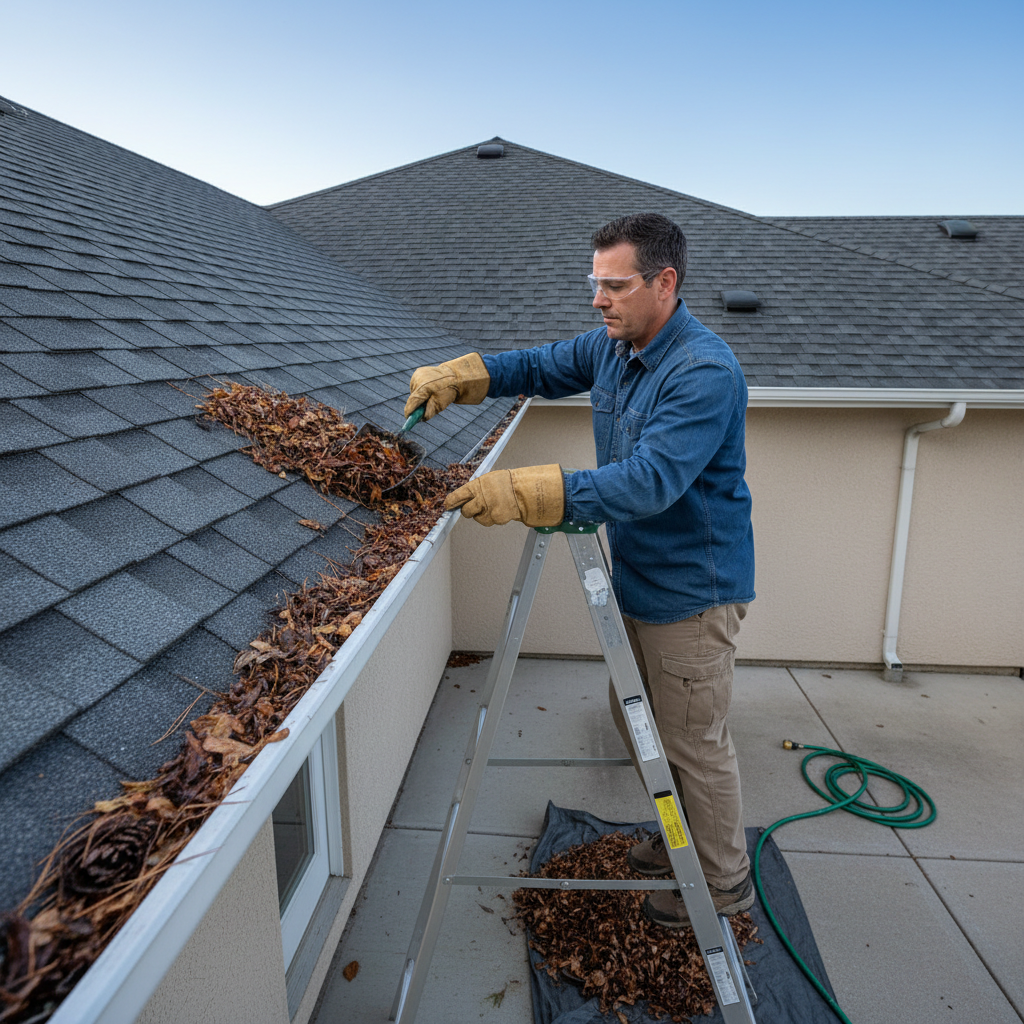
- Leaves and needles from nearby trees: The most obvious culprit. Deciduous trees shed leaves in the fall, while conifers drop needles year-round. This organic matter quickly builds up, especially in valleys and corners.
- Shingle grit and sand: Over time, asphalt shingles shed granules, especially older or weather-beaten ones. This fine grit, combined with dust and sand, creates a heavy sludge that often settles in downspouts.
- Moss and lichen: If your roof has moss or lichen growth, pieces can break off and wash into the gutters, contributing to blockages.
- Bird nests and rodent activity: Birds often build nests in downspout elbows or in the gutters themselves. Rodents might also stash food or nesting materials, creating a surprising amount of bulk.
- Tennis balls, toys, and other foreign objects: Occasionally, things like children's toys or wind-blown debris can land in gutters and create an instant dam.
HVAC · High energy usage
| Project category | HVAC |
|---|---|
| Problem type | High energy usage |
| Trade required | HVAC |
| Urgency | Planned project |
| Safety risk | Low safety risk |
| DIY suitability | DIY for experienced homeowners |
| Cost category | High cost |
| Typical timeline | Assessment within weeks; replacement planned off-season |
| Contractor type | Licensed HVAC technician |
Repair option
Duct sealing, insulation, and a tune-up before touching the equipment.
Replacement option
High-efficiency replacement sized by a load calculation, not a rule of thumb.
Common causes
- Aging, low-efficiency equipment
- Leaking ducts losing conditioned air
- Insufficient attic insulation
- Oversized system short-cycling
Relevant tools:project cost estimatorrepair or replace
Published June 6, 2026Last updated August 17, 2026
Tools & materials you'll need
Affiliate linksAs an Amazon Associate FixlyGuide earns from qualifying purchases — at no extra cost to you. Prices and availability are accurate as of publication and subject to change.
Quick Answer
Many homeowners focus solely on removing visible debris from their gutters but overlook the critical step of ensuring downspouts are completely clear. This oversight leads to hidden blockages that cause water to accumulate, overflow, and ultimately compromise the integrity of the roof, fascia, and even the home's foundation. The correct approach involves not only clearing the main troughs but also thoroughly flushing downspouts to guarantee unimpeded water flow away from the house, protecting against expensive water damage.
The Problem
You've probably seen leaves, twigs, and shingle grit piling up in your gutters. Your instinct is right: scoop it out. But here's the insidious problem: even after you've cleared the visible mess, smaller debris often gets washed into the downspouts, forming insidious clogs out of sight. These downspout blockages are the true silent destroyers. When a downspout is clogged, rainwater has nowhere to go. It backs up in the gutter, overflows, and cascades directly over the edge of the gutter. This isn't just an annoyance; it's a direct assault on your home's most vulnerable areas. Constant overflowing water saturates the fascia boards, soffits, and roof decking, leading to rot, mold, and premature aging of your roofing materials. It can also seep behind siding, causing interior wall damage, and erode your landscaping or even compromise your home's foundation by saturating the soil directly around it. The cumulative effect of neglecting thorough downspout cleaning can transform a simple maintenance task into a several-thousand-dollar repair bill for your roof or foundation.
How It Works
Your home's gutter system is a deceptively simple yet critical part of its hydrology. Rainwater hits your roof, travels down the shingles, and collects in the horizontal troughs – the gutters – installed along the roof's edge. Gravity then guides this collected water towards the downspout openings. Downspouts are vertical pipes designed to channel the water safely away from your home's foundation, usually into a drainage system or onto a splash block. The entire system works efficiently only when water can flow freely and unimpeded.
When debris, such as leaves, pine needles, shingle granules, and even small bits of moss, accumulates in the gutter trough, it can restrict flow. If enough debris builds up, especially near the downspout opening, it creates a dam. Water then pools in the gutter, becoming stagnant and heavy. This pooled water can seep beneath shingles, promoting dry rot in the roof decking and fascia board, which is the long, straight board that runs along the lower edge of the roof. Even worse, the accumulated weight can cause gutters to pull away from the fascia, leading to expensive repairs.
The most damaging scenario, however, occurs when debris makes its way into the downspout. Downspouts are narrower and often include bends or elbows, making them highly susceptible to clogging. Once a downspout is blocked, the entire drainage system fails. Water has no escape route other than to overflow the gutter. This overflowing water, instead of being directed away, runs directly down the house siding, onto window frames, and critically, saturates the ground immediately surrounding the foundation. Over time, this can lead to basement leaks, foundation cracks, and severe erosion of landscaping. Furthermore, in colder climates, backed-up water in gutters can freeze, expand, and contribute to ice dams, which push under shingles and cause severe leaks into attics and interior walls. Understanding this flow dynamic – from roof to gutter to downspout and away from the house – highlights why every part of the system must be clear and functional.
Step-by-Step Fix
Safety First! Always use a stable ladder on firm, level ground. Have a helper spot you. Wear sturdy gloves to protect your hands from sharp debris and grime. Safety glasses are also recommended to protect against falling debris.
-
Gather Your Tools & Prep the Area — Before you even touch a ladder, make sure you have everything you need within reach and clear the ground below your work area. This prevents multiple trips up and down and provides a safe zone for falling debris.
- Tools: Sturdy extension ladder, heavy-duty work gloves, small plastic scoop or trowel, garden hose with spray nozzle, durable bucket or tarp for debris, safety glasses.
-
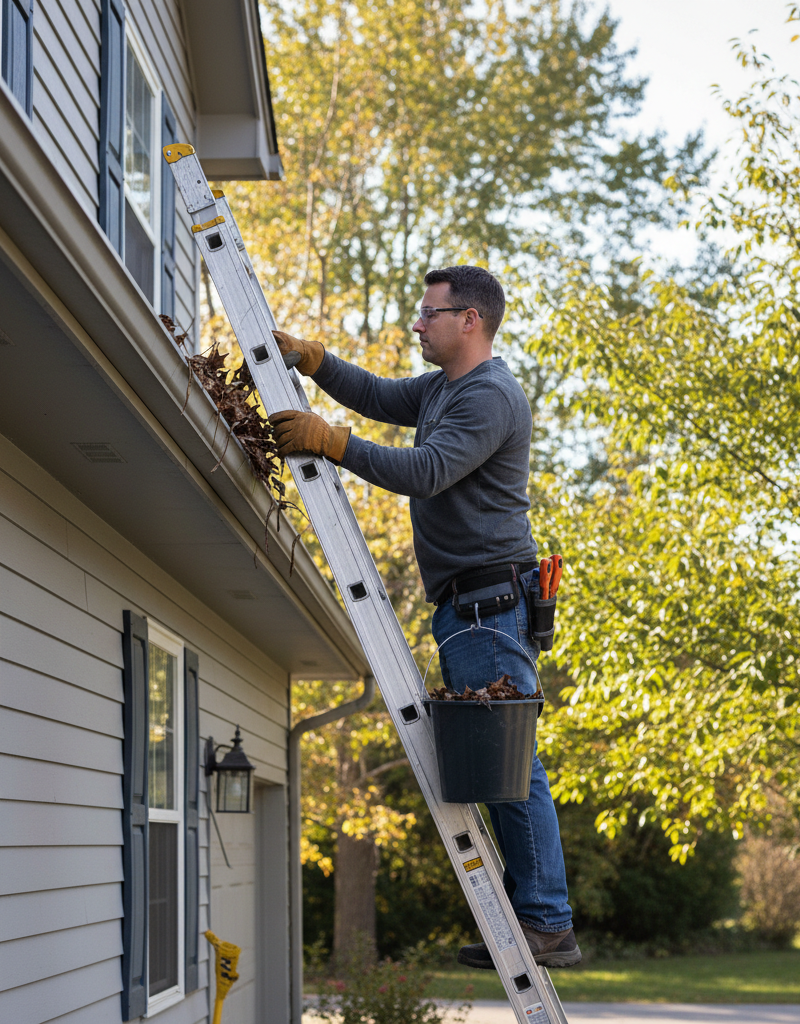
Position Your Ladder Securely — Place your ladder on a stable, flat surface. Ensure it extends at least three rungs above the gutter line. Maintain a 4:1 ratio (for every 4 feet of ladder height, the base should be 1 foot away from the wall). Have a spotter hold the base of the ladder for added safety.
-
Scoop Out Loose Debris — Starting at one end, carefully reach into the gutter and use your scoop or glovel hands to remove large leaves, twigs, and other visible debris. Place the gunk into your bucket or onto a tarp on the ground below. Work in small sections, moving the ladder as needed. Pay special attention to areas around downspout openings.
- If your gutters are extremely packed: Use a garden hose without the nozzle to loosen compacted debris first. Start gently at one end and work towards the downspout. Then scoop it out.
-
Clear Downspout Openings — The area where the gutter meets the downspout is a common choke point. Ensure this opening is completely free of debris. Use your hands or a small tool to dig out any packed-in gunk. Some downspout openings might have a leaf guard or screen – remove and clean it before reinstalling.
-
Flush the Gutters with Water — Once the visible debris is removed, use a garden hose with a strong spray nozzle. Start from the end opposite the downspout and flush water towards it. This will wash away any small remaining particulate matter. Observe the water flow; it should move freely and quickly towards the downspout.
- Watch for standing water: If water pools or moves sluggishly, it indicates a low spot or a remaining blockage. Repeat step 3 in that area.
-
Test and Clear Downspout Clogs — This is the most crucial step often overlooked. Direct the strong spray from your garden hose directly down the downspout opening. Listen for the sound of water flowing freely from the bottom of the downspout. If no water comes out, or it backs up, you have a clog.
- For minor clogs: Increase water pressure and try to force the blockage through. Sometimes simply flushing with high-pressure water is enough.
- For stubborn clogs: Use a plumber's auger (drain snake). Feed it into the downspout from the top. Twist and push until you hit the blockage, then crank the auger to break it up. Once you feel resistance ease, pull the auger out slowly, then flush with water again.
- If augering from the top doesn't work: Disconnect the downspout sections, particularly at elbows, and clear the clog manually. This might involve removing a few screws or clips.
-
Inspect for Damage & Leaks — While the gutters are clean and wet, look for any signs of damage. Check for sagging sections, loose hangers, cracks, or holes. Note any areas where water is dripping from seams or joints. These might need sealing or repair.
-
Re-Route Downspout Extensions (If Necessary) — Ensure any downspout extensions are directing water at least 5-10 feet away from your home's foundation. If they're too short or aiming water towards the house, adjust or add extensions. This is key to preventing foundation issues.
-
Clean Up & Final Inspection — Gather all debris and dispose of it. Store your tools properly. Do a final walk-around to ensure all gutters are clean, downspouts are flowing, and no debris remains on the ground.
Common Causes
- Leaves and needles from nearby trees: The most obvious culprit. Deciduous trees shed leaves in the fall, while conifers drop needles year-round. This organic matter quickly builds up, especially in valleys and corners.
- Shingle grit and sand: Over time, asphalt shingles shed granules, especially older or weather-beaten ones. This fine grit, combined with dust and sand, creates a heavy sludge that often settles in downspouts.
- Moss and lichen: If your roof has moss or lichen growth, pieces can break off and wash into the gutters, contributing to blockages.
- Bird nests and rodent activity: Birds often build nests in downspout elbows or in the gutters themselves. Rodents might also stash food or nesting materials, creating a surprising amount of bulk.
- Tennis balls, toys, and other foreign objects: Occasionally, things like children's toys or wind-blown debris can land in gutters and create an instant dam.
- Improper gutter slope: Gutters need a slight pitch (1/4 inch per 10 feet) towards the downspout for proper drainage. If they are level or slope away, water and debris will sit and accumulate.
Common Mistakes
- Only cleaning the visible muck: As highlighted, the biggest mistake is not properly flushing and clearing downspouts. Visible debris is only half the battle.
- Using a pressure washer improperly: While powerful, a pressure washer can damage gutters, dislodge shingles, and force water into your soffits if not handled delicately and at a low setting. A standard garden hose is usually sufficient.
- Neglecting safety precautions: Falling from a ladder is a serious risk. Many people rush, overreach, or use unstable ladders. Always use a spotter and ensure the ladder is secure.
- Ignoring minor gutter issues: Small sags, loose hangers, or dripping seams might seem minor, but they indicate weak points that can worsen rapidly and lead to bigger problems if not addressed promptly.
- Waiting until gutters are overflowing to clean: Gutters should be cleaned proactively, typically twice a year (spring and fall), not just when they're visibly clogged. Preventative cleaning saves significant costs.
- Not extending downspouts away from the foundation: After all that work, if downspout extensions are too short, water will still pool near your foundation, undermining its integrity. Ensure water is directed at least 5-10 feet away.
Cost & Time Breakdown
| Task | DIY Cost | Pro Cost | Time |
|---|---|---|---|
| Gutter/Downspout Cleaning (DIY) | $0-$30 | $150-$400 | 1-4 hours |
| Gutter Repairs (sealing small leaks, re-hanging) | $10-$50 | $200-$600 | 30 mins - 2 hours |
| Downspout Extension/Re-routing | $15-$50 | $100-$200 | 15-30 minutes |
| Gutter Guards (materials only) | $100-$500 | $500-$1500+ | 2-8 hours |
Tips & Prevention
- Regular Cleaning Schedule: Plan to clean your gutters at least twice a year: once in the late spring after trees have fully leafed out and shed any lingering winter debris, and crucially, once in late fall after all leaves have dropped. If you have many evergreen trees, you might need more frequent checks.
- Invest in Gutter Guards: While not entirely maintenance-free, gutter guards (screens, micro-mesh, or solid covers) can significantly reduce the frequency of cleaning by preventing large debris from entering the troughs. Choose a style appropriate for the types of debris in your area.
- Trim Overhanging Branches: Prune any tree branches that directly overhang your roof or gutters. This will greatly reduce the amount of leaves, twigs, and sap that fall into your system. Aim to keep branches at least 5-10 feet away from the roofline.
- Check for Proper Slope: Periodically check that your gutters have a slight downward slope towards the downspouts. If you notice standing water after a rain, it's a sign they might be level or sloped incorrectly. Minor adjustments can often be made by tightening or adding hangers.
- Inspect Gutters While Washing Windows: Make it a habit to quickly eyeball your gutters for visible debris, sagging, or damage whenever you're doing other outdoor chores like washing windows or gardening. Early detection can prevent small problems from becoming large ones.
- Ensure Downspout Extensions are Effective: After cleaning, always double-check that your downspout extensions are properly directing water away from your foundation. If they're cracked, loose, or too short, replace or extend them.
When to Call a Professional
You should call a professional if you notice persistent clogs despite your best efforts, especially if you've already tried flushing and snaking. A gutter professional has specialized tools, such as high-powered suction machines or industrial-strength augers, that can dislodge even the most stubborn blockages. Additionally, if your home has multiple stories or a very steep roof pitch, climbing ladders can be extremely dangerous. Professionals are trained and equipped for working at heights safely. If you notice significant gutter damage like large cracks, separation from the fascia, severe sagging, or signs of roof damage (like stained fascia or soffits where water has repeatedly overflowed), it's time to call a pro. They can assess the full extent of the damage, repair or replace sections, and ensure your entire drainage system is functioning optimally to protect your entire home's structure.
Related Articles
Keep troubleshooting with these hand-picked guides from FixlyGuide:
- The #1 Mistake Homeowners Make Cleaning Gutters (And How to Fix It) — Discover the biggest gutter cleaning mistake that leads to costly roof damage and learn the right way to protect your home.
- The #1 Mistake Homeowners Make With HVAC Filters (And How Often to Really Change Them) — Discover the crucial mistake most homeowners make with HVAC filters and the specific schedule you should follow to avoid costly HVAC issues…
- The #1 HVAC Mistake Costing You Hundreds (And How Often to Really Change Your Filter) — Discover the crucial mistake most homeowners make with HVAC filters, leading to higher energy bills, poor air quality, and system damage. L…
- The #1 Gutter Mistake That Leads to $10,000 Roof Damage — Learn the most common gutter-cleaning mistake homeowners make and how to properly maintain your gutters to prevent expensive roof damage.
- The #1 Mistake Homeowners Make When Heat Pumps Stop Heating in Winter — Discover the crucial mistake most homeowners make when their heat pump struggles in cold weather and how to fix it, potentially saving hund…
- Wind Lifted Your Shingles? The 7 Immediate Steps to Prevent Roof Leaks — Discover the crucial steps to take immediately after a storm rips shingles from your roof to prevent costly water damage and temporary repa…
Should you do this yourself?
Answer five quick questions before you start. Safety outranks savings every time.
Your experience with work like this
How high do you have to work?
Does the job involve any of these?
Will it need a permit?
Specialty tools
Free and instant. Educational guidance only — not a quote, inspection, or professional diagnosis.
Questions to ask before you sign
Ask every contractor the same questions and the cheapest bid stops looking cheapest. Check them off as you go — your progress is saved on this device.
Free, no signup. Bring this to every walkthrough so you compare bids on the same terms.
What should this project cost?
Enter your project details for a realistic cost range before you call anyone.
Service calls and common repairs run $150–$900; full system replacement typically $6,000–$12,000.
- Regional adjustment
- National average
- Labor share (typical)
- ~$1,935
- Quotes to collect
- 3 written estimates
Educational estimate based on national averages — not a binding quote. Always confirm with written local estimates.
Fixly Project Decision Box
- DIY difficulty
- Professional Recommended
- Estimated time
- Inspection 1–2 hours · repairs 1–3 days
- Cost level
- High
Main tools / materials
- Binoculars for a ground-level look
- Flashlight for attic checks
- Moisture meter
- Roofing cement (temporary patch only)
When to stop and call a pro
- Active leak near lights, fans, or any wiring
- Sagging, bulging, or water-filled ceiling
- Steep, wet, or two-story roof — do not climb it
- Storm or hail damage you plan to claim on insurance
Need professional help?
Free roof assessment first — no phone calls until you ask for them.
Get Local Roofing HelpGet help with your roof now
Stay off the roof. These free tools help you protect the house and reach the right professional fast.
- Emergency repair checklistThe first steps that limit damage before a pro arrives.Open
- Repair or replace your roof?Answer 10 questions about age, leaks, and damage to get a clear next step.Open
- Get local estimatesSend one request and compare written estimates from vetted pros.Open
Free, no signup required. Estimates are educational guidance, not a quote or an inspection.
Get the print-ready PDF of this guide
A clean, ad-free, printable version you can keep on your phone or pin to the workshop wall. Free with a FixlyGuide account.
- Print-optimized layout
- Tools, materials & every step included
- Saved to your account
Frequently asked questions
How often should I clean my gutters?+
Ideally, you should clean your gutters at least twice a year: once in late spring after trees have fully leafed out, and again in late fall after all leaves have dropped. If you live in an area with many trees, more frequent cleaning may be necessary.
What happens if I don't clean my gutters?+
Neglecting gutter cleaning can lead to a cascade of expensive problems, including rotting fascia boards, damaged roof decking, foundation cracks due to water pooling around the base, leaky basements, and soil erosion around your home.
Can I use a pressure washer to clean my gutters?+
While a pressure washer can be effective, it must be used with extreme caution and at a low setting. High pressure can easily damage gutters, dislodge roof shingles, and force water into your soffits and attic. A garden hose with a strong nozzle is generally safer and sufficient.
How do I know if my downspout is clogged?+
The easiest way to check for a downspout clog is to run water from a garden hose directly into the top of the downspout. If water backs up, overflows from the gutter, or doesn't flow freely from the bottom, your downspout is likely clogged. You might also notice water stains on your siding below the downspout.
Are gutter guards worth it?+
Gutter guards can significantly reduce the frequency of gutter cleaning by preventing large debris from entering the troughs. However, they are not entirely maintenance-free; smaller debris like shingle grit or pine needles can still pass through or accumulate on top, requiring occasional inspection and clearing. Their value depends on type and tree coverage.


Discussion
Loading comments…