- Mold/Mildew Growth: In the evaporator coil, drain pan, or humid sections of ductwork. This creates a musty, stale, or locker-room smell, often indicative of moisture problems.
- Animal Activity/Decomposition: Rodents, birds, or insects can build nests or die within ductwork, vents, or the furnace cabinet, leading to strong, foul, decaying odors that can be distributed throughout the home by the blower.
- Electrical Problems: Overheating wiring, motors, or circuit boards can produce a metallic, burning plastic, or 'fishy' smell. This indicates an electrical fault and a potential fire hazard.
- New Furnace/Component 'Break-In' Smell: A new furnace or recently replaced components may emit a faint chemical or metallic smell for the first few hours of operation as manufacturing oils and coatings burn off. This should be temporary.
HVAC · High energy usage
| Project category | HVAC |
|---|---|
| Problem type | High energy usage |
| Trade required | HVAC |
| Urgency | Planned project |
| Safety risk | Low safety risk |
| DIY suitability | DIY for experienced homeowners |
| Cost category | High cost |
| Typical timeline | Assessment within weeks; replacement planned off-season |
| Contractor type | Licensed HVAC technician |
Repair option
Duct sealing, insulation, and a tune-up before touching the equipment.
Replacement option
High-efficiency replacement sized by a load calculation, not a rule of thumb.
Common causes
- Aging, low-efficiency equipment
- Leaking ducts losing conditioned air
- Insufficient attic insulation
- Oversized system short-cycling
Relevant tools:project cost estimatorrepair or replace
Published June 25, 2026Last updated August 17, 2026
Tools & materials you'll need
Affiliate linksAs an Amazon Associate FixlyGuide earns from qualifying purchases — at no extra cost to you. Prices and availability are accurate as of publication and subject to change.
Quick Answer
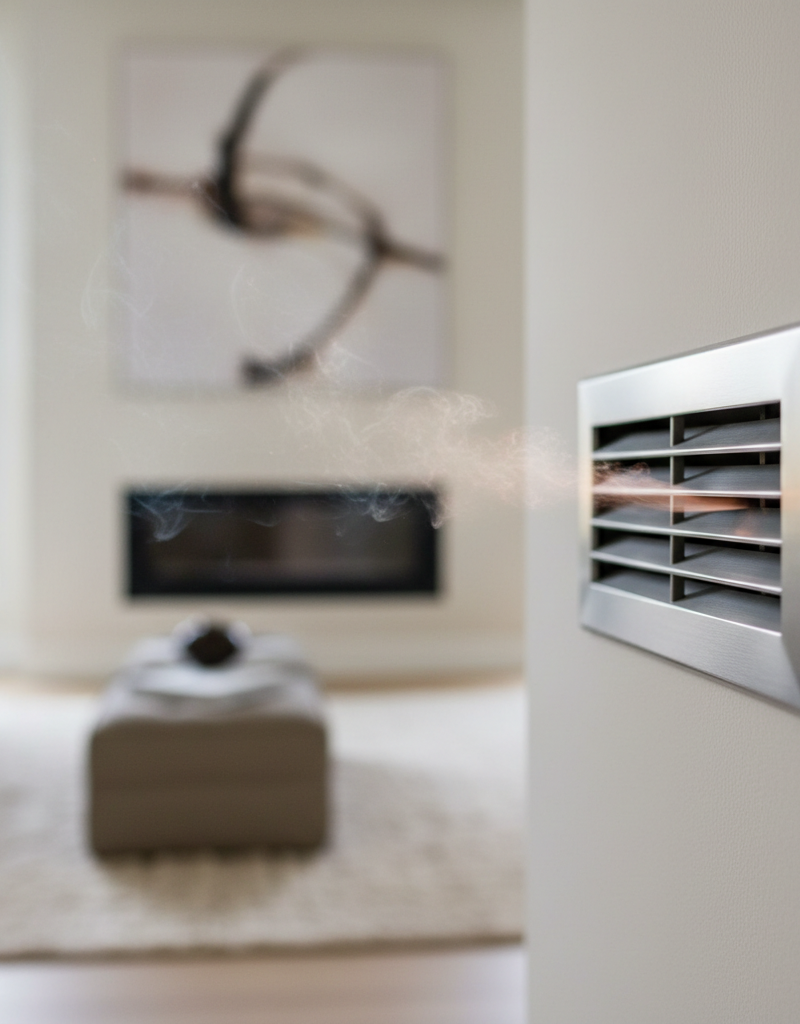
That strange smell emanating from your vents when the heat first kicks on can be an indication of several common household issues within your HVAC system. Most often, it's simply accumulated dust and debris burning off the heat exchanger or heating elements, producing a 'burning dust' smell. However, persistent musty odors can signal mold or mildew growth, especially if moisture is present, while more pungent or acrid smells might point to electrical problems or even rodent activity. A thorough inspection and cleaning of your system, focusing on filters, ducts, and drainage, can usually resolve these unpleasant odors.
The Problem
It's a familiar scenario: the temperatures drop, you switch on your furnace for the first time in months, and immediately, an unsettling odor wafts from your vents. For many homeowners, this is an annual ritual, often dismissed as 'just the furnace burning off dust.' While often true and harmless, a persistent or particularly noxious smell warrants attention. These odors aren't just an annoyance; they can indicate underlying issues compromising your indoor air quality, the efficiency of your HVAC system, or even pose a safety risk. From a subtle mustiness to a strong chemical or burning stench, identifying the exact nature of the smell is the first step toward effective troubleshooting and a more pleasant, healthy home environment. Ignoring these signals can lead to larger, more expensive repairs down the line, or continuous exposure to allergens and irritants.
How It Works
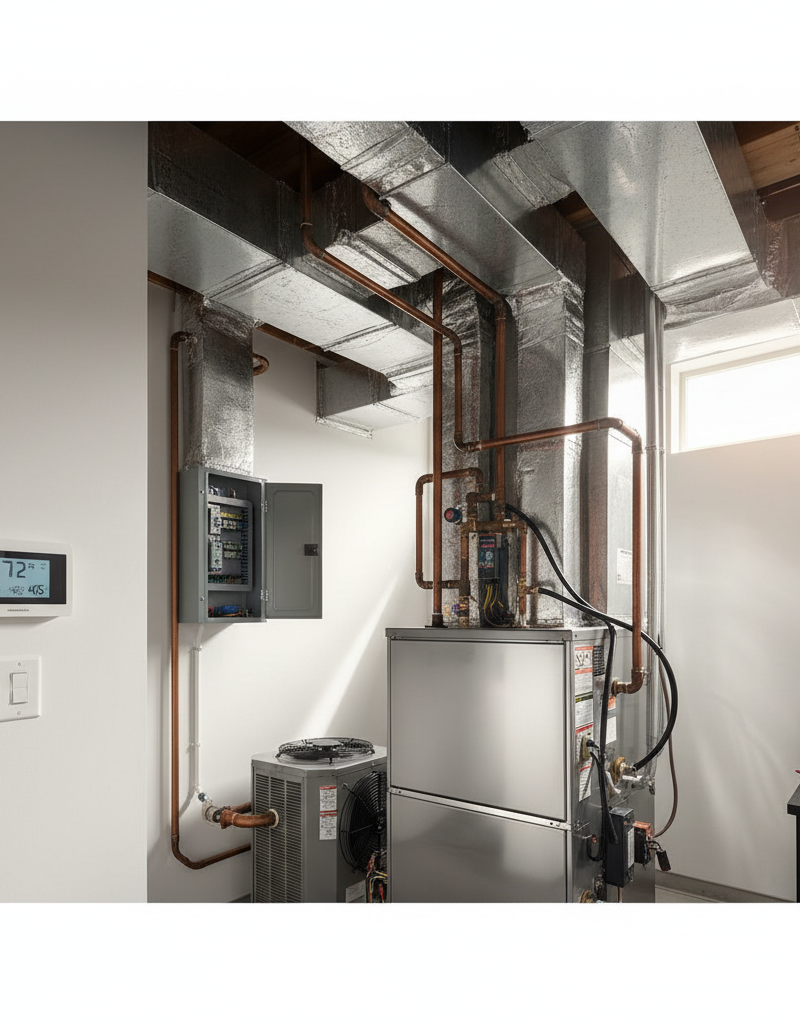
To understand why your heating system might smell, it helps to know how it operates. A typical forced-air heating system works by drawing return air from your home through a filter, passing it over a heat exchanger (in a gas furnace) or electric heating coils (in an electric furnace or heat pump air handler). The heat exchanger or coils generate heat, warming the air. A blower fan then pushes this heated air through a network of sheet metal or flexible ducts and out into your rooms via supply vents.
Crucially, air doesn't just pass through; it interacts with surfaces. Dust, pet dander, pollen, and other airborne particles are constantly pulled into the return ductwork. While the filter catches many contaminants, some inevitably settle on the heat exchanger, blower motor, duct walls, and evaporator coil (even when not in use). When the furnace fires up, especially after a period of dormancy, the sudden heating of these surfaces causes any accumulated dust or organic matter to burn or volatilize, releasing odors.
Beyond simple dust, other elements contribute:
- Moisture: The evaporator coil, used for cooling in summer, collects condensation. If this moisture doesn't drain properly, it can create a damp environment conducive to mold and mildew growth. Even during heating season, residual moisture in the drain pan or ducts can foster these issues.
- Combustion: For gas furnaces, proper combustion is key. A malfunction can lead to incomplete burning, producing smells like rotten eggs (natural gas leak – urgent safety concern) or exhaust fumes.
- Electrical Components: Motors, wiring, and circuit boards can overheat or short circuit, releasing metallic or electrical burning smells.
- External Factors: Animals or insects can enter ducts, especially if there are gaps or wear, and their presence (or demise) can create strong, decaying odors. Household chemicals, paints, or even new carpets can also have lingering volatile organic compounds (VOCs) that get circulated by the HVAC system, creating transient smells.
Step-by-Step Fix
1. Switch Off the Power — Ensure safety before you begin.
Before performing any inspections or maintenance on your furnace or air handler, navigate to your thermostat and switch the system to the 'Off' position. For an added layer of safety, locate the dedicated circuit breaker for your HVAC system in your electrical panel and flip it to the 'Off' position. This prevents accidental startups and protects you from electrical shock.
- Safety Note: Always double-check that the power is off before touching any internal components.
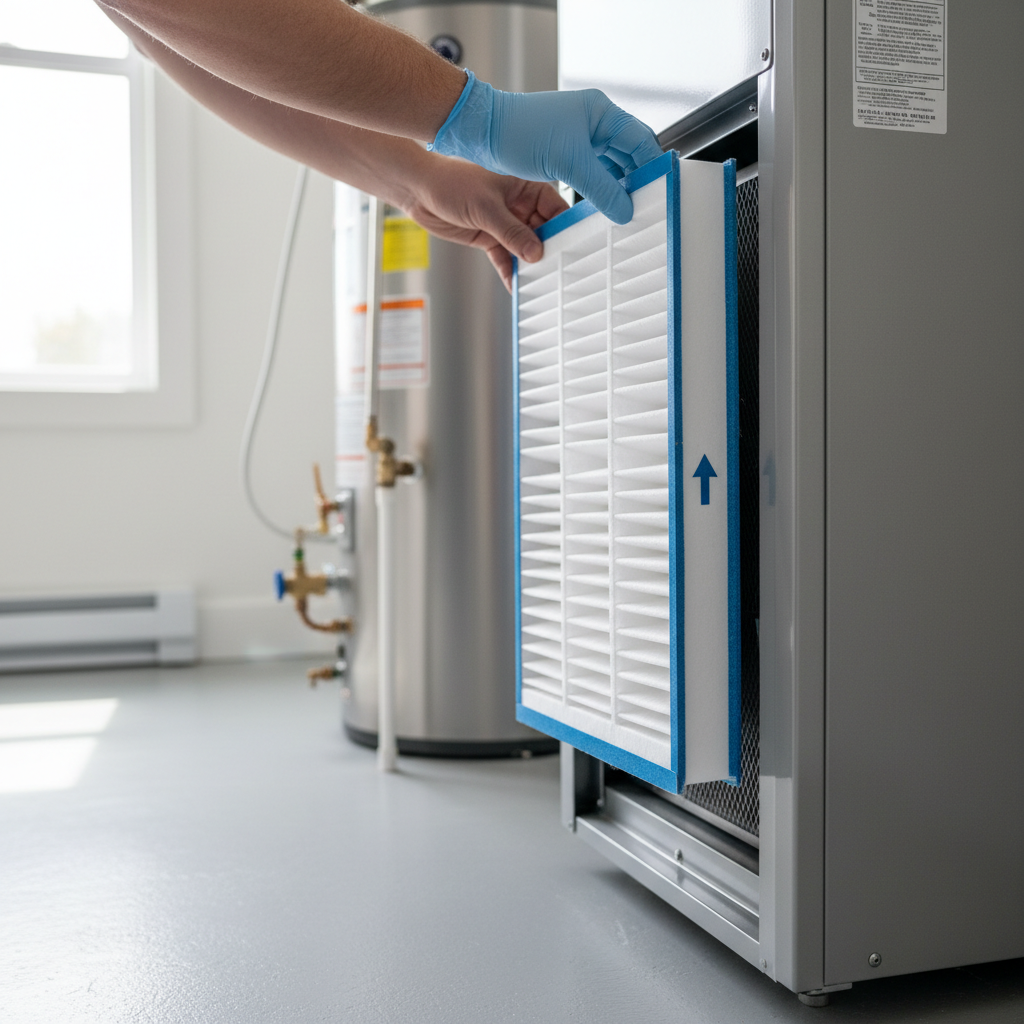
2. Replace the Air Filter — The simplest and most common solution.
Check your furnace filter. A clogged filter is a primary culprit for poor airflow and burning dust smells. Remove the old filter, noting the airflow direction arrow, and replace it with a new, appropriately sized filter. Higher MERV ratings (e.g., MERV 8-11) are good for filtering particles but may restrict airflow more if not changed regularly. Aim to replace filters every 1 to 3 months, more frequently if you have pets or allergies.
- If this doesn't work: A heavily clogged filter might just be one symptom; the system may also need internal cleaning.
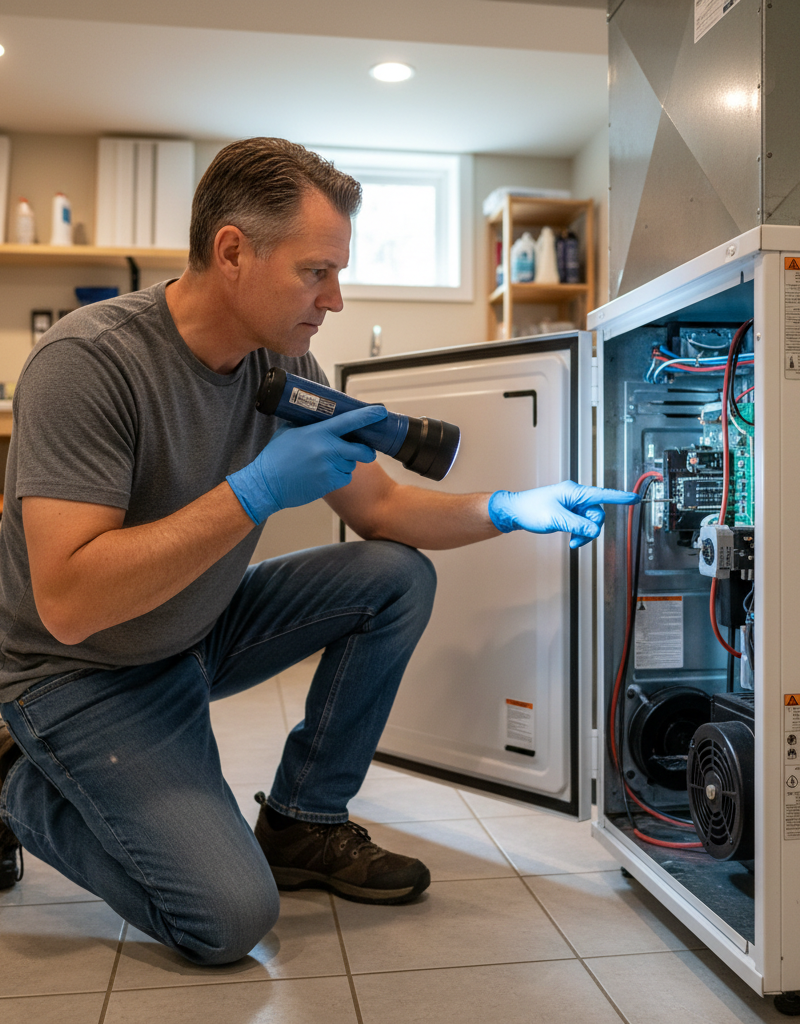
3. Inspect the Blower Motor and Fan — Look for dust buildup.
Locate the blower compartment, usually behind an access panel on your furnace or air handler. Carefully open it (you might need a screwdriver). Shine a flashlight inside and inspect the blower wheel and motor for heavy dust accumulation. Use a soft-bristle brush, a shop-vac with a brush attachment, or a can of compressed air to gently clean visible dust from the fan blades and surrounding areas.
- Tools: Screwdriver, flashlight, shop-vac with brush attachment or compressed air, soft-bristle brush.
4. Clean the Evaporator Coil and Drain Pan — Attack common mold sources.
If your furnace shares an indoor unit with your central AC, it has an evaporator coil. This coil, located above the furnace, can collect moisture and dust, leading to mold. Inspect the coil for visible mold growth or excessive dirt. Also, check the drain pan beneath the coil for standing water or slime. If accessible, you can gently clean the coil with a coil cleaner spray (follow product instructions) and clear the drain pan with a mixture of bleach and water (1 part bleach to 10 parts water) or specialized condensate pan tablets. Ensure the condensate drain line isn't clogged.
- If you see extensive mold: Consider calling an HVAC professional, as deep cleaning may require specialized equipment and expertise.
5. Examine Ductwork for Intrusions or Damage — Rodents, mold, or leaks.
Carefully inspect accessible sections of your ductwork, especially near the furnace and return air vents. Look for any visible signs of rodents (droppings, nesting materials), insects, or mold growth. Check for gaps or disconnected sections where outside air, moisture, or pests could enter. While extensive duct cleaning is often debated, if you suspect an infestation or significant mold, a professional duct cleaning service may be necessary. Seal minor gaps with mastic sealant or foil tape.
- Warning: Never attempt to handle live animals in ductwork. Call pest control.
6. Check for Blocked Vents or Returns — Ensure proper airflow.
Walk through your home and ensure all supply registers (where air comes out) and return air grilles (where air goes in) are clear of obstructions. Furniture, rugs, or drapes can partially or completely block airflow, leading to stagnant air pockets and potential overheating of the furnace, which can intensify odors. Clear any blockages.
- Tip: Good airflow is critical for both heating efficiency and air quality.
7. Test Fire the Furnace and Observe — Reintroduce power and listen/smell.
Once you've completed your cleaning and inspections, restore power to the furnace at the circuit breaker and set your thermostat to 'Heat.' Allow the system to run for a cycle. Pay close attention to any remaining odors. A faint 'burning dust' smell for the first 10-20 minutes is common after dormancy, but it should dissipate. If strong, persistent, or unusual smells (rotten eggs, burning plastic/electrical) continue, shut down the system immediately.
- Safety Note: If you smell gas (rotten eggs) at any point, evacuate your home immediately and call your gas provider and emergency services from a safe distance.
Common Causes
- Dust Buildup on Heat Exchanger/Elements: The most common cause, especially at the seasonal startup. Dust accumulates during the off-season and burns off when the heat kicks on, producing a 'burning dust' smell. This usually dissipates within an hour.
- Clogged Air Filter: A dirty filter restricts airflow, forcing the system to work harder and potentially causing components to overheat slightly, exacerbating dusty smells. It also allows more dust to bypass the filter and settle on internal components.
- Mold/Mildew Growth: In the evaporator coil, drain pan, or humid sections of ductwork. This creates a musty, stale, or locker-room smell, often indicative of moisture problems.
- Animal Activity/Decomposition: Rodents, birds, or insects can build nests or die within ductwork, vents, or the furnace cabinet, leading to strong, foul, decaying odors that can be distributed throughout the home by the blower.
- Combustion Issues (Gas Furnace): A cracked heat exchanger or improper gas combustion can release carbon monoxide (odorless, but can be accompanied by exhaust smells) or unburnt natural gas (rotten eggs). This is extremely dangerous and requires immediate professional intervention.
- Electrical Problems: Overheating wiring, motors, or circuit boards can produce a metallic, burning plastic, or 'fishy' smell. This indicates an electrical fault and a potential fire hazard.
- Stagnant Water in Condensate Drain: If the AC condensate pan or drain line retains water for extended periods, it becomes a breeding ground for bacteria and mold, leading to musty odors even when only the heat is running and circulating air over the pan.
- New Furnace/Component 'Break-In' Smell: A new furnace or recently replaced components may emit a faint chemical or metallic smell for the first few hours of operation as manufacturing oils and coatings burn off. This should be temporary.
Common Mistakes
- Ignoring the Smell: Assuming every smell is 'just dust burning off.' While often true, persistent or unusual odors (rotten eggs, burning plastic, strong musty smells) are signals the system needs attention.
- Not Changing Air Filters Regularly: A dirty filter is the number one cause of reduced efficiency and many odor issues. Skipping changes allows more contaminants into the system and strains the blower.
- Overlooking the Condensate Pan: Focusing only on the furnace itself and forgetting that the evaporator coil and its drain pan (part of your AC) are often located directly above the furnace and can be a source of moldy smells.
- Using Harsh Cleaners in Ducts: Spraying household cleaners or air fresheners directly into vents or ducts can introduce new chemicals into the air and potentially damage internal components or linings.
- Attempting Complex Electrical Repairs: If you suspect an electrical burning smell, do not attempt to diagnose or fix it yourself. Electrical issues can be dangerous and should be handled by a licensed HVAC technician or electrician.
- Blocking Return Air Vents: Covering return air grilles with furniture or rugs can restrict airflow to the furnace, causing it to overheat and potentially leading to more pronounced burning smells or even system damage.
Cost & Time Breakdown
| Task | DIY Cost | Pro Cost (Hourly) | Time |
|---|---|---|---|
| Replace Air Filter | $15–$40 | $0 (if part of service) | 2–5 minutes |
| Clean Blower/Fan & Coils (DIY) | $0–$25 | N/A | 30–60 minutes |
| HVAC System Tune-Up & Cleaning | N/A | $100–$250 | 1–2 hours |
| Duct Cleaning (Professional) | N/A | $300–$700 | 3–8 hours |
| Minor Duct Sealing (DIY) | $10–$30 | N/A | 30–60 minutes |
| Animal Removal/Extermination | N/A | $150–$400+ | Varies |
Tips & Prevention
- Regular Filter Changes: As a golden rule, change your HVAC air filter every 1 to 3 months. This is the single most effective way to prevent dust buildup and improve air quality.
- Annual HVAC Tune-Up: Schedule a professional HVAC inspection and cleaning every fall before the heating season. Technicians can spot potential issues, clean internal components thoroughly, and ensure safe operation.
- Keep Vents Unobstructed: Ensure all supply and return air vents are clear of furniture, drapes, and other obstructions to maintain proper airflow throughout your home.
- Address Moisture Issues Promptly: Repair any leaks in your plumbing or roof immediately to prevent mold growth that can migrate to your ductwork. Ensure your AC condensate drain is flowing freely.
- Seal Duct Leaks: Periodically inspect visible ductwork for gaps and leaks, especially in basements or attics. Seal them with mastic sealant or foil tape to prevent dust, debris, and pests from entering the system.
- Consider a UV Light: For persistent mold issues in the evaporator coil, an HVAC professional can install a UV-C light in your air handler to continuously sterilize the coil surface, preventing mold and bacteria growth.
When to Call a Professional
While many odor issues can be resolved with DIY cleaning and filter changes, certain smells and situations warrant immediate professional attention. If you detect a strong 'rotten egg' smell, it indicates a natural gas leak, which is extremely dangerous – evacuate your home, call your gas provider and emergency services immediately. A persistent burning plastic, metallic, or 'fishy' smell suggests an electrical problem that could lead to a fire; shut down the system and call a licensed HVAC technician. If musty odors persist after cleaning and filter replacement, you might have extensive mold growth within your ductwork or air handler that requires specialized professional cleaning and moisture remediation. Any unusual grinding, banging, or squealing noises accompanied by odors also point to mechanical failure. Additionally, if you suspect an animal has died within your ductwork or furnace, a professional can safely remove the carcass and clean/sanitize the area. Don't hesitate to call if you're unsure about the source or safety of an odor; your family's health and safety are paramount.
Related Articles
Keep troubleshooting with these hand-picked guides from FixlyGuide:
- The #1 Reason Your AC Blows Warm Air (And It's Not What You Think) — A dirty air filter is often the overlooked culprit behind an air conditioner blowing warm air, hindering its ability to cool your home effi…
- The Secret Reason Your AC Isn't Drying Your Air (And What to Check First) — Your AC should cool and dehumidify, but if your house feels muggy, there's a specific, often overlooked culprit preventing it from doing it…
- The #1 Mistake Homeowners Make When Heat Pumps Stop Heating in Winter — Discover the crucial mistake most homeowners make when their heat pump struggles in cold weather and how to fix it, potentially saving hund…
- The One Part That Fails When Your Freezer Works But Fridge Doesn’t ($30 Fix) — If your freezer works but the refrigerator isn't cooling, the most common culprit is a faulty evaporator fan motor or a a clogged defrost d…
- The Hidden Reason Your AC Freezes — And Why Most Homeowners Get It Wrong — Your outdoor AC unit freezing solid is a common, frustrating problem often caused by airflow issues or low refrigerant, leading to system i…
- The Nasty Truth: Is Your Bathroom Sink's Stink Coming From a Hidden Biofilm? — A persistent, foul odor from your bathroom sink drain often signals a hidden biofilm buildup, not just a simple clog, demanding specific cl…
Should you do this yourself?
Answer five quick questions before you start. Safety outranks savings every time.
Your experience with work like this
How high do you have to work?
Does the job involve any of these?
Will it need a permit?
Specialty tools
Free and instant. Educational guidance only — not a quote, inspection, or professional diagnosis.
Estimate your own project cost
National averages are a starting point. Enter your details for a range that fits your house.
HVAC replacement cost
- Equipment$2,200 – $3,800
- Installation labor$1,200 – $2,500
Always insist on a Manual J load calculation — sq-ft sizing is only a rough check. Federal heat-pump rebates may reduce cost significantly.
Educational estimate only — always confirm with written local bids.
What should this project cost?
Enter your project details for a realistic cost range before you call anyone.
Service calls and common repairs run $150–$900; full system replacement typically $6,000–$12,000.
- Regional adjustment
- National average
- Labor share (typical)
- ~$1,935
- Quotes to collect
- 3 written estimates
Educational estimate based on national averages — not a binding quote. Always confirm with written local estimates.
Fixly Project Decision Box
- DIY difficulty
- Advanced
- Estimated time
- Homeowner checks 20–30 minutes
- Cost level
- Moderate
Main tools / materials
- Clean air filter
- Garden hose for condenser coils
- Shop vac for the condensate line
When to stop and call a pro
- Burning smell, smoke, or a tripping breaker
- Refrigerant lines iced over or hissing
- Any work inside the sealed refrigerant circuit (EPA-licensed only)
- Gas smell near a furnace — leave and call the utility
Need professional help?
Find an HVAC Pro Near YouBefore you start
Check the difficulty, permits, and safety risk — then decide whether to call a pro.
Free, no signup required. Estimates are educational guidance, not a quote or an inspection.
Frequently asked questions
Why does my house smell like burning dust when the heat turns on?+
This is very common, especially at the beginning of the heating season. Dust accumulates on the heat exchanger and heating elements during the dormant months. When the furnace activates, this dust burns off, creating a noticeable odor that usually dissipates within an hour or two.
What if the smell from my vents is musty or moldy?+
A musty or moldy smell typically indicates moisture accumulation and mold or mildew growth within your HVAC system, likely on the evaporator coil, in the condensate drain pan, or in the ductwork. Check and clean your AC's drain pan and consider professional duct cleaning if the problem persists.
Should I be worried if I smell burning plastic or chemicals?+
Yes, immediately. A burning plastic, metallic, or chemical smell can indicate an overheating electrical component, such as a motor, wiring, or circuit board, which is a fire hazard. Shut off your furnace at the thermostat and circuit breaker and call a licensed HVAC professional immediately.
Can animals cause odors in my heating system?+
Absolutely. Rodents, birds, or other small animals can enter ductwork or the furnace cabinet, especially if there are gaps or damage. Their presence, or if they die within the system, can cause strong, decaying odors to be distributed throughout your home. You might need professional animal removal and cleaning.
Discussion
Loading comments…