
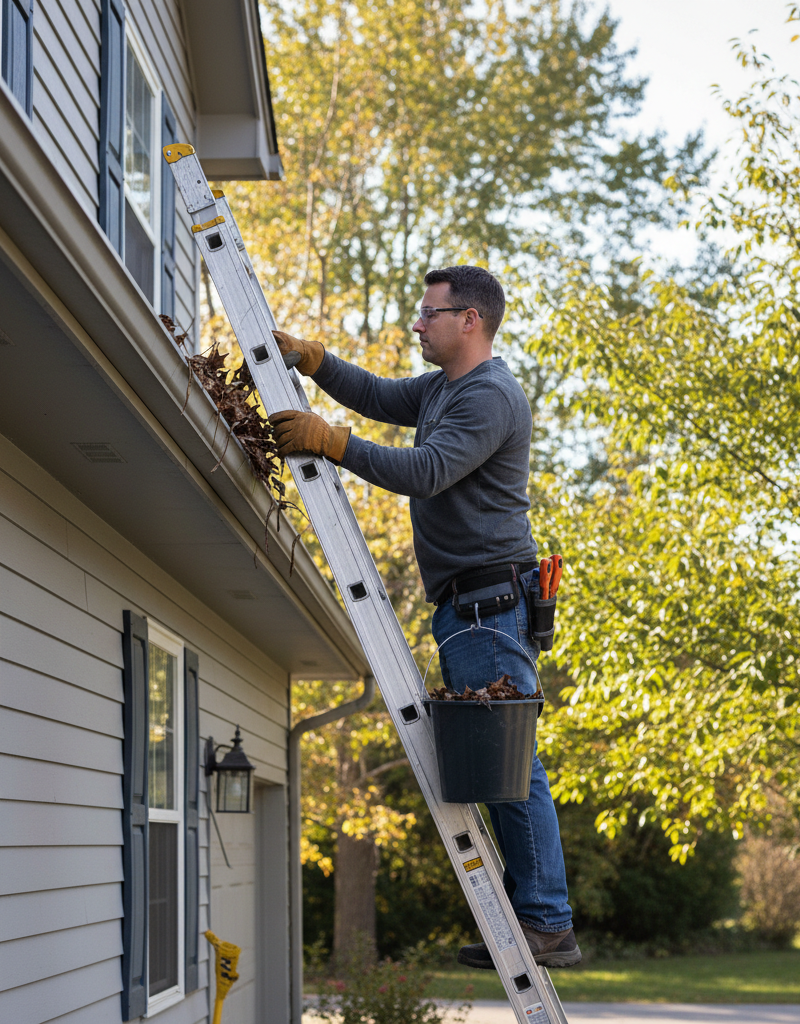
- Tools: Work gloves, safety glasses, sturdy extension ladder (check load rating), possibly a ladder stabilizer or stand-off.
- Safety: Always have someone spot you when using a ladder. Position the ladder on firm, level ground. Ensure the ladder extends at least three feet above the gutter line. Never lean too far to the side; move the ladder frequently.
- Pro Tip: Choose a dry, calm day. Wet leaves are slippery, and wind can make ladder work dangerous.
HVAC · High energy usage
| Project category | HVAC |
|---|---|
| Problem type | High energy usage |
| Trade required | HVAC |
| Urgency | Planned project |
| Safety risk | Low safety risk |
| DIY suitability | DIY for experienced homeowners |
| Cost category | High cost |
| Typical timeline | Assessment within weeks; replacement planned off-season |
| Contractor type | Licensed HVAC technician |
Repair option
Duct sealing, insulation, and a tune-up before touching the equipment.
Replacement option
High-efficiency replacement sized by a load calculation, not a rule of thumb.
Common causes
- Aging, low-efficiency equipment
- Leaking ducts losing conditioned air
- Insufficient attic insulation
- Oversized system short-cycling
Relevant tools:project cost estimatorrepair or replace
Published June 10, 2026Last updated August 18, 2026
Tools & materials you'll need
Affiliate links- AmazonSturdy extension ladderEnsure it's rated for your weight and extends at least 3 feet above the gutter.
- AmazonGutter scoop or small hand trowel
- AmazonGarden hose with spray nozzle
- AmazonPlumber's snake or downspout clean-out toolIf downspouts are severely clogged
- AmazonAdjustable wrench or screwdriverTo tighten loose hangers/fasteners
As an Amazon Associate FixlyGuide earns from qualifying purchases — at no extra cost to you. Prices and availability are accurate as of publication and subject to change.
Quick Answer
The most significant gutter mistake homeowners make is delaying or skipping regular cleaning. This oversight allows leaves, twigs, and other debris to accumulate, forming clogs that prevent rainwater from draining properly. Instead of flowing through the downspouts, water overflows the gutters, leading to a cascade of problems including rotten fascia boards, damaged soffits, compromised roof shingles, eroded landscaping, and even foundation issues. Consistent biannual cleaning, ideally in late fall after leaves have dropped and again in early spring, is crucial for preventing these costly repairs.
The Problem
You've probably seen it: water cascading over the side of a gutter like a miniature waterfall during a heavy rain. While it might seem like a minor inconvenience, this is a clear sign of a clogged gutter system, and it's a direct threat to your home's structural integrity. When gutters are blocked, rainwater has nowhere to go but to spill over the sides, running down your home's exterior walls, saturating the ground around the foundation, and, most critically, backing up onto your roofline.
This persistent dampness at the roof's edge creates a host of problems. It can lead to ice dams in colder climates, forcing melting snow under your shingles. It can rot the fascia boards that support your gutters, cause soffit damage, and stain or damage siding. Over time, consistent water exposure can even compromise the integrity of your roof sheathing and rafters, leading to expensive structural repairs. The simple truth is that neglected gutters are a direct pipeline to severe, preventable roof and foundation damage, often costing thousands of dollars to fix.
How It Works
Your home's gutter system is a deceptively simple yet critical component designed to manage rainwater runoff. When rain falls on your roof, gravity channels it down the sloped surface into the gutters. These U-shaped troughs, typically made of aluminum, copper, or vinyl, are installed along the edge of your roofline and are pitched at a slight angle—usually about 1/4 inch per 10 feet of length—towards the downspouts. This pitch ensures that water flows efficiently towards the openings.
Downspouts are vertical pipes connected to the gutters that carry the collected water safely away from your home's foundation. Often, downspouts terminate with extensions that direct water several feet away, preventing it from pooling around the foundation. The entire system works in concert to protect your roof, siding, windows, doors, and foundation from water damage by diverting thousands of gallons of water during a single storm.
When leaves, twigs, shingle grit, and other debris accumulate in the gutters, they disrupt this carefully engineered flow. The debris acts like a dam, trapping water. Without a clear path to the downspouts, the standing water can seep under roof shingles, rot fascia boards, and accelerate deterioration of the gutter material itself. During winter, standing water can freeze and expand, forcing gutters away from the fascia and exacerbating damage, a phenomenon known as an ice dam. This constant exposure to moisture at the roofline is what ultimately leads to wood rot, mold growth, and compromised structural components, making regular cleaning an indispensable part of home maintenance.
Step-by-Step Fix
1. Gear Up for Safety — Before you even touch a ladder, ensure you have the right safety gear. * Tools: Work gloves, safety glasses, sturdy extension ladder (check load rating), possibly a ladder stabilizer or stand-off. * Safety: Always have someone spot you when using a ladder. Position the ladder on firm, level ground. Ensure the ladder extends at least three feet above the gutter line. Never lean too far to the side; move the ladder frequently. * Pro Tip: Choose a dry, calm day. Wet leaves are slippery, and wind can make ladder work dangerous.
2. Clear Large Debris by Hand — Start from one end of the gutter and work your way around the house. * Process: While wearing heavy-duty gloves, reach into the gutter and scoop out the bulk of wet leaves, twigs, and other large debris. Place the debris into a bucket attached to your ladder or toss it onto a tarp spread out on the ground below for easier cleanup. * Efficiency: Focus on removing the main obstructions first. This makes the finer cleaning easier.
3. Address Smaller Debris and Sludge — After removing the larger pieces, you'll be left with smaller grit and sludge. * Tools: A small hand trowel, gutter scoop, or even a strong garden hose with a spray nozzle. * Technique: Use your chosen tool to scrape out the embedded dirt and shingle grit. For stubborn grime, a high-pressure spray from a garden hose can help flush it out towards the downspouts. * Note: If using a hose, prepare for some mess below.
4. Flush the Gutters with Water — This step is vital for checking downspout function and removing remaining fine debris. * Process: Starting from the highest point of the gutter system (away from a downspout), use a garden hose to run water through the gutter. Observe if the water flows freely towards and down the downspouts. * Diagnostic: If water pools or overflows at any point, that section is not pitched correctly or still has a blockage. Pay close attention to how quickly water drains down the downspouts.
5. Clear Downspout Clogs — If water isn't draining from a downspout, it's likely clogged. * Initial Check: First, try flushing water directly down the downspout opening from the top using a strong hose nozzle. * Stubborn Clogs: If the clog persists, gently tap on the sides of the downspout to loosen debris. For more resistant clogs, you may need a plumber's snake or a specialized downspout clean-out tool. * Last Resort: If a clog is still present and accessible, you might carefully detach the bottom section of the downspout to remove the obstruction directly. * Safety: Never use excessive force, as you could damage the downspout joints or the gutter itself.
6. Inspect for Damage and Leaks — Once clean, the gutters are ready for a thorough check. * Visual Check: Look for rust spots, cracks, holes, or separated seams. Check for sagging sections where water might collect. * Joints & Seams: Pay close attention to the joints and connections, as these are common points for leaks. * Fasteners: Ensure all gutter hangers and fasteners are securely attached to the fascia board. Re-secure any loose ones with appropriate screws or lag bolts.
7. Repair Minor Issues — Small problems can become big problems quickly if left unaddressed. * Small Holes/Cracks: Use a tube of gutter sealant (compatible with your gutter material) to seal small holes or cracks. * Loose Seams: Apply sealant along the inside of loose seams. * Sagging Sections: If a section of gutter is sagging, it likely needs additional hangers or the existing hangers need to be tightened or repositioned to restore the proper pitch. Use a level to ensure adequate slope towards the downspout.
8. Consider Gutter Guards (Optional, But Recommended) — Gutter guards can significantly reduce the frequency of cleaning. * Types: There are various types: mesh screens, reverse curve systems, and fine micro-mesh. Each has pros and cons regarding effectiveness and cost. * Installation: While some require professional installation, many types are DIY-friendly and simply clip or screw onto the gutter lip. * Maintenance: Even with guards, a periodic check and occasional cleaning might still be necessary, as fine debris can sometimes accumulate on top of or within the guards themselves.
Common Causes
- Deciduous Trees: The most obvious culprit. Leaves, seeds, and small twigs from nearby trees are the primary source of gutter clogs, especially in fall and spring.
- Shingle Granules: As asphalt shingles age, they shed their protective granules. These small, gritty particles wash into gutters and accumulate, forming a sludge that impedes water flow.
- Nesting Animals and Pests: Birds, squirrels, and insects often build nests in gutters or downspouts, creating significant blockages that can be surprisingly tough to dislodge.
- Poor Gutter Pitch: If gutters aren't installed with the correct slope (a slight downward tilt towards the downspouts), water will sit and allow debris to settle and accumulate more quickly, even forming stagnant pools.
- Infrequent Cleaning: This is the overarching cause. Without a consistent cleaning schedule (at least twice a year), debris inevitably builds up.
- Damaged or Missing Gutter Guards: While often helpful, damaged or poorly installed gutter guards can sometimes trap debris more effectively, or simply fail to keep it out altogether.
Common Mistakes
- Using the Wrong Ladder (or No Ladder Spotter): Many DIYers use unsteady ladders or work alone, risking serious falls. Always use a stable, appropriately sized ladder and have someone spot you.
- Ignoring Downspouts: Cleaning only the horizontal gutter troughs but neglecting the downspouts is a common oversight. Clogged downspouts will still cause water to back up and overflow.
- Delaying Cleaning Until a Problem is Obvious: Waiting until water is cascading over the gutters during a rainstorm means damage might already be occurring. Proactive, seasonal cleaning is key.
- Not Inspecting After Cleaning: Simply removing debris isn't enough. After cleaning, flush the system to check for leaks, proper draining, and secure connections.
- Applying Sealant Over Wet Surfaces: Gutter sealants require clean, dry surfaces for proper adhesion. Applying them to wet, dirty, or rusted areas will result in a temporary fix that quickly fails.
- Improper Tool Use: Using a pressure washer too aggressively can damage shingles or warp gutters. Similarly, prying at stubborn clogs with sharp objects can puncture the gutter material.
Cost & Time Breakdown
| Task | DIY cost | Pro cost | Time |
|---|---|---|---|
| Gutter Cleaning (basic) | $0–$20 | $100–$250 | 1–3 hours |
| Downspout Unclogging | $0–$30 | $50–$100 | 30–60 minutes |
| Gutter Sealant/Minor Patch | $10–$25 | Included in svc | 15–30 minutes |
| Hanger/Fastener Repair | $5–$15 | Included in svc | 15–30 minutes |
| Gutter Guard Installation | $100–$500+ | $500–$2,000+ | 2–6 hours (DIY) |
Tips & Prevention
- Seasonal Cleaning Schedule: Aim for at least twice a year. Late fall (after all leaves have fallen) is essential, and early spring is crucial to clear winter debris and prepare for spring rains. In heavily treed areas, you might need more frequent checks.
- Install Gutter Guards: While not entirely maintenance-free, quality gutter guards (like micro-mesh or reverse curve designs) can significantly reduce the frequency of full cleanings, making the job much easier when it is required.
- Trim Nearby Trees: Keep tree branches trimmed back at least 6-10 feet from your roofline. This reduces the amount of leaves, twigs, and sap falling directly into your gutters.
- Regular Ground-Level Checks: After heavy storms, take a few minutes to walk around your home. Look for overflowing gutters, detached downspouts, or signs of water pooling. Addressing small issues quickly prevents them from escalating.
- Extend Downspouts: Ensure your downspout extensions direct water at least 5-10 feet away from your foundation. Consider flexible extensions or buried drainage pipes for optimal water diversion.
- Inspect Fascia & Soffits Annually: While cleaning, specifically check the fascia board (the trim behind the gutter) and soffits (the underside of the eaves) for any signs of water stains, rot, or pest activity. Early detection can save substantial repair costs.
When to Call a Professional
While basic gutter cleaning is a very accessible DIY task, there are specific situations where calling a professional is the safest and smartest choice. If your home has multiple stories, a steep roof pitch, or difficult-to-access gutter sections that require specialized equipment or advanced ladder work, a professional is highly recommended to prevent injury. If you notice significant structural damage to the gutters themselves, such as large sections detaching from the fascia, widespread rust, large holes, or improperly pitched sections that chronically hold water, a professional gutter repair or replacement specialist can assess the best course of action. Lastly, if you suspect extensive wood rot in the fascia or soffits, extensive mold growth, or damage to your roof's flashing, a professional will have the expertise to diagnose the full extent of the issue and implement appropriate, long-lasting repairs. Never jeopardize your safety or risk further damage to your home by attempting repairs beyond your comfort or skill level.
Related Articles
Keep troubleshooting with these hand-picked guides from FixlyGuide:
- The #1 Gutter Mistake That Leads to $10,000 Roof Damage — Learn the most common gutter-cleaning mistake homeowners make and how to properly maintain your gutters to prevent expensive roof damage.
- The #1 Mistake Homeowners Make Cleaning Gutters (And How to Fix It) — Discover the biggest gutter cleaning mistake that leads to costly roof damage and learn the right way to protect your home.
- The #1 HVAC Mistake Costing You Hundreds (And How Often to Really Change Your Filter) — Discover the crucial mistake most homeowners make with HVAC filters, leading to higher energy bills, poor air quality, and system damage. L…
- The #1 Mistake Homeowners Make With HVAC Filters (And How Often to Really Change Them) — Discover the crucial mistake most homeowners make with HVAC filters and the specific schedule you should follow to avoid costly HVAC issues…
- The #1 Mistake Homeowners Make When Their AC Won't Turn On (And the Easy Fix) — Learn the most common reason your AC isn't turning on and how to fix it with simple troubleshooting steps, potentially saving a costly serv…
- The #1 Gutter Mistake That Causes Overflow (And How to Fix It in 20 Minutes) — Overflowing gutters during heavy rain are usually caused by a readily fixable clog, often due to a common cleaning mistake.
Should you do this yourself?
Answer five quick questions before you start. Safety outranks savings every time.
Your experience with work like this
How high do you have to work?
Does the job involve any of these?
Will it need a permit?
Specialty tools
Free and instant. Educational guidance only — not a quote, inspection, or professional diagnosis.
Questions to ask before you sign
Ask every contractor the same questions and the cheapest bid stops looking cheapest. Check them off as you go — your progress is saved on this device.
Free, no signup. Bring this to every walkthrough so you compare bids on the same terms.
Get help with your roof now
Stay off the roof. These free tools help you protect the house and reach the right professional fast.
- Emergency repair checklistThe first steps that limit damage before a pro arrives.Open
- Repair or replace your roof?Answer 10 questions about age, leaks, and damage to get a clear next step.Open
- Get local estimatesSend one request and compare written estimates from vetted pros.Open
Free, no signup required. Estimates are educational guidance, not a quote or an inspection.
Frequently asked questions
How often should I clean my gutters?+
Most experts recommend cleaning your gutters at least twice a year: once in late fall after all the leaves have fallen, and again in early spring to clear any winter debris. Homes in heavily treed areas may require more frequent cleaning, potentially three to four times a year.
What happens if I don't clean my gutters?+
Neglecting gutter cleaning leads to several serious problems: water overflowing and damaging fascia boards, soffits, and siding; water backing up under roof shingles, causing leaks and wood rot; accelerated erosion of landscaping; and pooling water around your foundation, potentially leading to cracks and basement flooding.
Can gutter guards eliminate the need for cleaning?+
Gutter guards significantly reduce the frequency of cleaning by preventing large debris from entering the gutters. However, they don't entirely eliminate maintenance. Fine grit, shingle granules, and small seeds can still accumulate on top of or through some guards, requiring occasional checks and light cleaning.
Is it safe to clean gutters myself?+
Cleaning gutters can be safe if done correctly. Always use a sturdy, stable ladder on level ground, have a spotter, and wear appropriate safety gear like gloves and eye protection. Never overreach or work in windy or wet conditions. If your home is multi-story or has a steep roof, consider hiring a professional for safety.
How much does professional gutter cleaning cost?+
The cost for professional gutter cleaning typically ranges from $100 to $250 for an average-sized single-story home, but can go higher for larger homes, multiple stories, or heavily clogged systems. This usually includes clearing all debris and flushing the downspouts.


Discussion
Loading comments…