- Location – The air filter is typically located where the return air duct meets the furnace, often in a slot on the side or bottom of the furnace unit. Some systems have return air filters located in the ceiling or wall.
- Inspection – Pull out the existing filter. Hold it up to a light source. If you can't see light through it, or if it's visibly caked with dust and debris, it needs to be replaced.
- If this doesn't work: A severely dirty filter can cause the blower motor to work harder, potentially overheating components and causing a burning smell. Replacing it improves airflow and reduces strain.
- Safety Note: Turn off the furnace at the thermostat and the dedicated electrical switch (often on a wall near the furnace) before opening any panels or changing filters.
HVAC · High energy usage
| Project category | HVAC |
|---|---|
| Problem type | High energy usage |
| Trade required | HVAC |
| Urgency | Planned project |
| Safety risk | Low safety risk |
| DIY suitability | DIY for experienced homeowners |
| Cost category | High cost |
| Typical timeline | Assessment within weeks; replacement planned off-season |
| Contractor type | Licensed HVAC technician |
Repair option
Duct sealing, insulation, and a tune-up before touching the equipment.
Replacement option
High-efficiency replacement sized by a load calculation, not a rule of thumb.
Common causes
- Aging, low-efficiency equipment
- Leaking ducts losing conditioned air
- Insufficient attic insulation
- Oversized system short-cycling
Relevant tools:project cost estimatorrepair or replace
Published July 21, 2026Last updated August 17, 2026
Tools & materials you'll need
Affiliate links- AmazonNew HVAC air filter1
As an Amazon Associate FixlyGuide earns from qualifying purchases — at no extra cost to you. Prices and availability are accurate as of publication and subject to change.
Quick Answer
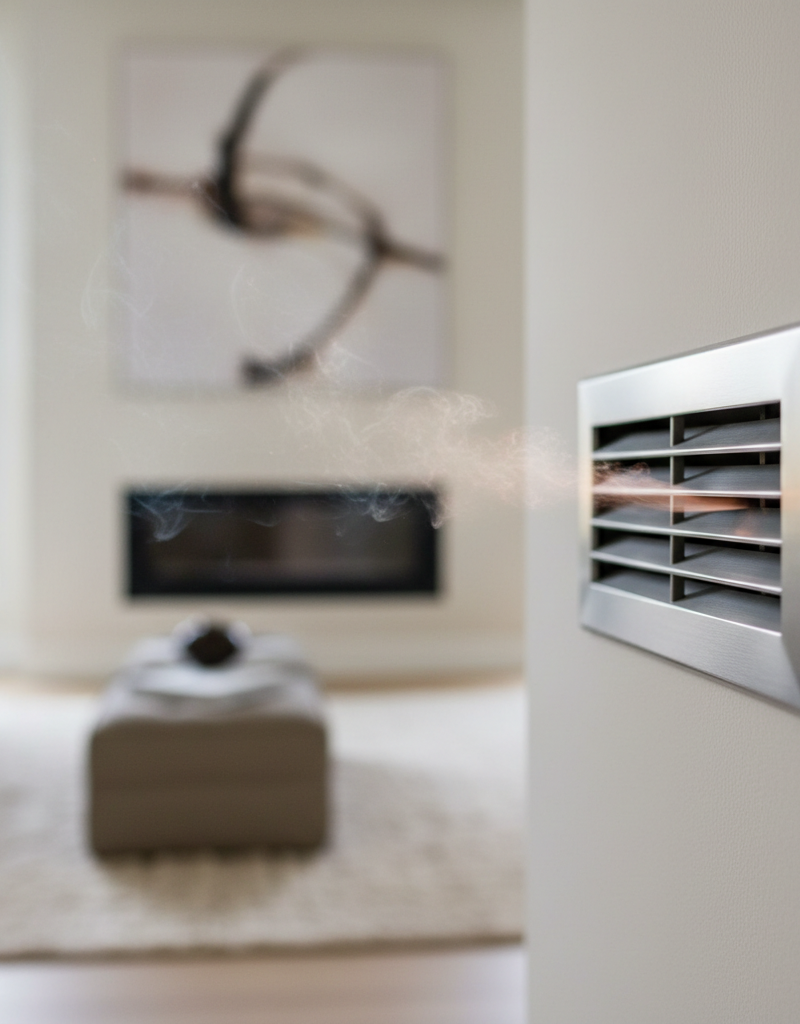
That burning smell from your vents when the heat first turns on is typically dust, pet dander, or other airborne particles burning off from the heat exchanger and burner assembly. As your furnace sits dormant, especially in warmer months, these particles settle on the internal components. When the furnace fires up, the sudden heat incinerates them, creating that distinct odor. While usually harmless and temporary, it's a good prompt to check your furnace filter and ensure the area around your furnace is clean and unobstructed to prevent fire hazards and maintain air quality.
The Problem
You flip on your heat for the first time in months, or even just after a day of no use, and a distinct, often alarming, burning smell wafts through your home. It's usually described as dusty, electrical, or even a bit metallic. This smell can range from a faint whiff to a pungent odor that makes you wonder if your furnace is about to burst into flames. While often a benign occurrence, it's a common concern for homeowners, especially as temperatures drop and heating systems are pressed back into service. Understanding the underlying cause is key to differentiating a normal, albeit unpleasant, event from a serious issue that demands immediate attention.
How It Works
Your furnace operates by drawing in cool return air, passing it over a heat exchanger where it's warmed by combustion gasses, and then forcing this heated air through your ductwork and out your supply vents. The combustion process itself takes place within a sealed chamber, with flames from the burners heating the heat exchanger. Many furnaces also include an igniter, a component that gets extremely hot to light the gas, and an electric blower motor to circulate air.
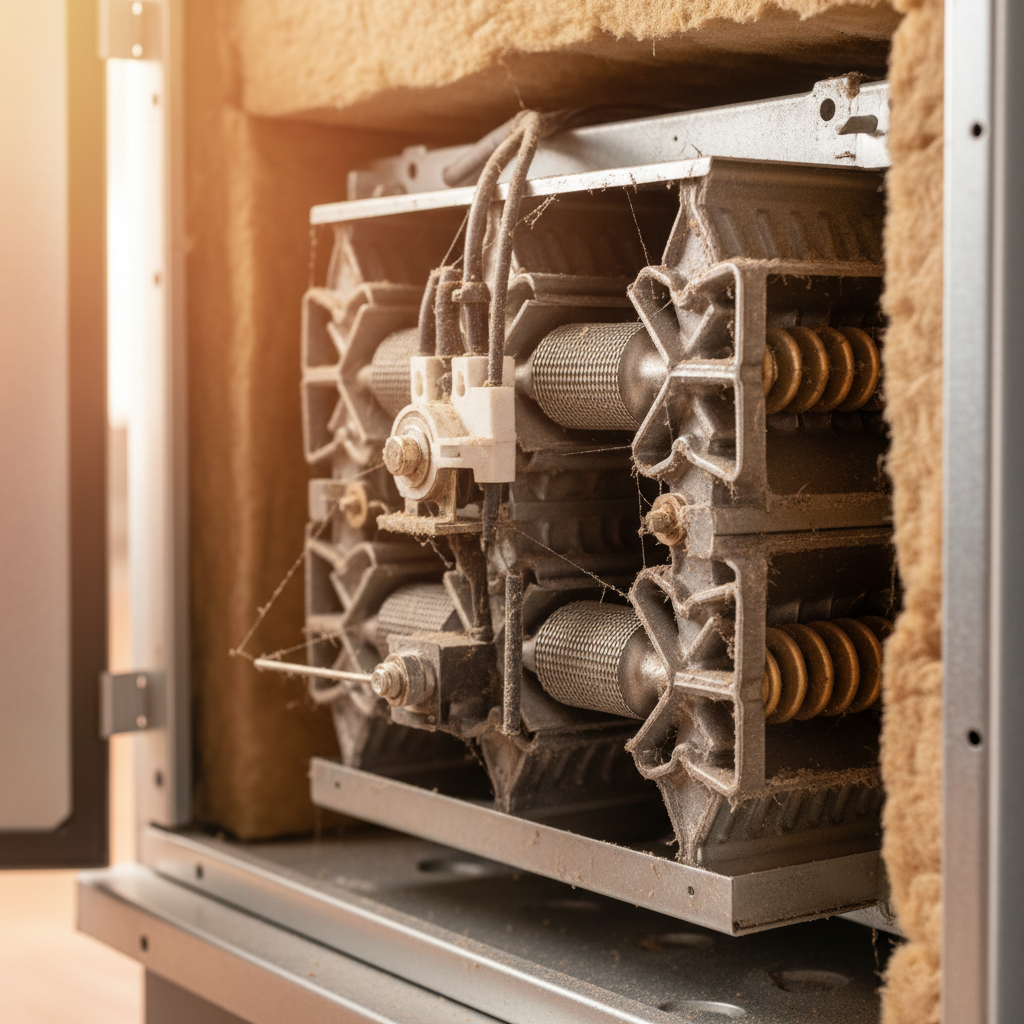
During the long periods of inactivity, especially in spring and summer, dust, pet hair, textile fibers, and other microscopic debris naturally accumulate within your furnace. This dust settles on the surface of the heat exchanger, the burners, and even the blower motor housing. When you first activate the heating cycle, the furnace components rapidly heat up. This sudden temperature increase causes these accumulated dust particles to burn off. Think of it like a toaster burning off crumbs from the last use – it produces a smell, but it's not a sign of a major malfunction. The smell is then carried through your ductwork along with the heated air. Factors like humidity, fan speed, and the amount of dust can influence the intensity and duration of the odor. Older furnaces or those in dusty environments might exhibit a stronger initial smell.
Step-by-Step Fix
1. Understand the 'First Fire-Up' Smell
- Your furnace will likely emit a burning dust smell the first time it kicks on after a long dormant period. This is normal as dust accumulated over months burns off. If the smell dissipates within an hour or two, it's usually nothing to worry about.
2. Check and Replace Your Air Filter
- Location – The air filter is typically located where the return air duct meets the furnace, often in a slot on the side or bottom of the furnace unit. Some systems have return air filters located in the ceiling or wall.
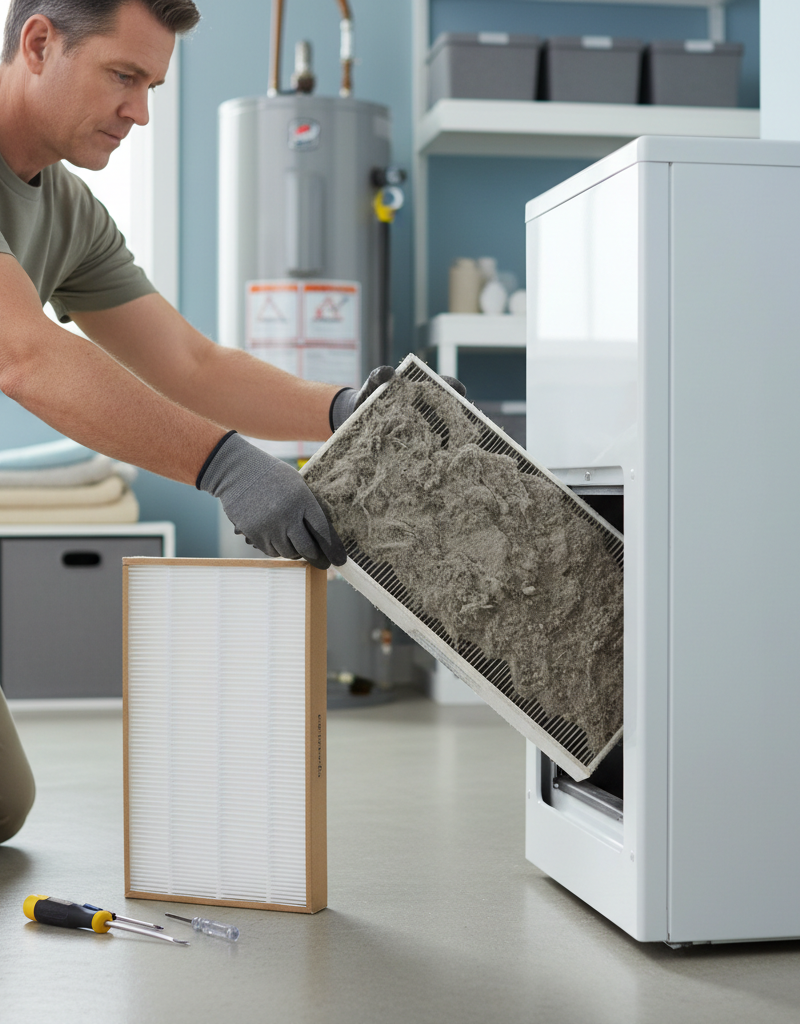
- Inspection – Pull out the existing filter. Hold it up to a light source. If you can't see light through it, or if it's visibly caked with dust and debris, it needs to be replaced.
- Replacement – Note the MERV rating and size (e.g., 16 x 25 x 1) on the old filter and purchase a new one with the same specifications. Higher MERV ratings (MERV 8-11 are common for residential use) offer better filtration but can restrict airflow if your system isn’t designed for them. Slide the new filter in, ensuring the arrow on the filter points in the direction of airflow (towards the furnace).
- If this doesn't work: A severely dirty filter can cause the blower motor to work harder, potentially overheating components and causing a burning smell. Replacing it improves airflow and reduces strain.
- Safety Note: Turn off the furnace at the thermostat and the dedicated electrical switch (often on a wall near the furnace) before opening any panels or changing filters.
3. Inspect the Blower Compartment
- Access – After ensuring the power is off, locate the access panel for the blower compartment. This is usually at the bottom section of the furnace and secured by screws or latches. Remove the panel.
- Cleanliness Check – Use a bright flashlight to inspect the blower fan (a squirrel-cage-shaped component) and the interior of the compartment. Look for excessive dust, pet hair, or any obstructions.
- Cleaning – Use a vacuum cleaner with a brush attachment or a soft, dry cloth to carefully remove any visible dust from the blower blades and compartment walls. Avoid using water or any liquid cleaners.
- If this doesn't work: A heavily soiled blower can cause friction and overheating, leading to a burning smell. Cleaning it ensures efficient operation.
4. Gently Clean Visible Heat Exchanger and Burner Areas
- Caution – This step requires great care. Only clean easily accessible, cool surfaces. Never try to clean inside the combustion chamber itself.
- Method – With the furnace completely cool and power off, use a soft-bristled brush (like a new, clean paintbrush) and a vacuum cleaner with a narrow attachment to gently brush and vacuum dust from the exterior surfaces of the heat exchanger fins and around the burner assembly. Do not apply pressure or bend any components.
- If this doesn't work: Excessive dust on these hot surfaces is the primary cause of the initial burning smell.
5. Clear Clutter Around the Furnace
- Safety Zone – Ensure there is at least a 2-foot clear perimeter around your furnace. Remove any flammable materials like cardboard boxes, cleaning supplies, paint cans, or rags.
- Ventilation – Make sure the area has adequate ventilation and the furnace intake vents (if applicable) are not blocked. Restricted airflow can cause the furnace to overheat.
- If this doesn't work: Flammable items too close to the furnace are a serious fire hazard and can contribute to strange odors as they warm up.
6. Inspect Belts (if applicable)
- Older Furnaces – Some older furnaces have a belt-driven blower motor. With power off, inspect the belt for signs of wear, fraying, or cracking. A worn belt can slip, causing a burning rubber smell.
- Replacement – If the belt looks worn, it's best to have it replaced by a professional. This is typically not a DIY task due to tensioning requirements.
- If this doesn't work: A slipping belt consistently produces a distinct burning rubber smell.
7. Check for Electrical Odors or Scorching
- Visual Inspection – Carefully inspect accessible wiring, especially near the blower motor and control board, for any signs of scorching, melted insulation, or discolored components. A distinct electrical burning smell is cause for concern.
- Flickering Lights/Tripping Breakers – If you notice flickering lights or circuit breakers tripping when the furnace runs, this could indicate an electrical issue.
- If this doesn't work: An electrical burning smell requires immediate professional attention.
- Safety Note: Do not attempt electrical repairs yourself. If you see signs of electrical damage, turn off the furnace and call a professional immediately.
8. Test the System and Monitor
- Restore Power – Replace all access panels and restore power to the furnace.
- Run Heat – Set your thermostat to heat and raise the temperature to trigger the furnace. Stand near the unit and at a few vents to observe any lingering smells.
- Duration – If the smell persists for more than a few hours of continuous operation (not just the initial kick-on), or if it worsens, turn off the furnace and call a professional.
Common Causes
- Accumulated Dust and Debris: The most frequent culprit. Dust settles on the heat exchanger, burners, and other hot surfaces while the furnace is idle. When it heats up, this dust burns off, causing the smell.
- Dirty Air Filter: An extremely dirty filter restricts airflow, causing the furnace to work harder and potentially overheat components. The accumulated dust on the filter itself can also contribute to the burning smell as warmed air passes through it.
- New Furnace or Components: A brand new furnace, or recently replaced parts, can emit a manufacturing oil or coating smell as they
Related Articles
Keep troubleshooting with these hand-picked guides from FixlyGuide:
- What's That Burning Dust Smell When Your Heat Kicks On? The HVAC Secret — That burning dust smell when your furnace starts is usually harmless, but it signals it's time for some essential HVAC maintenance.
- What's That Burning Dust Smell When Your Heat Kicks On? The HVAC Secret — That weird smell when your furnace starts isn't always serious, but understanding its cause can prevent bigger issues and improve home air…
- The Secret Reason Your Furnace Turns On and Off So Much (It's Not What You Think) — Short cycling strains your furnace and wastes energy. Learn the most common surprising causes and how to fix them to restore efficient heat…
- Furnace Keeps Turning On and Off? Here's Why. — Is your furnace running in short, frequent bursts instead of steady cycles? This is called short cycling. Discover the common causes, like…
- The Secret Reason Your Thermostat Lies (And How to Fix It in Minutes) — Discover why your thermostat isn't hitting its set temperature and learn simple, actionable steps to diagnose and fix the most common culpr…
- That New Grout Is Already Cracking? Here’s the Hidden Cause — Cracked grout weeks after a renovation is often a sign of a deeper issue with your subfloor or tile installation, not just a problem with t…
What should this project cost?
Enter your project details for a realistic cost range before you call anyone.
Service calls and common repairs run $150–$900; full system replacement typically $6,000–$12,000.
- Regional adjustment
- National average
- Labor share (typical)
- ~$1,935
- Quotes to collect
- 3 written estimates
Educational estimate based on national averages — not a binding quote. Always confirm with written local estimates.
Fixly Project Decision Box
- DIY difficulty
- Advanced
- Estimated time
- Homeowner checks 20–30 minutes
- Cost level
- Moderate
Main tools / materials
- Clean air filter
- Garden hose for condenser coils
- Shop vac for the condensate line
When to stop and call a pro
- Burning smell, smoke, or a tripping breaker
- Refrigerant lines iced over or hissing
- Any work inside the sealed refrigerant circuit (EPA-licensed only)
- Gas smell near a furnace — leave and call the utility
Need professional help?
Find an HVAC Pro Near YouFrequently asked questions
Is it normal for a furnace to smell like burning when it first turns on?+
Yes, it is very common and usually normal for a furnace to emit a burning, dusty smell the first few times it operates after a long period of inactivity. This is typically due to accumulated dust and debris burning off internal components like the heat exchanger.
How long should the burning smell last from my furnace?+
The burning smell from accumulated dust should dissipate relatively quickly, usually within an hour or two of continuous furnace operation. If the smell persists for longer than a few hours, or if it intensifies, it's a good idea to investigate further or call a professional.
What kind of burning smell is cause for concern with a furnace?+
A persistent or strong electrical burning smell (like melting plastic or ozone), a burning rubber smell, or an acrid chemical smell are all causes for immediate concern. Such odors can indicate serious electrical issues, a slipping blower belt, or fuel leaks. If you notice these, turn off your furnace and call a professional immediately. Also, a gas smell is an emergency.
Can a dirty filter cause a burning smell?+
Yes, an extremely dirty air filter can contribute to a burning smell. The filter itself can accumulate significant dust and debris that may give off an odor when heated air passes through it. More importantly, a clogged filter restricts airflow, causing the furnace to work harder and potentially overheat, leading to other components emitting a burning scent.

Discussion
Loading comments…