- Safety Note: For gas dryers, always ensure the gas supply is off and the area is well-ventilated before disconnecting the gas line. If you smell gas at any point, leave the area immediately and call your gas provider.
- If your vent hose is extremely dirty or damaged: It's often safer and more effective to simply replace an old, flimsy, or damaged flexible foil vent hose. They can be difficult to clean thoroughly and are prone to kinking.
- If you detect a gas smell: Shut off the gas immediately at the main valve and call a professional. Do not operate the dryer.
- Infrequent Cleaning: The most common cause. Homeowners simply forget or don't realize the importance of regular vent cleaning.
- Improper Vent Material: Flexible vinyl or thin foil dryer vents kink easily and have corrugated surfaces that trap lint, exacerbating buildup. Rigid metal ducts are far superior.
HVAC · High energy usage
| Project category | HVAC |
|---|---|
| Problem type | High energy usage |
| Trade required | HVAC |
| Urgency | Planned project |
| Safety risk | Low safety risk |
| DIY suitability | DIY for experienced homeowners |
| Cost category | High cost |
| Typical timeline | Assessment within weeks; replacement planned off-season |
| Contractor type | Licensed HVAC technician |
Repair option
Duct sealing, insulation, and a tune-up before touching the equipment.
Replacement option
High-efficiency replacement sized by a load calculation, not a rule of thumb.
Common causes
- Aging, low-efficiency equipment
- Leaking ducts losing conditioned air
- Insufficient attic insulation
- Oversized system short-cycling
Relevant tools:project cost estimatorrepair or replace
Published July 21, 2026Last updated August 17, 2026
Tools & materials you'll need
Affiliate linksAs an Amazon Associate FixlyGuide earns from qualifying purchases — at no extra cost to you. Prices and availability are accurate as of publication and subject to change.
Quick Answer
Lint accumulation in your dryer vent is a major hidden fire risk and significantly reduces your dryer's efficiency. The good news is that cleaning it is a straightforward DIY task. By removing the lint, you restore proper airflow, decrease drying times, save energy, and most importantly, drastically reduce the chance of a dryer fire. Plan to tackle this essential maintenance job at least once a year, or immediately if you notice your clothes taking longer to dry or a burning odor.
The Problem
Every time you dry a load of laundry, tiny fibers — lint — are pulled from your clothes. While much of this lint is caught by the dryer's lint trap, a surprising amount inevitably escapes and travels through the dryer vent system. Over time, these fine fibers build up, clinging to the interior surfaces of the vent hose and the dryer vent hood. This insidious accumulation creates several problems. First, it restricts the exhaust airflow, forcing your dryer to work harder and longer to dry clothes, leading to increased energy consumption and wear on the appliance. Second, and far more critically, lint is highly combustible. When combined with the high heat generated by your dryer, a significant lint clog can quickly ignite, leading to a house fire. Many homeowners are unaware of the hidden danger lurking within their dryer vents until it's too late.
How It Works
Your clothes dryer operates by tumbling clothes in a drum while simultaneously blowing heated air through them. This hot air absorbs moisture from the wet garments. To remove this moisture-laden air from the dryer and out of your home, a powerful fan (blower) pushes it through the lint trap screen, then into the exhaust vent hose, and finally, out through an exterior vent hood. The lint trap is designed to catch the bulk of the lint, but microscopic fibers and even larger pieces still bypass it.
The exhaust vent system is typically made of rigid metal ducting or flexible metal foil ducting, designed to transport this hot, moist, lint-filled air safely outdoors. The interior surfaces of these ducts, especially at bends and connections, become ideal traps for lint. As lint builds up, the pathway for the air narrows, creating back pressure against the dryer's blower. This reduced airflow causes the dryer to overheat and makes it significantly less efficient because the moist air isn't being expelled quickly enough. The electric heating element or gas burner cycles longer and hotter, increasing the internal temperature of the dryer and the vent itself. It's this combination of highly flammable lint, restricted airflow, and elevated temperatures that creates a perfect storm for a dryer fire.
Step-by-Step Fix
Safety First – Always disconnect power before working on your dryer. If it's a gas dryer, turn off the gas supply.
1. Unplug the Dryer and Disconnect the Vent Hose — Carefully pull your dryer away from the wall to access the back. Unplug the power cord from the wall outlet. If it's a gas dryer, turn off the gas valve and carefully disconnect the flexible gas line (you'll need a wrench for this). Next, locate the vent hose connected to the back of the dryer and the wall. Loosen the clamps (usually screw clamps or spring clamps) holding the hose in place using a screwdriver or pliers, then gently twist and pull the hose free from both the dryer exhaust port and the wall vent pipe.
- Safety Note: For gas dryers, always ensure the gas supply is off and the area is well-ventilated before disconnecting the gas line. If you smell gas at any point, leave the area immediately and call your gas provider.
2. Clean the Dryer's Exhaust Port — With the vent hose removed, you'll see the circular exhaust port on the back of the dryer. Use a vacuum cleaner with a crevice tool attachment to thoroughly suck out any visible lint from inside this port. You can also use a lint brush or an old rag to wipe away stubborn lint from around the opening.
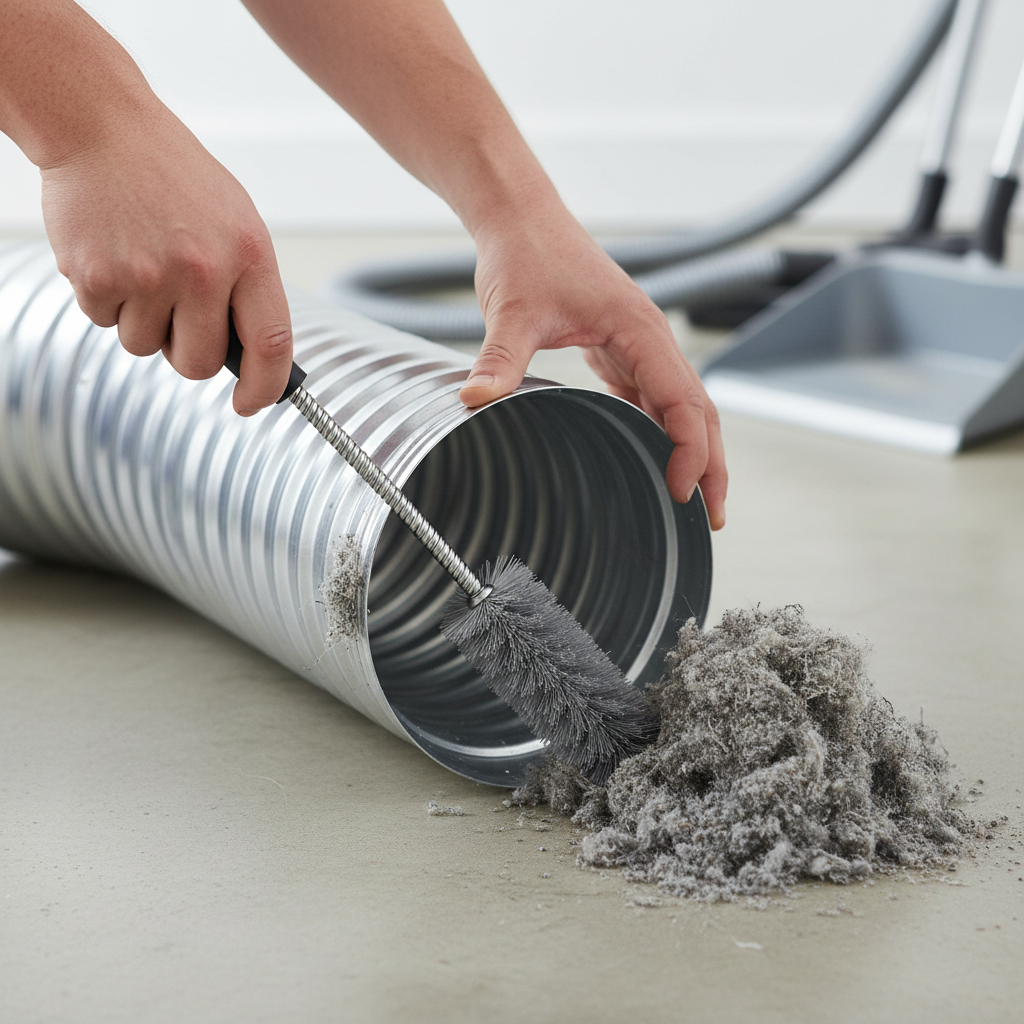
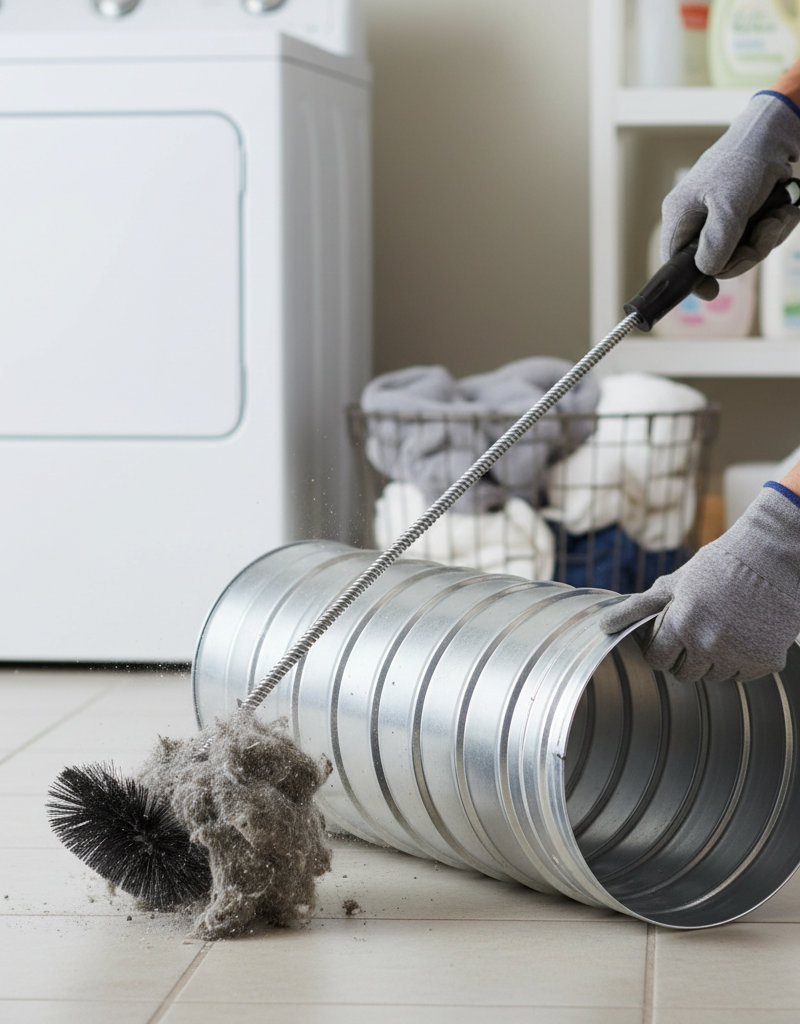
3. Clean the Vent Hose — Take the disconnected vent hose outdoors or to a garage where lint can be easily contained. Stretch it out as straight as possible. Use your dryer vent brush kit, assembling the rods and pushing the brush through the hose from one end to the other, rotating it as you go. This will dislodge lint. Follow up with a vacuum cleaner to suck out the loosened debris. If your hose is older, crushed, or extensively kinked, consider replacing it with a new, rigid metal or heavy-gauge flexible metal hose for better airflow and safety.
- If your vent hose is extremely dirty or damaged: It's often safer and more effective to simply replace an old, flimsy, or damaged flexible foil vent hose. They can be difficult to clean thoroughly and are prone to kinking.
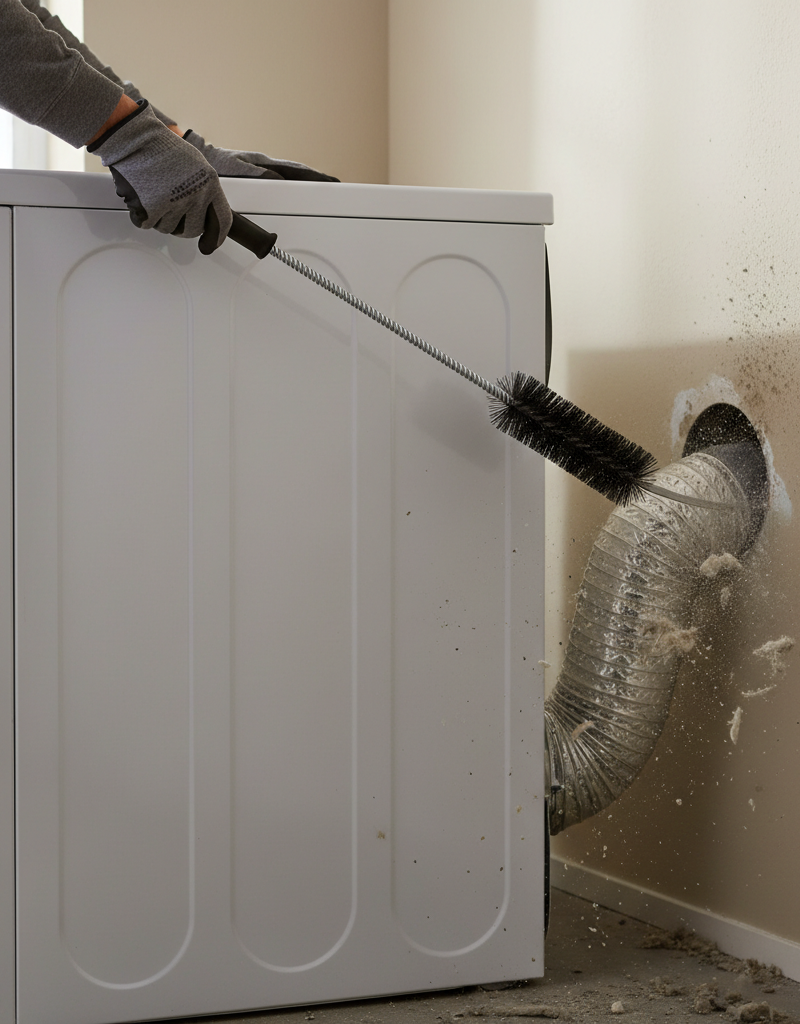
4. Clean the Wall Vent Pipe (from inside) — Now, focus on the wall vent pipe leading to the outside. Attach your dryer vent brush to the rods again and feed it into the wall duct opening. Push the brush as far as you can, rotating and pulling it back and forth to dislodge lint. Use your vacuum cleaner to pick up the loosened lint from the duct opening.
5. Clean the Exterior Vent Hood — Go outside to the exterior dryer vent hood. Inspect it for lint buildup, birds' nests, or other obstructions. Open the damper flaps (if present) and use a brush, vacuum, or even your hand (wearing gloves) to clear out all debris. Make sure the flaps can open and close freely. Stainless steel or plastic vent hoods with wider openings and minimal grates tend to accumulate less lint.
6. Reconnect and Test — Once all sections are clean, carefully reattach the vent hose to the wall pipe and the dryer exhaust port, securing it with the clamps. Ensure all connections are tight to prevent air leaks. If you disconnected a gas line, reconnect it securely using a wrench and then carefully turn the gas supply back on. Spray sudsy water (dish soap and water) on the gas connection points and check for bubbles – bubbles indicate a gas leak, meaning you need to tighten the connection further. Plug the dryer back into the electrical outlet. Run the dryer on an air-only (no heat) cycle for 10-15 minutes or a short heated cycle with a damp towel to check for proper operation and ensure no burning smells. Go outside to visually confirm strong airflow from the exterior vent.
- If you detect a gas smell: Shut off the gas immediately at the main valve and call a professional. Do not operate the dryer.
Common Causes
- Infrequent Cleaning: The most common cause. Homeowners simply forget or don't realize the importance of regular vent cleaning.
- Improper Vent Material: Flexible vinyl or thin foil dryer vents kink easily and have corrugated surfaces that trap lint, exacerbating buildup. Rigid metal ducts are far superior.
- Long or Kinked Vent Runs: Longer vent runs (especially over 25 feet) and multiple bends slow down airflow, allowing more lint to settle. Kinks in flexible hoses severely restrict air.
- Lack of Exterior Vent Maintenance: The exterior hood can get clogged with lint, pet hair, dirt, and even bird or rodent nests, blocking the exit point.
- Damaged or Loose Connections: Gaps or damage in the vent hose or connections can cause lint to escape into wall cavities or accumulate at the breach points.
- Overloading the Dryer or Drying Inappropriate Items: Drying very lint-heavy items (like new towels or pet blankets) excessively or routinely overloading the dryer can increase the amount of lint escaping the trap.
Common Mistakes
- Ignoring Longer Drying Times: Many homeowners simply accept slow drying as
Related Articles
Keep troubleshooting with these hand-picked guides from FixlyGuide:
- The #1 Dryer Fire Culprit Hiding in Your Laundry Room (And How to Evict It) — Regular dryer vent cleaning is crucial to prevent lint buildup, improve efficiency, and most importantly, safeguard your home from potentia…
- The Dryer Fire Hazard Hiding in Plain Sight (and How to Eliminate It in 30 Minutes) — Lint buildup in your dryer vent is a silent fire hazard. Learn how to clean it thoroughly and prevent a potential disaster with simple tool…
- The Dryer Vent Fire Trap: 3 Hidden Signs Your Home Is at Risk — Learn the critical signs your dryer vent is clogged and how to safely clean it to prevent a dangerous house fire.
- What's That Burning Dust Smell When Your Heat Kicks On? The HVAC Secret — That weird smell when your furnace starts isn't always serious, but understanding its cause can prevent bigger issues and improve home air…
- The Secret Reason Your Thermostat Lies (And How to Fix It in Minutes) — Discover why your thermostat isn't hitting its set temperature and learn simple, actionable steps to diagnose and fix the most common culpr…
- The Silent Fire Hazard Lurking In Your Laundry Room — Don't let a clogged dryer vent become a silent fire starter. Learn why this common oversight is so dangerous, the clear warning signs to lo…
What should this project cost?
Enter your project details for a realistic cost range before you call anyone.
Service calls and common repairs run $150–$900; full system replacement typically $6,000–$12,000.
- Regional adjustment
- National average
- Labor share (typical)
- ~$1,935
- Quotes to collect
- 3 written estimates
Educational estimate based on national averages — not a binding quote. Always confirm with written local estimates.
Frequently asked questions
How often should I clean my dryer vent?+
You should clean your dryer vent at least once a year. If you use your dryer frequently, have pets, or notice clothes taking longer to dry, consider cleaning it every 6 months.
What are the signs that my dryer vent is clogged?+
Key signs include clothes taking unusually long to dry, clothes feeling very hot to the touch after a cycle, a burning smell coming from the dryer, and excessive lint buildup around the lint trap or exterior vent opening.
Can I use a leaf blower to clean my dryer vent?+
While a leaf blower can push some lint out, it's not as effective as a specialized dryer vent brush kit. A brush physically dislodges lint stuck to the walls of the duct, which a leaf blower might miss or just compact further. A vacuum is best for removing the dislodged lint.

Discussion
Loading comments…