- Inspect and Replace Air Filter—A dirty air filter restricts airflow and can contribute to overheating and burning smells. Remove the old filter and check for excessive dust buildup.
- Tools/Materials: New HVAC air filter (MERV 8-11 recommended)
- If this doesn't work: A heavily clogged filter might just be one contributor; continue troubleshooting other areas.
HVAC · High energy usage
| Project category | HVAC |
|---|---|
| Problem type | High energy usage |
| Trade required | HVAC |
| Urgency | Planned project |
| Safety risk | Low safety risk |
| DIY suitability | DIY for experienced homeowners |
| Cost category | High cost |
| Typical timeline | Assessment within weeks; replacement planned off-season |
| Contractor type | Licensed HVAC technician |
Repair option
Duct sealing, insulation, and a tune-up before touching the equipment.
Replacement option
High-efficiency replacement sized by a load calculation, not a rule of thumb.
Common causes
- Aging, low-efficiency equipment
- Leaking ducts losing conditioned air
- Insufficient attic insulation
- Oversized system short-cycling
Relevant tools:project cost estimatorrepair or replace
Published July 8, 2026Last updated August 17, 2026
Tools & materials you'll need
Affiliate links- AmazonNew HVAC air filter1 · Match existing size, MERV 8-11 recommended
As an Amazon Associate FixlyGuide earns from qualifying purchases — at no extra cost to you. Prices and availability are accurate as of publication and subject to change.
Quick Answer
That strange, often described as "burning dust" or "BMS" (Burnt Material Smell), emanating from your heating vents when the system kicks on is typically a benign symptom of seasonal use. Over the summer months, dust, pet dander, and other airborne particles settle on your furnace's heat exchanger or electric heating elements. When your heating system is first engaged for the season, these accumulated particles are incinerated by the sudden increase in temperature, resulting in the telltale odor. This smell usually resolves itself within a few hours to a day of continuous operation as the dust burns away. However, persistent or unusual smells (like electrical burning, rotten eggs, or melting plastic) warrant immediate investigation.
The Problem
It's the first cold snap of the year, you crank up the thermostat, and within minutes, a peculiar odor wafts from your vents. For most homeowners, this is an annual ritual: the "burning dust" smell. While often harmless, occurring as the heating elements or heat exchanger warm up and burn off accumulated dust, there are scenarios where this smell can signal something more serious. Ignoring it could lead to reduced air quality, decreased system efficiency, or even safety hazards. The problem isn't just the smell itself, but understanding what it truly signifies so you can react appropriately, whether that means letting it air out or calling a professional.
How It Works
To understand the burning smell, it helps to know how your furnace generates heat. In a gas furnace, cold air from your home is drawn into the return ducts and then through a filter, removing larger particles. The filtered air then enters the furnace cabinet, where it passes over a heat exchanger. Inside the heat exchanger, gas burners ignite, combustion gasses heat the metal walls of the exchanger, and the air passing over the outside of these hot walls warms up. A blower motor then pushes this now-heated air through the supply ducts and out into your living spaces. The combustion byproducts (like carbon monoxide and water vapor) are safely vented outside through a flue.
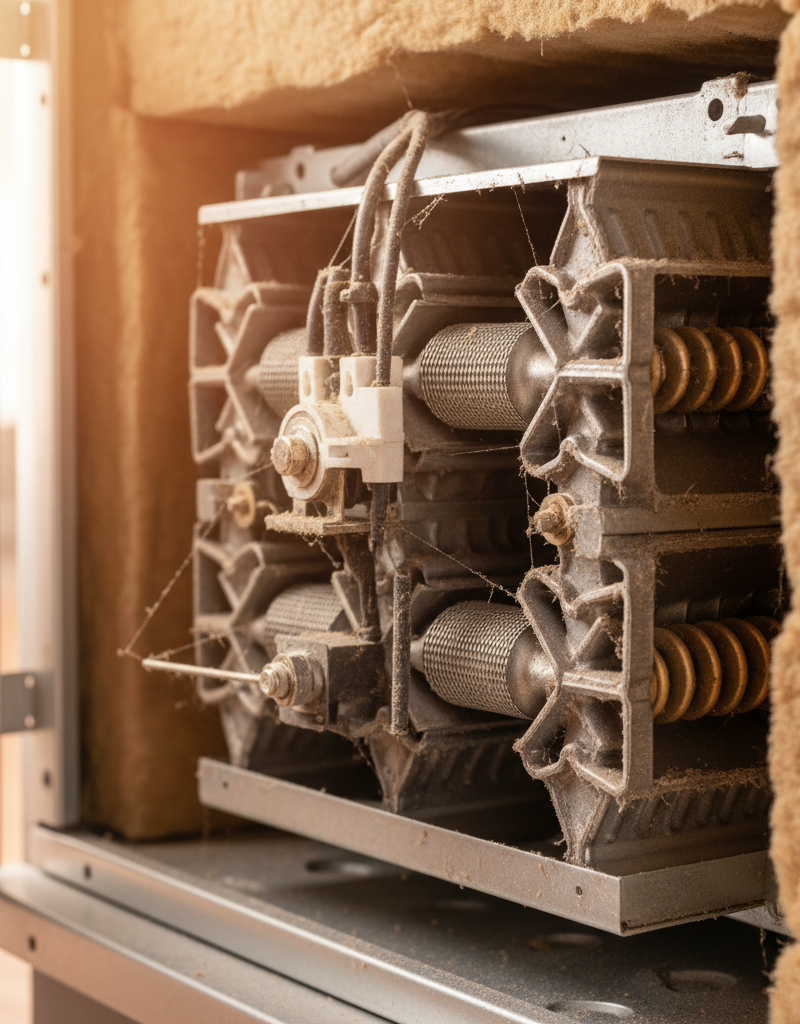
For an electric furnace, the process is similar but uses electric heating elements, akin to large toaster coils. As cold air passes over these energized elements, it heats up before being distributed by the blower. In both systems, if dust has settled on the heat exchanger or electric coils during the months the furnace was inactive, that dust will essentially "cook" and burn off the first time the system reaches operating temperature. This is the source of the common burning dust smell. Other smells, however, originate from different parts, like electrical wiring, refrigerant leaks, or even biological growth in ductwork, each with their own distinct characteristics and implications.
Step-by-Step Fix
Before tackling any issues, always prioritize safety. Turn off your HVAC system at the thermostat and the main power switch or breaker for the furnace. This prevents accidental startup and reduces the risk of electrical shock or burns.
-
Safety First—Before inspecting or working near any heating appliance, always turn off the power at the thermostat AND the dedicated circuit breaker for the furnace. This prevents accidental startup and ensures electrical safety.
- Tools/Materials: None
- Safety Note: Never work on electrical components with power on.
-
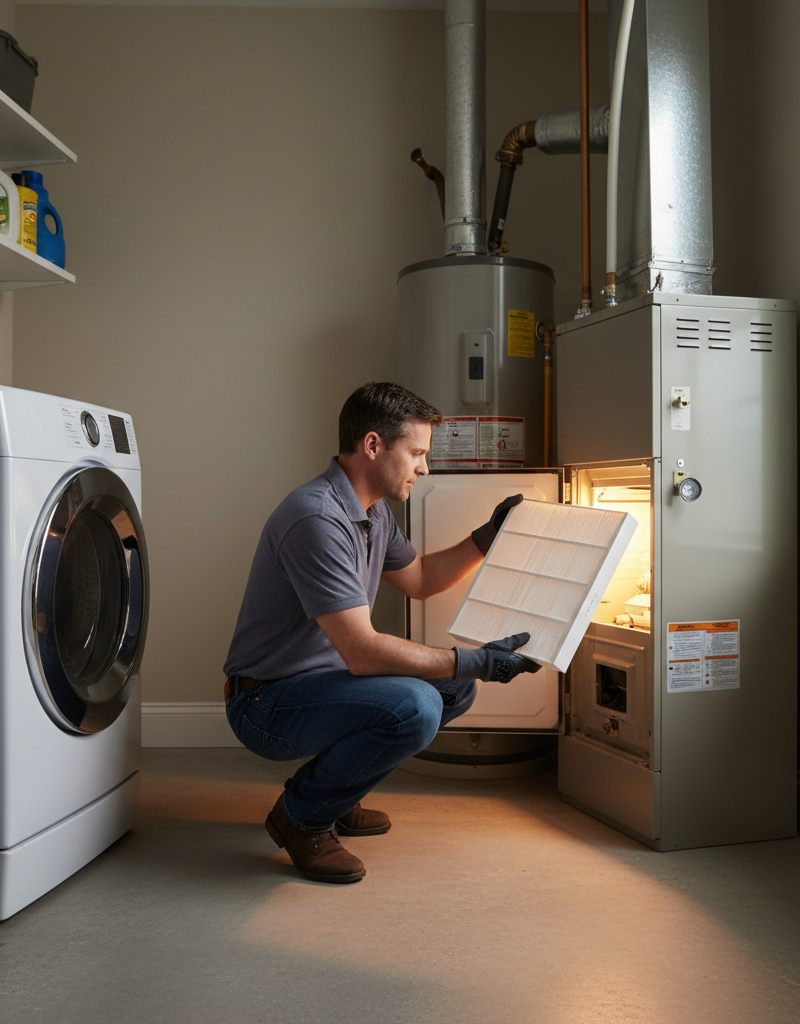
Inspect and Replace Air Filter—A dirty air filter restricts airflow and can contribute to overheating and burning smells. Remove the old filter and check for excessive dust buildup.
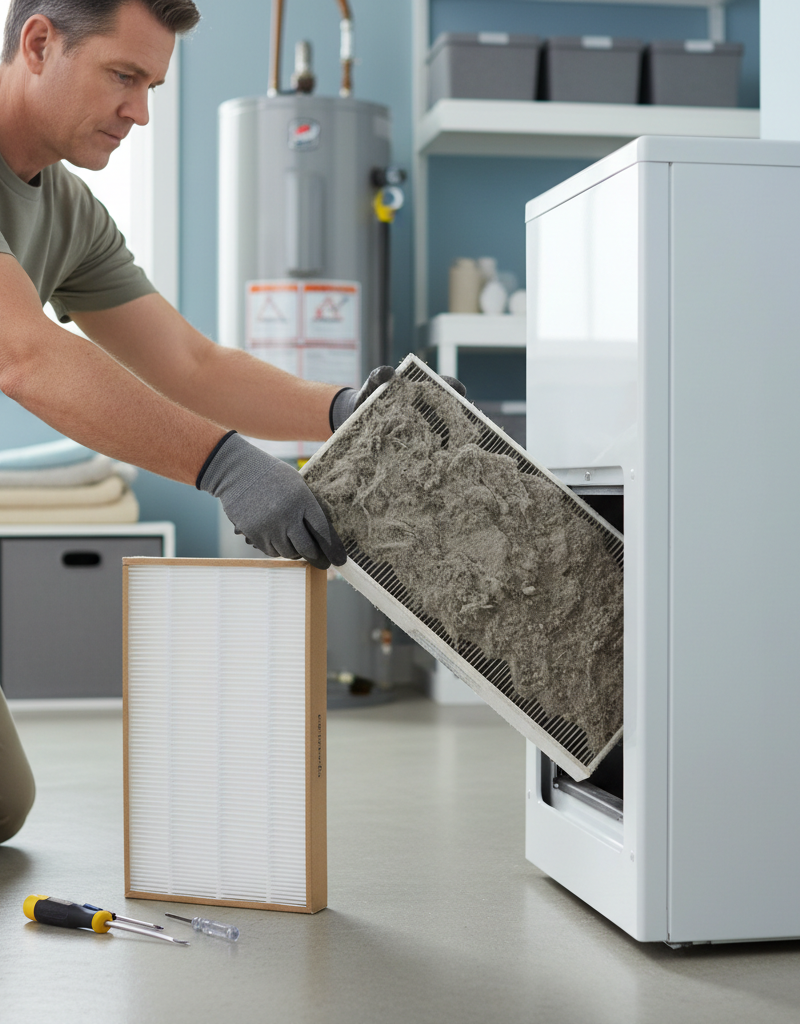
- Instruction: Locate the air filter slot, usually near the furnace blower compartment. Slide out the old filter. If it's dark grey and heavily laden with dust and debris, it's due for replacement. Replace with a new, correctly sized filter (check the dimensions printed on the old filter frame).
- Tools/Materials: New HVAC air filter (MERV 8-11 recommended)
- If this doesn't work: A heavily clogged filter might just be one contributor; continue troubleshooting other areas.
-
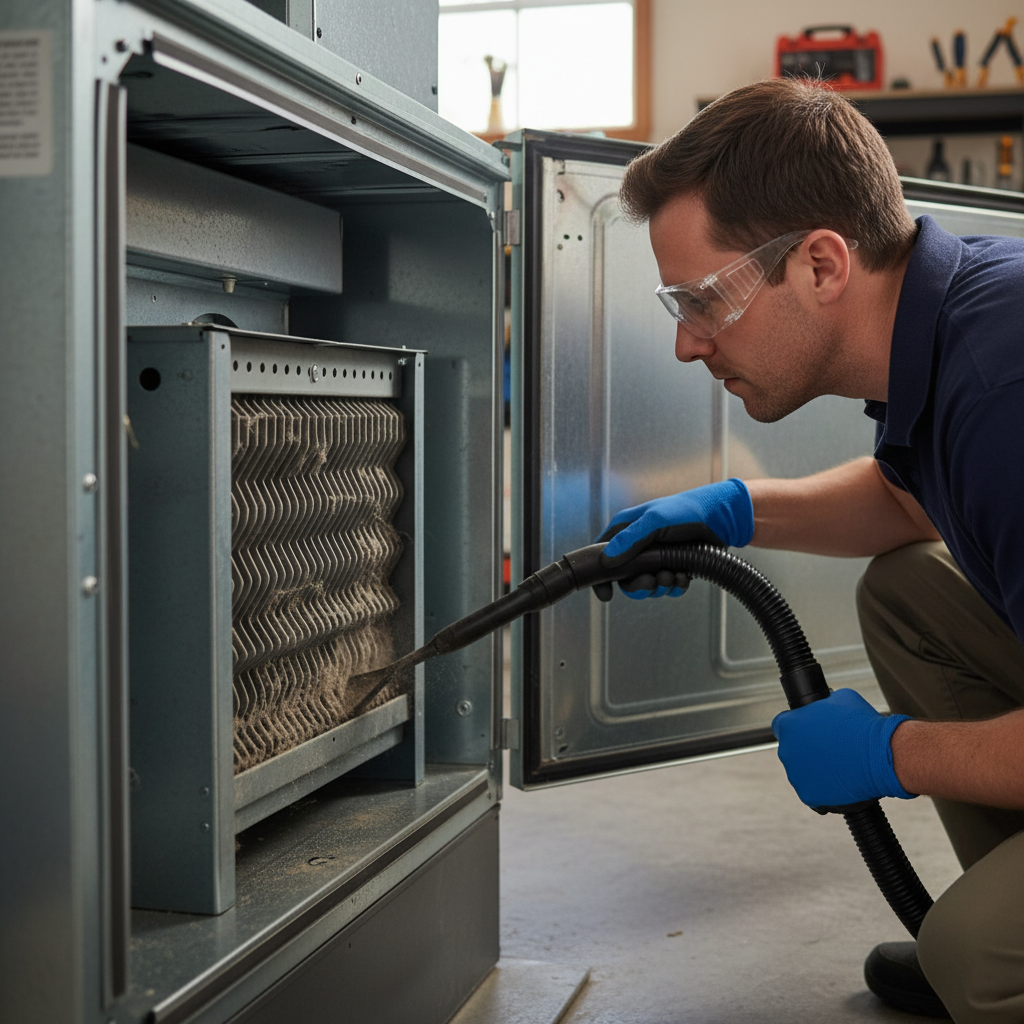
Vacuum Visible Dust in Furnace Cabinet—With the power off, open the furnace access panels and carefully vacuum any visible dust accumulation around the heat exchanger, blower motor, and control boards.
- Instruction: Use a shop vac with a brush attachment or a standard vacuum cleaner with a hose. Pay close attention to the heat exchanger fins (for gas furnaces) or the heating elements (for electric furnaces). Avoid touching delicate wiring or electronic components with the vacuum nozzle directly.
- Tools/Materials: Shop vacuum or household vacuum with hose attachments, flashlight.
- If this doesn't work: If dust is deep within coils or hard to reach, a professional cleaning might be necessary.
-
Check for Obstructions in Vents and Ductwork—Sometimes, objects can fall into vents or ductwork, causing localized burning or restricted airflow.
- Instruction: Remove floor and wall registers and peer into the ducts with a flashlight. Look for toys, debris, or excessive dust buildup. Use a coat hanger or specialized duct brush to dislodge any accessible obstructions. Ensure all registers are open and clear.
- Tools/Materials: Flashlight, coat hanger (optional), screwdriver (to remove register screws if needed).
- If this doesn't work: Significant duct blockage may require professional duct cleaning.
-
Inspect Blower Motor—A failing blower motor can overheat and emit a burning electrical smell. Look for signs of wear or excessive dust build-up on the motor itself.
- Instruction: Carefully inspect the blower motor (usually located in the lower compartment of the furnace). Look for signs of scorching, frayed wires, or excessive dirt. Spin the blower wheel by hand (gently) to check for resistance or unusual noises. Do not attempt to lubricate sealed blower motors; only older models require lubrication.
- Tools/Materials: Flashlight.
- Safety Note: If you detect a strong electrical burning smell or see scorched wires, turn off power immediately and call a professional. This indicates a serious electrical fault.
-
Run the Heater Continuously (if smell is "dusty")—If the smell is truly just "burning dust", running the system for several hours will often clear it.
- Instruction: After performing the above steps and confirming no alarming smells (electrical, rotten eggs, melting plastic), restore power to the furnace. Set your thermostat to a higher temperature to ensure the furnace runs continuously for at least 2-3 hours. Open windows slightly to ventilate your home during this initial burn-off period.
- Tools/Materials: None.
- If this doesn't work: If the dusty smell persists intensely after several hours of operation, or if it changes to a more alarming odor, shut down the system and call a professional.
-
Check for Belt Issues (older furnaces)—Some older furnace models use a belt to drive the blower. A worn or slipping belt can create a friction-based burning rubber smell.
- Instruction: With the power off, locate the blower belt (if present). Inspect it for cracks, fraying, or excessive wear. Check its tension; it should deflect about 1/2 to 3/4 inch when pressed firmly in the middle. A squealing noise often precedes a burning rubber smell from a failing belt.
- Tools/Materials: None.
- If this doesn't work: Replacement of a worn belt is a straightforward DIY for some, but if unsure, call an HVAC technician.
-
Understand Other Odors—Different smells indicate different problems. Distinguishing them is crucial.
- Electrical/Burning Plastic: Immediately power down and call a pro. This indicates overheating wires or components, a fire hazard.
- Rotten Eggs/Sulfur: Turn off gas supply, evacuate, and call gas company/fire department. This is natural gas leak.
- Musty/Moldy: Indicates moisture and mold in ductwork or evaporator coil. Requires professional inspection and cleaning.
- Sweet/Chemical: Could be refrigerant leak (for heat pumps). Call a pro immediately.
Common Causes
- Accumulated Dust (Most Common): Dust, pet hair, and other debris settle on the furnace's heat exchanger, burners, or electric heating elements during the off-season. When the heat turns on, these particles burn off, creating a temporary "burning dust" smell. This is typically harmless and dissipates quickly.
- Dirty Air Filter: A clogged air filter restricts airflow, causing the furnace to work harder and potentially overheat. It also allows more dust to bypass the filter and settle on internal components, contributing to the burning smell.
- New Furnace Installation: New furnaces or heating elements can sometimes emit a manufacturing oil or coating smell as they "burn in" during initial operation. This should be temporary.
- Overheated Blower Motor: The blower motor can overheat due to a lack of lubrication (in older models), a failing capacitor, restricted airflow, or excessive dirt, leading to a burning electrical or oily smell.
- Burning Belt (Older Furnaces): Furnaces with belt-driven blowers can develop a burning rubber smell if the belt is worn, loose, or misaligned, causing friction.
- Electrical Faults: Frayed or deteriorating wiring, faulty connections, or failing electrical components can overheat and emit a distinct burning plastic or electrical smell, which is a significant fire hazard.
- Obstructions in Ductwork: Objects trapped in vents or ducts can partially melt or burn if they come into contact with heated air or components, especially if they are plastic or fabric.
Common Mistakes
- Ignoring Persistent or Worsening Odors: Many homeowners assume all burning smells are "just dust." While common, if the smell persists for more than a day, intensifies, or changes character (e.g., becomes electrical or metallic), it's a warning sign that shouldn't be ignored. Trust your nose; if it smells truly alarming, investigate or call a pro.
- Not Changing Air Filters Regularly: A dirty filter is the root of many furnace problems, including inefficient operation, reduced airflow, and increased dust accumulation inside the furnace, which directly contributes to burning smells. Change filters every 1-3 months.
- Restarting the System After an Electrical Burn Smell: If you detect a distinct electrical burning or melting plastic odor, immediately shut off power to the furnace at the breaker. Restarting it can exacerbate the problem, cause further damage, or even start a fire.
- Attempting Complex Electrical Repairs Without Expertise: While changing a filter or vacuuming dust is DIY-friendly, troubleshooting and repairing electrical components, motors, or gas lines requires specialized knowledge and tools. Improper attempts can lead to serious injury or damage.
- Blocking Vents or Returns: Partially or fully blocking supply registers or return air grilles restricts airflow. This forces the furnace to work harder, can lead to overheating, and may contribute to burning smells.
- Mislubricating Blower Motors: While some older blower motors require annual lubrication, most modern motors are sealed and do not. Attempting to lubricate a sealed motor can introduce dirt and actually shorten its lifespan. Consult your furnace manual.
Cost & Time Breakdown
| Task | DIY Cost | Pro Cost | Time |
|---|---|---|---|
| Air Filter Replacement | $10–$30 | $0 (with service)* | 5–10 minutes |
| Furnace Dust Vacuuming | $0 | $100–$250 | 30–60 minutes |
| Vent/Duct Obstruction Removal | $0 | $150–$400 | 15–30 minutes |
| Blower Motor Inspection | $0 | $75–$150 | 15–20 minutes |
| Blower Belt Replacement | $10–$25 | $150–$300 | 30–60 minutes |
| Professional Diagnostic | N/A | $75–$150 | 30–60 minutes |
*Many HVAC service calls include filter replacement as part of maintenance.
Tips & Prevention
- Regular Filter Changes: Replace your HVAC air filter every 1-3 months, or more frequently if you have pets or allergies. This is the single most effective way to prevent dust buildup in your system.
- Annual Professional Tune-Up: Schedule an annual furnace inspection and tune-up with a qualified HVAC technician. They can clean internal components, check electrical connections, lubricate moving parts, and identify potential issues before they become major problems.
- Keep Furnace Area Clear: Ensure the area around your furnace is clear of clutter, especially combustible materials. This improves airflow and reduces fire hazards.
- Clear Vents and Returns: Periodically check that all supply registers and return air grilles are open and unobstructed by furniture, rugs, or drapes. Restricted airflow makes your furnace work harder.
- Seal Ductwork Leaks: Leaky ductwork can pull in unconditioned air and dust from attics, crawlspaces, and basements, depositing it into your system. Sealing leaks improves efficiency and reduces dust.
- Consider a Humidifier: In very dry climates, static electricity can attract more dust to internal components. A whole-home humidifier can help control dust by reducing static and promoting healthier air.
When to Call a Professional
While a "burning dust" smell usually resolves itself, certain odors and situations demand immediate professional attention. If you smell electrical burning or melting plastic, immediately shut off your furnace at the breaker and call an HVAC technician. This indicates an electrical fault and is a significant fire hazard. Similarly, a rotten egg or sulfur smell signifies a natural gas leak—turn off your gas supply, evacuate your home, and contact your gas company and fire department immediately. If you notice a persistent musty or moldy odor, especially after the initial burn-off period, it could indicate mold growth in your ductwork or evaporator coil, requiring professional cleaning and moisture remediation. Any burning smell that persists for more than 24-48 hours, increases in intensity, or is accompanied by unusual sounds, reduced heating performance, or visible smoke, warrants a call to a licensed HVAC professional for a thorough diagnosis and repair. Never attempt to repair gas lines or complex electrical components yourself.
Related Articles
Keep troubleshooting with these hand-picked guides from FixlyGuide:
- What's That Burning Dust Smell When Your Heat Kicks On? The HVAC Secret — That weird smell when your furnace starts isn't always serious, but understanding its cause can prevent bigger issues and improve home air…
- What's That Burning Dust Smell When Your Heat Kicks On? The HVAC Secret — That burning dust smell when your furnace starts is usually harmless, but it signals it's time for some essential HVAC maintenance.
- Bathroom fan smell? 3 hidden culprits for mold & moisture — A musty smell from your bathroom fan often signals trapped moisture and mold growth in the fan housing or ductwork, a fixable issue that ha…
- The $5 Part That Stops Your Dryer From Heating (And How to Replace It in 30 Min) — Discover the most common, inexpensive culprit behind a dryer not heating up and learn how to quickly diagnose and replace it yourself.
- The $5 Part That Stops Your Dryer From Heating (And How to Replace It in 30 Minutes) — A dryer that tumbles but doesn't heat often points to a blown thermal fuse, a simple and inexpensive fix most homeowners can do themselves.
- The Secret Culprit Behind Your Dishwasher's Standing Water (It's Not Always a Clog) — Don't assume a clog is the only reason your dishwasher isn't draining; often, the fix is simpler than you think.
What should this project cost?
Enter your project details for a realistic cost range before you call anyone.
Service calls and common repairs run $150–$900; full system replacement typically $6,000–$12,000.
- Regional adjustment
- National average
- Labor share (typical)
- ~$1,935
- Quotes to collect
- 3 written estimates
Educational estimate based on national averages — not a binding quote. Always confirm with written local estimates.
Fixly Project Decision Box
- DIY difficulty
- Advanced
- Estimated time
- Homeowner checks 20–30 minutes
- Cost level
- Moderate
Main tools / materials
- Clean air filter
- Garden hose for condenser coils
- Shop vac for the condensate line
When to stop and call a pro
- Burning smell, smoke, or a tripping breaker
- Refrigerant lines iced over or hissing
- Any work inside the sealed refrigerant circuit (EPA-licensed only)
- Gas smell near a furnace — leave and call the utility
Need professional help?
Find an HVAC Pro Near YouGet the print-ready PDF of this guide
A clean, ad-free, printable version you can keep on your phone or pin to the workshop wall. Free with a FixlyGuide account.
- Print-optimized layout
- Tools, materials & every step included
- Saved to your account
Frequently asked questions
Is a burning smell from vents normal when I first turn on the heat?+
Yes, a temporary 'burning dust' smell is very common when you first turn on your heating system for the season. This happens because dust and debris have settled on the furnace's heat exchanger or electric elements during the off-season and burn off upon initial activation. It should dissipate within a few hours.
What if the burning smell is like plastic or electrical?+
If the burning smell is distinctly like plastic, melting wires, or an electrical short, it is NOT normal and indicates a serious problem. Immediately shut off power to your furnace at the circuit breaker and call a licensed HVAC professional. Do not attempt to restart the system, as this poses a fire hazard.
How long should the burning dust smell last?+
The common 'burning dust' smell should typically last for only a few hours after your heating system is first engaged for the season, as the accumulated dust burns off. If the smell persists intensely for more than 24-48 hours, or if it changes to a more acrid or alarming odor, it's wise to investigate further or call a professional.
Can a dirty air filter cause a burning smell?+
Yes, a very dirty or clogged air filter can contribute to a burning smell. It restricts airflow, making the furnace work harder and potentially leading to overheating. It also allows more dust to bypass the filter and settle on internal components, which then burn off. Regularly changing your air filter is a crucial preventative measure.
When should I call a professional for a burning smell?+
Call a professional immediately if you detect a strong electrical or melting plastic smell, a rotten egg (gas) smell, or if any burning smell persists beyond 24-48 hours, increases in intensity, or is accompanied by abnormal noises, visible smoke, or a lack of heat. Complex electrical or gas issues should always be handled by a licensed HVAC technician.
Discussion
Loading comments…