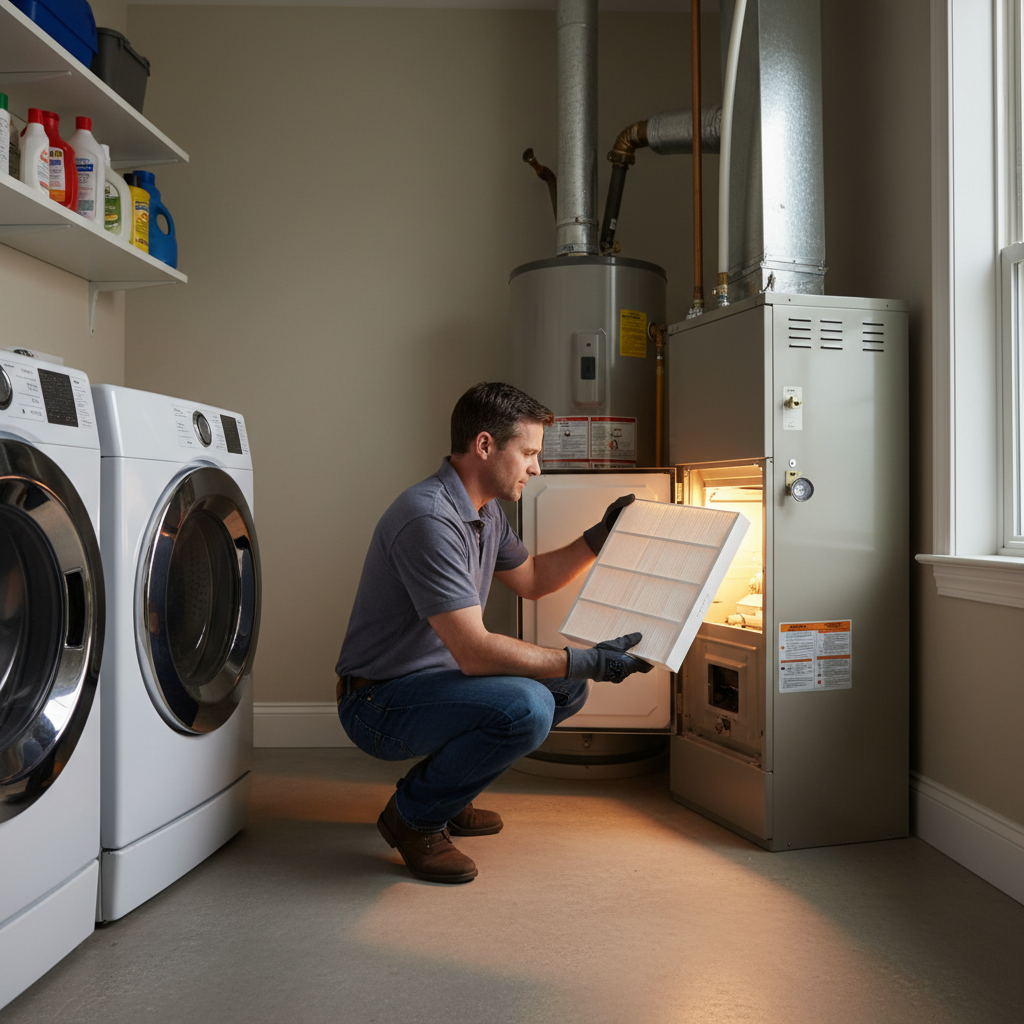
- Check and Replace Your Air Filter — The First Suspect
- Open the filter slot on your furnace. It’s usually a rectangular opening on the bottom, side, or top of the cabinet.
- Pull out the old filter. If it’s black with crud, there’s a good chance you’ve found a major airflow problem and a big reason for dust buildup. A dirty filter can make the system run hotter than it should, which burns off more particles.
HVAC · High energy usage
| Project category | HVAC |
|---|---|
| Problem type | High energy usage |
| Trade required | HVAC |
| Urgency | Planned project |
| Safety risk | Low safety risk |
| DIY suitability | DIY for experienced homeowners |
| Cost category | High cost |
| Typical timeline | Assessment within weeks; replacement planned off-season |
| Contractor type | Licensed HVAC technician |
Repair option
Duct sealing, insulation, and a tune-up before touching the equipment.
Replacement option
High-efficiency replacement sized by a load calculation, not a rule of thumb.
Common causes
- Aging, low-efficiency equipment
- Leaking ducts losing conditioned air
- Insufficient attic insulation
- Oversized system short-cycling
Relevant tools:project cost estimatorrepair or replace
Published July 30, 2026Last updated August 17, 2026
Tools & materials you'll need
Affiliate linksAs an Amazon Associate FixlyGuide earns from qualifying purchases — at no extra cost to you. Prices and availability are accurate as of publication and subject to change.
Quick Answer
That first whiff of fall — or winter, depending on where you live and when you kick the furnace on — often comes with that familiar burning dust smell from the vents. Most of the time, it’s exactly what it sounds like: a season’s worth of dust and pet hair getting baked off the furnace’s heat exchanger or electric heating elements. Usually it’s harmless, lasts about 30 minutes to an hour, and then it fades out. Still, don’t just shrug it off. If that smell hangs around, gets stronger, or turns into something nastier like electrical burning or rotten eggs, you need to poke around and figure out why. Smells like that can point to real safety trouble, and I don’t mess around with them.
The Problem
I’ve been in houses all my life, and that “dirty sock” or “burning dust” smell when the heat first fires up is one of the most common calls I get once the weather turns. Folks describe it as faint and sweet, or flat-out acrid. Most of the time, the furnace is just waking up after sitting idle all summer and baking off the dust that settled on the hot parts. Makes sense if you think about it. Your furnace sits there collecting whatever’s floating around the house, and when it kicks on at 130-150°F, that junk cooks off.
But here’s the deal: a harmless smell can hide a bad one. I had a call in Plano back in '18 where the homeowner was sure it was just dust. Nope. Mouse nest right on top of the heat exchanger. Once that furnace got hot, it smelled like a burned science experiment. Another time, in Arlington, somebody kept smelling a “sweet, burning plastic” odor. We tracked it down to a toy army man that had fallen into a vent and got hung up near the blower motor — it was melting slow and steady. So yeah, a lot of times it’s nothing serious, but you can’t just ignore it and call it a day. Your nose is telling you something.
How It Works
To really get what’s going on, you’ve got to know how the heating system does its job. Most homes in the U.S. use forced-air systems. That means you’ve got a furnace — gas or electric — heating air, then a blower motor pushes that hot air through ducts and out into the rooms through vents.
Here’s the simple version:
- The Return Side: Air gets pulled from your rooms through return air vents, runs back through the return ducts, and lands at the furnace. Along the way, it picks up dust, pet dander, little fibers, and all kinds of microscopic junk floating around your house.
- The Filter: Before the air gets into the furnace’s guts, it passes through an air filter. That filter’s there to catch most of the debris, protect the equipment, and help keep the air cleaner. Even a good one won’t grab everything, especially the tiny stuff.
- The Heating Element/Heat Exchanger: This is the heart of the system. In a gas furnace, natural gas or propane burns in a combustion chamber, and the heat transfers to the air as it passes over the sealed heat exchanger. In an electric furnace, big electrical coils — basically giant toaster elements — heat the air directly. These surfaces get hot — easily 130°F to 150°F, sometimes even hotter on direct contact surfaces.
- The Blower: After the air gets heated, a strong fan — the blower motor and squirrel cage fan — pushes that warm air through the supply ducts and out through your registers, which are the actual vents in your rooms. That’s the good stuff.
When dust or other particles land on those hot surfaces, they burn. Plain and simple. It’s no different than a crumb hitting a hot burner. The smell you catch is those particles off-gassing as they burn up. Once the bulk of that dust is gone, the smell usually goes with it. If the source isn’t just dust, though, or if something’s wrong with the system, that smell can stick around, change, or get worse — and that’s no dice.
Step-by-Step Fix
Before you crack anything open, always shut off the power to your furnace at the thermostat and the main breaker panel. You don’t want that thing firing up while your hands are in it.
-
Check and Replace Your Air Filter — The First Suspect
- Open the filter slot on your furnace. It’s usually a rectangular opening on the bottom, side, or top of the cabinet.
- Pull out the old filter. If it’s black with crud, there’s a good chance you’ve found a major airflow problem and a big reason for dust buildup. A dirty filter can make the system run hotter than it should, which burns off more particles.
- Swap in a fresh filter that’s the right size. I usually tell people to stick with a MERV 8 or 10. Don’t go overboard on MERV unless the system is built for it; a too-dense filter can choke off airflow and beat up the furnace over time. Check the arrow on the new filter — it needs to point with the airflow, usually toward the furnace.
-
Inspect Your Ducts and Vents — Look for Blockages
- Grab a flashlight and look over all your supply and return vents. Toys, pet hair, even little bits of insulation poking out can all cause trouble. Anything blocking airflow can overheat and stink.
- Carefully poke a broom handle or a long stick into the vents to loosen any obvious blockage you can reach. Don’t force it; you’re not trying to wreck the ductwork. Last year, I pulled a child’s sock out of a return vent in a house in Frisco that was causing a horrible musty smell every time the fan kicked on.
-
Clean Around the Furnace Exterior — General Housekeeping
- Use a shop vacuum with a brush attachment to clean the area around the furnace. Hit the return air plenum tied into the furnace, plus any vents or grilles on the cabinet itself.
- Dust, lint, and pet hair get pulled in from the surrounding area. A clean furnace closet or utility room helps keep the inside of the unit cleaner too.
-
Carefully Inspect the Blower Compartment — Hidden Dirt and Debris
- Find the blower compartment cover, usually a panel on the lower section of the furnace. It might have a few screws, or it may just slide up and out. Double-check the power is OFF!
- Shine your flashlight inside. You’ll see the big “squirrel cage” fan. Look for heavy dust on the blades or any foreign objects. I’ve found dead rodents, screws, and little toys in there over the years.
- Use a soft brush and your shop vacuum to clean the fan blades and the inside of the compartment. Take it easy — those blades can be delicate. Don’t pull the blower assembly unless you know what you’re doing; it’s easy to throw it out of balance.
-
Examine Electric Heating Elements/Heat Exchanger — The Source of the Burn
- For electric furnaces, locate the heating elements. They look like big glowing coils when they’re hot. With the power off, inspect them for visible dust buildup. Use a soft brush or a can of compressed air to knock off loose dust. Do NOT touch them with your bare hands, even when cold, as oils from your skin can create hot spots when they heat up again.
- For gas furnaces, you’re looking for the heat exchanger. It’s a big metal component that hot gases pass through. You usually can’t clean it thoroughly without pro tools and know-how, but you can often see dust on the outside surfaces through the access panels. A shop vac can help with anything you can reach.
-
Cycle the System and Monitor — The Test Run
- Once you’ve cleaned what you can safely reach and put in a new filter, reinstall all the covers.
- Turn the power back on at the breaker and thermostat. Set the thermostat to 'Heat' and raise it a few degrees above the current room temp so the furnace actually kicks on.
- Stand near the vents and the furnace and keep your nose on it. You might still get a faint smell for a little bit while leftover dust burns off, but it should clear out fast — ideally within 15-30 minutes. If it comes back strong, changes, or hangs around for more than an hour, don’t ignore it.
-
Check for Other Odor Sources — Beyond Burning Dust
- Burning Plastic/Electrical: If you smell something sharp and acrid, like burning wires or melting plastic, shut the system down IMMEDIATELY. That’s a serious electrical problem. Could be a bad motor, a shorted wire, or some foreign object melting. Call an HVAC pro; this isn’t a DIY job.
- Rotten Eggs/Sulfur: That’s the smell of natural gas or propane. Shut it down, open windows, get out of the house, and call your gas company and/or an HVAC tech from a safe distance. Do not turn on lights or use anything that could spark. This is extremely dangerous.
- Musty/Moldy: If it smells damp and musty, especially if it happens when the AC runs too, you may have mold or too much moisture in the ductwork or evaporator coil. Sometimes a clogged condensate drain line does it. That needs a pro looking at it so you don’t end up with health issues.
- Chemical/Sweet: Antifreeze (glycol) leaks can sometimes smell sweet. If you know your system uses an antifreeze solution — common in boiler systems or certain heat pump setups — that could mean a leak. Call a pro.
Common Causes
- Accumulated Dust: This is the usual suspect. Dirt, dust, pet dander, and everyday airborne particles settle on the furnace’s heat exchanger or electric coils during the off-season. When the heat comes on, they burn off and make that classic smell.
- Dirty Air Filter: A clogged air filter cuts down airflow, makes the furnace work harder, and can push components hotter than normal. That bumps up the chance of dust burning off and makes the smell worse. It also lets more particles slide past the filter and settle on heating surfaces.
- Foreign Objects: Little things like toys, debris, rodent nests, or insulation scraps can end up in the ductwork or inside the furnace. When those hit a hot surface or block airflow, the smell can stick around and get pretty concerning.
- **New Furnace
Related Articles
Keep troubleshooting with these hand-picked guides from FixlyGuide:
- What's That Burning Dust Smell When Your Heat Kicks On? The HVAC Secret — That weird smell when your furnace starts isn't always serious, but understanding its cause can prevent bigger issues and improve home air…
- What's That Burning Dust Smell When Your Heat Kicks On? The HVAC Secret — That burning dust smell when your furnace starts is usually harmless, but it signals it's time for some essential HVAC maintenance.
- The Secret Reason Your Oven Fails to Heat (It's NOT Always the Element) — Discover why your oven isn't reaching its set temperature, from common part failures to overlooked calibration issues, and how to fix it.
- The #1 Mistake Homeowners Make With HVAC Filters (And How Often to Really Change Them) — Discover the crucial mistake most homeowners make with HVAC filters and the specific schedule you should follow to avoid costly HVAC issues…
- Why Your Heat Pump Auxiliary Heat Won't Turn Off — Discover why your heat pump's auxiliary heat keeps running, driving up your energy bills. Learn to troubleshoot common issues and know when…
- That Mildew Smell in Your Washer? Here’s the Real Reason — Is a musty odor taking over your laundry room? That mildew smell from your washing machine isn't just unpleasant—it's a sign of a deeper pr…
What should this project cost?
Enter your project details for a realistic cost range before you call anyone.
Service calls and common repairs run $150–$900; full system replacement typically $6,000–$12,000.
- Regional adjustment
- National average
- Labor share (typical)
- ~$1,935
- Quotes to collect
- 3 written estimates
Educational estimate based on national averages — not a binding quote. Always confirm with written local estimates.
Fixly Project Decision Box
- DIY difficulty
- Advanced
- Estimated time
- Homeowner checks 20–30 minutes
- Cost level
- Moderate
Main tools / materials
- Clean air filter
- Garden hose for condenser coils
- Shop vac for the condensate line
When to stop and call a pro
- Burning smell, smoke, or a tripping breaker
- Refrigerant lines iced over or hissing
- Any work inside the sealed refrigerant circuit (EPA-licensed only)
- Gas smell near a furnace — leave and call the utility
Need professional help?
Find an HVAC Pro Near YouGet the print-ready PDF of this guide
A clean, ad-free, printable version you can keep on your phone or pin to the workshop wall. Free with a FixlyGuide account.
- Print-optimized layout
- Tools, materials & every step included
- Saved to your account
Frequently asked questions
Why does my furnace smell like burning dust only when it first turns on?+
This is almost always due to dust and debris accumulating on the heat exchanger or electric heating elements during the months your furnace was dormant. When the heat kicks on, these particles quickly burn off, producing that distinct smell. It usually dissipates within an hour.
Is a burning smell from my vents dangerous?+
A faint burning dust smell that quickly disappears is generally harmless. However, if the smell is strong, persists for more than an hour, or smells like burning plastic, electrical, or rotten eggs, it can indicate a serious problem like an electrical fault or a gas leak. In those cases, it is dangerous, and you should take immediate action.
How long should the burning dust smell last?+
Typically, the burning dust smell should only last for 15-30 minutes, or at most an hour, after your furnace first starts up for the season. If it continues longer, it's a sign that excessive dust has built up or there might be an underlying issue that needs investigation.
Can a dirty air filter cause a burning smell?+
Yes, absolutely. A clogged, dirty air filter restricts airflow, forcing your furnace to work harder and potentially overheat. It also allows more dust and particles to pass through and accumulate on the heating elements, exacerbating the burning dust smell.
What if the smell is like rotten eggs?+
A rotten egg or sulfur smell is a critical warning sign of a natural gas or propane leak. If you detect this, immediately shut off your gas supply if safe, open windows for ventilation, evacuate the premises, and call your gas company and/or fire department from a safe distance. Do NOT use any electrical switches or create sparks.
I smell something sweet or chemical from my vents. What is it?+
A sweet or chemical smell could indicate an antifreeze (glycol) leak, which is sometimes used in specific boiler or heat pump systems. It could also point to a refrigerant leak if you have a heat pump. This requires professional diagnosis and repair, as these chemicals can be hazardous.
Can I prevent the burning dust smell?+
While you can't eliminate it entirely, regular maintenance significantly reduces it. Change your air filter monthly during peak use, keep the area around your furnace clean, and consider annual professional HVAC tune-ups. These steps minimize dust accumulation and improve system efficiency.
When should I call an HVAC professional for strange furnace smells?+
Always call a professional if the burning smell persists, intensifies, or changes to anything other than typical dust – especially if it smells electrical, like melting plastic, or like rotten eggs. Also, call if you suspect a mold issue, gas leak, or a mechanical problem you can't identify.

Discussion
Loading comments…