- Tools: Garden hose, soft brush (optional), screwdriver (optional for grill removal).
- Frequency: Quarterly, or more often if you live in an area with a lot of foliage.
- If this doesn't work: If fins are severely bent or heavily caked with grime, a professional may be needed for specialized coil cleaning.
HVAC · High energy usage
| Project category | HVAC |
|---|---|
| Problem type | High energy usage |
| Trade required | HVAC |
| Urgency | Planned project |
| Safety risk | Low safety risk |
| DIY suitability | DIY for experienced homeowners |
| Cost category | High cost |
| Typical timeline | Assessment within weeks; replacement planned off-season |
| Contractor type | Licensed HVAC technician |
Repair option
Duct sealing, insulation, and a tune-up before touching the equipment.
Replacement option
High-efficiency replacement sized by a load calculation, not a rule of thumb.
Common causes
- Aging, low-efficiency equipment
- Leaking ducts losing conditioned air
- Insufficient attic insulation
- Oversized system short-cycling
Relevant tools:project cost estimatorrepair or replace
Published May 20, 2026Last updated August 17, 2026
Tools & materials you'll need
Affiliate linksAs an Amazon Associate FixlyGuide earns from qualifying purchases — at no extra cost to you. Prices and availability are accurate as of publication and subject to change.
Quick Answer
Is your HVAC system costing you more than it should? The answer is likely yes, and the primary culprit isn't a complex mechanical failure, but a surprisingly simple oversight: neglected routine maintenance. Specifically, failing to regularly change your air filters and skipping annual professional tune-ups can reduce your system's efficiency by 5% to 15%, significantly inflate your energy bills, and accelerate wear and tear leading to costly breakdowns. By addressing these two critical maintenance areas, homeowners can prevent up to 80% of common HVAC issues, extend their system's lifespan by years, and save hundreds of dollars annually in energy costs and emergency repairs. This guide will walk you through the essential steps to keep your HVAC system running efficiently and reliably.
The Problem
Many homeowners view their heating, ventilation, and air conditioning (HVAC) system as a set-it-and-forget-it appliance. As long as it's blowing hot or cold air, it's considered operational. This passive approach, however, is the most expensive mistake you can make. An HVAC system is a complex piece of machinery that relies on the clean movement of air, proper refrigerant levels, and well-lubricated moving parts to function optimally. When filters become clogged, coils get dirty, or components wear down, the system has to work harder to achieve the desired temperature. This increased effort translates directly into higher energy consumption and accelerated depreciation of parts. Think of it like driving a car without ever changing the oil or checking the tire pressure – eventually, you'll face a major breakdown and a hefty repair bill, or worse, have to replace the entire system prematurely. Unlike a car, your HVAC system affects your comfort, air quality, and budget year-round, making proactive maintenance not just a recommendation, but a financial necessity.
How It Works
To understand why maintenance is crucial, it helps to grasp the basic principles of how your HVAC system operates. Whether it's a central air conditioner, a heat pump, or a furnace, these systems move heat. An air conditioner, for example, doesn't 'create' cold air; it removes heat from inside your home and transfers it outside. This process involves a refrigerant cycle. Inside your home, warm return air from the living space passes over an evaporator coil. The refrigerant inside this coil absorbs heat from the air, turning into a low-pressure gas. This cooled air is then blown back into your home. The refrigerant gas travels to the outdoor unit (condenser), where a compressor increases its pressure and temperature. The hot, high-pressure gas then flows through the condenser coil, where a fan blows outdoor air over it, allowing the refrigerant to release its heat to the outside air and condense back into a high-pressure liquid. This liquid then moves through an expansion valve, where its pressure drops, and it cools before returning to the evaporator coil to repeat the cycle.
A furnace, conversely, generates heat. Natural gas or propane is ignited in a combustion chamber, and the hot gases pass through a heat exchanger. Air from your home is drawn in by a blower fan, passed over the hot heat exchanger, where it absorbs heat, and then distributed through your ductwork. The byproducts of combustion are safely vented outside. Heat pumps are essentially reversible air conditioners; they can move heat into or out of your home depending on the season.
For all these systems, efficient operation hinges on unimpeded airflow, clean heat exchange surfaces, and properly functioning mechanical and electrical components. A dirty air filter restricts airflow to both the evaporator coil (AC) and the heat exchanger (furnace), forcing the blower motor to work harder and reducing the system's ability to efficiently transfer heat. Dirty coils act as insulators, preventing proper heat exchange. Low refrigerant levels, unbalanced components, and loose electrical connections all add stress, decrease efficiency, and set the stage for premature failure.
Step-by-Step Fix
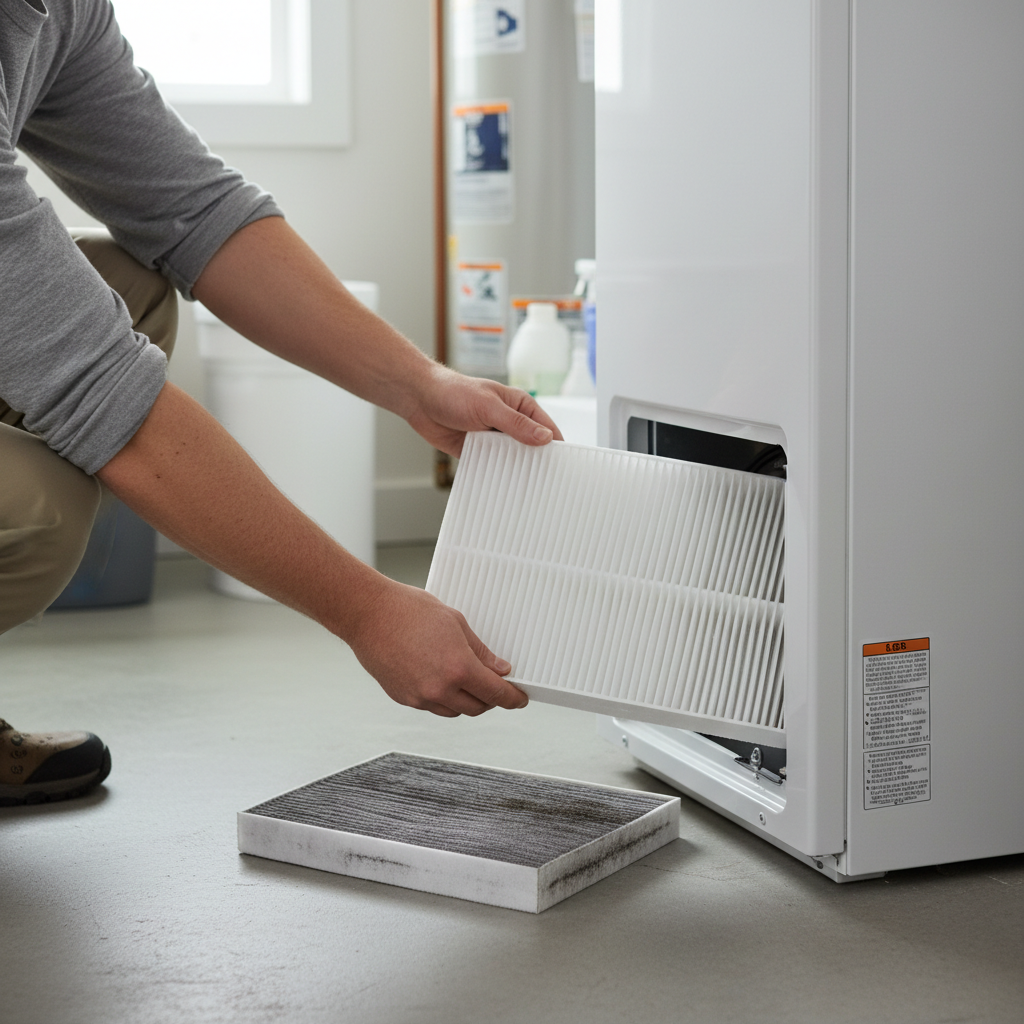
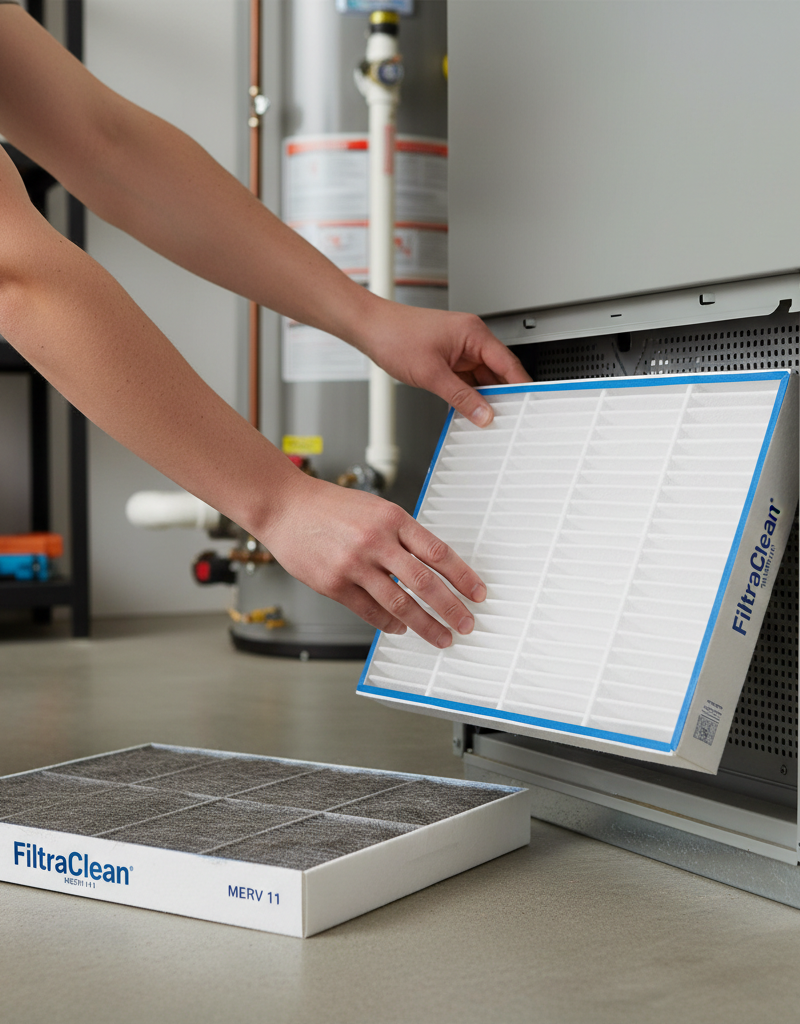
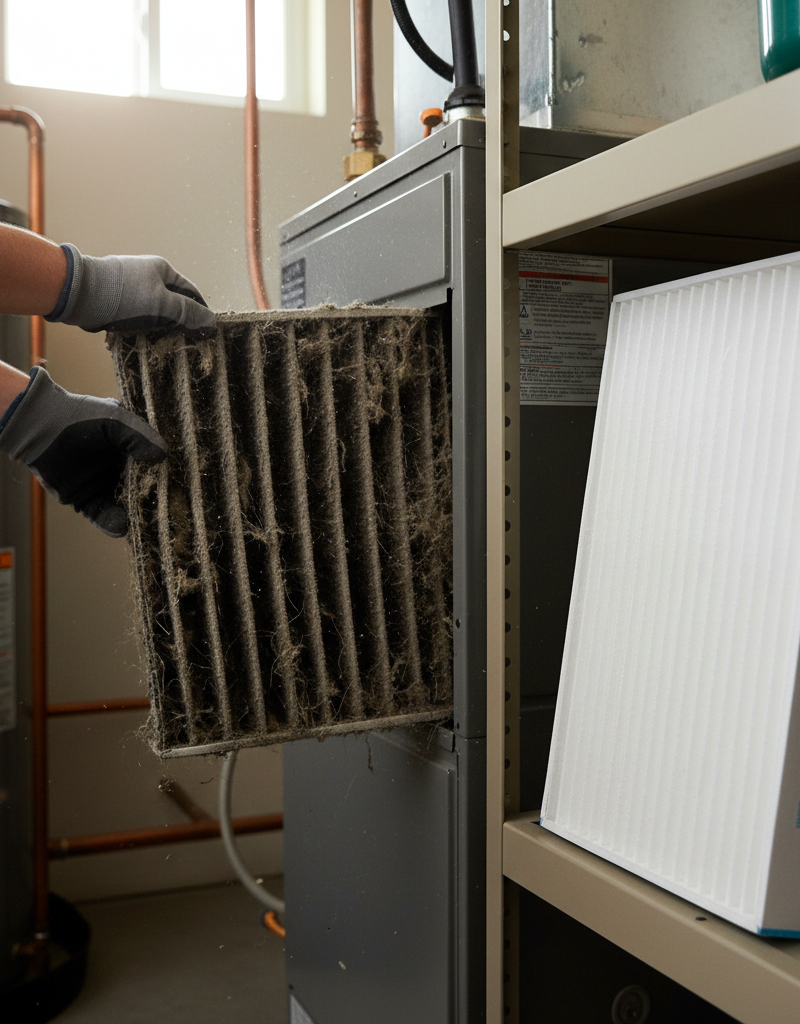
1. Change Your Air Filter Regularly — The simplest, most impactful DIY task.
- Tools: New air filter (check size on existing filter), marker (optional).
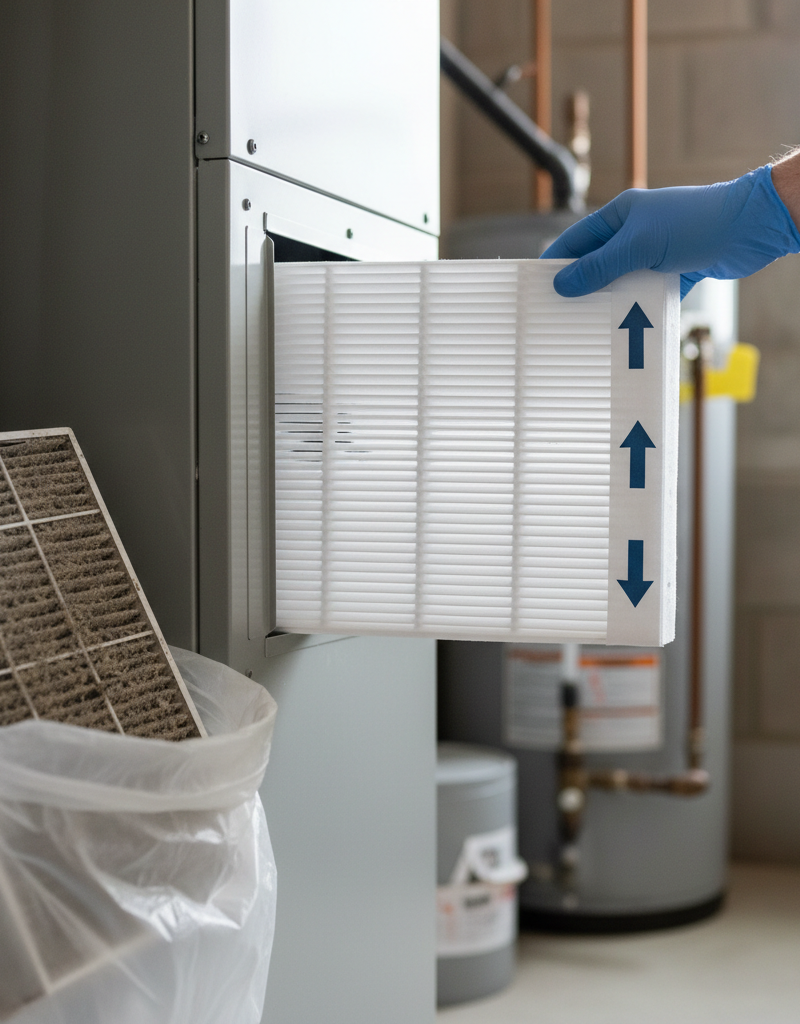
- Instructions: Locate your air filter slot, typically in the return air duct or within the indoor air handler/furnace unit. Note the direction of the airflow arrow on the old filter. Slide out the old, dirty filter. Write the installation date on the new filter with a marker. Slide the new filter in, ensuring the airflow arrow points towards the furnace/air handler.
- Frequency: Check monthly, replace every 1-3 months. If you have pets, allergies, or live in a dusty area, replace closer to monthly. A good rule of thumb: hold it up to a light source. If you can't see light through it, it's time for a change.
- If this doesn't work: If your system seems inefficient even with a new filter, it could indicate dirty coils or ductwork issues, necessitating a professional inspection.
2. Check Your Thermostat Settings — Ensure your thermostat is operating correctly.
- Tools: None.
- Instructions: Set your thermostat to 'Auto' fan mode, not 'On', to prevent constant air circulation when not actively heating or cooling, which can wear out the fan motor faster. Program schedules to allow for temperature setbacks when you're away or asleep, saving energy. Ensure the batteries are fresh if it's a battery-powered model.
- Safety: Never bypass or directly manipulate thermostat wiring without consulting a professional if you're unsure.
- Frequency: Monthly check, adjust programs as seasons change.
3. Keep Outdoor Condenser Unit Clean — Clear debris for efficient heat exchange.
- Tools: Garden hose, soft brush (optional), screwdriver (optional for grill removal).
- Instructions: SAFETY NOTE: Before doing anything, turn off power to the outdoor unit at the dedicated outdoor disconnect switch (usually a small box near the unit) or at your main electrical panel. Clear away leaves, grass clippings, weeds, and other debris from around the unit, maintaining at least a 2-foot clearance. Gently rinse the outside of the condenser fins with a garden hose, spraying from the inside out if possible (after removing the top grill carefully, then reattaching). Do not use a pressure washer, as it can bend the delicate fins.
- Frequency: Quarterly, or more often if you live in an area with a lot of foliage.
- If this doesn't work: If fins are severely bent or heavily caked with grime, a professional may be needed for specialized coil cleaning.
4. Clear Drain Line Traps — Prevent condensate clogs and water damage.
- Tools: Wet/dry vacuum, distilled white vinegar, measuring cup.
- Instructions: Locate the condensate drain line, often a PVC pipe extending from your indoor unit. Many systems have a small access port with a cap or a removable T-trap. SAFETY NOTE: Turn off power to the indoor unit at the thermostat and main electrical panel before working on the drain line. If there's an access port, pour about 1/4 to 1/2 cup of distilled white vinegar into it to kill algae and mold. Let it sit for 30 minutes. If no access port, you might need to use a wet/dry vacuum at the exterior end of the drain line to suction out any clogs. Re-secure any caps or traps.
- Frequency: Every 2-3 months during cooling season.
- If this doesn't work: If water continues to back up or you hear gurgling, the clog might be deeper or require professional tools to clear.
5. Inspect Ductwork for Leaks — Seal leaks to improve efficiency and air quality.
- Tools: Strong flashlight, metallic foil tape (specific for HVAC), mastic sealant and brush (optional).
- Instructions: In your attic, basement, or crawl space, visually inspect accessible ductwork. Look for gaps at seams, tears in flexible ducts, or disconnected sections. Run your hand along seams to feel for escaping air while the system is running. Safety: Be careful in attics; watch for nails and unstable footing. Seal small leaks and gaps with metallic foil tape, ensuring a tight, secure bond. For larger gaps or major disconnections, mastic sealant can be more effective but is messier to apply.
- Frequency: Annually.
- If this doesn't work: Extensive duct damage or inaccessible leaks require professional diagnosis and repair, as they significantly impact efficiency and air delivery.
6. Check Your Evaporator Coil (Limited Access) — Keep it clean for optimal heat transfer.
- Tools: Flashlight, soft brush (optional).
- Instructions: SAFETY NOTE: ONLY attempt this if the coil is easily accessible without dismantling the unit, and ALWAYS turn off all power to the indoor unit BEFORE opening any panels. Locate the evaporator coil (inside the indoor air handler). Using a flashlight, inspect for a buildup of dirt, dust, or mold. If there is light, loose debris, you can carefully brush it off with a soft brush or vacuum with a brush attachment.
- Pro Callout: If the coil is heavily soiled or not easily accessible, this is a job for a professional, as improper cleaning can damage the delicate fins.
- Frequency: Annually as part of your system check.
Common Causes
- Neglected Air Filters: The single biggest cause of HVAC inefficiency and breakdowns. Clogged filters restrict airflow, forcing the system to work harder, leading to overheating, frozen coils (AC), and reduced heating capacity (furnace). This directly increases energy consumption and shortens component life.
- Dirty Coils (Evaporator & Condenser): Dust, dirt, and grime on the coils act as insulators, impeding the heat exchange process. A dirty evaporator coil can cause the AC to freeze up, while a dirty condenser coil prevents outdoor heat dissipation, leading to higher head pressure and compressor failure.
- Refrigerant Leaks/Incorrect Charge: Too little or too much refrigerant disrupts the carefully balanced pressure and temperature cycles essential for efficient heat transfer, leading to poor cooling, higher energy use, and potential compressor damage.
- Poorly Maintained Ductwork: Leaks, kinks, or obstructions in ductwork lead to significant air loss, reducing the amount of conditioned air reaching your living spaces and forcing the system to run longer to compensate.
- Lack of Professional Tune-ups: Beyond what a homeowner can do, professional tune-ups address issues like unbalanced blower motors, loose electrical connections, worn belts, improper thermostat calibration, and slight refrigerant charge imbalances before they escalate into major failures.
- Drain Line Clogs: Algae and mold growth can clog the condensate drain line, causing water to back up, potentially leading to water damage, high humidity, and system shutdowns (due to safety float switches).
Common Mistakes
- Ignoring Filter Changes: Many homeowners replace filters only when the system struggles. The mistake is waiting too long; filters should be checked monthly and replaced proactively every 1-3 months, not reactively.
- **Thinking
Related Articles
Keep troubleshooting with these hand-picked guides from FixlyGuide:
- The #1 Mistake Homeowners Make With Their AC (and the $50 Fix) — Discover the most common and costly mistake homeowners make with their AC system and how a simple, affordable fix can prevent expensive rep…
- The Secret Reason Your AC Isn't Drying Your Air (And What to Check First) — Your AC should cool and dehumidify, but if your house feels muggy, there's a specific, often overlooked culprit preventing it from doing it…
- The HVAC Maintenance Myth: Why "Annual Service" Can Cost You More (and 3 Things to Check Instead) — Discover why strict annual HVAC servicing isn't always necessary and learn the essential checks that can save you money and extend your sys…
- The #1 Reason Your AC Blows Warm Air (And It's Not What You Think) — A dirty air filter is often the overlooked culprit behind an air conditioner blowing warm air, hindering its ability to cool your home effi…
- The Hidden Reason Your AC Freezes — And Why Most Homeowners Get It Wrong — Discover the surprising truth behind why your outdoor AC unit is freezing up and the common mistake homeowners make when trying to fix it.
- The Hidden Reason Your AC Isn't Cooling (And Why Most Homeowners Get It Wrong) — Is your central AC blowing warm air or struggling to cool your home? The culprit is often a silent but serious issue many homeowners overlo…
Estimate your own project cost
National averages are a starting point. Enter your details for a range that fits your house.
HVAC replacement cost
- Equipment$2,200 – $3,800
- Installation labor$1,200 – $2,500
Always insist on a Manual J load calculation — sq-ft sizing is only a rough check. Federal heat-pump rebates may reduce cost significantly.
Educational estimate only — always confirm with written local bids.
Questions to ask before you sign
Ask every contractor the same questions and the cheapest bid stops looking cheapest. Check them off as you go — your progress is saved on this device.
Free, no signup. Bring this to every walkthrough so you compare bids on the same terms.
What should this project cost?
Enter your project details for a realistic cost range before you call anyone.
Service calls and common repairs run $150–$900; full system replacement typically $6,000–$12,000.
- Regional adjustment
- National average
- Labor share (typical)
- ~$1,935
- Quotes to collect
- 3 written estimates
Educational estimate based on national averages — not a binding quote. Always confirm with written local estimates.
Fixly Project Decision Box
- DIY difficulty
- Advanced
- Estimated time
- Homeowner checks 20–30 minutes
- Cost level
- Moderate
Main tools / materials
- Clean air filter
- Garden hose for condenser coils
- Shop vac for the condensate line
When to stop and call a pro
- Burning smell, smoke, or a tripping breaker
- Refrigerant lines iced over or hissing
- Any work inside the sealed refrigerant circuit (EPA-licensed only)
- Gas smell near a furnace — leave and call the utility
Need professional help?
Find an HVAC Pro Near YouCheck these numbers against your project
National averages are a starting point. These tools narrow it to your scope and ZIP.
Free, no signup required. Estimates are educational guidance, not a quote or an inspection.
Frequently asked questions
How often should I change my HVAC filter?+
You should check your HVAC filter monthly and replace it every 1 to 3 months, depending on factors like pet ownership, allergies, and local dust levels. A good test is to hold it up to a light source; if you can't see light through it, it's time for a new one.
What happens if I don't service my HVAC system?+
Neglecting HVAC service can lead to decreased efficiency (higher energy bills), frequent breakdowns, reduced system lifespan, poor indoor air quality, and potentially costly emergency repairs. Components like compressors and heat exchangers are particularly vulnerable to increased strain.
What does a professional HVAC tune-up include?+
A professional tune-up typically includes cleaning coils, checking refrigerant levels, inspecting electrical connections, lubricating moving parts, calibrating the thermostat, checking ductwork for leaks, and ensuring safety controls are working correctly. It's a comprehensive inspection and preventative service.
Can I clean my outdoor AC unit myself?+
Yes, you can clean the exterior of your outdoor AC unit yourself. First, turn off all power to the unit at the disconnect switch. Then, clear away debris (leaves, grass) from around the unit and gently rinse the condenser fins with a garden hose. Avoid using a pressure washer, which can damage the delicate fins.
How much does professional HVAC service cost?+
A professional HVAC tune-up typically costs between $75 and $200, depending on your location and the service provider. This is a small investment compared to the potential savings on energy bills and the cost of major repairs or early system replacement.
Discussion
Loading comments…