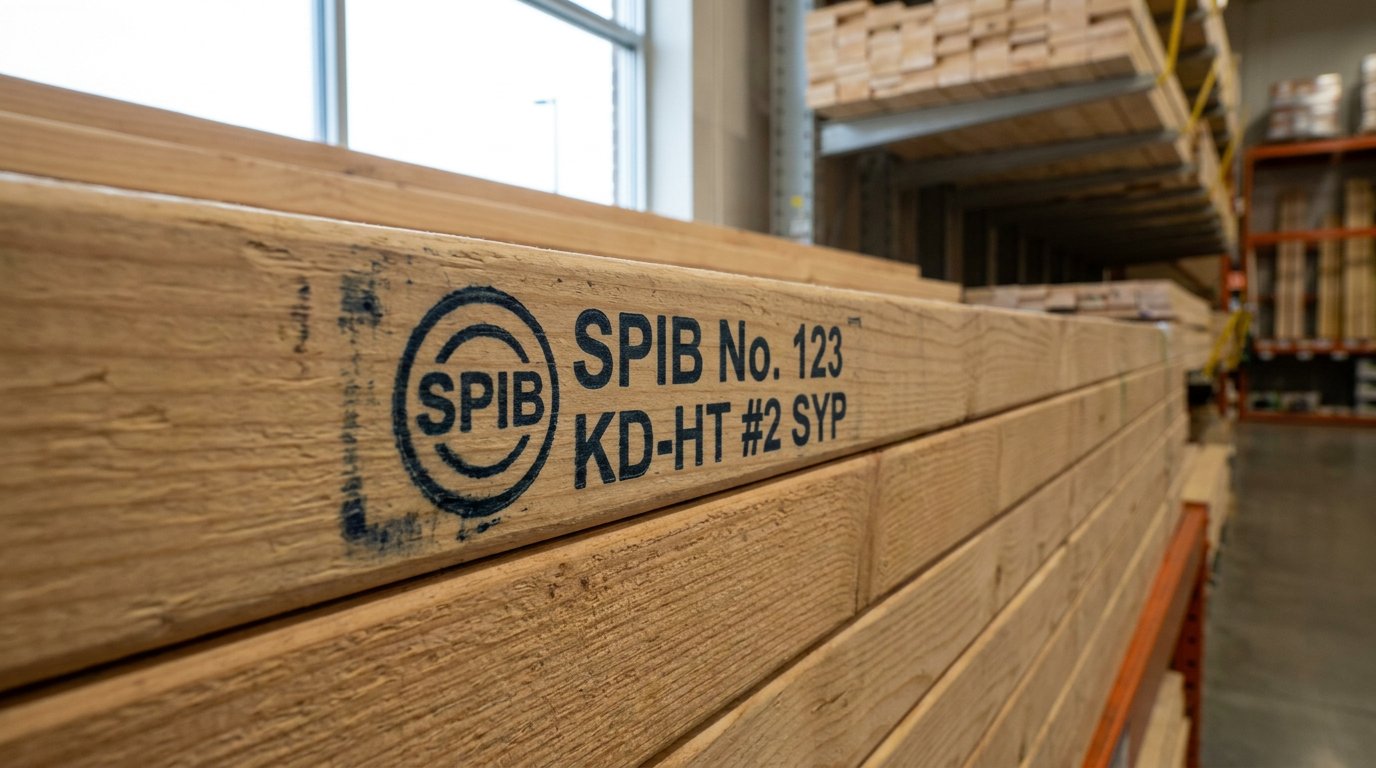
- Check the Species Mark - This abbreviation tells you what kind of tree the lumber came from. Sometimes it’s one species, sometimes it’s a group with similar properties that get harvested and sold together. Common marks include:
- S-P-F: Spruce-Pine-Fir. A common, affordable softwood for general construction.
- SYP: Southern Yellow Pine. Heavier, stronger, and often used for pressure-treated lumber.
- DF-L: Douglas Fir-Larch. A strong, stable wood often used for structural beams.
Published October 6, 2026Last updated October 6, 2026
Tools & materials you'll need
Affiliate linksAs an Amazon Associate FixlyGuide earns from qualifying purchases — at no extra cost to you. Prices and availability are accurate as of publication and subject to change.
The Problem
You’re standing in the lumber aisle at the home center, staring at a giant stack of 2x4s. They all look the same, more or less. Some are straighter. Some have more knots. But how do you pick the right one for your project?
A lot of folks grab the prettiest board, haul it home, and then wonder why it twists into a pretzel a week later. Or they build a deck with the wrong stuff and watch it rot out in just a few years. That’s not a small headache. That’s wasted money, busted time, and sometimes a safety problem.
Most DIYers do a quick eyeball check for straightness and call it a day. Trouble is, they miss the most useful info on the board: the grade stamp. That little ink mark tells you what the board is, where it came from, and what it’s meant for. It’s how you get the right wood for the job every single time, whether you’re framing a wall, building a bookshelf, or fixing a fence.
How It Works
Think of a lumber grade stamp like a report card for a piece of wood. If a 2x6 from Oregon needs to act like a 2x6 from Georgia, the lumber industry has to keep things consistent. So they use independent third-party agencies to inspect and certify the wood. Those agencies write the grading rules and train the people who stamp the lumber.
Once a log gets milled into boards, a trained grader looks over each piece. They’re checking knot size, knot location, grain slope, splits, wane (that bark left on the edge), and the other little natural flaws wood comes with. Based on what they see, they assign a grade. Better grade means fewer defects, stronger lumber, and a cleaner look. The grade, the wood species, the moisture content at the time it was surfaced, and the mill ID all get printed right on the board in a standard format.
For example, one of the most common species groups you’ll run into is "SPF," short for Spruce-Pine-Fir. Those trees grow together up north and have similar structural qualities. Another common one is "SYP" for Southern Yellow Pine, which is denser and stronger — real common here in Texas. The moisture content tells you whether the board was dried before it was surfaced. "KD-HT" means it was kiln-dried to a moisture content below 19% and heat-treated to kill pests, so it’s stable for indoor use. "S-GRN" means it was surfaced while green, over 19% moisture, and it’s going to shrink as it dries. If you don’t know those codes, you’re basically guessing — and wood loves to punish guesses.
I pulled a stack of framing lumber in Frisco last month for a garage conversion, and half the problems on that job came down to guys grabbing the wrong stamp and then acting surprised when the boards moved on them. Wood’s honest. The stamp tells you the truth. You just have to read it.
Decoding the Lumber Stamp: A Step-by-Step Guide
Let’s crack open a typical lumber stamp you’d see at any home improvement store. The layout’s pretty consistent, so once you get the pattern, you can read just about any of them without squinting at it like it’s a tax form.
-
Find the Grading Agency Mark - This is the official logo of the inspection agency that certified the lumber. You can’t miss it; it’s usually the most prominent symbol on the stamp. Common ones include SPIB (Southern Pine Inspection Bureau), WCLIB (West Coast Lumber Inspection Bureau), and TP (Timber Products Inspection). That tells you the standards are legit.
-
Identify the Mill Number - Near the agency logo, you’ll find a mill number or name (e.g., "123" or "XYZ Co"). This points back to the lumber mill that made the board. If there’s ever a recall or a bad batch turns up, that number traces it to the source.
-
Check the Species Mark - This abbreviation tells you what kind of tree the lumber came from. Sometimes it’s one species, sometimes it’s a group with similar properties that get harvested and sold together. Common marks include:
- S-P-F: Spruce-Pine-Fir. A common, affordable softwood for general construction.
- SYP: Southern Yellow Pine. Heavier, stronger, and often used for pressure-treated lumber.
- DF-L: Douglas Fir-Larch. A strong, stable wood often used for structural beams.
- Hem-Fir: Hemlock-Fir.
-
Read the Moisture Content - This is one of the biggest things to look at if you’re doing any DIY work. It tells you how much moisture was in the wood when it got planed down to its final size.
- KD or KD-HT: Kiln-Dried (HT means Heat Treated). The wood was dried in a kiln to a moisture content of 19% or less. This is the most stable wood for interior projects like framing walls or building furniture. The heat-treating process also sterilizes the wood, which is a requirement for lumber being shipped internationally.
- S-GRN: Surfaced Green. The wood had a moisture content over 19% when surfaced. This wood will shrink, cup, and twist as it dries. It’s cheaper but should only be used where that movement won’t cause problems, like a temporary brace.
- S-DRY: Surfaced Dry. Means the moisture content was 19% or less, equivalent to KD.
- MC-15: Indicates the wood was dried to 15% moisture content. You’ll see this on higher-quality finish-grade boards.
-
Determine the Grade - The grade tells you about the wood’s strength and appearance based on the number, size, and type of natural defects. It’s usually the biggest text on the stamp, which helps when you’re trying to read it in a dark aisle with a cart in the way.
- #2: The most common grade for general construction and framing. It offers good strength with a moderate number of knots and defects. Most of the 2x4s and 2x6s you see at the home center are #2 grade.
- #1: A higher-quality grade with smaller, tighter knots. It’s stronger and has a better appearance than #2. It’s a good choice if you need a straighter board or if the wood will be visible.
- Stud: This grade is specifically for vertical use in wall framing. It has good compression strength and is typically cut to pre-determined lengths (like 92-5/8 inches for a standard 8-foot wall).
- Select Structural or SS: The highest and strongest grade. It has very few defects and is used where strength is critical, like for deck joists or stair stringers. It’s also the most expensive.
- #3 or Utility: Lower-grade wood with more and larger defects. It’s not intended for structural use but can be fine for temporary bracing, shipping crates, or projects where appearance and strength don’t matter.
Common Lumber Grades and Their Uses
Picking the right grade can save you money and keep a project from going sideways. Using high-end lumber for a plain utility shelf is just burning cash, and using a low-grade board where you need structure is asking for trouble.
| Grade | Common Characteristics | Best For | Typical Cost (per board foot) |
|---|---|---|---|
| Select Structural | Minimal knots, straight grain, highest strength. | Deck beams, stair stringers, exposed rafters. | $$$$ |
| #1 | Smaller, tight knots. Stronger and better appearance than #2. | Framing, visible studs, high-quality furniture. | $$$ |
| #2 | The all-purpose standard. Good strength, moderate knots. | General framing, studs, rafters, joists. | $$ |
| Stud | Cut to specific lengths for wall framing (e.g., 92-5/8"). Good compression strength. | Vertical studs in load-bearing walls. | $$ |
| #3 / Utility | Larger knots, splits, and wane are allowed. Not for structural use. | Crates, temporary bracing, non-structural projects. | $ |
Common Mistakes to Avoid
-
Buying "Green" Lumber for Interior Projects: Don’t use lumber stamped "S-GRN" for framing walls, building furniture, or any indoor project. It’ll shrink across its width as it dries inside your house, and that means drywall cracks, twisted frames, and loose joints. No dice.
-
Ignoring the Crown: Every board has a slight curve, or "crown," along its edge. When you’re framing, install joists and rafters with the crown facing up. The load helps flatten the board over time. Flip it crown-down and you’ve built a sag right into the thing.
-
Using Interior Lumber Outdoors: Even if it looks stout, standard KD-HT lumber isn’t treated to resist rot and insects. For decks, fences, or anything touching the ground, you MUST use pressure-treated lumber. You’ll usually spot it by the greenish tint and a separate tag showing the chemical treatment, like "UC4A".
-
Choosing Based Only on Straightness in the Store: A board can look dead straight in the aisle and still turn into a warped mess in your garage a week later if it’s drying unevenly. The moisture content on the stamp (KD-HT) tells you a whole lot more about future stability than a quick eyeball test ever will.
-
Thinking All 2x4s are the Same: A #1 grade 2x4 is a lot stronger and more stable than a #3 grade 2x4. Don’t just grab the top board from the pile and hope for the best — dig for the grade you need.
Tips & Prevention
-
Acclimate Your Lumber: For any interior project, especially with nicer grades of wood, let the lumber sit inside your house for at least a week before you use it. That gives the moisture time to settle into your home’s environment and cuts down on movement after install.
-
Sight Your Boards: Pick up the board and look down the edge from one end to the other. That’s the easiest way to spot twists, bows, and cups. If it looks like a propeller or a banana, put it back.
-
Seal End Grains: Wood takes on and loses moisture about 10 to 12 times faster through the end grain than through the face. For outdoor projects, always seal the cut ends of pressure-treated boards with a suitable wood preservative so they don’t rot out early.
-
Stack It Right: If you’re storing lumber for more than a few days, stack it neatly on a flat surface with small pieces of scrap wood (stickers) placed every 16-24 inches between the layers. That keeps air moving evenly and helps prevent warping.
-
Buy a Little Extra: It’s just how it goes — you’ll always find a warped board or make one wrong cut. Plan on buying about 10-15% more lumber than your project calls for. Better to have a couple extra boards than to make a second trip mid-project.
When to Call a Professional
Picking out 2x4s for a simple shelf is one thing. Bigger structural stuff is a different animal. If you’re sizing floor joists, roof rafters, or support beams, you really want a structural engineer or an experienced framing contractor involved. They can figure out the loads and tell you the exact species, grade, and size of lumber your local building codes require so the job’s done right and stays safe. Don’t guess on the bones of your house.
Related Articles
Keep troubleshooting with these hand-picked guides from FixlyGuide:
- 7 Insurance Claim Mistakes That Get Your Payout Denied — Paid your premiums but got your claim denied? Uncover the critical homeowner insurance claim mistakes that can jeopardize your payout and l…
- The One Schedule That Saves Homeowners $2,500 a Year — A disciplined seasonal home maintenance schedule is your best defense against catastrophic repair bills. Learn which tasks to tackle each s…
- Weed Killer Colors & Labels: 9 Common Types and How to Choose the Right One — Don't guess at the garden center—learn what the colors and active ingredients on weed killer labels really mean so you buy the right produc…
- The Secret to Lush Raised Beds? It's Not Just About How You Water — Smart irrigation for raised garden beds isn't just about automation; it's about delivering the right amount of water precisely when your pl…
- The 6 Cleaning Secrets Hiding in Your Power Drill (Plus Attachments to Master) — Your power drill isn't just for DIY projects; with the right attachments, it's a powerful and efficient cleaning tool for tackling tough gr…
- Is Your House Breathing? Why Doors Stick Shut in Summer — Don't just muscle that sticking door shut. It's a sign of a house-wide issue. Learn the surprising reason your doors swell in summer and th…
Should you do this yourself?
Answer five quick questions before you start. Safety outranks savings every time.
Your experience with work like this
How high do you have to work?
Does the job involve any of these?
Will it need a permit?
Specialty tools
Free and instant. Educational guidance only — not a quote, inspection, or professional diagnosis.
What should this project cost?
Enter your project details for a realistic cost range before you call anyone.
Cost depends heavily on which system turns out to be the source.
- Regional adjustment
- National average
- Labor share (typical)
- ~$1,620
- Quotes to collect
- 3 written estimates
Educational estimate based on national averages — not a binding quote. Always confirm with written local estimates.
Before you start
Check the difficulty, permits, and safety risk — then decide whether to call a pro.
- Estimate this projectGet a cost range for your scope and ZIP before you call anyone.Open
- Get local estimatesSend one request and compare written estimates from vetted pros.Open
Free, no signup required. Estimates are educational guidance, not a quote or an inspection.
This article was independently written by FixlyGuide based on the source topic.
Frequently asked questions
What does KD-HT mean on a lumber stamp?+
KD-HT stands for Kiln-Dried and Heat-Treated. This means the wood was dried in a kiln to a moisture content below 19% and heated to at least 133°F for 30 minutes to sterilize it, killing pests and fungi.
What's the difference between #1 and #2 lumber?+
#1 grade lumber has smaller and fewer defects (knots) than #2 grade. This makes it stronger, straighter, and better for applications where the wood will be visible or needs higher strength. #2 is the standard for general construction framing.
Can I use S-GRN lumber for a deck?+
No. S-GRN means the wood was 'surfaced green' with a high moisture content and it will shrink and warp as it dries. For a deck, you need pressure-treated lumber that is rated for ground contact (UC4A) or outdoor use (UC3B) and is structurally sound, like #1 or #2 grade.
What is SPF lumber?+
S-P-F stands for Spruce-Pine-Fir. These three wood species have similar structural properties and are often harvested and milled together. It's a very common and affordable type of softwood used for framing and general construction.
Why is some lumber stamped 'STUD'?+
'Stud' is a specific grade for lumber intended for vertical use in wall framing. These boards are optimized for compression strength and are usually pre-cut to common wall heights like 92-5/8 inches for an 8-foot ceiling, which saves time on site.
Does the mill number on lumber matter to me?+
For a homeowner, the mill number isn't usually important. It's a quality control mark that allows the grading agency to trace the wood back to its origin if any problems are discovered with its quality or grading.
What does the 'crown' of a board mean?+
The crown is the slight upward curve you'll see when looking down the narrow edge of a board. When installing joists or rafters, always place them 'crown up' so that the weight of the structure flattens them over time, rather than causing them to sag.
How long should I let lumber acclimate before using it?+
For interior projects, you should let lumber acclimate in the room where it will be installed for at least 7 to 10 days. This allows the wood's moisture content to equalize with the surrounding environment, which minimizes shrinking, swelling, and warping after it's installed.

Discussion
Loading comments…