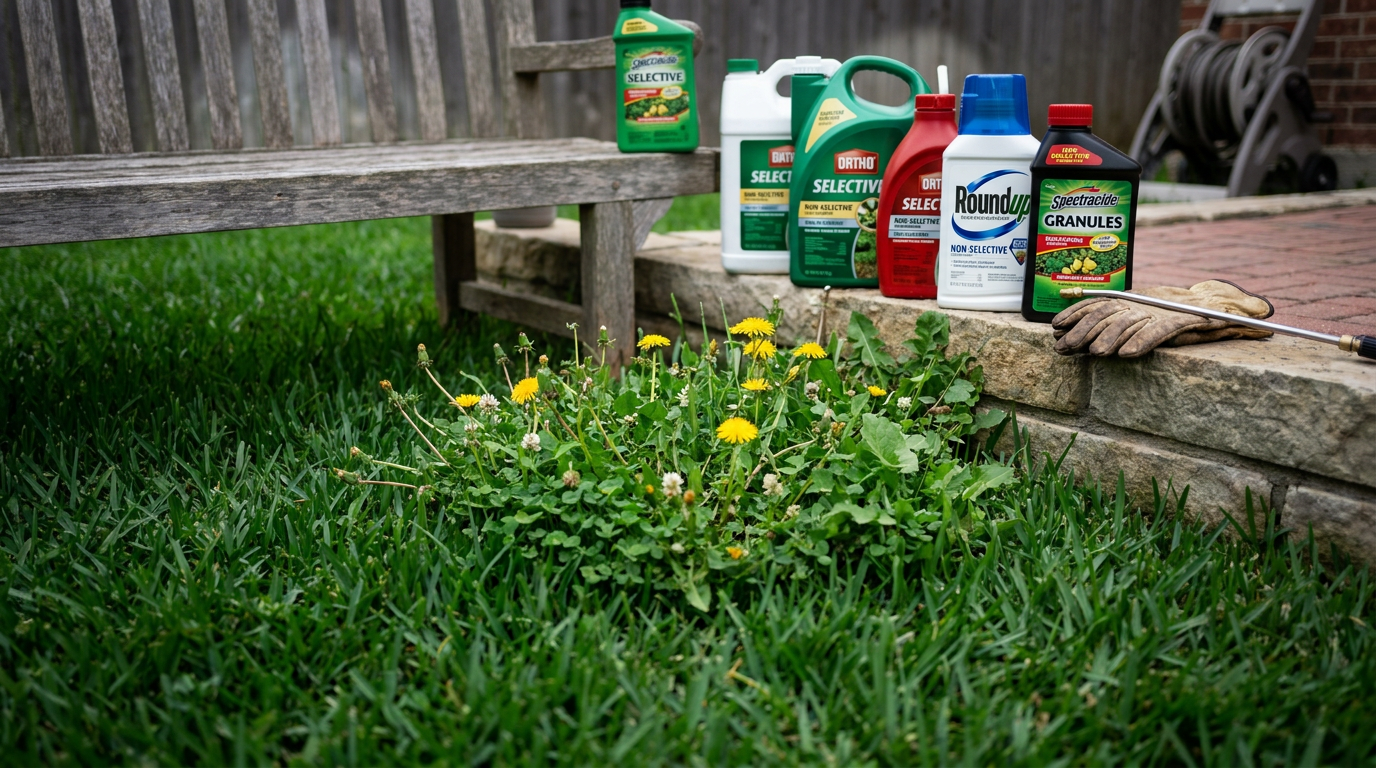
- A Healthy Lawn is the Best Defense. Thick, healthy turf is the best weed prevention there is. It crowds out weeds and leaves their seeds nowhere to germinate. Fertilize right, water deeply but not too often, and don’t mow too short.
- Mow High. Cutting at the highest recommended height for your grass type (around 3-4 inches for St. Augustine) helps shade the soil, which keeps weed seeds from getting the light they need to sprout.
- Time Your Pre-Emergent. For North Texas, the trick is getting your pre-emergent down when soil temperatures stay at 55°F. That’s usually late February to early March. A second round in late summer can help head off winter weeds.
- Read the Label. Then Read It Again. Every single time you apply. Check the grass type, temperature warnings, mixing rate, and safety precautions. Takes a minute. Can save your whole lawn.
- Spot Treat When Possible. Instead of blasting the entire yard, walk the lawn with a ready-to-use sprayer and hit the weeds you actually see. It’s easier on the environment and keeps the chemical load down.
Published October 1, 2026Last updated October 1, 2026
Tools & materials you'll need
Affiliate linksAs an Amazon Associate FixlyGuide earns from qualifying purchases — at no extra cost to you. Prices and availability are accurate as of publication and subject to change.
Quick Answer
Weed killer packaging uses color as a hint sometimes, but there’s no hard-and-fast standard. I’d never trust the bottle color alone. The real key is reading the label for two things: the "active ingredient" (like glyphosate, 2,4-D, or iron HEDTA) and whether it’s "selective" or "non-selective." Selective killers target specific weeds and leave the lawn alone, while non-selective products kill any plant they touch.
The Problem
You’re standing in front of a wall of weed killers at the hardware store. Bottles of every color—red, blue, green, yellow, purple. It feels like you need a secret decoder ring just to buy the right jug. You know you need to kill the crabgrass taking over your St. Augustine, but you don’t want to accidentally nuke the whole lawn in the process.
Buying the wrong stuff is more than a waste of money. It can mean killing your expensive turfgrass, missing the weeds entirely, or spraying something that won’t do a thing to the problem you’ve got. The labels are messy, the brands all claim they’re the miracle cure, and the stakes on your lawn feel pretty high. You just want the right bottle and a clean finish.
How It Works
Weed killers, properly called herbicides, work a few different ways. The big divider is selective vs. non-selective.
A non-selective herbicide is the kill-everything kind. It’s built to wipe out any plant it hits. Glyphosate is the classic example. You’d use that for cleaning up a gravel driveway, wiping out everything in a flower bed you’re tearing out, or taking care of poison ivy on a fence line—places where total vegetation control is the whole point.
A selective herbicide is a lot more specific. It goes after certain weeds and leaves others—usually your turfgrass—standing. That’s the stuff you want for lawn care. It works because broadleaf weeds, like dandelions and clover, are biologically different from grassy plants like Bermuda or Zoysia. A common ingredient like 2,4-D mimics a plant growth hormone. The broadleaf weeds soak it up and basically grow themselves into a mess, while grasses have a different cellular structure and can handle it.
Herbicides are also split into pre-emergent or post-emergent. A pre-emergent, like dithiopyr or prodiamine, puts down a chemical barrier in the top layer of soil so weed seeds can’t germinate. You apply it in late winter or early spring before you see weeds popping up. A post-emergent is for weeds you can already see. It gets absorbed through the leaves, moves down to the root, and kills the plant that’s already there.
How to Choose the Right Weed Killer
-
Step 1: Identify Your Weed. - Before you do anything else, you’ve got to know what you’re fighting. Is it a broadleaf weed like clover, dollarweed, or dandelions? Or is it a grassy weed like crabgrass or dallisgrass? Take a clear photo or pull a sample in a plastic bag. Most university extension services have solid weed ID guides online—plenty of them right here in Texas. Know the enemy first. Saves a lot of grief.
-
Step 2: Identify Your Grass Type. - This one’s just as critical. Are you growing St. Augustine, Bermuda, Zoysia, or something else? A lot of selective herbicides that are fine for Bermuda will scorch or kill St. Augustine. The product label will ALWAYS list the turfgrass types it’s safe for. Don’t skip this. I’ve seen folks torch a lawn because they assumed "lawn safe" meant safe for everything—no dice.
-
Step 3: Check for the Active Ingredient. - Ignore the brand name and slick packaging for a second. Find the "Active Ingredients" section on the label. It’s usually tucked away in small print on the back or side. That tells you what’s actually in the bottle. Common ones for lawns are 2,4-D, MCPP (Mecoprop), and Dicamba, often mixed together. For grassy weeds, you might see Quinclorac. For kill-all jobs, you’ll see Glyphosate or Diquat.
-
Step 4: Look for "Selective" vs. "Non-Selective". - The label should spell this out. If you’re treating weeds in your lawn, you need a selective herbicide. If you’re clearing ground and starting fresh, you want a non-selective one. "Lawn Weed Killer" almost always means selective, while stuff sold for patios, fences, and driveways is usually non-selective.
-
Step 5: Note Pre-Emergent vs. Post-Emergent. - Are you trying to stop seeds from sprouting this spring? You need a pre-emergent. Are you trying to kill weeds that are already up and growing? You need a post-emergent. Some products do both jobs, so you get quick control and some prevention too.
-
Step 6: Read the Temperature and Mowing Warnings. - This is a big one, especially in North Texas. Most herbicides have temperature limits. If you spray when it’s over 85°F or 90°F, you can stress the lawn and cause real damage, even if the product is normally safe for your grass type. The label will also tell you how long to wait before and after mowing—usually 2-3 days. I pulled a water heater in Frisco last month, and the homeowner mentioned he’d fried half his St. Augustine doing a mid-July spray. Same story, different job.
-
Step 7: Consider the Formulation: Granules vs. Liquid. - Granular products get spread with a broadcast or drop spreader, and a lot of them are "weed and feed" products with fertilizer mixed in. They’re easy enough to apply, but they can be less effective if the weed leaves aren’t wet. Liquid concentrates you mix yourself are usually more cost-effective for big areas, while ready-to-use (RTU) trigger sprayers are great for small spot jobs. Handy, but they add up.
-
Step 8: Pay Attention to the Color... But Be Skeptical. - Color can give you a loose clue, but it’s not a rule. Bright red or orange caps and labels often point to non-selective, kill-everything products (think Roundup). Blue or green packaging is often used for selective lawn weed killers. Yellow is often tied to crabgrass control. Still, brands change their packaging all the time, so read the label first and trust the color second.
Common Weed Killer Types
Here’s a breakdown of what you’ll find on the shelf.
| Herbicide Type | Active Ingredient(s) | Primary Use Case | What It Does | Common Color Hint |
|---|---|---|---|---|
| Broadleaf Killer | 2,4-D, MCPP, Dicamba | Killing dandelions, clover, dollarweed in lawns. | Selectively targets broadleaf weeds, leaving most turfgrasses unharmed. The classic "lawn weed killer". | Green or Blue |
| Grassy Weed Killer | Quinclorac, Fenoxaprop | Killing crabgrass, dallisgrass, foxtail in lawns. | Selectively targets undesirable grasses. Check your turf type—some are sensitive! | Yellow or Orange |
| Total Vegetation Killer | Glyphosate, Imazapyr | Clearing gravel driveways, fence lines, patios, garden bed prep. | Non-selective. Kills any plant it touches by stopping a key protein process. Can persist in soil. | Red or Bright Orange |
| Fast-Acting Burn-Down | Diquat, Pelargonic Acid | Quick visual results on patios, walkways. Edging. | Non-selective contact killer. Kills the top growth quickly but may not kill the root. Good for annuals. | Red or Purple |
| Natural / Organic | Iron HEDTA, Acetic Acid | Lawns (iron-based) or general use (vinegar-based). | Iron-based products selectively overload broadleaf weeds. Vinegar is a non-selective burn-down agent. | Green, Earth Tones |
| Pre-Emergent | Dithiopyr, Prodiamine | Preventing crabgrass and other annual weeds before they sprout. | Creates a chemical barrier in the soil that inhibits seed germination. Must be applied before weeds emerge. | Often Yellow or in bags |
Common Mistakes
- Applying on a Windy Day. Herbicide drift is a real headache. Even a light breeze can carry spray onto your prize roses or your neighbor’s vegetable garden. Apply when the air is calm—early morning usually does the trick.
- Ignoring the Temperature. Spraying selective herbicides when it’s too hot (typically over 85°F) can damage or kill your lawn, even if you’ve got the "right" product. Heat makes turfgrass more vulnerable to chemical stress. It’s a bad combo.
- Using the Wrong Rate. More is not better. Mixing concentrate too strong or laying it down too heavy won’t kill weeds faster—it’ll just burn your grass and waste money. Use a real measuring cup and follow the dilution rates on the label exactly.
- Watering Too Soon. Most post-emergent herbicides need time to get absorbed through the weed’s leaves. The label will tell you how long it needs to be "rainproof," usually anywhere from 1 to 6 hours. Watering the lawn or kicking on the sprinklers too soon just washes it off.
- Expecting Instant Results. Chemical herbicides aren’t magic. Some burn-down products show results in hours, sure, but systemic killers that go after the root can take 7-14 days to show the full effect. Give it time before you decide to spray again.
- Using a Sprayer for Multiple Jobs. Don’t use the same sprayer for herbicides and insecticides/fungicides. It’s almost impossible to clean it well enough to prevent cross-contamination. A little weed killer residue is plenty to wipe out your prize tomato plants. Keep one sprayer just for herbicides and label it plain as day.
Cost & Time Breakdown
| Task | DIY Cost | Pro Cost | Time |
|---|---|---|---|
| Spot-Treating Weeds | $15–$25 (for RTU bottle) | $75–$150 (minimum service call) | 15–30 minutes |
| Broadcasting Granular Weed & Feed | $30–$60 (1 bag) | $100–$200 | 1–2 hours |
| Spraying a Whole Lawn (Concentrate) | $25–$40 (bottle of concentrate) | $90–$180 | 1–2 hours |
| Pre-Emergent Application | $40–$70 (1 bag for 5,000 sq ft) | $100–$200 | 1–2 hours |
| Clearing a Large Area (Non-Selective) | $20–$50 | $150–$300+ | 2-3 hours |
Tips & Prevention
- A Healthy Lawn is the Best Defense. Thick, healthy turf is the best weed prevention there is. It crowds out weeds and leaves their seeds nowhere to germinate. Fertilize right, water deeply but not too often, and don’t mow too short.
- Mow High. Cutting at the highest recommended height for your grass type (around 3-4 inches for St. Augustine) helps shade the soil, which keeps weed seeds from getting the light they need to sprout.
- Time Your Pre-Emergent. For North Texas, the trick is getting your pre-emergent down when soil temperatures stay at 55°F. That’s usually late February to early March. A second round in late summer can help head off winter weeds.
- Read the Label. Then Read It Again. Every single time you apply. Check the grass type, temperature warnings, mixing rate, and safety precautions. Takes a minute. Can save your whole lawn.
- Spot Treat When Possible. Instead of blasting the entire yard, walk the lawn with a ready-to-use sprayer and hit the weeds you actually see. It’s easier on the environment and keeps the chemical load down.
- Safety First. Always wear gloves, long sleeves, and eye protection when mixing or spraying herbicides. Keep kids and pets off the treated area until it’s completely dry, or for as long as the label says.
When to Call a Professional
If you’re dealing with a widespread, stubborn infestation that hasn’t responded to DIY treatments, it’s time to call a pro. They’ve got access to professional-grade products and can sort out messy issues, like a mix of fungus and weeds. If you’ve got a big property (over half an acre), letting a licensed applicator handle it is usually more efficient and easier on the wallet. And for tough weeds like nutsedge, dallisgrass, or Virginia buttonweed, a pro’s experience and specialty products can save you a whole season of frustration and wasted effort.
Related Articles
Keep troubleshooting with these hand-picked guides from FixlyGuide:
- The Secret to Lush Raised Beds? It's Not Just About How You Water — Smart irrigation for raised garden beds isn't just about automation; it's about delivering the right amount of water precisely when your pl…
- The Surprising Trick to Cutting Your Dryer Bill By $100 Per Year — Installing a clothesline can significantly reduce your energy bills and add a fresh scent to your laundry. This guide covers how to choose…
- 7 Inspection Red Flags That Secretly Signal a $20,000 Bill — Don't let your dream home become a money pit. Many buyers and even some inspectors overlook subtle home inspection red flags that lead to f…
- The Shocking Truth About GFCIs vs. AFCIs: Are You Really Protected? — GFCIs prevent electrocution from ground faults, while AFCIs stop fires from dangerous electrical arcs. Understanding their distinct roles i…
- The One Mistake DIYers Make with Old Paint (It Could Cost You Your Health) — If your home was built before 1978, disturbing old paint during DIY projects can release dangerous lead dust. Learn how to protect your fam…
- The #1 Pre-Emergent Mistake Wrecking Your Weed Control (And How to Fix It) — Applying pre-emergent at the wrong time is the most common mistake, leading to ineffective weed control and wasted effort for homeowners.
Should you do this yourself?
Answer five quick questions before you start. Safety outranks savings every time.
Your experience with work like this
How high do you have to work?
Does the job involve any of these?
Will it need a permit?
Specialty tools
Free and instant. Educational guidance only — not a quote, inspection, or professional diagnosis.
Estimate your own project cost
National averages are a starting point. Enter your details for a range that fits your house.
Concrete slab calculator
- Bagged mix (80 lb)$372 – $527
- Ready-mix delivery (1.5 cu yd)$210 – $300
Ready-mix is usually cheaper above ~1 cu yd. Most suppliers have a short-load fee under 3 yd.
Educational estimate only — always confirm with written local bids.
What should this project cost?
Enter your project details for a realistic cost range before you call anyone.
Cost depends heavily on which system turns out to be the source.
- Regional adjustment
- National average
- Labor share (typical)
- ~$1,620
- Quotes to collect
- 3 written estimates
Educational estimate based on national averages — not a binding quote. Always confirm with written local estimates.
Before you start
Check the difficulty, permits, and safety risk — then decide whether to call a pro.
Free, no signup required. Estimates are educational guidance, not a quote or an inspection.
This article was independently written by FixlyGuide based on the source topic.
Frequently asked questions
What's the difference between selective and non-selective weed killer?+
A selective weed killer is designed to target specific weeds (like dandelions) while leaving your lawn grass unharmed. A non-selective weed killer, like glyphosate, is a 'kill-all' product that will destroy any plant it touches, including your grass.
Can I use any weed killer on my St. Augustine grass?+
No, absolutely not. St. Augustine is notoriously sensitive to certain herbicides, especially some ingredients in 'weed and feed' products. Always check the label to ensure it explicitly says it is safe for St. Augustine lawns or you risk severe damage.
What do the colors on weed killer bottles mean?+
While not a strict rule, colors can be a general hint. Red/orange often means non-selective (kills everything), blue/green is typically for selective lawn weed killers, and yellow is often for crabgrass control. However, you must always read the label's active ingredients and usage directions instead of relying only on color.
How long after spraying weed killer is it safe for pets and kids?+
The general rule is to keep pets and children off the treated area until the spray has completely dried. This can take anywhere from a few hours to a full day, depending on humidity and temperature. The product label will provide the specific re-entry interval you should follow.
When is the best time to apply weed killer?+
Apply post-emergent herbicides on a calm, dry day when temperatures are between 60°F and 85°F. Applying in extreme heat can damage your lawn. For pre-emergents in North Texas, apply when the soil hits a consistent 55°F, usually in late February or early March.
Can I water my lawn after applying weed killer?+
No, not right away. Most liquid herbicides need to be absorbed through the weed's leaves. The label will specify a 'rainproof' time, typically 1 to 6 hours. Watering too soon will wash the product off before it can work.
Why didn't the weed killer work?+
There could be several reasons. You might have used the wrong type for your specific weed, applied it at the wrong time of year, or it might have rained too soon after application. Some tough perennial weeds also require multiple applications to fully kill the root system.
Is it better to use liquid or granular weed killer?+
It depends. Liquids, especially concentrates you mix yourself, are often more effective for post-emergent control as they stick to weed leaves well. Granules are easy to apply with a spreader and are great for pre-emergent applications or 'weed and feed' products, but the leaves need to be damp for them to work best.
Discussion
Loading comments…