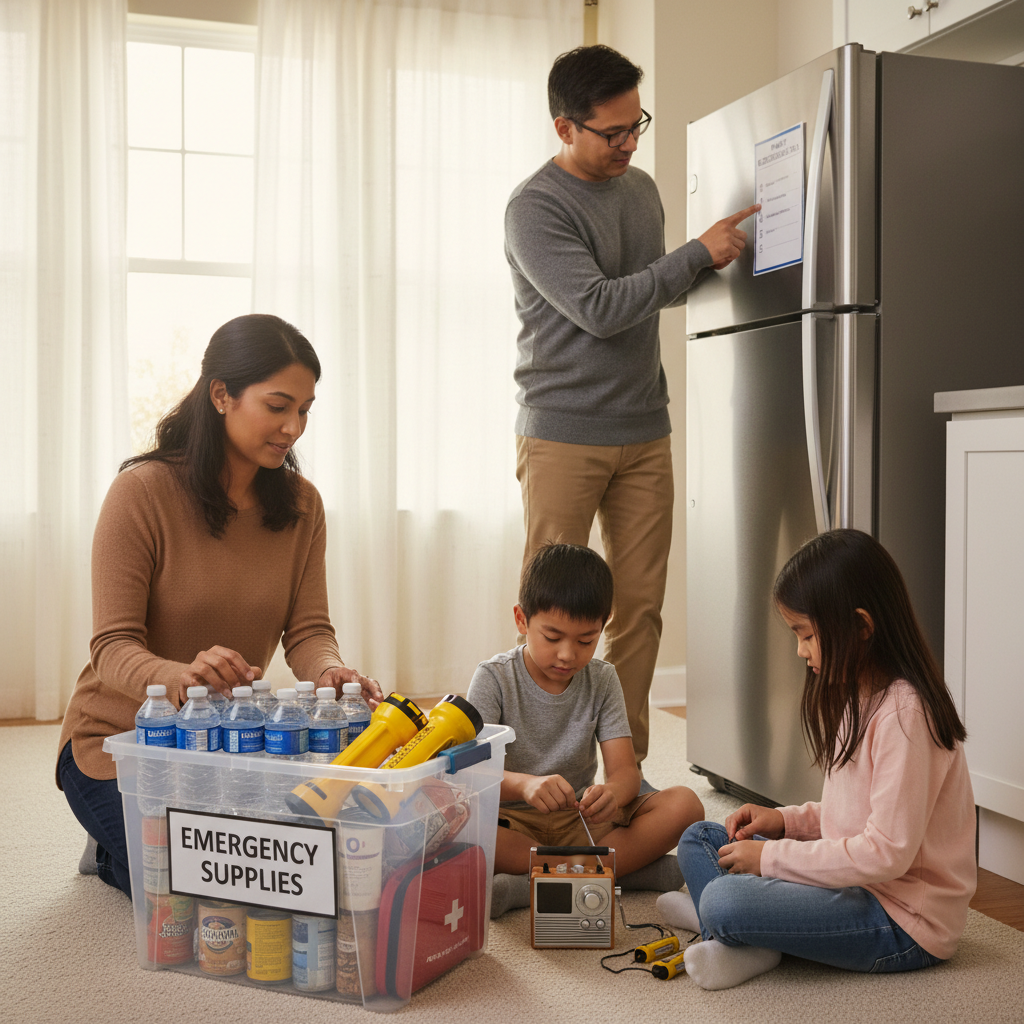
- Assemble Your Emergency Aftermath Kit — Create a dedicated, easily accessible kit with essentials for at least 72 hours, ideally longer.
- Water: At least 1 gallon per person per day for drinking and sanitation. Store in a cool, dark place. Pro-tip: If a storm is imminent, fill bathtubs with water for flushing toilets.
- Food: Non-perishable, easy-to-prepare items like canned goods, energy bars, and dried fruit. Don't forget a manual can opener.
- First Aid: Comprehensive kit including bandages, antiseptic wipes, pain relievers, prescription medications (at least a 7-day supply), and any specific medical supplies your family needs.
- Lighting: Multiple flashlights (LED preferred for battery life), extra batteries, and headlamps. Avoid candles as they pose a fire risk.
Published July 20, 2026Last updated August 17, 2026
Tools & materials you'll need
Affiliate linksAs an Amazon Associate FixlyGuide earns from qualifying purchases — at no extra cost to you. Prices and availability are accurate as of publication and subject to change.
Quick Answer
Many homeowners focus solely on pre-storm securing of their homes, but neglect the crucial aftermath. The single biggest mistake is failing to prepare adequately for the post-storm cleanup and recovery phase, which includes not having essential supplies, a clear action plan, or understanding their insurance policies. This oversight can turn a stressful situation into a chaotic and dangerous one. Proactive planning, including a well-stocked emergency kit, a family communication strategy, and an understanding of your home's vulnerabilities, ensures a smoother, safer recovery.
The Problem
Extreme weather events, ranging from hurricanes and blizzards to tornadoes and severe thunderstorms, are becoming more frequent and intense. While many homeowners take steps to secure their property before a storm hits—boarding windows, clearing gutters, tying down loose items—a significant number overlook the critical period immediately after the storm. This oversight creates a new set of problems: lack of essential supplies, difficulty assessing damage, communication breakdowns, and delayed recovery efforts. The aftermath can be even more dangerous than the storm itself due to downed power lines, contaminated water, structural damage, and debris. Without a clear plan and the right resources, homeowners can find themselves overwhelmed, jeopardizing their safety and the long-term integrity of their homes.
How It Works
Effective storm preparedness functions on several interconnected levels, much like a chain where each link is vital. Before any weather event, the process begins with risk assessment and mitigation. This involves understanding the specific threats your region faces (e.g., coastal flooding for hurricanes, high winds for tornadoes) and then taking steps to harden your home against those threats. For instance, in hurricane-prone areas, this might mean installing hurricane clips on rafters, reinforcing garage doors, or investing in impact-resistant windows. For areas susceptible to heavy snow, it could involve ensuring your roof can handle the load and that your heating system is regularly maintained.
The next layer is emergency supply staging. This isn't just about having a flashlight; it's about anticipating a complete loss of utilities for an extended period. This includes power, water, and even cellular service. Your emergency kit acts as a self-contained life support system, providing potable water, non-perishable food, first aid, and communication tools (like a hand-crank radio) to sustain your household until services are restored or professional help arrives.
Crucially, communication and evacuation planning form another layer. This involves establishing out-of-state contacts, designating meeting points, and creating a detailed evacuation route. Knowing where to go and how to get there safely is paramount. This planning extends to understanding local emergency alerts and having multiple ways to receive them, such as NOAA weather radios, local news apps, and community siren systems.
Finally, the post-storm recovery phase is where many homeowners falter. This involves safely assessing damage, documenting everything for insurance purposes, and having the tools and knowledge to perform initial, safe cleanup. This phase requires not just physical preparation but also mental resilience and access to critical information regarding recovery services and financial aid.
Step-by-Step Fix
Here’s how to build a robust post-storm preparedness plan that goes beyond simply boarding up windows:
-
Assemble Your Emergency Aftermath Kit — Create a dedicated, easily accessible kit with essentials for at least 72 hours, ideally longer.
- Water: At least 1 gallon per person per day for drinking and sanitation. Store in a cool, dark place. Pro-tip: If a storm is imminent, fill bathtubs with water for flushing toilets.
- Food: Non-perishable, easy-to-prepare items like canned goods, energy bars, and dried fruit. Don't forget a manual can opener.
- First Aid: Comprehensive kit including bandages, antiseptic wipes, pain relievers, prescription medications (at least a 7-day supply), and any specific medical supplies your family needs.
- Lighting: Multiple flashlights (LED preferred for battery life), extra batteries, and headlamps. Avoid candles as they pose a fire risk.
- Communication: NOAA weather radio (hand-crank or battery-powered), fully charged power bank for phones, and a whistle to signal for help.
- Sanitation: Wet wipes, hand sanitizer, garbage bags, and feminine hygiene products.
- Tools: Multi-tool, adjustable wrench (to turn off utilities), duct tape, work gloves, and basic repair supplies like heavy-duty tarps and rope.
-
Harden Your Home's Periphery — Focus on mitigating damage from wind and water before the storm, and prepare for potential post-storm cleanup needs.
- Clear Gutters and Downspouts: Ensure they are free of debris to allow for proper water drainage and prevent foundation damage. This is a critical step to prevent water intrusion post-storm.
- Secure Loose Outdoor Items: Bring in or anchor anything that can become a projectile (patio furniture, trash cans, grills). Even small items can cause significant damage in high winds.
- Trim Trees and Shrubs: Remove dead or weak branches that could fall on your house or power lines. Consider professional tree trimming for large, close-to-home trees.
- Generator Prep (If Applicable): If you have a generator, test it regularly. Ensure you have a sufficient, safely stored fuel supply and understand proper ventilation to prevent carbon monoxide poisoning. NEVER run a generator inside your home or garage.
-
Create a Digital and Physical Document Safe — Protect vital records against loss or damage.
- Critical Documents: Copies of insurance policies (homeowners, flood, auto), identification (driver's licenses, passports), birth certificates, marriage certificates, property deeds, and financial records. Store physical copies in a waterproof, fireproof safe.
- Digital Backups: Scan all documents and save them to a cloud storage service (e.g., Google Drive, Dropbox) or an external hard drive stored off-site. Have a separate, secure backup in a different geographic location.
- Contact List: Print out an emergency contact list including family, doctors, insurance agents, utility companies, and local emergency services. Relying solely on your phone is a mistake if it loses charge or service.
-
Develop a Communication and Evacuation Plan — Ensure everyone in your household knows what to do and where to go.
- Family Communication Plan: Designate an out-of-state contact person for family members to check in with if local communication lines are down. Practice this plan regularly.
- Emergency Rendezvous Points: Establish a primary and secondary meeting place both near your home (for non-evacuation scenarios) and outside your immediate neighborhood (for evacuation).
- Evacuation Routes: Know your primary and alternative evacuation routes. Monitor local authorities for official evacuation orders and adhere to them immediately. Plan for pets! Pack their food, medications, carriers, and leashes.
-
Understand Your Insurance and Document Your Home — This is crucial for a smooth recovery process.
- Review Policies: Understand what your homeowners policy covers (e.g., wind damage, hail). Many standard policies do not cover flood damage; you may need a separate flood insurance policy. Review deductibles and coverage limits.
- Inventory Your Belongings: Create a detailed home inventory of all your possessions. Take photos and videos of each room, including closets and drawers. Document high-value items with receipts and appraisals. Store this inventory with your critical documents.
- Know Your Emergency Contacts: Have your insurance agent's contact information readily available. Know how to file a claim and what documentation will be required before you need it.
-
Learn Utility Shut-off Procedures — Knowing how to do this safely can prevent further damage and injury.
- Water Main: Locate your main water shut-off valve (usually where the main water line enters your house or at the curb) and ensure you know how to turn it off using a wrench if necessary. Practice turning it off and on gently.
- Electrical Panel: Know where your main electrical breaker box is and how to shut off the main power swiftly. This is vital if you have water intrusion or electrical damage. Safety Note: Never touch electrical panels or wiring if standing in water.
- Natural Gas: Locate your main gas shut-off valve (typically at the meter). In the event of a gas leak or strong gas smell, you must know how to turn it off. Safety Note: If you smell gas, leave your home immediately and call your gas company and emergency services from a safe distance. Do NOT attempt to turn off gas if you are unsure or smell gas inside your home. This is a job for a professional.
Common Causes
- Underestimating Aftermath Challenges: Many homeowners focus solely on pre-storm preparations (boarding windows, securing outdoor items) but fail to plan for power outages, water contamination, and communication breakdowns that can last for days or weeks after the storm.
- Lack of a Comprehensive Emergency Kit: Relying on a basic flashlight and a few canned goods won't suffice for an extended emergency. A truly comprehensive kit addresses hydration, nutrition, sanitation, communication, first aid, and basic tools.
- Poor Document Protection: Vital papers like insurance policies, IDs, and financial records are often stored haphazardly, making them vulnerable to damage or loss, and complicating insurance claims and recovery.
- Undefined Communication Plan: Without a clear family communication strategy (e.g., an out-of-state contact, predetermined meeting spots), families can become separated and unable to reach each other during a crisis.
- Neglecting Property Inventory: Failing to document household possessions makes insurance claims significantly harder and can prolong the financial recovery process.
- Ignoring Utility Shut-off Knowledge: Not knowing how to safely turn off water, electricity, or gas can exacerbate damage (e.g., a burst pipe flooding a home) or create serious hazards (e.g., gas leaks or electrical fires).
Common Mistakes
- Mistake: Only having one way to receive emergency alerts (e.g., just relying on your phone).
- Instead: Have multiple sources: a NOAA weather radio, local TV/radio, and official emergency apps. Power outages can render phones useless, and cell towers can be damaged.
- Mistake: Storing all emergency supplies in an attic or basement that might become inaccessible or flooded.
- Instead: Keep your emergency kit in a sturdy, waterproof container in an easily accessible, central location like a hall closet or a garage shelf, ready to grab if you need to evacuate quickly. Consider a smaller
Related Articles
Keep troubleshooting with these hand-picked guides from FixlyGuide:
- The #1 Chainsaw Mistake That Wrecks Your Yard (and Your Back) — Avoid common chainsaw errors that lead to frustration, damage, and unnecessary physical strain.
- The 4 Critical Power Tools Every New Homeowner FORGETS to Buy (Don't Be One of Them) — New homeowners often overlook essential power tools that make common home repairs and maintenance tasks significantly easier. Learning whic…
- 7 Inspection Red Flags That Secretly Signal a $20,000 Bill — Don't let your dream home become a money pit. Many buyers and even some inspectors overlook subtle home inspection red flags that lead to f…
- The Hidden Culprit Behind Your AC Not Cooling (and How to Find It) — If your central AC isn't cooling your home, the issue often stems from a surprisingly simple problem that's easy to overlook. Learn how to…
- The Hidden Reason Your GFCI Trips (and Why Most Homeowners Miss It) — A continuously tripping GFCI outlet is a safety warning, often signaling common but overlooked issues like moisture intrusion, appliance fa…
- The #1 Watering Mistake Homeowners Make (And How to Fix It in Minutes) — Discover the most common lawn watering mistake homeowners make and how adjusting your technique can lead to a healthier, greener lawn.
Should you do this yourself?
Answer five quick questions before you start. Safety outranks savings every time.
Your experience with work like this
How high do you have to work?
Does the job involve any of these?
Will it need a permit?
Specialty tools
Free and instant. Educational guidance only — not a quote, inspection, or professional diagnosis.
What should this project cost?
Enter your project details for a realistic cost range before you call anyone.
Cost depends heavily on which system turns out to be the source.
- Regional adjustment
- National average
- Labor share (typical)
- ~$1,620
- Quotes to collect
- 3 written estimates
Educational estimate based on national averages — not a binding quote. Always confirm with written local estimates.
Before you start
Check the difficulty, permits, and safety risk — then decide whether to call a pro.
- Estimate this projectGet a cost range for your scope and ZIP before you call anyone.Open
- Get local estimatesSend one request and compare written estimates from vetted pros.Open
Free, no signup required. Estimates are educational guidance, not a quote or an inspection.
Get the print-ready PDF of this guide
A clean, ad-free, printable version you can keep on your phone or pin to the workshop wall. Free with a FixlyGuide account.
- Print-optimized layout
- Tools, materials & every step included
- Saved to your account
This article was independently written by FixlyGuide based on the source topic.
Frequently asked questions
How much water should I store for an emergency?+
The general recommendation is to store at least one gallon of water per person per day for a minimum of three days for drinking and sanitation. For extended outages, aim for more, or have purification methods available.
What documents are essential to keep in an emergency kit?+
Essential documents include copies of insurance policies, identification (driver's licenses, passports), birth certificates, property deeds, and a list of important phone numbers. Store both physical copies in a waterproof bag and digital backups in cloud storage.
Should I turn off my utilities before a storm?+
It's often advisable to turn off your main water supply if you anticipate flooding or pipe damage. Only turn off electricity at the main breaker if directed by authorities or if there's a clear risk of electrical hazard (e.g., flooding). If you smell gas, evacuate immediately and call the gas company – do NOT attempt to turn off the gas yourself unless instructed by a professional and you are well outside the home.
How often should I check my emergency kit?+
You should check your emergency kit at least once a year. Replace expired food and water, refresh batteries, update medications, and ensure all documents are current. Test any battery-operated devices like radios and flashlights.
What's the best way to communicate with family if cell service is down?+
Establish an out-of-state contact person that all family members can call or text to check in. Local phone lines may overwhelm, but long-distance calls might still go through. A hand-crank or battery-powered emergency radio can also provide vital information.

Discussion
Loading comments…