- The stability of a floating shelf depends entirely on understanding the structure of your wall and the physics of leverage.
- Follow these steps methodically to ensure your floating shelves are secure, level, and capable of supporting their intended load without damaging your walls.
- Using the Wrong Drywall Anchors: The most common failure point is using the small, plastic, cone-shaped anchors often included with consumer-grade shelving.
- This table outlines typical costs and time for installing a single floating shelf.
General remodeling · Renovation planning
| Project category | General remodeling |
|---|---|
| Problem type | Renovation planning |
| Trade required | General contracting |
| Urgency | Planned project |
| Safety risk | Low safety risk |
| DIY suitability | Pro recommended |
| Cost category | Major investment |
| Typical timeline | Design and permitting often 2–4 months before work starts |
| Contractor type | General contractor |
Repair option
Phase the work and fix the building envelope first.
Replacement option
Full renovation with permits, design, and a general contractor.
Common causes
- Space no longer fits how the household lives
- Resale preparation
- Deferred maintenance stacking up
Relevant tools:project cost estimatorcompare quoteshome improvement material prices
Published April 22, 2026Last updated August 17, 2026
Tools & materials you'll need
Affiliate linksAs an Amazon Associate FixlyGuide earns from qualifying purchases — at no extra cost to you. Prices and availability are accurate as of publication and subject to change.
How it works
The stability of a floating shelf depends entirely on understanding the structure of your wall and the physics of leverage. A standard interior wall is a hollow cavity framed with vertical wooden posts called studs, typically spaced 16 inches apart from center to center. This wood framing is the only structural part of the wall. The surface you see is drywall, a panel made of compressed gypsum plaster pressed between two sheets of thick paper. Drywall has excellent fire resistance and provides a smooth finish, but it possesses very little tensile or shear strength. It is brittle and will easily crumble or tear under focused weight.
A floating shelf acts as a simple lever. The wall bracket is the fulcrum (the pivot point), and the weight placed on the shelf is the load. This load creates a powerful rotational force, or torque, that tries to pull the top of the bracket away from the wall and push the bottom of the bracket into it. The further the shelf extends from the wall (its depth), the greater the leverage and the stronger this pulling force becomes. For example, a 20-pound load on a shelf 10 inches deep exerts a pull-out force on the top fasteners that is many times greater than 20 pounds. Anchoring directly into a wooden stud transfers this force to the house's frame, which can easily support it. Relying on drywall alone forces the soft gypsum material to resist this immense pulling force, which it is not designed to do, leading to fastener failure, sagging, and eventual collapse.
Step-by-Step Fix
Follow these steps methodically to ensure your floating shelves are secure, level, and capable of supporting their intended load without damaging your walls.
-
Plan the Layout and Gather Tools — First, decide on the precise placement. Use painter's tape to create a full-scale outline of your shelf on the wall. This helps you visualize its position relative to furniture, windows, and other wall features. Use a tape measure to confirm height from the floor at both ends to establish a rough level line.
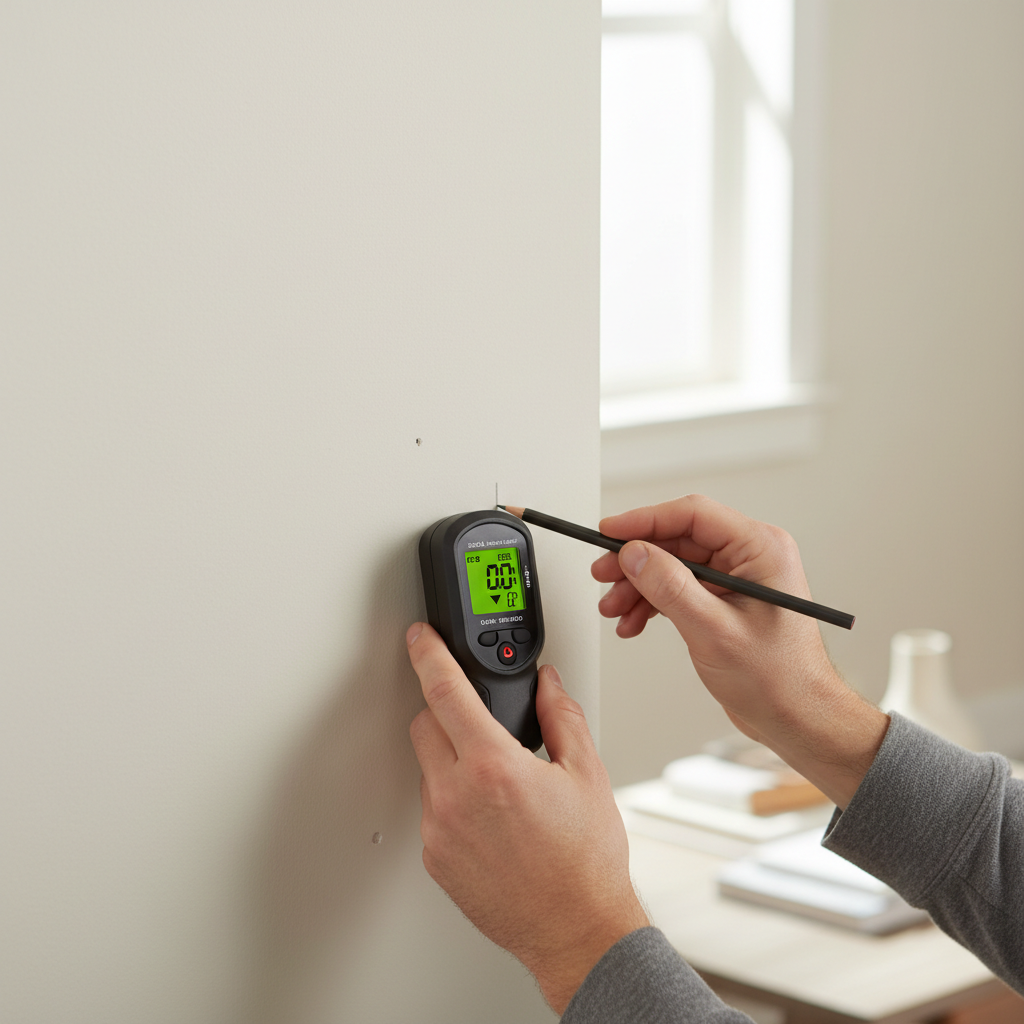
- Tools: A quality electronic stud finder (one that detects both wood and metal studs as well as live AC wiring), a 24-inch or 48-inch level, a torpedo level, a drill/driver with a full set of bits, a tape measure, a pencil, and painter's tape.
- Materials: The floating shelf kit (bracket and shelf sleeve), and—most importantly—a separate purchase of heavy-duty drywall anchors rated for at least 50% more than your maximum expected load.
-
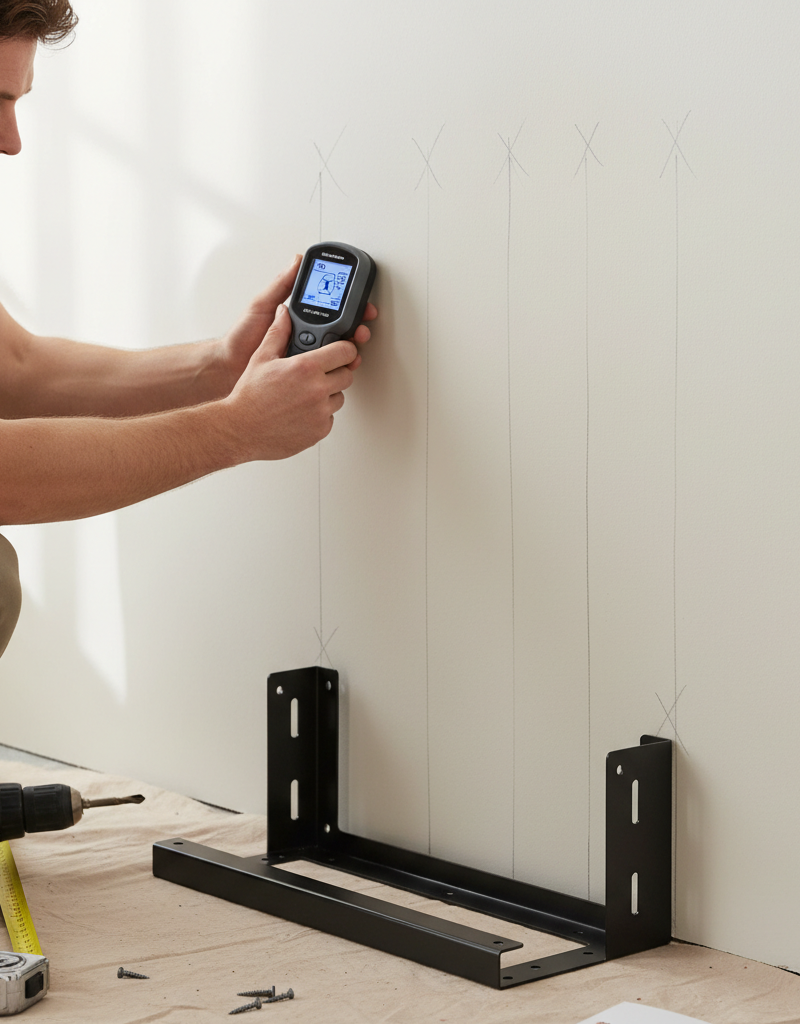
Locate and Verify Wall Studs — This is the most critical step. Turn on your electronic stud finder and calibrate it on a section of wall where you know there are no studs. Move it horizontally across your painter's tape line. Mark the leading and trailing edge of each stud you detect. The center point between these two marks is the center of the stud.
- Verification: To confirm you've found wood and not a pipe or electrical conduit, drive a very thin 1.5-inch finish nail into the wall at your marked center point in a place that will be covered by the shelf bracket. You should feel firm resistance after the nail passes through the 1/2-inch drywall. If it pushes through easily or hits something unyielding and metallic, investigate further before drilling. Most studs are 16 inches apart on-center, so you can often predict the location of the next stud by measuring from your first confirmed one.
-
Mark Exact Bracket Mounting Holes — Hold the shelf's metal mounting bracket against the wall, aligning it with your desired height and any stud center-lines you've marked. Place your long level on top of the bracket itself. Adjust the bracket until the bubble is perfectly centered, then re-check your alignment with the stud marks. Using a sharp pencil or an awl, press firmly through each mounting hole in the bracket to make a precise mark on the wall.
-
Select the Appropriate Fasteners — Do not automatically use the hardware included with the shelf kit. Assess your situation based on stud locations.
- If a mounting hole aligns with a stud: Use a #10 or #12 structural screw, at least 2.5 inches long. This ensures about 1.5 inches of threaded contact with the stud wood.
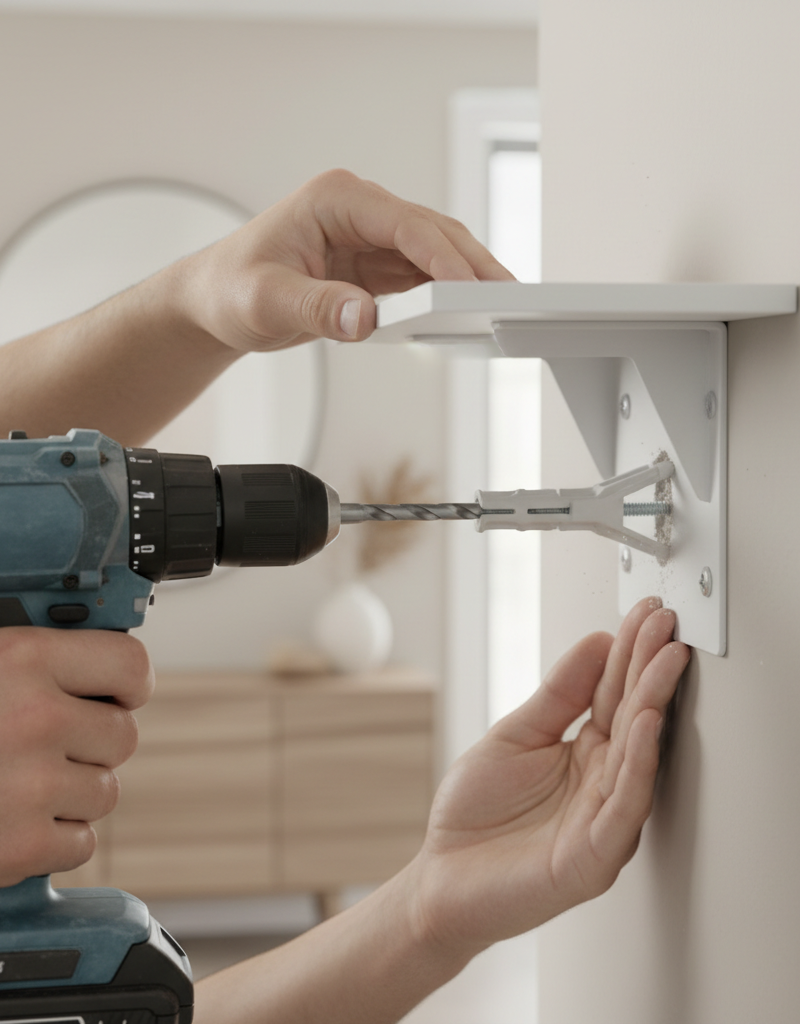
- If a mounting hole is in a hollow drywall cavity (no stud): Discard any included plastic conical anchors. You must use a heavy-duty anchor. The best choice for this application is a toggle-style anchor like a Toggler SnapToggle. These are rated to hold over 200 pounds in 1/2-inch drywall and excel at resisting pull-out forces. Heavy-duty molly bolts (hollow-wall anchors) are a secondary option for lighter loads.
-
Drill Precise Pilot Holes — The size of your pilot hole is crucial for fastener performance. Refer to manufacturer specifications for both your screws and your anchors.
- For screws into a wood stud: The pilot hole should be slightly smaller than the screw's diameter. For a #12 screw, a 1/8-inch or 9/64-inch drill bit is typically correct. This allows the screw threads to bite into the wood without splitting it.
- For toggle anchors: Use the exact drill bit size specified on the anchor's packaging, which is often 1/2-inch. A hole that is too small will prevent the anchor from passing through; a hole that is too large will not allow the anchor collar to seat properly, compromising its strength.
-
Install the Wall Anchors — For any mounting points that are not over a stud, install your heavy-duty anchors now. For a SnapToggle anchor, fold the metal channel flat and push it through the 1/2-inch hole. Pull the plastic straps toward you until you feel the metal channel seat flat against the inside of the drywall. Slide the plastic collar down the straps until it is flush with the exterior wall surface, then snap the straps off. This leaves a threaded receptacle securely locked behind the wall.
-
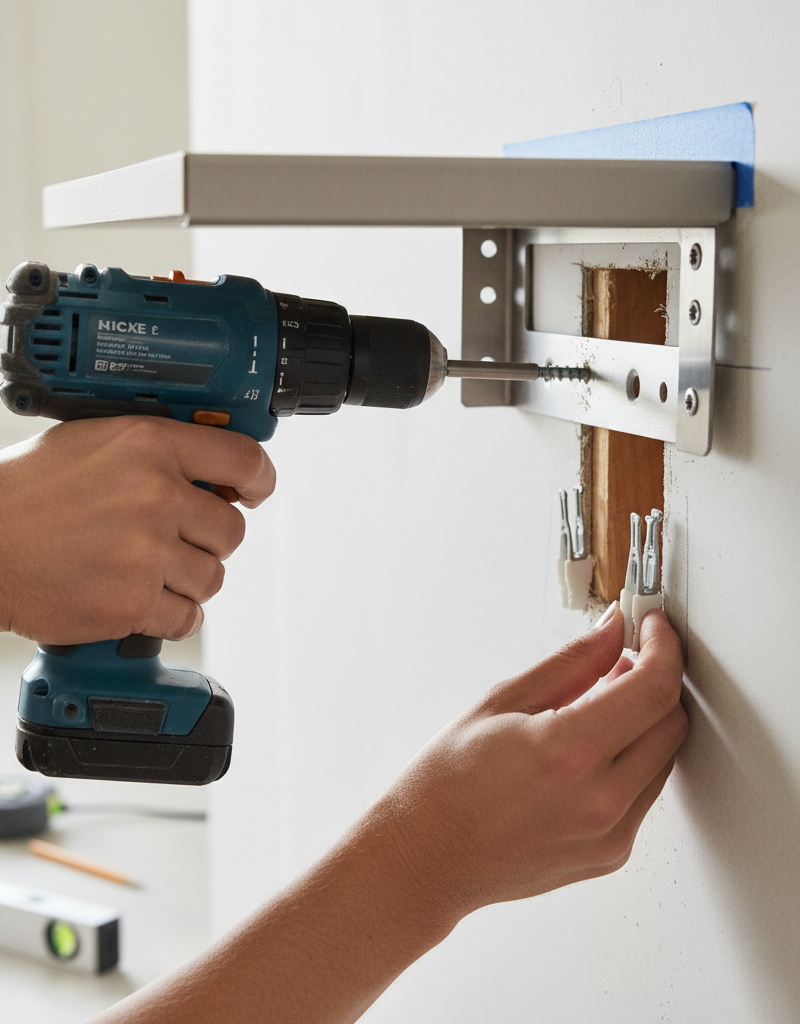
Mount the Bracket to the Wall — Position the bracket back over your pilot holes and now-installed anchors.
- Into Studs: Drive your structural screws through the bracket and into the pilot holes in the studs. Use a driver set to a low-torque setting to avoid stripping the screw head or overtightening. The screw should be driven until the bracket is snug and flush against the wall, but not so tight that it crushes the drywall behind it.
- Into Anchors: Thread the machine bolts (provided with the anchors) through the bracket and into the anchor collar. Tighten until the bracket is firm. Confirm the bracket is still perfectly level.
-
Attach the Shelf Sleeve — With the bracket securely mounted, slide the outer shelf (the "sleeve") onto the support arms of the bracket. It should be a snug fit. If it is too tight, check that the bracket wasn't bent during installation. If it is too loose, the shelf may wobble. Most floating shelves have small set screws on the underside. Use the provided Allen key to tighten these screws. They press against the bottom of the bracket arms, locking the shelf in place and preventing it from sliding off.
-
Perform a Final Stability Test — Before placing any items on the shelf, test your work. Apply firm, steady downward pressure with both hands to the front edge of the shelf. Watch the point where the shelf meets the wall for any sign of movement, flexing, or separation. Listen for any creaking or groaning sounds from the wall. The shelf should feel completely rigid and unmoving. If you detect any play, remove the shelf and re-evaluate your fasteners.
Common mistakes
- Using the Wrong Drywall Anchors: The most common failure point is using the small, plastic, cone-shaped anchors often included with consumer-grade shelving. These are designed for light-duty shear loads (like a picture hook) and have almost no resistance to the tensile (pull-out) force exerted by a cantilevered shelf. Solution: Throw away included plastic anchors and invest in heavy-duty toggle bolts or strap-toggles rated for 100+ pounds each.
- Guessing at Stud Locations: Trusting a knock on the wall or an inaccurate, cheap stud finder leads to mounting screws in empty air. This provides zero support and creates a large, unnecessary hole. Solution: Use a quality electronic stud finder to mark both edges of the stud, then find the center. Verify the stud's presence with a small exploratory nail before drilling a large pilot hole.
- Ignoring the Lever Principle (Overloading): Homeowners often fail to appreciate how shelf depth multiplies force. A few heavy books or a stack of ceramic plates on a 12-inch deep shelf can exert hundreds of pounds of pull-out force on the fasteners, even if the objects themselves only weigh 30 pounds. Solution: Always factor in shelf depth. For shelves deeper than 10 inches, securing to at least two studs is non-negotiable. For any shelf, strictly adhere to the manufacturer's weight limit, which assumes proper installation.
- Overtightening the Mounting Screws: In an attempt to make the bracket "extra secure," many people tighten the lag screws with excessive force. This crushes the drywall between the bracket and the stud, creating a depression. The bracket is no longer flush, leading to instability and weakening the connection over time. Solution: Tighten screws until the bracket is snug and does not move. Let the fastener's grip in the stud provide the strength, not raw compression force.
- Drilling Incorrectly Sized Pilot Holes: Drilling a pilot hole for an anchor that is too large allows the entire anchor to spin in place, preventing it from tightening. Drilling a pilot hole in a wood stud that is too small can cause the wood to split or the screw head to snap off under torque. Solution: Always read the anchor manufacturer's instructions and use the exact bit size specified. For wood, the pilot hole should be the diameter of the screw's shank, not its threads.
Cost & time breakdown
This table outlines typical costs and time for installing a single floating shelf. Tool costs assume you are purchasing them new.
| Task | DIY cost | Pro cost | Time |
|---|---|---|---|
| Single Floating Shelf Kit (36-inch) | $40 - $120+ | (Material cost passed to client) | 30 minutes (shopping) |
| Essential Installation Tools (if not owned) | $75 - $250 | $0 | N/A |
| Heavy-Duty Drywall Anchors | $15 - $25 (pack of 4-6) | Included in labor fee | 15 minutes (shopping) |
| Installation of One Shelf (DIY) | $0 (labor) | $85 - $175 | 1 - 2 hours |
| Post-Failure Drywall Repair (large hole) | $25 - $40 (patch kit, spackle, paint) | $150 - $300 | 2 - 4 hours (plus dry time) |
When to call a pro
While installing a basic floating shelf is a manageable DIY project, certain situations warrant calling a professional handyman or contractor.
If your stud finder gives erratic readings, or if you drill an exploratory hole and hit something other than wood or empty space (e.g., brick, concrete, or resilient metal), stop immediately. Your wall may be plaster and lath, masonry, or framed with steel studs, all of which require specialized tools and fasteners. A professional can correctly identify the wall type and use the appropriate anchoring method.
For very large, heavy, or custom-built floating shelves, such as those intended to serve as a media console or hold an entire collection of kitchen dishes, a pro is recommended. They can perform proper load calculations to ensure the weight is distributed safely across the wall framing, sometimes adding supplemental blocking inside the wall for reinforcement, a task beyond the scope of a typical DIY project.
Finally, if your electronic stud finder indicates the presence of live AC wiring in your desired drilling area, or if you lack confidence or the proper tools for the job, hiring a professional is the safest and most efficient choice. The cost of a handyman is far less than the cost of repairing electrical damage or a collapsed shelf that has torn a large section of drywall from the wall.
Prevention & maintenance
Proper installation is the best prevention, but ongoing awareness will ensure your shelves remain secure for years.
- Perform a Weighted Break-in: After installation and before loading the shelf with your valuables, place a few heavy books (10-15 lbs) on it and leave them for 24-48 hours. Afterwards, check again for any sign of sagging or separation from the wall. This is a safe way to test the integrity of your mounting.
- Conduct Biannual Inspections: Twice a year, take a close look at the seam where the shelf meets the wall. Use a flashlight to check for hairline cracks in the paint or joint compound, or any visible gap forming at the top edge. These are early warning signs that fasteners are loosening.
- Check for Wobble Periodically: Every few months, gently but firmly press on the front edge of the shelf. There should be absolutely no movement, play, or give. If you notice any new wobble that wasn't there before, it's a sign that a screw or anchor needs to be investigated and possibly retightened or replaced.
- Adhere to Weight Limits: The single most important maintenance task is to never overload the shelf. Be conscious of "weight creep"—the tendency to add more items over time. A few small, dense objects can quickly exceed the weight of larger, lighter decor. If you repurpose a shelf, make sure the new items do not exceed the original load calculations.
- Tighten Set Screws: The small set screws located on the underside of the shelf sleeve can occasionally vibrate loose over time. Check them annually and use the appropriate Allen key to snug them up, ensuring the shelf sleeve remains locked to the mounting bracket.
Related Articles
Keep troubleshooting with these hand-picked guides from FixlyGuide:
- Your Floating Shelves Failed? 3 Hidden Drywall Mistakes. — Learn how to safely and securely install floating shelves into drywall using the right anchors and tools, avoiding common mistakes.
- The 4-Inch Drywall Hole Fix: Why Spackle Alone Always Fails — Learn the right way to patch a small drywall hole (up to 4 inches) to ensure a s
Should you do this yourself?
Answer five quick questions before you start. Safety outranks savings every time.
Your experience with work like this
How high do you have to work?
Does the job involve any of these?
Will it need a permit?
Specialty tools
Free and instant. Educational guidance only — not a quote, inspection, or professional diagnosis.
What should this project cost?
Enter your project details for a realistic cost range before you call anyone.
Cost depends heavily on which system turns out to be the source.
- Regional adjustment
- National average
- Labor share (typical)
- ~$1,620
- Quotes to collect
- 3 written estimates
Educational estimate based on national averages — not a binding quote. Always confirm with written local estimates.
Before you start
Check the difficulty, permits, and safety risk — then decide whether to call a pro.
- Estimate this projectGet a cost range for your scope and ZIP before you call anyone.Open
- Get local estimatesSend one request and compare written estimates from vetted pros.Open
Free, no signup required. Estimates are educational guidance, not a quote or an inspection.
Get the print-ready PDF of this guide
A clean, ad-free, printable version you can keep on your phone or pin to the workshop wall. Free with a FixlyGuide account.
- Print-optimized layout
- Tools, materials & every step included
- Saved to your account
Recommended for DIYers & woodworkers
Sponsored
The Top 20 Tools for Workshops of Any Budget
No stationary machines or power tools required — plus 3 fundamental tools that can't be bought at any price.
Get the free guide
Ted's Woodworking — The #1 Woodworking Resource
Detailed instructions, dimensioned drawings, materials & cutting lists, and 3D schematics for every skill level.
See the plansSponsored: links above are affiliate links. FixlyGuide may earn a commission on qualifying purchases — at no extra cost to you.
Frequently asked questions
Can I install floating shelves without hitting a stud?+
Yes, but you must use heavy-duty drywall anchors specifically designed for the weight you intend to place on the shelf. Toggle anchors are a good option for heavier loads when studs aren't available.
What kind of anchors should I use for floating shelves in drywall?+
For floating shelves in drywall without a stud, use heavy-duty toggle anchors, molly bolts, or self-drilling drywall anchors with a high weight rating. Always check the anchor's weight capacity.
How do I know if my drywall anchors are strong enough?+
The packaging for drywall anchors will state their maximum weight capacity. Compare this to the combined weight of your shelf and all items you plan to place on it, adding a safety margin.
How do I find studs behind drywall?+
Use an electronic stud finder. Move it horizontally along the wall until it indicates a stud. Mark the edges and then find the center point for drilling.
My shelf is wobbly after installation. What went wrong?+
A wobbly shelf usually indicates that the anchors or screws are not securely fastened, or they are not adequately supporting the weight. Ensure you've hit studs where possible, or used appropriately rated anchors fully engaged with the drywall.
Discussion
Loading comments…