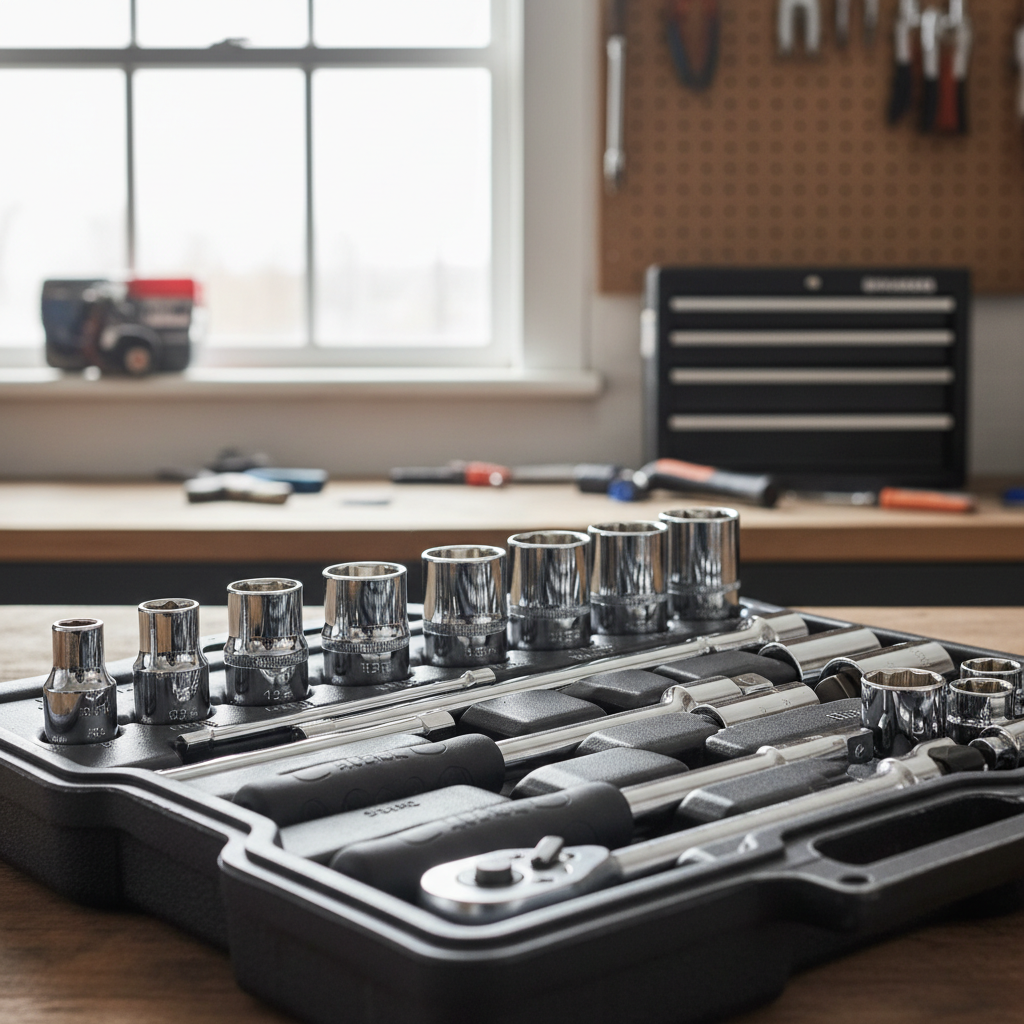
- Choose the Right Drive Size — Match power to task.
- A 3/8-inch drive set is the most versatile for general home repairs, offering a good balance of strength and maneuverability. It's ideal for most appliance, furniture assembly, and light vehicle tasks.
- A 1/4-inch drive is excellent for smaller fasteners and tight spaces where precision is key. A 1/2-inch drive is reserved for higher torque applications, like lug nuts on a car or larger outdoor equipment.
- Consider Adapters: If you have multiple drive sizes but want to use a specific socket with a different ratchet, drive adapters (e.g., 3/8" to 1/4" adapter) can be very useful, but always ensure they are high quality to prevent breakage.
Published July 23, 2026Last updated August 17, 2026
Tools & materials you'll need
Affiliate links- Amazon6-point socket set (SAE and Metric)1 set · Prefer chrome vanadium steel for durability.
- Amazon3/8-inch drive ratchet1 · At least 72 teeth for fine action.
- AmazonSocket extensions (3-inch, 6-inch)1-2 each · For reaching recessed fasteners.
- AmazonDeep well sockets1 set · In common SAE and Metric sizes.
As an Amazon Associate FixlyGuide earns from qualifying purchases — at no extra cost to you. Prices and availability are accurate as of publication and subject to change.
Quick Answer
Many homeowners inadvertently sabotage their home repair efforts by choosing the wrong socket sets. The most common pitfall is purchasing an incomplete or low-quality set that lacks essential sizes, features weak materials, or only offers 12-point sockets. This leads to stripped bolts, broken tools, and more frustration than actual progress. The savvy DIYer will invest in a comprehensive, durable set featuring both SAE (standard) and metric sizes, preferring 6-point sockets for superior grip, and made from robust materials like chrome vanadium steel to tackle a wide range of tasks around the house and garage effectively.
The Problem
Imagine you're tackling a seemingly simple task, like tightening a wobbly patio chair or attempting a minor car repair, only to find your socket set utterly useless. You grab a 1/2-inch socket, and it's too loose; the next size down, 7/16-inch, is too small. Or perhaps you finally find a socket that almost fits, but as you apply torque, it slips, rounding off the corners of the bolt head, leaving you with a much bigger problem than you started. This common scenario plays out in garages and workshops worldwide and almost always originates from a fundamental misunderstanding about what makes a good socket set. Cheap, incomplete, or poorly manufactured sets are a primary source of frustration, leading to damaged fasteners, wasted time, and the inevitable trip to the hardware store mid-project for the right tool – if you can even find a replacement for a now-stripped bolt.
The underlying problem isn't just about having a socket set; it's about having the right socket set. Many entry-level sets are built to a price point, sacrificing essential features and durability. They often lack crucial sizes (especially smaller metric or larger SAE), come with only 12-point sockets that are prone to slipping, or are made from inferior metals that quickly deform under stress. This leaves homeowners ill-equipped for the diverse demands of household projects, turning what should be straightforward fixes into aggravating ordeals.
How It Works
Sockets are precision tools designed to grip and turn fasteners like nuts and bolts. They work by fitting snugly over the head of a fastener, providing a secure connection for a wrench or ratchet to apply rotational force. The "size" of a socket refers to the internal diameter of its opening, precisely matching the measurement across the flats of a hexagonal (or sometimes square or other shape) fastener head. Sockets come in two primary measurement systems: SAE (Society of Automotive Engineers), also known as standard or imperial, which uses fractions of an inch (e.g., 1/4", 3/8", 1/2"), and Metric, which uses millimeters (e.g., 10mm, 13mm, 19mm). Most modern vehicles and many imported appliances use metric fasteners, while older vehicles, plumbing fixtures, and construction tend toward SAE.
The "points" of a socket refer to the number of facets on its internal opening. The vast majority of fasteners are hexagonal, meaning they have six sides. Consequently, 6-point sockets offer the strongest, most direct grip on these fasteners because they contact all six sides evenly. This minimizes the risk of "rounding off" or stripping the fastener head. 12-point sockets, while quicker to position on a fastener, contact only alternating points and are therefore more prone to slipping, especially when dealing with stubborn, rusted, or overtightened fasteners. Drive sizes (e.g., 1/4-inch, 3/8-inch, 1/2-inch) refer to the square opening on the back of the socket where the ratchet or extension bar connects. The larger the drive size, the more torque the system can handle. For general home use, 3/8-inch drive is the most versatile, though 1/4-inch is useful for smaller tasks and 1/2-inch for heavy-duty applications.
Sockets are typically made from hardened steel alloys, most commonly chrome vanadium steel. This material provides excellent strength, durability, and resistance to corrosion. A chrome plating is often applied for added protection and ease of cleaning. Impact sockets, designed for use with impact wrenches, are made from thicker, softer steel (often black oxide coated) to absorb the shock of repeated impacts without shattering. These are not typically necessary for most DIY home repairs, as standard chrome sockets suffice for manual use and offer thinner walls for better access in tight spaces.
Step-by-Step Fix
This isn't a "fix" in the traditional sense, but rather a guide to correcting a common purchasing mistake and ensuring you have the right tools for the job.
-
Assess Your Current Socket Set — Identify the gaps in your toolkit.
- Inspect your existing set. Do you have both SAE and Metric sizes? Are they primarily 6-point or 12-point? Note any sizes you frequently wish you had but don't, or any sockets that are worn/damaged.
- Consider the condition of your current sockets. Are they chrome-plated and relatively thin-walled (for hand tools), or thicker and black (for impact use)? If you're frequently stripping bolts with your current set, it's a strong indicator of low-quality or incorrect socket usage.
-
Prioritize 6-Point Sockets — Minimize fastener damage.
- When adding to or replacing your set, always prioritize 6-point over 12-point sockets for hexagonal fasteners. They provide a much better grip and significantly reduce the chance of rounding off bolt heads, especially on rusted or overtightened nuts.
- Safety Note: Using a 12-point socket on a stubborn hexagonal fastener is a fast track to stripping it. Always ensure the socket fits snugly.
-
Ensure Comprehensive Sizing (SAE & Metric) — Cover all your bases.
- For general home use, a good set will include common SAE sizes from roughly 1/4" to 7/8" and common Metric sizes from 8mm to 19mm. You'll likely need both. Many premium sets include both in a single case.
- If this doesn't work: If you find yourself frequently needing sizes outside these ranges, consider specialty sets (e.g., very small sockets for electronics, very large for plumbing). For automotive work, specific deep sockets or specialized designs might be necessary.
-
Choose the Right Drive Size — Match power to task.
- A 3/8-inch drive set is the most versatile for general home repairs, offering a good balance of strength and maneuverability. It's ideal for most appliance, furniture assembly, and light vehicle tasks.
- A 1/4-inch drive is excellent for smaller fasteners and tight spaces where precision is key. A 1/2-inch drive is reserved for higher torque applications, like lug nuts on a car or larger outdoor equipment.
- Consider Adapters: If you have multiple drive sizes but want to use a specific socket with a different ratchet, drive adapters (e.g., 3/8" to 1/4" adapter) can be very useful, but always ensure they are high quality to prevent breakage.
-
Look for Quality Materials — Invest in durability.
- Opt for sockets made from chrome vanadium steel. This alloy provides excellent strength, resistance to wear, and can withstand significant torque. The chrome finish also helps protect against rust and makes cleanup easier.
- Avoid sets made from "mystery metal" or those that feel excessively light or brittle. A good socket has a reassuring heft.
-
Consider Ratchet Quality — The heart of the set.
- A good ratchet should have a fine-tooth mechanism (72 teeth or more is ideal for tight spaces, allowing smaller arcs of movement) and a comfortable, ergonomic handle. The direction switch should be robust and easy to operate.
- Test the ratchet action – it should be smooth with minimal back-drag.
-
Evaluate Extensions and Accessories — Enhance accessibility.
- A good set often includes extension bars (3", 6", 10") to reach recessed fasteners, universal joints for angled access, and perhaps a spark plug socket. These dramatically increase the versatility of your set.
- Don't forget Storage: A well-organized case that clearly labels sizes is invaluable for efficiency and preventing lost sockets.
-
Budget for Value, Not Just Price — Long-term savings.
- While some budget sets seem attractive, they often cost more in the long run through stripped fasteners, broken tools, and the need for eventual replacements. Think of a quality socket set as a 20-year investment.
- Aim for reputable brands known for their tool quality and warranties.
Common Causes
- Impulse Buying Cheap Sets: The allure of a low price often overshadows the lack of crucial sizes, weak materials, and inclusion of less useful 12-point sockets, leading to an inadequate tool for most tasks.
- Lack of Understanding of Socket Types: Many DIYers don't realize the importance of 6-point vs. 12-point sockets, assuming more points mean more versatility, when in fact, fewer points (6-point) are stronger for hexagonal fasteners.
- Ignoring Drive Size Relevance: Using a 1/4-inch drive ratchet for a large, stubborn bolt, or a 1/2-inch drive for delicate work, demonstrates a mismatch between the tool's capability and the job's requirement.
- Missing Metric or SAE Sizes: Only having one system of measurement (e.g., only SAE) is a surefire way to be caught flat-footed when encountering fasteners from the other system, which is common in modern homes and vehicles.
- Using Incorrect Tools for the Job: Trying to use standard chrome sockets with an impact wrench, for instance, risks shattering the socket and causing injury. Similarly, using worn or damaged sockets guarantees poor performance.
- Mismanaging Torque: Over-tightening fasteners (often due to not understanding proper torque values or lacking a torque wrench) can deform both the fastener and the socket over time.
Common Mistakes
- Buying a "Basic" Set with Only 12-Point Sockets: While 12-point sockets can work, they are far more likely to slip and round off the corners of hexagonal fasteners. Always choose 6-point sockets for most general-purpose work with hex nuts and bolts.
- Only Buying SAE or Only Metric: Modern homes, cars, and appliances feature a mix of both. An incomplete set means constant frustration and trips to the store. Invest in a set that includes both, or two complementary sets.
- Ignoring the Ratchet's Quality: A cheap ratchet with a coarse tooth count (e.g., 24 or 36 teeth) requires a larger arc of movement, making it impractical in tight spaces. A fine-tooth ratchet (72+ teeth) offers greater precision and usability.
- Using a Universal Joint for High Torque: While valuable for tight angles, universal joints are not designed for applying significant torque and can break if overstressed. Use them for positioning, then regular extensions for tightening.
- Not Accounting for Deep Well Sockets: Many bolts feature long shanks or are recessed. A set with only shallow sockets will often prove inadequate. Look for a mix of shallow and deep well sockets, especially in common sizes.
- Storing Sockets Loosely: Sockets are small and easily lost. A well-organized case or rail system helps keep your set complete, prevents rust, and makes finding the right size quick and easy.
Cost & Time Breakdown
| Task | DIY cost | Pro cost | Time |
|---|---|---|---|
| Basic (incomplete) socket set | $15–$40 | N/A | 0 |
| Quality 3/8" Drive Set (SAE/Metric, 6-point) | $60–$150 | N/A | 0 |
| Comprehensive Master Set (Multiple Drives) | $150–$300+ | N/A | 0 |
| Replacing stripped fastener | $1–$10 (part) | $75–$250 | 30 min–2 hrs |
| Emergency hardware store run | $0–$5 (gas) | N/A | 15 min–1 hr |
Tips & Prevention
- Inspect Sockets Before Use: Always check for cracks, deformities, or excessive wear. A damaged socket can strip a fastener or, worse, break under pressure.
- Clean Sockets After Use: Wipe down sockets to remove grease, dirt, and debris before returning them to their case. This prevents rust and prolongs their life.
- Organize Your Set: Keep sockets in their designated spots in a case or on a socket rail. A missing socket can derail a project faster than anything.
- Match Socket to Fastener: Ensure a snug fit. If there's any play, try the next size down or up, or switch between SAE and Metric. A loose socket will round off the fastener.
- Hand Tighten First: Always start fasteners by hand to avoid cross-threading, then use your ratchet and socket.
- Consider Impact Sockets for Impact Tools Only: Never use standard chrome sockets with impact wrenches, as they are not designed to withstand the sudden, high-force impacts and can shatter, causing serious injury. Use specialized impact sockets, which are typically black and thicker-walled.
- Regularly Check for Rust: Especially if stored in a humid environment. Light oil can help prevent surface rust.
When to Call a Professional
While choosing and using the correct socket set is empowering for many DIY tasks, certain situations always warrant calling a professional. If a critical fastener is completely stripped and immovable, and attempts to remove it with specialized extractors (which require their own skills and tools) have failed, a professional mechanic or handyman with industrial-grade removal tools and expertise will be needed. Seriously damaged or seized fasteners in vital systems like automotive steering, brakes, or structural components of your home should always be handled by licensed professionals to ensure safety and prevent further damage. Additionally, if the repair involves complex electrical systems, gas lines, or structural elements where improper torque or fastener failure could lead to catastrophic consequences, err on the side of caution and consult with a licensed expert. Never attempt to force a stubborn fastener if it risks damaging surrounding components or injuring yourself.
Related Articles
Keep troubleshooting with these hand-picked guides from FixlyGuide:
- The Hidden Reason Your AC Isn't Cooling (And Why Most Homeowners Get It Wrong) — When your central AC unit isn't cooling, the culprit often isn't what you think, leading to frustration and unnecessary repair calls.
- 7 Inspection Red Flags That Secretly Signal a $20,000 Bill — Don't let your dream home become a money pit. Many buyers and even some inspectors overlook subtle home inspection red flags that lead to f…
- The #1 Chainsaw Mistake That Wrecks Your Yard (and Your Back) — Avoid common chainsaw errors that lead to frustration, damage, and unnecessary physical strain.
- 7 Hidden Equity Drains Costing You Thousands Annually — Your home is an asset, but silent problems like minor leaks, poor insulation, and deferred maintenance can drain its value. Discover the se…
- The Surprising Trick to Cutting Your Dryer Bill By $100 Per Year — Installing a clothesline can significantly reduce your energy bills and add a fresh scent to your laundry. This guide covers how to choose…
- The #1 Backsplash Mistake Most DIYers Make (And How to Fix It Before It's Too Late) — Discover the most overlooked mistake in beginner backsplash installations and how to prevent or fix it for a professional-looking finish.
Should you do this yourself?
Answer five quick questions before you start. Safety outranks savings every time.
Your experience with work like this
How high do you have to work?
Does the job involve any of these?
Will it need a permit?
Specialty tools
Free and instant. Educational guidance only — not a quote, inspection, or professional diagnosis.
What should this project cost?
Enter your project details for a realistic cost range before you call anyone.
Cost depends heavily on which system turns out to be the source.
- Regional adjustment
- National average
- Labor share (typical)
- ~$1,620
- Quotes to collect
- 3 written estimates
Educational estimate based on national averages — not a binding quote. Always confirm with written local estimates.
Before you start
Check the difficulty, permits, and safety risk — then decide whether to call a pro.
- Estimate this projectGet a cost range for your scope and ZIP before you call anyone.Open
- Get local estimatesSend one request and compare written estimates from vetted pros.Open
Free, no signup required. Estimates are educational guidance, not a quote or an inspection.
Get the print-ready PDF of this guide
A clean, ad-free, printable version you can keep on your phone or pin to the workshop wall. Free with a FixlyGuide account.
- Print-optimized layout
- Tools, materials & every step included
- Saved to your account
This article was independently written by FixlyGuide based on the source topic.
Frequently asked questions
What's the difference between 6-point and 12-point sockets?+
6-point sockets have six internal points and provide a stronger grip on hexagonal fasteners, reducing the risk of rounding them off. 12-point sockets have twelve points, offering more angles to attach to a fastener, but are more prone to slipping and best used for lighter tasks or when access is difficult, not heavy torque.


Discussion
Loading comments…