- Ignoring Loose Handrails or Wobbling Treads: Many homeowners put off fixing minor stair issues, but these quickly escalate into serious fall hazards. Address them immediately.
- Cluttering Stairwells: Using stair landings or steps for temporary storage is a common mistake that creates significant tripping hazards, especially during a hurried descent in an emergency. Keep them clear.
- Blocking Egress Windows: Placing heavy furniture in front of windows intended for emergency escape, or painting windows shut, compromises a crucial safety feature. Ensure all egress windows are fully functional.
- Failing to Test Smoke/CO Detectors: While not directly tied to staircases, functioning alarms give you the early warning needed to use your escape routes, including stairs. Test them monthly.
- Inadequate Lighting: Poorly lit stairwells are accident waiting to happen, particularly at night. Ensure sufficient illumination, ideally with switches at both the top and bottom of the stairs.
Published July 20, 2026Last updated August 17, 2026
Tools & materials you'll need
Affiliate linksAs an Amazon Associate FixlyGuide earns from qualifying purchases — at no extra cost to you. Prices and availability are accurate as of publication and subject to change.
Quick Answer
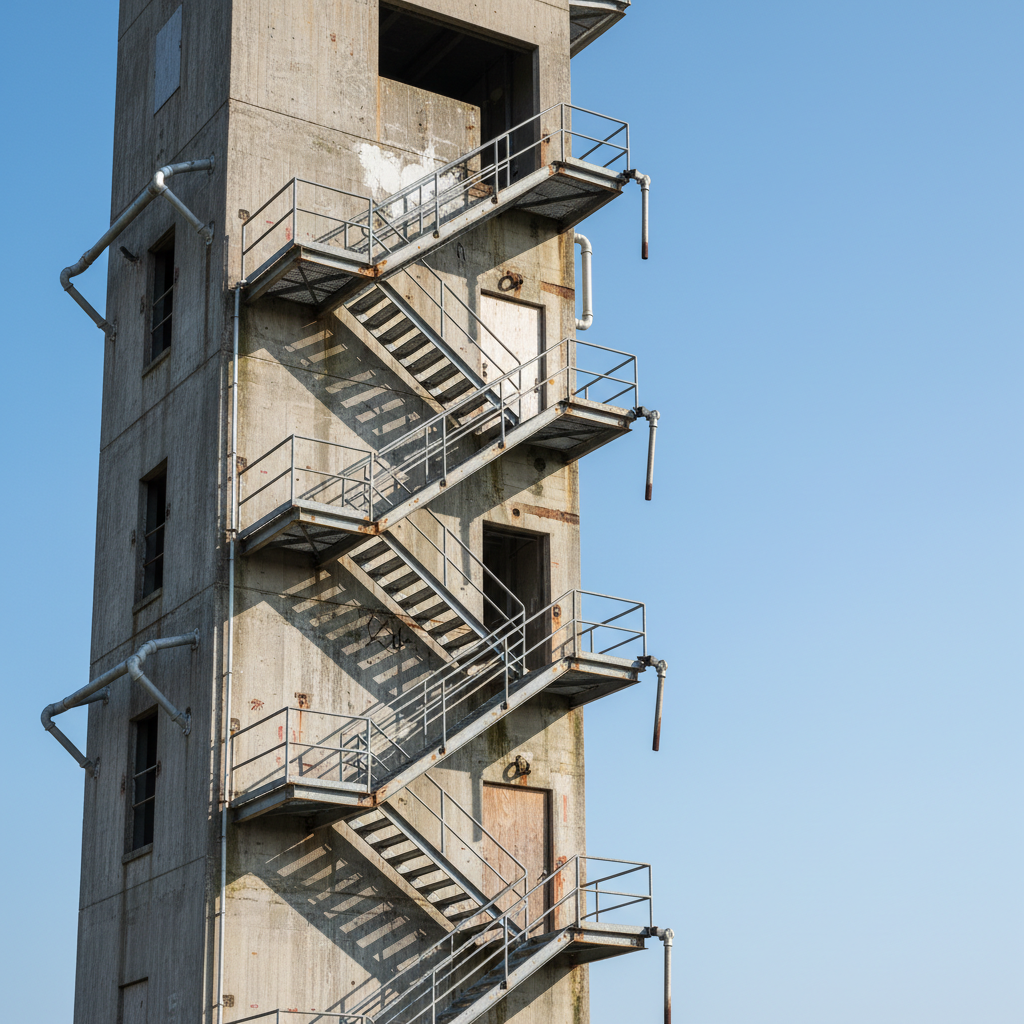
Staircases that appear to lead nowhere are often part of 'firefighter training towers' or 'burn buildings.' These structures are purpose-built to simulate real-world emergency scenarios, allowing firefighters to practice navigating challenging environments, ventilating smoke, conducting search and rescue operations, and honing their skills in a controlled, safe setting. For homeowners, understanding these training principles can offer valuable insights into fire safety and structural considerations in your own house.
The Problem
Many homeowners have seen them: a seemingly inexplicable staircase rising into a wall, or perhaps a set of steps ending abruptly on a concrete pad. These architectural oddities can be disorienting, even a little eerie. They raise questions about their purpose and why such a design choice would ever be made. While they might seem like a whimsical or unfinished construction project at first glance, these 'staircases to nowhere' often play a critical, life-saving role in community safety, far removed from standard residential building practices.
How It Works
Firefighter training is a demanding and highly specialized field, requiring constant drilling and simulation to prepare for the unpredictable nature of emergencies. Training towers, sometimes called 'burn buildings' or 'drill towers,' are specially constructed facilities designed to mimic various real-world building types and scenarios. These structures are often multi-story, featuring a labyrinth of rooms, hallways, windows, and, crucially, staircases. The 'staircases to nowhere' within these towers are not mistakes but intentional design elements. They serve several key functions:
- Vertical Access and egress practice: Firefighters regularly practice ascending and descending stairs while carrying heavy equipment (hose lines, air tanks, forcible entry tools). A staircase that abruptly ends allows them to simulate reaching a floor and then needing to transition to another method of access or egress, such as a ground ladder or an aerial apparatus. This builds muscle memory and tactical awareness.
- Search and Rescue Simulations: In smoky, disorienting conditions, firefighters must be able to navigate by touch and sound. Staircases, even those that don't lead to a typical 'next floor,' help simulate the complex layouts found in homes and commercial buildings. Trainees practice searching for victims, accounting for changes in elevation, and managing their air supply.
- Ventilation Drills: Proper ventilation is crucial for controlling a fire and improving visibility. Training towers allow firefighters to practice horizontal and vertical ventilation techniques, including using stairwells to create air currents that draw smoke out of a building. The presence of varied stair configurations helps them understand airflow dynamics in different structural contexts.
- High-Rise Operations: For departments covering urban areas, multi-story buildings present unique challenges. Training towers, with their numerous stairwells (even those terminating unexpectedly), help crews practice establishing staging areas, deploying hose lines up multiple floors, and managing personnel in extended operations. This includes simulating 'standpipe' connections and coordinating efforts across different levels.
- Physical Conditioning: Simply put, climbing stairs in full gear is incredibly strenuous. These training staircases provide an excellent, realistic environment for firefighters to maintain the high level of physical fitness required for their job. They're often run up and down hundreds of times during a single training session, building endurance and strength.
In essence, these structures are living classrooms where theoretical knowledge is translated into practical skills, ensuring that when a real emergency strikes, firefighters are prepared for any architectural curveball a building might throw at them.
Step-by-Step Fix
Given that 'staircases to nowhere' are rarely a problem in a homeowner's primary residence (unless it's a very unusual architectural folly or a genuine construction error), this section shifts to 'What a Homeowner Can Learn from the Firefighter's Staircase to Nowhere.' These principles apply to inspecting and improving your own home's safety and functionality.
-
Assess Your Home's Egress Points — Understand your escape routes
- Every bedroom should have two forms of emergency egress: a door to an interior hallway and a window that can be opened for escape (or rescue). Ensure windows aren't painted shut, nailed shut, or blocked by heavy furniture. Check that screens are easily removable from the inside. If you have security bars, they must have quick-release mechanisms.
- If this doesn't work: If your bedroom window is too high or small to be an effective escape route, consider a ground-floor escape ladder or discuss options with a fire safety expert. Special considerations apply for young children or individuals with mobility issues. Ensure exterior spaces beneath windows are clear of obstructions.
-
Inspect Stairwell Safety — Focus on functionality and structural integrity
- Examine all staircases in your home for loose treads, wobbly handrails, or inadequate lighting. Ensure risers are consistent in height and treads are deep enough for safe footing. Handrails should be graspable and run continuously the entire length of the stairs. Any gaps in railings or balusters should be less than 4 inches to prevent children or pets from getting stuck.
- Safety Note: Never ignore loose stairs or railings. These are fall hazards. Repair immediately. Consider non-slip treads or carpet for slick surfaces.
-
Clear Obstructions from Pathways — Ensure clear passage during an emergency
- Just as firefighters need clear paths, so do you during an emergency. Keep stairwells, hallways, and exits clear of clutter, furniture, storage boxes, and anything that could impede rapid escape. This is especially critical in basements and attics, which are often used for storage.
- Pro Tip: Walk through your home with your eyes closed (carefully!) to identify potential tripping hazards you might overlook in daylight. Practice a fire drill with your family.
-
Evaluate Your Attic/Basement Access — Consider difficult-to-reach areas
- If your attic or basement access is via a pull-down ladder or narrow, steep steps, ensure it's safe to use and well-maintained. These are often neglected but can become crucial during an emergency or for routine maintenance. Ensure adequate lighting in these areas.
- Material check: Check the structural integrity of the ladder or stairs. Look for cracks, splinters, or rusted hardware. Lubricate hinges if necessary.
-
Understand Your Home's Structure — Know where things 'go'
- While you won't have 'staircases to nowhere' in a well-built home, understanding how your home's various elements connect (or don't connect) is key. Know where plumbing lines run, where electrical panels are, and how your HVAC system is routed. This knowledge helps you identify when something is genuinely out of place versus when it's just an unfamiliar but intentional part of your home's infrastructure.
- Diagnostic Tip: Keep a simple floor plan of your home, noting key utility shut-offs. This is invaluable information for emergencies.
Common Causes
For a true 'staircase to nowhere' in an actual home, the common causes are far less heroic and often stem from:
- Unfinished Renovations: A homeowner might start an ambitious project, like adding an upper floor or deck, build the stairs, and then run out of funds, time, or permits before completing the rest of the structure. The stairs remain as a testament to an abandoned dream.
- Demolition Remnants: In some cases, a previous structure (like a porch, an old addition, or even a second story) might have been partially or fully demolished, but a section of stairs was left behind, perhaps due to cost, difficulty, or simple oversight.
- Architectural Quirks/Follies: Less common, but some custom homes or older properties might feature decorative staircases or 'follies' that serve no functional purpose, built purely for aesthetic reasons or as a historical nod. These are typically designed to look intentional, even if impractical.
- Building Code Violations/Errors: Very rarely, a contractor might make an error or disregard blueprints, resulting in stairs that don't lead to a proper landing or room. This should be caught during inspections, but sometimes slips through.
- Property Line/Setback Issues: A planned addition or expansion might be curtailed by property lines, setbacks, or zoning restrictions, leaving a pre-built staircase without its intended destination.
Common Mistakes
- Ignoring Loose Handrails or Wobbling Treads: Many homeowners put off fixing minor stair issues, but these quickly escalate into serious fall hazards. Address them immediately.
- Cluttering Stairwells: Using stair landings or steps for temporary storage is a common mistake that creates significant tripping hazards, especially during a hurried descent in an emergency. Keep them clear.
- Blocking Egress Windows: Placing heavy furniture in front of windows intended for emergency escape, or painting windows shut, compromises a crucial safety feature. Ensure all egress windows are fully functional.
- Failing to Test Smoke/CO Detectors: While not directly tied to staircases, functioning alarms give you the early warning needed to use your escape routes, including stairs. Test them monthly.
- Inadequate Lighting: Poorly lit stairwells are accident waiting to happen, particularly at night. Ensure sufficient illumination, ideally with switches at both the top and bottom of the stairs.
- DIY Structural Repairs Without Expertise: If a staircase has significant structural issues (e.g., sagging, rot, insect damage), a DIY repair without understanding load-bearing principles can be dangerous. Consult a structural engineer or experienced contractor.
Cost & Time Breakdown
| Task | DIY Cost | Pro Cost | Time |
|---|---|---|---|
| Inspecting Egress/Stairs | $0 | $0 | 15–30 minutes |
| Tighten Loose Handrail | $0–$10 | $75–$150 | 10–20 minutes |
| Replace Minor Components | $20–$50 | $150–$300 | 30–60 minutes |
| Clear Clutter from Pathways | $0 | $0 | 10–30 minutes |
| Install New Smoke Detectors | $60–$120 (per) | $150–$300 (per) | 30 minutes (per) |
| Comprehensive Stair Renovation | $500–$5,000+ | $2,000–$15,000+ | 1–5 days |
Tips & Prevention
- Annual Home Safety Audit: Dedicate an hour once a year to walk through your home specifically looking for fire hazards, egress obstructions, and stair safety issues. Involve your family.
- Regular Smoke Detector Checks: Test all smoke and carbon monoxide detectors monthly. Replace batteries annually, and replace units every 7-10 years (check manufacturer's date).
- Maintain Clear Pathways: Integrate
Related Articles
Keep troubleshooting with these hand-picked guides from FixlyGuide:
- The 12 Checks That Prevent 80% of Costly Home Repairs — Don't wait for a disaster. Our comprehensive monthly home maintenance checklist reveals the surprising, simple tasks that catch small issue…
- The Surprising Reason Your House Ticks and Pops At Night (And What It Means) — That unsettling ticking or popping sound in your house at night is usually normal thermal expansion and contraction, but sometimes it signa…
- The Surprising Trick to Cutting Your Dryer Bill By $100 Per Year — Installing a clothesline can significantly reduce your energy bills and add a fresh scent to your laundry. This guide covers how to choose…
- Is a Wall-Mounted Pressure Washer Right for Your Garage? The Unvarnished Truth — Discover if a wall-mounted pressure washer is the right cleaning solution for your home, offering a powerful and space-saving alternative t…
- The Secret to Endless Hot Showers? It's Not Your Water Heater's Age — Inconsistent hot water or no hot water at all often points to a single, often overlooked culprit: the thermostat. Understanding its role is…
- Those Ugly Black Streaks on Your Roof Aren't Dirt — Those unsightly black streaks are actually a type of algae called Gloeocapsa magma feeding on your shingles, but they can be cleaned and pr…
What should this project cost?
Enter your project details for a realistic cost range before you call anyone.
Cost depends heavily on which system turns out to be the source.
- Regional adjustment
- National average
- Labor share (typical)
- ~$1,620
- Quotes to collect
- 3 written estimates
Educational estimate based on national averages — not a binding quote. Always confirm with written local estimates.
Get the print-ready PDF of this guide
A clean, ad-free, printable version you can keep on your phone or pin to the workshop wall. Free with a FixlyGuide account.
- Print-optimized layout
- Tools, materials & every step included
- Saved to your account
This article was independently written by FixlyGuide based on the source topic.
Frequently asked questions
Why do some staircases lead to nowhere?+
In specialized urban search and rescue training facilities, staircases that appear to go nowhere are intentionally designed to help firefighters practice navigating complex, disorienting environments under simulated emergency conditions. They replicate scenarios where paths might be blocked or require transition to other tools like ladders.


Discussion
Loading comments…