- Insect and Rodent Activity: Small insects, spiders, or even nesting materials from rodents can get into the exterior opening of the drain line or find their way into the condensate pan and create obstructions.
- Improper Slope or Installation: If the drain line wasn't installed with an adequate downward slope towards the exterior of the house, water can pool and stagnate, accelerating biological growth and making it easier for blockages to form.
- Lack of Regular Maintenance: Homeowners often overlook the condensate drain during routine AC maintenance. Without periodic flushing, debris and biological growth accumulate unchecked, leading to inevitable clogs.
- Cracked or Damaged Drain Pan: While less common for clogs, a damaged condensate pan can lead to leaks that mimic a clogged drain. Water might be escaping before it even reaches the drain line if the pan itself is compromised.
Plumbing · Clog
| Project category | Plumbing |
|---|---|
| Problem type | Clog |
| Trade required | Plumbing |
| Urgency | Soon — within weeks |
| Safety risk | Low safety risk |
| DIY suitability | DIY friendly |
| Cost category | Low cost |
| Typical timeline | Same-day DIY attempt; pro visit within a day or two |
| Contractor type | Licensed plumber |
Repair option
Plunger, hand auger, or trap cleanout before chemicals.
Replacement option
Line replacement when clogs return in the same spot repeatedly.
Common causes
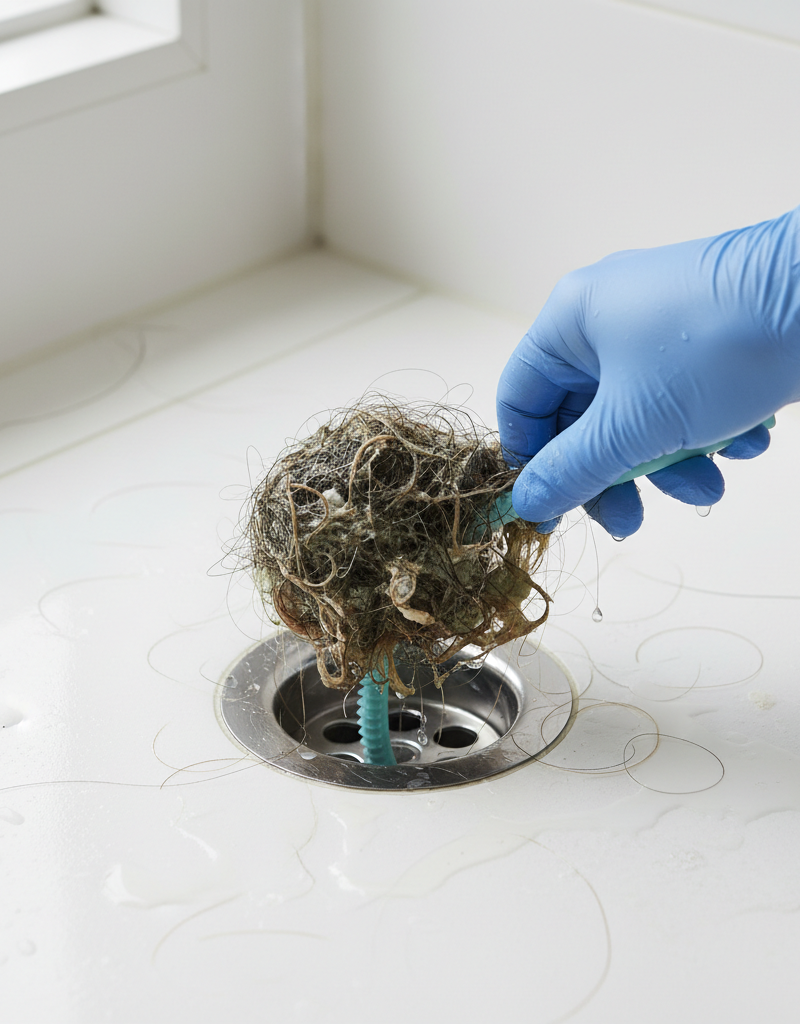
- Hair and soap buildup in the trap
- Grease cooling in the branch line
- Flushed wipes or foreign objects
Relevant tools:diy difficultydiy or hire a pro
Published April 25, 2026Last updated August 17, 2026
Tools & materials you'll need
Affiliate links- AmazonWet/dry shop vacuumWith a narrow nozzle attachment for sealing to the drain pipe
- AmazonBucket or old towels
- AmazonSafety glasses
- AmazonScrewdriver (for panel access, if needed)
- AmazonPlumber's snake (small diameter)Optional, for very stubborn clogs
- AmazonGarden hose with sprayerFor flushing the line
As an Amazon Associate FixlyGuide earns from qualifying purchases — at no extra cost to you. Prices and availability are accurate as of publication and subject to change.
Quick Answer
A clogged AC drain line is a common issue for homeowners, primarily caused by the buildup of algae, mold, and sludge within the condensate pan and the drain pipe itself. The most effective DIY fix involves a two-pronged approach: first, safely clearing any visible blockage from the condensate pan, and second, flushing the drain line with a homemade solution of distilled vinegar and water. For persistent clogs, a wet/dry vacuum can be used to create suction and pull the blockage free from the exterior drain opening. This preventative maintenance of regular flushing can keep your AC running efficiently and prevent water damage.
The Problem
Imagine walking into your home on a scorching summer day, eager for the blast of cool air, only to find a pool of water around your indoor AC unit, or worse, water dripping from your ceiling. This frustrating and potentially damaging scenario is often the tell-tale sign of a clogged AC condensate drain line. When this critical component becomes blocked, the condensation that your AC system removes from the air has nowhere to go. Instead of flowing safely outside, it backs up into the condensate pan, overflows, and can cause significant water damage to your ceiling, walls, flooring, and even electrical components. Beyond the visible water damage, a perpetually wet environment can foster mold growth, leading to poor indoor air quality and musty odors. Ignoring a clogged drain line can lead to premature failure of your AC unit, as the system may shut down automatically to prevent further damage, leaving you without cooling when you need it most. Understanding the 'why' behind these clogs—typically a combination of biological growth and debris—is the first step towards a lasting solution.
How It Works
Your air conditioning system does more than just cool the air; it also dehumidifies it. As warm, humid indoor air passes over the AC unit's cold evaporator coil, moisture in the air condenses into liquid water, much like the condensation that forms on a cold glass of water on a hot day. This condensed water, known as condensate, drips down into a shallow collection pan, often called the condensate pan or drain pan, located directly beneath the evaporator coil. From the condensate pan, the water is designed to flow by gravity through a PVC or copper drain line (also known as the condensate drain or primary drain line) to the exterior of your home, usually exiting near the foundation. Many systems also include a secondary, or auxiliary, drain pan and a separate drain line, often installed with a float switch. This secondary system acts as a backup: if the primary line clogs and the condensate pan overflows, the water then collects in the secondary pan, triggering the float switch to shut off the entire AC unit. This safety mechanism prevents widespread water damage, but it also signals a critical problem that needs immediate attention. Over time, in the dark, damp conditions of the drain line, it's common for algae, mold, dirt, dust, and other airborne particles to accumulate. These biological growths and debris combine to form a slimy sludge that can eventually restrict or completely block the narrow drain line, halting the flow of condensate and causing the backup.
Step-by-Step Fix
1. Safety First — Turn off the power to your AC unit at the thermostat and then at the circuit breaker.
This is a crucial first step to prevent electrical shock. Locate your thermostat and set the system to 'Off.' Then, head to your home's main electrical panel and switch off the breaker labeled for your outdoor AC unit and your indoor furnace/air handler. Confirm the unit is off before proceeding.
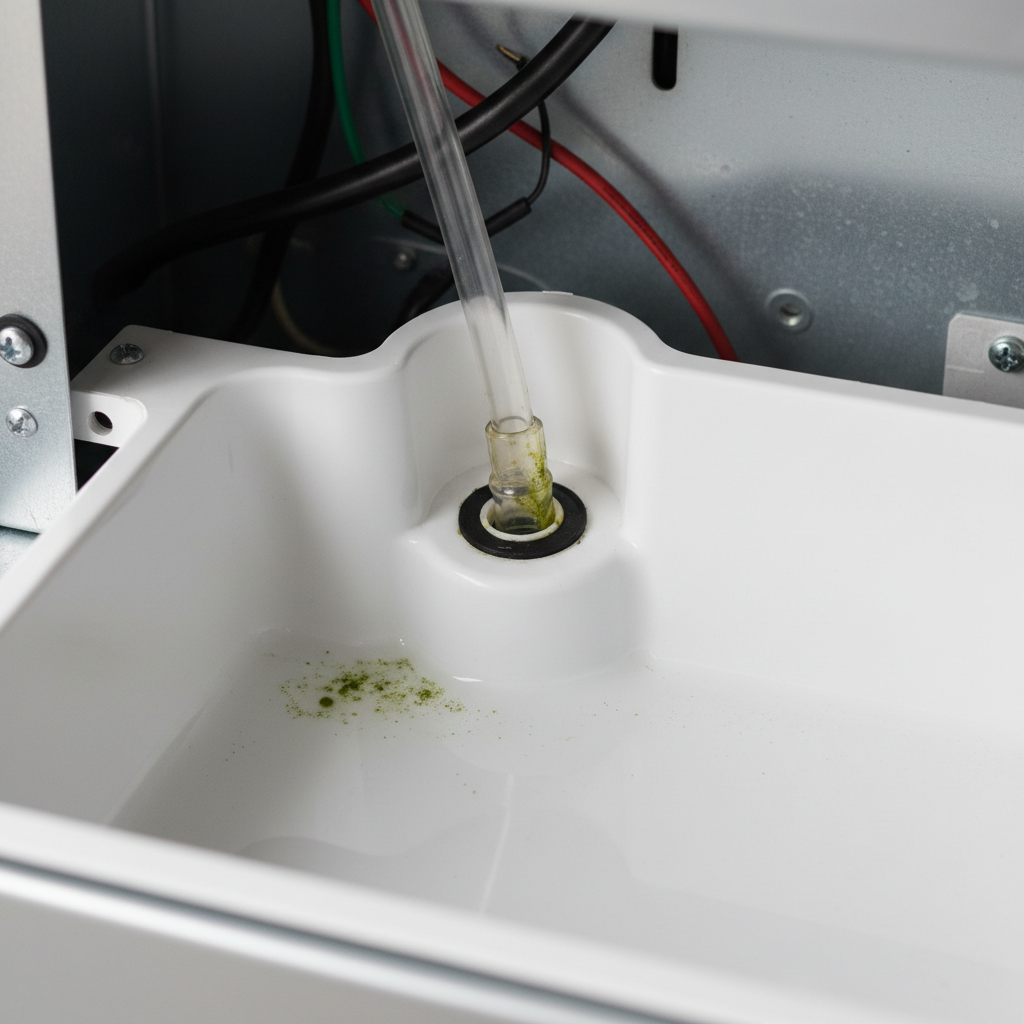
2. Locate the Condensate Pan and Drain Line — Find the drain pan and inspect for standing water and visible clogs.
Your condensate pan is usually located directly beneath the indoor evaporator coil, often found in your attic, basement, utility closet, or garage. It's a shallow plastic or metal pan. Look for standing water. The drain line, typically a 3/4-inch PVC pipe, will exit this pan and usually run through a wall to the outside.
3. Clear Visible Blockages — Remove any large debris from the condensate pan.
If there's standing water in the pan, use a wet/dry shop vacuum, towels, or an old cup to remove as much water as possible. Inspect the pan for any visible sludge, mold, or debris. Carefully use a stiff brush or a damp cloth to clean out any visible gunk from the pan and around the opening of the drain line. Wear gloves and eye protection.
4. Flush the Drain Line (Initial) — Pour a cleaning solution down the drain opening.
Mix a solution of 1 part distilled white vinegar to 1 part water (about 1 cup of each). Slowly pour this solution down the opening of the primary drain line where it connects to the condensate pan. If there's a vent cap (a T-shaped PVC fitting), open it and pour the solution directly into the vent. The vinegar helps to kill algae and dissolve sludge. Wait 30 minutes.
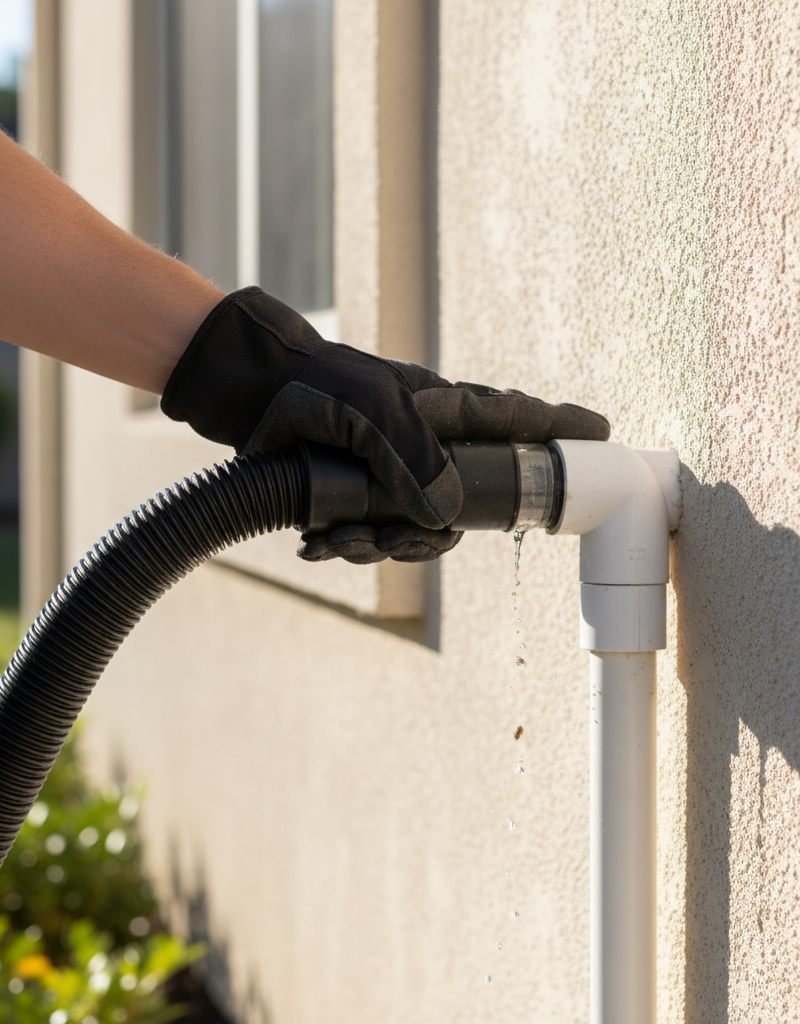
5. Identify the Exterior Drain Pipe — Locate where the AC drain line exits your home.
The drain line typically exits your home horizontally, usually within a few feet of your outdoor AC compressor unit, or sometimes near a kitchen or bathroom sink on an exterior wall. It will be a small PVC pipe, often just a stub, dripping water when the AC is running normally.
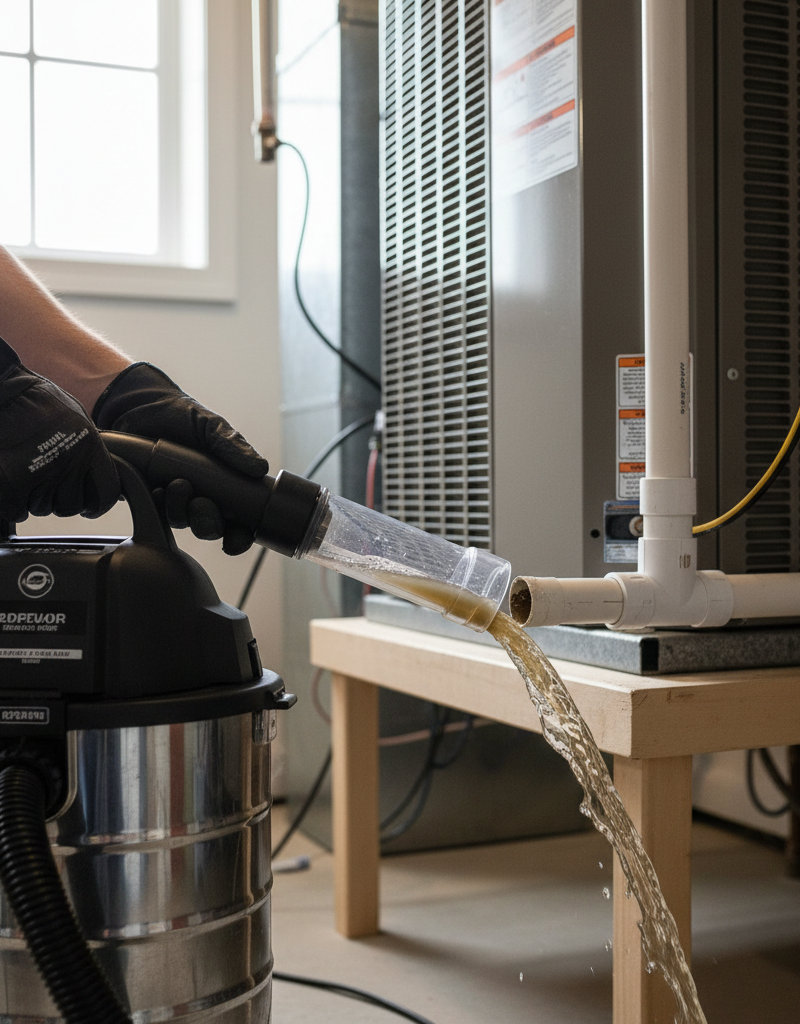
6. Suction Out Stubborn Clogs — Use a wet/dry vacuum to pull the blockage from the outside.
Safety Note: Ensure the AC power is still off. Go to the exterior end of the drain line. Apply firm pressure with the wet/dry vacuum hose around the opening of the PVC pipe to create a tight seal. Turn on the vacuum for 2-3 minutes. This should create enough suction to pull out the blockage. You'll likely see a gush of water and slimy debris get sucked into the vacuum. Repeat if necessary.
- If this doesn't work: The clog might be too dense or too far down. Gently push a plumber's snake (mini or rigid wire) a few feet into the exterior drain pipe to try and dislodge it. Do not force it. Alternatively, try a second wet/dry vac attempt with an even tighter seal.
7. Flush with Water — Rinse the line thoroughly after clearing the clog.
Once you believe the clog is clear (either by suction or snaking), return to the indoor unit. Slowly pour 1-2 gallons of clean water (or the remaining vinegar solution) down the drain line opening from the condensate pan. Observe if the water flows freely out of the exterior drain pipe. A steady stream indicates success.
8. Restore Power and Test — Turn the AC back on and check for proper drainage.
Replace any caps or covers. Turn the AC unit's circuit breaker back on, then set your thermostat to 'Cool' and lower the temperature significantly to ensure the unit runs continuously. After 15-20 minutes, check the exterior drain pipe for a steady drip or stream of water. Also, re-inspect the indoor condensate pan for any signs of overflow.
Common Causes
- Algae and Sludge Buildup: This is by far the most common culprit. In a dark, damp environment, algae, mildew, and mold thrive, forming a slimy sludge that coats the interior of the drain line and eventually restricts or completely blocks the flow of water. This is a natural biological process.
- Dirt and Debris: Dust, pet dander, lint, and other airborne particles pulled in by the AC's return air can bypass filters (especially if filters are old or ill-fitting) and settle in the condensate pan, eventually being flushed into the drain line where they contribute to blockages.
- Insect and Rodent Activity: Small insects, spiders, or even nesting materials from rodents can get into the exterior opening of the drain line or find their way into the condensate pan and create obstructions.
- Improper Slope or Installation: If the drain line wasn't installed with an adequate downward slope towards the exterior of the house, water can pool and stagnate, accelerating biological growth and making it easier for blockages to form.
- Lack of Regular Maintenance: Homeowners often overlook the condensate drain during routine AC maintenance. Without periodic flushing, debris and biological growth accumulate unchecked, leading to inevitable clogs.
- Cracked or Damaged Drain Pan: While less common for clogs, a damaged condensate pan can lead to leaks that mimic a clogged drain. Water might be escaping before it even reaches the drain line if the pan itself is compromised.
Common Mistakes
- Ignoring the Safety Switch: Many AC units have a float switch in the condensate pan that shuts off the unit when water levels get too high. A common mistake is simply resetting this switch without addressing the underlying clog, potentially leading to significant water damage.
- Using Harsh Chemicals: Pouring bleach, store-bought drain cleaner, or other corrosive chemicals down the AC drain line. This can damage the PVC pipe, corrode the coil, or harm internal components of the AC system. Stick to vinegar and water.
- Not Clearing the Entire Line: Only pouring water or solution into the indoor drain will often push the blockage further down the line rather than clearing it completely. The most effective method involves suctioning from the outside.
- Forgetting to Shut Off Power: Working on the AC unit, especially near electrical components and water, without first cutting power at the breaker is extremely dangerous and can lead to electric shock.
- Neglecting Filter Replacement: A dirty air filter allows more dust and debris to enter the AC system, increasing the likelihood of particles settling in the condensate pan and contributing to drain line clogs. Replace filters regularly.
- Skipping the Wet/Dry Vacuum Step: Relying solely on flushing often fails for substantial clogs. The direct suction from a wet/dry vac is usually the most effective DIY method for extracting the physical blockage.
Cost & Time Breakdown
| Task | DIY Cost | Pro Cost | Time |
|---|---|---|---|
| Gather supplies | $5–$15 | N/A | 10 min |
| Clear visible pan blockage | $0 | $50–$75 | 15–30 min |
| Interior line flush | $0–$5 | N/A | 30 min (wait) |
| Exterior line suction/snaking | $0 (if vac) | $100–$250 | 15–30 min |
| Final flush and testing | $0 | N/A | 15 min |
| Total | $5–$20 | $150–$325+ | 1–2 hours |
Tips & Prevention
- Monthly Vinegar Flush: Prevent future clogs by pouring 1 cup of distilled white vinegar (undiluted) down your AC drain line every month or two during peak cooling season. This will kill algae and prevent buildup.
- Regular Filter Changes: Replace your air filter every 1-3 months according to manufacturer recommendations. A clean filter reduces the amount of dust and debris entering the condensate pan and drain line.
- Keep Unit Area Clear: Ensure the area around your indoor and outdoor AC units is free of overgrown vegetation, debris, and dust accumulation, which can get drawn into the system.
- Check for Proper Slope: Periodically ensure your condensate drain line has a continuous downward slope to allow gravity to do its job. Any sags or bellies in the line can create water traps.
- Install a Drain Pan Tablet: Algae growth inhibitors, also known as drain pan tablets, can be placed in the condensate pan to slowly release chemicals that prevent algae and mold from forming. Replace them every few months.
- Annual Professional Tune-up: Schedule an annual AC tune-up with a professional HVAC technician. They will inspect and clean the condensate drain system as part of their comprehensive service, catching potential issues before they become major problems.
When to Call a Professional
While clearing an AC drain line is often a manageable DIY task, there are specific situations where calling an HVAC professional is the safest and most effective course of action. If you've attempted the steps above and the drain line remains stubbornly clogged, or if water continues to back up, a more complex issue may be at play. Professionals have specialized tools like pressurized nitrogen tanks, specialized drain vacuums, or industrial-strength biocide treatments that can tackle severe, deeply embedded clogs that DIY methods can't reach. Additionally, if you notice water damage to the ceiling or walls that appears significant, or if there's any concern about electrical components getting wet, it's crucial to immediately call a pro to assess potential hazards and prevent further damage. Any persistent musty odors in your home after clearing the drain could indicate mold growth within the ductwork or inside the air handler, requiring professional mold remediation and HVAC cleaning. Finally, if your AC unit repeatedly clogs shortly after being cleared, it could be a symptom of a larger underlying problem with your system's installation or components that requires expert diagnosis.
Related Articles
Keep troubleshooting with these hand-picked guides from FixlyGuide:
- Dishwasher Not Draining? Easy Fixes for a Clogged Drain — A dishwasher that won't drain at the end of a cycle is a common problem, often caused by simple clogs or blockages that homeowners can fix…
- Clogged AC Drain Line? Clear It Yourself in 30 Minutes — Learn how to quickly and safely clear a clogged AC drain line to restore your air conditioner's efficiency and prevent water damage.
- The #1 Mistake Homeowners Make with a Slow Kitchen Drain (And the Simple Fix) — A slow kitchen sink drain is frustrating, but often an easy fix if you avoid common mistakes and know where to look first.
- How to Unclog a Shower Drain Without Chemicals: A Homeowner's Guide — Learn how to clear a clogged shower drain using simple tools and methods, avoiding harsh chemicals that can damage pipes.
- Is a frozen pipe about to burst? 3 ways to fix it fast — Safely thawing a frozen pipe can prevent costly damage. This guide provides step-by-step instructions for homeowners to resolve a common pl…
- The #1 Mistake Killing Your Lawn's Clover—and the Easy fix That Spares Your Grass — Discover the most common mistake homeowners make when trying to eliminate clover, and learn how to remove it effectively without harming yo…
Should you do this yourself?
Answer five quick questions before you start. Safety outranks savings every time.
Your experience with work like this
How high do you have to work?
Does the job involve any of these?
Will it need a permit?
Specialty tools
Free and instant. Educational guidance only — not a quote, inspection, or professional diagnosis.
Estimate your own project cost
National averages are a starting point. Enter your details for a range that fits your house.
HVAC replacement cost
- Equipment$2,200 – $3,800
- Installation labor$1,200 – $2,500
Always insist on a Manual J load calculation — sq-ft sizing is only a rough check. Federal heat-pump rebates may reduce cost significantly.
Educational estimate only — always confirm with written local bids.
What should this project cost?
Enter your project details for a realistic cost range before you call anyone.
Common repairs run $150–$650; repipes and water-heater replacements reach $1,500–$4,500.
- Regional adjustment
- National average
- Labor share (typical)
- ~$754
- Quotes to collect
- 3 written estimates
Educational estimate based on national averages — not a binding quote. Always confirm with written local estimates.
Fixly Project Decision Box
- DIY difficulty
- Advanced
- Estimated time
- Homeowner checks 20–30 minutes
- Cost level
- Moderate
Main tools / materials
- Clean air filter
- Garden hose for condenser coils
- Shop vac for the condensate line
When to stop and call a pro
- Burning smell, smoke, or a tripping breaker
- Refrigerant lines iced over or hissing
- Any work inside the sealed refrigerant circuit (EPA-licensed only)
- Gas smell near a furnace — leave and call the utility
Need professional help?
Find an HVAC Pro Near YouFrequently asked questions
How do you know if your AC drain is clogged?+
The most common signs of a clogged AC drain are water pooling around the indoor unit, water dripping from your ceiling, a musty odor near your AC, or your AC unit shutting off automatically because its safety float switch has been triggered.
Can I pour bleach down my AC drain line?+
No, you should never pour bleach or harsh chemical drain cleaners down your AC drain line. Bleach can corrode the aluminum evaporator coils and other components, leading to costly damage. Stick to a solution of distilled white vinegar and water, which is effective yet safe.
How often should I clean my AC drain line?+
Ideally, you should flush your AC drain line with a vinegar-water solution at least once every 1-3 months during the peak cooling season. This preventative maintenance helps inhibit algae and mold growth, preventing clogs before they form.
Will a clogged AC drain line fix itself?+
No, a clogged AC drain line will not fix itself. The biological growth causing the clog will only continue to accumulate. It requires manual intervention, such as flushing or suctioning, to clear the blockage and restore proper drainage.
Discussion
Loading comments…