- Tools: Kitchen sink plunger (cup plunger).
- Safety: Wear gloves. Stand clear when pulling up the plunger to avoid splashing dirty water.
- If this doesn't work: The clog is likely a bit more stubborn or located further down. Move on to the p-trap.
Plumbing · Leak
| Project category | Plumbing |
|---|---|
| Problem type | Leak |
| Trade required | Plumbing |
| Urgency | Emergency — act now |
| Safety risk | High safety risk |
| DIY suitability | DIY for experienced homeowners |
| Cost category | Low cost |
| Typical timeline | Shut water off now; repair usually same or next day |
| Contractor type | Licensed plumber |
Repair option
Isolate at the shutoff, replace the failed component, and dry the cavity fully.
Replacement option
Repipe the run or the branch when corrosion is widespread.
Common causes
- Failed supply line or shutoff valve
- Worn washers, cartridges, or P-trap connections
- Pinhole corrosion in older copper
Relevant tools:emergency checklistdiy or hire a pro
Published June 18, 2026Last updated August 17, 2026
Tools & materials you'll need
Affiliate linksAs an Amazon Associate FixlyGuide earns from qualifying purchases — at no extra cost to you. Prices and availability are accurate as of publication and subject to change.
Quick Answer
A slow-draining kitchen sink is a common nuisance, primarily caused by a partial clog from the accumulation of grease, food particles, and soap scum within the p-trap or upper sections of the drainpipe. Less often, blockages in the main drain line, an improperly sloped pipe, or even a blocked plumbing vent can be the hidden culprit. Fortunately, most slow drains can be resolved by homeowners using basic tools and methods to clear these obstructions, often saving the cost of a professional plumber.
The Problem
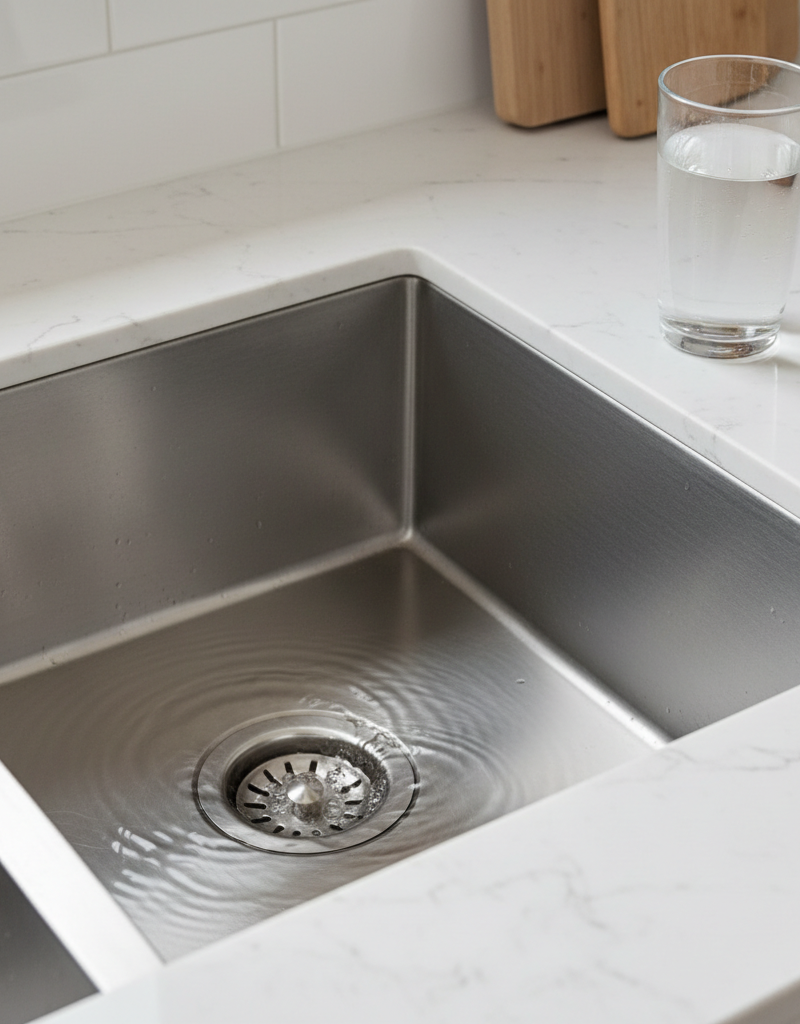
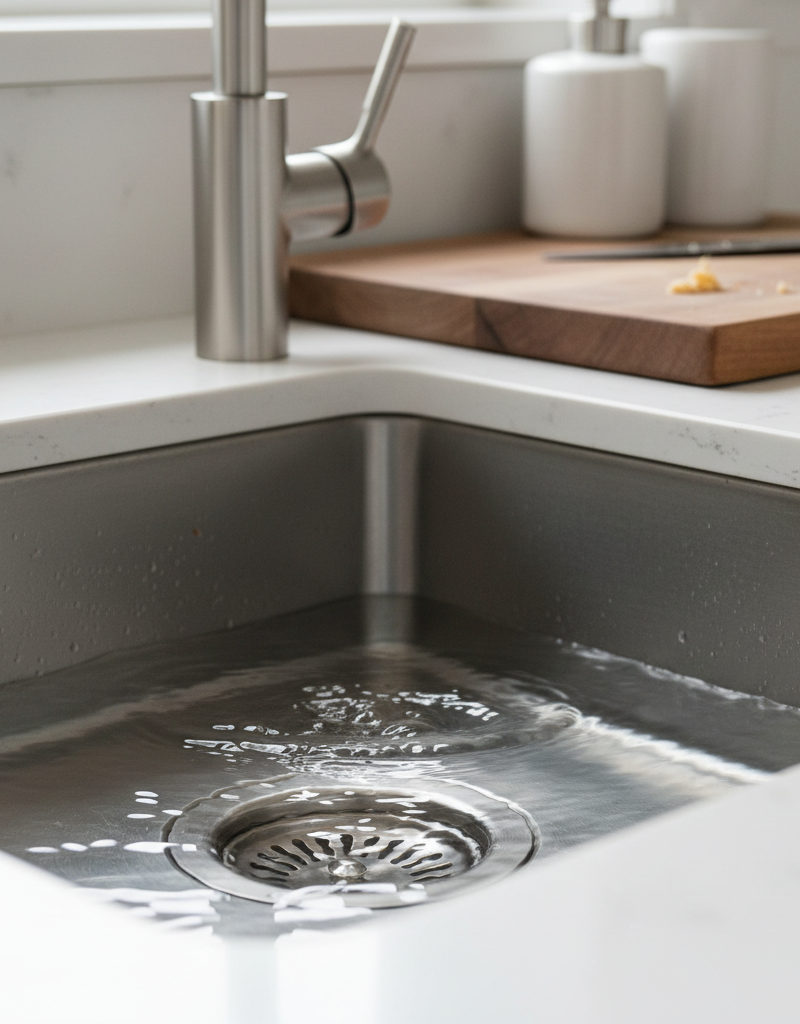
You pour water into your kitchen sink, and instead of disappearing instantly, it just… sits there. Slowly, agonizingly, the water level recedes. This isn't just an annoyance; it’s a sign of a partial blockage building up in your drainage system. Left unaddressed, a slow drain will inevitably become a completely clogged drain, bringing your kitchen to a halt. Beyond the inconvenience, standing water in a sink can become a breeding ground for bacteria and even attract pests. Understanding the mechanics of your sink's drainage is the first step toward diagnosing and fixing the problem. Ignoring it won't make it go away; in fact, it will likely worsen over time, leading to more difficult and potentially more expensive repairs.
How It Works
Your kitchen sink's drainage system is a cleverly designed network that relies on gravity and air pressure to whisk wastewater away. When you pull the stopper, water flows down the sink basket and into the tailpiece. Immediately below this awaits the p-trap, a U-shaped pipe that holds a small amount of water. This water barrier has two critical functions: it prevents sewer gases from entering your home and it catches heavier debris, acting as a first line of defense against clogs reaching the main drain system. After the p-trap, the drainpipe typically slopes downward, connecting to a branch drain that merges with the main sanitary drain line, which eventually carries wastewater to the municipal sewer system or your septic tank. Crucially, your plumbing system also includes vent pipes, which extend through your roof. These vents allow air into the drainpipes behind the flowing water, preventing a vacuum from forming that would otherwise slow or stop drainage, and also equalize pressure to ensure sewer gases are safely vented outside. A proper balance of water, gravity, and air pressure is essential for efficient drainage. When any part of this system is compromised – especially by a physical obstruction – flow rates diminish, leading to that frustratingly slow drain.
Step-by-Step Fix
Safety First: Before starting any plumbing work, always wear gloves and eye protection. Chemical drain cleaners can be caustic and dangerous; avoid them if possible. If using them, follow manufacturer instructions rigorously and ensure good ventilation.
1. Clear the Sink Basket and Stopper — Remove any visible debris
Your first step is to check the most superficial potential clog points. Lift out the sink basket and inspect it for any food particles, grease, or other debris caught around the strainer holes or under the stopper assembly. Use a paper towel or old cloth to wipe away any gunk. Often, a significant amount of food waste can accumulate here surprisingly quickly, impeding initial flow.
- Tools: Paper towel, old brush (optional).
- If this doesn't work: Proceed to the next step to address deeper clogs.
2. Plunge the Drain — Create hydraulic pressure to dislodge clogs
A basic cup plunger is often remarkably effective for minor clogs in a slow-draining kitchen sink. Remove any standing water in the sink. If you have a double sink, you'll need to block the second drain opening tightly with a wet cloth or a second person's hand to create the necessary seal. If there's an overflow opening near the top of your sink, cover it too. Fill the sink with enough hot water to cover the plunger's cup. Position the plunger firmly over the drain, ensuring a good seal. Plunge vigorously 10-15 times, maintaining the seal, then quickly pull up. Repeat this process 2-3 times. If you hear a gurgling sound or see debris coming up, you're on the right track.
- Tools: Kitchen sink plunger (cup plunger).
- Safety: Wear gloves. Stand clear when pulling up the plunger to avoid splashing dirty water.
- If this doesn't work: The clog is likely a bit more stubborn or located further down. Move on to the p-trap.
3. Clean the P-Trap — The most common location for kitchen sink clogs
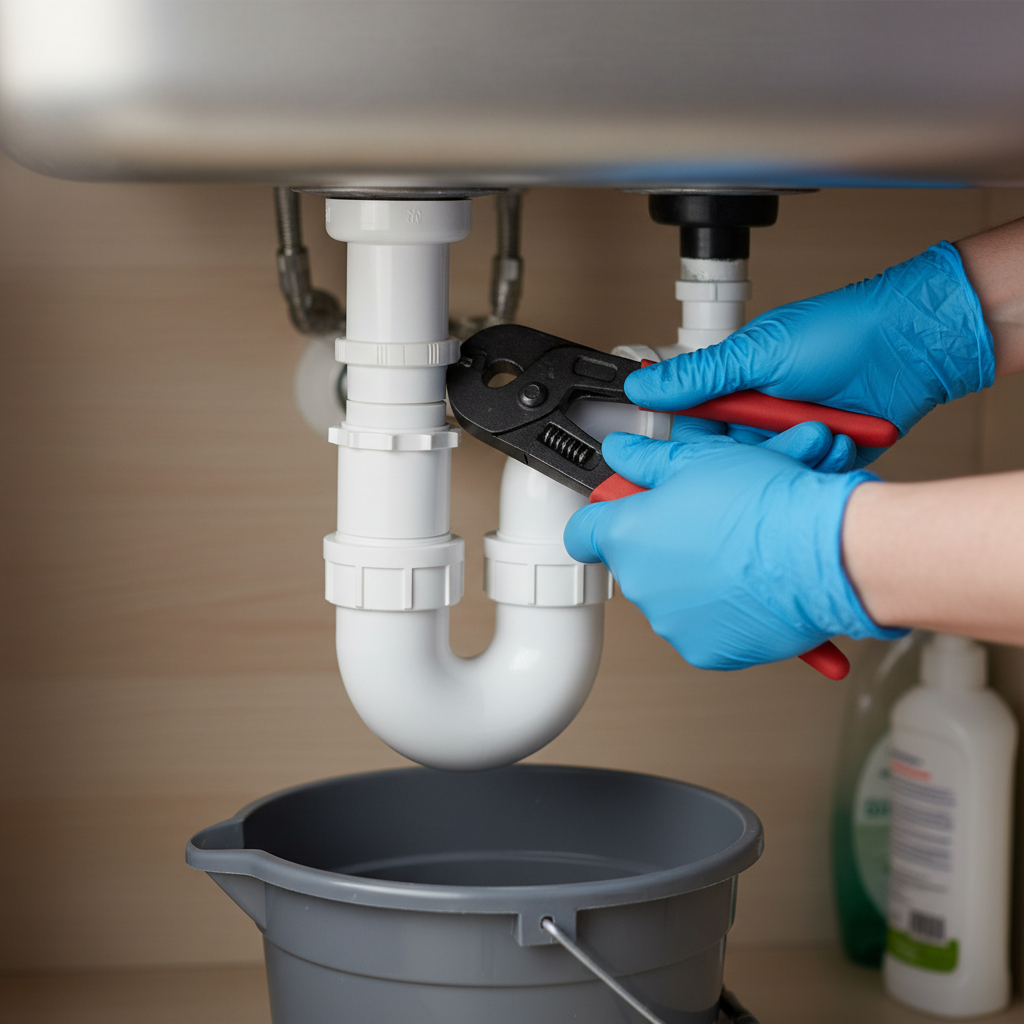
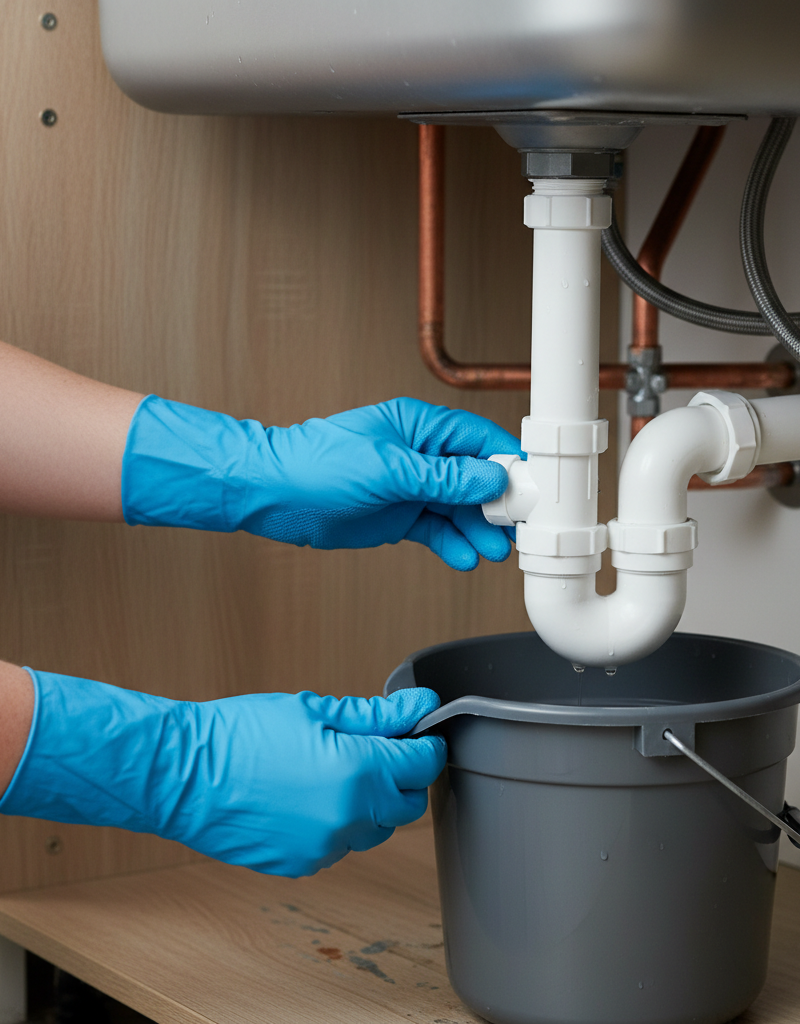
The p-trap is designed to catch debris, making it a prime location for clogs. Place a bucket directly under the p-trap to catch water and debris. Use channel-lock pliers or a basin wrench to loosen the slip nuts on both ends of the p-trap. Once loosened, carefully remove the p-trap. Be prepared for some water to spill out. Use an old brush, a wire coat hanger (bent straight with a small hook at the end), or a stiff bottle brush to thoroughly clean the inside of the p-trap. Scrape out all grease, food particles, and any other gunk you find. Also, shine a flashlight into the wall pipe to check for visible obstructions just past the p-trap. Reattach the p-trap, hand-tightening the slip nuts first, then giving them a quarter-turn with the pliers (don't overtighten, as this can crack plastic pipes).
- Tools: Bucket, channel-lock pliers or basin wrench, old brush or wire coat hanger, flashlight.
- Materials: Old rags.
- Safety: Always wear gloves and eye protection. The water can be dirty and contain bacteria.
- If this doesn't work: The blockage is probably further down the drain line.
4. Use a Drain Snake (Auger) — Reach deeper clogs beyond the p-trap
If cleaning the p-trap didn't solve the problem, the clog is deeper in the drainpipe. A manual drum auger (drain snake) is the homeowner's next best friend. After removing the p-trap (or feeding directly down the tailpiece if you don't want to remove the p-trap again, though access is easier from the wall pipe), feed the auger cable into the drain opening in the wall. Push the snake in until you feel resistance. This indicates you've hit the clog. Once resistance is met, lock the thumbscrew and crank the handle clockwise to help the snake's tip bore through the clog. Continue pushing and cranking, then slowly pull the snake back, twisting as you go, to retrieve the clog. You may need to repeat this several times. Run hot water to flush the drain thoroughly once you think the clog is cleared.
- Tools: Manual drum auger (drain snake), bucket.
- Safety: Wear heavy-duty gloves. The snake cable can be sharp and dirty.
- If this doesn't work: The clog might be a main line issue or a vent pipe problem, which may require professional help.
5. Check the Air Vent — Sometimes the cause isn't in the drain itself
Less commonly, a blocked plumbing vent pipe can cause slow drainage, often accompanied by gurgling sounds from the sink. The vent allows air into the system, preventing a vacuum. If the vent is blocked (e.g., by a bird's nest, leaves, or even an ice dam), water can't drain efficiently. This is a more advanced diagnostic step. If you suspect a vent issue, you might see slow draining not just in the kitchen sink but perhaps other fixtures too. Clearing a vent often requires safely accessing your roof. If you're uncomfortable doing this, or if you can't locate the vent or diagnose a blockage, this is a good time to call a professional.
- Tools: Safety harness, ladder (if accessing roof), garden hose, long wire brush (for vent clearing).
- Safety: WARNING: Working on a roof is dangerous. Only attempt if you are experienced and have proper safety equipment. Otherwise, call a professional.
- If this doesn't work: It's time to consider a professional plumber. The issue might be a more complex main line clog or a deeper system problem.
Common Causes
- Grease and Fat Buildup: This is by far the leading cause in kitchen sinks. Hot cooking grease cools as it flows down the drain, solidifying and sticking to pipe walls. Over time, these layers accumulate, narrowing the pipe diameter and catching other debris.
- Food Particles: Small food scraps, coffee grounds, rice, pasta, and even seemingly harmless crumbs can collect in the p-trap or further down the line, especially when combined with grease and soap scum, forming a dense blockage.
- Soap Scum: While more common in bathroom drains, soap scum (a byproduct of soap reacting with hard water minerals) can contribute to blockages in kitchen drains, particularly when combined with grease and food.
- Damaged or Improperly Sloped Pipes: A pipe section that has sagged or was installed with insufficient slope (less than 1/4 inch per foot) can cause water and debris to collect, leading to chronic slow drainage. This is more common in older homes or homes with recent, poorly executed plumbing work.
- Blocked Vent Pipe: As described above, a clogged plumbing vent prevents air from entering the drain system, leading to a vacuum that inhibits proper water flow. This often results in gurgling noises.
- Main Line Clog: If multiple drains in your home (e.g., kitchen sink, bathroom sink, toilet) are draining slowly, the problem likely lies in your main sewer line, which requires professional attention.
Common Mistakes
- Pouring Grease Down the Drain: This is the absolute worst thing you can do for your kitchen drain. Always pour cooled grease into a disposable container (like an old coffee can) and throw it in the trash. Even hot water and dish soap won't prevent grease from solidifying downstream.
- Relying on Chemical Drain Cleaners: While seemingly convenient, chemical drain cleaners are often harsh, corrosive, and can damage pipes, especially older or PVC pipes. They rarely fully clear a blockage, instead just eating a small hole through it, allowing the clog to quickly re-form. They are also highly toxic and dangerous to handle. Use them only as a last resort and with extreme caution, or better yet, avoid them entirely.
- Ignoring Gurgling Sounds: Gurgling noises from your sink when it drains are not normal. They often indicate a vent issue or a significant partial clog that is drawing air back through the p-trap. Addressing these early can prevent full clogs.
- Overtightening P-Trap Nuts: When reassembling the p-trap, it's easy to overtighten plastic slip nuts with pliers. This can strip the threads or even crack the plastic, leading to leaks. Hand-tighten, then give a slight quarter-turn with pliers for a secure fit.
- Not Using a Bucket: Skipping the bucket when opening the p-trap will result in a messy spill of dirty water and debris. Always place a large bucket underneath to contain the mess.
- Not Clearing the Entire Clog: A common DIY mistake is to clear just enough of the clog to get the water flowing again. Unless the entire obstruction is removed, the remaining gunk will quickly accumulate more debris, leading to a recurring problem. Keep flushing with hot water and check for full flow.
Cost & Time Breakdown
| Task | DIY Cost | Pro Cost | Time |
|---|---|---|---|
| Plunging the Drain | $0 | N/A | 5–10 minutes |
| Cleaning P-Trap | $0–$10 | $100–$250 | 20–30 minutes |
| Using a Drain Snake | $20–$50 | $150–$400 | 30–60 minutes |
| Diagnosing Vent Issue | $0 (if safe) | $200–$500 | 1–2 hours |
| Main Line Clog (Pro) | N/A | $300–$800+ | 2–4 hours |
Tips & Prevention
- Scrape Plates Thoroughly: Before washing dishes, scrape all food scraps into the trash or compost, even seemingly small ones. Use a sink strainer to catch anything that slips past.
- Manage Grease Properly: Never pour cooking grease, fat, or oil down the drain. Let it cool and solidify, then dispose of it in the trash.
- Flush with Hot Water: After washing dishes, run very hot water down the drain for 30-60 seconds to help flush away minor grease or soap residue before it can solidify.
- Baking Soda and Vinegar Flush (Maintenance): Once a month, pour 1 cup of baking soda down the drain, followed by 1 cup of white vinegar. Let it sit for 30 minutes to an hour (or even overnight), then flush with very hot water. This creates a fizzing action that can help break down minor buildup. It's a preventative measure, not a strong clog remover.
- Install a Garbage Disposal (if applicable): If you have a garbage disposal, use it regularly and correctly. Run cold water before, during, and after use. Grind small batches of food, and avoid fibrous materials, coffee grounds, and grease.
- Regular P-Trap Checks: Consider checking and cleaning your p-trap every 6-12 months as a preventative measure, especially if you cook frequently or have an older home.
When to Call a Professional
While many slow drains are DIY-friendly, certain situations warrant calling a licensed plumber. If you've tried plunging, cleaning the p-trap, and snaking without success, the clog is likely deep within your main drain line, beyond the reach of a homeowner's tools. Indicators of a main line issue include multiple fixtures (e.g., toilets, showers, other sinks) draining slowly or backing up simultaneously. Additionally, if you suspect a blocked plumbing vent but are uncomfortable accessing your roof, or if you notice water backing up into surprising places (like a laundry tub when flushing a toilet), it's a clear sign of a significant problem requiring professional diagnostic tools like camera inspections and specialized augers. Attempting to clear a main line clog without proper equipment can potentially worsen the issue or damage your plumbing system, leading to more expensive repairs.
Related Articles
Keep troubleshooting with these hand-picked guides from FixlyGuide:
- The Secret Culprit Behind Your Slow Sink Drain (It's Not Always Hair) — Uncover the surprising reasons your kitchen sink drains slowly and learn straightforward fixes to restore flow without calling a plumber.
- The #1 Mistake Homeowners Make with a Slow Kitchen Drain (And the Easy Fix) — A slow kitchen sink drain is frustrating, but often it's a simple fix homeowners overlook by focusing on the wrong culprits.
- The #1 Mistake Homeowners Make with a Slow Kitchen Drain (And the Simple Fix) — A slow kitchen sink drain is frustrating, but often an easy fix if you avoid common mistakes and know where to look first.
- The #1 Mistake Homeowners Make Unclogging a Shower Drain (and 5 Better Fixes) — Shower drains get clogged with hair and soap scum, but harsh chemicals often worsen the problem; learn safe, effective DIY methods.
- The #1 Mistake Homeowners Make with a Slow Kitchen Drain (and the Real Fix) — Before you reach for harsh chemicals, learn the right way to fix a slow kitchen sink drain and prevent future clogs.
- The #1 Gutter Mistake You're Making (And 3 Hidden Causes of Overflow) — Overflowing gutters in heavy rain are often a sign of a deeper issue than just debris, leading to potential foundation damage and costly re…
Should you do this yourself?
Answer five quick questions before you start. Safety outranks savings every time.
Your experience with work like this
How high do you have to work?
Does the job involve any of these?
Will it need a permit?
Specialty tools
Free and instant. Educational guidance only — not a quote, inspection, or professional diagnosis.
What should this project cost?
Enter your project details for a realistic cost range before you call anyone.
Common repairs run $150–$650; repipes and water-heater replacements reach $1,500–$4,500.
- Regional adjustment
- National average
- Labor share (typical)
- ~$754
- Quotes to collect
- 3 written estimates
Educational estimate based on national averages — not a binding quote. Always confirm with written local estimates.
Fixly Project Decision Box
- DIY difficulty
- Moderate
- Estimated time
- 30 minutes – half a day
- Cost level
- Moderate
Main tools / materials
- Adjustable wrench
- Plunger or drain auger
- Bucket and towels
- Thread tape
When to stop and call a pro
- Water you cannot shut off at the fixture or main
- Sewage backing up into more than one fixture
- Water near electrical panels or outlets
- Gas water heater work beyond relighting a pilot
Need professional help?
Get a Licensed PlumberBefore you start
Check the difficulty, permits, and safety risk — then decide whether to call a pro.
- Estimate this projectGet a cost range for your scope and ZIP before you call anyone.Open
- Get local estimatesSend one request and compare written estimates from vetted pros.Open
Free, no signup required. Estimates are educational guidance, not a quote or an inspection.
Frequently asked questions
Why is my kitchen sink draining slowly but not completely clogged?+
A slow drain usually indicates a partial clog, most commonly an accumulation of grease, food particles, and soap scum that has narrowed the inside diameter of the drainpipe or p-trap. Water can still pass through, but at a reduced rate.
Can I use chemical drain cleaner for a slow kitchen sink?+
While chemical drain cleaners can temporarily clear a path, they are generally not recommended. They can damage pipes, are highly corrosive, harmful to the environment, and often don't fully remove the clog, leading to recurrence. Manual methods like plunging or snaking are safer and more effective.
What's the best way to prevent kitchen sink clogs?+
The best prevention involves proper disposal of grease (never down the drain), scraping all food scraps into the trash before washing dishes, using a sink strainer, and occasional preventive methods like a baking soda and vinegar flush.
How often should I clean my p-trap?+
For preventative maintenance, consider checking and cleaning your p-trap every 6 to 12 months, especially if you frequently cook with oils or fats, or if you notice even a slight slowdown in drainage.
What does it mean if multiple drains are slow?+
If your kitchen sink, bathroom sink, or toilet are all draining slowly, it's a strong indicator of a blockage in your main sewer line, which connects all your home's drains. This typically requires professional plumbing assistance.
Discussion
Loading comments…