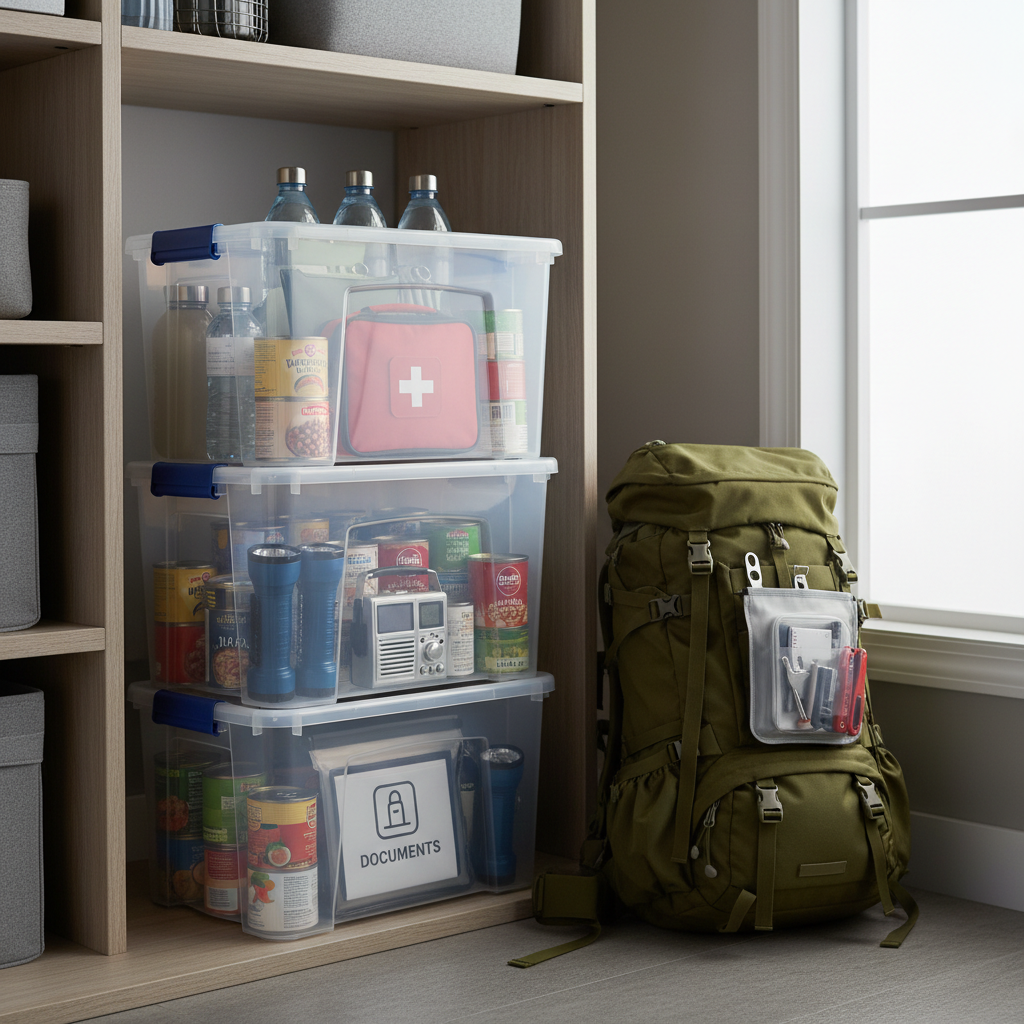
- Assess Your Household's Specific Needs — Before buying anything, consider who lives in your home.
- Children: Do you need formula, diapers, or special foods? Are there comfort items like a favorite toy or book that would help?
- Seniors: Are there specific medications, mobility aids, or dietary restrictions?
- Pets: What food, water, and medications do they need? Include a leash, carrier, and vaccination records.
- Medical Conditions: List all prescription medications and medical equipment, ensuring you have at least a 7-day supply. Keep a copy of prescriptions and doctor's contact info.
Published July 19, 2026Last updated August 17, 2026
Tools & materials you'll need
Affiliate linksAs an Amazon Associate FixlyGuide earns from qualifying purchases — at no extra cost to you. Prices and availability are accurate as of publication and subject to change.
Quick Answer
Being ready for extreme weather means more than just boarding up windows. It means having a well-stocked emergency kit that can sustain your household for at least 72 hours after a storm, power outage, or other natural disaster. This includes having a reliable water supply, non-perishable food, a comprehensive first-aid kit, lighting, communication devices, and important documents readily accessible.
The Problem
When hurricanes, blizzards, floods, or severe thunderstorms hit, they can disrupt daily life in profound ways. Power outages can last for days, cutting off refrigeration, heating, and communication. Roads may become impassable, making it impossible to reach stores or emergency services. Water supplies can become contaminated, and gas lines can be compromised. Without a pre-prepared emergency kit, homeowners can find themselves without basic necessities, facing increased risks to their health and safety, and adding immense stress to already difficult situations. The immediate aftermath of extreme weather is not the time to scramble for supplies; advance preparation is crucial.
How It Works
An emergency kit functions as your household's self-sufficiency hub when external services are unavailable. Think of it as a concentrated capsule of survival essentials. The core principle is redundancy and self-containment. For instance, while municipal water might be compromised, a stored supply of bottled water provides hydration. When the electrical grid fails, battery-powered or hand-crank radios and flashlights offer light and communication. Food items are selected for their long shelf life and lack of preparation requirements to ensure sustenance without refrigeration or cooking facilities. First-aid supplies address immediate medical needs until professional help is accessible. Important documents are kept secure and waterproofed because digital copies may be inaccessible without power or internet. The kit's effectiveness hinges on a systematic approach to anticipating needs and providing simple, reliable solutions for each – ensuring that essential life functions can continue even when the typical infrastructure cannot. Regularly checking and rotating items ensures everything remains functional and within its expiration date, making the kit a dynamic, living asset rather than a static box in the closet.
Step-by-Step Fix
Here’s how to assemble a robust emergency kit for your home:
-
Assess Your Household's Specific Needs — Before buying anything, consider who lives in your home.
- Children: Do you need formula, diapers, or special foods? Are there comfort items like a favorite toy or book that would help?
- Seniors: Are there specific medications, mobility aids, or dietary restrictions?
- Pets: What food, water, and medications do they need? Include a leash, carrier, and vaccination records.
- Medical Conditions: List all prescription medications and medical equipment, ensuring you have at least a 7-day supply. Keep a copy of prescriptions and doctor's contact info.
-
Gather Water Supplies — Water is the most critical item. Plan for one gallon per person per day for drinking and basic sanitation, for at least three days (aim for seven).
- Store commercially bottled water in a cool, dark place.
- Consider water purification tablets or a portable water filter as a backup for non-potable sources.
-
Stock Non-Perishable Food — Choose foods that require no cooking, refrigeration, or special preparation.
- Look for canned goods with pop-tops, energy bars, dried fruit, nuts, and peanut butter.
- Don't forget a manual can opener!
- Rotate your food supply every 6–12 months to ensure freshness.
-
Assemble a Comprehensive First-Aid Kit — Beyond basic bandages, think about potential injuries and illnesses specific to your family.
- Include pain relievers, antiseptic wipes, sterile gauze pads, adhesive tape, antibiotic ointment, non-latex gloves, and any necessary prescription medications.
- Consider an emergency blanket and a whistle to signal for help.
-
Secure Lighting and Communication — Power outages are common.
- Flashlights: At least two reliable, battery-powered flashlights with extra batteries.
- Headlamps: Hands-free lighting is invaluable.
- Lanterns: For ambient light.
- Radio: A hand-crank or battery-powered NOAA weather radio to stay informed.
- Power Bank: A fully charged power bank for cell phones.
- Safety Note: Avoid candles for general lighting during emergencies due to fire risk; use them only if absolutely necessary and with extreme caution.
-
Pack Essential Documents and Cash — In a waterproof, portable container.
- Copies of identification (driver's license, passport), birth certificates, insurance policies (home, auto, health), and medical records.
- A small amount of cash in small denominations, as ATMs and credit card machines may not work.
-
Consider Sanitation and Hygiene — Basic hygiene is important for morale and health.
- Include moist towelettes, hand sanitizer, toilet paper, garbage bags, and feminine hygiene products.
- A small shovel can be useful for burying waste if plumbing is out.
-
Prepare for Shelter and Warmth — Depending on your climate, this is critical.
- Emergency blankets, sleeping bags, and extra warm clothing.
- A tent or tarp for temporary outdoor shelter, if necessary.
-
Store Your Kit Properly — Keep your emergency kit in a clearly marked, easily accessible location, such as a closet near an exit or a garage.
- Use sturdy, waterproof containers or backpacks.
- Regularly check expiration dates on food, water, and medications, and replace batteries every 6-12 months.
Common Causes
The need for an emergency kit stems directly from the unpredictability and severity of various extreme weather events and natural disasters:
- Power Outages: Caused by high winds, ice storms, heavy snowfall, or damage to utility infrastructure (e.g., downed power lines). These can last hours to weeks.
- Flooding: From heavy rainfall, overflowing rivers, storm surges (coastal areas), or dam failures. Flooding contaminates water, damages homes, and makes roads impassable.
- Hurricanes and Tropical Storms: Bring high winds, torrential rain, and storm surges, leading to widespread power outages, flooding, and structural damage.
- Blizzards and Severe Winter Storms: Heavy snow and ice can cause power outages, make travel impossible, and lead to hypothermia risks.
- Earthquakes: Can cause immediate structural damage, utility disruptions (gas leaks, water main breaks), and road closures, making immediate access to services difficult.
- Tornados: Rapid and destructive wind events that can completely devastate homes and infrastructure, requiring immediate self-sufficiency.
- Wildfires: Require quick evacuation (making a portable kit crucial) and can cause power outages and air quality issues for those staying put.
Common Mistakes
Homeowners often make several critical errors when preparing for emergencies:
- Underestimating Water Needs: Many underestimate the sheer volume of water required for drinking and basic hygiene, aiming for too little. Remember 1 gallon per person per day, minimum for 3 days.
- Forgetting a Manual Can Opener: Relying solely on electric can openers leaves you stranded when the power is out, making canned food inaccessible.
- Using Candles for Primary Lighting: While seemingly convenient, candles are a significant fire hazard in emergency situations, especially in chaos or darkness. Opt for battery or hand-crank alternatives.
- Not Rotating Supplies: Food, water, and battery expiration dates are real. Forgetting to periodically check and replace items means your
Related Articles
Keep troubleshooting with these hand-picked guides from FixlyGuide:
- The Secret to Surviving Power Outages: Why Your HVAC Isn't the Real Power Hog — Discover how a whole-home battery system can keep your essential appliances running during a power outage, even when the grid fails.
- The Hidden Reason Your GFCI Trips — And Why Most Homeowners Get It Wrong — A continuously tripping GFCI outlet is a safety warning, often indicating a problem like moisture, a faulty appliance, or a wiring issue th…
- The Secret Power Tool Hiding in Your Garage for a Speedier Clean — Unlock the hidden potential of your cordless drill to tackle stubborn household grime, soap scum, and dirt with specialized cleaning attach…
- The Hidden Reason Your GFCI Trips (and Why Most Homeowners Miss It) — A continuously tripping GFCI outlet is a safety warning, often signaling common but overlooked issues like moisture intrusion, appliance fa…
- The Hidden Reason Your AC Isn't Cooling (And Why Most Homeowners Get It Wrong) — When your central AC unit isn't cooling, the culprit often isn't what you think, leading to frustration and unnecessary repair calls.
- The 7 Critical Spring Home Maintenance Tasks Most Homeowners Forget — Prepare your home for warmer weather and prevent costly repairs with a comprehensive spring maintenance checklist that goes beyond surface-…
Should you do this yourself?
Answer five quick questions before you start. Safety outranks savings every time.
Your experience with work like this
How high do you have to work?
Does the job involve any of these?
Will it need a permit?
Specialty tools
Free and instant. Educational guidance only — not a quote, inspection, or professional diagnosis.
Questions to ask before you sign
Ask every contractor the same questions and the cheapest bid stops looking cheapest. Check them off as you go — your progress is saved on this device.
Free, no signup. Bring this to every walkthrough so you compare bids on the same terms.
What should this project cost?
Enter your project details for a realistic cost range before you call anyone.
Cost depends heavily on which system turns out to be the source.
- Regional adjustment
- National average
- Labor share (typical)
- ~$1,620
- Quotes to collect
- 3 written estimates
Educational estimate based on national averages — not a binding quote. Always confirm with written local estimates.
Handle this before it gets worse
First steps that limit damage, then a way to reach a qualified pro.
- Emergency repair checklistThe first steps that limit damage before a pro arrives.Open
- Get local estimatesSend one request and compare written estimates from vetted pros.Open
- Estimate this projectGet a cost range for your scope and ZIP before you call anyone.Open
Free, no signup required. Estimates are educational guidance, not a quote or an inspection.
Get the print-ready PDF of this guide
A clean, ad-free, printable version you can keep on your phone or pin to the workshop wall. Free with a FixlyGuide account.
- Print-optimized layout
- Tools, materials & every step included
- Saved to your account
This article was independently written by FixlyGuide based on the source topic.
Frequently asked questions
How much water should I store for an emergency?+
The recommendation is one gallon of water per person per day for at least three days for drinking and basic sanitation. Aim for a longer supply if space allows, ideally up to seven days.
What kind of food should I put in an emergency kit?+
Focus on non-perishable foods that require no cooking, refrigeration, or special preparation. Canned goods with pop-top lids, energy bars, dried fruits, nuts, and peanut butter are excellent choices. Remember a manual can opener!
How often should I check and update my emergency kit?+
You should check your emergency kit at least once a year, and ideally every six months. Replace expired food, water, and medications, and test flashlights and radios, replacing batteries as needed. Adjust contents based on changes in your family's needs.
Can I use candles for emergency lighting?+
While tempting, candles pose a significant fire risk during an emergency, especially when visibility is low or movement is restricted. It's much safer to rely on battery-powered flashlights, headlamps, and lanterns, along with extra batteries or hand-crank options.
Where is the best place to store an emergency kit?+
Store your emergency kit in a cool, dry, and easily accessible location. A closet near an exit, a designated bin in the garage, or even under a bed are good options. Ensure it's clearly marked so everyone in the household knows where to find it.
Discussion
Loading comments…