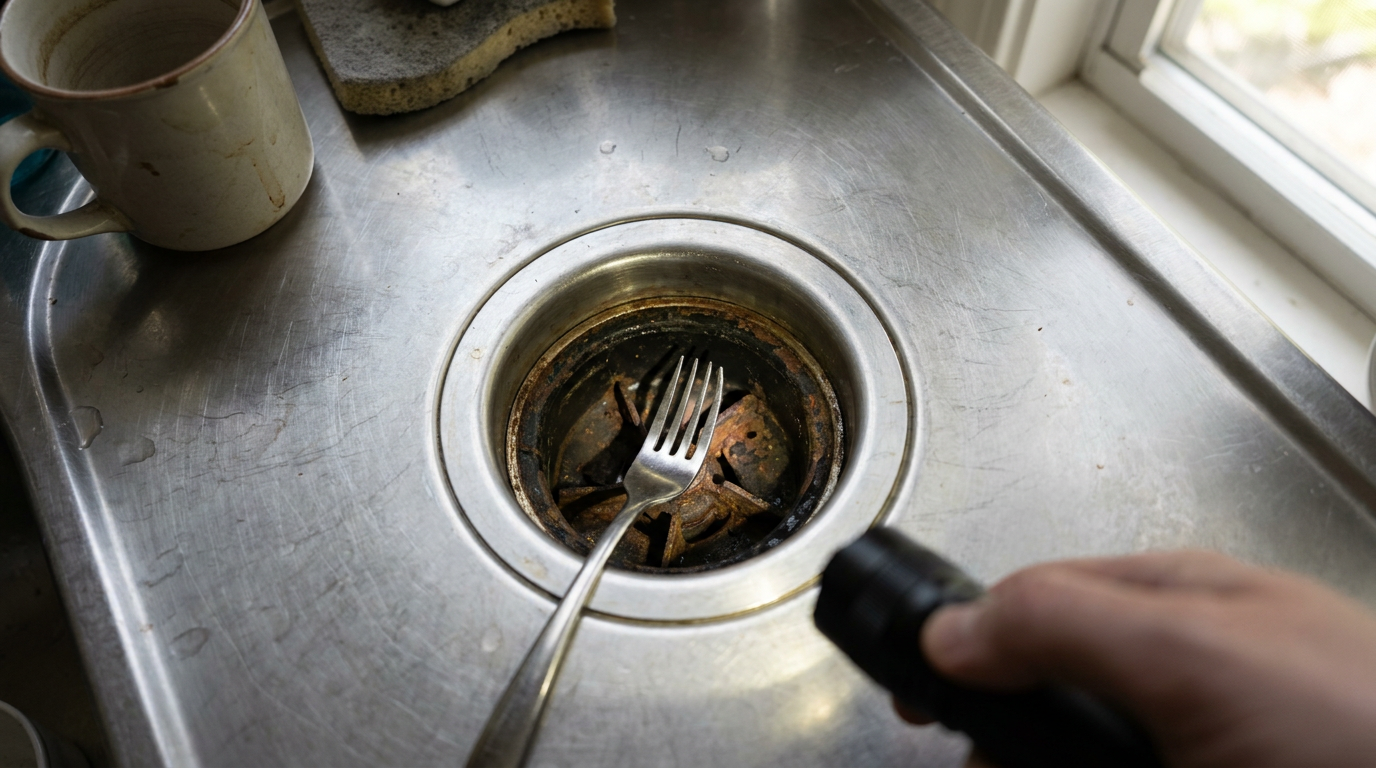
- Silverware: The 1 culprit. A fork, spoon, or knife slipping into the drain is an instant racket.
- Bottle Caps & Pull-Tabs: Metal caps or the pull-tab from a can of soup can bounce around the chamber and make a miserable noise.
- Hard, Non-Food Items: Chicken bones, big fruit pits like peaches or avocados, or corn cobs are too tough for most residential disposals. They won’t grind up and just rattle around.
- Accidental Debris: During a kitchen remodel or even a weekend project, a stray screw, nut, or little piece of hardware can fall into the drain without anyone noticing.
- Loose Mounting Screws: Sometimes the grinding isn’t inside the chamber at all. The whole unit may be vibrating against the sink mount. That sound usually comes off more like a deep rattle than a sharp metallic grind.
HVAC · Strange noises
| Project category | HVAC |
|---|---|
| Problem type | Strange noises |
| Trade required | HVAC |
| Urgency | Soon — within weeks |
| Safety risk | Moderate safety risk |
| DIY suitability | Pro recommended |
| Cost category | Moderate cost |
| Typical timeline | Schedule within days — noises rarely resolve on their own |
| Contractor type | Licensed HVAC technician |
Repair option
Motor, bearing, or wheel replacement before it takes out other parts.
Replacement option
Replacement when the compressor or heat exchanger is the source.
Common causes
- Failing blower or fan motor bearings
- Loose blower wheel or debris in the cabinet
- Delayed gas ignition causing a boom on startup
Relevant tools:diy or hire a prorepair or replace
Published October 11, 2026Last updated October 11, 2026
Tools & materials you'll need
Affiliate linksNo materials required.
As an Amazon Associate FixlyGuide earns from qualifying purchases — at no extra cost to you. Prices and availability are accurate as of publication and subject to change.
Quick Answer
If your garbage disposal suddenly sounds like a rock tumbler full of bolts, a foreign object is almost always the culprit. I’ve pulled forks, bottle caps, twist-ties, and even a drywall screw out of disposals that were making that awful metal-on-metal racket. The fix is usually pretty plain: kill the power, grab a flashlight and a pair of pliers, and fish out whatever’s jammed in there. If the chamber’s clear but the grinding keeps going, you’re probably dealing with loose mounting bolts, a busted internal part, or worn motor bearings—and yeah, that thing’s toast.
The Problem
A healthy garbage disposal makes a steady whir when it’s running. A loud, violent, sudden grinding or rattling noise is your cue that something’s gone sideways. It’s not the same as a low hum, which usually means a jam, or dead silence, which means the unit’s not getting power at all. This is a harsh, active sound. Metal’s hitting metal, and it’s doing it fast. Ignore it and you can shatter the object, wreck the grinding parts, or burn up the motor.
How It Works
Your garbage disposal doesn’t have “blades” like a blender does. It uses a spinning plate called an impeller, and that plate has two small swiveling metal lugs, or “teeth,” riding on it. When you switch it on, centrifugal force throws those impellers outward. They don’t slice waste; they smash it. The impeller plate spins at roughly 1,725 RPM, slinging food waste against a fixed, perforated outer ring called a grind ring. That action turns the waste into a slurry that can go down the drain. The whole thing’s a motor inside a sealed housing, built to take a beating—but not a fork tine or a bottle cap.
Step-by-Step Fix
1. Kill the Power—No Excuses.
- Don’t just flip the wall switch and call it good. Go to the main electrical panel and shut off the breaker for the disposal. That keeps the unit from firing up while your hands are near the chamber. I like to tape over the breaker too, just so nobody “helps” and turns it back on.
- Safety: This is the big one. A disposal can hurt you bad. Double-check the power is off by trying the wall switch before you go any farther.
2. Look for the Foreign Object.
- Grab a bright flashlight and shine it down into the drain. Take your time and look into the grinding chamber. You’re hunting for anything that shouldn’t be there: silverware, a twist-tie, a fruit pit, a bottle cap, a little toy, a shard of glass, or a chicken bone. The object might be wedged under one of the impeller lugs.
3. Use Pliers or Tongs to Remove It.
- NEVER use your fingers. Once you spot the object, use needle-nose pliers or kitchen tongs to reach in and pull it out. Sometimes you’ve got to wiggle it a bit to break it loose. If you can’t see it, use the tongs to gently rock the impellers back and forth—you may hear it clink or see it move.
- I pulled a water heater in Frisco last month that had a spoon jammed in the disposal line from a kitchen cleanout. Same song, different verse.
4. Check for Free Impeller Movement.
- Most disposals come with a small hex-head Allen wrench, often called a jam-buster wrench, for turning the motor by hand. If yours walked off, a standard 1/4-inch Allen wrench usually does the trick. Stick it into the service port on the very bottom center of the disposal and work it back and forth. The impeller plate inside should turn a full 360 degrees without a fight. If it spins smooth, you’ve probably cleared the mess.
- If it doesn’t move freely: You may have a worse jam or a broken internal part. Don’t muscle it. That’s past a simple object removal.
5. Reset and Restore Power.
- Look for a small red or black button on the bottom of the disposal unit. That’s the overload protector reset button. If the motor bogged down, it may have popped out. Press it firmly until it clicks and stays in.
- Then head back to the panel and turn the breaker back on.
6. Test the Disposal.
- With everybody clear of the sink, run a strong stream of cold water into the drain. Flip on the disposal switch. Listen close. If you got the foreign object out, that ugly grinding sound should be gone and replaced by the normal motor whir.
7. If the Grinding Persists...
- If you’ve removed all the junk and it still grinds, the problem’s inside the unit. That usually means one of two things: a broken flywheel piece or a failed motor bearing. Either way, it’s not safely repairable, and the disposal needs to be replaced.
Common Causes
- Silverware: The #1 culprit. A fork, spoon, or knife slipping into the drain is an instant racket.
- Bottle Caps & Pull-Tabs: Metal caps or the pull-tab from a can of soup can bounce around the chamber and make a miserable noise.
- Hard, Non-Food Items: Chicken bones, big fruit pits like peaches or avocados, or corn cobs are too tough for most residential disposals. They won’t grind up and just rattle around.
- Accidental Debris: During a kitchen remodel or even a weekend project, a stray screw, nut, or little piece of hardware can fall into the drain without anyone noticing.
- Loose Mounting Screws: Sometimes the grinding isn’t inside the chamber at all. The whole unit may be vibrating against the sink mount. That sound usually comes off more like a deep rattle than a sharp metallic grind.
Common Mistakes
- Using Your Hands: Never, ever put your hand inside a garbage disposal, even if you think the power’s off. Use tongs or pliers.
- Ignoring the Breaker: Depending only on the wall switch is asking for trouble. Someone can bump it or flip it by accident. Always use the breaker as your real shutoff.
- Forcing a Jammed Unit: If the Allen wrench won’t turn the motor, don’t stick a pipe on it for extra leverage. You can crack the housing or shear an internal part, and then you’ve turned a fix into a replacement.
- Using Hot Water: Running hot water while grinding can melt fats and grease, then let them cool and harden farther down the line. That’s a clog waiting to happen. Use cold water.
- Trying to "Grind It Out": Hoping the disposal will chew through a fork tine or screw is a pricey mistake. It’ll beat up the impeller lugs and may burn out the motor long before it breaks down hardened steel.
Cost & Time Breakdown
| Task | DIY Cost | Pro Cost | Time |
|---|---|---|---|
| Remove Foreign Object | $0 | $125–$200 (service call) | 5–15 minutes |
| Tighten Loose Mounting Bolts | $0 | $125–$200 (service call) | 10 minutes |
| Replace a Failed Disposal Unit | $100–$350 (unit) | $300–$600 (incl. labor) | 1–2 hours |
| Clear a Related Drain Clog | $5–$20 (tools) | $150–$250 | 30–60 minutes |
Tips & Prevention
- Use a Sink Strainer: Easiest fix there is. Keep a decent mesh strainer in the drain when you’re not actively using the disposal so stray stuff doesn’t sneak in.
- Scrape, Don't Shove: Scrape plates with a spatula instead of a fork or spoon. Saves you from dropping silverware into the drain in the first place.
- "Read" the Sounds: Listen to your disposal. A sudden pitch change or a new rattle is your early warning. Shut it off and take a look.
- No Hard Stuff: Don’t put bones, glass, metal, or plastic in the disposal. And skip fibrous veggies like celery stalks and corn husks—they love wrapping around the impellers.
- Run It Regularly: Run the disposal for a few seconds every other day with cold water, even if it’s empty. Keeps things moving and helps prevent rust and corrosion from seizing up the works.
When to Call a Professional
If you’ve pulled out any foreign objects and tightened the mounting assembly, but the grinding noise keeps hanging around, stop there. Persistent grinding from an empty chamber usually means the motor bearings or grinding plate are shot. At that point, the unit’s unsafe and not worth saving; a plumber can swap out the whole garbage disposal fast and make sure the electrical and plumbing connections are tight and leak-free. This isn’t a repair job—it’s a replacement.
Related Articles
Keep troubleshooting with these hand-picked guides from FixlyGuide:
- The 30-Second Trick When Your Garbage Disposal Hums (But Won't Spin) — When your garbage disposal hums but refuses to spin, it's usually a simple fix involving a jammed flywheel, easily remedied with basic tool…
- The Drip You Can't Ignore: Why Your Garbage Disposal Leaks (And How to Stop It) — Don't let a leaky garbage disposal ruin your cabinets and create a mold problem; discover the real reasons behind the drips and how to fix…
- Why Your Garbage Disposal Just Died (And the One Thing You Should Check First) — Don't panic if your garbage disposal went silent. Often, it's a simple, overlooked electrical issue you can fix in minutes without a plumbe…
- The 30-Second Fix for a Humming Garbage Disposal (Plumbers Don't Want You to Know) — Before you call a plumber, try these simple steps to unjam a humming garbage disposal in under a minute and save yourself a service call.
- The Slow Drain Mystery: Why Your Garbage Disposal Backs Up (and the One Simple Tool That Saves the Day) — If your garbage disposal is draining slowly or backing up into your sink, it's likely a stubborn clog that you can tackle with a few basic…
- The Mystery Buzzing Under Your Kitchen Sink? Why Your Garbage Disposal Humiliates You — That annoying humming sound from your garbage disposal usually means the motor's stuck, not broken. Here's how I get it running again, fast.
Should you do this yourself?
Answer five quick questions before you start. Safety outranks savings every time.
Your experience with work like this
How high do you have to work?
Does the job involve any of these?
Will it need a permit?
Specialty tools
Free and instant. Educational guidance only — not a quote, inspection, or professional diagnosis.
What should this project cost?
Enter your project details for a realistic cost range before you call anyone.
Common repairs run $150–$650; repipes and water-heater replacements reach $1,500–$4,500.
- Regional adjustment
- National average
- Labor share (typical)
- ~$754
- Quotes to collect
- 3 written estimates
Educational estimate based on national averages — not a binding quote. Always confirm with written local estimates.
Before you start
Check the difficulty, permits, and safety risk — then decide whether to call a pro.
- Estimate this projectGet a cost range for your scope and ZIP before you call anyone.Open
- Get local estimatesSend one request and compare written estimates from vetted pros.Open
Free, no signup required. Estimates are educational guidance, not a quote or an inspection.
Frequently asked questions
Why is my garbage disposal making a loud grinding noise all of a sudden?+
A sudden, loud grinding almost always means a foreign object like a piece of silverware, a bottle cap, or a screw has fallen into the grinding chamber. The noise is the metal impeller blades hitting that object at high speed.
Is a grinding garbage disposal dangerous?+
It can be. The object can shatter and fly out of the sink drain, or it can severely damage the unit's motor or blades. Never operate a disposal that's making a loud metallic grinding sound, and never put your hand inside to investigate.
What's the difference between a humming and a grinding noise?+
A hum means the motor is trying to turn but can't—it's jammed. A grinding noise means the motor IS turning, but the spinning impellers are repeatedly striking something hard, like a lost fork or a bad motor bearing.
Can I run my garbage disposal if it's grinding?+
No, turn it off immediately. Continuing to run it can shatter the foreign object, damage the disposal's grinding ring and impellers, and potentially burn out the motor, turning a simple fix into a full replacement.
How do I get a spoon out of my garbage disposal?+
First, turn off the power at the circuit breaker. Then, use a flashlight to locate the spoon and a pair of needle-nose pliers or tongs to grab it and pull it out. Never use your fingers.
What if I can't find anything in the disposal but it still grinds?+
If the chamber is empty and the noise persists, the problem is internal. This indicates a failed bearing or a broken impeller component. The unit is no longer repairable and must be replaced.
Will a chicken bone break my garbage disposal?+
Yes, it very well could. While disposals can handle soft food, hard items like chicken bones, beef bones, or large fruit pits will not grind up. They will just rattle around inside, creating a loud grinding noise and potentially damaging the unit.
Does a grinding noise mean I need a new garbage disposal?+
Not necessarily. If the cause is a foreign object that you can remove, the disposal will likely work fine afterward. However, if the grinding noise continues after the chamber is cleared, then yes, you need a new unit because its internal parts have failed.

Discussion
Loading comments…