
- Inspect Your Electrical Panel — The house-wide backup plan.
- Safety: Know where your electrical panel is and how to identify the correct breaker. If you're not comfortable, don't mess with it.
- Sometimes, other kitchen outlets are on the same circuit. If your countertop outlets also died, that's a strong clue you found the right breaker.
Plumbing · Leak
| Project category | Plumbing |
|---|---|
| Problem type | Leak |
| Trade required | Plumbing |
| Urgency | Emergency — act now |
| Safety risk | High safety risk |
| DIY suitability | DIY for experienced homeowners |
| Cost category | Low cost |
| Typical timeline | Shut water off now; repair usually same or next day |
| Contractor type | Licensed plumber |
Repair option
Isolate at the shutoff, replace the failed component, and dry the cavity fully.
Replacement option
Repipe the run or the branch when corrosion is widespread.
Common causes
- Failed supply line or shutoff valve
- Worn washers, cartridges, or P-trap connections
- Pinhole corrosion in older copper
Relevant tools:emergency checklistdiy or hire a pro
Published September 24, 2026Last updated September 24, 2026
Tools & materials you'll need
Affiliate linksAs an Amazon Associate FixlyGuide earns from qualifying purchases — at no extra cost to you. Prices and availability are accurate as of publication and subject to change.
Quick Answer
Alright, so your garbage disposal just went kaput. No hum, no spin, just silence. Before you throw in the towel and call a pro, listen up: nine times out of ten, it's an electrical issue, not a mechanical failure. Most disposals have a small reset button on the bottom, and your kitchen circuit might have tripped too. Give those a look-see; you'd be surprised how often that's the whole story.
The Problem
Picture this: you're scraping dinner plates, flip the switch, and... nothing. Your garbage disposal's dead quiet. No hum, no grind, not even a whisper. It's not jammed, it's not leaking, it just stopped getting power. This isn't the "humming but not spinning" deal where something's caught in the impellers. This is a full power loss to the unit. And I've seen homeowners lose their minds over that, thinking their disposal's toast, when it’s often a two-minute fix.
How It Works
Okay, so how does this thing work before it decides to act like it's dead? A garbage disposal is basically an electric motor tied to a grinding chamber. You flip a switch, electricity hits the motor, it spins a shredder ring and impellers at high speed (typically 1,725 RPM to over 2,000 RPM for higher-end models), and those food scraps get chewed up and flushed down the drain. Pretty straightforward.
But here's the kicker: these motors pull a lot of juice. When they run into too much resistance—say, you tried to grind a whole chicken bone or a metal spoon—they can draw too much current. To keep the motor from burning up, and to keep your house from catching fire, disposals come with built-in safety gear. First, there's an internal thermal overload protector. Think of it like a tiny breaker right on the unit itself. If the motor gets too hot or tries to pull too much power, that little button pops out and cuts power. Second, the circuit your disposal's on, usually a dedicated 20-amp circuit in modern homes, also has a breaker in your main electrical panel. If the disposal pulls too much current or there's a short, that breaker trips and kills power to the whole circuit, which might take out your kitchen lights or outlets too. Knowing those two safeguards is the key to bringing the thing back to life.
Step-by-Step Fix
Alright, let's get your disposal humming again. Remember, we're dealing with electricity here, so safety first! Disconnect power whenever you're sticking your hand or tools near the unit.
-
Check the Disposal's Reset Button — Your first, easiest win.
- Safety: Make sure the disposal switch is OFF.
- Look underneath the disposal unit. You'll see a small red or black button, usually flush with the housing. That's the internal circuit breaker. If it's tripped, it'll stick out a bit. Push it firmly. If you hear a click, good. It's reset. Try the disposal switch now.
-
Inspect Your Electrical Panel — The house-wide backup plan.
- Safety: Know where your electrical panel is and how to identify the correct breaker. If you're not comfortable, don't mess with it.
- Head to your main electrical panel. Look for a breaker labeled "Disposal," "Kitchen," or "Garbage Disposal." If it's halfway between ON and OFF, or fully in the OFF position, it's tripped. Flip it firmly to the OFF position first, then back to the ON position. Don't just shove it back if it feels flimsy—always cycle it fully OFF then ON.
- Sometimes, other kitchen outlets are on the same circuit. If your countertop outlets also died, that's a strong clue you found the right breaker.
-
Check the Wall Switch — Sounds dumb, but I've seen it.
- Sometimes, the disposal switch itself can fail, or less commonly, it's wired through a GFCI outlet upstream that might've tripped. Try flipping the switch a few times. Is it firm or does it feel loose? If it feels sloppy or makes a buzzing sound, that might be your issue, but don't try to fix the switch yourself unless you're an experienced electrician.
-
Confirm Power with a Non-Contact Voltage Tester — Be sure it's truly dead.
- Safety: Ensure the disposal switch is ON for this test, but do not touch wires.
- With the disposal switch ON, carefully hold a non-contact voltage tester near the wires leading into the disposal unit. If it beeps or lights up, you've got power coming to the unit, and the problem is likely internal to the disposal (which points back to the reset button, or a truly dead motor). If it shows no power, your issue is upstream—the switch, the wiring, or the breaker panel.
-
Remove Any Obstructions (If Reset Doesn't Hold) — When the motor tries, but can't.
- Safety: Absolutely cut power at the breaker first! Then turn the wall switch OFF.
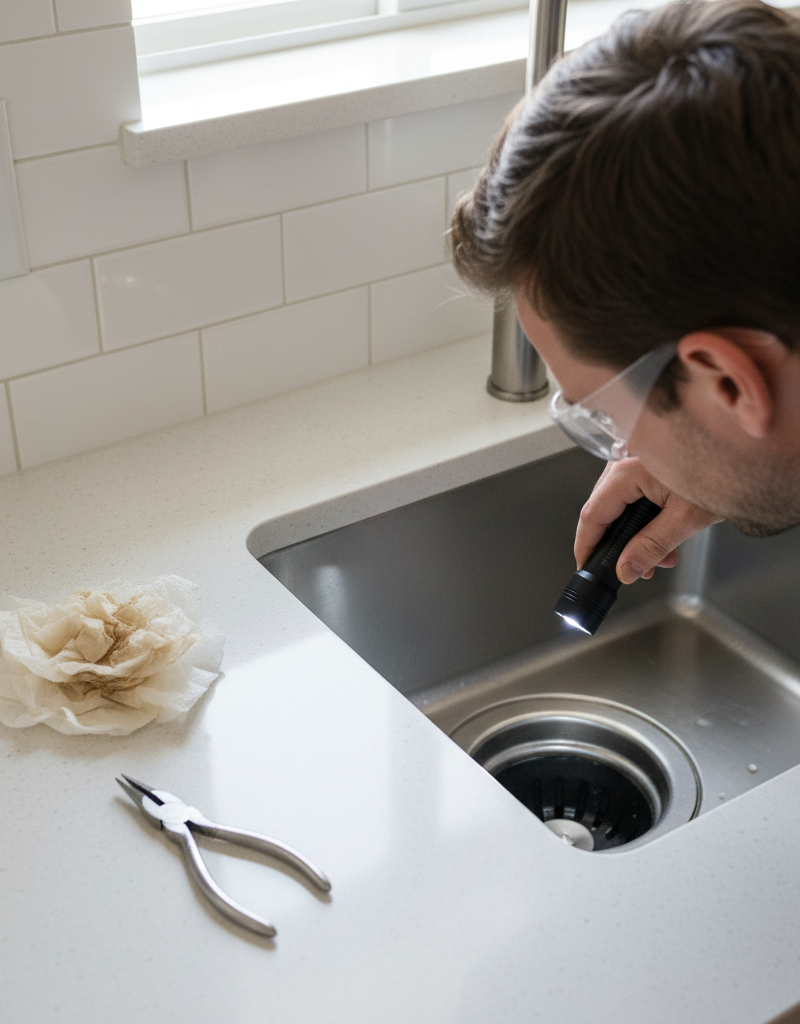
- If the reset button keeps tripping, or you hear a slight hum but no grinding, there might still be an obstruction. Use a flashlight and look down the drain opening. Use tongs or needle-nose pliers (NEVER your hand!) to remove anything you see. Once it's clear, try the reset button again and then power it up.
-
Use an Allen Wrench for Impeller Jams (If Applicable) — For stubborn jams.
- Safety: Power OFF at the breaker and turn the wall switch OFF.
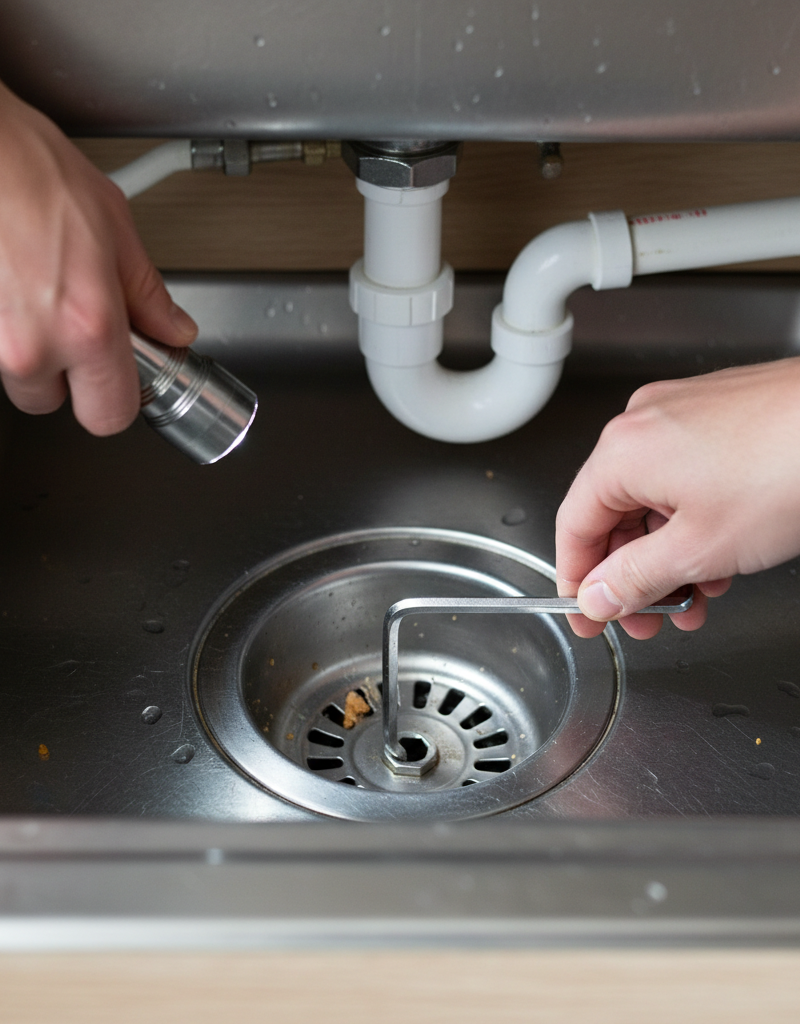
- Many disposals (like InSinkErator) have a hexagonal hole in the very center of the bottom. Insert the 1/4-inch hex wrench that came with your disposal (or a universal one). Turn it back and forth several times to free the impellers. You should feel it loosen up. Remove the wrench, then press the reset button. Restore power and try the disposal.
-
Consider a Failed Motor — The last resort, usually.
- If you've checked both the internal reset and the circuit breaker, confirmed power is reaching the unit, and there are no jams, then you might be looking at a truly dead motor. At that point, it's probably time for a replacement. A disposal motor isn't really a DIY repair for the average homeowner.
Common Causes
- Overloading: Trying to shove too much food waste down at once. It makes the motor work too hard, drawing excessive current and tripping the internal reset or circuit breaker.
- Hard-to-Grind Items: Bones, fruit pits, fibrous vegetables (celery, corn husks), coffee grounds (yes, they're bad!), pasta, rice, and even potato peels. These can jam the impellers or overwork the motor.
- Foreign Objects: Spoons, bottle caps, pull tabs, even small toys. I pulled a kid's plastic army man out of a disposal in Smyrna last month—that thing was locked up solid. Metal stuff is notorious for jamming things tight and tripping breakers.
- Old Age/Wear and Tear: Like any appliance, motors wear out. Bearings can seize, windings can burn, especially after years of heavy use or abuse. If your unit is 10+ years old and suddenly dies, it might just be its time.
- Loose Electrical Connection: Less common, but a loose wire connection at the disposal, the switch, or even in the electrical panel can cause intermittent or complete power loss. This needs to be addressed by a professional electrician.
Common Mistakes
- Ignoring the Reset Button: So many folks jump straight to calling a plumber when a simple push of a button underneath the unit would've solved it. Always check that first!
- Not Cutting Power: Reaching into the disposal or even trying to fix jams with power connected is incredibly dangerous. I can't stress this enough—you will lose a finger or get a nasty shock. Cut the power at the breaker every single time.
- Assuming It's a Jam: Just because it's not working doesn't mean something's stuck. A dead unit usually points to a power issue, not a jam (which typically gives you a hum but no spin).
- Using Harsh Chemicals: Pouring drain cleaner down the disposal isn't just ineffective; it can damage the rubber and plastic seals inside the unit, leading to leaks down the road. Stick to mechanical methods or specific disposal cleaners.
- Overfilling the Grinding Chamber: Trying to grind too much at once, or putting in items that are too large. That's a surefire way to trip the overload protector.
- Calling a Plumber Too Soon: For a completely dead unit, the first call might actually be to an electrician if you can't find a tripped breaker, but often, it's a DIY fix. A plumber's great for leaks or major clogs further down the line, but a simple electrical reset isn't usually their first stop.
Cost & Time Breakdown
| Task | DIY Cost | Pro Cost | Time |
|---|---|---|---|
| Reset Disposal Button | $0 | $75–$150 (service call) | 1 minute |
| Reset Circuit Breaker | $0 | $75–$150 (service call) | 1–2 minutes |
| Clear Simple Jam (if present) | $0 | $100–$200 | 5–15 minutes |
| Replace Wall Switch | $5–$20 | $150–$300 | 30–60 minutes |
| New Disposal Installation | $100–$400 (unit) | $300–$800 (unit + labor) | 1–2 hours (DIY) / 2–4 hours (Pro) |
| Electrician for Wiring | $0 (not DIY) | $150–$400 | 1–2 hours |
Tips & Prevention
- Cold Water is Your Friend: Always run a strong stream of cold water for 15-20 seconds before, during, and for another 15 seconds after grinding. Cold water solidifies grease, letting it get chopped up, and helps flush everything down.
- Small Batches: Don't try to grind a whole meal's worth of scraps at once. Feed items slowly, letting the disposal process them.
- Avoid the Bad Stuff: Keep bones, corn husks, celery strings, coffee grounds, pasta, rice, potato peels, and fruit pits out of the disposal. These are prime candidates for jams and clogs.
- Regular Cleaning: Grind a few ice cubes (they help sharpen the impellers and scour the chamber) followed by citrus peels (lemon, orange) once a week to keep it fresh and clean. The ice cubes will make a racket for about 30 seconds.
- Know Your Breakers: Label your electrical panel clearly. Knowing which breaker controls the disposal can save you a lot of time and frustration.
- Don't Ignore Odd Sounds: If your disposal starts making strange noises or grinding less effectively, address it quickly before it leads to a complete breakdown.
When to Call a Professional
Look, I'm all for DIY, but there are times when you gotta call in the cavalry. If you've checked both the disposal's reset button and your main electrical panel, and the unit still won't power on—especially if you've used a voltage tester and confirmed no power is getting to the unit itself—it's time for an electrician. There might be an issue with the wiring in the wall, the switch, or a faulty connection deeper in your electrical system that's beyond typical homeowner troubleshooting. Also, if you find a severe leak after troubleshooting, or if the unit keeps tripping the breaker right after resetting, that points to a bigger internal problem or a short circuit that needs pro attention. Don't try to disassemble the unit or mess with house wiring if you're not experienced; electricity is no joke.
Related Articles
Keep troubleshooting with these hand-picked guides from FixlyGuide:
- The One Trick Plumbers Use When Your Garbage Disposal Hums But Won't Spin — When your garbage disposal hums but the blades aren't spinning, it's usually a simple jam that you can fix in minutes with common household…
- The 30-Second Fix for a Humming Garbage Disposal (Plumbers Don't Want You to Know) — Before you call a plumber, try these simple steps to unjam a humming garbage disposal in under a minute and save yourself a service call.
- The Drip You Can't Ignore: Why Your Garbage Disposal Leaks (And How to Stop It) — Don't let a leaky garbage disposal ruin your cabinets and create a mold problem; discover the real reasons behind the drips and how to fix…
- That Annoying Water Heater Popping Sound? It's Trying to Tell You This One Thing — A popping noise from your water heater is a common sign of sediment buildup, which can reduce efficiency and shorten its lifespan, but it's…
- The Secret Culprit Behind Your Leaky Washer (It's Not Always the Hose!) — Don't panic about a puddle under your washing machine; often, the fix is simpler and cheaper than you think, especially when the leak origi…
- The Surprising Reason Your Dishwasher Won't Start (It's Not Always the Door) — Don't rush to call a repairman when your dishwasher refuses to start; often, the culprit is a simple, overlooked issue you can fix yourself…
What should this project cost?
Enter your project details for a realistic cost range before you call anyone.
Common repairs run $150–$650; repipes and water-heater replacements reach $1,500–$4,500.
- Regional adjustment
- National average
- Labor share (typical)
- ~$754
- Quotes to collect
- 3 written estimates
Educational estimate based on national averages — not a binding quote. Always confirm with written local estimates.
Fixly Project Decision Box
- DIY difficulty
- Professional Recommended
- Estimated time
- Diagnosis 1–2 hours
- Cost level
- Moderate
Main tools / materials
- Non-contact voltage tester
- Outlet tester
- Flashlight
When to stop and call a pro
- Burning smell, scorch marks, or a warm outlet or switch plate
- A breaker that trips again right after being reset
- Any work inside the service panel
- Aluminum wiring or cloth-insulated wiring
Need professional help?
Talk to a Licensed ElectricianGet the print-ready PDF of this guide
A clean, ad-free, printable version you can keep on your phone or pin to the workshop wall. Free with a FixlyGuide account.
- Print-optimized layout
- Tools, materials & every step included
- Saved to your account
Frequently asked questions
Why would my garbage disposal suddenly stop working with no sound?+
If your garbage disposal is completely silent, the most common reason is a tripped internal thermal overload protector (a reset button) located on the bottom of the unit, or a tripped circuit breaker in your home's electrical panel. It's usually an electrical safety mechanism at work.
Where is the reset button on a garbage disposal?+
The reset button is typically a small, red or black button found on the bottom-center of the garbage disposal unit. You'll need to look underneath the disposal in your sink cabinet to find it. If it's tripped, it will be protruding slightly.
What should I do if the reset button keeps tripping?+
If the reset button immediately trips again after you push it, it usually indicates a persistent jam in the grinding chamber or a failing motor drawing too much power. Make sure to cut power at the breaker, then check for and remove any obstructions before trying to reset again.
Can a circuit breaker cause my garbage disposal to stop working?+
Yes, absolutely. Garbage disposals draw significant power, and if they overload the circuit or there's a short, the circuit breaker in your main electrical panel will trip, cutting all power to the disposal and potentially other kitchen outlets.
Is it safe to put my hand in a garbage disposal to clear a jam?+
**Absolutely NOT.** Never put your hand into a garbage disposal. Always turn off the power at the circuit breaker first, then use tongs, pliers, or an Allen wrench to clear any obstructions from the grinding chamber.
How can I prevent my garbage disposal from dying again?+
To prevent future issues, always run cold water while grinding, feed food scraps slowly in small batches, avoid hard-to-grind items (like bones or fibrous vegetables), and regularly clean it by grinding ice cubes and citrus peels.
When should I call an electrician versus a plumber for a dead disposal?+
If you've checked both the disposal's reset button and your home's circuit breaker, and confirmed there's no power to the unit (perhaps with a non-contact voltage tester), then it's likely an electrical issue, and an electrician would be the appropriate professional to call. If the disposal is getting power but still not working, or if it's leaking, a plumber is usually the right choice.
My disposal makes a hum but doesn't spin – is that the same problem?+
No, a hum without spinning usually means the motor is trying to run but is jammed, or the impellers are stuck. This is different from a completely silent, dead disposal, which typically indicates a lack of electrical power to the unit due to a tripped breaker or reset button.
What's the typical lifespan of a garbage disposal?+
Most garbage disposals, with proper care, last between 8 to 15 years. Factors like frequency of use, the type of waste processed, and initial quality all play a role. If your unit is older than 10 years and dies, it might just be reaching the end of its service life.
Can I replace a garbage disposal myself?+
Yes, replacing a garbage disposal is a common DIY project for moderately experienced homeowners. It involves disconnecting plumbing, electrical wiring, and then reconnecting the new unit. However, if you're not comfortable with basic electrical work or plumbing connections, it's best to hire a plumber.
Discussion
Loading comments…