- Assess Your Power Needs — Determine your critical circuits and wattage requirements.
- Pro Tip: Use an online wattage calculator or consult an electrician for a precise load assessment. Don't eyeball it; an undersized generator is useless.
- If this doesn't work: If you can't find ratings, assume refrigerator surge is 1800W, well pump surge 2000W, and furnace fan 800W.
Published July 23, 2026Last updated August 17, 2026
Tools & materials you'll need
Affiliate links- AmazonHeavy-duty outdoor extension cordsVaries · Appropriate gauge for generator output and appliance load
- AmazonCarbon monoxide detector2-3 · Essential safety device
- AmazonFuel stabilizer1 bottle · For gasoline generators, if storing fuel
- AmazonApproved fuel containersVaries · Properly sized for gasoline or propane
- AmazonOwner's Manual1 · Specific to your chosen generator model
As an Amazon Associate FixlyGuide earns from qualifying purchases — at no extra cost to you. Prices and availability are accurate as of publication and subject to change.
Quick Answer
Many homeowners make the mistake of buying the cheapest generator or a brand based solely on name recognition, only to find it underperforms, is difficult to service, or lacks crucial features for their specific needs. The 'best' generator brand is subjective and depends entirely on your home's power requirements, desired fuel type, expected run time, and the availability of local support and parts. Understanding the nuances of brands and their product lines in relation to these factors can save you significant money and headaches down the road.
The Problem
The lights go out. The refrigerator stops humming. Maybe it's a summer storm, a winter ice event, or an unexpected grid failure. When the power fails, a generator becomes your home's lifeline. But then comes the overwhelming question: which one? The market is flooded with brands, each promising reliability and performance. Homeowners, often in a rush or trying to save money, frequently pick a generator based on a sale price or a brand they've vaguely heard of. This can lead to purchasing a unit that's either too small to power essential appliances, incompatible with easily accessible fuel, too noisy for residential use, or, worst of all, a brand with no local service network, turning a crucial investment into a costly lawn ornament when it inevitably needs maintenance or repair. The real problem isn't just picking a 'bad' brand, it's failing to match a brand's strengths to your unique backup power strategy.
How It Works
Generators, at their core, convert mechanical energy into electrical energy. A small engine, typically gasoline, propane, or natural gas-powered, spins an alternator (also called a generator head). This alternator contains coils of wire and magnets; as the magnets rotate past the coils, they induce an electric current. This current is then regulated and made available through various outlets on the generator.
Different brands excel in different aspects of this process. Some focus on robust, commercial-grade engines designed for heavy, continuous use, leading to brands known for durability (often at a higher price point). Others prioritize fuel efficiency, offering advanced fuel injection systems or dual-fuel capabilities. The type of power produced is also critical: cheaper models might produce 'dirty' power with unstable voltage and frequency, which can harm sensitive electronics. Higher-end brands often feature 'inverters,' which convert the raw AC power to DC, then back to clean, stable AC, ideal for computers and modern appliances. This 'total harmonic distortion' (THD) rating is a key differentiator – reputable brands will often boast THD under 5%.
Cooling systems (air-cooled vs. liquid-cooled), sound-dampening enclosures, and sophisticated automatic transfer switches (for whole-home standby units) are further points of distinction. Brands also vary wildly in their control panels, offering everything from basic on/off switches to smart, app-controlled monitoring and diagnostics. Understanding these underlying technologies helps homeowners appreciate why one brand might be significantly more expensive or better suited for their needs than another, moving beyond mere marketing claims.
Step-by-Step Fix
When 'fixing' the problem of a potential power outage, the 'fix' is proactive: choosing the right generator brand for your needs. This isn't a repair, but a system for making an informed purchase.
-
Assess Your Power Needs — Determine your critical circuits and wattage requirements.
- List all essential appliances (refrigerator, freezer, well pump, furnace fan, essential lights, medical equipment). Don't forget smaller devices like phone chargers. For each, note its running wattage and surge (starting) wattage. Surge wattage can be 2-3 times higher for motors (refrigerators, AC units). You can often find this on the appliance's data plate or in its manual.
- Pro Tip: Use an online wattage calculator or consult an electrician for a precise load assessment. Don't eyeball it; an undersized generator is useless.
- If this doesn't work: If you can't find ratings, assume refrigerator surge is 1800W, well pump surge 2000W, and furnace fan 800W.
-
Choose Your Fuel Type — Gasoline, propane, or natural gas each have pros and cons.
- Gasoline: Widely available, but has a short shelf life (3-6 months) and requires careful storage. Best for portable, infrequent use. Fuel tanks are typically smaller than for other types.
- Propane: Longer shelf life (indefinite), burns cleaner, readily available in tanks. Less efficient than gasoline, meaning larger tanks are needed for equivalent run times. Excellent for portable and smaller standby units.
- Natural Gas: Only for standby generators. Unlimited supply (if grid is up), no refueling. Requires professional installation to connect to your home's gas line. Most convenient, but less power output than gasoline/propane for the same engine size.
- Dual Fuel/Tri Fuel: Offers flexibility but can be more complex and expensive.
-
Portable vs. Standby — Decide between mobility and whole-home automation.
- Portable Generators: Manual operation (pull start or electric start), require extension cords, can be moved. Cost-effective for powering a few essentials. Requires careful exhaust management.
- Safety Note: ALWAYS operate portable generators outdoors in well-ventilated areas, far from windows and doors, to prevent carbon monoxide poisoning.
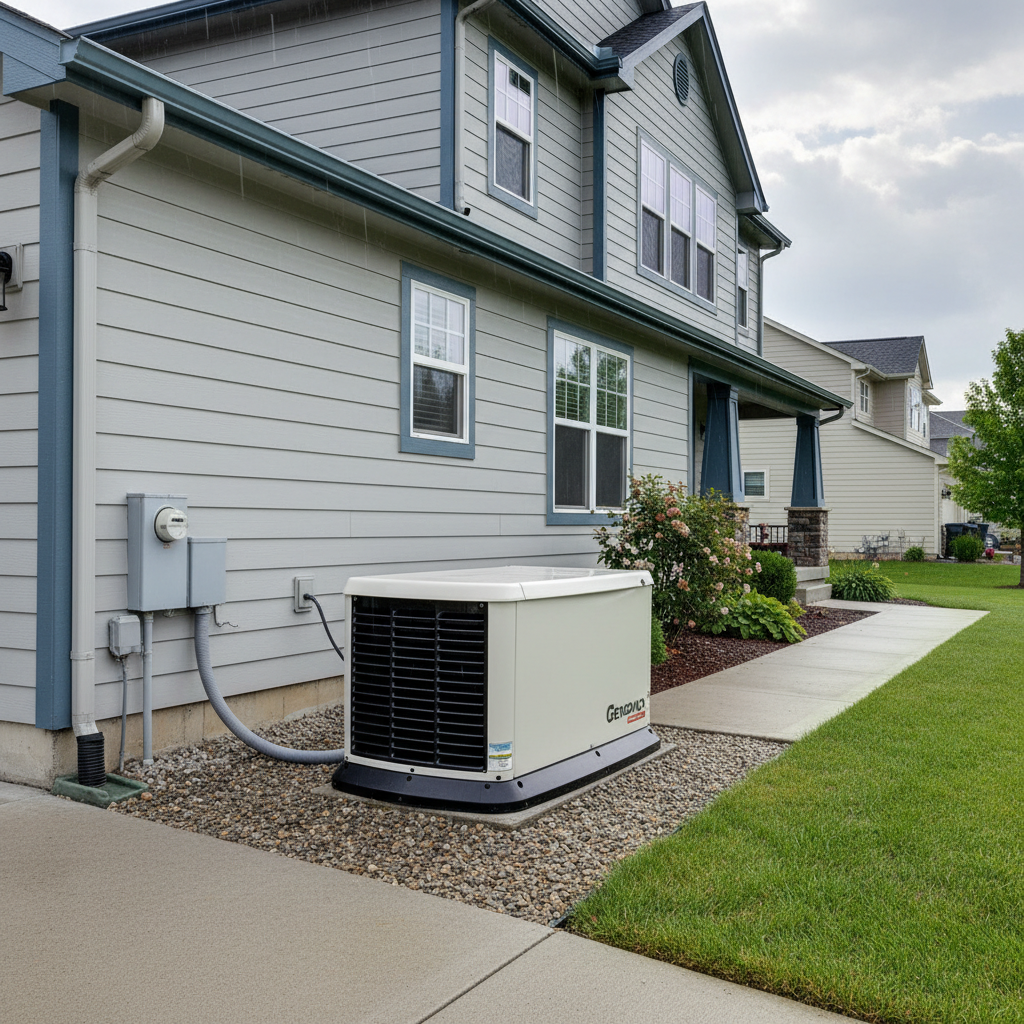
- Standby Generators: Permanently installed outside your home, connect directly to your electrical panel via an automatic transfer switch (ATS). Turn on automatically when power fails. More expensive, requires professional installation, but offers seamless, whole-home power.
- Portable Generators: Manual operation (pull start or electric start), require extension cords, can be moved. Cost-effective for powering a few essentials. Requires careful exhaust management.
-
Inverter vs. Conventional — Protect your electronics with clean power.
- Inverter Generators: Produce clean, stable sine wave power (low THD: <5%), safe for sensitive electronics (computers, smart TVs, medical devices). Quieter and more fuel-efficient due to variable engine speed. Generally more expensive.
- Conventional Generators: Produce power with higher THD, potentially harmful to sensitive electronics. Better for power tools, lights, and appliances with robust motors. Louder and run at a constant RPM.
-
Research Top Brands & Models — Compare reputation, features, and warranty.
- Look into brands with a strong history of reliability. For portable units, consider brands like Honda, Yamaha, Generac, Champion, Wen. For standby units, Generac, Kohler, Cummins are dominant players.
- Compare specific model features against your requirements: wattage (running and surge), fuel capacity/type, noise level (dB), outlets available, electric start, remote monitoring, low-oil shutdown.
- Check warranty length and terms. A good warranty reflects manufacturer confidence.
-
Seek Out Reviews & Local Service — Real-world experiences and repair accessibility are crucial.
- Read objective third-party reviews, not just manufacturer websites. Look for recurring issues or praises.
- Crucially: Identify authorized service centers in your local area before purchasing. A top-tier brand is only as good as its repair network when something goes wrong. Ask about parts availability and typical repair times.
-
Consider Noise Levels — Especially important for residential areas.
- Generators are measured in decibels (dB). Inverter generators are often significantly quieter (50-60 dB at 25% load) than conventional ones (70-80 dB). Check local noise ordinances if installing a standby unit.
-
Understand Load Management/Automatic Transfer Switches (ATS) — For standby units or advanced portable setups.
- An ATS is essential for standby generators, safely disconnecting your home from the utility grid before connecting to the generator. Some advanced models include load management, prioritizing power to essential circuits when demand exceeds generator capacity.
Common Causes
Homeowners often make purchasing errors not due to brand defects, but because they haven't adequately defined their own needs against what a brand offers. Common 'causes' of generator regret include:
- Underestimating Power Needs: Buying a generator that can't handle essential appliances, especially their high starting (surge) wattage.
- Ignoring Fuel Logistics: Choosing a gasoline generator for long-term outages without a safe, sufficient fuel storage plan, or a natural gas unit where service isn't available.
- Overlooking Noise: Neglecting decibel ratings, leading to a loud, disruptive generator that annoys neighbors or makes outdoor use unpleasant.
- Assuming All Power is Equal: Not understanding the difference between conventional and inverter generators, and potentially damaging sensitive electronics with 'dirty' power.
- Poor Service Network Research: Purchasing a generator from a brand with no local authorized repair technicians, leaving the homeowner stranded when maintenance or warranty work is needed.
- Impulse Buying During a Crisis: Making a rushed decision when an outage hits, leading to a suboptimal or overpriced purchase.
Common Mistakes
- Buying Based Solely on Peak Wattage: Peak wattage is only for a few seconds. Focus on continuous (running) wattage for your primary load.
- Neglecting Maintenance Requirements: Every generator needs regular oil changes, filter replacements, and spark plug checks. Some brands offer easier access to these components or better self-diagnostic features.
- Forgetting Transfer Switch Requirements: For standby, or even connecting a portable to your home's main panel, an interlock kit or automatic transfer switch is non-negotiable for safety and legality. Don't just plug into a dryer outlet.
- Operating Indoors or Too Close to the House: Carbon monoxide is an invisible, odorless killer. Generators must be outdoors, at least 20 feet from windows, doors, and vents.
- Storing Fuel Improperly: Gasoline degrades, especially with modern ethanol blends. Use fuel stabilizer if storing for more than a month or two, and store fuel in approved containers away from living spaces and heat sources.
- Ignoring Local Regulations: Some areas have strict noise ordinances or rules about generator placement. Check with your HOA or local municipality before installation.
Cost & Time Breakdown
| Task | DIY cost | Pro cost | Time |
|---|---|---|---|
| Portable Generator (2,000-7,500W) | $400–$1,500 | N/A | 15–30 min setup |
| Standby Generator (8-22kW) | $3,000–$6,000 | $5,000–$12,000 | 1–2 days (installation) |
| Automatic Transfer Switch (ATS) | N/A | $500–$2,000 (part & labor) | 4–8 hours |
| Fuel Storage (portable) | $30–$100 | N/A | N/A |
| Maintenance (annual) | $50–$150 (parts) | $150–$300 | 1–2 hours |
Tips & Prevention
- Regular Exercise: Run your generator under a light load for 15-30 minutes once a month (for portable units) or weekly (for standby units) to keep components lubricated and ensure it starts when needed. Refer to your owner's manual for specifics.
- Know Your Outlets: Understand the different outlet types on your generator (120V, 240V, twist-lock) and ensure you have appropriate heavy-duty extension cords (rated for outdoor use) capable of handling the load.
- Install CO Detectors: Place battery-operated carbon monoxide detectors near sleeping areas and on every level of your home, especially if running a portable generator. This is a crucial safety measure.
- Maintain Fuel Freshness: If using gasoline, add fuel stabilizer to the tank if storing for more than 30 days. Consider draining the carburetor bowl for long-term storage to prevent gumming.
- Understand Generator Sizing for AC: Air conditioners have very high surge wattages. If you plan to power your AC, you'll need a much larger (and more expensive) generator, likely a large standby unit.
- Winterization: If you live in a cold climate, ensure your generator is equipped for winter. Some models offer cold-weather kits, including battery warmers and oil heaters, to ensure reliable starting.
When to Call a Professional
While selecting a generator brand involves extensive research, the installation and critical connections, especially for standby units, are definitively professional tasks. You must call a licensed electrician or qualified generator installer if you are installing a standby generator, connecting a portable generator to your home's electrical panel via an interlock kit or manual transfer switch, or running a dedicated natural gas or propane line. Improper installation can lead to electrocution, fire, equipment damage, and back-feeding the utility grid, endangering utility workers.
Related Articles
Keep troubleshooting with these hand-picked guides from FixlyGuide:
- 7 Hidden Equity Drains Costing You Thousands Annually — Your home is an asset, but silent problems like minor leaks, poor insulation, and deferred maintenance can drain its value. Discover the se…
- The #1 Chainsaw Mistake That Wrecks Your Yard (and Your Back) — Avoid common chainsaw errors that lead to frustration, damage, and unnecessary physical strain.
- The Surprising Yard Tool That Vaporizes Weeds (No Chemicals Needed) — A weed torch offers an efficient, chemical-free method for removing unwanted plants from hardscaped areas like driveways, patios, and grave…
- The 7 Critical Household Filters You're Forgetting (And What They Cost You) — Neglected household filters are quietly costing you money, diminishing air quality, and paving the way for expensive repairs. Discover the…
- The Secret Power Tool Hiding in Your Garage for a Speedier Clean — Unlock the hidden potential of your cordless drill to tackle stubborn household grime, soap scum, and dirt with specialized cleaning attach…
- The #1 Mistake Homeowners Make Installing a Smart Thermostat (and How to Avoid It) — Avoid a common wiring mistake that can fry your smart thermostat or HVAC system, by ensuring proper power and compatibility.
Should you do this yourself?
Answer five quick questions before you start. Safety outranks savings every time.
Your experience with work like this
How high do you have to work?
Does the job involve any of these?
Will it need a permit?
Specialty tools
Free and instant. Educational guidance only — not a quote, inspection, or professional diagnosis.
What should this project cost?
Enter your project details for a realistic cost range before you call anyone.
Cost depends heavily on which system turns out to be the source.
- Regional adjustment
- National average
- Labor share (typical)
- ~$1,620
- Quotes to collect
- 3 written estimates
Educational estimate based on national averages — not a binding quote. Always confirm with written local estimates.
Before you start
Check the difficulty, permits, and safety risk — then decide whether to call a pro.
- Estimate this projectGet a cost range for your scope and ZIP before you call anyone.Open
- Get local estimatesSend one request and compare written estimates from vetted pros.Open
Free, no signup required. Estimates are educational guidance, not a quote or an inspection.
Get the print-ready PDF of this guide
A clean, ad-free, printable version you can keep on your phone or pin to the workshop wall. Free with a FixlyGuide account.
- Print-optimized layout
- Tools, materials & every step included
- Saved to your account
This article was independently written by FixlyGuide based on the source topic.
Frequently asked questions
What's the biggest mistake homeowners make when buying a generator?+
The biggest mistake is often underestimating power needs or choosing a brand without considering local service support. Many buy a generator based on price or generic recommendations instead of matching it to their specific home requirements and ensuring they can easily get parts or repairs locally.
Should I get a portable or a standby generator?+
This depends on your needs and budget. Portable generators are cheaper and provide temporary power for essential circuits, but require manual setup and refueling. Standby generators are permanently installed, automatically turn on during outages, and can power a whole house, but are significantly more expensive and require professional installation.
What's the difference between an inverter and a conventional generator?+
Inverter generators produce 'clean' power (low Total Harmonic Distortion) safe for sensitive electronics, are typically quieter, and more fuel-efficient. Conventional generators are often louder, produce 'dirty' power (higher THD) that can harm electronics, but are generally less expensive and suitable for tools or basic appliances.
How do I know what size generator I need?+
You need to calculate the running wattage and surge wattage of all the essential appliances you want to power simultaneously. Surge wattage (for starting motors) is often 2-3 times higher than running wattage. It's best to consult an electrician or use an online generator sizing tool for an accurate assessment.
Can I install a standby generator myself?+
No, standby generators require professional installation by a licensed electrician and often a plumber (for gas lines). Improper installation can be extremely dangerous, void warranties, and violate local codes. Portable generators, however, typically only require careful unboxing and fueling.
How often should I run my generator?+
Most manufacturers recommend 'exercising' your generator regularly. For portable units, run it under a light load for 15-30 minutes once a month. Standby generators typically have an automatic weekly or bi-weekly exercise cycle. This keeps components lubricated and ensures reliable startup when needed.


Discussion
Loading comments…