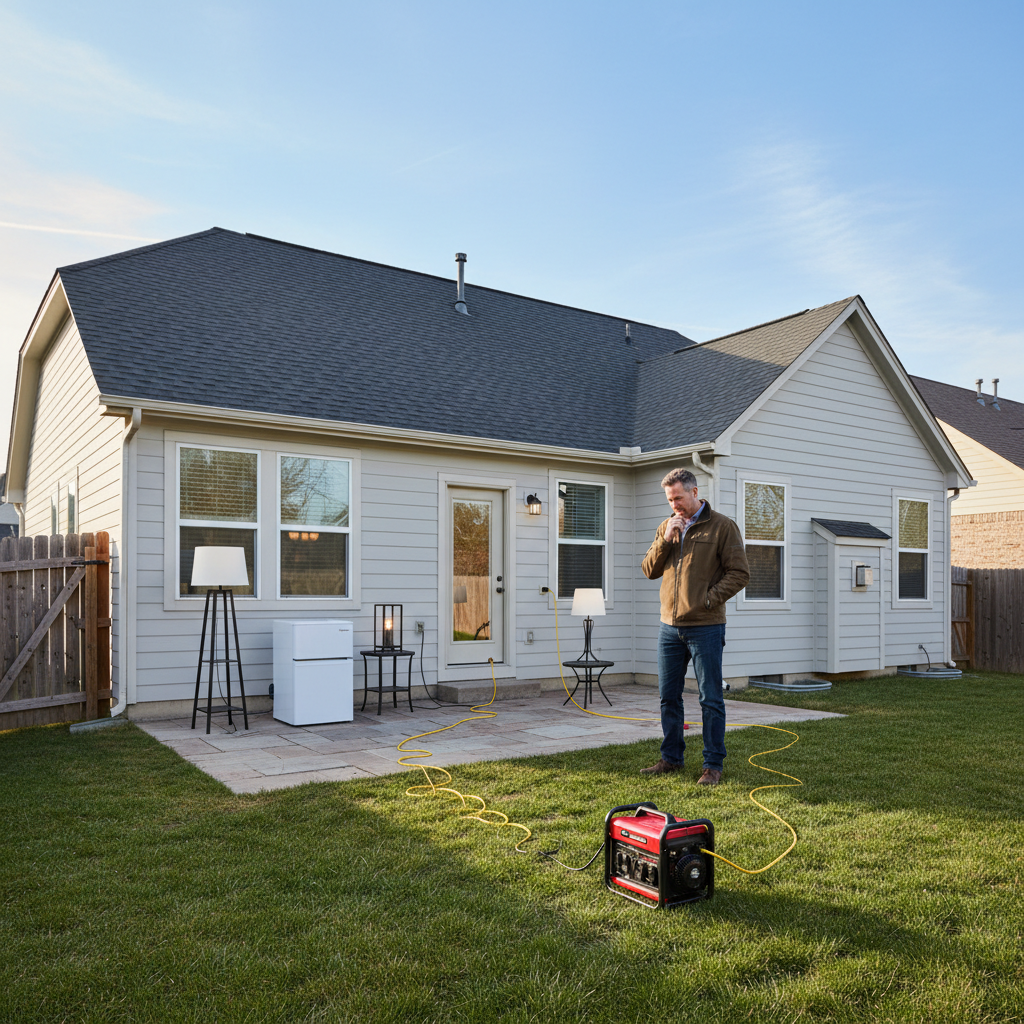
- Walk through your home and list all the appliances, lights, and electronics you consider critical during a power outage. Think beyond just "lights" to specific rooms or even specialized medical equipment.
- Emergency essentials: Refrigerator/freezer, sump pump, well pump, furnace fan, specific lights, phone chargers.
- Convenience items: Television, computer, microwave, coffee maker. Be realistic about what you can live without.
Plumbing · Sewer backup
| Project category | Plumbing |
|---|---|
| Problem type | Sewer backup |
| Trade required | Plumbing |
| Urgency | Emergency — act now |
| Safety risk | High safety risk |
| DIY suitability | Licensed pro only |
| Cost category | Major investment |
| Typical timeline | Emergency response; excavation work often several days |
| Contractor type | Licensed plumber |
Repair option
Camera inspection and hydro jetting or a spot repair at the failure point.
Replacement option
Line replacement or trenchless lining when the pipe has collapsed.
Common causes
- Tree roots intruding into the main line
- Collapsed or bellied sewer pipe
- Municipal main surcharge during heavy rain
Relevant tools:emergency checklistcompare quotes
Published July 23, 2026Last updated August 17, 2026
Tools & materials you'll need
Affiliate linksAs an Amazon Associate FixlyGuide earns from qualifying purchases — at no extra cost to you. Prices and availability are accurate as of publication and subject to change.
Quick Answer
The biggest mistake homeowners make when buying a generator is failing to accurately calculate their power needs. This often results in purchasing an undersized unit that won't run essential appliances, or an oversized, inefficient unit that costs more upfront and in fuel. Understanding your specific requirements for critical appliances and choosing the correct generator type – portable, inverter, or whole-home standby – is crucial to securing reliable, cost-effective backup power.
The Problem
A sudden power outage can range from a minor inconvenience to a major disaster, depending on its duration and the reliability of your home's backup system. Many homeowners rush into buying a generator, often driven by panic during a storm season or swayed by a good sale. This haste frequently leads to purchasing a unit that is either ill-suited for their actual needs or far more expensive to operate than necessary.
The core issue stems from a lack of understanding regarding generator types, power output calculations, and the real-world implications of different fuel sources and installation methods. Some homeowners buy a small portable generator, only to find it cannot power their refrigerator and furnace simultaneously. Others invest in a massive standby system for a few critical circuits, incurring significant installation costs and higher fuel consumption than required. This means thousands of dollars potentially wasted—not just on the initial purchase, but also on efficiency losses, increased fuel costs, and potential damage to appliances from underpowering. Without a clear plan and foundational knowledge, homeowners risk owning an expensive piece of equipment that fails to deliver when it matters most, or drains their wallet unnecessarily.
How It Works
Generators function by converting mechanical energy into electrical energy. An engine (fueled by gasoline, propane, natural gas, or diesel) spins an alternator, which in turn generates electricity. Understanding the three main types and their key differences is vital for making an informed decision.
1. Portable Generators: These are the most common type for homeowners and offer flexibility. They typically run on gasoline or propane and must be manually started and connected to appliances either directly via extension cords or through a manual transfer switch professionally installed into your home's electrical panel. They come in various sizes, measured in watts, and are designed for temporary power solutions, making them ideal for camping, job sites, and powering a few essential devices during an outage. They require you to store fuel and refuel manually.
2. Inverter Generators: A specialized type of portable generator, inverter generators produce AC power, then convert it to DC, and finally "invert" it back to clean AC power. This multi-step process results in electricity with a stable sine wave, making it safe for sensitive electronics like computers, smartphones, and certain medical equipment. Inverter generators are typically quieter, more fuel-efficient, and lighter than traditional portable generators of similar output, but they also tend to be more expensive. They are excellent for powering sensitive electronics and for situations where noise is a concern.
3. Standby (Whole-Home) Generators: These are permanently installed outside your home, similar to an air conditioning unit. They are connected directly to your home's electrical system via an automatic transfer switch and typically run on natural gas or liquid propane from your existing supply. When utility power fails, the automatic transfer switch senses the outage and seamlessly switches your home's electrical load to the generator. Once utility power is restored, it switches back, and the generator shuts down. This process is fully automatic, often within seconds, providing continuous, hands-off power to pre-selected circuits or even your entire home. Standby generators are a significant investment but offer the ultimate convenience and peace of mind for long-term outages. They are suitable for homeowners who cannot manually operate a portable generator, require power for critical medical equipment, or simply want to maintain their normal lifestyle without interruption.
Key power measurements to understand are watts (W) and amps (A). Watts measure the power an appliance consumes, while amps measure the current flow. Generators typically list both a "running watts" (continuous power output) and a "starting watts" (a temporary surge of power needed to start motor-driven appliances like refrigerators or air conditioners). Always factor in starting watts when calculating your needs to avoid tripping breakers or damaging the generator.
Step-by-Step Fix: Choosing the Right Generator
Selecting the ideal generator involves a systematic approach to ensure it meets your specific needs without overspending.
Step 1: Determine Your Essential Power Needs — Identify what absolutely must run during an outage.
- Walk through your home and list all the appliances, lights, and electronics you consider critical during a power outage. Think beyond just "lights" to specific rooms or even specialized medical equipment.
- Emergency essentials: Refrigerator/freezer, sump pump, well pump, furnace fan, specific lights, phone chargers.
- Convenience items: Television, computer, microwave, coffee maker. Be realistic about what you can live without.
Step 2: Calculate Your Total Wattage Requirements — Accurately sum the power draw of your selected items.
- Locate the wattage (W) listed on the nameplate or in the owner's manual for each item from Step 1. If only amps (A) and volts (V) are listed, multiply them (A x V = W).
- Create two columns: "Running Watts" and "Starting Watts." Starting watts can be 2-3 times running watts for motor-driven appliances. For example, a refrigerator might run at 600W but surge to 1800W for a few seconds to start its compressor.
- Sum the running watts for all the items you want to power simultaneously. This is your minimum continuous wattage requirement.
- Identify the single appliance with the highest starting wattage. Add this highest starting wattage to your total running watts. This figure represents the maximum power surge your generator must handle at any given moment. For example, if your total running watts are 3000W and your refrigerator needs 1800W to start, your effective running wattage is 3000W, but your generator needs to handle brief spikes up to 4800W.
- Pro Tip: Always add a 10-20% buffer to your calculated total to account for voltage drops, varying loads, and future needs. So, if your calculation is 4000W, look for a generator with at least 4400-4800 running watts.
Step 3: Select the Appropriate Generator Type (Portable, Inverter, Standby) — Match the generator to your lifestyle and power demands.
- Portable Generator: Best for temporary use, powering a few essentials, budget-conscious homeowners. Requires manual operation, fueling, and outdoor use.
- Inverter Generator: Ideal for sensitive electronics, quieter operation, and good fuel efficiency. Good for RVs, camping, or backing up specific sensitive home circuits. Can be paralleled for more power.
- Standby Generator: Essential for permanent, automatic whole-home or critical circuit power. Best for long-term outages, medical needs, or if you can't manually operate a portable unit. Requires professional installation.
Step 4: Consider Fuel Type and Availability — Choose a fuel source that is reliable and practical for your location.
- Gasoline: Widely available but has a short shelf life (3-6 months without stabilizer), potentially hazardous storage, and requires manual refueling.
- Propane (LP): Longer shelf life than gasoline, burns cleaner, but larger tanks needed for extended run times. Can be hooked to home LP supply for standby units.
- Natural Gas: Only for standby generators connected to a home's natural gas line. Unlimited supply during an outage (unless gas lines are damaged), but less power output than LP for the same engine size. No on-site fuel storage needed.
- Diesel: Primarily for very large commercial or industrial generators due to high cost and maintenance for residential use.
Step 5: Prioritize Safety Features — Ensure the unit protects your family and your home.
- CO Sensor: Crucial for portable generators; automatically shuts down the unit if carbon monoxide levels become dangerous.
- Low Oil Shutdown: Protects the engine from damage due to insufficient lubrication.
- Circuit Breakers: Prevent overloading the generator and protect connected appliances.
- GFCI Outlets: Provide ground fault protection, especially important when using outdoors or in damp conditions.
Step 6: Evaluate Noise Levels — Consider where the generator will be placed and its impact.
- Generators are measured in decibels (dB). For reference, a normal conversation is around 60 dB.
- Portable generators: Can range from 65 dB (like a vacuum cleaner) to 80 dB (like a garbage disposal).
- Inverter generators: Typically quieter, often in the 50-60 dB range.
- Standby generators: Generally run between 55-65 dB, but their fixed outdoor placement means noise is less of an immediate concern inside the home. Check local ordinances for noise restrictions.
Step 7: Plan for Installation and Connection — Understand if you need DIY supplies or professional help.
- Portable/Inverter: Requires quality, heavy-gauge outdoor-rated extension cords (10- or 12-gauge), an appropriate manual transfer switch (installed by an electrician) for connecting to your home's panel, or a generator inlet box. Never backfeed power directly into your home's main panel without a transfer switch.
- Standby: Always requires professional installation by a licensed electrician and possibly a plumber for gas line connections. This includes laying a concrete pad, wiring the automatic transfer switch, and connecting to fuel lines.
Step 8: Research Maintenance and Warranty — Factor in long-term ownership costs and support.
- Look for generators with readily available parts and good customer service.
- Check warranty length and coverage. A longer warranty often indicates manufacturer confidence.
- Consider features like electric start vs. pull-start, fuel gauge, and hour meter for easier maintenance tracking.
Common Causes
The primary causes for homeowners choosing the wrong generator often boil down to:
- Lack of Research: Many homeowners simply don't know the different types of generators or how to calculate their specific power needs.
- Impulse Buys: Purchases made under duress (e.g., during storm warnings) often prioritize immediate availability or sale price over suitability.
- Misinformation: Relying on anecdotal advice from friends, neighbors, or single online reviews without cross-referencing against their own specific requirements.
- Underestimating Costs: Focusing solely on the generator's purchase price and ignoring fuel costs, installation fees, and ongoing maintenance.
- Over-reliance on "Small" or "Large" Labels: Assuming a "small household" needs a small generator or a "large home" needs a large one, without doing the actual wattage calculations.
Common Mistakes
Here are some of the most frequent errors homeowners make when acquiring or using a generator:
- Buying the Wrong Size: This is the most common and costly mistake. An undersized generator won't power essential items, while an oversized one wastes fuel and money. Always calculate running and starting watts for your specific needs.
- Ignoring Fuel Type & Storage: Choosing a gasoline generator but not having a safe, stable fuel storage plan, or underestimating how much fuel is needed for a multi-day outage.
- Improper Placement: Operating portable generators indoors, in garages, or too close to windows/doors. This creates a deadly carbon monoxide poisoning risk. Generators must be operated outdoors, far from the home.
- "Backfeeding" Power: Connecting a portable generator directly into a home's electrical panel without a proper transfer switch. This can electrocute utility workers and damage your home's electrical system, and is illegal and extremely dangerous.
- Neglecting Maintenance: Failing to run the generator regularly (e.g., once a month for 20-30 minutes under load) or perform routine oil changes and filter replacements. This leads to reliability issues when you need it most.
- Using Indoor Extension Cords Outdoors: Using undersized or non-outdoor-rated extension cords can overheat, cause fires, or lead to electrocution. Always use heavy-gauge, three-pronged, outdoor-rated cords.
Cost & Time Breakdown
| Task | DIY Cost | Pro Cost | Time |
|---|---|---|---|
| Portable Gen. Purchase & Setup (basic) | $400–$1,500 | N/A | 30–60 minutes |
| Portable Gen. w/ Manual Transfer Switch | $400–$1,500 + $300–$800 for switch | $1,500–$3,000+ | 4–8 hours (pro) |
| Inverter Gen. Purchase & Setup | $600–$3,000 | N/A | 30–60 minutes |
| Standby Gen. Purchase & Installation | N/A | $6,000–$20,000+ | 1–3 days (pro) |
| Fuel (gasoline, per 5 gallons) | $15–$25 | N/A | N/A |
| Annual Maintenance (DIY/Pro for oil change, etc.) | $50–$100 (materials) | $200–$400 | 1–2 hours |
Tips & Prevention
- Regular Testing is Key: Run your generator under a partial load for 20-30 minutes at least once a month (more often for standby units, which usually self-test). This keeps the engine lubricated and ensures it starts when needed.
- Proper Fuel Storage: Store gasoline in approved containers in a cool, dry, well-ventilated area away from living spaces and heat sources. Add fuel stabilizer for long-term storage (beyond 3-6 months).
- Know Your Connections: Practice hooking up your portable generator and connecting appliances or the transfer switch before an outage occurs. Ensure all extension cords are heavy-duty, outdoor-rated, and properly sized for the intended load.
- Consider a Whole-Home Surge Protector: While not directly generator-related, it protects your valuable electronics from power surges when utility power returns, which can sometimes be unstable initially.
- Replace Old Fuel: If your generator uses gasoline, drain and replace old fuel (over 6 months without stabilizer) to prevent carburetors from gumming up.
- Annual Professional Check-up: For standby generators, schedule a professional service technician once a year to ensure all components are functioning optimally, especially essential safety cutoffs and the transfer switch.
When to Call a Professional
While basic portable generator setup and operation can be a DIY task, several situations absolutely require a licensed professional. If you are considering a standby generator, professional installation by a licensed electrician is mandatory. This involves hardwiring the generator into your home's electrical system, installing an automatic transfer switch, and potentially connecting to a natural gas or propane line, which may also require a licensed plumber. Never attempt this complex electrical and fuel line work yourself due to severe risks of electrocution, fire, gas leaks, and damage to your home and appliances. Additionally, if your specific power needs are complex, involving sensitive electronics, medical equipment, or high-amperage appliances, it's wise to consult with an electrician to accurately size the generator and ensure safe, compliant integration with your home's electrical system. Trying to DIY complex generator hook-ups can lead to dangerous backfeeding, voided warranties, and potential harm to utility workers and your family.
Related Articles
Keep troubleshooting with these hand-picked guides from FixlyGuide:
- The Secret to Lush Raised Beds? It's Not Just About How You Water — Smart irrigation for raised garden beds isn't just about automation; it's about delivering the right amount of water precisely when your pl…
- The Sneaky Way a Gas Tax Freeze Could Raise Your Property Bill — A gas tax freeze promises immediate relief at the pump, but for homeowners, it can trigger hidden costs, from deteriorating roads to potent…
- Is That Sweet Car Smell a Secret Killer? (& 6 Other Odors to Watch For) — Unusual odors in your car aren't just unpleasant; they're often critical warnings of underlying mechanical issues that could compromise saf…
- The Secret to Scoring Deep Grill Discounts (Before Everyone Else Does) — Unlock massive savings on top-brand grills and outdoor cooking essentials by understanding the overlooked retail inventory cycles before Me…
- The Hidden Reason Your AC Isn't Cooling (And Why Most Homeowners Get It Wrong) — Is your central AC blowing warm air or struggling to cool your home? The culprit is often a silent but serious issue many homeowners overlo…
- The #1 Mistake Homeowners Make After Finding Missing Shingles (And How to Fix It Right) — Discover the crucial steps to take after a storm rips shingles from your roof, ensuring a proper, lasting repair and preventing costly futu…
Questions to ask before you sign
Ask every contractor the same questions and the cheapest bid stops looking cheapest. Check them off as you go — your progress is saved on this device.
Free, no signup. Bring this to every walkthrough so you compare bids on the same terms.
What should this project cost?
Enter your project details for a realistic cost range before you call anyone.
Cost depends heavily on which system turns out to be the source.
- Regional adjustment
- National average
- Labor share (typical)
- ~$1,620
- Quotes to collect
- 3 written estimates
Educational estimate based on national averages — not a binding quote. Always confirm with written local estimates.
Check these numbers against your project
National averages are a starting point. These tools narrow it to your scope and ZIP.
- Estimate this projectGet a cost range for your scope and ZIP before you call anyone.Open
- Get local estimatesSend one request and compare written estimates from vetted pros.Open
Free, no signup required. Estimates are educational guidance, not a quote or an inspection.
This article was independently written by FixlyGuide based on the source topic.
Frequently asked questions
How do I know what size generator I need?+
To determine the correct generator size, you need to calculate the running watts and the highest starting watts of all the essential appliances you want to power simultaneously. Add a 10-20% buffer to this total for optimal performance and safety.
Can I run a portable generator indoors?+
No, never run a portable generator indoors, in a garage, or near windows and doors. Generators produce carbon monoxide, an odorless, colorless, deadly gas. Always operate portable generators outdoors in an open area, at least 20 feet away from your home, with the exhaust directed away from any buildings.
What's the difference between a portable and a standby generator?+
A portable generator is manually operated, temporary, and powers specific items via extension cords or a manual transfer switch. A standby generator is permanently installed, automatically turns on during outages, and can power selected circuits or your entire home directly through your electrical panel.
How often should I run my generator?+
You should run your generator under a partial load for 20-30 minutes once a month. This lubricates the engine, charges the battery (if applicable), and ensures all components are working properly. Standby generators often have self-test features for this purpose.
Is it safe to plug a generator into a wall outlet?+
Absolutely not. Plugging a generator into a wall outlet (known as backfeeding) is extremely dangerous and illegal. It can send electricity back into the utility grid, potentially electrocuting utility workers, and can also damage your home's electrical system and appliances. Always use a professionally installed transfer switch or a generator inlet box with dedicated outdoor-rated cords.


Discussion
Loading comments…