- Is That Hail Damage on Your Siding? 5 Hidden Signs Most Homeowners Miss — Discover how to inspect your siding for hidden hail damage, understand the different types, and navigate the repair or replacement process.
- The 1 Mistake Homeowners Make After Finding Missing Shingles (And How to Fix It Right) — Discover the crucial steps to take after a storm rips shingles from your roof, ensuring a proper, lasting repair and preventing costly futu…
- Hail-Damaged Siding? The Inspection Trick That Saves Thousands (and How to Fix It) — Hail can cause significant, often hidden damage to your home's siding. Learn how to pinpoint the damage and perform DIY repairs to prevent…
- The One Overlooked Mistake After Storm Damage: Finding Missing Roof Shingles Fast — Storms can rip off roof shingles, exposing your home to further damage. Learning how to safely assess and temporarily patch your roof is cr…
- Did Wind Damage Your Roof? Find Out Before It's Too Late — High winds can inflict serious, yet subtle, damage to your roof. Learn to spot the hidden signs of wind damage from the safety of the groun…
Roofing · Hail damage
| Project category | Roofing |
|---|---|
| Problem type | Hail damage |
| Trade required | Roofing |
| Urgency | Urgent — within days |
| Safety risk | Moderate safety risk |
| DIY suitability | Licensed pro only |
| Cost category | High cost |
| Typical timeline | Inspection within days; claim and build often several weeks |
| Contractor type | Licensed roofing contractor |
Repair option
Spot repair for isolated slopes with limited impact marks.
Replacement option
Insurance-scope replacement when impacts exceed the carrier threshold per square.
Common causes
- Impact bruising that knocked granules loose
- Cracked mat under the surface, not visible from the ground
- Damaged soft metals: vents, gutters, flashing
Relevant tools:repair or replace roofcompare quotes
Published June 30, 2026Last updated August 17, 2026
Tools & materials you'll need
Affiliate links- AmazonStep ladder or extension ladderEnsure it's stable and rated for your weight.
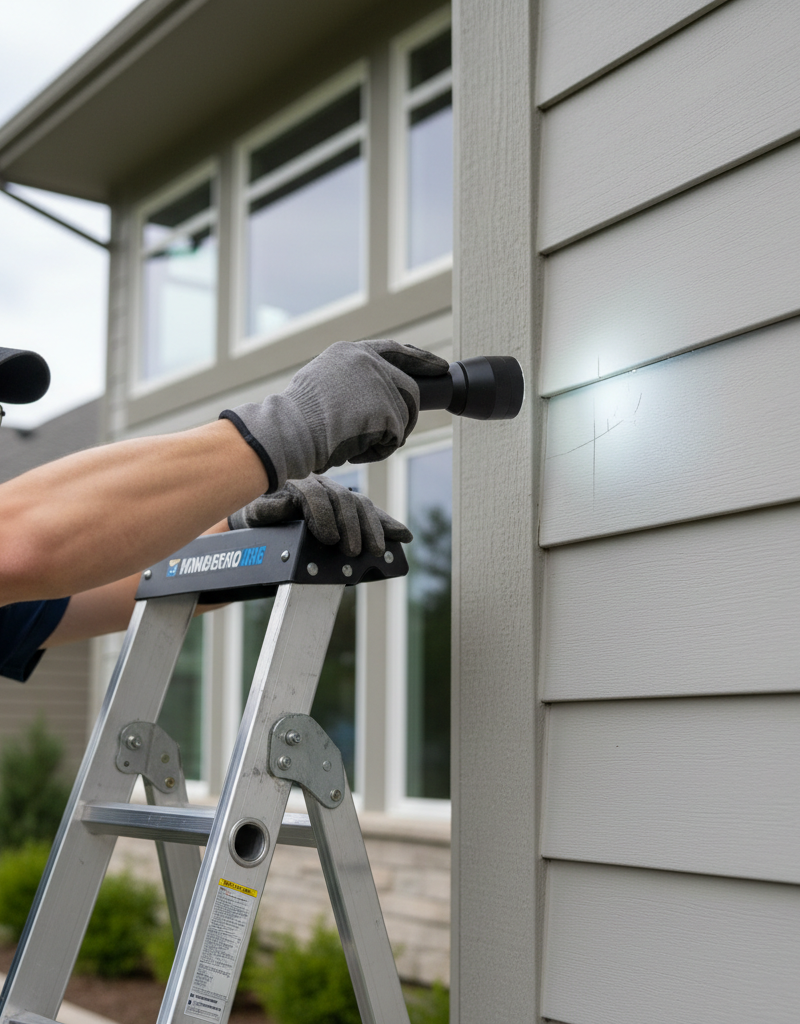
- AmazonStrong flashlightFor oblique lighting to spot subtle dents.
- AmazonDigital camera or smartphoneFor high-resolution photos and videos.
- AmazonMeasuring tape or rulerTo show scale of damage.
- AmazonSiding removal tool (zip tool)If replacing vinyl siding panels.
- AmazonCaulk gun and exterior caulk1 tube · For sealing small holes and cracks.
- AmazonSafety gloves and glasses
As an Amazon Associate FixlyGuide earns from qualifying purchases — at no extra cost to you. Prices and availability are accurate as of publication and subject to change.
Quick Answer
Hail damage on siding can range from barely perceptible marks to significant cracks and holes, often leading to water intrusion and further structural problems if not addressed. The crucial first steps involve a thorough visual inspection of all sides of your home, meticulously documenting any damage with high-resolution photos and videos, and then contacting your homeowner's insurance carrier to report a potential claim. Depending on the severity, you might undertake small, cosmetic repairs yourself, or for more extensive damage, you'll need a professional contractor to ensure proper restoration and protect your home's integrity.
The Problem
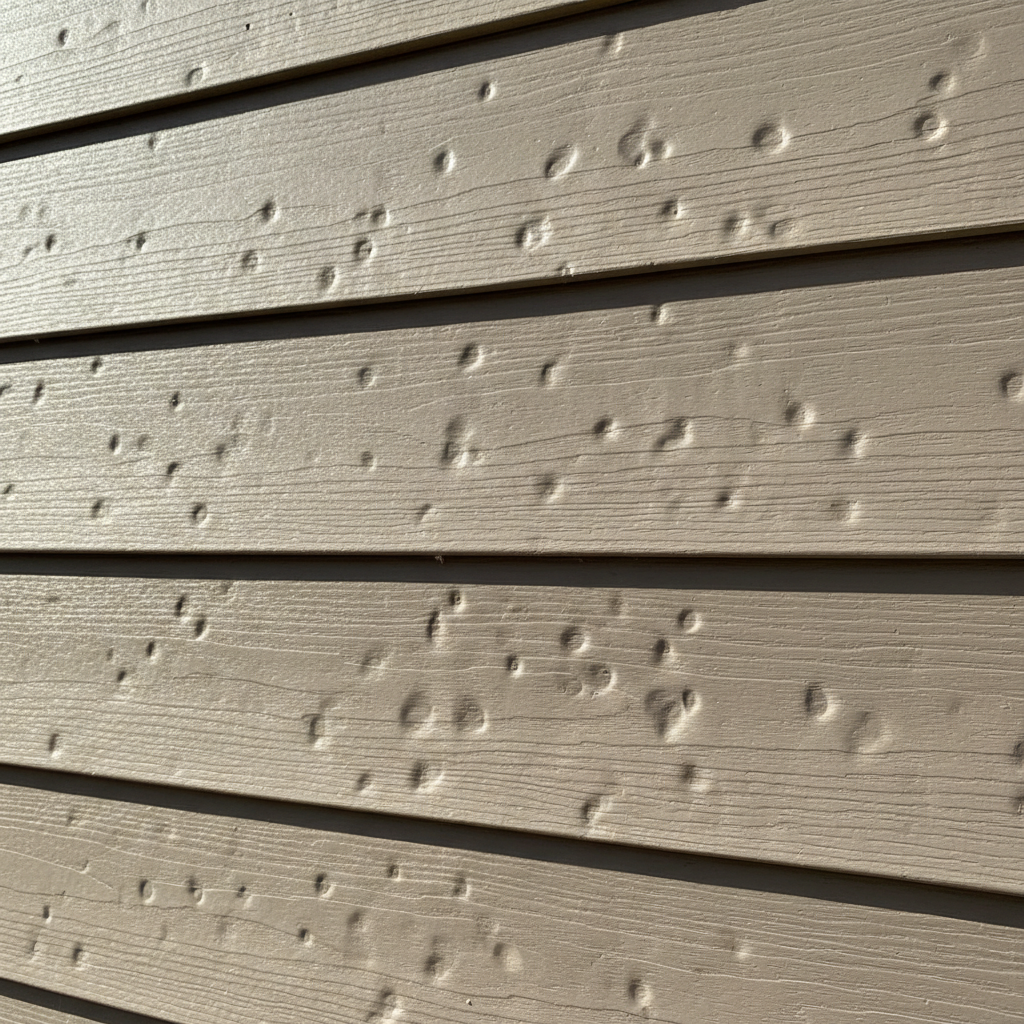
Late spring and summer storms bring more than just rain; they often unleash hail, icy pellets that can pummel your home’s exterior. While you might immediately think of your roof, your siding is equally, if not more, vulnerable. Hailstones, even small ones, strike siding at high velocities, capable of causing a surprising array of damage. This isn't just about aesthetics; compromised siding is an open invitation for water, insects, and pests to infiltrate your home's protective envelope. Once water gets behind the siding, it can lead to rot in the wood sheathing, mold growth, and eventual structural damage to the framing. The problem is compounded because hail damage isn't always obvious to the untrained eye, especially on lighter-colored siding or from ground level. Many homeowners only discover the issue months or even years later when secondary problems like peeling paint, interior water stains, or increased energy bills begin to surface. Addressing hail damage promptly is critical to maintaining your home's value, structural integrity, and indoor air quality.
How It Works
Your home's siding acts as its primary defense against the elements, forming a protective barrier that sheds water and wind. It's typically installed in an overlapping fashion, directing water downwards and away from the underlying wall sheathing. When hailstones strike this barrier, the impact can be significant. The outcome depends on several factors: the size, density, and velocity of the hailstones, the type and age of your siding material, and the angle of impact. Small, soft hail might cause minor 'bruises' or scuffs on vinyl siding, while larger, harder, or wind-driven hail can create deep pockmarks, cracks, and even splinter wood siding. Fiber cement siding, while durable, can chip. Aluminum siding dents easily. The energy of the impact can sometimes delaminate composite materials or weaken the fastener points, causing sections to loosen over time. Even if a direct penetration doesn't occur, the integrity of the siding is compromised, making it more susceptible to future weather events and reducing its intended lifespan. The hidden danger lies in hairline cracks or subtle deformations that compromise the water-shedding capabilities, allowing moisture to seep into the wall cavity, where it can cause slow, insidious damage that's expensive to repair later.
Step-by-Step Fix
Safety First! Before beginning any inspection or repair, always prioritize your safety. If you need to use a ladder, ensure it's stable on level ground and have someone spot you. Be mindful of slippery surfaces, especially after a storm. Do not attempt to inspect if more hail or severe weather is imminent.
1. Initial Ground-Level Inspection — Get a preliminary look.
- Walk around the entire perimeter of your home, paying close attention to all sides, especially those most exposed to the storm's direction. Look for obvious signs like large dents, cracks, shattered pieces, or missing sections of siding. Don't forget to check gutters, downspouts, windows, and outdoor fixtures, as these can also show hail impact.
- Shine a strong flashlight across the siding, even in daylight. The oblique angle of the light will help reveal subtle indentations and inconsistencies that might be invisible when viewed straight on. This is especially effective on vinyl or aluminum siding.
2. Close-Up Siding Examination — Identify subtle damage.
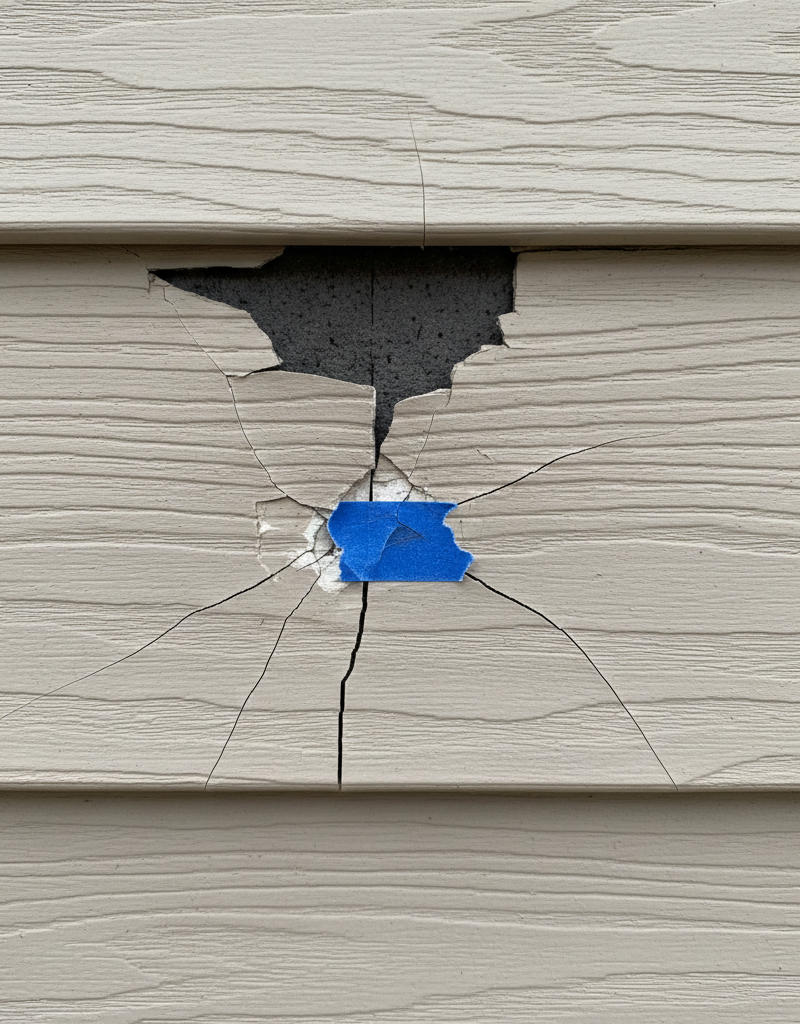
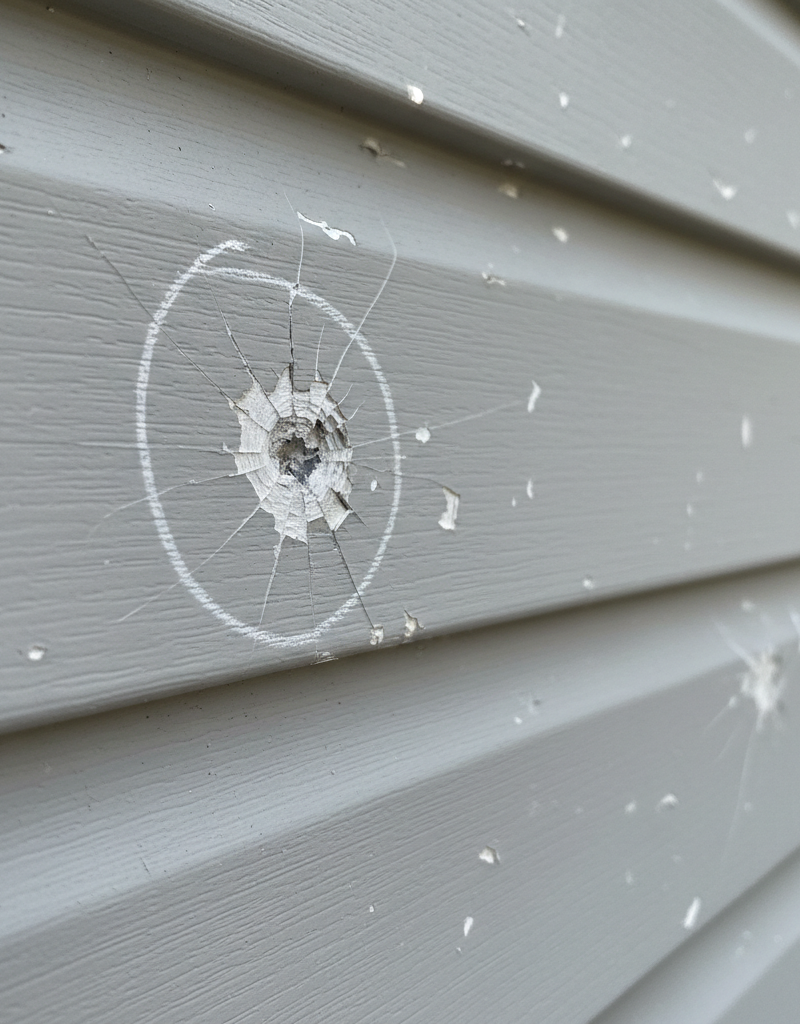
- Using a sturdy ladder (with a spotter!), carefully inspect the siding at different heights. Pay attention to common hail impact zones: areas under eaves and overhangs, corners, and anywhere there's a change in building material or shape. Look for circular or irregular indentations. On vinyl, these might be slight depressions that feel soft to the touch. On wood, look for splintering or chipped paint. On fiber cement, search for chips or spiderweb cracks.
- Gently run your fingers over suspected areas. Sometimes, a tactile inspection can confirm a subtle dent that's hard to see. For vinyl, look for small, crescent-shaped cracks along the edges of panels.
3. Document Everything Thoroughly — Evidence for your claim.
- Take numerous high-resolution photos and videos. Start with wide shots of each side of your house, then zoom in on specific areas of damage. Place a common object like a coin or ruler next to the damage to provide a sense of scale. Include photos of related damage, such as dings on outside AC units, bent downspouts, or damaged window screens, as this corroborates a hail event.
- Keep a detailed log of the date of the storm, the size of the hail reported (if known), and where specific damage was found. This comprehensive documentation is crucial for your insurance claim.
4. Contain Minor Damage & Prevent Further Issues — Temporary fixes.
- For small cracks or holes that aren't structural, you can temporarily cover them with heavy-duty waterproof tape designed for outdoor use (e.g., flashing tape) to prevent immediate water intrusion. This is a stop-gap measure, not a permanent repair.
- If a siding panel is significantly cracked or detached and sagging, gently try to re-secure it if possible, pushing it back into its channel, or use screws with washers in an inconspicuous spot as a temporary hold. Ensure screws penetrate studs, not just sheathing.
- If this doesn't work: If the damage is too extensive for temporary measures, or if water is already visibly entering the wall cavity (e.g., damp insulation, interior water stains), skip to contacting a professional immediately.
5. Contact Your Insurance Company — Reporting the damage.
- Notify your homeowner's insurance carrier as soon as possible after discovering the damage. Provide them with your documentation (photos, videos, notes) and be prepared to schedule an adjuster's visit. Understand your policy's deductible and how hail damage claims are typically handled.
- Important: Do not sign any
Related Articles
Keep troubleshooting with these hand-picked guides from FixlyGuide:
- Is That Hail Damage on Your Siding? 5 Hidden Signs Most Homeowners Miss — Discover how to inspect your siding for hidden hail damage, understand the different types, and navigate the repair or replacement process.
- The #1 Mistake Homeowners Make After Finding Missing Shingles (And How to Fix It Right) — Discover the crucial steps to take after a storm rips shingles from your roof, ensuring a proper, lasting repair and preventing costly futu…
- Hail-Damaged Siding? The Inspection Trick That Saves Thousands (and How to Fix It) — Hail can cause significant, often hidden damage to your home's siding. Learn how to pinpoint the damage and perform DIY repairs to prevent…
- The One Overlooked Mistake After Storm Damage: Finding Missing Roof Shingles Fast — Storms can rip off roof shingles, exposing your home to further damage. Learning how to safely assess and temporarily patch your roof is cr…
- Did Wind Damage Your Roof? Find Out Before It's Too Late — High winds can inflict serious, yet subtle, damage to your roof. Learn to spot the hidden signs of wind damage from the safety of the groun…
- Is Your Roofline Hiding a $10,000 Secret? 7 Soffit & Fascia Warning Signs — Discover the critical warning signs of soffit and fascia damage, why these often-overlooked components are crucial, and how to tackle commo…
Should you do this yourself?
Answer five quick questions before you start. Safety outranks savings every time.
Your experience with work like this
How high do you have to work?
Does the job involve any of these?
Will it need a permit?
Specialty tools
Free and instant. Educational guidance only — not a quote, inspection, or professional diagnosis.
Questions to ask before you sign
Ask every contractor the same questions and the cheapest bid stops looking cheapest. Check them off as you go — your progress is saved on this device.
Free, no signup. Bring this to every walkthrough so you compare bids on the same terms.
What should this project cost?
Enter your project details for a realistic cost range before you call anyone.
Spot repairs commonly run $400–$1,800; full replacement typically $9,000–$18,000 for an average home.
- Regional adjustment
- National average
- Labor share (typical)
- ~$2,948
- Quotes to collect
- 3 written estimates
Educational estimate based on national averages — not a binding quote. Always confirm with written local estimates.
Fixly Project Decision Box
- DIY difficulty
- Professional Recommended
- Estimated time
- Inspection 1–2 hours · repairs 1–3 days
- Cost level
- High
Main tools / materials
- Binoculars for a ground-level look
- Flashlight for attic checks
- Moisture meter
- Roofing cement (temporary patch only)
When to stop and call a pro
- Active leak near lights, fans, or any wiring
- Sagging, bulging, or water-filled ceiling
- Steep, wet, or two-story roof — do not climb it
- Storm or hail damage you plan to claim on insurance
Need professional help?
Free roof assessment first — no phone calls until you ask for them.
Get Local Roofing HelpGet help with your roof now
Stay off the roof. These free tools help you protect the house and reach the right professional fast.
- Emergency repair checklistThe first steps that limit damage before a pro arrives.Open
- Repair or replace your roof?Answer 10 questions about age, leaks, and damage to get a clear next step.Open
- Get local estimatesSend one request and compare written estimates from vetted pros.Open
Free, no signup required. Estimates are educational guidance, not a quote or an inspection.
Frequently asked questions
How do I know if my siding has hail damage?+
Look for dents, cracks, chips, or circular impact marks on the siding panels. Use a flashlight at an oblique angle to reveal subtle indentations. Check all sides of your house, especially those facing the storm, and compare with undamaged areas, such as those under eaves or porch coverings.
Should I file an insurance claim for hail damage?+
If the damage is significant or widespread, it's generally advisable to file a claim. Document all damage thoroughly before contacting your insurer. Be aware of your deductible and weigh the repair cost against the deductible to decide if filing a claim is worthwhile for minor damage.
Can I repair hail damage on siding myself?+
Minor dents or small cracks on some types of siding, like vinyl or aluminum, can sometimes be repaired DIY with replacement panels or patching kits. However, extensive damage, structural issues, or damage to specialized siding materials usually require professional repair or replacement to ensure proper waterproofing and material matching.
What's the best way to prevent future hail damage to siding?+
While complete prevention is difficult, choosing impact-resistant siding materials like fiber cement or certain reinforced vinyls during replacement can offer better protection. Keeping trees trimmed away from the house also reduces the risk of branch damage during storms. After a storm, a quick inspection can help catch minor issues before they worsen.
Discussion
Loading comments…