- Safety Note: Never attempt to inspect your roof or climb ladders if you are uncomfortable or if conditions are slippery or windy. Call a professional for high-up or extensive inspections. Your personal safety is paramount.
- Wear sturdy, non-slip shoes.
- Be aware of downed power lines or broken tree branches.
Roofing · Hail damage
| Project category | Roofing |
|---|---|
| Problem type | Hail damage |
| Trade required | Roofing |
| Urgency | Urgent — within days |
| Safety risk | Moderate safety risk |
| DIY suitability | Licensed pro only |
| Cost category | High cost |
| Typical timeline | Inspection within days; claim and build often several weeks |
| Contractor type | Licensed roofing contractor |
Repair option
Spot repair for isolated slopes with limited impact marks.
Replacement option
Insurance-scope replacement when impacts exceed the carrier threshold per square.
Common causes
- Impact bruising that knocked granules loose
- Cracked mat under the surface, not visible from the ground
- Damaged soft metals: vents, gutters, flashing
Relevant tools:repair or replace roofcompare quotes
Published June 18, 2026Last updated August 17, 2026
Tools & materials you'll need
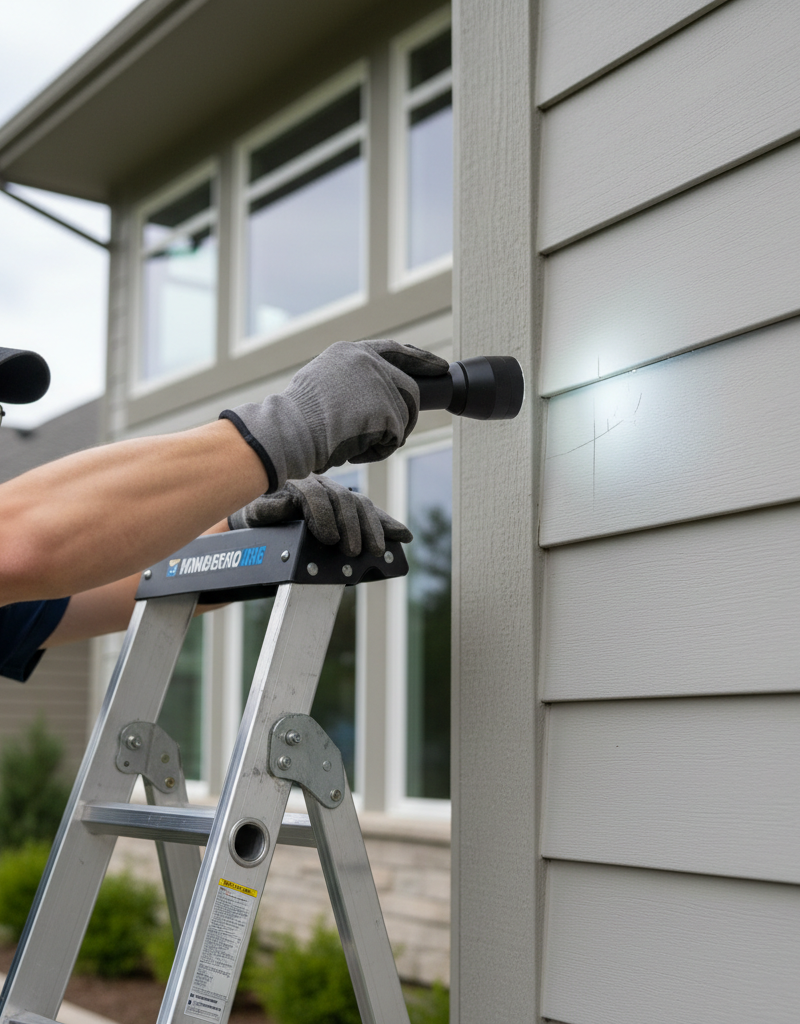
Affiliate links- AmazonStep ladderFor safe access to higher areas of siding.
- AmazonDigital camera or smartphoneFor high-resolution photos and video documentation.
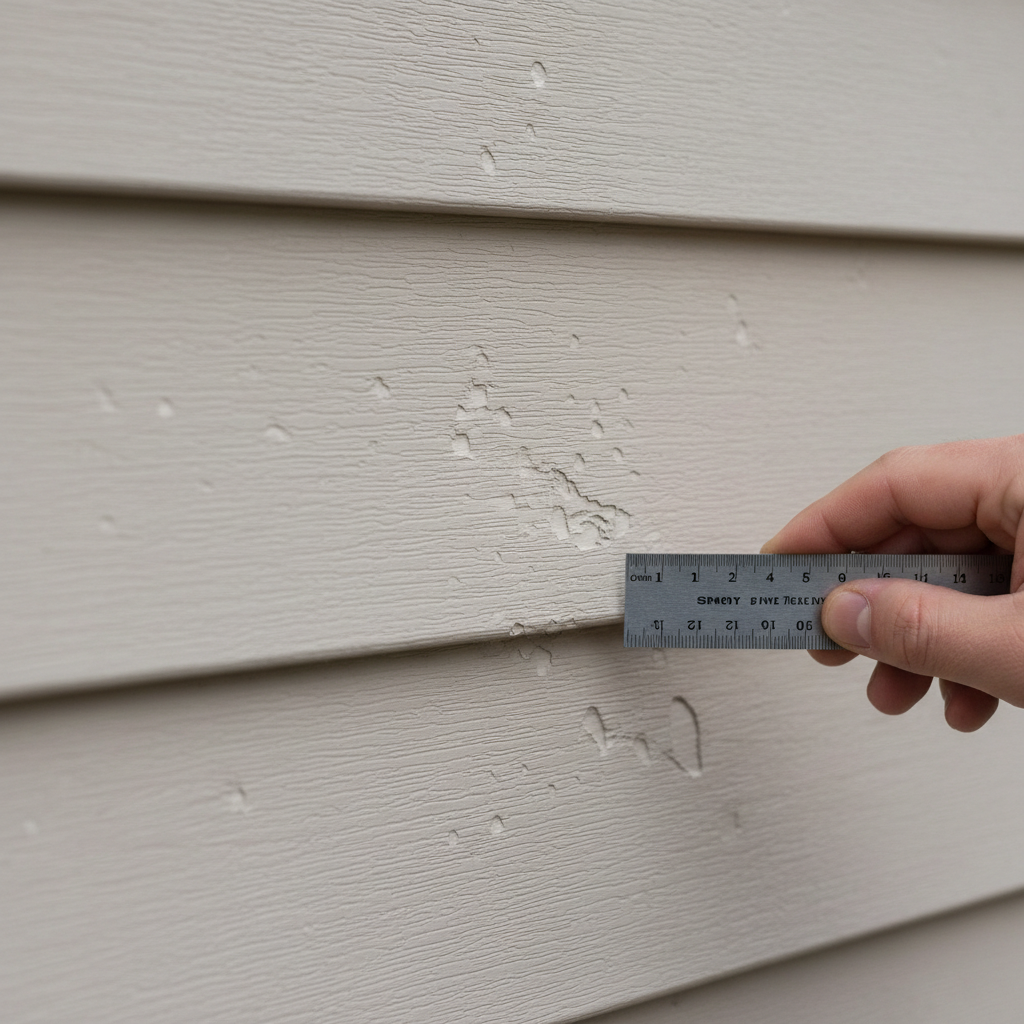
- AmazonMeasuring tape or rulerTo provide scale in damage photos.
- AmazonPermanent marker and notepadFor detailed note-taking during inspection.
- AmazonSafety glassesTo protect eyes from debris during close inspection.
- AmazonWork glovesTo protect hands during inspection.
As an Amazon Associate FixlyGuide earns from qualifying purchases — at no extra cost to you. Prices and availability are accurate as of publication and subject to change.
Quick Answer
When your home experiences a hail storm, examining your siding for damage is critical. Start by safely inspecting your property, looking for dents, cracks, and chips. Document everything with clear photos and notes, then contact your insurance provider immediately to initiate a claim. Be aware that even seemingly minor damage can lead to future problems like moisture intrusion, so a comprehensive assessment is vital for proper repair and to ensure your home remains protected.
The Problem
You've just weathered a hail storm, and now you're wondering what kind of lasting impact it had on your home. Specifically, your siding. Hail, even small stones, can inflict significant damage on various types of siding, from vinyl and aluminum to wood and fiber cement. This damage isn't just cosmetic; it can compromise the protective envelope of your home, opening the door to moisture intrusion, pest infestations, and accelerated deterioration of your home's structure. Ignoring hail damage can lead to more extensive, costly repairs down the line, diminishing your home's value and structural integrity.
The immediate problem is assessing the extent of the damage safely and accurately. Many homeowners underestimate the impact of hail, missing subtle signs that can become major issues. The challenge isn't just finding the obvious holes, but recognizing the less apparent fractures, impact marks, and granule loss on composite sidings that indicate potential failure points. Understanding how to properly inspect, document, and navigate the subsequent steps—especially with insurance—is crucial to restoring your home to its pre-storm condition and safeguarding your investment.
How It Works
Hailstones, essentially ice pellets, form in thunderstorm updrafts. The stronger the updraft, the larger the hailstones can grow. When these frozen projectiles fall, they gain considerable velocity, impacting surfaces with surprising force. The susceptibility of your siding to damage depends on several factors: the size, density, and velocity of the hailstones; the angle of impact; and the type and age of your siding material.
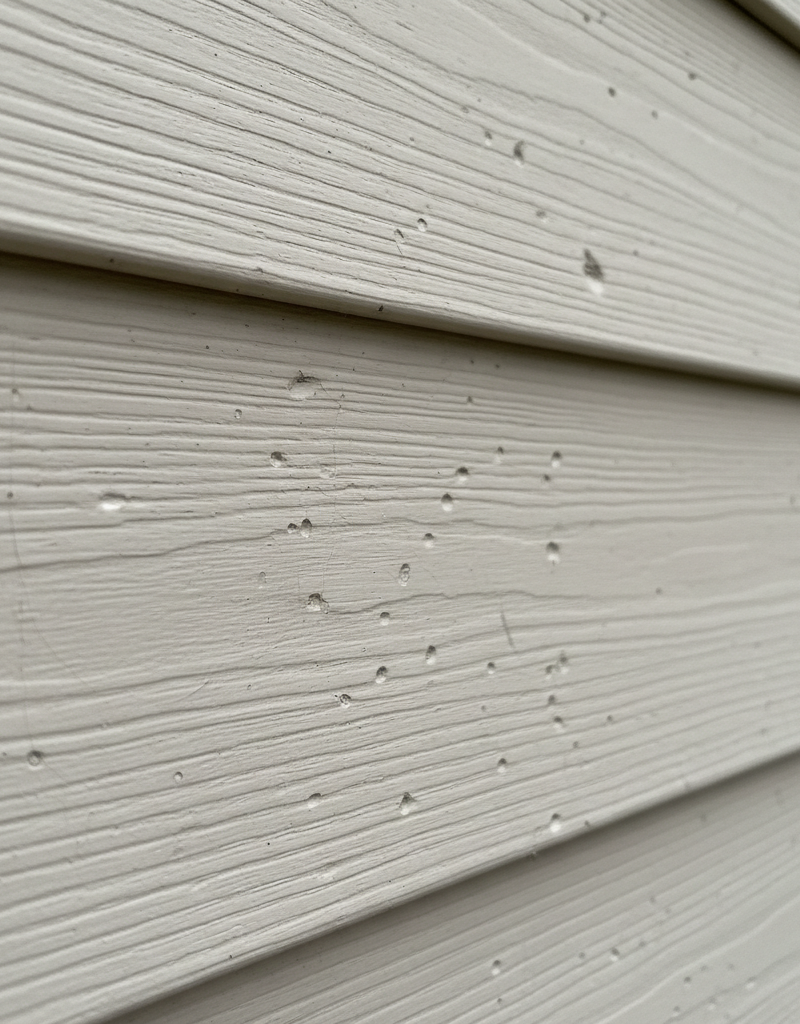
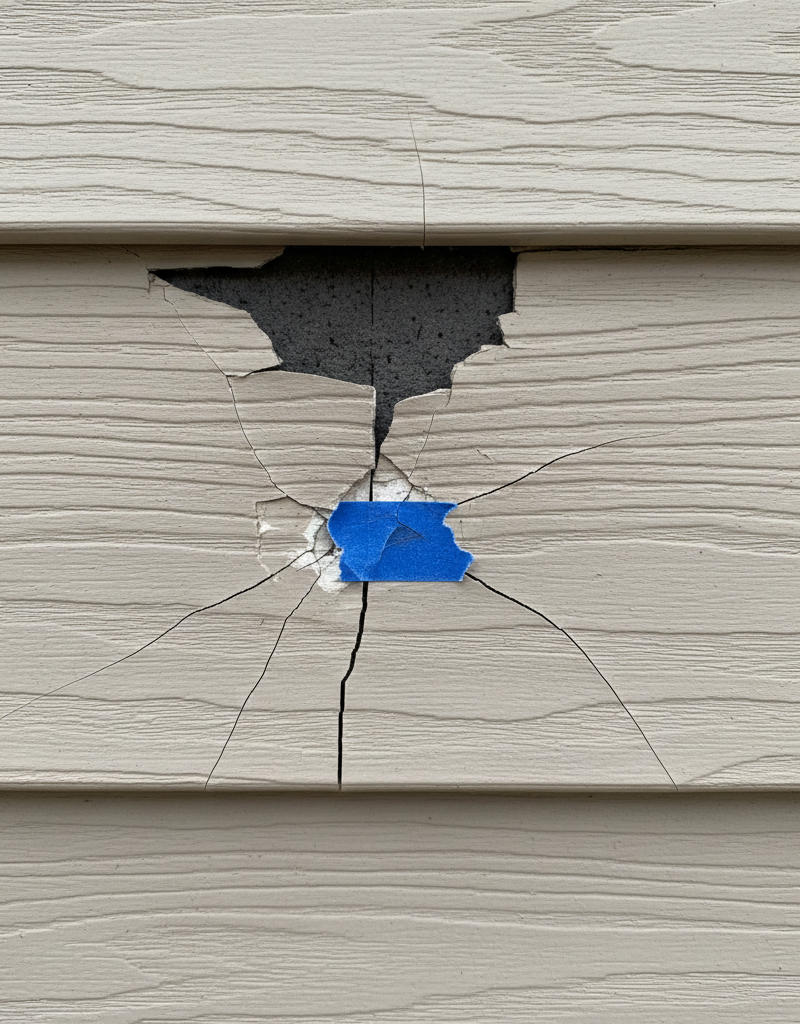
Vinyl siding, common in many homes, can crack, chip, or develop impact marks that look like crescent moons or stars. These impacts weaken the material, making it brittle and susceptible to further damage from temperature fluctuations or future storms. Aluminum siding, while more pliable, is prone to denting. These dents, often circular or irregular depressions, can also scrape off protective coatings, leading to corrosion over time. Wood siding can suffer from gouges, splits, and chipped paint or stain, exposing the raw wood to moisture and rot. Fiber cement siding, known for its durability, can still chip, crack, or fracture, especially at edges or thinner sections, compromising its weatherproofing. Even brick or stucco, while robust, can experience spalling (surface flaking) or cracking from severe impacts.
Beyond direct penetration, hail damage can compromise the integrity of the siding's installation, loosening panels or leading to seal failures. Water can then seep behind the siding, reaching the sheathing and framing, leading to mold, rot, and structural decay. The protective layers, like house wrap, are then directly exposed, losing their efficacy. Recognizing these subtle forms of damage is key to a comprehensive repair strategy that preserves your home's long-term health.
Step-by-Step Fix
1. Prioritize Safety — Before you even think about looking at your siding, ensure the hail storm has completely passed and it's safe to go outside. * Safety Note: Never attempt to inspect your roof or climb ladders if you are uncomfortable or if conditions are slippery or windy. Call a professional for high-up or extensive inspections. Your personal safety is paramount. * Wear sturdy, non-slip shoes. * Be aware of downed power lines or broken tree branches.
2. Initial Ground-Level Assessment — Start by walking around your entire home, looking at the siding from the ground. * Look for obvious signs of damage: large dents, holes, cracks, or missing pieces of siding. * Pay close attention to siding on the sides of your house most exposed to the storm's direction, as these areas often show the most severe damage. * Check metal components like gutters, downspouts, and window wraps for dents, which can be an indicator of hail size and intensity.
3. Detailed Siding Inspection (Close-Up) — Get closer to the siding to examine it in detail. A ladder may be necessary for higher sections, but proceed with extreme caution. * Vinyl Siding: Look for star-shaped cracks, crescent-shaped impact marks, or chipping, especially around the edges of the panels. Gently press on a discolored or potential impact spot; if it feels brittle or gives way slightly, it's likely hail damage. * Aluminum Siding: Search for dents, ranging from small pockmarks to larger indentations. Check for scrapes where the protective coating has been removed, exposing the raw metal. * Wood Siding: Inspect for gouges, chips, significant splintering, or areas where paint/stain has been knocked off, exposing the bare wood. * Fiber Cement Siding: Look for chips, particularly at the corners or edges of panels, and hairline cracks. Tap gently on suspect areas; a hollow sound can indicate internal damage. * Stucco/Brick: Hail can cause spalling (surface flaking) or small impact craters on stucco. For brick, inspect mortar joints for chips or crumbling, and the bricks themselves for impact fractures.
4. Document Everything Meticulously — Proper documentation is critical for any insurance claim. * Photographs: Take clear, well-lit photos of every piece of damaged siding. Include wide shots showing the location of the damage on the house, and close-up shots demonstrating the type of damage (e.g., crack, dent, chip). * Tip: Place a common object (like a coin, ruler, or pen) next to the damage in a few photos to provide scale. * Video: A continuous video walk-around can also be very helpful, narrating what you see. * Notes: Write down the date of the storm, the specific areas of damage, and any other observations. Keep a log of whom you speak to at the insurance company, including dates and times.
5. Contact Your Insurance Company — The sooner you report the damage, the better. * Explain the situation calmly and clearly. Provide them with your documentation. * Ask about your deductible and the specifics of your policy regarding hail damage. * Understand that they will likely send an adjuster to inspect the damage. Be present during this inspection if possible, and be prepared to show them what you've found.
6. Get Multiple Professional Estimates — Even if your insurance company recommends a contractor, get additional bids. * Obtain estimates from at least two to three reputable, licensed, and insured local contractors specializing in siding repair. * Ensure the estimates are detailed, specifying the scope of work, materials to be used, and a clear breakdown of costs. * Compare these estimates to the insurance adjuster's assessment. If there's a significant discrepancy, you may need to discuss this with your insurance company.
7. Understand the Repair Options — Depending on the extent and type of damage, repairs can vary. * Patching/Filling: For very minor surface dings on robust materials, a cosmetic patch might be possible, but this is rare for true hail impact. * Panel Replacement: Individual damaged siding panels can often be replaced, especially with vinyl or aluminum. Matching the color and texture of existing siding can be a challenge, particularly for older homes. * Full Siding Replacement: If damage is widespread or if matching new panels to old ones is impossible (leading to a
Related Articles
Keep troubleshooting with these hand-picked guides from FixlyGuide:
- Hail-Damaged Siding? The Inspection Trick That Saves Thousands (and How to Fix It) — Hail can cause significant, often hidden damage to your home's siding. Learn how to pinpoint the damage and perform DIY repairs to prevent…
- Is That Hail Damage on Your Siding? 5 Hidden Signs Most Homeowners Miss — Discover how to inspect your siding for hidden hail damage, understand the different types, and navigate the repair or replacement process.
- Is That Hail Damage to Your Siding—Or Something Worse? (And How to Know For Sure) — Distinguishing hail damage from other siding issues is crucial for proper repair and insurance claims. Learn how to identify hail damage an…
- The #1 Mistake Homeowners Make After Finding Missing Shingles (And How to Fix It Right) — Discover the crucial steps to take after a storm rips shingles from your roof, ensuring a proper, lasting repair and preventing costly futu…
- The One Overlooked Mistake After Storm Damage: Finding Missing Roof Shingles Fast — Storms can rip off roof shingles, exposing your home to further damage. Learning how to safely assess and temporarily patch your roof is cr…
- The $5 Flapper Trick Plumbers Hope You Don't Know About Your Running Toilet — Discover the secret $5 flapper trick that often fixes a running toilet, saving you money on parts and plumber call-outs.
Should you do this yourself?
Answer five quick questions before you start. Safety outranks savings every time.
Your experience with work like this
How high do you have to work?
Does the job involve any of these?
Will it need a permit?
Specialty tools
Free and instant. Educational guidance only — not a quote, inspection, or professional diagnosis.
Questions to ask before you sign
Ask every contractor the same questions and the cheapest bid stops looking cheapest. Check them off as you go — your progress is saved on this device.
Free, no signup. Bring this to every walkthrough so you compare bids on the same terms.
What should this project cost?
Enter your project details for a realistic cost range before you call anyone.
Spot repairs commonly run $400–$1,800; full replacement typically $9,000–$18,000 for an average home.
- Regional adjustment
- National average
- Labor share (typical)
- ~$2,948
- Quotes to collect
- 3 written estimates
Educational estimate based on national averages — not a binding quote. Always confirm with written local estimates.
Fixly Project Decision Box
- DIY difficulty
- Professional Recommended
- Estimated time
- Inspection 1–2 hours · repairs 1–3 days
- Cost level
- High
Main tools / materials
- Binoculars for a ground-level look
- Flashlight for attic checks
- Moisture meter
- Roofing cement (temporary patch only)
When to stop and call a pro
- Active leak near lights, fans, or any wiring
- Sagging, bulging, or water-filled ceiling
- Steep, wet, or two-story roof — do not climb it
- Storm or hail damage you plan to claim on insurance
Need professional help?
Free roof assessment first — no phone calls until you ask for them.
Get Local Roofing HelpGet help with your roof now
Stay off the roof. These free tools help you protect the house and reach the right professional fast.
- Emergency repair checklistThe first steps that limit damage before a pro arrives.Open
- Repair or replace your roof?Answer 10 questions about age, leaks, and damage to get a clear next step.Open
- Get local estimatesSend one request and compare written estimates from vetted pros.Open
Free, no signup required. Estimates are educational guidance, not a quote or an inspection.
Frequently asked questions
How do I know if my siding has hail damage?+
Look for visible dents, cracks, chips, or holes on the siding panels. On vinyl, you might see star-shaped fractures or crescent marks. On aluminum, look for circular depressions. For wood, watch for gouges or splintering. Always check all sides of your house, especially those facing the storm.
Discussion
Loading comments…