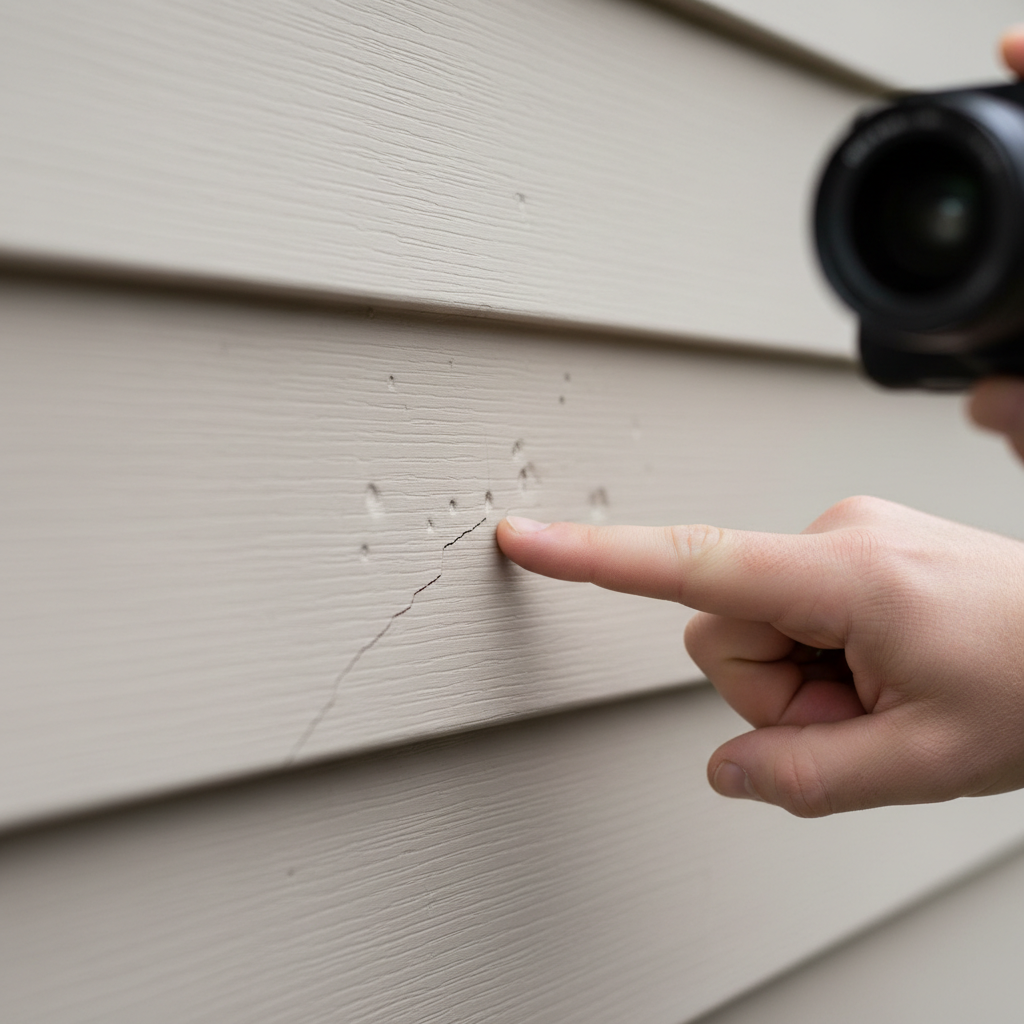
- Hail Size and Density: Larger, denser hail causes more severe impact damage. Hailstones the size of quarters or larger are particularly destructive.
- Wind Speed and Direction: Strong winds during a hailstorm can increase the impact force of hail, essentially turning smaller hail into more damaging projectiles. Wind-driven hail can also hit siding at an angle, increasing the shear force.
- Underlying Sheathing Condition: If the wall sheathing beneath the siding is old, Water-damaged, or improperly installed, it offers less support, making the siding more vulnerable to breakthrough or severe deformation from impact.
- Cold Temperatures: For vinyl siding especially, colder temperatures make the material more rigid and prone to cracking or shattering upon impact, rather than just denting or deforming.
Roofing · Hail damage
| Project category | Roofing |
|---|---|
| Problem type | Hail damage |
| Trade required | Roofing |
| Urgency | Urgent — within days |
| Safety risk | Moderate safety risk |
| DIY suitability | Licensed pro only |
| Cost category | High cost |
| Typical timeline | Inspection within days; claim and build often several weeks |
| Contractor type | Licensed roofing contractor |
Repair option
Spot repair for isolated slopes with limited impact marks.
Replacement option
Insurance-scope replacement when impacts exceed the carrier threshold per square.
Common causes
- Impact bruising that knocked granules loose
- Cracked mat under the surface, not visible from the ground
- Damaged soft metals: vents, gutters, flashing
Relevant tools:repair or replace roofcompare quotes
Published July 8, 2026Last updated August 17, 2026
Tools & materials you'll need
Affiliate linksAs an Amazon Associate FixlyGuide earns from qualifying purchases — at no extra cost to you. Prices and availability are accurate as of publication and subject to change.
Quick Answer
After a hailstorm, inspect your siding for damage from a safe distance. Document everything meticulously with high-resolution photos and videos. Contact your insurance company immediately to understand your policy and start the claims process. Avoid common pitfalls like neglecting temporary repairs, signing contracts with door-to-door solicitors, or assuming minor damage isn't worth reporting. Your priority is to prevent secondary damage and ensure a professional assessment.
The Problem
Hailstorms, even seemingly minor ones, can cause significant damage to your home's siding. This damage isn't always immediately obvious, often appearing as subtle dents, cracks, or fractured panels. Unaddressed, these seemingly cosmetic issues can lead to much larger problems. For instance, tiny cracks can allow moisture to penetrate behind the siding, leading to wood rot, mildew growth, and even structural compromise over time. Furthermore, compromised siding loses its ability to protect against wind and weather, potentially increasing energy costs and decreasing your home's curb appeal and value. Many homeowners, overwhelmed by the storm or underestimating the damage, make critical mistakes in the aftermath that can complicate insurance claims, lead to shoddy repairs, or even void existing warranties. Understanding the correct steps to take and the pitfalls to avoid is crucial for a successful and lasting repair.
How It Works
Siding, whether vinyl, fiber cement, or aluminum, is designed to be your home's primary protective barrier against the elements. When hail impacts siding, the interaction varies depending on the material, hail size, and impact force.
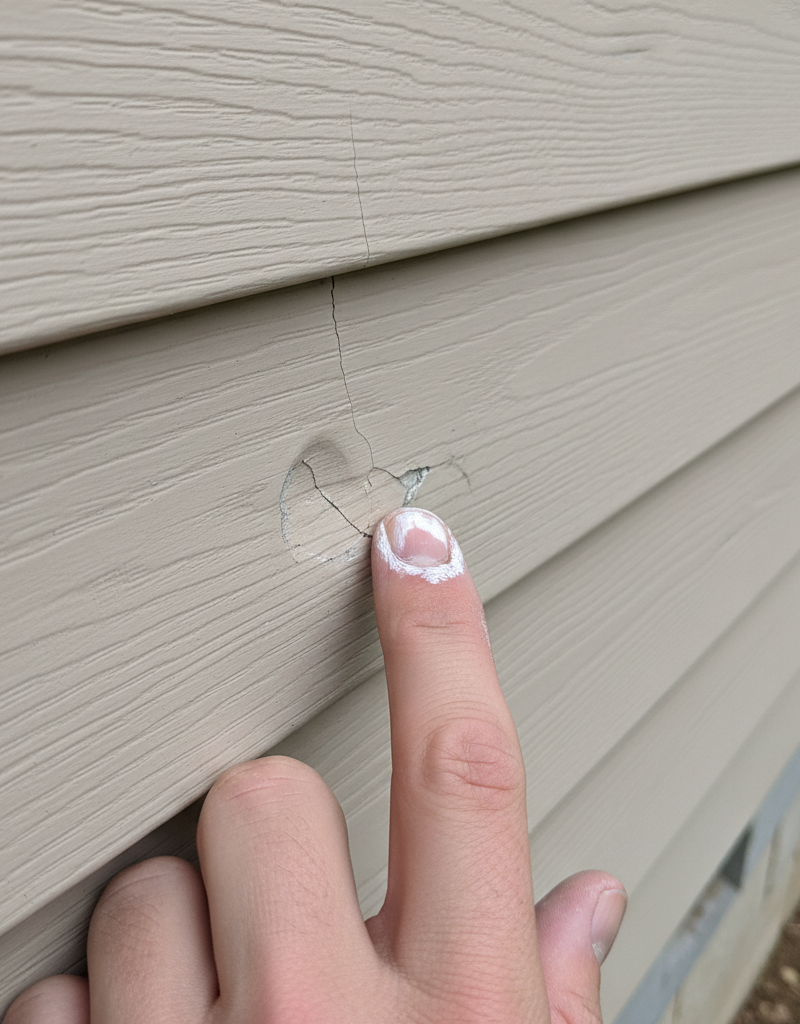
Vinyl siding is a thermoplastic, meaning it can deform under impact. Smaller hail might cause minor scuffs or subtle dents (often called "dings"). Larger, harder hail can cause more significant damage, including cracks, fractures, or even complete panel shattering, especially in colder temperatures when the material is more brittle. The impact can also loosen panels, allowing wind and water intrusion.
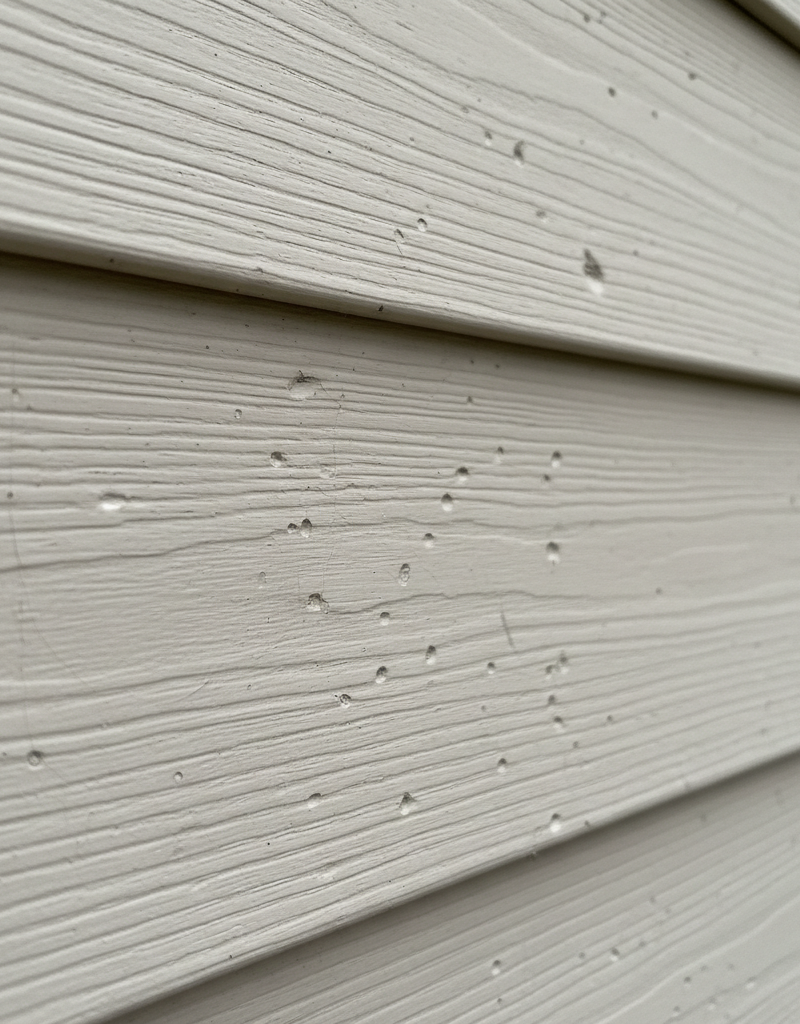
Fiber cement siding, a mix of cement, sand, and cellulose fibers, is much harder and more rigid. Hail impacts typically result in chipped paint, gouges, or spiderweb cracks. These cracks might not be immediately obvious but can compromise the material's integrity and allow moisture absorption, leading to delamination or further cracking during freeze-thaw cycles.
Aluminum siding is softer and more pliable than fiber cement. Hail typically leaves circular dents or craters on aluminum panels. While highly visible, these dents don't always compromise the material's water resistance unless the impact is severe enough to puncture or tear the aluminum. However, repeated impacts can weaken the metal, leading to fatigue cracks over time.
Regardless of the material, hail damage often extends beyond the visible impact point. The force can loosen fasteners, compromise underlayment, and create pathways for water to seep into the wall cavity. This ingress of moisture is the silent killer, fostering rot, mold, and mildew, which can significantly degrade your home's structural integrity and indoor air quality.
Step-by-Step Fix
While extensive hail damage repair should be left to professionals, here's how to properly assess, secure, and initiate the repair process.
-
Safety First: Visual Inspection from the Ground — Before approaching your home, ensure the storm has fully passed and there are no downed power lines or other immediate hazards. From a safe distance, walk around your entire home and visually inspect the siding for obvious signs of damage such as large dents, cracks, or detached panels. Use binoculars for higher areas. Make notes of the locations and types of damage.
-
Document Everything with Photos and Video — This step is critical for your insurance claim. Take clear, well-lit photos and videos of all damaged areas. Get close-ups of specific dents, cracks, and missing pieces, as well as wider shots showing the context of the damage on the entire wall or section. Include timestamps if possible.
- Tip: Use a coin or measuring tape next to smaller dents to provide a sense of scale.
- If this doesn't work: If you can't get good photos due to height, hire a drone inspection service or wait for your insurance adjuster to perform a professional assessment.
-
Perform Temporary Emergency Repairs — If siding panels are severely cracked, missing, or flapping, you need to prevent water intrusion immediately. Use heavy-duty waterproof tape (like Gorilla Tape or flashing tape) to temporarily seal cracks or hold loose panels in place. For larger holes, you can use a plastic tarp or sheeting secured with battens to cover the area. These are strictly temporary measures.
- Safety Note: Do NOT climb on a ladder if it's windy, wet, or if you're uncomfortable. Call a professional if the damage is out of reach or too extensive to secure safely.
-
Contact Your Homeowner's Insurance Company — As soon as possible, call your insurance provider to report the damage and inquire about their claims process. Understand your deductible and what documentation they require.
- Pro Tip: Be informed but avoid admitting fault or making definitive statements about the cause until a professional assessment confirms it. Simply report the damage you observe.
-
Schedule a Professional Inspection — Your insurance company will likely send an adjuster to assess the damage. It's also wise to get at least one, if not two, independent estimates from reputable local siding contractors. A contractor's assessment can sometimes identify damage an adjuster might overlook.
- Warning: Be wary of storm-chasers who appear immediately after a storm. Research any company thoroughly before allowing them to inspect your home.
-
Understand Your Insurance Claim Process — Once the adjuster has visited, they will provide a report and an estimate. Compare this to the contractor estimates you've received. Be prepared to negotiate if there are significant discrepancies. Your goal is to ensure all legitimate damage is covered.
-
Choose a Reputable Contractor — Select a licensed, insured, and experienced siding contractor with excellent local references. Ensure they are familiar with your specific siding material and can match it or provide an appropriate replacement. Get a detailed written contract outlining the scope of work, materials, timeline, and payment schedule.
Common Causes
The primary cause of this problem is, of course, hailstorms. However, the extent of the damage can be exacerbated by several factors:
- Hail Size and Density: Larger, denser hail causes more severe impact damage. Hailstones the size of quarters or larger are particularly destructive.
- Wind Speed and Direction: Strong winds during a hailstorm can increase the impact force of hail, essentially turning smaller hail into more damaging projectiles. Wind-driven hail can also hit siding at an angle, increasing the shear force.
- Siding Material and Age: Older siding materials can become brittle and more susceptible to cracking. Vinyl, in particular, becomes less flexible with age and cold temperatures. Aluminum can be easily dented. Low-quality siding also offers less resistance.
- Underlying Sheathing Condition: If the wall sheathing beneath the siding is old, Water-damaged, or improperly installed, it offers less support, making the siding more vulnerable to breakthrough or severe deformation from impact.
- Cold Temperatures: For vinyl siding especially, colder temperatures make the material more rigid and prone to cracking or shattering upon impact, rather than just denting or deforming.
Common Mistakes
- Delaying Inspection: Waiting too long to inspect for damage can lead to secondary problems like water intrusion and mold, which might not be covered by insurance if not promptly reported. Inspect within a few days of the storm.
- Neglecting Temporary Repairs: Failing to secure loose panels or seal large cracks immediately leaves your home vulnerable to further water damage, which can complicate or even void your insurance claim for the initial hail damage.
- DIYing Extensive Repairs: Attempting to replace multiple siding panels or repair large areas without proper training and tools can lead to improper installation, voided warranties, and potentially worse water intrusion issues. Leave major structural or panel replacement to pros.
- Signing with the First Contractor: Be wary of
Related Articles
Keep troubleshooting with these hand-picked guides from FixlyGuide:
- The One Mistake Homeowners Make When Shingles Blow Off (And How to Fix It Right) — After a storm, finding missing roof shingles can be alarming. Learn the critical mistake homeowners often make and how to properly assess a…
- The #1 Mistake Homeowners Make After Finding Missing Shingles (And How to Fix It Right) — Discover the crucial steps to take after a storm rips shingles from your roof, ensuring a proper, lasting repair and preventing costly futu…
- Is Your Siding Hiding Hail Damage? The Inspection Secret Most Homeowners Miss — Discover how to meticulously inspect your siding for hidden hail damage, understand the different types of impact, and perform effective re…
- Wind Lifted Your Shingles? The 7 Immediate Steps to Prevent Roof Leaks — Discover the crucial steps to take immediately after a storm rips shingles from your roof to prevent costly water damage and temporary repa…
- Is That Hail Damage to Your Siding—Or Something Worse? (And How to Know For Sure) — Distinguishing hail damage from other siding issues is crucial for proper repair and insurance claims. Learn how to identify hail damage an…
- The 7 Critical Mistakes Homeowners Make Thawing Frozen Pipes (And How to Fix Them) — Safely thawing a frozen pipe requires understanding common pitfalls and using the right techniques to prevent costly damage.
Should you do this yourself?
Answer five quick questions before you start. Safety outranks savings every time.
Your experience with work like this
How high do you have to work?
Does the job involve any of these?
Will it need a permit?
Specialty tools
Free and instant. Educational guidance only — not a quote, inspection, or professional diagnosis.
Questions to ask before you sign
Ask every contractor the same questions and the cheapest bid stops looking cheapest. Check them off as you go — your progress is saved on this device.
Free, no signup. Bring this to every walkthrough so you compare bids on the same terms.
What should this project cost?
Enter your project details for a realistic cost range before you call anyone.
Spot repairs commonly run $400–$1,800; full replacement typically $9,000–$18,000 for an average home.
- Regional adjustment
- National average
- Labor share (typical)
- ~$2,948
- Quotes to collect
- 3 written estimates
Educational estimate based on national averages — not a binding quote. Always confirm with written local estimates.
Fixly Project Decision Box
- DIY difficulty
- Professional Recommended
- Estimated time
- Inspection 1–2 hours · repairs 1–3 days
- Cost level
- High
Main tools / materials
- Binoculars for a ground-level look
- Flashlight for attic checks
- Moisture meter
- Roofing cement (temporary patch only)
When to stop and call a pro
- Active leak near lights, fans, or any wiring
- Sagging, bulging, or water-filled ceiling
- Steep, wet, or two-story roof — do not climb it
- Storm or hail damage you plan to claim on insurance
Need professional help?
Free roof assessment first — no phone calls until you ask for them.
Get Local Roofing HelpGet help with your roof now
Stay off the roof. These free tools help you protect the house and reach the right professional fast.
- Emergency repair checklistThe first steps that limit damage before a pro arrives.Open
- Repair or replace your roof?Answer 10 questions about age, leaks, and damage to get a clear next step.Open
- Get local estimatesSend one request and compare written estimates from vetted pros.Open
Free, no signup required. Estimates are educational guidance, not a quote or an inspection.
Get the print-ready PDF of this guide
A clean, ad-free, printable version you can keep on your phone or pin to the workshop wall. Free with a FixlyGuide account.
- Print-optimized layout
- Tools, materials & every step included
- Saved to your account
Frequently asked questions
How do you tell if siding has hail damage?+
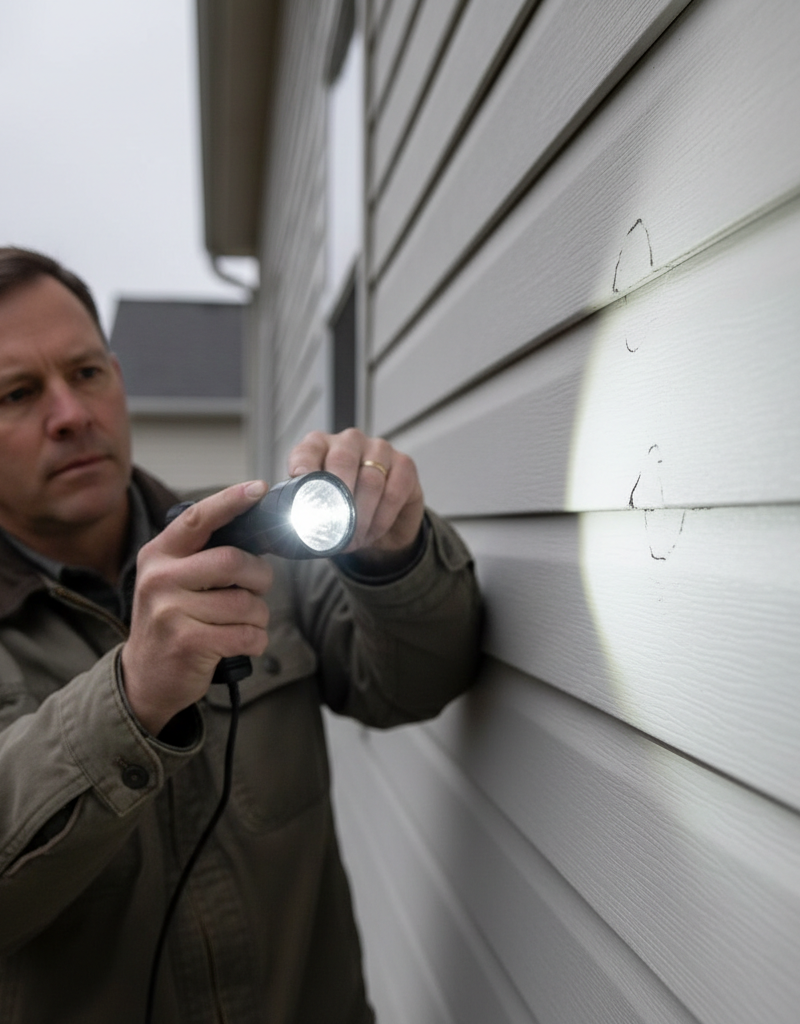
Look for circular dents, cracks, chips, or spiderweb fractures on the siding surface. Walk around your home and inspect each side, paying close attention to areas facing the direction the storm came from. Vinyl siding might show subtle 'dings' or cracks, while fiber cement might have chipped paint or gouges. Aluminum siding will typically show circular dents. Use a marker to circle suspected damage for the insurance adjuster.
Will insurance cover hail damage to siding?+
Most standard homeowner's insurance policies cover hail damage to siding, as it's considered a sudden and accidental peril. However, coverage limits, deductibles, and depreciation can vary significantly. It's crucial to review your specific policy documents and speak with your insurance provider immediately after sustaining damage to understand your coverage.
What happens if you don't fix hail damage on siding?+
Ignoring hail damage, even seemingly minor, can lead to significant long-term problems. Small cracks or dents can allow moisture to penetrate behind the siding, leading to wood rot, mold and mildew growth, and compromised structural integrity. Over time, this can cause bubbling paint, warped walls, increased energy bills, and extensive, costly repairs that may no longer be covered by insurance.
Discussion
Loading comments…