- Hail Impact: The direct and obvious cause. Size, density, and velocity of hailstones are primary factors. Even small hailstones can create micro-fractures.
- Existing Siding Weaknesses: Older, brittle, or poorly installed siding is more susceptible to damage from even minor hail.
- Incorrect Siding Type for Climate: Certain siding materials are better suited to specific climates. For instance, vinyl can become very brittle in extreme cold, making it more prone to shattering from hail.
- Poor Installation: Siding installed too tightly or without proper expansion gaps can crack or buckle more easily when impacted.
- Lack of Proper Sheathing: If the underlying sheathing behind the siding is inadequate or damaged, it offers less support, making the siding itself more vulnerable to impact damage.
Roofing · Hail damage
| Project category | Roofing |
|---|---|
| Problem type | Hail damage |
| Trade required | Roofing |
| Urgency | Urgent — within days |
| Safety risk | Moderate safety risk |
| DIY suitability | Licensed pro only |
| Cost category | High cost |
| Typical timeline | Inspection within days; claim and build often several weeks |
| Contractor type | Licensed roofing contractor |
Repair option
Spot repair for isolated slopes with limited impact marks.
Replacement option
Insurance-scope replacement when impacts exceed the carrier threshold per square.
Common causes
- Impact bruising that knocked granules loose
- Cracked mat under the surface, not visible from the ground
- Damaged soft metals: vents, gutters, flashing
Relevant tools:repair or replace roofcompare quotes
Published July 21, 2026Last updated August 17, 2026
Tools & materials you'll need
Affiliate links- AmazonSturdy extension ladderEnsure it's rated for your weight and height requirements
- AmazonHigh-resolution camera or smartphoneFor documenting damage
- AmazonSiding zip toolFor vinyl siding repair
- AmazonUtility knifeWith extra blades for cutting siding
- AmazonRubber malletFor aluminum siding dent removal
- AmazonSafety glasses
- AmazonWork gloves
As an Amazon Associate FixlyGuide earns from qualifying purchases — at no extra cost to you. Prices and availability are accurate as of publication and subject to change.
Quick Answer
Hail damage to siding can range from obvious cracks and dents to subtle fractures and granule loss, greatly diminishing your home's protective barrier and aesthetic value. Your first step should be a meticulous inspection, capturing comprehensive photographic evidence of all damage. This documentation is vital for your insurance claim. Depending on the type of siding and the extent of the damage, solutions can vary from minor patch repairs for isolated spots, replacing individual siding panels, or, in cases of severe and widespread impact, a complete siding replacement. Early detection and repair are key to preventing further issues like water intrusion.
The Problem
One of the most insidious threats to your home's exterior is hail. Unlike a tree falling or a car hitting your house, hail damage often isn't immediately catastrophic or even obvious. Homeowners might walk around their house after a storm, see a few dings, and assume it's cosmetic—or worse, see nothing at all. But hail, even pea-sized, can compromise the integrity of your siding in ways you can't easily spot from the ground. It can dent aluminum, crack vinyl, chip paint, and tear through the surface of wood or composite materials. This isn't just an aesthetic concern; compromised siding creates pathways for water, insects, and air infiltration. These hidden breaches can lead to rot, mold, structural damage, and increased energy bills, snowballing into far more expensive problems down the line. Moreover, delaying detection and repair can complicate insurance claims, as it becomes harder to prove the damage originated from a specific storm.
How It Works
Siding is your home's first line of defense against the elements. Different siding materials react distinctively to hail impact. Understanding these reactions is key to identifying damage.
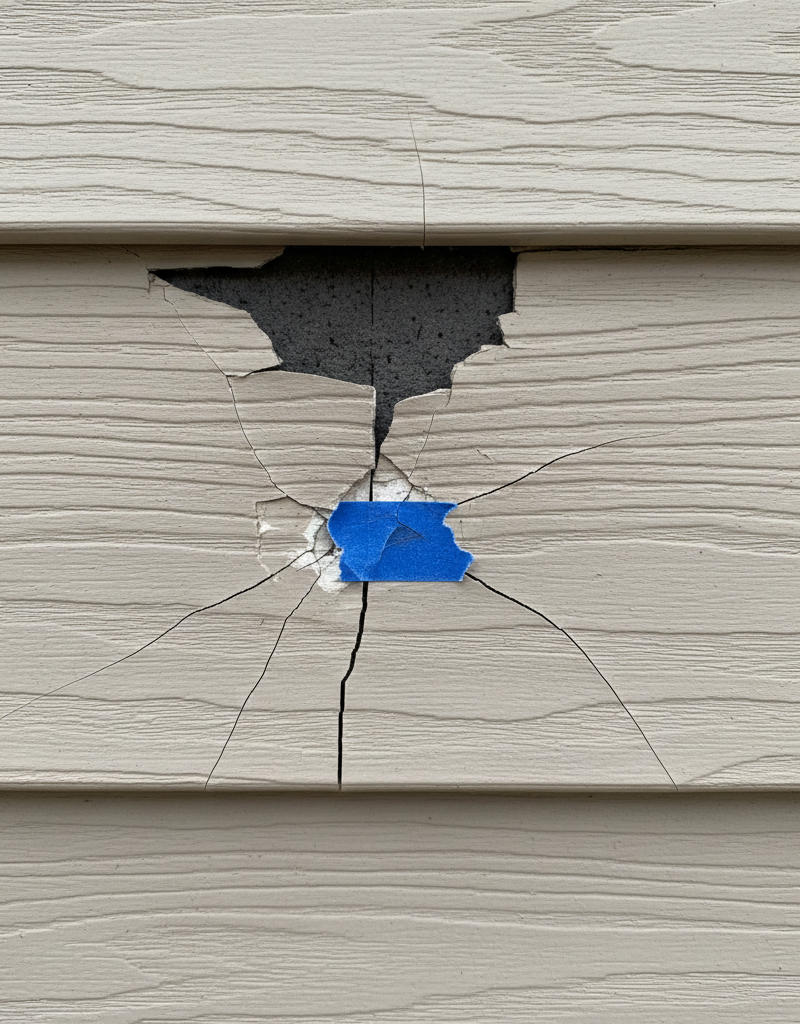
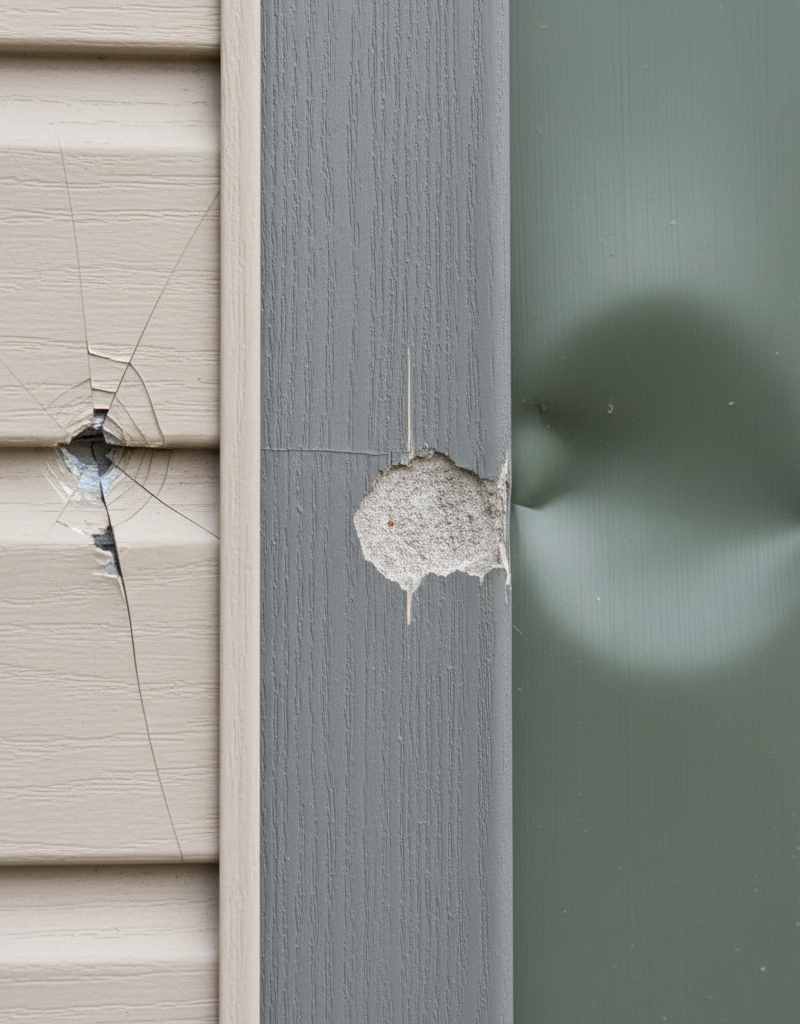
Vinyl Siding: This popular option is made from PVC (polyvinyl chloride). When struck forcefully by hail, especially when cold, vinyl can become brittle and crack, fracture, or shatter. The impact point often leaves a starburst pattern, but sometimes it's just a small, clean puncture or a subtle stress crack that's only visible upon close inspection or from an angle. The flexibility of vinyl can also lead to deformation and warping that isn't always immediately apparent.
Aluminum Siding: Aluminum is a metal, so it dents rather than cracks. Hail will leave circular or crescent-shaped dents on aluminum panels. The severity of the dent depends on the size and speed of the hailstones. Sometimes, the paint or finish on aluminum siding can also chip or flake off at the impact point, exposing the bare metal underneath which is susceptible to corrosion.
Wood Siding (e.g., cedar shakes, clapboard): Wood siding is more resilient to cracking but can suffer from chips, gouges, and splinters where hail strikes. Over time, these impact points can absorb moisture, leading to rot, fungal growth, and paint delamination. Painted wood might show chipped paint exposing the wood beneath, while stained wood might have visible indentations.
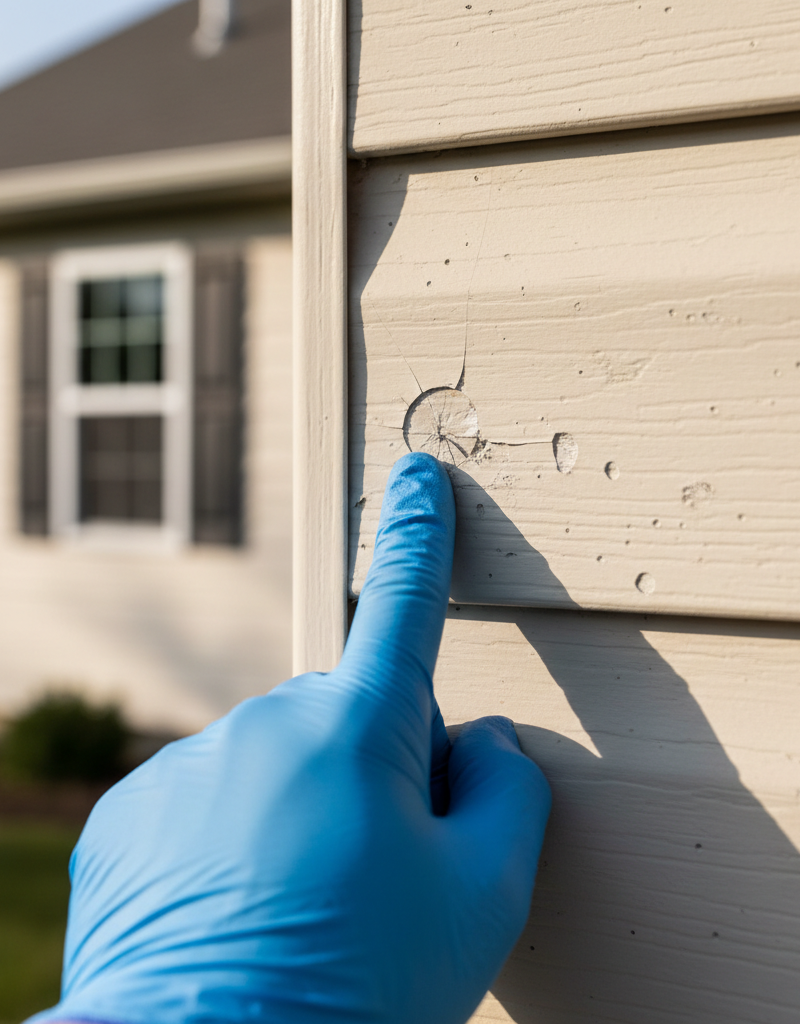
Fiber Cement Siding: Composed of cement, sand, and cellulose fibers, fiber cement siding is highly durable. However, large impact hail can still chip, crack, or even create small craters in its surface. The damage might look like a divot or a spiderweb crack, similar to a cracked windshield.
Stucco: Stucco, a cement-based plaster, is rigid. Hail impact can cause chips, spalling (flaking of the surface), or small holes, especially if the stucco is older or has existing hairline cracks. The severity often depends on the type of stucco finish and its application.
In all cases, the primary concern is the breach of the material's protective layer. This allows moisture to seep behind the siding, attacking the sheathing, insulation, and even the structural wood framing. Undetected and unrepaired, this can lead to mold growth, wood rot, reduced insulation effectiveness, and significant structural damage over time. The sun's UV rays can also accelerate the degradation of damaged areas.
Step-by-Step Fix
Safety First: Before starting any inspection or repair, take safety precautions. Wear sturdy, non-slip shoes and use a stable ladder. If walking on the roof, wear a safety harness and have a spotter. Never work alone. Be aware of power lines. If you suspect damage to electrical components or gas lines, call a professional immediately.
1. Initial Assessment – The Ground-Level Scan – Start by walking around your entire house at eye level and then stepping back to get a broader view. Look for obvious signs of damage: large dents, cracks, missing pieces, or punctures. Pay close attention to corners, trim, and areas facing the prevailing wind direction during the storm. Don't forget detached structures like sheds or garages. This initial scan will give you a general idea of the extent of the impact.
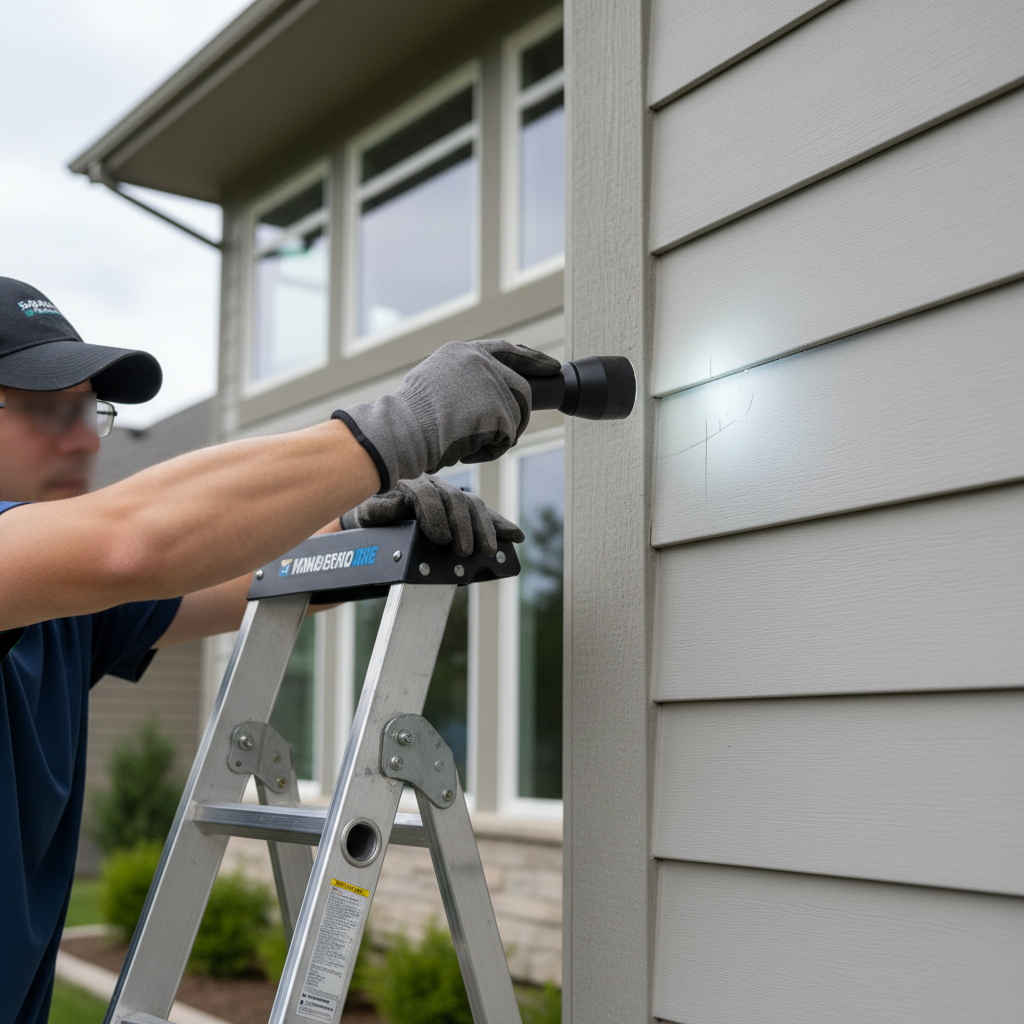
2. Close-Up Inspection – The Detail Hunt – Get a ladder and carefully inspect siding panels section by section, starting from the ground up. Look for the less obvious signs: small fractures in vinyl that might only be visible when bending the siding slightly or looking at it from an extreme angle, subtle dimples in aluminum, chipped paint, or scuffed surfaces on wood and fiber cement. Use a flashlight, even in daylight, to create shadows that highlight imperfections. Rub your hand gently over the surface to feel for inconsistencies. Check under eaves and overhangs as well. Look at the corners and edges of panels, as these are often more vulnerable.
3. Document Everything – Picture Proof – Take plenty of high-resolution photos and videos of all detected damage. Get close-up shots showing the specifics of the damage (cracks, dents, chips) and wider shots that show the damage in context with the rest of the wall. Include photos of non-damaged areas for comparison. Date and time-stamp your photos if possible. This documentation is crucial for your insurance claim. Include a common object, like a coin or ruler, next to the damage in some photos to provide a sense of scale.
4. Contact Your Insurance – Know Your Policy – As soon as you suspect significant hail damage, contact your homeowner's insurance provider. Review your policy to understand your coverage for hail and wind damage, including your deductible. Be prepared to provide the date of the storm and your documentation. Your insurer will likely send an adjuster to assess the damage. It's often beneficial to be present during their inspection to point out areas you've identified.
5. Temporary Repairs (If Necessary) – Prevent Further Damage – If there are obvious holes or significant cracks that could lead to immediate water intrusion, consider temporary fixes. For larger holes in vinyl or fiber cement, you can use a piece of tarpaulin or thick plastic sheeting securely taped over the damaged area with strong, waterproof tape. For smaller cracks, a high-quality, exterior-grade silicone caulk can provide a temporary seal. The goal is to prevent water ingress until permanent repairs can be made. Do not attempt this if it puts you at risk.
6. Vinyl Siding Panel Replacement – Matching the Look – For localized cracked or shattered vinyl panels, you can replace individual sections. Use a siding zip tool to unlatch the damaged panel from the panel above it. Carefully pull out the loose panel. If the nail hem is broken, you may need to cut out the damaged section and replace it with a new piece, overlapping the existing siding underneath. Slide the new panel into place, ensuring it hooks correctly into the panel below, and then re-latch the panel above. Ensure you have matching siding, which can be challenging on older homes. If you can't find an exact match, consider taking a piece from a less visible area (like the back of a shed) and using it for the repair, then using the new slightly mismatched piece in the less visible location.
7. Aluminum Siding Dent Repair or Panel Replacement – Careful Reshaping – For minor dents in aluminum siding, a small rubber mallet can sometimes gently tap the dent out from the inside if you can access it, or from the outside with a block of wood to distribute the force. For larger, deeper, or more numerous dents, or if the paint is severely chipped, panel replacement is the best option. This involves carefully cutting out the damaged panel and sliding a new, matching panel into its place, similar to vinyl siding. Be very cautious not to bend or crease the surrounding panels while working.
8. Wood & Fiber Cement Siding Repair – Filling and Patching – For chips, gouges, or small cracks in wood or fiber cement siding, thoroughly clean the damaged area. For wood, ensure it's dry and free of rot. Apply exterior-grade wood filler for wood or patching compound for fiber cement, following product instructions. Allow it to dry completely, then sand smooth and prime and paint to match the existing siding. For larger damaged sections, cutting out the damaged piece and replacing it with a new, matching section of siding might be necessary. Ensure proper flashing and sealing around any new pieces.
9. Post-Repair Inspection – Final Check – After any repair, step back and inspect the area from various angles and distances. Ensure the repair blends well with the surrounding siding, is secure, and provides a watertight seal. This is also a good time to do a general inspection of your entire exterior for any missed hail damage or other issues that might have been caused by the storm.
Common Causes
- Hail Impact: The direct and obvious cause. Size, density, and velocity of hailstones are primary factors. Even small hailstones can create micro-fractures.
- Existing Siding Weaknesses: Older, brittle, or poorly installed siding is more susceptible to damage from even minor hail.
- Incorrect Siding Type for Climate: Certain siding materials are better suited to specific climates. For instance, vinyl can become very brittle in extreme cold, making it more prone to shattering from hail.
- Poor Installation: Siding installed too tightly or without proper expansion gaps can crack or buckle more easily when impacted.
- Lack of Proper Sheathing: If the underlying sheathing behind the siding is inadequate or damaged, it offers less support, making the siding itself more vulnerable to impact damage.
- Temperature Differential: Hail damage can be worse when there are significant temperature differences between the exterior of the house and the hailstones themselves, increasing material stress.
Common Mistakes
- Ignoring Subtle Damage: Many homeowners only look for large, obvious damage. Small cracks, dimples, or scuffs can lead to bigger problems if overlooked. Always conduct a thorough, close-up inspection.
- Delaying Insurance Claims: Waiting too long to file a claim can lead to its rejection, especially if secondary damage (like rot) develops, making it harder to prove hail was the initial cause. Check your policy regarding filing deadlines.
- Attempting Major Structural Repairs Without Expertise: While minor siding repairs are DIY-friendly, anything involving large sections of siding replacement, complex material matching, or compromised structural integrity should be left to licensed professionals.
- Not Documenting Damage Properly: Insufficient photos or vague descriptions can weaken your insurance claim. Always over-document with clear, scaled, and contextual images.
- Using Mismatched Materials for Repair: Using the wrong type of caulk, filler, or a non-matching siding panel can compromise the aesthetics and long-term durability of the repair. Strive for exact matches as much as possible.
- Forgetting to Check Other Areas: Hail rarely limits itself to one wall. Always inspect all sides of the house, soffits, fascia, gutters, windows, and even detached garages or sheds for damage.
Cost & Time Breakdown
| Task | DIY Cost | Pro Cost | Time |
|---|---|---|---|
| Damage Inspection & Doc. | $0 (your time) | $0 (adjuster) | 1–2 hours |
| Minor Patch/Caulk Repair | $10–$30 | $100–$250 (min) | 30–60 minutes |
| Single Panel Replacement | $20–$70 | $150–$300 | 1–2 hours |
| Multiple Panel Replacement | $50–$200 | $300–$800 | 2–6 hours |
| Full Wall Siding Repair | $200–$1,000+ | $800–$3,000+ | 1–3 days |
| Full Siding Replacement | N/A | $8,000–$25,000+ | 3–10 days |
Note: DIY material costs assume you already have basic tools. Professional costs can vary widely by location, siding material, and complexity.
Tips & Prevention
- Regular Inspections: Periodically inspect your siding, especially after severe weather, not just for hail but for general wear and tear, loose panels, or cracks. This helps you catch minor issues before they become major.
- Maintain Gutters & Downspouts: Clogged or damaged gutters can cause water to overflow and run down siding, exacerbating damage from cracks or chips. Keep them clean and in good repair.
- Trim Trees & Shrubs: Prevent branches from rubbing against siding, which can weaken it over time and make it more susceptible to hail damage, or obscure signs of damage.
- Know Your Siding's Age: Siding becomes more brittle and prone to damage with age. If your siding is nearing the end of its typical lifespan (e.g., 20-40 years for fiber cement, 15-20 for vinyl), be extra vigilant after storms.
- Consider Impact-Resistant Siding: If you live in an area prone to severe hailstorms, consider upgrading to impact-resistant siding materials when it's time for replacement. These are designed to withstand significant blunt force.
- Professional Cleaning: Annually cleaning your siding with a soft wash can help you spot minor blemishes or cracks that dirt might otherwise hide.
When to Call a Professional
Do not hesitate to call a licensed siding professional or a reputable general contractor if you notice widespread damage across multiple walls, evidence of water intrusion inside your home, or if you are uncomfortable working on a ladder at significant heights. Professionals have the experience, specialized tools, and safety equipment to perform extensive repairs or full siding replacements correctly and safely. Furthermore, if you suspect damage to your roof in addition to your siding, a professional contractor can provide a comprehensive assessment and coordinate repairs, often working directly with your insurance company to streamline the claims process. They can also help ensure proper installation techniques to maintain your home's warranty and structural integrity. For any suspected gas line or high-voltage electrical damage resulting from a storm, immediately evacuate and call emergency services and appropriate licensed professionals.
Related Articles
Keep troubleshooting with these hand-picked guides from FixlyGuide:
- Is That Hail Damage on Your Siding? 5 Hidden Signs Most Homeowners Miss — Discover how to inspect your siding for hidden hail damage, understand the different types, and navigate the repair or replacement process.
- The Invisible Hail Damage Mistake Most Homeowners Make (And How to Spot It) — Discover how to accurately assess hail damage on your home's siding, understand its hidden impacts, and perform essential repairs to protec…
- Is That Hail Damage to Your Siding—Or Something Worse? (And How to Know For Sure) — Distinguishing hail damage from other siding issues is crucial for proper repair and insurance claims. Learn how to identify hail damage an…
- The Urgent Truth About Missing Roof Shingles (And Your 3-Step Fix) — High winds can rip shingles off your roof, exposing your home to immediate water damage – here’s how to assess, temporary patch, and plan p…
- The One Mistake Homeowners Make When Shingles Blow Off (And How to Fix It Right) — After a storm, finding missing roof shingles can be alarming. Learn the critical mistake homeowners often make and how to properly assess a…
- The Hidden Culprit Behind Your AC Not Cooling (and How to Find It) — If your central AC isn't cooling your home, the issue often stems from a surprisingly simple problem that's easy to overlook. Learn how to…
Should you do this yourself?
Answer five quick questions before you start. Safety outranks savings every time.
Your experience with work like this
How high do you have to work?
Does the job involve any of these?
Will it need a permit?
Specialty tools
Free and instant. Educational guidance only — not a quote, inspection, or professional diagnosis.
Questions to ask before you sign
Ask every contractor the same questions and the cheapest bid stops looking cheapest. Check them off as you go — your progress is saved on this device.
Free, no signup. Bring this to every walkthrough so you compare bids on the same terms.
What should this project cost?
Enter your project details for a realistic cost range before you call anyone.
Spot repairs commonly run $400–$1,800; full replacement typically $9,000–$18,000 for an average home.
- Regional adjustment
- National average
- Labor share (typical)
- ~$2,948
- Quotes to collect
- 3 written estimates
Educational estimate based on national averages — not a binding quote. Always confirm with written local estimates.
Fixly Project Decision Box
- DIY difficulty
- Professional Recommended
- Estimated time
- Inspection 1–2 hours · repairs 1–3 days
- Cost level
- High
Main tools / materials
- Binoculars for a ground-level look
- Flashlight for attic checks
- Moisture meter
- Roofing cement (temporary patch only)
When to stop and call a pro
- Active leak near lights, fans, or any wiring
- Sagging, bulging, or water-filled ceiling
- Steep, wet, or two-story roof — do not climb it
- Storm or hail damage you plan to claim on insurance
Need professional help?
Free roof assessment first — no phone calls until you ask for them.
Get Local Roofing HelpGet help with your roof now
Stay off the roof. These free tools help you protect the house and reach the right professional fast.
- Emergency repair checklistThe first steps that limit damage before a pro arrives.Open
- Repair or replace your roof?Answer 10 questions about age, leaks, and damage to get a clear next step.Open
- Get local estimatesSend one request and compare written estimates from vetted pros.Open
Free, no signup required. Estimates are educational guidance, not a quote or an inspection.
Frequently asked questions
How do you check for hail damage on siding?+
To check for hail damage, perform a two-step inspection: first, a ground-level scan for obvious dents, cracks, or missing pieces, then a close-up ladder inspection looking for subtle fractures, dimples, chips, or scuffs. Use a flashlight and feel the surface for inconsistencies. Always check all sides of your home and other structures.
Can small hail damage siding?+
Yes, even small hail can damage siding. While large hailstones cause obvious dents and cracks, smaller ones can create micro-fractures in vinyl, scuff paint on wood, or cause subtle dimpling in aluminum that compromises the material's integrity over time and leads to water intrusion.
Will insurance cover hail damage to siding?+
Most homeowner's insurance policies cover hail damage to siding, as it's typically considered a 'peril' in standard policies. However, coverage limits, deductibles, and specific policy clauses vary. It's crucial to review your individual policy and contact your insurer promptly after a suspected hail event to understand your coverage and initiate a claim.
How do you fix a dent in aluminum siding?+
For minor dents in aluminum siding, you might be able to gently tap them out using a rubber mallet and a block of wood. For deeper or more extensive dents, or if the paint is chipped, the best solution is often to replace the individual damaged panel. This involves carefully cutting out the old panel and installing a new, matching one.
Discussion
Loading comments…