- Humidity Fluctuations: Wood expands in high humidity and contracts in low humidity. This is the most common seasonal cause for doors binding, particularly in older homes with solid wood doors.
- Loose Hinge Screws: Over time, the constant movement of a door can cause hinge screws to loosen, allowing the door to sag out of alignment.
- Foundation Settlement: Even minor settling of a house's foundation can subtly shift wall framing and door openings, pulling door frames out of square.
- Excessive Paint Buildup: Multiple layers of paint on the door edges or frame rebate can incrementally reduce clearance, leading to sticking.
- Worn or Damaged Hinges: Hinges can become bent or corroded, preventing the door from pivoting smoothly.
General remodeling · Renovation planning
| Project category | General remodeling |
|---|---|
| Problem type | Renovation planning |
| Trade required | General contracting |
| Urgency | Planned project |
| Safety risk | Low safety risk |
| DIY suitability | Pro recommended |
| Cost category | Major investment |
| Typical timeline | Design and permitting often 2–4 months before work starts |
| Contractor type | General contractor |
Repair option
Phase the work and fix the building envelope first.
Replacement option
Full renovation with permits, design, and a general contractor.
Common causes
- Space no longer fits how the household lives
- Resale preparation
- Deferred maintenance stacking up
Relevant tools:project cost estimatorcompare quoteshome improvement material prices
Published May 25, 2026Last updated August 17, 2026
Tools & materials you'll need
Affiliate links- AmazonPhillips Head Screwdriver
- AmazonBlock PlaneIf significant material removal is needed
- AmazonOrbital SanderWith 80-120 grit sandpaper for minor adjustments
- AmazonSafety Glasses
- AmazonDust Mask
- AmazonPencil
- AmazonUtility Knife or Putty KnifeFor paint buildup
- AmazonCarpenter's Square or LevelFor diagnosing frame issues
As an Amazon Associate FixlyGuide earns from qualifying purchases — at no extra cost to you. Prices and availability are accurate as of publication and subject to change.
Quick Answer
An interior door that sticks can be an annoying, everyday problem. Often, homeowners immediately suspect humidity, and while that's a common factor, it's frequently not the only or even primary cause. The real culprits often include loose hinge screws, subtle shifts in the door frame due to foundation movement, or even paint buildup. Most of these issues are straightforward to diagnose and fix, requiring only basic tools and a bit of patience. By addressing the root cause, you can restore your door to smooth operation, avoiding unnecessary frustration or professional intervention.
The Problem
Imagine trying to close your bedroom door, only for it to drag, scrape, or bind against the frame or floor. This isn't just an inconvenience; a sticking door can damage door finishes, wear down flooring, and even make a room feel closed off or oppressive. The causes range from seasonal shifts in moisture content to structural issues that manifest as subtle changes around the door opening. Identifying precisely where and why the door is sticking is the first critical step toward a lasting solution. Failing to correctly diagnose the issue can lead to wasted effort on temporary fixes or even damage to the door or frame.
How It Works
An interior door operates as part of a system involving the door slab itself, its hinges, the door frame, and the surrounding wall structure. Each component plays a vital role in its smooth function. Wood, the most common material for interior doors and frames, is hygroscopic, meaning it absorbs and releases moisture from the air. When humidity is high, wood swells; when it's low, wood shrinks. This natural expansion and contraction can cause a door to bind against the frame. A standard interior door often has three hinges: a top, middle, and bottom. These hinges are screwed into the door jamb and the door's edge. Over time, these screws can loosen, allowing the door to sag slightly, causing the top or bottom corner on the latch side to drag. The door frame itself is secured within the rough opening of the wall. This rough opening is, in turn, supported by the house's framing. Foundation settlement, even minor shifts over years, can subtly distort the rough opening, pulling the door frame out of square. This distortion might be imperceptible to the eye but can create enough misalignment to cause the door to stick. Furthermore, multiple layers of paint, especially if applied without proper sanding between coats, can thicken the door's edge or the frame's rebate, incrementally reducing the clearance and leading to binding. Understanding these interrelationships helps in pinpointing the specific point of failure.
Step-by-Step Fix
1. Identify the Sticking Point — Pinpoint where the door binds before attempting any fix.
Open and close the door several times, observing carefully where it drags against the frame or the floor. Listen for scraping sounds and look for scuff marks or worn areas on the door or frame. Mark these spots with a pencil. To make subtle contact points more visible, try sliding a piece of paper around the door's perimeter when it's closed – the areas where the paper snags indicate contact. This diagnostic step is crucial for an accurate repair.
2. Check and Tighten Hinges — Often, loose hinges are the simplest fix for a sagging door.
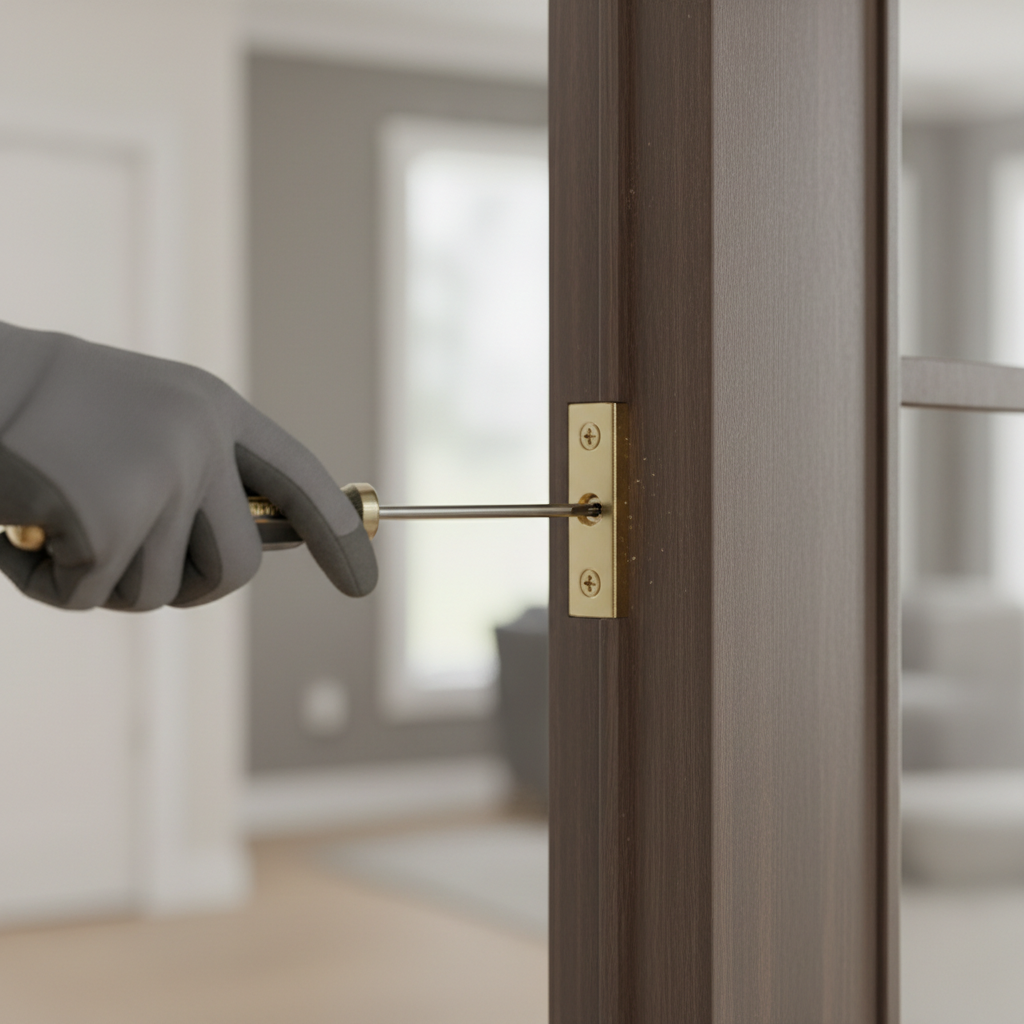
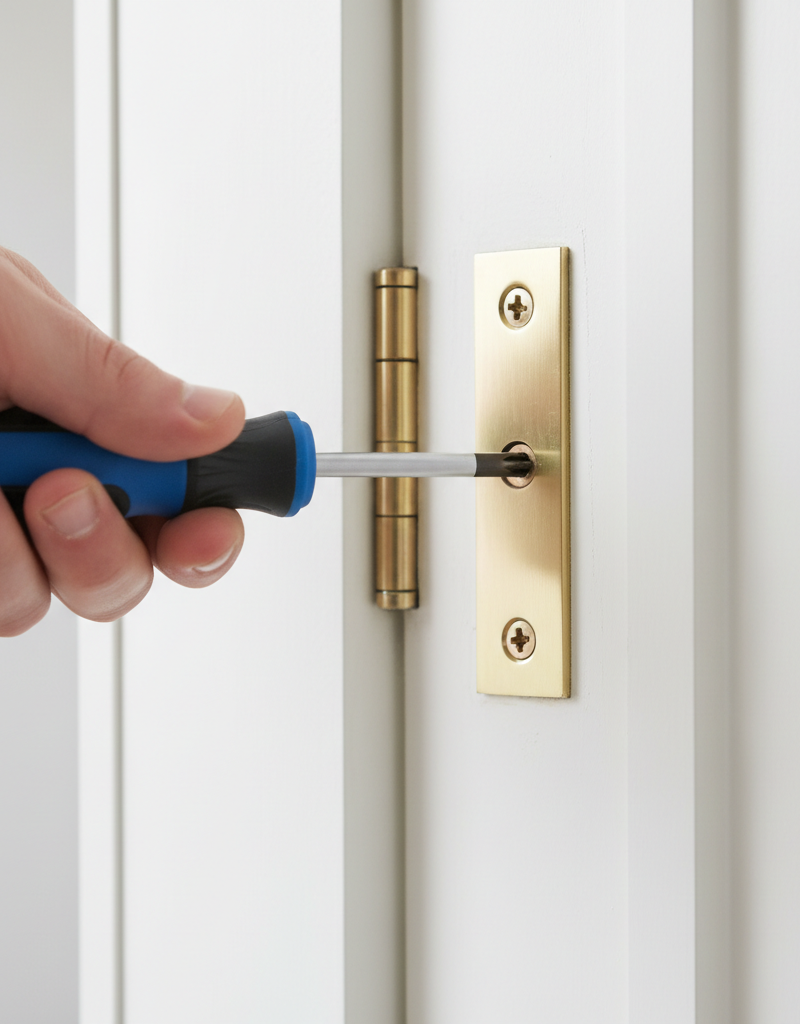
Start by opening the door wide. Using a Phillips head screwdriver, firmly tighten every screw on all three hinges on both the door jamb side and the door slab side. Sometimes, screw holes can become stripped. If a screw spins freely, remove it, insert a wooden golf tee or a wood splint with wood glue into the hole, let it dry, then snap off flush and reinsert the screw. This reinforces the hold and can pull a sagging door back into alignment.
3. Shim Loose Hinges (If Necessary) — Correct minor door sag or frame issues by adjusting hinge plates.
If tightening screws isn't enough, slightly loosening the hinge screws on the jamb side, sliding a thin cardboard shim (from a cereal box or business card) behind the hinge plate, and then re-tightening, can push the door slightly away from the jamb. This is particularly effective if the door is binding on the latch side near the top. Conversely, shimming behind the door-side of the hinge can adjust the door's depth within the frame.
4. Lengthen Top Hinge Screws — For persistent top-latch-side sag, a longer screw can anchor into the framing.
If the top of the door is still sagging on the latch side despite tightening, remove one of the screws from the top hinge on the jamb side – specifically, the one closest to the center of the jamb. Replace it with a 3-inch long wood screw. This longer screw will pass through the door jamb and into the wall stud behind it, providing a much firmer anchor and pulling the door system tighter into the frame, often resolving stubborn sag.
5. Identify Frame Out-of-Square (When All Else Fails) — If hinges are solid, the door frame might be the issue.
Use a reliable carpenter's square or a large framing square to check the door frame's corners. Close the door and measure the diagonal distances from the top-left corner of the frame to the bottom-right and from the top-right to the bottom-left. If these measurements differ by more than 1/8 inch, your frame is out of square. Also, use a level on the vertical and horizontal sections of the frame to check for plumb and level. Small discrepancies here can cause significant binding.
6. Plane or Sand the Sticking Edge — Carefully remove material from the door itself where it binds.
Safety Note: Always wear eye protection and a dust mask when sanding or planing wood. If the door sticks on the side or top, carefully remove the door from its hinges. Use a block plane or an orbital sander with 80-grit sandpaper to gradually remove a small amount of wood from the sticking edge. Work slowly, checking frequently by rehanging the door. For the bottom edge, if it rubs the floor, you may need a circular saw with a fine-tooth blade and a guide, but this is more advanced. Start with small adjustments; you can always remove more, but you can't put it back.
7. Address Paint Buildup — Scrape or sand away excess paint that constricts clearance.
Over many years, layers of paint can accumulate on the door's edges and in the door frame's rebate, reducing the necessary clearance for smooth operation. Use a putty knife or a utility knife to carefully scrape away excess paint from the problem areas. For a smoother finish, follow up with fine-grit sandpaper. Remember to repaint these areas to protect the wood after scraping.
8. Adjust Strike Plate — If the latch isn't catching smoothly, the strike plate may be misaligned.
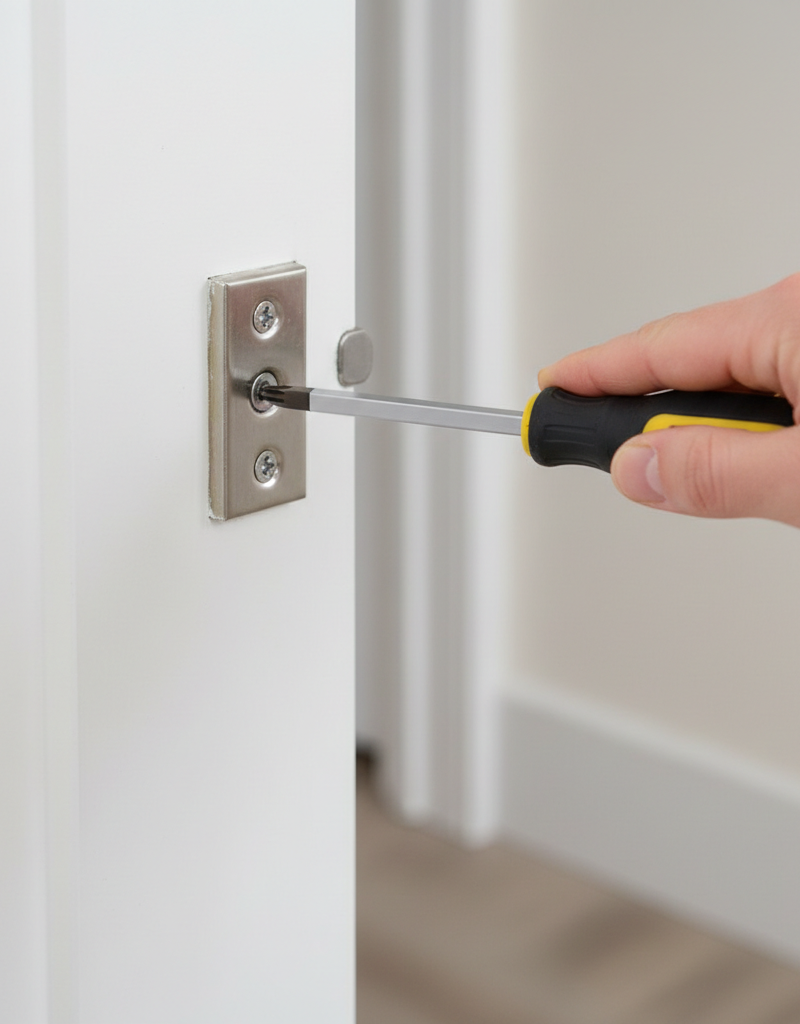
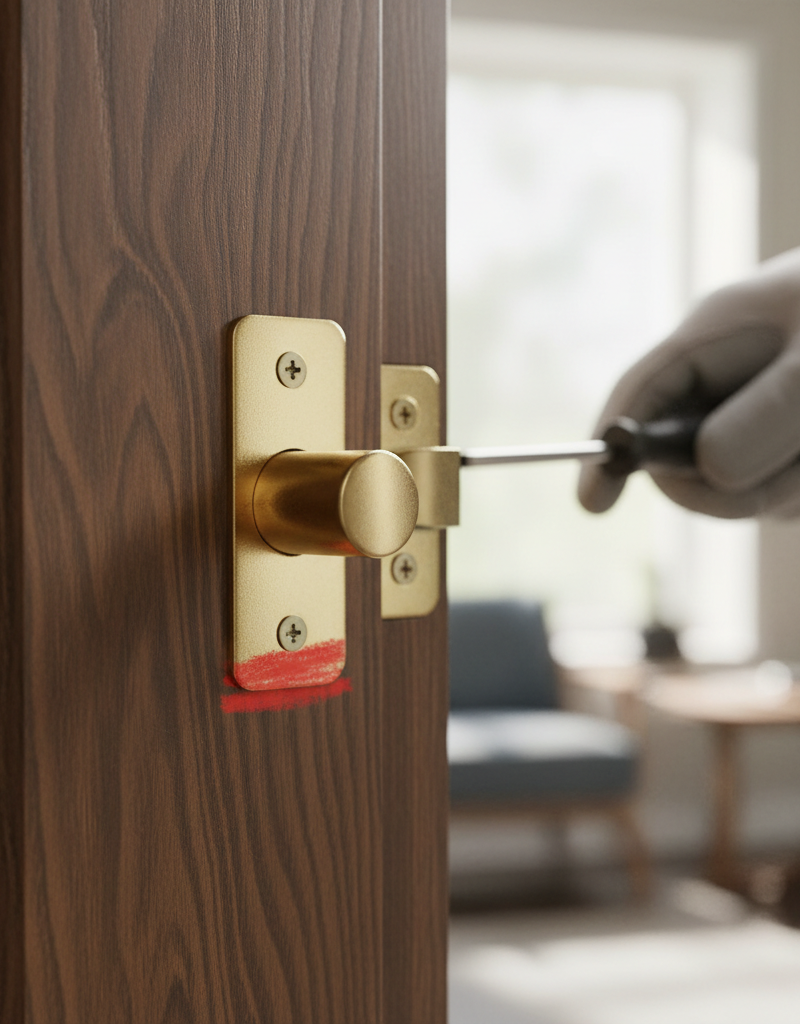
If the door closes but the latch bolt doesn't fully extend (or rubs excessively), the strike plate on the door frame might need adjustment. Loosen the strike plate screws, gently tap the plate up, down, or sideways a millimeter or two in the direction needed, then re-tighten. If the wood behind is worn, consider mortising it slightly deeper or filling the old screw holes with wood filler and re-drilling new pilot holes.
Common Causes
- Humidity Fluctuations: Wood expands in high humidity and contracts in low humidity. This is the most common seasonal cause for doors binding, particularly in older homes with solid wood doors.
- Loose Hinge Screws: Over time, the constant movement of a door can cause hinge screws to loosen, allowing the door to sag out of alignment.
- Foundation Settlement: Even minor settling of a house's foundation can subtly shift wall framing and door openings, pulling door frames out of square.
- Excessive Paint Buildup: Multiple layers of paint on the door edges or frame rebate can incrementally reduce clearance, leading to sticking.
- Worn or Damaged Hinges: Hinges can become bent or corroded, preventing the door from pivoting smoothly.
- Improper Installation: A door or frame that was not initially installed plumb and square can cause issues from day one or exacerbate problems over time.
Common Mistakes
- Sanding Without Diagnosing: Many homeowners immediately reach for sandpaper, removing material without first checking hinges or frame squareness. This can lead to an over-sanded door that has excessive gaps once the true cause is fixed, or when humidity levels drop.
- Ignoring Loose Hinge Screws: Overlooking the simple solution of tightening hinges can lead to more complex and unnecessary interventions.
- Over-Planing/Sanding: Removing too much material from the door makes the problem worse, creating drafty gaps, compromising fire ratings, and requiring more significant repairs like adding wood back or even door replacement.
- Forgetting Safety Gear: When sanding or planing, fine wood dust and flying chips can cause eye and respiratory irritation. Always wear safety glasses and a dust mask.
- Not Checking for Out-of-Square Frames: If the frame itself is significantly out of square, simply adjusting the door won't provide a lasting fix, and the problem will likely return.
- Using Improper Tools: Using a dull plane, coarse sandpaper where fine is needed, or the wrong type of saw for wood removal can damage the door and create a poor finish.
Cost & Time Breakdown
| Task | DIY Cost | Pro Cost | Time |
|---|---|---|---|
| Tighten existing hinges | $0 | $50-$75 | 5–10 minutes |
| Replace hinge screws | $2–$5 | $75-$100 | 10–20 minutes |
| Shim hinges | $0 | $75-$120 | 15–25 minutes |
| Sand door edge | $5–$20 | $100-$200 | 30–60 minutes |
| Adjust strike plate | $0–$5 | $75-$120 | 10–20 minutes |
| Plane door edge | $5–$25 (rental) | $150-$250 | 45–90 minutes |
Tips & Prevention
- Maintain Stable Humidity: In your home, try to maintain consistent indoor humidity levels, ideally between 30-50%. Dehumidifiers in summer and humidifiers in winter can mitigate wood expansion and contraction.
- Regular Hinge Checks: Periodically (e.g., every 6-12 months) check your door hinges and tighten any loose screws. This simple maintenance can prevent many sticking issues.
- Proper Painting Technique: When painting doors or frames, apply thin, even coats and light sand between coats. Avoid drips or heavy buildup on edges and inside the frame rebate.
- Inspect for Frame Settling: If other doors or windows in your home also show signs of sticking or misalignment, it could indicate foundation issues. Monitor these carefully.
- Proper Door Storage (If Removed): If you remove a door for an extended period, store it flat in a climate-controlled environment to prevent warping.
When to Call a Professional
While many sticking door issues are DIY-friendly, certain situations warrant calling a licensed professional. If you suspect significant foundation settlement or structural movement, evidenced by multiple doors and windows sticking, cracks in drywall above door frames, or uneven floors, you should consult a structural engineer or a foundation repair specialist immediately. A general handyman or carpenter can usually handle door and frame adjustments, but if the frame is severely out of square and needs to be re-framed, or if the door needs substantial planing (especially hollow-core doors which cannot be planed much), a professional carpenter will have the specialized tools and expertise to perform the job correctly and efficiently. If you've tried all the basic adjustments and the door still binds, or if the binding is so severe it requires significant material removal you're uncomfortable doing yourself, a professional can correctly diagnose and repair the issue without damaging your door or home's integrity. Never attempt to force a severely sticking door, as this can damage hinges, the door slab, or the frame, turning a simple fix into a costly replacement.
Related Articles
Keep troubleshooting with these hand-picked guides from FixlyGuide:
- The Secret Reason Your Interior Door Sticks (and the 15-Minute Fix) — Discover the common culprits behind a sticky interior door and learn how to fix it in 15 minutes with simple tools.
- The Secret Reason Your Interior Door Sticks (It's Not Always Humidity) — Discover the real reasons your interior door is sticking and how to implement simple, lasting fixes with common household tools.
- The 5-Minute Trick for a Door That Won't Latch (And Why It Keeps Happening) — Discover the simplest fixes for a door that won't latch, from minor adjustments to tackling persistent alignment issues.
- The Secret Reason Your Interior Door Sticks (It's Not Always Humidity) — Before you blame humidity, learn the less obvious culprits behind a sticking interior door and how to fix it with simple steps.
- The 3 Hidden Reasons Your Interior Door Sticks (and the Easy Fixes) — Your interior door sticking isn't just annoying; it's often a symptom of underlying issues that are surprisingly easy to fix with the right…
- The #1 Reason Your Gutters Overflow (It's Not Clogging) — Discover the surprising true cause of overflowing gutters during heavy rain and how a simple fix can prevent costly water damage to your ho…
Should you do this yourself?
Answer five quick questions before you start. Safety outranks savings every time.
Your experience with work like this
How high do you have to work?
Does the job involve any of these?
Will it need a permit?
Specialty tools
Free and instant. Educational guidance only — not a quote, inspection, or professional diagnosis.
What should this project cost?
Enter your project details for a realistic cost range before you call anyone.
Cost depends heavily on which system turns out to be the source.
- Regional adjustment
- National average
- Labor share (typical)
- ~$1,620
- Quotes to collect
- 3 written estimates
Educational estimate based on national averages — not a binding quote. Always confirm with written local estimates.
Recommended for DIYers & woodworkers
Sponsored
The Top 20 Tools for Workshops of Any Budget
No stationary machines or power tools required — plus 3 fundamental tools that can't be bought at any price.
Get the free guide
Ted's Woodworking — The #1 Woodworking Resource
Detailed instructions, dimensioned drawings, materials & cutting lists, and 3D schematics for every skill level.
See the plansSponsored: links above are affiliate links. FixlyGuide may earn a commission on qualifying purchases — at no extra cost to you.
Frequently asked questions
Why does my door only stick sometimes?+
Intermittent sticking is almost always due to humidity fluctuations. Wood absorbs moisture and swells during humid periods, causing the door to expand and bind. When humidity drops, the wood shrinks back, and the door operates normally again.
Can I fix a sticking door without removing it?+
Yes, many sticking door issues can be resolved without removing the door. Tightening hinge screws, shimming hinges, or adjusting the strike plate are common fixes that don't require door removal.
How do I know if my door frame is out of square?+
You can check if your door frame is out of square by measuring the diagonals. With the door closed, measure from the top-left corner of the frame to the bottom-right, and then from the top-right to the bottom-left. If these two measurements differ by more than 1/8 inch, your frame is out of square. You can also use a level on the vertical and horizontal sections of the frame.
What if my door sticks at the top on the latch side?+
If your door sticks at the top on the latch side, it typically indicates that the door is sagging on the hinge side. The most common fix is to tighten the hinge screws, especially the top hinge. If this doesn't work, replace one of the top hinge's jamb-side screws with a longer 3-inch screw to anchor it more securely into the wall stud. Shimming the top hinge can also help push the door away from the jamb slightly.
Discussion
Loading comments…