- The 5-Minute Fix for a Door That Won't Latch (And the Hidden Cause) — Discover the surprisingly simple reasons your door isn't latching and how to fix it in minutes with common household tools.
- The 5-Minute Trick to Fix a Door That Won't Latch (No New Hardware Needed) — Discover the simple, often overlooked reason your door isn't latching and how to fix it in minutes with basic tools, no new hardware requir…
- The 5-Minute Trick to Fix a Door That Won't Latch (No New Hardware Needed) — Discover the simple, often overlooked reasons why your door isn't latching and how to fix it in minutes without replacing any hardware.
- The 5-Minute Trick for a Door That Won't Latch (And Why It Keeps Happening) — Discover the simplest fixes for a door that won't latch, from minor adjustments to tackling persistent alignment issues.
- The 5-Minute Trick to Fix a Door That Won't Latch (No, It's Not the Latch Itself) — Discover the surprisingly simple trick to fix a door that won't latch properly, often without even touching the latch mechanism itself.
General remodeling · Renovation planning
| Project category | General remodeling |
|---|---|
| Problem type | Renovation planning |
| Trade required | General contracting |
| Urgency | Planned project |
| Safety risk | Low safety risk |
| DIY suitability | Pro recommended |
| Cost category | Major investment |
| Typical timeline | Design and permitting often 2–4 months before work starts |
| Contractor type | General contractor |
Repair option
Phase the work and fix the building envelope first.
Replacement option
Full renovation with permits, design, and a general contractor.
Common causes
- Space no longer fits how the household lives
- Resale preparation
- Deferred maintenance stacking up
Relevant tools:project cost estimatorcompare quoteshome improvement material prices
Published May 23, 2026Last updated August 17, 2026
Tools & materials you'll need
Affiliate linksAs an Amazon Associate FixlyGuide earns from qualifying purchases — at no extra cost to you. Prices and availability are accurate as of publication and subject to change.
Quick Answer
Is your door refusing to stay shut, or does it require a shoulder bump to latch properly? The good news is that most common door latch issues aren't serious and can be diagnosed and fixed quickly with basic tools. Often, the problem lies with a misaligned strike plate, loose hinge screws, or a sticky latch mechanism. Before you call a handyman, you can usually identify the culprit and make the necessary adjustments in under 30 minutes, restoring your door's functionality.
The Problem
Few things are as frustrating as a door that refuses to latch. It might swing open unexpectedly, fail to provide privacy, or even compromise security for an exterior door. You might find yourself rattling the handle, pushing harder, or even propping the door shut with a wedge. This isn't just an annoyance; a poorly latching door can indicate underlying issues that, if left unaddressed, could worsen over time, leading to premature wear on the door frame, hinges, or the latch hardware itself. The constant struggle to close the door puts undue stress on its components, potentially loosening screws, stripping wood, or grinding down the latch bolt. While it might seem like a minor inconvenience now, a persistent unlatched door can impact energy efficiency if it's an exterior door, and certainly reduces the comfort and functionality of your living space.
How It Works
To effectively troubleshoot a door that won't latch, it helps to understand the basic mechanics of how a door latches. A standard interior door relies on a simple system: the door frame, the door slab, hinges, and the latch mechanism. The latch mechanism, housed within the door, consists of a spring-loaded latch bolt (the angled piece of metal that extends from the door's edge) and a spindle connected to the door handles. When you turn the handle, the spindle retracts the latch bolt. When you release the handle, the spring pushes the latch bolt back out.
The critical interaction happens between the latch bolt and the strike plate, which is a metal plate mortised into the door frame. This strike plate has a rectangular hole that the latch bolt slides into when the door closes. The inner edge of the strike plate's opening is typically angled or beveled to guide the latch bolt smoothly into place as the door swings shut. Small adjustments in the alignment of the door, hinges, or strike plate can prevent the latch bolt from fully engaging with the strike plate's opening. If the door sags due to loose hinges, or if the strike plate is improperly positioned (either too high, too low, or too far in/out), the latch bolt will hit the frame or the edge of the strike plate instead of sliding into its receptacle, causing the door to rebound or simply not catch.
Step-by-Step Fix
1. Diagnose the Issue – Identify what's preventing the latch from engaging.
- First, open the door and examine the latch bolt. Does it extend and retract smoothly when you turn the handle? If it's sticky or doesn't move freely, apply a graphite lubricant or a silicone spray to the mechanism. If it's bent or severely damaged, it may need replacement (see 'When to Call a Professional').
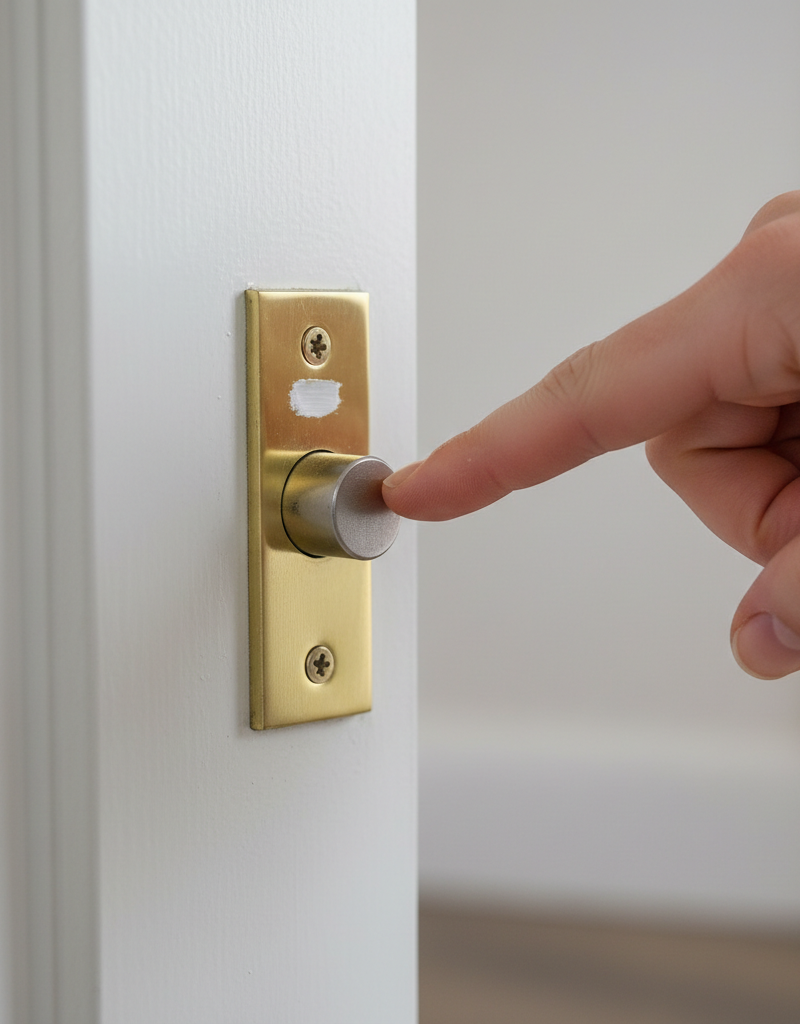
- Next, close the door very slowly. Observe where the latch bolt makes contact with the door frame. Does it hit the top, bottom, or side of the strike plate, or does it miss the opening entirely? A common trick is to apply a small amount of non-permanent marker or toothpaste to the top, bottom, and end of the latch bolt. Close the door slowly until it just touches the strike plate, then open it. The transfer marks will clearly show where the bolt is hitting.
2. Tighten Loose Hinges – Eliminate door sag that throws off alignment.
- How to: Use a screwdriver to tighten every screw on the door’s hinges, both on the door frame and on the door itself. Start with the top hinge, then the middle, and finally the bottom. Don't overtighten, but ensure they are snug. Pay special attention to any stripped screws – if a screw just spins without tightening, you'll need a different approach.
- If this doesn't work: For stripped hinge screw holes, remove one screw at a time. Insert a few wooden toothpicks or a small wooden golf tee into the hole, break them off flush with the surface, and then reinsert and tighten the screw. This effectively gives the screw new wood to bite into. Repeat for all stripped screws.
3. Adjust the Strike Plate (Vertical Alignment) – When the latch bolt hits too high or too low.
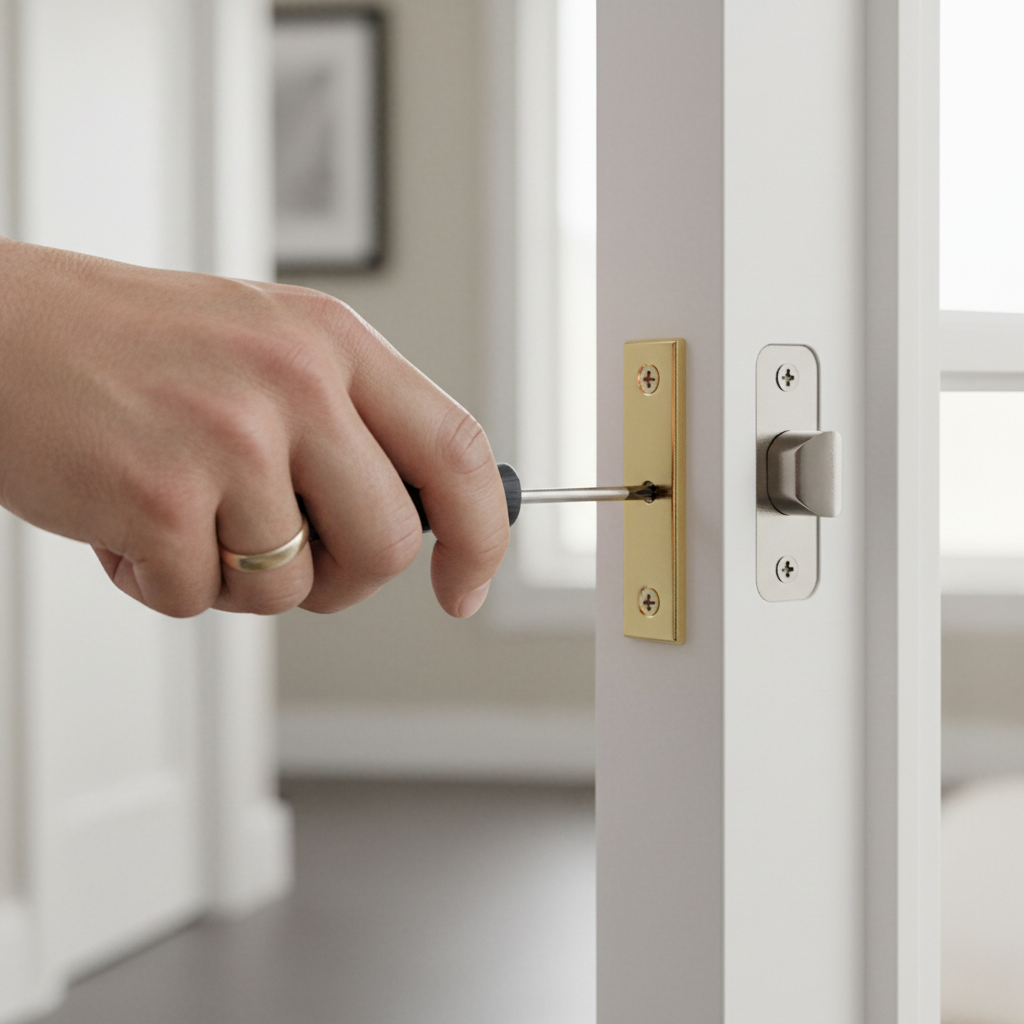
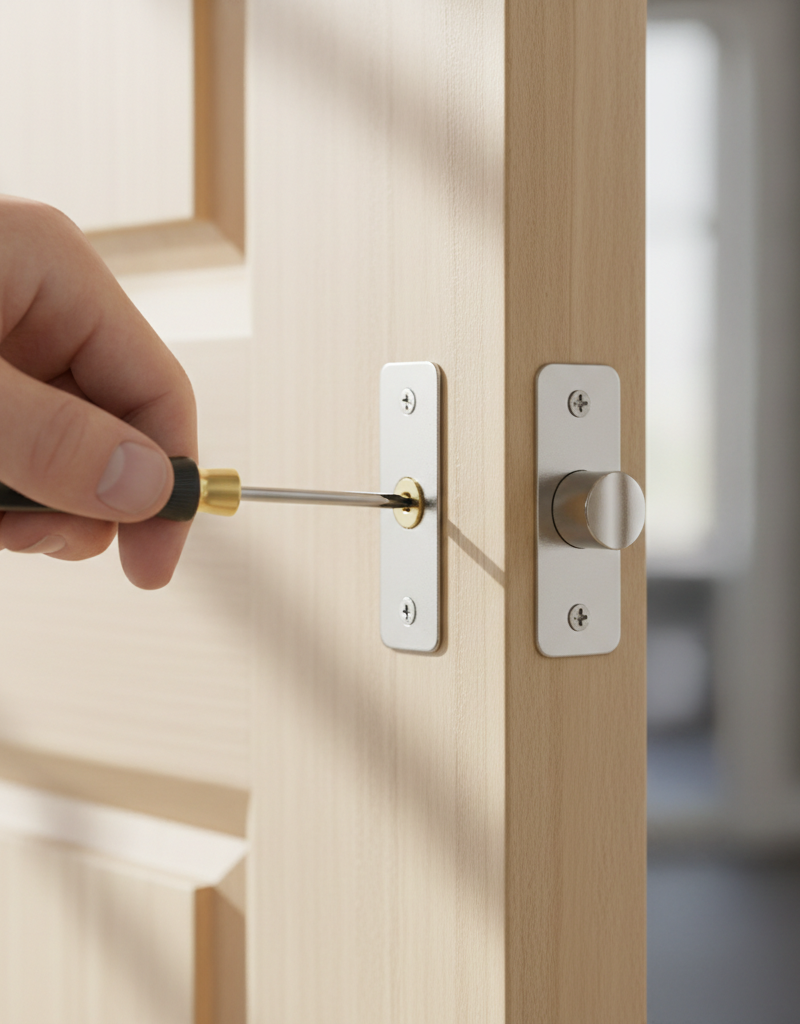
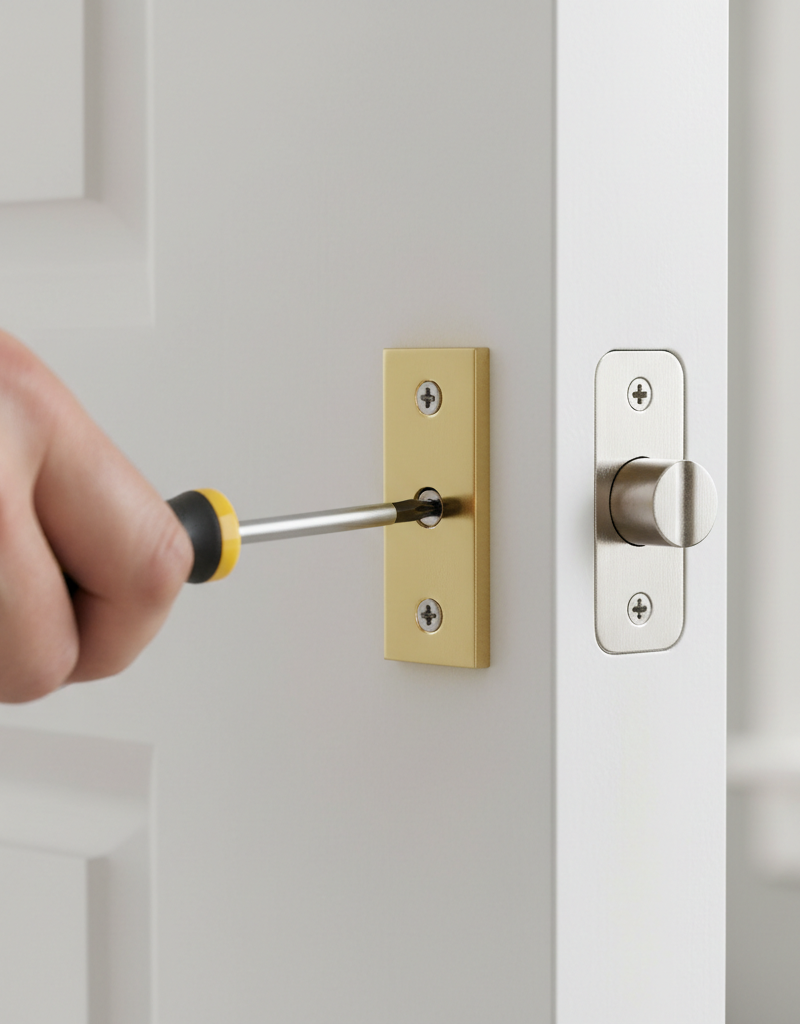
- How to: If your diagnostic (from Step 1) shows the latch bolt is hitting the top or bottom edge of the strike plate opening, you need to adjust its vertical position. Loosen the two screws holding the strike plate in place. With the screws slightly loose, you can often shift the plate up or down a hair. Align it so the latch bolt precisely enters the center of the opening. Tighten the screws. Test the door.
- If a slight adjustment isn't enough: You might need to slightly enlarge the opening in the strike plate or the mortise in the frame. Use a small, sharp file (like a rat-tail file for the opening, or a chisel for the mortise) to carefully remove a small amount of material from the edge of the opening where the latch bolt is hitting. Go slowly, removing only a tiny bit at a time, and test the door frequently until it latches smoothly.
4. Adjust the Strike Plate (Horizontal/Depth Alignment) – When the door rattles or doesn't close flush.
- How to: If the door rattles when closed (meaning the latch allows too much play) or if the latch bolt isn't reaching the strike plate because the door is binding against the frame on the hinge side, the strike plate might need to be moved slightly in or out. Again, loosen the two screws. Some strike plates have an elongated screw hole that allows for minor adjustments in depth (in or out from the door stop). If yours does, shift it accordingly. Tighten and test.
- If your strike plate doesn't allow for depth adjustment: You'll need to either move the entire strike plate assembly or slightly deepen the mortise in the frame. If the door isn't closing tightly enough, you can place a thin piece of cardboard or wood shim (
cardboard shim,wood shim) under the strike plate (between the plate and the door frame) before screwing it back in. This will push the strike plate out slightly. If the latch bolt is hitting the frame before it can enter the strike plate opening, you'll need to chisel out a deeper mortise for the strike plate, moving it further into the frame. This is a more advanced task requiring precision.
5. Clean and Lubricate the Latch Mechanism – For sticky or sluggish latches.
- How to: Dirt, dust, and old lubricant can stiffen the internal workings of the latch. Remove the door handle and the latch mechanism face plate from the edge of the door. Use compressed air or a brush to clear out any debris. Apply a graphite lubricant or a silicone-based spray to the moving parts of the latch mechanism (the spring, the bolt housing, etc.). Avoid oil-based lubricants as they can attract more dust.
6. Adjust Hinge Mortises (Advanced) – When significant door repositioning is needed.
- How to: If the door is consistently sagging or binding and simple hinge tightening doesn't resolve it, the hinges themselves might not be mortised correctly. If the door sags on the latch side, the top hinge on the frame side might need to be recessed deeper. If the door binds at the top on the latch side, the bottom hinge on the frame side might need to be recessed deeper. This involves carefully chiseling away a small amount of wood from behind the hinge leaf in its mortise. This is a delicate operation; remove too much, and the hinge will be proud, potentially creating new problems. Work slowly and check the door's alignment frequently. Conversely, if a hinge mortise is too deep, you can place a thin shim (like a piece of cardboard or veneer) behind the hinge leaf to bring it out slightly.
7. Check for Warped Door/Frame – If all else fails.
- How to: Use a long level or a straightedge to check the door slab itself for warping. Place the level horizontally, vertically, and diagonally across the door. Do the same for the door frame. If either is significantly warped, especially by more than 1/4 inch across the length of the door, it's unlikely a simple adjustment will suffice. Minor warping might be temporarily mitigated by adjusting hinges, but significant warping often points to a larger issue or the need for door/frame replacement.
Common Causes
- Loose Hinge Screws: This is arguably the most frequent culprit. Over time, the constant swinging of the door can cause hinge screws to loosen, allowing the door to sag, throwing off the alignment of the latch bolt with the strike plate. This often manifests as the latch bolt hitting the bottom of the strike plate.
- Misaligned Strike Plate: The strike plate itself might be incorrectly installed, or the door frame might have shifted slightly due to house settling, humidity changes, or heavy use. If the latch bolt consistently hits the top, bottom, or side of the strike plate, this is your primary suspect.
- Worn or Damaged Latch Bolt/Mechanism: The spring inside the latch mechanism can weaken or break, causing the latch bolt to not extend fully. The bolt itself can become bent or corroded, preventing smooth retraction and extension. This often results in a
Related Articles
Keep troubleshooting with these hand-picked guides from FixlyGuide:
- The 5-Minute Fix for a Door That Won't Latch (And the Hidden Cause) — Discover the surprisingly simple reasons your door isn't latching and how to fix it in minutes with common household tools.
- The 5-Minute Trick to Fix a Door That Won't Latch (No New Hardware Needed) — Discover the simple, often overlooked reason your door isn't latching and how to fix it in minutes with basic tools, no new hardware requir…
- The 5-Minute Trick to Fix a Door That Won't Latch (No New Hardware Needed) — Discover the simple, often overlooked reasons why your door isn't latching and how to fix it in minutes without replacing any hardware.
- The 5-Minute Trick for a Door That Won't Latch (And Why It Keeps Happening) — Discover the simplest fixes for a door that won't latch, from minor adjustments to tackling persistent alignment issues.
- The 5-Minute Trick to Fix a Door That Won't Latch (No, It's Not the Latch Itself) — Discover the surprisingly simple trick to fix a door that won't latch properly, often without even touching the latch mechanism itself.
- The Secret Reason Your Thermostat Lies (And How to Fix It in Minutes) — Discover why your thermostat isn't hitting its set temperature and learn simple, actionable steps to diagnose and fix the most common culpr…
Should you do this yourself?
Answer five quick questions before you start. Safety outranks savings every time.
Your experience with work like this
How high do you have to work?
Does the job involve any of these?
Will it need a permit?
Specialty tools
Free and instant. Educational guidance only — not a quote, inspection, or professional diagnosis.
What should this project cost?
Enter your project details for a realistic cost range before you call anyone.
Cost depends heavily on which system turns out to be the source.
- Regional adjustment
- National average
- Labor share (typical)
- ~$1,620
- Quotes to collect
- 3 written estimates
Educational estimate based on national averages — not a binding quote. Always confirm with written local estimates.
Recommended for DIYers & woodworkers
Sponsored
The Top 20 Tools for Workshops of Any Budget
No stationary machines or power tools required — plus 3 fundamental tools that can't be bought at any price.
Get the free guide
Ted's Woodworking — The #1 Woodworking Resource
Detailed instructions, dimensioned drawings, materials & cutting lists, and 3D schematics for every skill level.
See the plansSponsored: links above are affiliate links. FixlyGuide may earn a commission on qualifying purchases — at no extra cost to you.
Frequently asked questions
Why won't my door latch shut?+
The most common reasons a door won't latch shut are loose hinge screws causing the door to sag, a misaligned strike plate on the door frame, or a sticky/worn latch bolt mechanism within the door itself. Over time, house settling or frequent use can throw these components out of alignment.
Discussion
Loading comments…