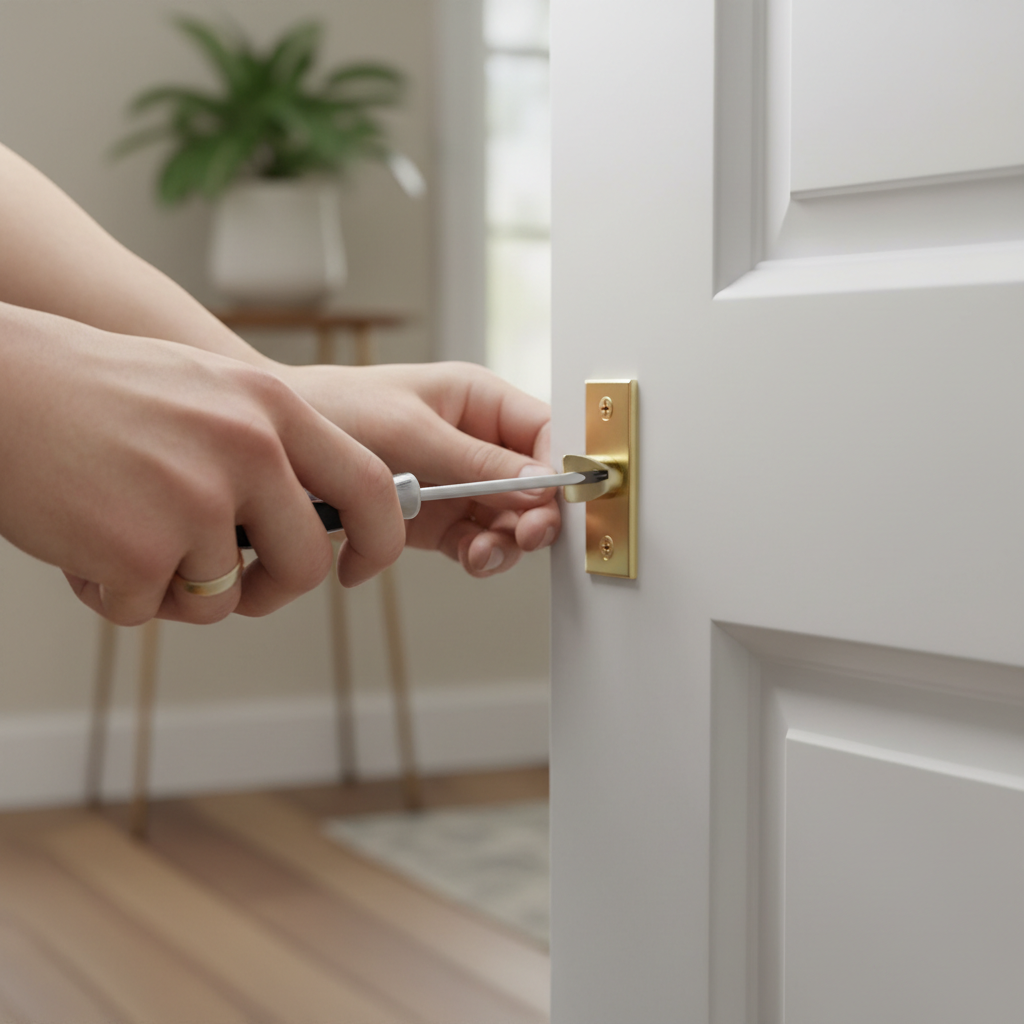
- Tool: Flashlight (optional, for better visibility)
- If the latch bolt is hitting the top or bottom of the strike plate: The strike plate likely needs to be adjusted vertically, or the hinges are loose.
- If the latch bolt is hitting the side of the strike plate or the frame: The strike plate needs lateral adjustment, or the door needs to be shifted horizontally.
General remodeling · Renovation planning
| Project category | General remodeling |
|---|---|
| Problem type | Renovation planning |
| Trade required | General contracting |
| Urgency | Planned project |
| Safety risk | Low safety risk |
| DIY suitability | Pro recommended |
| Cost category | Major investment |
| Typical timeline | Design and permitting often 2–4 months before work starts |
| Contractor type | General contractor |
Repair option
Phase the work and fix the building envelope first.
Replacement option
Full renovation with permits, design, and a general contractor.
Common causes
- Space no longer fits how the household lives
- Resale preparation
- Deferred maintenance stacking up
Relevant tools:project cost estimatorcompare quoteshome improvement material prices
Published May 3, 2026Last updated August 17, 2026
Tools & materials you'll need
Affiliate linksAs an Amazon Associate FixlyGuide earns from qualifying purchases — at no extra cost to you. Prices and availability are accurate as of publication and subject to change.
Quick Answer
ADoor that won't latch properly is a common household nuisance, often stemming from minor issues like a misaligned strike plate, loose hinges, or a door that has expanded due to humidity. These problems prevent the latch bolt from fully extending into the strike plate opening, leaving your door unsecured. The good news is that most of these issues are straightforward to diagnose and fix with basic tools you likely already own, restoring your door's functionality and your home's security in under an hour.
The Problem
A door that fails to latch isn't just an annoyance; it's a security concern and a disruption to privacy and energy efficiency. You push the door closed, but the latch bolt doesn't fully engage with the strike plate, causing the door to spring open or remain ajar. This could be a recurring problem that develops over time, or it might appear suddenly due to changes in humidity or foundation settling. The core issue is always the same: the mechanical interaction between the latch bolt, the strike plate, and the door's position within its frame is out of sync. This misalignment can lead to drafts, increased noise transmission, and a general feeling of instability within your home.
How It Works
To understand why a door won't latch, it helps to know how a properly functioning door assembly works. A standard residential door latch mechanism consists of a spring-loaded latch bolt, operated by a doorknob or lever. When the doorknob is turned, the latch bolt retracts into the door. When released, the spring pushes the latch bolt outward. For the door to latch, this extended latch bolt must slide into and secure itself within an opening in the strike plate, which is mounted on the door frame.
The strike plate is essentially a metal plate with a cutout, sized to receive the latch bolt. A slight ramp or bevel on the latch bolt allows it to slide cleanly over the strike plate's edge as the door closes, retracting slightly as it passes, then fully extending into the opening once aligned. For this sequence to work, the following must be true: the door must hang perfectly square within the frame, the hinges must be tight and hold the door precisely, and the strike plate opening must be in exact vertical and horizontal alignment with the latch bolt. Any deviation – even a millimeter – can prevent the latch bolt from fully entering the strike plate, causing the door to fail to latch. Factors like house settling, repeated door slamming, humidity changes, or loose screws can easily throw this delicate balance off.
Step-by-Step Fix
1. Inspect the Latch and Strike Plate — Start by identifying the exact point of failure.
Open the door wide and visually inspect the latch bolt on the door's edge and the strike plate on the door frame. Look for wear marks, scrapes, or indentations on either component. Close the door slowly until it's almost latched, then visually check the alignment of the latch bolt with the opening in the strike plate. Is the latch bolt hitting the top, bottom, or side of the strike plate? Is it hitting the frame itself, above or below the strike plate? This initial observation is crucial for narrowing down the problem.
- Tool: Flashlight (optional, for better visibility)
- If the latch bolt is hitting the top or bottom of the strike plate: The strike plate likely needs to be adjusted vertically, or the hinges are loose.
- If the latch bolt is hitting the side of the strike plate or the frame: The strike plate needs lateral adjustment, or the door needs to be shifted horizontally.
2. Tighten Loose Hinge Screws — Loose hinges are a common cause of door misalignment.
Over time, hinge screws can loosen, causing the door to sag and fall out of alignment with the strike plate. Open the door and check all screws on both hinge leaves (the parts attached to the door and the frame). Use a screwdriver to tighten any loose screws. Be careful not to overtighten, which can strip the wood.
- Tool: Phillips head screwdriver (or appropriate drive for your hinge screws)
- Safety Note: Support the door if its hinges are severely loose to prevent it from swinging unexpectedly.
- If screws are stripped: Remove the screw, insert a few wooden toothpicks or a wood dowel with wood glue into the stripped hole, let the glue dry, then reinsert the screw. This provides new material for the screw threads to grip.
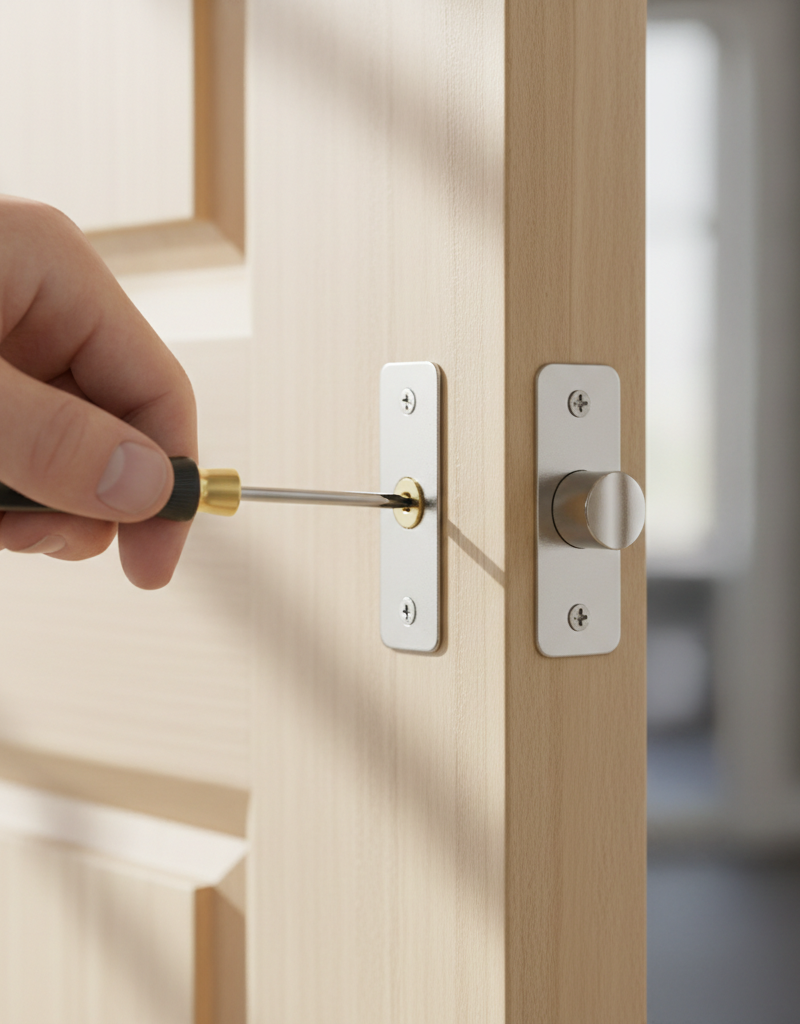
3. Adjust the Strike Plate Horizontally — Shift the strike plate to meet the latch bolt.
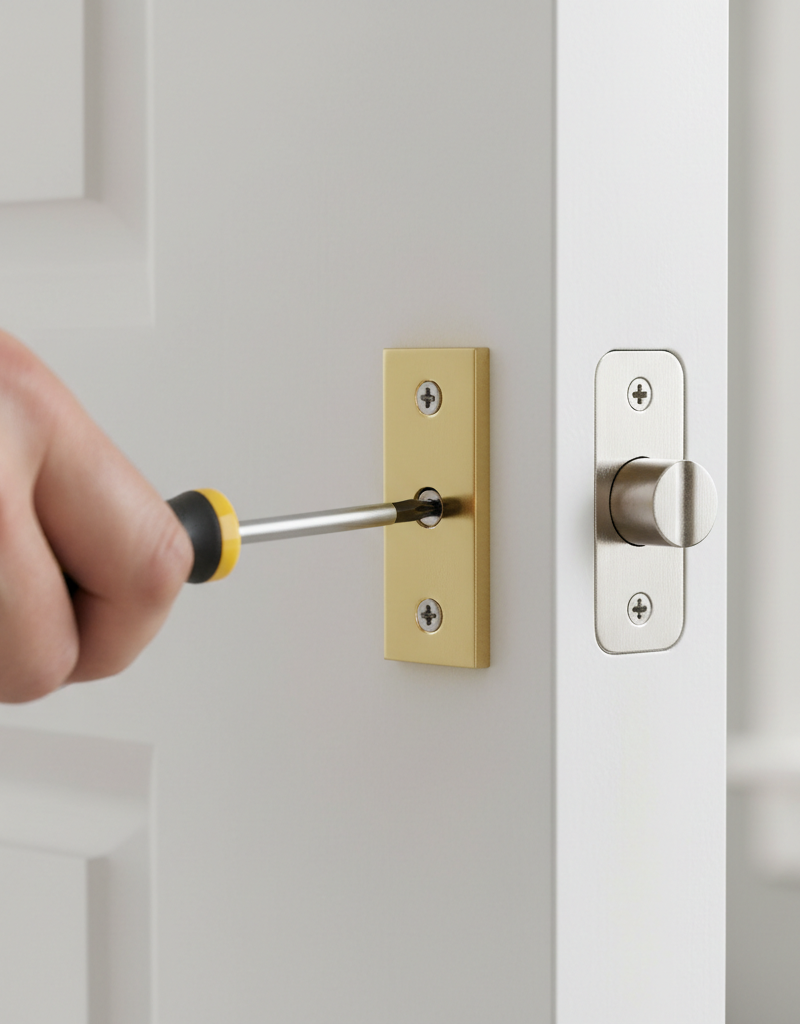
If the latch bolt is hitting the side of the strike plate opening, you often only need a small horizontal adjustment. Unscrew the strike plate and, if there's enough room in the existing screw holes, gently shift the plate a millimeter or two in the direction needed. Retighten the screws. If the old screw holes prevent the shift, you'll need to widen the opening.
- Tool: Phillips head screwdriver, pencil
- If the latch bolt needs to move further into the frame: Shift the strike plate towards the door stop (deeper into the frame).
- If the latch bolt needs to move away from the door stop: Shift the strike plate towards the door jamb face.
- Note: Some strike plates have elongated screw holes designed for minor adjustments. Take advantage of these if present.
4. Widen the Strike Plate Opening Vertically or Horizontally (Carefully) — When minor adjustments aren't enough, modify the opening.
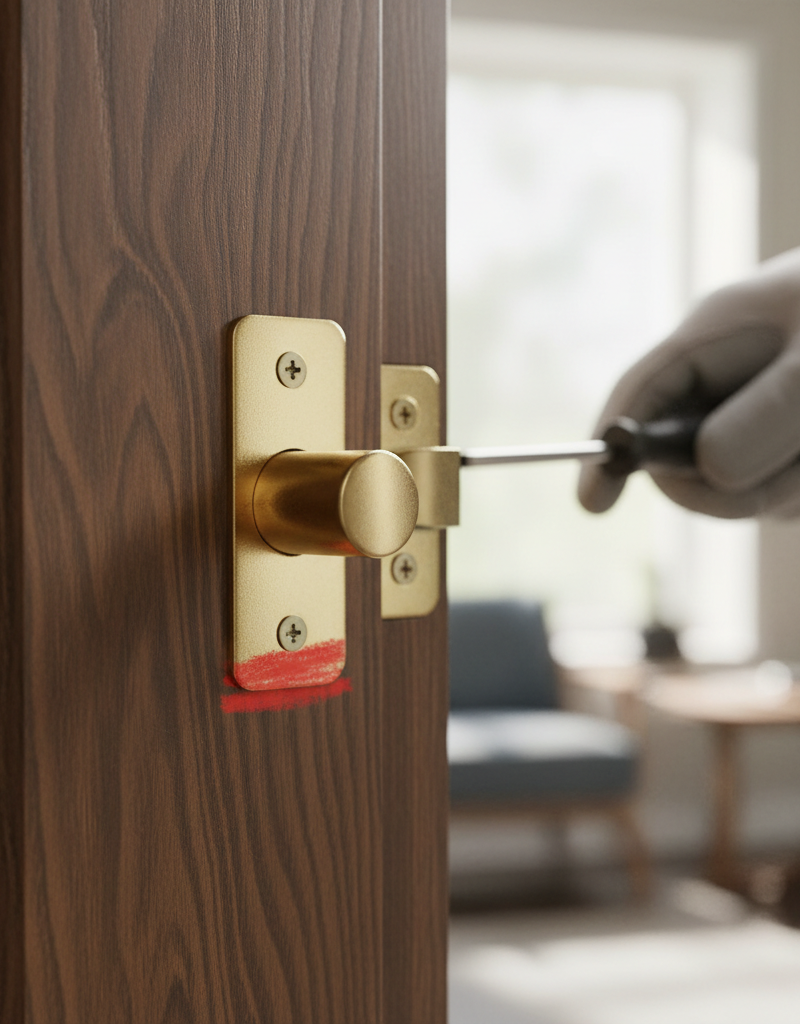
If the latch bolt is hitting the top or bottom of the strike plate opening, or if horizontal adjustment isn't possible with existing holes, you'll need to carefully widen the metal opening. Use a metal file to remove small amounts of material from the edge of the opening where the latch bolt is catching. Work slowly and check the fit frequently. If the latch bolt is catching on the wooden frame behind the strike plate, you'll need to remove the strike plate and chisel away a tiny amount of wood.
- Tool: Metal file (round or flat), chisel (for wood), hammer (light taps on chisel)
- Safety Note: Always file or chisel away from your body. Wear gloves to protect your hands from sharp metal edges or splinters.
- Tip: Mark the exact spot where the latch bolt is catching with a pencil before filing or chiseling to ensure precision.
5. Adjust the Strike Plate Depth — Sometimes the latch bolt isn't reaching far enough.
If the door closes but the latch bolt doesn't fully extend into the strike plate, or if the door feels loose even when latched, the strike plate might be mounted too deeply. This is less common but can happen. Remove the strike plate. Place a thin shim (e.g., a piece of cardboard from a cereal box) behind the strike plate before re-screwing it. This will bring the strike plate slightly forward, allowing the latch bolt to engage more fully.
- Tools: Phillips head screwdriver, thin cardboard or plastic shims
6. Address a Swollen Door — Humidity can expand wood, causing sticking and latching issues.
Wood doors absorb moisture from the air, especially in humid climates or seasons, causing them to swell. This swelling can make the door too tight in the frame, preventing it from closing properly or causing the latch bolt to misalign. If your door latches fine in dry weather but sticks in humid conditions, swelling is likely the culprit.
- Solution: Identify where the door is sticking. Often, it's along the top, bottom, or hinge side. Use a belt sander or plane to remove a small amount of wood from the sticking edge. Work slowly, removing only a tiny bit at a time, and test the door frequently. Finish by sanding smooth and resealing or repainting the exposed wood to prevent future moisture absorption.
- Tools: Belt sander or hand plane, sandpaper (120-grit, 220-grit), safety glasses, dust mask
- Pro Tip: If you need to remove material from the hinge side, consider shaving a little off the latch side first, as it's less critical for the door's overall fit. If the problem persists, you may need to remove the door and plane the hinge side.
7. Replace Worn or Damaged Latch Mechanism — If the mechanism itself is faulty, replacement is the best option.
If, after all adjustments, the latch bolt itself is sluggish, fails to extend fully, or is visibly damaged (e.g., chipped, bent), the issue is likely with the internal latch mechanism of the doorknob assembly. This is an internal component that can wear out over time. While individual parts are rarely replaceable, the entire doorknob or handle set can be replaced relatively easily.
- Tool: Screwdriver, new doorknob/latch set (match the backset and bore hole diameter)
- How To: Remove the old doorknob by unscrewing the mounting screws (usually two visible screws on the inner side of the knob). Pull apart the two halves and remove the latch mechanism from the door edge. Install the new mechanism, ensuring the latch bolt faces the correct direction (beveled edge towards the door stop). Reinstall the new doorknob halves.
Common Causes
- House Settling: Over years, a house's foundation can shift slightly, leading to door frames going out of square. This slight tilt can misalign the door with its frame and the strike plate.
- Loose Hinges: The screws holding the hinges to the door or door frame can work their way loose due to repeated use or vibrations. This causes the door to sag, making the latch bolt hit the strike plate in the wrong spot.
- Humidity and Swelling: Wood doors, especially older ones, absorb moisture from the air during humid seasons. This causes the wood to swell, increasing the door's dimensions and making it too tight in the frame, preventing the latch bolt from reaching the strike plate.
- Worn Latch Bolt Mechanism: The spring inside the latch mechanism can weaken over time, or the latch bolt itself can become worn or damaged by repeated impact with the strike plate, preventing it from extending fully.
- Improper Installation: In new construction or after a door replacement, if the door or frame components weren't installed perfectly plumb and square, latching issues can occur from day one or develop as the house settles into its faulty alignment.
- Repeated Door Slamming: Forcefully slamming a door can gradually loosen hinge screws, warp the door frame, or even bend the strike plate, leading to misalignment.
Common Mistakes
- Overtightening Screws: While tightening loose screws is a common fix, overtightening, especially into wood, can strip the screw hole, making the problem worse and harder to fix. Stop when the screw feels snug.
- Ignoring Stripped Holes: Simply putting a loose screw back into a stripped hole won't solve anything; it will just loosen again. Use the toothpick/wood glue method or butterfly anchors for a lasting repair.
- Filing Too Much: When widening the strike plate opening, it's easy to remove too much material. Work in small increments and test the door frequently. Once you remove metal or wood, you can't put it back.
- Not Checking Door Swing: Before making any permanent adjustments, always check the door's swing and ensure it closes freely without binding anywhere else in the frame. A door that binds will continue to stress the latch.
- Replacing the Entire Doorknob Prematurely: Often, the doorknob itself isn't the issue, but rather the alignment. Don't spend money on a new doorknob until you've ruled out hinge and strike plate adjustments.
- Neglecting the Door's Finish: If you sand or plane a wooden door to address swelling, remember to reseal or repaint the exposed wood immediately to prevent moisture re-absorption and further issues.
Cost & Time Breakdown
| Task | DIY Cost | Pro Cost | Time |
|---|---|---|---|
| Tighten existing screws | $0 | $50–$100 | 5-10 minutes |
| Fix stripped screw holes | $0–$5 | $75–$125 | 15-30 minutes |
| Adjusting strike plate | $0–$10 | $75–$125 | 15-45 minutes |
| Filing/chiseling frame | $0–$15 | $100–$150 | 30-60 minutes |
| Planing/sanding door (minor) | $0–$20 | $120–$200+ | 1–2 hours |
| Replace doorknob/latch set | $20–$80 | $100–$180 | 30-60 minutes |
Tips & Prevention
- Regular Hinge Checks: Periodically (e.g., twice a year) check all door hinge screws for tightness, especially on frequently used doors. Tighten them before they become too loose and cause alignment issues.
- Humidity Control: In areas with high humidity, consider using a dehumidifier to reduce moisture levels, which can help prevent wooden doors from swelling.
- Proper Door Finish: Ensure all wooden doors, especially exterior ones, are properly sealed, painted, or varnished on all sides and edges. This acts as a barrier against moisture absorption.
- Gentle Closing: Encourage household members to close doors gently rather than slamming them. This reduces wear and tear on hinges, latches, and frames.
- Inspect for Wear: When cleaning, take a moment to eyeball the latch bolt and strike plate for any signs of excessive wear, bending, or chipping. Addressing minor issues early can prevent bigger problems.
- Lubricate Latch: Occasionally, a dry or sticky latch bolt mechanism can cause issues. A small squirt of graphite or a silicone-based lubricant into the latch mechanism (avoiding oil-based lubricants which can attract dirt) can ensure smooth operation.
When to Call a Professional
While most door latch issues are DIY-friendly, some situations warrant calling a professional locksmith or carpenter. If the door frame itself appears warped, twisted, or significantly out of square due to structural shifts in your home, a simple strike plate adjustment won't solve the underlying problem. Similarly, if the door itself is severely warped or binding excessively in multiple places, removal and professional planing might be necessary, which can be challenging for an inexperienced DIYer. If you've tried all the common fixes and the door still won't latch, or if you encounter resistance that suggests deeper structural issues, it's time to seek expert help. A professional has the tools and experience to accurately diagnose complex frame issues or replace entire jambs if necessary, ensuring proper and lasting operation without risking further damage to your home.
Related Articles
Keep troubleshooting with these hand-picked guides from FixlyGuide:
- The 3 Hidden Reasons Your Door Won't Latch (And the Easy DIY Fixes) — Don't live with a door that refuses to latch; discover simple, DIY solutions for common door latch problems and restore security and privac…
- The 3 Hidden Reasons Your Door Won't Latch (And the Easy Fixes) — Discover the surprising reasons your interior door isn't latching and how to quickly diagnose and fix the issue with simple tools.
- Your Door Won't Latch? The 5-Minute Fix Nobody Talks About — Tired of a door that swings open? Learn the secret 5-minute fix for a door that won't latch. This simple adjustment to your strike plate ca…
- The 3 Hidden Reasons Your Door Won't Latch (And the Easy Fixes) — A door that won't latch properly is a common household nuisance, often caused by simple issues that are easy to diagnose and repair.
- The 3 Hidden Reasons Your Window Won't Stay Up (And the Easy Fixes) — Before you call a repairman, learn the three most common reasons your double-hung window won't stay open and how to fix them yourself.
- The 3 Hidden Reasons Your Toilet Tank Fills Slowly (And How to Fix Each) — Discover the common culprits behind a slow-filling toilet tank, from crucial valve issues to subtle obstructions, and learn how to restore…
Should you do this yourself?
Answer five quick questions before you start. Safety outranks savings every time.
Your experience with work like this
How high do you have to work?
Does the job involve any of these?
Will it need a permit?
Specialty tools
Free and instant. Educational guidance only — not a quote, inspection, or professional diagnosis.
What should this project cost?
Enter your project details for a realistic cost range before you call anyone.
Cost depends heavily on which system turns out to be the source.
- Regional adjustment
- National average
- Labor share (typical)
- ~$1,620
- Quotes to collect
- 3 written estimates
Educational estimate based on national averages — not a binding quote. Always confirm with written local estimates.
Before you start
Check the difficulty, permits, and safety risk — then decide whether to call a pro.
- Estimate this projectGet a cost range for your scope and ZIP before you call anyone.Open
- Get local estimatesSend one request and compare written estimates from vetted pros.Open
Free, no signup required. Estimates are educational guidance, not a quote or an inspection.
Recommended for DIYers & woodworkers
Sponsored
The Top 20 Tools for Workshops of Any Budget
No stationary machines or power tools required — plus 3 fundamental tools that can't be bought at any price.
Get the free guide
Ted's Woodworking — The #1 Woodworking Resource
Detailed instructions, dimensioned drawings, materials & cutting lists, and 3D schematics for every skill level.
See the plansSponsored: links above are affiliate links. FixlyGuide may earn a commission on qualifying purchases — at no extra cost to you.
Frequently asked questions
Why won't my door latch when it used to?+
Over time, hinges can loosen, house foundations can settle slightly, or humidity changes can cause a wooden door to swell. All these factors can subtly shift the door's alignment, preventing the latch bolt from properly engaging with the strike plate.
Can a swollen door be fixed without replacing it?+
Yes, often. If a wooden door is swollen due to humidity, you can usually remedy the issue by carefully sanding or planing a small amount of material from the sticking edge of the door. After reshaping, seal the exposed wood to prevent future moisture absorption.
How do I know if my hinges are the problem?+
To check if hinges are causing the issue, open the door and try to wiggle it. If there's significant play or movement, or if you can see gaps around the hinge leaves or loose screws, the hinges are likely contributing to the misalignment. Tightening screws or shimming the hinges can often resolve this.
What tools do I need to fix a door that won't latch?+
Most door latch fixes require only basic tools: a Phillips head screwdriver, a pencil, and potentially a metal file or wood chisel. For more advanced issues like a swollen door, you might need a hand plane or belt sander. A flashlight is helpful for inspection.
When should I call a professional for a door latch issue?+
Call a professional if the door frame itself appears significantly warped or out of square, if the door is severely warped beyond simple planing, or if you've exhausted all DIY solutions without success. These could indicate more complex structural problems that require expert assessment.
Discussion
Loading comments…