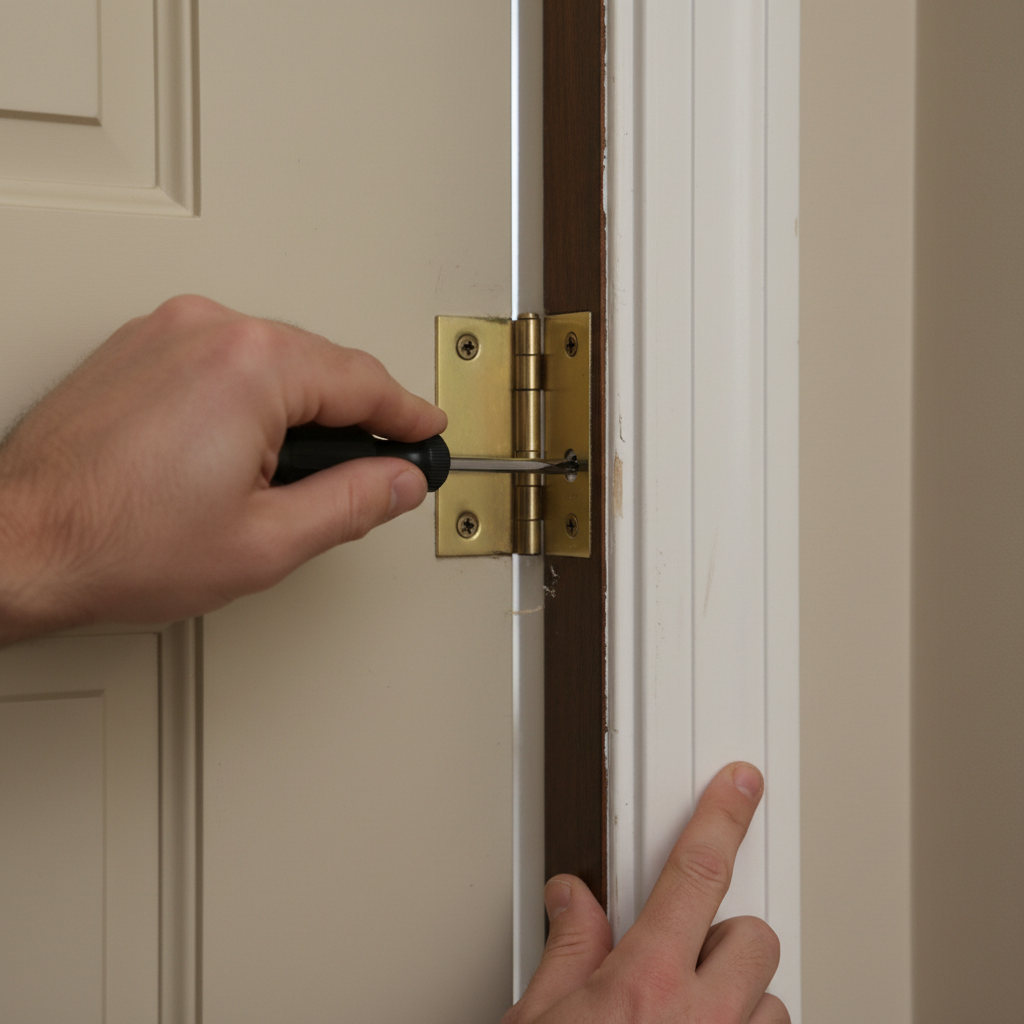
- If the latch hits below the strike plate opening, the door is likely sagging. Most commonly, this is due to loose screws in the top hinge, or sometimes all hinges.
- Use a screwdriver to firmly tighten all screws on both the door-side and frame-side of all hinges, starting with the top hinge. Be careful not to strip the screws.
- Test the door after tightening. If it still sags, move on to the next step.
General remodeling · Renovation planning
| Project category | General remodeling |
|---|---|
| Problem type | Renovation planning |
| Trade required | General contracting |
| Urgency | Planned project |
| Safety risk | Low safety risk |
| DIY suitability | Pro recommended |
| Cost category | Major investment |
| Typical timeline | Design and permitting often 2–4 months before work starts |
| Contractor type | General contractor |
Repair option
Phase the work and fix the building envelope first.
Replacement option
Full renovation with permits, design, and a general contractor.
Common causes
- Space no longer fits how the household lives
- Resale preparation
- Deferred maintenance stacking up
Relevant tools:project cost estimatorcompare quoteshome improvement material prices
Published May 27, 2026Last updated August 17, 2026
Tools & materials you'll need
Affiliate linksAs an Amazon Associate FixlyGuide earns from qualifying purchases — at no extra cost to you. Prices and availability are accurate as of publication and subject to change.
Quick Answer
When your door refuses to latch, the culprit is almost always a minor misalignment. The most common issues range from loose hinge screws that cause the door to sag, to a strike plate that's moved or isn't perfectly aligned with the door's latch bolt. Additionally, sometimes the latch bolt itself can become sticky or worn. Addressing these problems often involves simple adjustments like tightening screws, slightly modifying the strike plate opening, or lubricating the latch mechanism. In most cases, you can diagnose and fix a misbehaving door latch with basic tools in under an hour, preventing the annoyance of a door that swings open or fails to secure properly.
The Problem
A door that refuses to latch is more than just inconvenient; it compromises privacy, security, and energy efficiency. It can be particularly frustrating in high-traffic areas like bathrooms or bedrooms, or on exterior doors where security is paramount. You might find yourself repeatedly pushing the door closed, only for it to spring open again, or you might hear the dreaded "thunk" of the latch bolt hitting the strike plate instead of sliding smoothly into it. This persistent issue often indicates a relatively minor mechanical problem that, if left unaddressed, can lead to further wear on the door frame, hinges, and the latch mechanism itself. Understanding the underlying cause is the first step toward a lasting solution.
How It Works
To understand why a door won't latch, it helps to know how a door latch system is designed to work. At its core, a door functions through the interplay of several components: the door slab, hinges, latch mechanism, and strike plate. The hinges bear the weight of the door and allow it to swing open and closed. The latch mechanism, housed within the door, consists of a spring-loaded bolt that extends and retracts when the doorknob or lever is turned. When the door closes, this bevel-edged latch bolt is designed to glide smoothly over the strike plate – a metal plate installed on the door frame – and then snap into the strike plate's opening, securing the door.
The strike plate is crucial. Its opening must be perfectly aligned with the latch bolt, both horizontally and vertically. The curved lip of the strike plate helps guide the latch into the opening as the door closes. Any deviation in this alignment, even a few millimeters, can prevent the latch bolt from fully engaging. Over time, factors like settling of the house, fluctuating humidity causing wood to expand and contract, or simply the repeated stress of opening and closing the door can cause hinges to loosen, the door frame to shift, or the strike plate to move. When the door sags due to loose hinges, the latch bolt drops below the strike plate opening. If the door shifts horizontally, the latch bolt might hit the vertical edge of the strike plate. A sticky or corroded latch mechanism can also prevent the bolt from extending or retracting properly, causing it to drag or fail to fully extend into the strike plate. Understanding these relationships allows for targeted troubleshooting rather than random adjustments.
Step-by-Step Fix
Safety First — Inspect the door and frame carefully.
Before you begin, ensure the door itself is secure on its hinges and that there are no visible cracks or damage to the door frame. Wear safety glasses to protect your eyes from any dust or debris loosened during the repair.
1. Identify the Misalignment — Determine the direction of the problem.
Close the door slowly until it just touches the strike plate. Observe where the latch bolt makes contact. You can also apply a small amount of lipstick or chalk to the tip of the latch bolt, then close the door gently against the strike plate. This will leave a mark indicating exactly where the latch is hitting. Does it hit above, below, or to the side of the strike plate opening? This tells you whether the door is sagging, shifting horizontally, or if the strike plate is out of position.
2. Tighten Hinge Screws — Address door sag or shift.
- If the latch hits below the strike plate opening, the door is likely sagging. Most commonly, this is due to loose screws in the top hinge, or sometimes all hinges.
- Use a screwdriver to firmly tighten all screws on both the door-side and frame-side of all hinges, starting with the top hinge. Be careful not to strip the screws.
- If screws spin freely, they may be stripped. Remove the screw, insert 2-3 wooden toothpicks or a golf tee (with wood glue if you have it) into the hole, break them off flush, and then reinsert and tighten the screw. This gives the screw new material to grip.
- Test the door after tightening. If it still sags, move on to the next step.
3. Shim the Hinges (If Needed) — Correct persistent sag.
- If tightening screws doesn't fully resolve sag, you may need to shim the bottom hinge. This effectively pushes the bottom of the door away from the frame, raising the top latch side.
- Open the door wide and support its weight with shims under the bottom edge or have a helper.
- Remove the screws from the bottom hinge leaves (both door and frame sides).
- Carefully insert a thin cardboard shim (from a cereal box or business card) under the hinge leaf on the frame side, between the hinge and the door frame. You might need 1-3 shims.
- Reattach the hinge screws, checking for alignment. Adding a shim to the top hinge on the door side can also help if the door is dragging on the latch side.
4. Adjust the Strike Plate Horizontally — When the latch hits the side.
- If the latch bolt hits the side of the strike plate, preventing it from entering, the strike plate needs to move horizontally.
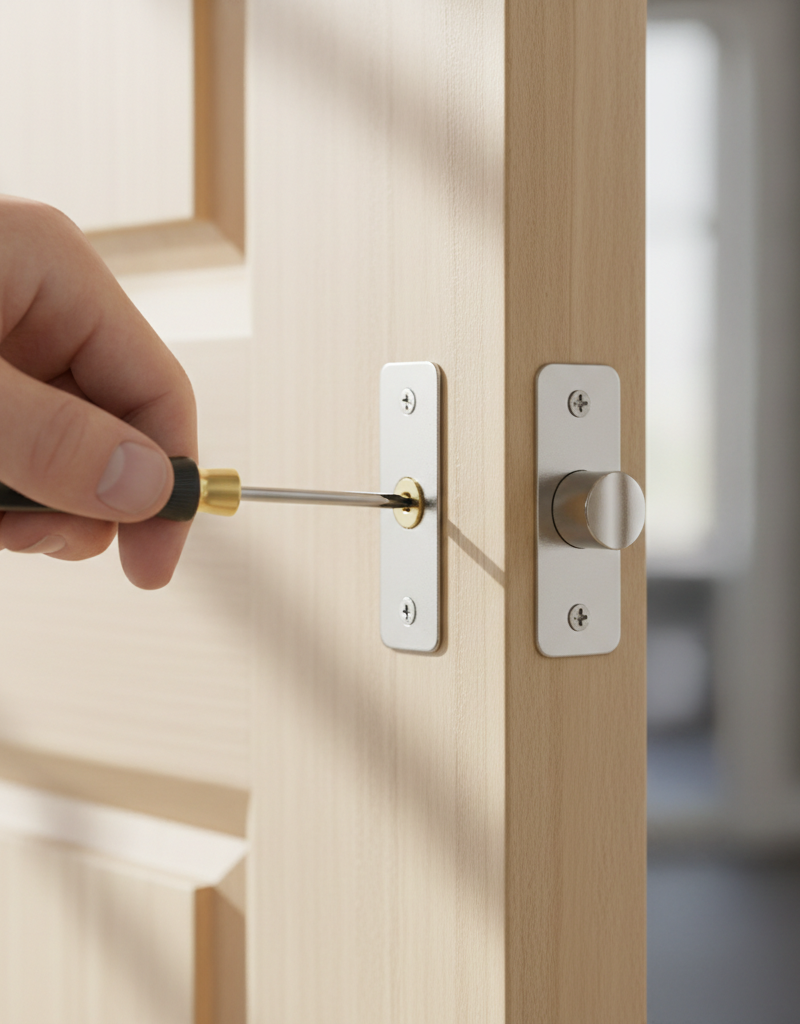
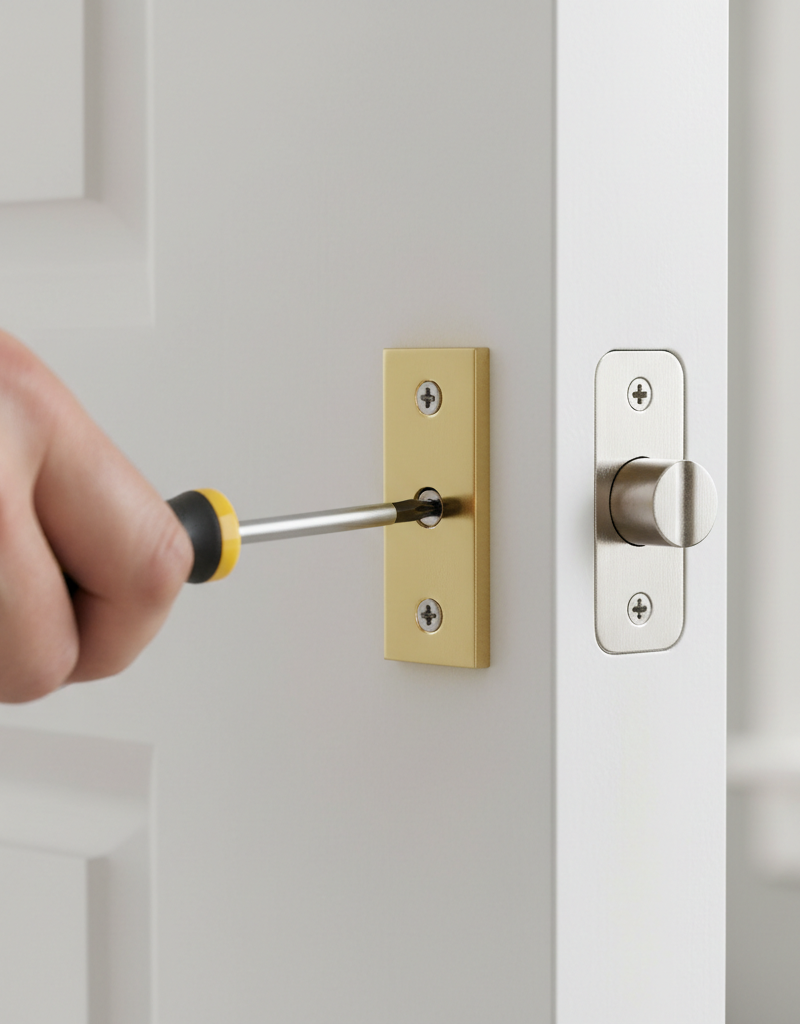
- Use a screwdriver to loosen the strike plate screws.
- Carefully shift the strike plate a millimeter or two in the direction needed (away from the latch bolt's impact point).
- Tighten the screws and test the door. You might need to repeat this a few times to get it just right.
- If the screw holes are stripped or too large to hold the plate in its new position, use the toothpick and wood glue trick mentioned in step 2.
5. Enlarge the Strike Plate Opening Vertically — When the latch hits top or bottom.
- If the latch bolt hits the top or bottom edge of the strike plate opening (after addressing hinge issues), the opening itself needs to be slightly enlarged.
- Remove the strike plate.
- Using a flat wood chisel and a hammer, carefully chip away a tiny amount of wood from the top or bottom of the mortise (the recessed area) where the latch bolt enters. Go slowly, removing very small amounts at a time.
- You can also use a metal file to slightly enlarge the metal opening of the strike plate itself. Consider a Dremel tool with a grinding bit for precision.
- Reinstall the strike plate and test. Repeat as necessary until the latch bolt enters smoothly.
6. Check the Latch Mechanism — Is the bolt itself sticking?
- Sometimes, the problem isn't alignment but the latch bolt itself.
- With the door open, turn the doorknob/lever several times. Does the latch bolt move in and out smoothly? Does it retract fully and spring back out completely?
- If it feels sticky or sluggish, spray a small amount of dry lubricant (like graphite spray or silicone spray – avoid WD-40, which attracts dust) into the mechanism around the latch bolt. Wipe away any excess.
- If the latch bolt is bent or damaged, the entire latch mechanism might need replacement. This is a more involved repair, often requiring removal of the doorknob assembly.
7. Adjust the Strike Plate Tab — For a tighter close.
- Many strike plates have a small metal tab that protrudes into the opening. This tab is designed to be slightly bent to provide tension against the latch, preventing rattling and ensuring a snug fit.
- If the door rattles or feels too loose even when latched, remove the strike plate and gently bend this tab outwards very slightly using pliers.
- Reinstall and test. Bend only a little at a time, as too much will make the door hard to close.
Common Causes
- Loose Hinge Screws: The most frequent offender. Over time, screws holding hinges to the door frame or the door itself can loosen, causing the door to sag or shift out of alignment. This is especially common on heavily used doors.
- House Settling/Humidity Changes: As a house settles, or as humidity levels fluctuate throughout the seasons (causing wood to expand or contract), door frames can subtly shift. This can throw off the precise alignment needed for the latch and strike plate.
- Misaligned Strike Plate: The metal plate on the door frame might be installed incorrectly from the start, or it could have shifted over time if its screws loosened or the wood behind it compressed.
- Worn Latch Mechanism: The internal spring or components of the door latch itself can wear out, causing the latch bolt to stick, fail to extend fully, or not retract smoothly.
- Paint Buildup: Multiple layers of paint on the door edge, door frame, or the strike plate can subtly reduce clearances, preventing the latch from fully engaging.
- Damaged Door Frame: While less common, a compromised or warped door frame can make proper latching impossible without significant repair.
Common Mistakes
- Adjusting without Diagnosing: Don't just start hammering at the strike plate. Always identify where the latch is hitting first (using the lipstick/chalk method) to ensure you're addressing the root cause. Random adjustments can make the problem worse.
- Over-tightening Screws: When tightening hinge screws, be firm but stop when you feel resistance. Forcing them further can strip the screw threads, making the hole useless and requiring a more complex fix with toothpicks or plugs.
- Ignoring Stripped Screw Holes: A screw that spins endlessly means the wood is stripped. Simply putting it back in won't fix the problem. Always use a toothpick/golf tee and wood glue trick to give the screw something fresh to grab onto.
- Aggressive Strike Plate Modifications: When chiseling or filing the strike plate opening, always go slowly and remove very small amounts of material. You can always remove more, but you can't put it back. Too large an opening means the door will rattle or feel loose.
- Using the Wrong Lubricant: Oily lubricants like WD-40 can attract dust and dirt, eventually making the problem worse by gumming up the latch mechanism. Stick to dry lubricants like graphite or silicone spray for internal door hardware.
- Failing to Check All Hinges: Sometimes the problem isn't just the top hinge, but a combination of loose screws on multiple hinges that contribute to the door's overall sag or shift. Check and tighten all of them.
Cost & Time Breakdown
| Task | DIY cost | Pro cost | Time |
|---|---|---|---|
| Tighten Hinge Screws | $0 | $50–$100 | 10–15 minutes |
| Shim Hinges | $0–$5 | $75–$125 | 20–30 minutes |
| Adjust Strike Plate | $0–$5 | $75–$125 | 20–45 minutes |
| Enlarge Strike Plate Opening | $0–$10 | $75–$150 | 30–60 minutes |
| Lubricate Latch Mechanism | $5–$10 | $50–$100 | 10–15 minutes |
| Replace Latch Mechanism | $15–$50 | $100–$200+ | 60–90 minutes+ |
Tips & Prevention
- Regular Screw Checks: Periodically (e.g., every 6-12 months) check and tighten all hinge and strike plate screws, especially on frequently used doors. This proactive maintenance can prevent most latching issues.
- Maintain Humidity Levels: In homes with significant seasonal humidity swings, consider using a humidifier or dehumidifier to stabilize indoor moisture. This can reduce wood expansion and contraction that affects door frames.
- Door Weight Considerations: If replacing a hollow-core door with a much heavier solid-core door, ensure the existing hinges are robust enough to support the increased weight. Upgrading to heavier-duty hinges might be necessary to prevent future sagging.
- Proper Painting Technique: When painting doors or frames, avoid letting paint build up on the edges of the door, inside the hinge mortises, or within the strike plate opening. Multiple thin coats are better than one thick coat that can reduce clearances.
- Lubrication Schedule: For exterior doors or those in high-dust environments, a small annual application of dry lubricant to the latch mechanism can keep it operating smoothly and prevent sticking.
When to Call a Professional
While many door latch issues are DIY-friendly, there are situations where calling a professional carpenter, handyman, or locksmith is the best course of action. If you've tried the common adjustments and the door still won't latch, or if you suspect structural damage to the door frame, it's time to seek expert help. Professionals have specialized tools and experience to diagnose complex problems like a warped door slab, a severely compromised door frame, or issues with a door that's significantly out of plumb with the jamb. If the problem involves intricate lock mechanisms beyond a simple spring-loaded latch, or if you're dealing with an exterior door where security is a major concern and the issue persists, a locksmith can ensure proper functioning and security. Attempting repairs beyond your skill level can lead to further damage, misalignment, or an insecure door.
Related Articles
Keep troubleshooting with these hand-picked guides from FixlyGuide:
- The 3 Hidden Reasons Your Door Won't Latch (And the Easy DIY Fixes) — Frustrated by a door that refuses to latch? Discover the common culprits behind this annoying problem and learn simple, effective DIY fixes…
- The 3 Hidden Reasons Your Door Won't Latch (And the Easy Fixes) — Discover the surprising reasons your interior door isn't latching and how to quickly diagnose and fix the issue with simple tools.
- The 3 Hidden Reasons Your Door Won't Latch (And the Easy Fixes) — A door that won't latch properly is a common household nuisance, often caused by simple issues that are easy to diagnose and repair.
- The 5-Minute Fix for a Door That Won't Latch (And the Hidden Cause) — Discover the surprisingly simple reasons your door isn't latching and how to fix it in minutes with common household tools.
- The 3 Hidden Reasons Your Door Won't Latch (And the 10-Minute Fix) — Discover the common culprits behind a door that won't latch properly and learn how to fix it in just 10 minutes, restoring security and pea…
- The #1 Reason Your Gutters Overflow (It's Not Clogging) — Discover the surprising true cause of overflowing gutters during heavy rain and how a simple fix can prevent costly water damage to your ho…
What should this project cost?
Enter your project details for a realistic cost range before you call anyone.
Cost depends heavily on which system turns out to be the source.
- Regional adjustment
- National average
- Labor share (typical)
- ~$1,620
- Quotes to collect
- 3 written estimates
Educational estimate based on national averages — not a binding quote. Always confirm with written local estimates.
Recommended for DIYers & woodworkers
Sponsored
The Top 20 Tools for Workshops of Any Budget
No stationary machines or power tools required — plus 3 fundamental tools that can't be bought at any price.
Get the free guide
Ted's Woodworking — The #1 Woodworking Resource
Detailed instructions, dimensioned drawings, materials & cutting lists, and 3D schematics for every skill level.
See the plansSponsored: links above are affiliate links. FixlyGuide may earn a commission on qualifying purchases — at no extra cost to you.
Frequently asked questions
Why won't my door latch at all?+
The most common reason a door won't latch is misalignment between the latch bolt and the strike plate on the door frame. This is often caused by loose hinge screws allowing the door to sag, or the strike plate itself being out of position. Less often, the latch mechanism inside the door could be worn or sticky.
How do I know if my door is sagging?+
To check for door sag, close the door slowly until it just barely touches the frame. Observe the latch bolt relative to the strike plate opening. If the latch bolt is hitting below the opening, the door is sagging. You can also look for uneven gaps around the door frame, wider at the top on the latch side or at the bottom on the hinge side.
Can I fix a door latch without replacing the whole doorknob?+
Yes, often you can. Many latching problems are due to door alignment issues (hinges, strike plate) rather than the internal latch mechanism itself. If the latch bolt is sticking, lubricating it can help. Only if the latch bolt is bent or the internal spring is broken would you likely need to replace the entire doorknob assembly.
What kind of lubricant should I use for a sticky door latch?+
For internal door latch mechanisms, it's best to use a dry lubricant like graphite powder spray or a silicone-based spray. Avoid oily lubricants like WD-40, as they can attract dust and grime over time, potentially worsening the sticking problem.
Discussion
Loading comments…