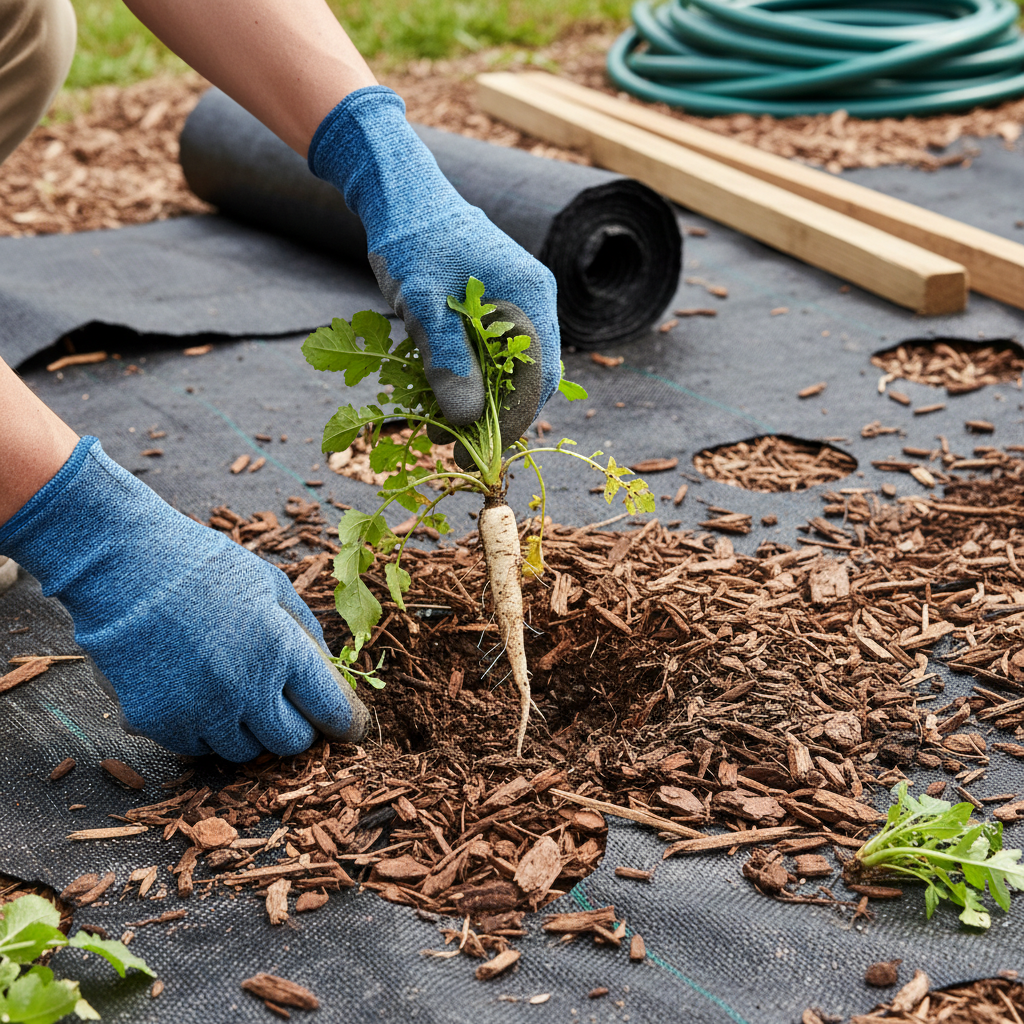
- Preparation: Clear the area thoroughly of all existing weeds and debris. Rake the soil smooth.
- Laying: Roll out the fabric, overlapping edges by at least 6-12 inches to prevent weeds from growing through the gaps. Secure it with landscape staples every few feet and along seams.
- Planting: Cut X-shaped holes in the fabric where you want to plant your desired vegetation.
Landscaping · Deck or fence project
| Project category | Landscaping |
|---|---|
| Problem type | Deck or fence project |
| Trade required | Landscaping |
| Urgency | Planned project |
| Safety risk | Moderate safety risk |
| DIY suitability | DIY for experienced homeowners |
| Cost category | High cost |
| Typical timeline | Most builds 3–10 days depending on size |
| Contractor type | Landscaping contractor |
Repair option
Replace failed boards, posts, and hardware; reseal the surface.
Replacement option
Rebuild when framing or the ledger connection is unsafe.
Common causes
- Rot at posts and ledger
- Storm damage
- Adding outdoor living space
Relevant tools:home improvement material pricesproject cost estimator
Published May 27, 2026Last updated August 17, 2026
Tools & materials you'll need
Affiliate linksAs an Amazon Associate FixlyGuide earns from qualifying purchases — at no extra cost to you. Prices and availability are accurate as of publication and subject to change.
Quick Answer
Achieving permanent weed removal in your yard is a long-term project that combines both immediate and preventive actions. The most effective strategies involve a combination of rigorous manual removal, precise application of the right herbicides (if opted for), and robust environmental controls like appropriate mulching and landscape fabric installation. This comprehensive approach tackles existing weeds while creating an unfavorable environment for new ones to sprout.
The Problem
Every homeowner knows the frustration: you spend an afternoon pulling weeds, only for them to sprout back with renewed vigor seemingly overnight. This endless cycle isn't just annoying; it's a drain on your time, effort, and the aesthetic appeal of your landscape. The underlying issue is that most DIY weed removal methods only address the visible part of the plant, leaving roots, seeds, and dormant spores ready to resurface. Common annual weeds can produce thousands of seeds in a single season, while perennial weeds can regenerate from even a small piece of root left in the soil. Without understanding the specific life cycles and growth habits of different weeds, homeowners are often fighting a losing battle, leading to constant re-infestations and a perpetuation of the weed problem.
How It Works
To effectively combat weeds permanently, you need to understand their basic biology. Weeds, like any plant, require sunlight, water, and nutrients from the soil to grow. They are often opportunistic, thriving in disturbed soil or areas where desired plants are struggling. Their reproductive strategies are diverse: some, like dandelions, spread readily by wind-borne seeds; others, like crabgrass, produce numerous seeds that can lie dormant for years; and many perennial weeds, such as bindweed or quackgrass, spread aggressively through rhizomes (underground stems) or stolons (above-ground runners). Manual pulling often leaves these reproductive structures intact. Herbicides work in different ways: pre-emergent herbicides create a chemical barrier in the soil that prevents seeds from germinating, while post-emergent herbicides are absorbed by existing plants, disrupting their cellular processes and leading to their demise. Non-selective herbicides kill almost any plant they touch, while selective herbicides target specific types of weeds (e.g., broadleaf weeds) without harming desirable grasses. Understanding these mechanisms allows for a more strategic and ultimately permanent approach to weed management.
Step-by-Step Fix
Step 1: Identify Your Enemy — Know what you're up against to choose the right strategy.
Start by identifying the prevalent weeds in your yard. Are they annuals (like crabgrass, common purslane) that complete their life cycle in one season and die after setting seed? Or are they perennials (like dandelions, thistle, bindweed) that live for multiple years, often regenerating from roots? Understanding whether you have broadleaf or grassy weeds also informs your choice of herbicide. Many plant identification apps can help, or consult your local agricultural extension office.
Step 2: Start with Manual Removal (Roots and All) — The foundation for any long-term weed control.
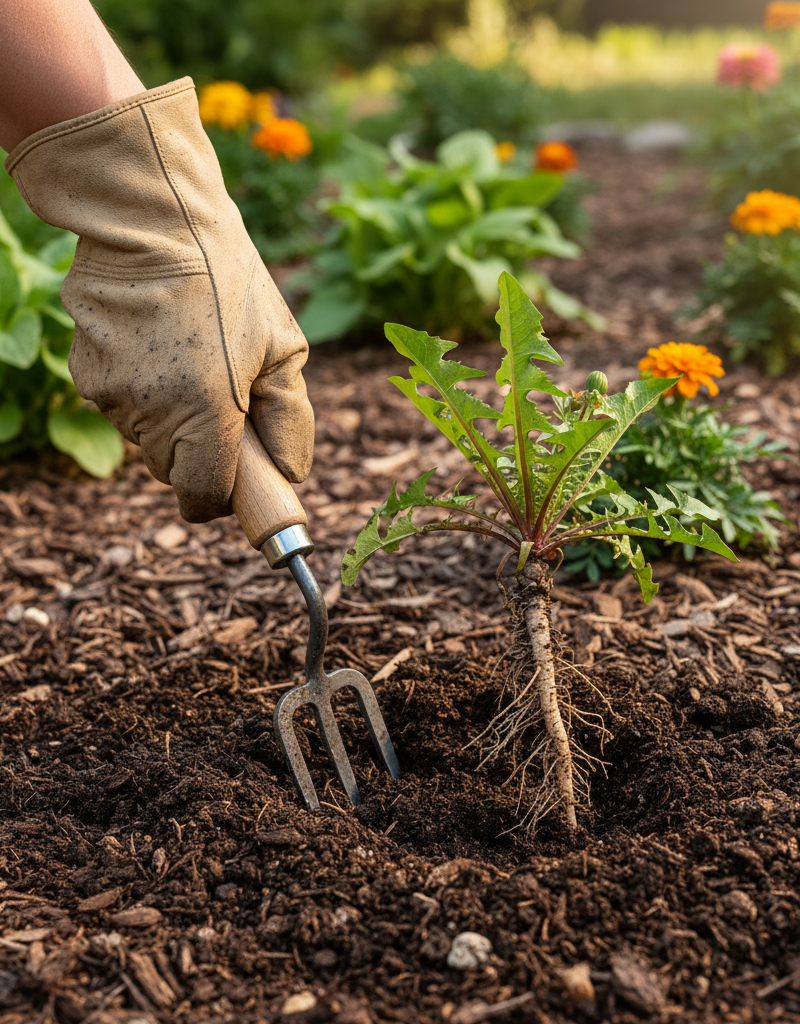
For existing weeds, especially perennials, manual removal is critical. Use a weeding tool that helps you extract the entire root system. Water the area first to soften the soil, making root removal easier. Aim to remove weeds before they go to seed to prevent future generations. Dispose of weeds properly; don't add seeding weeds to your compost pile unless it reaches very high temperatures.
- If you can't remove the entire root, don't despair; consistent pulling will eventually deplete the root's energy reserves.
- Safety Note: Always wear gardening gloves to protect your hands from thorns, irritating sap, and soil microbes.
Step 3: Apply Targeted Herbicides (Choose Wisely) — When manual pulling isn't enough, chemical assistance can be effective.
If weeds are widespread, consider herbicides. Choose between pre-emergent and post-emergent, and selective or non-selective, based on your identified weeds and goals.
- Pre-emergent herbicides: Apply in early spring before weed seeds germinate, typically when soil temperatures reach 50-55°F (check local advisories). These create a chemical barrier that stops seeds from sprouting. They are ineffective on existing weeds.
- Application: Follow product instructions meticulously regarding concentration and watering. Do not disturb the soil after applying, as this can break the chemical barrier.
- Post-emergent herbicides: Apply directly to actively growing weeds. Choose a selective one for weeds in lawns (e.g., 2,4-D for broadleaf weeds in turf) or a non-selective one (like glyphosate) for areas where you want all plant life gone (e.g., cracks in pavement, gravel paths, before laying new garden beds).
- Application: Apply on a calm, warm, non-windy day when rain isn't expected for 24 hours. Target the leaves thoroughly. Avoid spraying desirable plants. For tough perennial weeds, multiple applications may be necessary, typically 7-10 days apart.
- Safety Note: Always read and follow all label instructions for herbicides, including wearing appropriate personal protective equipment (gloves, eye protection, long sleeves/pants). Never use more product than recommended.
Step 4: Install Landscape Fabric (A Physical Barrier) — An excellent long-term solution for garden beds.
For new or renovated garden beds, landscape fabric provides a permeable physical barrier. It allows water and nutrients to pass through while blocking sunlight from reaching weed seeds and preventing them from sprouting.
- Preparation: Clear the area thoroughly of all existing weeds and debris. Rake the soil smooth.
- Laying: Roll out the fabric, overlapping edges by at least 6-12 inches to prevent weeds from growing through the gaps. Secure it with landscape staples every few feet and along seams.
- Planting: Cut X-shaped holes in the fabric where you want to plant your desired vegetation.
Step 5: Mulch Heavily (The Ultimate Weed Suppressor) — A critical layer for both prevention and aesthetics.
Once weeds are removed and, if used, landscape fabric is installed, apply a thick layer of mulch. Organic mulches (wood chips, shredded bark, pine needles, straw) are best as they break down over time, improving soil health. Inorganic mulches (gravel, river rock) are fine for pathways or specific aesthetic uses.
- Depth: Aim for a consistent layer of 3-4 inches (or 2 inches for fine mulches like shredded leaves). This depth blocks sunlight to germinating weed seeds and smothers existing small weeds.
- Edge: Keep mulch a few inches away from tree trunks and shrub bases to prevent moisture buildup and pest issues.
- Maintenance: Replenish mulch annually as it decomposes or thins.
Step 6: Cultivate a Healthy Lawn — Dense turf naturally crowds out weeds.
For lawns, permanent weed control means fostering a thick, healthy stand of grass. Thick turf crowds out weeds by denying them sunlight and root space.
- Mowing Height: Mow your lawn at the highest recommended setting (usually 2.5-3.5 inches). Taller grass shades the soil, keeping weed seeds from germinating.
- Fertilization: Fertilize regularly based on a soil test to ensure your grass has the nutrients it needs to thrive. A well-fed lawn is a strong lawn.
- Watering: Water deeply and infrequently (1 inch per week, total) to encourage deep root growth, making your lawn more resilient to drought and weed invasion.
- Aeration and Overseeding: Periodically aerate compacted lawns and overseed thin areas to maintain density.
Step 7: Consistent Vigilance — A little effort regularly goes a long way.
Even with the best strategies, a few weeds will always pop up. Make it a habit to walk your garden beds and lawn weekly, pulling any new weeds while they are small and easy to remove. Early intervention prevents them from setting seed or establishing deep root systems.
Common Causes
- Disturbed Soil: Any digging or tilling can bring dormant weed seeds to the surface, exposing them to light and encouraging germination.
- Poor Soil Health: Compacted, nutrient-deficient, or poorly draining soil can weaken desirable plants, making them less competitive against aggressive weeds.
- Inadequate Mulch/Groundcover: Bare soil is an open invitation for weeds. Without a protective layer, seeds easily germinate.
- Improper Watering/Mowing: Shallow, frequent watering encourages shallow-rooted weeds. Mowing turf too short reduces its ability to shade out weeds.
- Wind/Wildlife/Foot Traffic: Weed seeds can be carried into your yard by wind, birds, animals, or even on shoes and clothing.
- Leaving Roots Behind: For perennial weeds, even a small fragment of root can regenerate an entirely new plant.
Common Mistakes
- Pulling Weeds After They've Seeded: This effectively
Related Articles
Keep troubleshooting with these hand-picked guides from FixlyGuide:
- The 3 Permanent Weed Killers No One Talks About (And How to Use Them Safely) — Discover three overlooked, highly effective methods for permanently eliminating weeds from your yard, moving beyond temporary fixes to long…
- The #1 Mistake Homeowners Make When Fighting Dandelions (And The Weeds Still Win) — Learn the surprising reason dandelions continue to plague your lawn and the effective, long-term strategies to reclaim your turf without en…
- The Eternal Weed Battle: Why They Always Come Back (And How to Actually Win) — Stop the cycle of endless weeding by understanding why weeds persist and how to implement long-term control strategies.
- The #1 Mistake Killing Your Lawn's Fight Against Dandelions (And the Easy Fix) — Stop dandelions from taking over your lawn by understanding a simple, often overlooked cultural mistake and how to correct it for long-term…
- The #1 Mistake Killing Your Lawn's Dandelion Battle (And How to Win It) — Discover the most common error homeowners make in fighting dandelions and learn how to implement effective, long-term control strategies fo…
- The 4-Hour — Transform your garden into a self-sufficient oasis with smart strategies for watering, weeding, and pest control, minimizing your effort.
What should this project cost?
Enter your project details for a realistic cost range before you call anyone.
Cost depends heavily on which system turns out to be the source.
- Regional adjustment
- National average
- Labor share (typical)
- ~$1,620
- Quotes to collect
- 3 written estimates
Educational estimate based on national averages — not a binding quote. Always confirm with written local estimates.
Frequently asked questions
What is the most permanent way to get rid of weeds?+
The most permanent way involves a combination of strategies: thorough manual removal of roots, application of pre-emergent herbicides to stop new seeds, installation of landscape fabric in beds, and a thick layer of mulch to block sunlight. Maintaining a dense, healthy lawn also helps prevent weeds from establishing.
Can vinegar kill weeds permanently?+
Horticultural vinegar (acetic acid) can effectively kill the top growth of small, young weeds, especially broadleaf types. However, it rarely kills the root system of perennial weeds, meaning they will likely regrow. It's a non-selective contact killer, so it will harm any plant it touches and is not a permanent solution for established weeds.
How do professionals get rid of weeds permanently?+
Professionals use an integrated approach, often combining targeted chemical applications with cultural practices. This includes pre-emergent treatments, selective post-emergent herbicides for specific weeds, broad-spectrum herbicides for cleared areas, and recommendations for soil amendments, proper irrigation, and mulching to create an environment less hospitable to weeds.
Is there a chemical that kills weeds forever?+
No single chemical kills weeds 'forever' in every scenario. However, certain persistent pre-emergent herbicides can provide season-long control by preventing seed germination. Non-selective systemic herbicides (like glyphosate) can kill a wide range of existing plants down to the root, but they don't prevent new seeds from sprouting in the future.
Discussion
Loading comments…