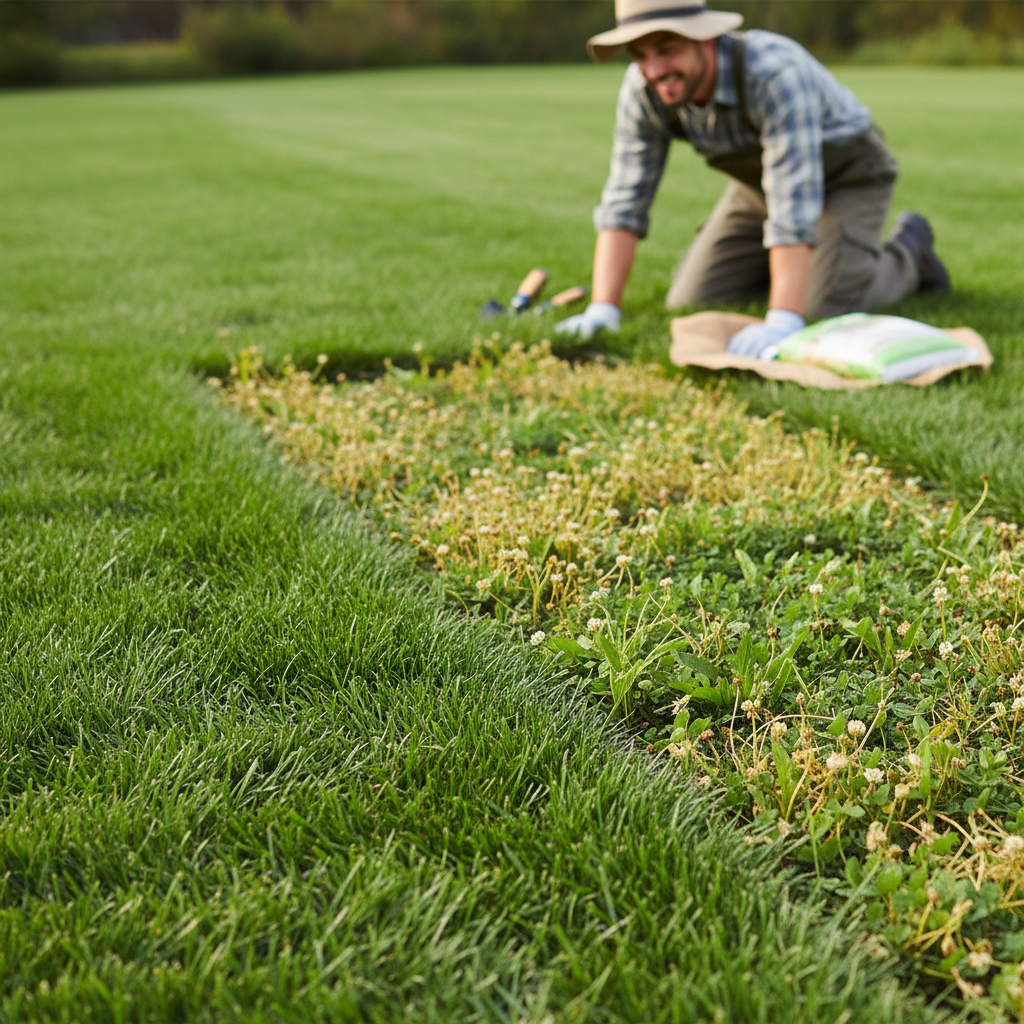
- Compacted Soil: Restricts root growth for grass, creates anaerobic conditions favorable to certain weeds.
- Improper Mowing Height: Mowing too short stresses grass and allows sunlight to reach dormant weed seeds.
- Incorrect Watering: Frequent, shallow watering encourages shallow roots in grass and promotes surface weed germination.
- Nutrient Imbalances/Poor Soil Fertility: Weakens turfgrass, making it less competitive against weeds.
- Lack of Overseeding: Sparse lawns leave open areas for weeds to colonize.
Landscaping · Deck or fence project
| Project category | Landscaping |
|---|---|
| Problem type | Deck or fence project |
| Trade required | Landscaping |
| Urgency | Planned project |
| Safety risk | Moderate safety risk |
| DIY suitability | DIY for experienced homeowners |
| Cost category | High cost |
| Typical timeline | Most builds 3–10 days depending on size |
| Contractor type | Landscaping contractor |
Repair option
Replace failed boards, posts, and hardware; reseal the surface.
Replacement option
Rebuild when framing or the ledger connection is unsafe.
Common causes
- Rot at posts and ledger
- Storm damage
- Adding outdoor living space
Relevant tools:home improvement material pricesproject cost estimator
Published June 6, 2026Last updated August 17, 2026
Tools & materials you'll need
Affiliate linksAs an Amazon Associate FixlyGuide earns from qualifying purchases — at no extra cost to you. Prices and availability are accurate as of publication and subject to change.
Quick Answer
Many homeowners struggle with a never-ending battle against weeds because they're making a fundamental mistake: treating only the visible weeds without addressing the underlying conditions that allow them to thrive. Permanent weed removal isn't about a single magical spray; it's about understanding and improving your soil health, implementing consistent cultural practices that favor your lawn over weeds, and utilizing targeted removal techniques to break the weed life cycle for good.
The Problem
Is your lawn a battleground where weeds seem to win every season, no matter how much you pull or spray? Many homeowners get stuck in a frustrating cycle, treating established weeds only to see new ones emerge weeks later. This isn't just bad luck; it's often a symptom of treating the symptom (the weed) rather than the root cause (the conditions enabling its growth). The problem isn't usually a lack of effort, but a misdirected effort, leaving homeowners feeling defeated and their lawns still infested. This article will expose the critical oversight preventing true weed control and provide a comprehensive strategy to achieve a permanently healthier, weed-resistant lawn.
How It Works
Weeds are opportunistic plants. They don't just appear; they exploit weaknesses in your lawn's health and soil conditions. Understanding this dynamic is crucial for permanent removal. Think of your lawn and its soil as an ecosystem. When this ecosystem is healthy and balanced, desirable turfgrass thrives, naturally outcompeting weeds for resources like sunlight, water, and nutrients. When the ecosystem is imbalanced – perhaps due to compacted soil, incorrect mowing, improper watering, or nutrient deficiencies – weeds find an opening.
Weed seeds are incredibly resilient. They can lie dormant in the soil for years, even decades, waiting for the right conditions to germinate. Factors like sunlight exposure (from sparse grass), moisture, and soil temperature trigger their growth. Some weeds, like dandelions, have deep taproots that make them difficult to remove entirely, allowing them to regrow from even small root fragments. Others, like crabgrass, spread rapidly via extensive root systems and prolific seed production. Chemical herbicides work by targeting specific plant processes, but they rarely alter the underlying soil conditions or prevent new seeds from germinating. Mechanical removal, like pulling, is effective for individual weeds but labor-intensive and often misses tiny seedlings. The most effective approach leverages both an understanding of weed biology and turfgrass physiology, creating an environment where weeds struggle and grass flourishes.
Step-by-Step Fix
1. Identify Your Weeds — Know your enemy.
Accurate identification is the first step. Different weeds respond to different control methods. Broadleaf weeds like dandelions or clover require different approaches than grassy weeds like crabgrass or nimblewill. Use a weed identification guide or a local extension office resource. Note if they are annuals (complete their life cycle in one year) or perennials (return year after year from the same root system).
2. Soil Test to Uncover Hidden Issues — Don't guess, test.
Soil health is paramount. Compacted, nutrient-deficient, or pH-imbalanced soil stresses turfgrass and invites weeds. Collect soil samples from several areas of your lawn and send them to a local university extension for analysis. The report will detail your soil's pH, nutrient levels, and organic matter content, providing specific recommendations for amendments. This step is non-negotiable for long-term weed control.
- If your soil is compacted: Consider aeration, especially if heavy foot traffic or clay soil is present.
3. Correct Soil Issues with Amendments — Build a strong foundation.
Based on your soil test, amend your soil. This might involve adding lime to raise pH, sulfur to lower it, or specific fertilizers to correct nutrient imbalances. Incorporate organic matter like compost to improve soil structure, water retention, and nutrient availability. Healthy soil promotes strong turfgrass growth, which is your best defense against weeds.
4. Mow at the Right Height — Let your grass fight back.
Many homeowners mow too short, weakening the grass and allowing sunlight to reach weed seeds. Mow your cool-season grass (fescue, rye, bluegrass) to 2.5–3.5 inches and warm-season grass (Bermuda, zoysia) to 2–3 inches. Taller grass shades the soil, keeping weed seeds dormant and promoting deeper root growth for your turf.
- Safety Note: Always wear closed-toe shoes and eye protection when mowing. Never refuel a hot mower.
5. Water Deeply and Infrequently — Teach roots to search.
Frequent, shallow watering encourages shallow grass roots and weed germination. Water deeply (aim for 1 inch of water per week, including rainfall) and infrequently. This encourages your turfgrass roots to grow deeper, making them more drought-tolerant and less susceptible to surface-germinating weeds. Water in the early morning to minimize evaporation and reduce fungal disease risk.
6. Fertilize Strategically — Feed the grass, starve the weeds.
Follow your soil test recommendations for fertilizer. A healthy, well-fed lawn actively outcompetes weeds. Use a slow-release nitrogen fertilizer that provides a steady supply of nutrients, promoting dense grass growth. Avoid over-fertilizing, which can stimulate weed growth or lead to runoff.
7. Overfill Sparse Areas — Close the gaps.
Thin areas in your lawn are invitations for weeds. Overseed these spots with a turfgrass variety appropriate for your climate. For cool-season grasses, do this in late summer/early fall; for warm-season grasses, late spring/early summer. Aerate before overseeding to improve seed-to-soil contact.
8. Hand-Pull Persistent Weeds — Targeted removal.
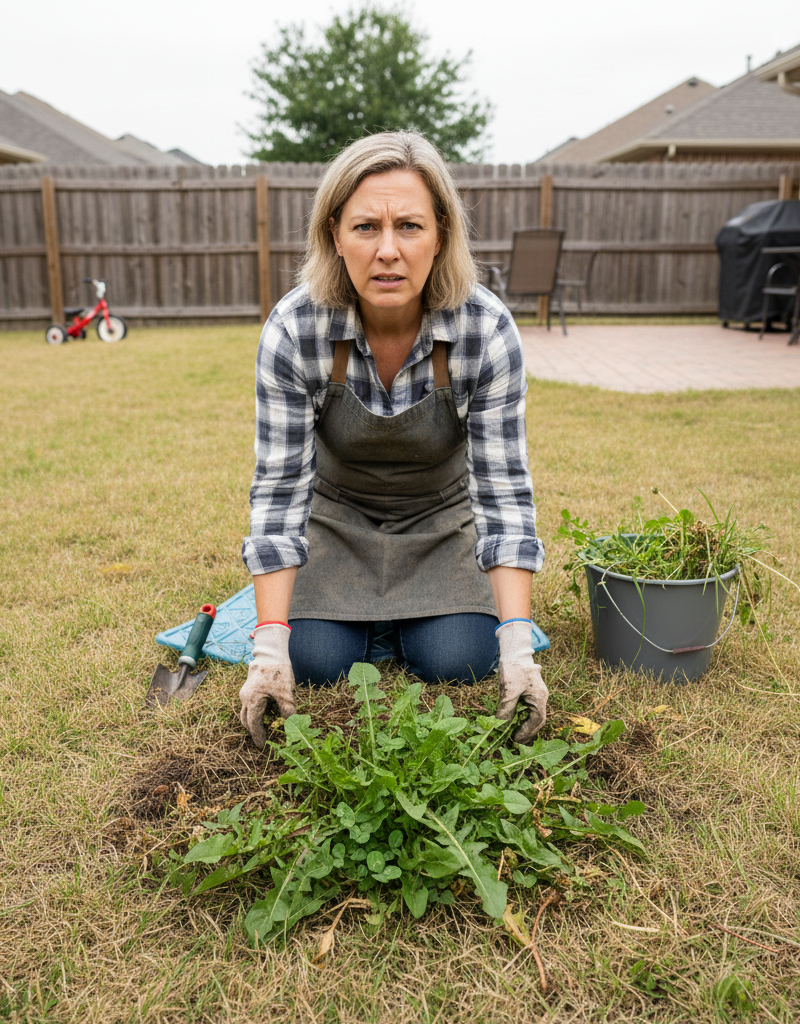
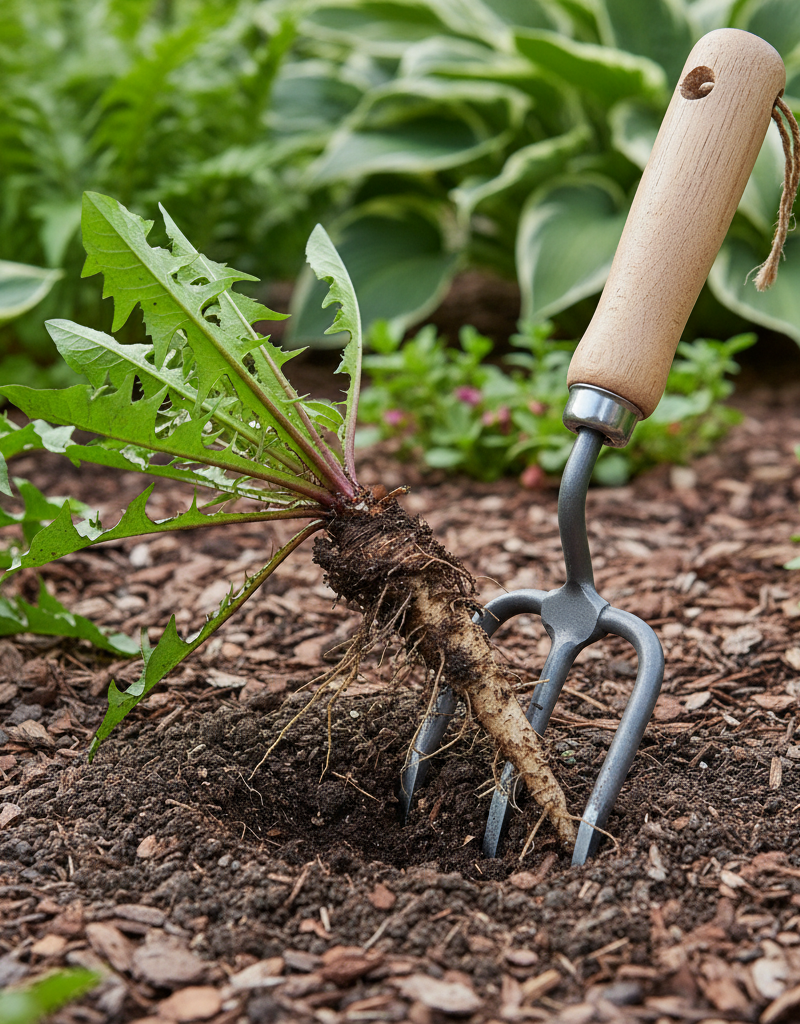
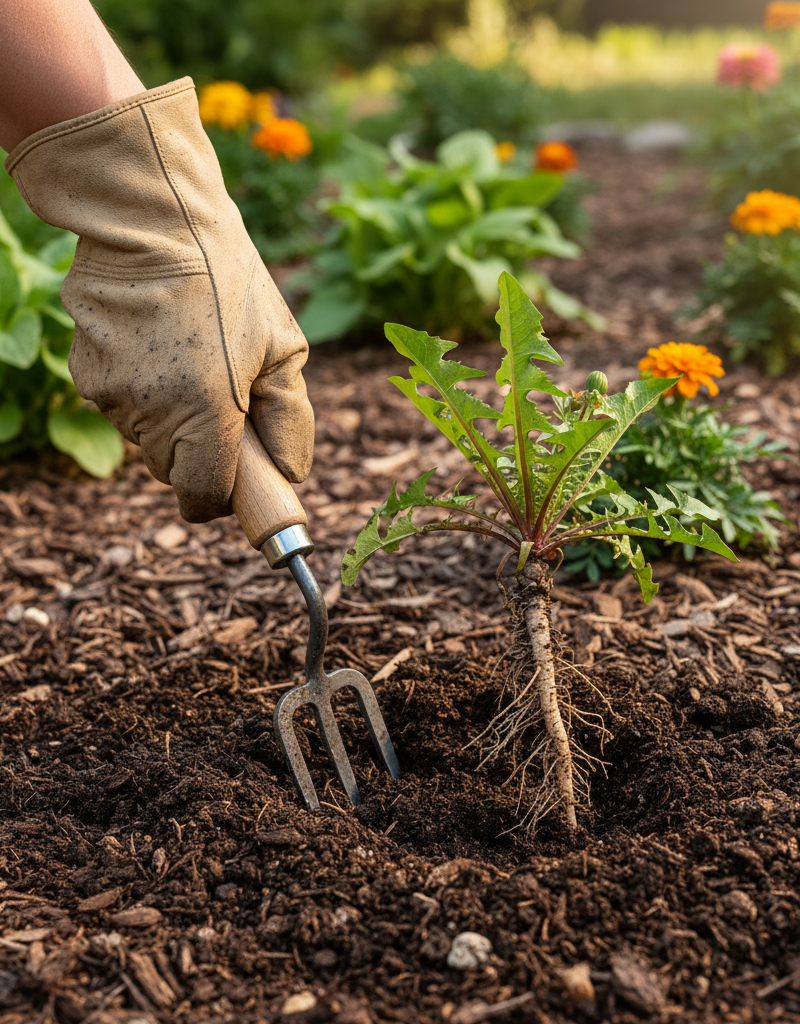
For individual, stubborn weeds, especially perennials with taproots like dandelions, hand-pulling is effective. Do this when the soil is moist, which makes extraction easier. Use a weeding tool to ensure you remove the entire taproot to prevent regrowth. For broadleaf weeds, aim to remove them before they go to seed.
9. Spot Treat with Targeted Herbicides (if necessary) — A last resort.
If cultural methods aren't enough, use herbicides as a spot treatment, not a blanket application. Choose a product specifically designed for your weed type (pre-emergent for grassy weeds like crabgrass before they sprout, post-emergent for established broadleaf weeds after they emerge). Always read and follow label instructions carefully.
- Safety Note: Wear gloves, long sleeves, and eye protection when handling herbicides. Do not apply on windy days or near water sources. Keep pets and children off treated areas until dry.
Common Causes
- Compacted Soil: Restricts root growth for grass, creates anaerobic conditions favorable to certain weeds.
- Improper Mowing Height: Mowing too short stresses grass and allows sunlight to reach dormant weed seeds.
- Incorrect Watering: Frequent, shallow watering encourages shallow roots in grass and promotes surface weed germination.
- Nutrient Imbalances/Poor Soil Fertility: Weakens turfgrass, making it less competitive against weeds.
- Lack of Overseeding: Sparse lawns leave open areas for weeds to colonize.
- Weed Seeds in Imported Materials: New topsoil or mulch can introduce new weed seeds to your lawn.
- Neighboring Weeds: Wind or animals can carry seeds from adjacent properties.
Common Mistakes
- Spraying Everything Indiscriminately: Using a broad-spectrum herbicide without identifying the weed or understanding its life cycle often harms desirable plants or is ineffective against specific weeds.
- Ignoring Soil Health: Without a soil test and amendments, you're constantly fighting symptoms rather than addressing the root cause, leading to endless weed battles.
- Mowing Too Low: This is a huge mistake. Short grass cannot compete with weeds for sunlight and moisture, and it exposes dormant weed seeds to the light they need to germinate.
- Watering Frequently and Shallowly: This encourages a shallow root system for your grass, making it weak and susceptible to drought and weed invasion, especially surface-germinating annual weeds.
- Pulling Weeds Without the Entire Root: For perennial weeds with taproots (like dandelions), leaving even a small root fragment means it will regrow. Use a weeding tool and ensure complete removal.
- Not Calibrating Spreaders/Sprayers: Incorrect application rates for fertilizers or herbicides can lead to under-application (ineffective) or over-application (damaging to lawn, wasteful, and potentially harmful to the environment).
- Only Treating Visible Weeds: This reactive approach misses the millions of dormant seeds waiting in your soil. A proactive, holistic strategy is key.
Cost & Time Breakdown
| Task | DIY Cost | Pro Cost | Time |
|---|---|---|---|
| Soil Test | $20–$50 | Included in pkg | 1 hour |
| Soil Amendments (Lime/Compost) | $50–$200 | $200–$500 | 2–4 hours |
| Aerator Rental | $50–$100 | $150–$300 | 2–3 hours |
| Quality Grass Seed | $30–$80 | Included in pkg | 1–2 hours |
| Spot Herbicides | $15–$40 | $50–$100 (per visit) | 15–30 min |
| Hand Weeding Tools | $20–$50 | Included in pkg | Ongoing |
Tips & Prevention
- Regular Lawn Assessment: Walk your lawn weekly to catch new weeds early. Small weeds are easier to remove.
- Mulch Flower Beds: Apply a 2-3 inch layer of organic mulch to flower beds and around trees to suppress weeds and retain moisture.
- Clean Equipment: Before and after use, clean mowers and other tools to avoid spreading weed seeds from one area to another.
- Edging: Install landscape edging between your lawn and garden beds to prevent weeds from spreading via runners.
- Consider Pre-Emergent: For stubborn annual weeds like crabgrass, a properly timed pre-emergent herbicide application in early spring (when soil temperatures reach 50-55°F) can prevent germination. This should be part of a broader strategy, not a standalone solution.
- Native Plants: Incorporate native plants into your landscape design. They are often more resilient and require less active management, reducing weed pressures.
When to Call a Professional
While many aspects of weed control are well within a homeowner's grasp, certain situations warrant calling a licensed lawn care professional. If you are dealing with a severe, widespread infestation of a particularly aggressive or difficult-to-identify weed, a professional can offer specialized treatments and knowledge. They have access to commercial-grade herbicides and equipment that are not available to the public and can accurately diagnose persistent soil issues. Additionally, if you suspect a complex lawn disease is weakening your turf and making it vulnerable to weeds, a professional can provide an expert diagnosis and integrated pest management plan. For properties with steep slopes, large areas, or physical limitations that prevent you from safely or effectively completing the outlined steps, professional assistance ensures the job is done correctly and safely. They can establish a long-term, customized lawn care program tailored to your specific turf and soil conditions.
Related Articles
Keep troubleshooting with these hand-picked guides from FixlyGuide:
- The #1 Mistake Killing Your Lawn (and Spreading Dandelions Everywhere) — Discover the most common mistake homeowners make that inadvertently encourages dandelions and how to achieve a weed-free lawn.
- The #1 Mistake Killing Your Lawn's Fight Against Dandelions (And the Easy Fix) — Stop dandelions from taking over your lawn by understanding a simple, often overlooked cultural mistake and how to correct it for long-term…
- The #1 Mistake Killing Your Lawn (And How to Eradicate Clover Safely) — Discover the secret to a clover-free lawn without resorting to harsh chemicals that harm your grass, focusing on a common pH imbalance.
- The #1 Mistake Killing Your Lawn's Crabgrass Defense (And the Easy Fix) — Discover why common crabgrass removal methods fail and how to naturally eliminate this stubborn weed for a healthier lawn.
- The #1 Crabgrass Mistake Killing Your Lawn (And 3 Natural Fixes) — Discover how common crabgrass removal mistakes undermine your lawn's health and learn three natural, effective methods to eradicate crabgra…
- Is Your Gutter Sagging After Every Storm? The Hidden Flaw Most Homeowners Miss — Discover the overlooked reason your gutters sag after every storm and learn the lasting fix that most homeowners miss.
Should you do this yourself?
Answer five quick questions before you start. Safety outranks savings every time.
Your experience with work like this
How high do you have to work?
Does the job involve any of these?
Will it need a permit?
Specialty tools
Free and instant. Educational guidance only — not a quote, inspection, or professional diagnosis.
What should this project cost?
Enter your project details for a realistic cost range before you call anyone.
Cost depends heavily on which system turns out to be the source.
- Regional adjustment
- National average
- Labor share (typical)
- ~$1,620
- Quotes to collect
- 3 written estimates
Educational estimate based on national averages — not a binding quote. Always confirm with written local estimates.
Before you start
Check the difficulty, permits, and safety risk — then decide whether to call a pro.
- Estimate this projectGet a cost range for your scope and ZIP before you call anyone.Open
- Get local estimatesSend one request and compare written estimates from vetted pros.Open
Free, no signup required. Estimates are educational guidance, not a quote or an inspection.
Frequently asked questions
How do I permanently get rid of weeds in my lawn?+
Permanently getting rid of weeds requires a holistic approach: identify the weeds, conduct a soil test, amend your soil (pH, nutrients, organic matter), mow at the correct height, water deeply and infrequently, fertilize appropriately, overseed thin areas, hand-pull persistent weeds, and spot treat with targeted herbicides only when necessary. Focusing on overall lawn health is key.
What kills weeds but not grass permanently?+
Selective herbicides are designed to kill specific types of weeds (e.g., broadleaf weeds) without harming most common turfgrasses. However, for true permanent control, a strong, dense lawn that can outcompete weeds is your best defense. This is achieved through proper mowing, watering, fertilizing, and soil health rather than just chemical applications.
Why do weeds keep coming back after I pull them?+
Weeds often return because either you didn't remove the entire root system (especially true for perennial weeds with deep taproots like dandelions), or new weed seeds germinated from the millions dormant in your soil. Your lawn's underlying conditions (sparse grass, poor soil, incorrect watering/mowing) might also be creating an ideal environment for their regrowth and proliferation.
Is there a permanent weed killer that is safe for pets?+
There is no single
Discussion
Loading comments…