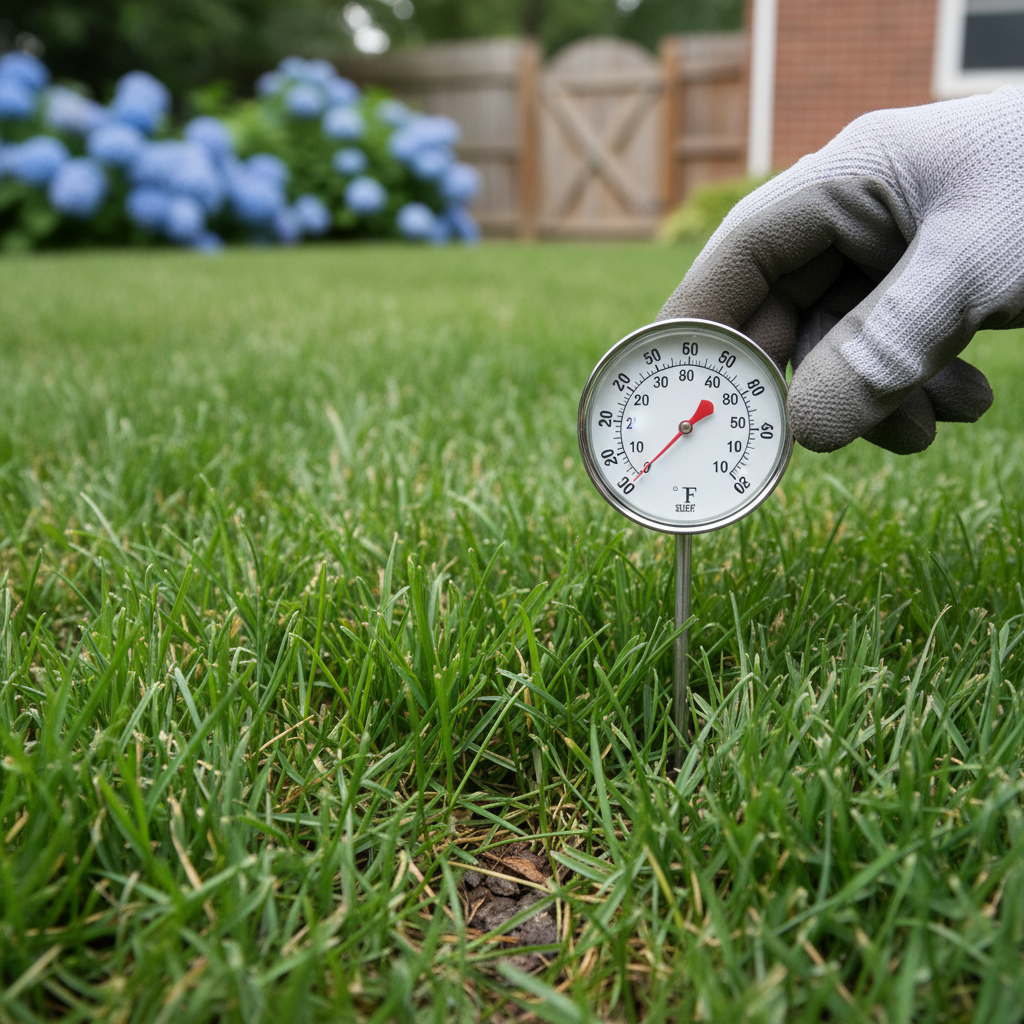
- Action: Purchase a reliable soil thermometer. These are relatively inexpensive and can be found at garden centers or online. Analogue or digital, either works as long as it's accurate.
- How-to: Insert the thermometer 2-3 inches deep into your lawn in a few different spots, especially areas that get varied sun exposure (sunny spots warm faster). Take readings daily around mid-morning for several consecutive days.
- Why: Relying on air temperature or calendar dates is highly unreliable as soil temperatures lag behind air temperatures and vary significantly based on sun exposure, soil type, and recent weather.
Landscaping · Deck or fence project
| Project category | Landscaping |
|---|---|
| Problem type | Deck or fence project |
| Trade required | Landscaping |
| Urgency | Planned project |
| Safety risk | Moderate safety risk |
| DIY suitability | DIY for experienced homeowners |
| Cost category | High cost |
| Typical timeline | Most builds 3–10 days depending on size |
| Contractor type | Landscaping contractor |
Repair option
Replace failed boards, posts, and hardware; reseal the surface.
Replacement option
Rebuild when framing or the ledger connection is unsafe.
Common causes
- Rot at posts and ledger
- Storm damage
- Adding outdoor living space
Relevant tools:home improvement material pricesproject cost estimator
Published May 7, 2026Last updated August 17, 2026
Tools & materials you'll need
Affiliate links- AmazonGranular pre-emergent herbicideChoose one suited for your grass type and target weeds
As an Amazon Associate FixlyGuide earns from qualifying purchases — at no extra cost to you. Prices and availability are accurate as of publication and subject to change.
Quick Answer
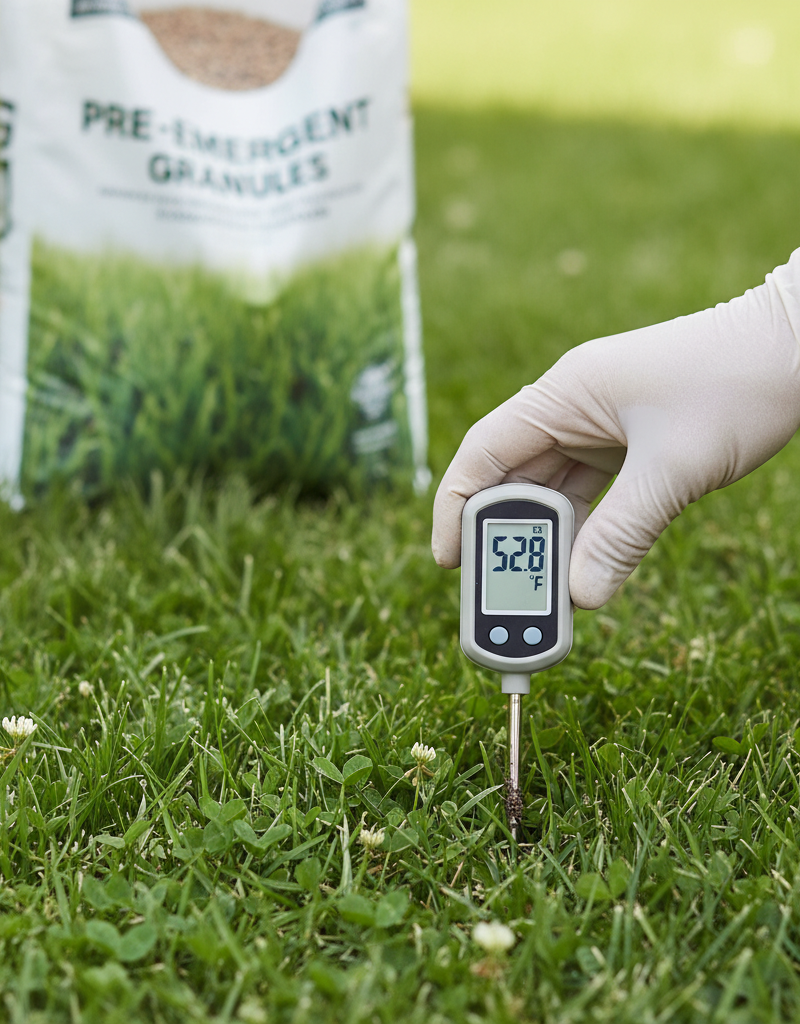
Applying pre-emergent weed control is a critical step for a weed-free lawn, but its effectiveness hinges almost entirely on precise timing. The golden rule for spring application, primarily targeting crabgrass and other summer annual weeds, is to apply when soil temperatures consistently reach 50-55°F (10-13°C) at a 2-inch depth for several days. For fall application, aimed at winter annuals such as henbit, chickweed, and annual bluegrass, the target soil temperature is around 70°F (21°C) as temperatures begin to cool. Missing these narrow windows by even a week or two can drastically reduce the product's efficacy, leading to frustrating weed outbreaks and wasted effort and money.
The Problem
Homeowners often diligently apply pre-emergent herbicides, expecting a pristine, weed-free lawn, only to find themselves battling the same relentless weeds year after year. The exasperation grows when they realize they've spent money and time on a product that seems to have failed them. The root cause of this widespread disappointment isn't typically a faulty product or incorrect application technique (though those can contribute), but rather a fundamental misunderstanding of how pre-emergents work and, crucially, when they work. The most common and costly mistake is applying the product at the wrong time of year relative to local soil temperatures and weed germination cycles. Apply too early, and the active ingredients may break down before weeds emerge. Apply too late, and weed seeds will have already germinated, rendering the pre-emergent powerless. This mistiming leads to a cycle of frustration, wasted resources, and a lawn perpetually plagued by undesirable growth.
How It Works
Pre-emergent herbicides create a protective barrier, or “chemical shield,” at the soil surface. This barrier doesn't kill existing weeds or weed seeds directly. Instead, when a weed seed begins to germinate, its tiny root (radicle) grows into this treated zone. The pre-emergent's active ingredients then disrupt the cellular division process in the developing root. Unable to establish a root system, the seedling dies shortly after germination, preventing it from ever emerging above the soil line and becoming a visible weed. It's a preventive measure, not a curative one. Most pre-emergents come in granular form and need to be watered into the soil to activate and properly distribute the herbicide particles within the top inch or two of the soil profile. The effectiveness of this barrier is finite; the active ingredients degrade over time due to microbial activity, sunlight, and irrigation, which is why proper timing and sometimes a second application are crucial.
Different pre-emergent chemicals have varying residual effects, typically lasting anywhere from 6 to 12 weeks. The key is to have the barrier established and fully active before the target weed seeds begin to germinate. For instance, crabgrass, one of the most common and difficult annual weeds, typically germinates when soil temperatures consistently reach 50-55°F (10-13°C) for several days. This often coincides with identifiable natural indicators, such as when forsythias are in full bloom or dogwoods are starting to flower in your region. Other summer annuals, like spurge or goosegrass, may germinate slightly later, often when soil temperatures are closer to 60-65°F (15-18°C). Winter annuals, such as henbit, chickweed, and annual bluegrass (Poa annua), germinate in the late summer or early fall when soil temperatures drop to around 70°F (21°C) and continue through winter. Understanding these distinct germination windows for different weed types is paramount for successful pre-emergent application.
Step-by-Step Fix
Fixing poor pre-emergent performance primarily involves re-calibrating your application timing based on soil temperature, not just the calendar.
1. Get a Soil Thermometer — _Accurate temperature is everything.
- Action: Purchase a reliable soil thermometer. These are relatively inexpensive and can be found at garden centers or online. Analogue or digital, either works as long as it's accurate.
- How-to: Insert the thermometer 2-3 inches deep into your lawn in a few different spots, especially areas that get varied sun exposure (sunny spots warm faster). Take readings daily around mid-morning for several consecutive days.
- Why: Relying on air temperature or calendar dates is highly unreliable as soil temperatures lag behind air temperatures and vary significantly based on sun exposure, soil type, and recent weather.
2. Identify Your Target Weeds — _Know your enemy.
- Action: Determine which annual weeds are most problematic in your lawn. Are they primarily summer annuals like crabgrass, goosegrass, or spurge, or winter annuals like henbit, chickweed, or annual bluegrass?
- Resource: Use online weed identification guides specific to your region if you're unsure. This will dictate your primary application windows.
3. Spring Application Timing (Summer Annuals) — _Preventing crabgrass and warm-season weeds.
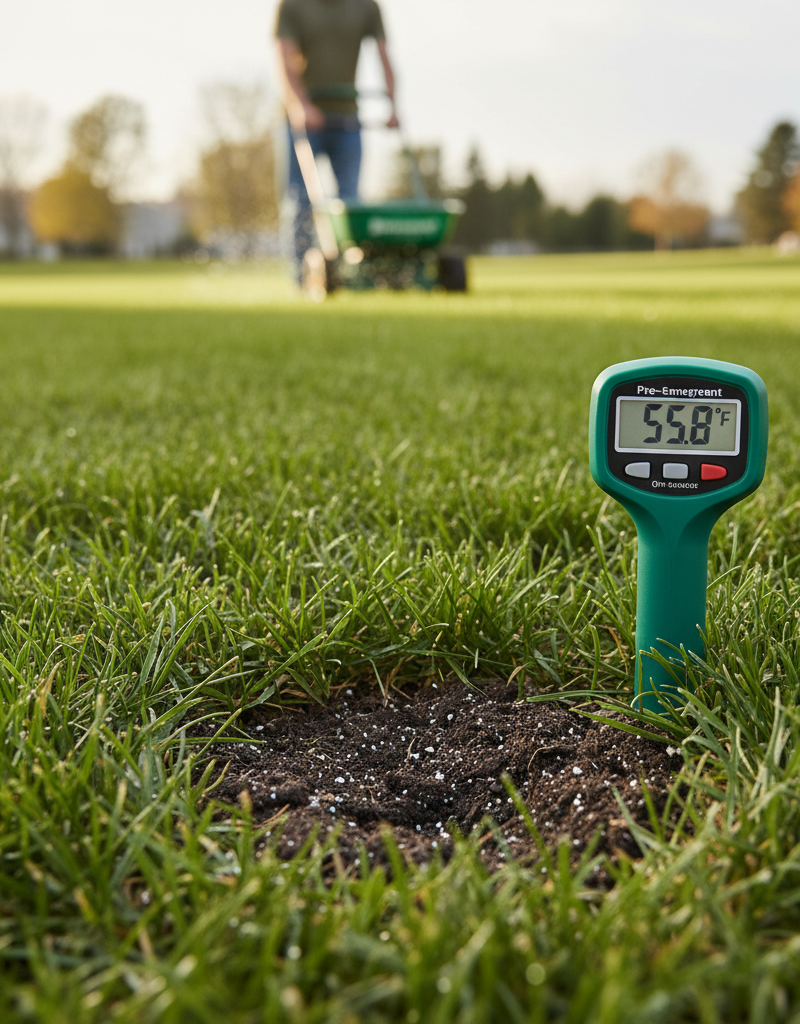
- Target: Apply pre-emergent when soil temperatures consistently reach 50-55°F (10-13°C) for 3-5 consecutive days at a 2-inch depth.
- Natural Indicators (Secondary): Observe local forsythia bushes. When they are in full bloom and beginning to drop their flowers, it's often a good sign soil temperatures are in the target range. (Use a thermometer for confirmation!).
- Considerations: If you plan to overseed in the spring, skip pre-emergent as it will prevent your new grass seeds from germinating. Wait until your new grass is established (mowed 2-3 times) before applying a pre-emergent labeled safe for new lawns, or postpone pre-emergent to the fall.
4. Fall Application Timing (Winter Annuals) — _Stopping henbit, chickweed, and Poa annua.
- Target: Apply pre-emergent when soil temperatures consistently drop to 70°F (21°C) and are predicted to continue cooling, typically in late summer or early fall.
- Why: This application targets weeds that germinate in cooler soil and grow through the fall and winter, going to seed in late winter/early spring.
- Note: This is an excellent time for overseeding cool-season grasses, as pre-emergents are generally not applied simultaneously. You may need to choose between overseeding or pre-emergent for winter annuals depending on your lawn's needs.
5. Choose the Right Pre-Emergent Product — _Not all are created equal.
- Active Ingredients: Look for products with dithiopyr (Dimension), pendimethalin (Prowl), or prodiamine (Barricade) for broad-spectrum annual weed control. Some products are formulated for specific concerns or types of grass.
- Label Reading: ALWAYS read the manufacturer's label for specific application rates, watering instructions, and safety precautions for your grass type. Applying too much can harm your lawn; too little will be ineffective.
6. Prepare Your Lawn for Application — _Maximize effectiveness.
- Mow: Mow your lawn a few days before application. This allows the granules to reach the soil more easily.
- Clear Debris: Rake any heavy leaf litter or thatch. The pre-emergent needs to reach the soil surface.
- Soil Moisture: Apply to a dry lawn for even distribution, but ensure the soil isn't bone dry, as some soil moisture helps activation.
7. Apply Evenly and Water In — _Crucial for barrier formation.
- Application: Use a broadcast spreader for larger lawns or a drop spreader for smaller, more precise areas. Calibrate your spreader according to the product label to ensure even coverage.
- Safety: Always wear gloves, long sleeves, and closed-toe shoes when handling and applying chemicals. Avoid applying on windy days.
- Watering: Immediately after applying, water your lawn thoroughly with 0.25 to 0.5 inches of water. This is critical for moving the herbicide granules from the grass blades into the top layer of soil, activating the protective barrier.
- If this doesn't work: If you don't water it in, the pre-emergent will sit on top of the grass blades, exposed to sunlight where it can degrade, and won't form the necessary barrier.
8. Monitor and Re-apply if Needed — _Sustaining the barrier.
- Timing: Depending on the product's residual effect (check the label), you might need a second application 6-10 weeks after the spring application for extended protection against later-germinating summer annuals.
- Signs of Failure: If you see weeds emerging despite your application, it's likely a timing issue or the product barrier has broken down. For existing weeds, you'll need a post-emergent herbicide.
Common Causes
- Incorrect Soil Temperature Reading: Relying solely on air temperature, calendar dates, or bloom times (without thermometer verification) often leads to applications outside the critical soil temperature window.
- Applying Too Late: The most prevalent issue. If weed seeds have already germinated and their roots are established, the pre-emergent cannot prevent them from emerging.
- Applying Too Early: The pre-emergent active ingredients degrade over time. If applied too early, the protective barrier may disappear before the peak germination period of your target weeds, leaving your lawn vulnerable.
- Insufficient Watering After Application: Pre-emergent granules must be watered into the soil to activate the chemical barrier. Without proper irrigation, the product remains on the surface and is largely ineffective.
- Uneven Application: Skipping areas or applying too heavily in some spots and too lightly in others creates gaps in the protective barrier, allowing weeds to penetrate.
- Using the Wrong Product for the Weed Type: Some pre-emergents are more effective against certain weed species or have different residual periods. Using a product not suited for your main weed problem can lead to failure.
- Thatch Layer Too Thick: A thick layer of thatch (dead organic matter between grass blades and soil) can physically prevent the pre-emergent from reaching the soil surface where it needs to form its barrier.
Common Mistakes
- Applying Pre-Emergent and Overseeding Simultaneously: Pre-emergents don't differentiate between weed seeds and grass seeds. They will prevent any seed from germinating, including desirable grass. If you plan to seed, use a starter fertilizer with a pre-emergent that is explicitly labeled as safe for new grass (e.g., mesotrione for certain turf types) or delay your pre-emergent application until new grass is established.
- Ignoring the Soil Thermometer: Guessing based on
Related Articles
Keep troubleshooting with these hand-picked guides from FixlyGuide:
- The #1 Mistake Homeowners Make When Fighting Lawn Grubs (And How to Fix It) — Discover the crucial mistake homeowners often make when treating lawn grubs and learn the most effective, timing-sensitive strategies to el…
- The #1 Dandelion Mistake Almost Every Homeowner Makes (and How to Fix It) — Many homeowners accidentally make dandelions worse. Learn the most common mistake and how to truly eliminate these persistent weeds for goo…
- The #1 Lawn Aeration Mistake Most Homeowners Make (And When to REALLY Do It) — Discover the crucial mistake many homeowners make with lawn aeration and learn the optimal timing for a healthier, more vibrant lawn.
- The #1 Mistake Killing Your Lawn's Crabgrass Defense (And the Easy Fix) — Discover why common crabgrass removal methods fail and how to naturally eliminate this stubborn weed for a healthier lawn.
- The #1 Lawn Aeration Mistake Most Homeowners Make (And When to REALLY Do It) — Discover the crucial mistake many homeowners make with lawn aeration and learn the optimal timing for a thriving, healthy lawn.
- The #1 Mistake Homeowners Make When Sealing a Deck (and How to Fix It) — Many homeowners make a critical error that prevents their deck sealer from lasting, leading to premature rot and mildew. Learn the right wa…
Should you do this yourself?
Answer five quick questions before you start. Safety outranks savings every time.
Your experience with work like this
How high do you have to work?
Does the job involve any of these?
Will it need a permit?
Specialty tools
Free and instant. Educational guidance only — not a quote, inspection, or professional diagnosis.
What should this project cost?
Enter your project details for a realistic cost range before you call anyone.
Cost depends heavily on which system turns out to be the source.
- Regional adjustment
- National average
- Labor share (typical)
- ~$1,620
- Quotes to collect
- 3 written estimates
Educational estimate based on national averages — not a binding quote. Always confirm with written local estimates.
Before you start
Check the difficulty, permits, and safety risk — then decide whether to call a pro.
- Estimate this projectGet a cost range for your scope and ZIP before you call anyone.Open
- Get local estimatesSend one request and compare written estimates from vetted pros.Open
Free, no signup required. Estimates are educational guidance, not a quote or an inspection.
Frequently asked questions
How do I know the exact best time to apply pre-emergent?+
The most accurate way is to use a soil thermometer and apply when soil temperatures at 2-3 inches deep are consistently 50-55°F (10-13°C) for spring application (crabgrass) and around 70°F (21°C) in late summer/early fall for winter annuals. Don't rely solely on air temperature or calendar dates due to local variations.
What happens if I apply pre-emergent too late?+
If applied too late, weed seeds will have already germinated their tiny roots, and the pre-emergent barrier will be ineffective. The weeds will emerge as usual, and you'll have wasted the product and effort.
Can I apply pre-emergent if I'm planning to overseed my lawn?+
Generally, no. Most pre-emergents will prevent your new grass seeds from germinating. If you must seed, either choose a pre-emergent specifically labeled safe for new grass (e.g., those containing mesotrione) or wait until your new grass has been mowed at least 2-3 times before applying a standard pre-emergent.
How soon after applying pre-emergent should I water my lawn?+
You should water your lawn thoroughly (0.25 to 0.5 inches of water) immediately after applying granular pre-emergent. This is crucial for moving the active ingredients from the grass blades into the soil to form the protective barrier.

Discussion
Loading comments…