- Wipe Up Spills Immediately (When Cool): The easiest way to prevent baked-on grime is to address spills as soon as they happen and the oven has cooled. A quick wipe with a damp cloth can save hours of scrubbing later.
- Regular Light Cleaning: Don't wait until the oven is heavily soiled. A light steam clean every 2-3 months, or even just a warm wipe-down, will prevent significant build-up and make deep cleaning much less daunting.
- Inspect and Clean Door Gasket: Periodically check the rubber gasket around your oven door. Wipe any food particles or grease from it to ensure a tight seal and prevent buildup in crevices that are harder to reach with the main cleaning.
Published July 10, 2026Last updated August 17, 2026
Tools & materials you'll need
Affiliate linksAs an Amazon Associate FixlyGuide earns from qualifying purchases — at no extra cost to you. Prices and availability are accurate as of publication and subject to change.
Quick Answer
Baked-on oven grime is notoriously tough, but you don't need harsh chemicals to tackle it. The secret lies in harnessing the power of steam to soften stubborn residues, making them simple to wipe away. By combining water with a few common household ingredients, you can create a superheated environment within your oven that loosens even heavily caked-on food, leaving your appliance sparkling clean without the noxious fumes.
The Problem
Caked-on food spills and grease spatters are an inevitable part of oven use. Over time, these residues bake onto the oven's interior surfaces, forming a tough, carbonized layer that's difficult to remove. Traditional oven cleaners often contain harsh chemicals like lye (sodium hydroxide) or petroleum distillates, which can be irritating to the skin, eyes, and respiratory system. The fumes can linger, affecting indoor air quality and potentially tainting food cooked afterward. Moreover, some self-cleaning cycles, while effective, use extremely high temperatures (up to 900°F) that can generate smoke, trigger fire alarms, and wear down oven components over time. The challenge is finding an effective, safe, and less damaging way to restore your oven's cleanliness without resorting to these harsher methods.
How It Works
Steam cleaning an oven works on a simple scientific principle: heat and moisture combined can break down organic matter. When water is heated within the enclosed space of your oven, it turns into steam. This steam permeates the hardened layers of baked-on food and grease. The water molecules in the steam interact with the food residues, rehydrating and softening them. Think of it like soaking a dried-up sponge; hard, stiff material becomes pliable and easier to manipulate once it absorbs water.
Specifically, the high temperature of the steam helps to weaken the chemical bonds holding the grease and carbonized food to the oven surfaces. This process is called hydrolysis, where water molecules react with larger organic molecules, breaking them down into smaller, more soluble components. As the residues absorb moisture, they expand and lose their adhesion to the oven walls, floor, and racks. This transformation from a brittle, caked-on substance to a softer, malleable sludge makes it incredibly easy to scrape or wipe away with minimal effort. The effectiveness is boosted when a small amount of an acidic agent, like white vinegar, or an abrasive, like baking soda, is introduced, further aiding in the breakdown and removal process without relying on corrosive chemicals.
Step-by-Step Fix
Here’s how to unleash the power of steam and natural ingredients to deep clean your oven.
-
Prep the Oven — Begin by removing oven racks, pizza stones, and any large, loose food debris. Use a spatula or plastic scraper for bigger chunks. This ensures the steam can reach all surfaces efficiently and prevents loose bits from turning into muddy messes later.
- Safety Note: Always ensure the oven is completely cool before starting. Unplugging the oven is a good practice to prevent accidental activation.
-
Combine Cleaning Agents — In an oven-safe bowl, baking dish, or deep baking pan (ceramic or glass is ideal), mix 1 cup of white vinegar with 2 cups of water. For extra scrubbing power, you can also add 2 tablespoons of baking soda directly onto the worst soiled areas of the oven floor before placing the bowl inside.
- If your oven is particularly greasy: Add a squeeze of dish soap (about 1 teaspoon) to the water and vinegar mixture in the bowl. This helps to emulsify the grease.
-
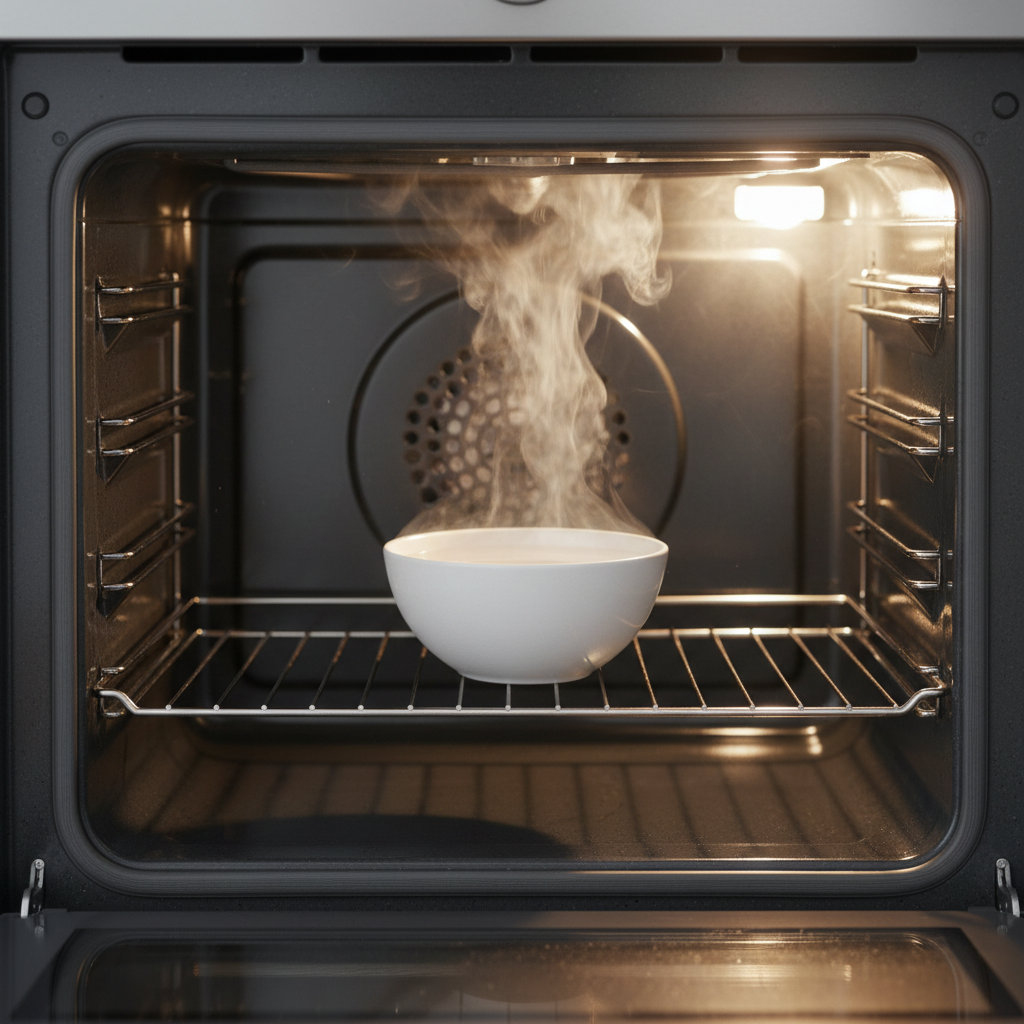
Heat for Steam Generation — Place the bowl with the water/vinegar mixture onto the center rack of your cool oven. Close the oven door. Set your oven to a temperature between 350°F and 450°F (175°C to 230°C). Allow the mixture to heat and steam for 20–30 minutes, or until the water is vigorously steaming and a visible condensation forms on the oven door.
- Avoid opening the door: Keep the oven door closed during this phase to trap the steam effectively.
-
Cool Down Gradually — Once the steaming time is complete, turn off the oven but do not open the door immediately. Let the oven stand with the door closed for at least 1 hour, or ideally, 2–3 hours. The trapped steam will continue to work on the grime as the oven cools. The longer it sits, the softer the baked-on food becomes.
- Severe grime? For extremely heavy build-up, you can leave the oven to cool completely overnight with the door shut.
-
Wipe Down Surfaces — Open the oven door. Remove the now-cool bowl. The grime should be noticeably softer and easier to remove. Using a damp microfiber cloth or a non-scratch scrub pad, wipe down the interior surfaces of the oven, including the walls, floor, and ceiling.
- Stubborn spots: For any persistent spots, sprinkle a little baking soda directly onto them, spray with a bit of white vinegar (it will fizz!), and let it sit for 5 minutes before scrubbing gently with a non-scratch pad.
-
Clean Oven Racks — While the oven is steaming, you can clean the racks separately. Place them in a bathtub or large utility sink filled with hot water, a few drops of dish soap, and half a cup of white vinegar. Let them soak for an hour or so, then scrub with a brush and rinse thoroughly.
- Aluminum foil trick: For very caked-on racks, you can wrap them in aluminum foil, spray thoroughly with hot water, and let them sit overnight before scrubbing.
-
Final Rinse and Polish — After wiping away all the loosened grime, use a clean, damp cloth to remove any remaining residue from the baking soda or vinegar. A dry microfiber cloth can be used to buff the interior for a streak-free finish.
-
Reassemble — Once the oven interior and racks are dry, slide the racks back into place. Your oven is now sparkling clean and ready for its next culinary adventure!
Common Causes
- Splatter and Spills: The most obvious cause – grease from roasting meats, bubbling casseroles, or overflowing pies. These go unnoticed until they're baked on. This is especially true for foods that brown quickly or cook at high temperatures, which can turn small spills into hard, carbonized deposits. Without a quick wipe-down after minor incidents, these accumulate.
- High-Temperature Cooking: Roasting vegetables, baking at 400°F (200°C) or higher, and broiling foods all contribute to hardening any existing spills. The intense heat acts like a kiln, permanently fusing food residue to the oven's metal or enamel surfaces. This also accelerates the caramelization of sugars and fats, turning them into tough, sticky, black stains.
- Infrequent Cleaning: An oven that isn't cleaned regularly allows layers of grime to build up. Each cooking cycle adds another layer of baked-on residue, making the cleaning job much harder over time. The longer a spill sits, the more it adheres to the surface and the more difficult it becomes to rehydrate and remove.
- Dishwasher Use for Racks: While convenient, putting some oven racks (especially those with a non-stick coating or certain finishes) in the dishwasher can strip their protective layers, making them more prone to food adherence and harder to clean manually in the future. Always check manufacturer instructions.
- Door Seal Issues: A damaged or dirty oven door seal (gasket) can allow small amounts of food vapor and grease to escape, often accumulating around the oven door frame where it bakes on and becomes hard to reach. It also reduces the oven's efficiency.
Common Mistakes
- Using Abrasive Scrubbers on Enamel: Vigorously scrubbing with steel wool or harsh abrasive pads can scratch the delicate enamel coating inside your oven, making it even easier for new food particles to stick and harder to clean in the future. Always opt for non-scratch pads or microfiber cloths.
- Opening the Oven Door Too Early: Releasing the steam too soon significantly reduces its effectiveness. The longer the oven cools with the door closed, the more time the steam has to penetrate and soften the baked-on grime. Patience is key.
- Not Removing Loose Debris First: Trying to steam clean over large chunks of food will only create a muddy mess and make the final wipe-down more difficult. Always scrape out as much loose debris as possible before steaming.
- Ignoring the Oven Door's Glass: The oven door often gets overlooked, but baked-on grease here is notoriously visible. The steam method works just as well on the glass, but you might need gentle scraping with a razor blade (on a cool surface!) for particularly stubborn spots after steaming, followed by a thorough wipe.
- Forgetting the Oven Racks: While the main oven cavity is the focus, the racks collect just as much baked-on gunk. Cleaning them simultaneously (perhaps by soaking them in a tub while the oven steams) saves time and ensures a complete job. Neglecting them will only transfer fresh grime back into your clean oven.
- Using the Self-Clean Cycle Too Often: While convenient, frequent use of the self-clean cycle can stress oven components like heating elements, igniters, and temperature sensors due to the extreme heat. Reserve it for truly severe situations and consider steam cleaning for routine maintenance.
Cost & Time Breakdown
| Task | DIY cost | Pro cost | Time |
|---|---|---|---|
| Initial Prep & Debris Removal | $0 | N/A | 10–15 minutes |
| Steam Generation & Soak | $0–$1 | N/A | 1–3 hours |
| Interior Wipe-Down & Scrub | $0–$5 | N/A | 30–60 minutes |
| Oven Rack Cleaning | $0–$2 | N/A | 30–60 minutes |
| Final Rinse & Dry | $0 | N/A | 10–15 minutes |
| Total | $0–$8 | $150–$300+ | 2.5–5.5 hours |
Tips & Prevention
- Wipe Up Spills Immediately (When Cool): The easiest way to prevent baked-on grime is to address spills as soon as they happen and the oven has cooled. A quick wipe with a damp cloth can save hours of scrubbing later.
- Use Baking Soda Paste for Fresh Spills: For somewhat recent spills that have started to dry, make a paste of baking soda and water. Apply it to the spill, let it sit for 15-30 minutes, then wipe away. This often lifts grime before it becomes a permanent fixture.
- Line the Oven Floor (Carefully): Place a silicone oven liner or a sheet of aluminum foil on the bottom rack below the heating element to catch drips. Never place foil or liners directly on the oven floor, as this can impede air circulation, damage the heating element, or fuse to the oven surface. Ensure it doesn't block vents.
- Strategic Rack Placement & Bakeware: Use baking sheets or drip pans on lower racks when cooking items that are prone to bubbling over or splattering, such as casseroles, pies, or roasted meats. This catches drips before they hit the oven floor.
- Regular Light Cleaning: Don't wait until the oven is heavily soiled. A light steam clean every 2-3 months, or even just a warm wipe-down, will prevent significant build-up and make deep cleaning much less daunting.
- Inspect and Clean Door Gasket: Periodically check the rubber gasket around your oven door. Wipe any food particles or grease from it to ensure a tight seal and prevent buildup in crevices that are harder to reach with the main cleaning.
When to Call a Professional
While steam cleaning is highly effective for most baked-on grime, there are specific situations where calling a professional oven cleaner or an appliance repair technician is advisable. If your oven has severe mechanical issues preventing it from heating properly, or if there's an electrical fault (e.g., sparking, burning smell from wiring), do not attempt to fix it yourself; this requires a licensed professional. If you find that despite several attempts at steam cleaning, the grime remains impossibly stuck, or if you notice any unusual odors (like gas or burning plastic, not just food residue), it's best to consult a professional cleaner who has specialized tools and industrial-grade, yet safe, cleaning solutions. Furthermore, if you're dealing with an extremely old oven with damaged enamel or a compromised interior structure, a professional assessment can determine if cleaning is safe or if replacement parts are needed. Never attempt to service gas lines or complex electrical components yourself.
Related Articles
Keep troubleshooting with these hand-picked guides from FixlyGuide:
- The Surprising Yard Tool That Vaporizes Weeds (No Chemicals Needed) — A weed torch offers an efficient, chemical-free method for removing unwanted plants from hardscaped areas like driveways, patios, and grave…
- The Single Cedar Board Secret to Attracting Bluebirds to Your Yard — Discover how to construct an ideal bluebird nesting box using just one cedar board, providing a safe and inviting habitat for these cherish…
- The Single Board Secret to Attracting Bluebirds: A Quick DIY House — Discover how to construct an ideal bluebird house using just one cedar board, providing a safe and inviting home for these cherished backya…
- The Secret Power Tool Hiding in Your Garage for a Speedier Clean — Unlock the hidden potential of your cordless drill to tackle stubborn household grime, soap scum, and dirt with specialized cleaning attach…
- The 4 Critical Dimensions of a Bluebird House (Most DIY Plans Miss One) — Discover the precise measurements and often-overlooked design elements essential for building a bluebird house that truly attracts nesting…
- The 3 Hidden Reasons Your Interior Door Sticks (and The 15-Minute Fix) — Discover the surprisingly common reasons your interior door sticks and learn how to fix it in under 15 minutes with simple tools.
Should you do this yourself?
Answer five quick questions before you start. Safety outranks savings every time.
Your experience with work like this
How high do you have to work?
Does the job involve any of these?
Will it need a permit?
Specialty tools
Free and instant. Educational guidance only — not a quote, inspection, or professional diagnosis.
What should this project cost?
Enter your project details for a realistic cost range before you call anyone.
Cost depends heavily on which system turns out to be the source.
- Regional adjustment
- National average
- Labor share (typical)
- ~$1,620
- Quotes to collect
- 3 written estimates
Educational estimate based on national averages — not a binding quote. Always confirm with written local estimates.
Before you start
Check the difficulty, permits, and safety risk — then decide whether to call a pro.
- Estimate this projectGet a cost range for your scope and ZIP before you call anyone.Open
- Get local estimatesSend one request and compare written estimates from vetted pros.Open
Free, no signup required. Estimates are educational guidance, not a quote or an inspection.
Get the print-ready PDF of this guide
A clean, ad-free, printable version you can keep on your phone or pin to the workshop wall. Free with a FixlyGuide account.
- Print-optimized layout
- Tools, materials & every step included
- Saved to your account
This article was independently written by FixlyGuide based on the source topic.
Frequently asked questions
Is steam cleaning an oven effective?+
Yes, steam cleaning is highly effective for loosening baked-on grease and food residues. The hot steam penetrates and softens the grime, making it much easier to wipe away compared to scrubbing dry, hardened spills. It's especially good for regular maintenance and moderately dirty ovens.
Can I use just water to steam clean my oven?+
While hot water alone will create steam and help loosen some grime, adding white vinegar helps to cut through grease and neutralize odors, and a sprinkle of baking soda acts as a gentle abrasive. This combination significantly boosts the cleaning power.
How long should I let the steam sit in the oven?+
After heating the water for 20-30 minutes to generate steam, it's crucial to turn off the oven and let the steam continue to work as the oven cools. For best results, leave the oven door closed for at least 1-2 hours, or even overnight for very stubborn grime.
Will steam cleaning damage my oven?+
No, steam cleaning using water and natural ingredients will not damage your oven. It's a gentle method compared to harsh chemical cleaners or abrasive scrubbing. Always ensure your containers are oven-safe (glass or ceramic) and don't place anything directly on heating elements.
How often should I steam clean my oven?+
For optimal results and to prevent heavy build-up, aim to steam clean your oven every 2-3 months, or more frequently if you use it often or have major spills. Regular light cleaning is far easier than tackling years of baked-on grime.


Discussion
Loading comments…