- Clear the Tracks — Remove debris and obstructions
- Tools: Vacuum with crevice tool, stiff brush, damp cloth.
- If this doesn't work: The problem is likely with the balance mechanism itself.
General remodeling · Renovation planning
| Project category | General remodeling |
|---|---|
| Problem type | Renovation planning |
| Trade required | General contracting |
| Urgency | Planned project |
| Safety risk | Low safety risk |
| DIY suitability | Pro recommended |
| Cost category | Major investment |
| Typical timeline | Design and permitting often 2–4 months before work starts |
| Contractor type | General contractor |
Repair option
Phase the work and fix the building envelope first.
Replacement option
Full renovation with permits, design, and a general contractor.
Common causes
- Space no longer fits how the household lives
- Resale preparation
- Deferred maintenance stacking up
Relevant tools:project cost estimatorcompare quoteshome improvement material prices
Published June 2, 2026Last updated August 17, 2026
Tools & materials you'll need
Affiliate linksAs an Amazon Associate FixlyGuide earns from qualifying purchases — at no extra cost to you. Prices and availability are accurate as of publication and subject to change.
Quick Answer
If your double-hung window sash keeps sliding down, the most common culprit is a worn or dislodged balance mechanism. This can usually be fixed by cleaning the tracks, adjusting the balance tension, or replacing a broken balance shoe. It's often a quick DIY repair that restores full window functionality, preventing frustration and improving ventilation in your home.
The Problem
You're trying to let in some fresh air, but your window sash just won't cooperate. You lift it, only for it to slowly (or quickly!) slide back down, refusing to stay open. This isn't just an annoyance; it can be a significant inconvenience, making it impossible to ventilate a room properly, invite a breeze, or even use a window air conditioning unit effectively. Left unaddressed, it can also lead to more serious issues if people try to prop the window open with makeshift solutions that could damage the frame or glass. The good news is that for most modern double-hung windows, the problem is usually a relatively straightforward mechanical issue with the balance system, rather than a structural failure.
How It Works
Most modern double-hung windows rely on a 'balance' system to hold the sash in any open position. Gone are the days of heavy weights and ropes in the wall (though some older homes still have them). Today, you'll typically find one of three main types of balances: spring balances, spiral balances, or block and tackle balances.
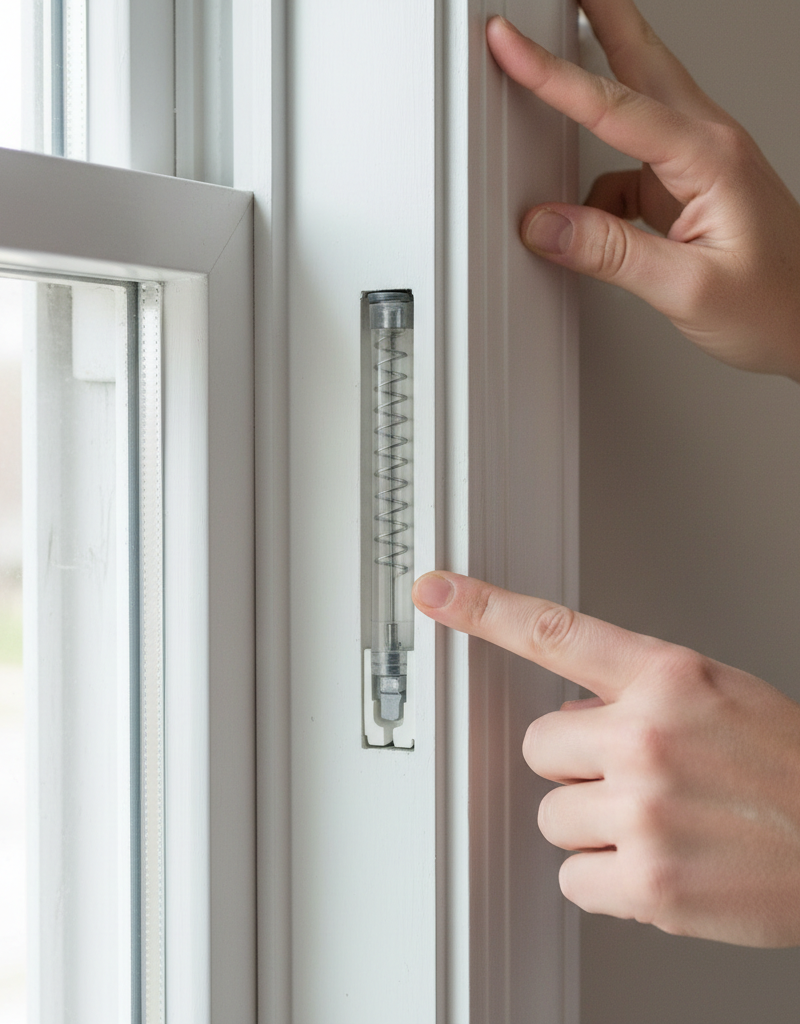
Spring Balances: These are common in many vinyl and aluminum windows. They consist of a long, coiled spring housed within a metal or plastic tube, running vertically alongside the window sash. As you open the window, the spring compresses, storing energy. This stored energy then exerts an upward force, counteracting the weight of the sash and holding it in place. If the spring weakens or breaks, it can no longer support the sash's weight, causing it to slide down.
Spiral Balances: Often found in vinyl and some wood windows, spiral balances resemble a metal rod with a long, coiled spiral at the bottom. A small tube, usually plastic, covers the spiral. When you compress the spring, a tension rod inside the tube rotates, storing energy. A special 'shoe' at the bottom of the sash connects to this balance. When the window is raised, the spring unwinds to provide lift. A common issue here is the spiral losing its tension or the shoe detaching or breaking.
Block and Tackle Balances: These systems are a bit more complex, utilizing a series of cords, pulleys, and springs (or sometimes weights) enclosed within the window frame. They operate similarly to a miniature block and tackle system, multiplying the lifting force to assist in raising and lowering the sash. Problems here can include frayed cords, broken pulleys, or issues with the internal spring or weight mechanism.
Regardless of the type, the core principle is the same: the balance provides an opposing force to the weight of the window sash. When this force is insufficient—either due to wear, damage, or improper installation—the sash invariably slides down. Understanding which type of balance your window uses is the first step in diagnosing and fixing the problem.
Step-by-Step Fix
Before you begin, carefully examine your window to identify the type of balance system. This will guide your troubleshooting and repair process.
Safety Note: Always wear eye protection when working with tools and particularly with springs, as they can release tension suddenly. Be cautious when handling the window sash, as it can be heavy and awkward.
-
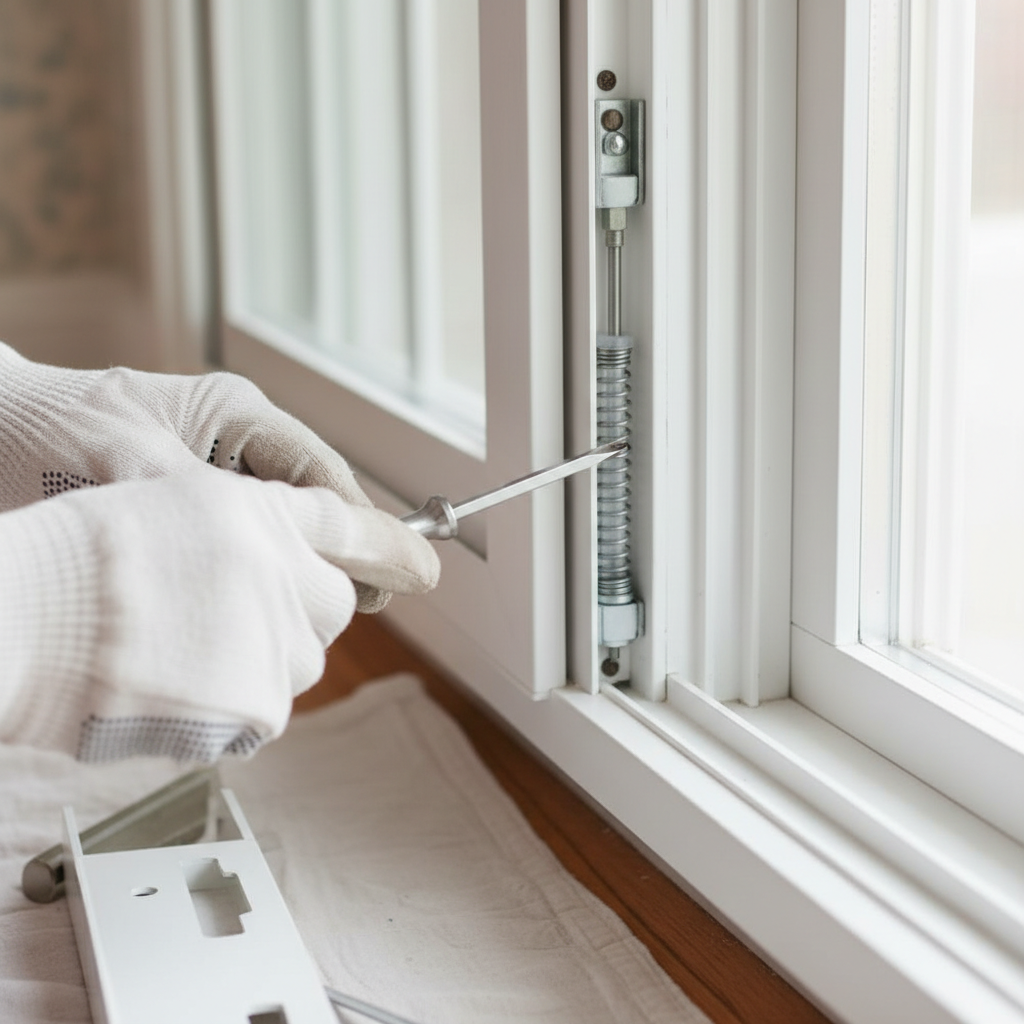
Clear the Tracks — Remove debris and obstructions Often, the simplest solution for a window that won't stay up is debris in the tracks. Over time, dirt, dust, pet hair, paint chips, and even small insects can accumulate, creating friction that prevents the balance system from working smoothly or even jamming the balance shoe. Use a stiff brush or a vacuum cleaner with a crevice attachment to thoroughly clean the side tracks where the sash slides. Pay close attention to the bottom corners where the balance shoes sit. Wipe down the tracks with a damp cloth.
- Tools: Vacuum with crevice tool, stiff brush, damp cloth.
- If this doesn't work: The problem is likely with the balance mechanism itself.
-
Inspect the Balance Shoe — Check for detachment or damage With the window open as far as it will go, or carefully removed from the frame (see Step 3 if needed), look at the plastic or metal shoe at the bottom of the side sash channel. This is the part that connects the balance rod to the sash. Check if it's detached from the sash, cracked, or broken. Sometimes, the shoe simply pops out of its groove. If it's detached, try to re-seat it firmly into the sash. If it's visibly damaged, it will need replacement.
- Look for: Cracks, missing pieces, signs of wear, or detachment from the sash.
-
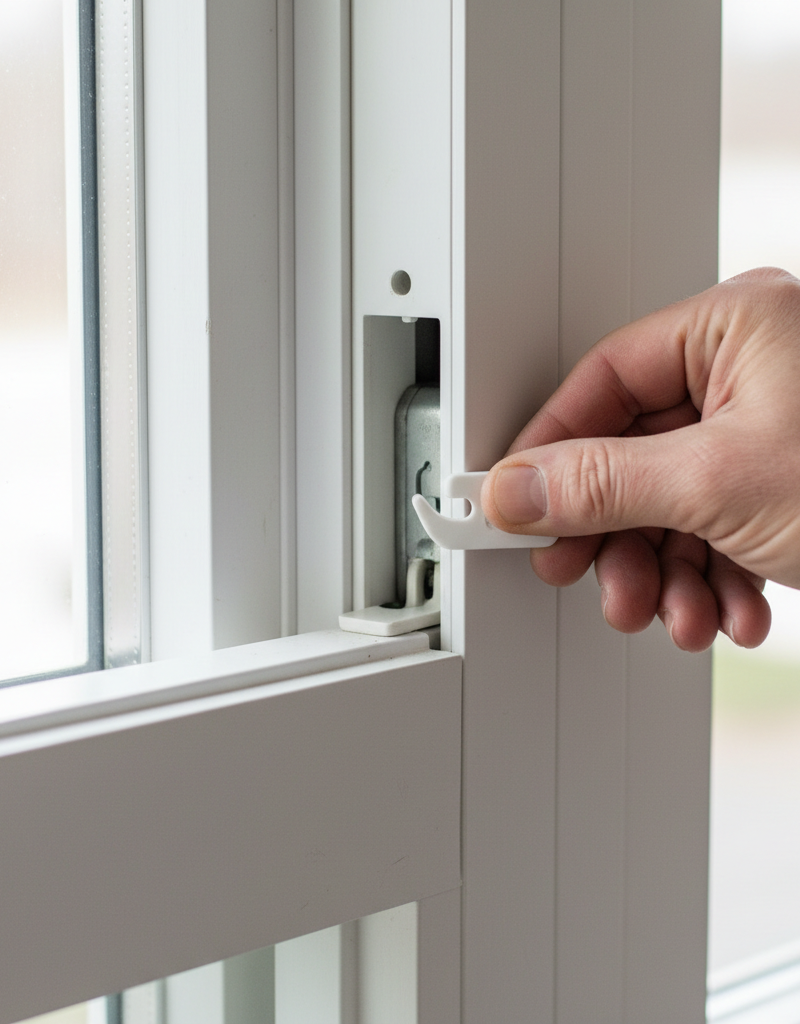
Remove the Window Sash — Gain access to the balance mechanisms To properly inspect or replace balances, you'll often need to remove the window sash. Most modern double-hung windows have tilt latches at the top of the sash (often small levers or buttons) that allow the window to tilt inwards for cleaning. Engage these latches, pull the top of the sash towards you, and then lift it out of the frame. Set it aside carefully on a protected surface.
- Pro tip: Take photos before and during removal to aid reassembly.
- Be aware: Sashes can be heavy; get help if necessary.
-
Examine the Balance Rods/Springs — Check for breakage or loss of tension Once the sash is out, you can get a better look at the balance mechanisms in the side channels of the window frame. For spiral balances, look for the spiral rod. Is it bent, broken, or does it appear to have lost its tension (i.e., it doesn't try to spring back up)? For spring balances, look for a broken spring or housing. For block and tackle systems, check for frayed or broken cords and damaged pulleys. Any visible damage here indicates a need for replacement.
-
Re-tension Spiral Balances (If Applicable) — Restore spring tension If you have spiral balances and the spring mechanism still feels intact but just isn't holding the weight, it might need re-tensioning. With the sash removed, the balance shoe should be at the bottom of the track. If the balance rod has a flat head or notch, you can use a balance tensioning tool (or sometimes a flathead screwdriver) to rotate the rod clockwise. Typically, 3-5 full turns of the rod will increase tension. Re-seat the balance shoe firmly into the track and reinstall the sash to test.
- Caution: Over-tensioning can damage the mechanism or make the window difficult to operate. Start with a few turns and add more if needed.
-
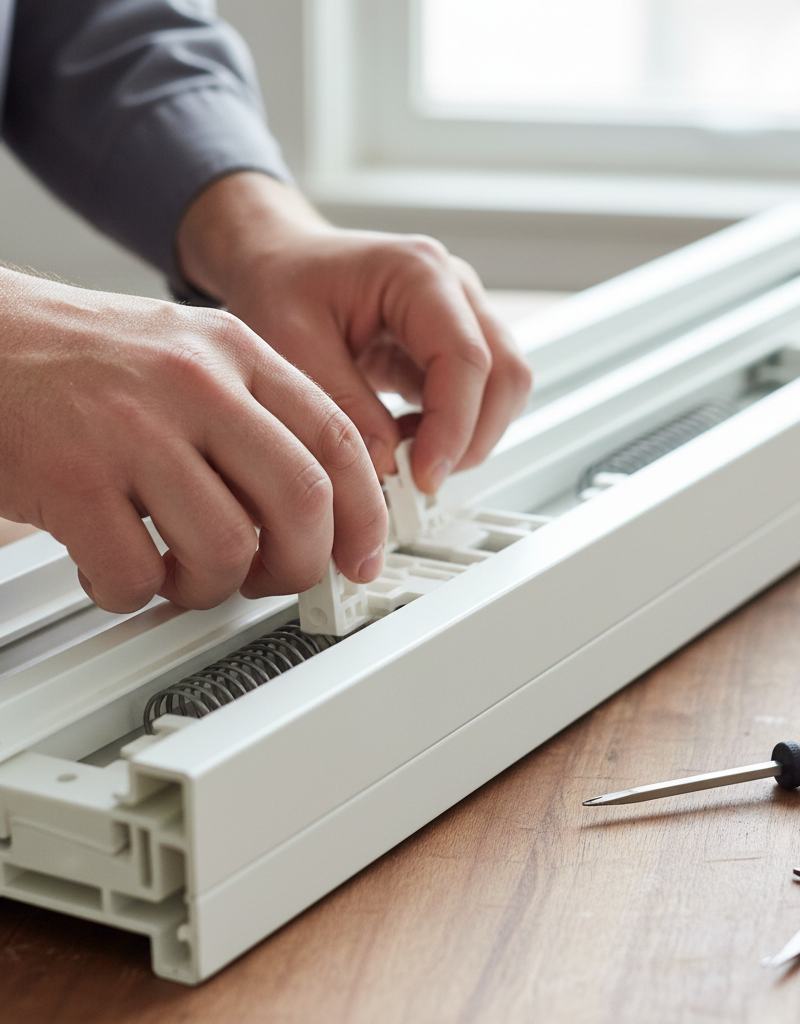
Replace Damaged Balance Shoes — Swap out broken plastic components If the balance shoe (the plastic piece that connects the sash to the balance rod) is broken, you'll need a replacement. These are typically specific to the manufacturer and balance type. Gently pry out the old shoe from the bottom of the sash channel, noting its orientation. Insert the new shoe, ensuring it snaps securely into place and engages with the balance rod correctly. You may need to press down on the balance rod for it to seat properly.
-
Replace the Entire Balance Assembly — For broken springs or significant damage If the spring is broken, the spiral rod is bent, or the entire block and tackle system is compromised, you'll need to replace the entire balance assembly. This usually involves prying out the old balance from the side channel. Note the length and type of your existing balance carefully before purchasing a replacement. Window balances are specific to the weight of your sash and the window manufacturer. Once the old balance is removed, slide the new one into place, ensuring it's oriented correctly and secured. Then, re-engage the balance shoe with the sash.
- Crucial: Measure the length of the metal channel and note any numbers printed on the balance. This information is key for ordering the correct replacement part.
- Where to buy: Specialty window hardware stores, online retailers, or direct from the window manufacturer.
-
Lubricate the Tracks — Reduce friction for smoother operation After cleaning or replacing components, a light, dry lubricant can significantly improve window operation. Avoid oil-based lubricants as they can attract dirt and grime, leading to future problems. Silicone spray or a PTFE-based lubricant is ideal. Spray a thin coat into the side channels where the sash slides. Open and close the window several times to distribute the lubricant evenly.
- Do NOT use: WD-40 or similar oil-based products, which can gum up over time.
-
Reinstall and Test — Check your work Carefully reinstall the window sash, ensuring the tilt latches engage correctly and the sash sits properly in its tracks. Slowly raise and lower the window several times, checking if it now stays open at various heights. The operation should feel smooth and balanced. If it still slides down, re-evaluate the tensioning (if spiral balance) or double-check the balance shoe's connection.
Common Causes
- Worn or Broken Balance Mechanisms: This is by far the most frequent issue. Over years of use, springs lose their tension, spiral rods become fatigued, or parts of the block and tackle system (cords, pulleys) wear out or break.
- Accumulated Dirt and Debris in Tracks: Even a small amount of grit, dust, or paint overspray can increase friction, making it harder for the balance system to support the sash, especially if it's already slightly weakened.
- Damaged or Dislodged Balance Shoes: The plastic or metal components that connect the sash to the balance rod can crack, break, or simply pop out of their groove, disconnecting the sash from its support.
- Improper Tension (Spiral Balances): Spiral balances are designed to be tensioned. If they lose tension over time, or were never correctly tensioned after installation, they won't provide adequate lift.
- Paint or Sealant on Tracks: When windows are painted, sometimes paint can inadvertently get into the tracks or onto the weatherstripping,
Related Articles
Keep troubleshooting with these hand-picked guides from FixlyGuide:
- The 5-Minute Trick to Fix a Sagging Window (No New Parts Needed) — Discover the simple, often overlooked cause of a window that won't stay open and how to fix it in minutes using common household items.
- The 5-Minute Trick to Fix a Window That Won't Stay Open (No Tools Needed!) — Discover the surprisingly simple reasons why your window keeps sliding shut and how to fix it in minutes, often without any tools.
- The 4-Minute Trick to Fix a Sagging Window (No More Prop-Sticks!) — Discover the simple, often-overlooked culprit behind a window that won't stay open and how to fix it in minutes with basic tools.
- The 5-Minute Trick to Fix a Door That Won't Latch (No New Hardware Needed) — Discover the simple, often overlooked reason your door isn't latching and how to fix it in minutes with basic tools, no new hardware requir…
- The 5-Minute Trick to Fix a Door That Won't Latch (No New Hardware Needed) — Discover the simple, often-overlooked reason your door won't latch and how to fix it in minutes without replacing any parts.
- The 30-Second Trick to Fix a Humming Garbage Disposal (Without Calling a Plumber) — A humming garbage disposal likely indicates a jam; most can be cleared in minutes with a simple trick, avoiding costly plumber calls.
Should you do this yourself?
Answer five quick questions before you start. Safety outranks savings every time.
Your experience with work like this
How high do you have to work?
Does the job involve any of these?
Will it need a permit?
Specialty tools
Free and instant. Educational guidance only — not a quote, inspection, or professional diagnosis.
What should this project cost?
Enter your project details for a realistic cost range before you call anyone.
Cost depends heavily on which system turns out to be the source.
- Regional adjustment
- National average
- Labor share (typical)
- ~$1,620
- Quotes to collect
- 3 written estimates
Educational estimate based on national averages — not a binding quote. Always confirm with written local estimates.
Get the print-ready PDF of this guide
A clean, ad-free, printable version you can keep on your phone or pin to the workshop wall. Free with a FixlyGuide account.
- Print-optimized layout
- Tools, materials & every step included
- Saved to your account
Recommended for DIYers & woodworkers
Sponsored
The Top 20 Tools for Workshops of Any Budget
No stationary machines or power tools required — plus 3 fundamental tools that can't be bought at any price.
Get the free guide
Ted's Woodworking — The #1 Woodworking Resource
Detailed instructions, dimensioned drawings, materials & cutting lists, and 3D schematics for every skill level.
See the plansSponsored: links above are affiliate links. FixlyGuide may earn a commission on qualifying purchases — at no extra cost to you.
Frequently asked questions
Why does my window keep sliding down?+
The most common reason a double-hung window sash slides down is a problem with the balance mechanism (spring, spiral, or block and tackle) inside the window frame. These balances lose tension or break over time, or the shoes connecting them to the sash can detach or break. Dirt and debris in the tracks can also create excessive friction.
Can I fix a window that won't stay up myself?+
Yes, for most modern double-hung windows, fixing a sash that won't stay up is a repair well within the capabilities of a DIY homeowner. It often involves cleaning tracks, re-tensioning a spiral balance, or replacing a broken balance shoe or the entire balance assembly. No special tools are usually required beyond basic household implements.
How do I know what type of window balance I need?+
To identify the correct type of balance, first remove the window sash. Examine the balance mechanism in the side channel. Look for a coiled spring inside a tube (spring balance), a spiral rod (spiral balance), or cords and pulleys (block and tackle). Also, measure the length of the metal channel and look for any manufacturer codes or numbers printed on the balance itself. Take pictures to help you find the right replacement part.
How much does it cost to fix a window that won't stay up?+
The cost to fix a window that won't stay up can range from $0 if you simply need to clean the tracks, to $10-$40 for a replacement balance shoe, or $20-$80 for an entire balance assembly. Professional repair could range from $75-$200 per window, depending on labor rates and the complexity of the repair.
Discussion
Loading comments…