- Check connections: Look for leaks at the connection points where the line attaches to the back of the refrigerator and where it connects to the house's water shut-off valve.
- Examine the line itself: Inspect the entire length of the supply line for kinks, cracks, or punctures. Even a small pinhole can cause a significant leak over time. If the line is plastic, it can become brittle over time.
- Tighten loose connections: Use an adjustable wrench to gently tighten any loose fittings. Do not overtighten, as this can strip threads or crack plastic components.
- If damaged: If the line is cracked or punctured, it must be replaced. Turn off the water supply to the refrigerator before disconnecting the old line.
Plumbing · Leak
| Project category | Plumbing |
|---|---|
| Problem type | Leak |
| Trade required | Plumbing |
| Urgency | Emergency — act now |
| Safety risk | High safety risk |
| DIY suitability | DIY for experienced homeowners |
| Cost category | Low cost |
| Typical timeline | Shut water off now; repair usually same or next day |
| Contractor type | Licensed plumber |
Repair option
Isolate at the shutoff, replace the failed component, and dry the cavity fully.
Replacement option
Repipe the run or the branch when corrosion is widespread.
Common causes
- Failed supply line or shutoff valve
- Worn washers, cartridges, or P-trap connections
- Pinhole corrosion in older copper
Relevant tools:emergency checklistdiy or hire a pro
Published May 1, 2026Last updated August 17, 2026
Tools & materials you'll need
Affiliate linksAs an Amazon Associate FixlyGuide earns from qualifying purchases — at no extra cost to you. Prices and availability are accurate as of publication and subject to change.
Quick Answer
Most refrigerator leaks on the floor are caused by a clogged defrost drain tube, which allows meltwater to overflow and escape the appliance. Other common culprits include a damaged or overflowing drain pan, a loose or compromised water supply line, a faulty water inlet valve, or a cracked ice maker fill tube. Addressing these issues usually requires a few basic tools and some careful observation.
The Problem
You wake up to a puddle of water under your refrigerator. It’s a common, frustrating, and potentially damaging problem. Not only can it ruin your kitchen flooring, but it can also create a slip hazard and indicate a deeper issue with your appliance. The source of the leak isn't always obvious, leading many homeowners to assume the worst. However, in most cases, a refrigerator leak isn't a sign of a dying appliance but rather a fixable maintenance issue, often originating from one of a few key components designed to handle condensation or water delivery.
How It Works
To understand why your refrigerator is leaking, it helps to understand how its various systems manage water. A refrigerator's primary function is to keep food cold, which it does by circulating refrigerant. As the refrigerant absorbs heat from the interior, condensation forms on the evaporator coils. To prevent excessive ice buildup, refrigerators have a defrost cycle that periodically warms the coils, melting this frost.
This meltwater then flows down a defrost drain tube, typically located at the back of the freezer compartment, through a hole, and into a drain pan situated beneath the refrigerator. The drain pan holds this water, where it eventually evaporates due to the heat generated by the compressor. For refrigerators with ice makers or water dispensers, a separate water supply line connects the refrigerator to your home's water system. This line, often a thin copper or plastic tube, feeds water through a water inlet valve to the ice maker or dispenser. Any disruption in this delicate balance—a clog in the drain, a crack in the pan, or a leak in the supply line—can lead to water accumulating and eventually escaping onto your floor.
Step-by-Step Fix
1. Unplug the Refrigerator & Examine the Area — Safety first, always unplug the appliance before any inspection or repair.
Safely pull your refrigerator away from the wall, giving you access to the back and sides. Use a flashlight to inspect the floor for the immediate source of the leak. Look for trails of water leading to the puddle. If the leak is significant, place towels or a shallow pan to catch any further drips.
2. Check the Defrost Drain Pan — The most common culprit for unexplained puddles.
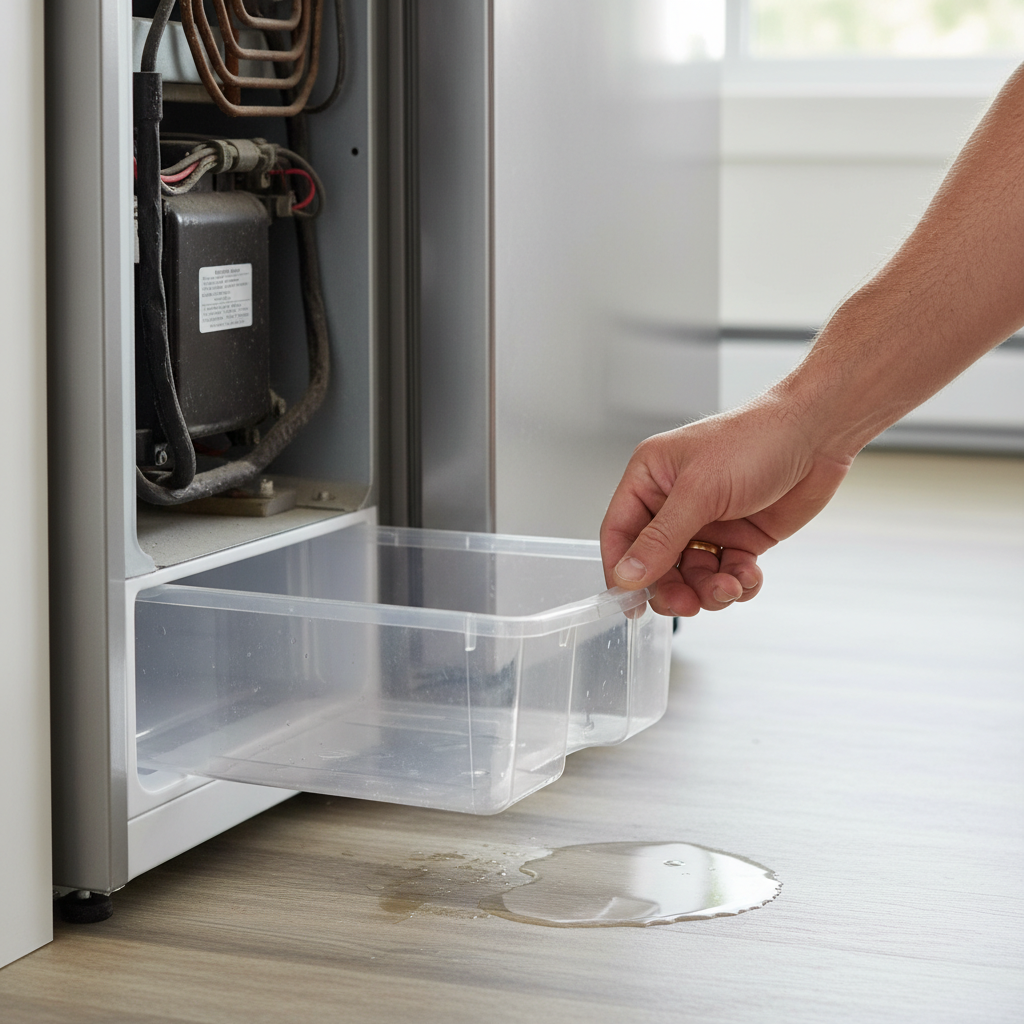
Locate the drain pan, which is usually a shallow plastic tray situated beneath the refrigerator, often near the compressor coils at the very bottom/back. Carefully slide it out.
- If the pan is full or overflowing: This indicates the defrost drain is working but the water isn't evaporating fast enough, or the pan itself is cracked. Empty the pan, clean it thoroughly with soap and water to remove any algae or mold, and inspect it for cracks. If cracked, you'll need to replace it.
- If the pan is dry but there's water nearby: The leak is likely originating from above the pan, possibly the defrost drain tube itself.
3. Clear a Clogged Defrost Drain Tube — A frequent cause of water overflowing inside the freezer.
The defrost drain tube can become clogged with ice, food particles, or mold/algae, causing meltwater to back up and overflow into the freezer compartment, eventually finding its way to the floor.
- Locate the drain tube: In most models, you'll need to remove the freezer's rear panel (inside the freezer) to access the drain hole. You may need to remove shelves and the ice maker first. For some models, the tube exits directly into the drain pan below.
- Clear the clog: Use a turkey baster or syringe filled with hot water or a mixture of hot water and baking soda to flush the drain tube from the freezer side. If it’s frozen, use a hairdryer (on a low setting, held at a safe distance) to gently melt any ice. You can also use a pipe cleaner or a long, flexible brush to dislodge debris.
- Consider a drain cleaner kit: Some appliance stores sell kits specifically designed to clear refrigerator drain clogs, often including a long, flexible probe.
- Safety Note: Be careful not to damage internal components or wiring while working inside the freezer.
4. Inspect the Water Supply Line — A common issue for refrigerators with ice makers or water dispensers.
If your refrigerator has an ice maker or water dispenser, it's connected to your home's water supply via a narrow tube, usually made of braided stainless steel or copper.
- Check connections: Look for leaks at the connection points where the line attaches to the back of the refrigerator and where it connects to the house's water shut-off valve.
- Examine the line itself: Inspect the entire length of the supply line for kinks, cracks, or punctures. Even a small pinhole can cause a significant leak over time. If the line is plastic, it can become brittle over time.
- Tighten loose connections: Use an adjustable wrench to gently tighten any loose fittings. Do not overtighten, as this can strip threads or crack plastic components.
- If damaged: If the line is cracked or punctured, it must be replaced. Turn off the water supply to the refrigerator before disconnecting the old line.
5. Assess the Water Inlet Valve — Controls water flow to the ice maker/dispenser; can fail over time.
The water inlet valve, usually located at the lower back of the refrigerator, is an electrically operated valve that opens to allow water into the ice maker and dispenser.
- Look for drips: Inspect the valve body and its connections for any signs of water drips or mineral buildup (calcium deposits), which indicate a slow leak.
- Listen for sounds: A humming or buzzing sound from the valve when no water is being dispensed might indicate it's stuck open or partially open, potentially leading to leaks.
- If leaking: A leaking inlet valve typically needs to be replaced. Turn off the water supply and unplug the refrigerator before attempting this repair.
6. Examine the Ice Maker Fill Tube — A less obvious but fixable leak source.
The small plastic or rubber tube that delivers water to the ice maker tray can sometimes crack or become misaligned, causing water to miss the tray and spill into the freezer, eventually leading to a floor puddle.
- Locate the fill tube: This tube usually extends from the freezer wall or ceiling into the back of the ice maker assembly.
- Inspect and realign: Check for cracks in the tube. Ensure it’s properly positioned to direct water directly into the ice maker mold. If it's merely misaligned, carefully reposition it. If cracked, it may need replacement, though some small cracks can be temporarily sealed with food-grade silicone sealant.
7. Level the Refrigerator — Prevents water from pooling unevenly.
While less common as a direct cause of leaks, an unleveled refrigerator can sometimes contribute to water pooling incorrectly, particularly in the drain pan, which might then overflow.
- Check level: Use a carpenter's level on top of the refrigerator to ensure it’s level side-to-side and front-to-back. Many manufacturers recommend a slight tilt backward to help door sealing.
- Adjust feet: Adjust the leveling feet at the bottom of the refrigerator with a wrench until it is properly leveled.
8. Monitor for Recurrence — After any repair, keep a close eye on the area.
Once you’ve performed a fix, plug the refrigerator back in and push it into place. Monitor the area for the next 24-48 hours to ensure the leak has stopped. If water reappears, you may need to re-evaluate the source or consider professional help.
Common Causes
- Clogged Defrost Drain Tube: The most frequent culprit. Food particles, ice, or algae can block the tube, causing meltwater to back up and overflow into the freezer compartment or into the drain pan, which then overflows.
- Damaged or Misaligned Drain Pan: The shallow pan beneath the refrigerator collects defrost water. If it’s cracked, overflowing due to excessive moisture, or shifted out of place, water will spill onto the floor.
- Leaky Water Supply Line: For refrigerators with ice makers or water dispensers, the plastic or copper line supplying water can become loose at its connections, kinked, cracked, or punctured, leading to a steady drip.
- Faulty Water Inlet Valve: This valve controls the flow of water to the ice maker and dispenser. If it cracks, fails to close properly, or develops an internal leak, water can seep out.
- Cracked or Misaligned Ice Maker Fill Tube: The small tube that directs water into the ice maker molds can crack due to freezing or become displaced, causing water to miss the mold and spill inside the freezer.
- Unlevel Refrigerator: While not usually a direct cause, an unleveled fridge can cause water in the drain pan to slosh over the edges or prevent proper drainage.
Common Mistakes
- Ignoring the Quick Fixes First: Many homeowners jump to calling a repair person before checking the most common and easiest-to-fix issues like a clogged drain tube or a loose water line.
- Overtightening Water Line Connections: While loose connections leak, overtightening can strip threads, crack plastic components, or damage the line itself, creating a worse leak.
- Forgetting to Unplug the Refrigerator: Always disconnect power before working on any appliance. This is crucial for safety and to prevent electrical damage.
- Using Harsh Chemicals in the Drain Tube: Strong chemical drain cleaners can damage the plastic components of the drain system or leave harmful residues. Stick to hot water, baking soda, or mild solutions.
- Assuming the Worst: A leak often seems like a major problem, but many refrigerator leaks are simple, inexpensive fixes that don't require professional intervention.
- Not Cleaning the Drain Pan Regularly: Algae and mold can grow in a neglected drain pan, contributing to clogs and unpleasant odors. Regular cleaning is a simple preventative measure.
Cost & Time Breakdown
| Task | DIY cost | Pro cost | Time |
|---|---|---|---|
| Clear Defrost Drain Tube | $0–$10 | $100–$250 | 15–45 minutes |
| Replace Drain Pan | $20–$50 | $150–$300 | 10–20 minutes |
| Replace Water Supply Line | $15–$40 | $100–$200 | 20–45 minutes |
| Replace Water Inlet Valve | $50–$150 | $200–$400 | 30–60 minutes |
| Relevel Refrigerator | $0 | $75–$150 | 5–15 minutes |
| Diagnose (pro only) | N/A | $75–$150 (trip charge) | 30–60 minutes |
Tips & Prevention
- Regular Drain Tube Flush: Every 6–12 months, flush your defrost drain tube with a turkey baster filled with hot water and a tablespoon of baking soda to prevent clogs.
- Clean the Drain Pan: Periodically check and clean the defrost drain pan to prevent mold and algae buildup, especially if you notice a damp smell.
- Inspect Water Lines: During routine kitchen cleaning, quickly check the water supply line and its connections for any signs of wear, kinks, or drips.
- Maintain Proper Leveling: Ensure your refrigerator remains level. This not only prevents leaks from the drain pan but also helps the doors seal properly, improving efficiency.
- Avoid Overpacking: Do not block the freezer's air vents or the drain hole, as this can impede airflow and drainage, leading to ice buildup and potential clogs.
- Replace Old Water Lines: If your refrigerator's water supply line is older than 5-7 years, especially if it's plastic, consider proactively replacing it to prevent a burst and major flood.
When to Call a Professional
While many refrigerator leaks are DIY-friendly, certain situations warrant calling a licensed appliance repair technician. If you've diligently worked through these troubleshooting steps and the leak persists, especially if you cannot identify the source, a professional has specialized tools and diagnostic experience. If you suspect a more complex internal component failure, such as a faulty sealed system (though rare for leaks), or if the repair requires specialized knowledge of refrigerant lines or electrical components that you are uncomfortable with, it's best to call a pro. Additionally, if the leak is substantial and causing significant water damage or if you feel unsafe performing the repair, immediately unplug the unit and contact a professional. They can accurately diagnose intricate issues and ensure the repair is done safely and correctly, saving you further frustration and potential damage.
Related Articles
Keep troubleshooting with these hand-picked guides from FixlyGuide:
- The 3 Hidden Reasons Your Refrigerator Leaks Water (And How to Fix Them in 30 Minutes) — Discover the most common culprits behind a leaking refrigerator and learn how to diagnose and fix them quickly with this comprehensive guid…
- The Secret Culprit Behind Your Leaking Refrigerator (It’s Not Always a Big Fix) — Discover the most common and often overlooked reasons why your refrigerator is leaking water on the floor, and how to fix them yourself.
- The Secret Culprit Behind Your Leaky Refrigerator (It’s Not Always the Water Line) — Discover the most common, often overlooked, reasons your refrigerator is leaking water and how to fix them with simple DIY steps.
- The Surprising Culprit Behind Your Refrigerator's Water Leak (It's Not Always the Ice Maker) — Discover the most common, often overlooked reason your refrigerator is leaking water and how to fix it with simple steps.
- The Secret Culprit Behind Your Leaky Chimney (It's Not Always the Obvious Fix) — Discover the often-overlooked causes of a leaky chimney during rain and learn how to diagnose and fix these common problems yourself.
- That Peeling Paint? Your Bathroom Has a Moisture Secret — Discover the hidden causes behind your peeling bathroom ceiling paint. We reveal why moisture is the main culprit and provide a permanent f…
Should you do this yourself?
Answer five quick questions before you start. Safety outranks savings every time.
Your experience with work like this
How high do you have to work?
Does the job involve any of these?
Will it need a permit?
Specialty tools
Free and instant. Educational guidance only — not a quote, inspection, or professional diagnosis.
Questions to ask before you sign
Ask every contractor the same questions and the cheapest bid stops looking cheapest. Check them off as you go — your progress is saved on this device.
Free, no signup. Bring this to every walkthrough so you compare bids on the same terms.
Handle this before it gets worse
First steps that limit damage, then a way to reach a qualified pro.
- Emergency repair checklistThe first steps that limit damage before a pro arrives.Open
- Get local estimatesSend one request and compare written estimates from vetted pros.Open
- Estimate this projectGet a cost range for your scope and ZIP before you call anyone.Open
Free, no signup required. Estimates are educational guidance, not a quote or an inspection.
Frequently asked questions
Why is there water under my refrigerator?+
The most common reason for water under your refrigerator is a clogged defrost drain tube, which causes meltwater to overflow from the freezer and seep onto the floor. Other causes include a cracked drain pan, a leaking water supply line, or a faulty water inlet valve.
How do I clear a clogged refrigerator drain tube?+
To clear a clogged drain tube, first unplug the refrigerator. Access the drain hole in the freezer (often behind a rear panel) and use a turkey baster with hot water and baking soda, or a flexible brush, to flush out the clog. You may also need to melt any ice buildup with a hairdryer on a low setting.
Can an unlevel refrigerator cause a leak?+
An unlevel refrigerator isn't usually a direct cause of a leak, but it can contribute. If the refrigerator isn't level, water in the defrost drain pan might slosh over the edges rather than evaporating properly, leading to small puddles. Adjusting the leveling feet can resolve this.
How often should I clean my refrigerator's drain pan?+
It's a good practice to check and clean your refrigerator's drain pan every 6 to 12 months, or whenever you notice a damp smell around the appliance. This prevents the buildup of mold, mildew, and algae that can lead to clogs and odors.
Discussion
Loading comments…