- The Secret Reason Your Toilet Clogs Every Few Days (It’s Not What You Think) — Frequent toilet clogs often point to issues beyond simple blockages, from vent pipe problems to a failing flush mechanism, demanding a clos…
- The 3 Hidden Reasons Your Toilet Clogs Repeatedly (And How to Fix Each One) — Uncover the surprising culprits behind your constantly clogging toilet and learn homeowner-friendly fixes to restore flush power.
- Why Your Toilet Clogs Every Few Days (And the 1 Mistake Homeowners Make) — A toilet that clogs frequently is a frustrating problem, but often points to a few common culprits that homeowners can diagnose and fix wit…
- Why Your Toilet Clogs Every Few Days (And the 1 Mistake Homeowners Make) — A toilet that clogs frequently is a frustrating problem, often caused by easily overlooked issues like trapway obstructions or ventilation…
- The 1 Mistake Homeowners Make When Their AC Drain Clogs (And The $5 Fix) — Discover the most common error homeowners make when tackling a clogged AC drain line and learn a simple, inexpensive solution to prevent co…
Plumbing · Clog
| Project category | Plumbing |
|---|---|
| Problem type | Clog |
| Trade required | Plumbing |
| Urgency | Soon — within weeks |
| Safety risk | Low safety risk |
| DIY suitability | DIY friendly |
| Cost category | Low cost |
| Typical timeline | Same-day DIY attempt; pro visit within a day or two |
| Contractor type | Licensed plumber |
Repair option
Plunger, hand auger, or trap cleanout before chemicals.
Replacement option
Line replacement when clogs return in the same spot repeatedly.
Common causes
- Hair and soap buildup in the trap
- Grease cooling in the branch line
- Flushed wipes or foreign objects
Relevant tools:diy difficultydiy or hire a pro
Published July 25, 2026Last updated August 17, 2026
Tools & materials you'll need
Affiliate linksAs an Amazon Associate FixlyGuide earns from qualifying purchases — at no extra cost to you. Prices and availability are accurate as of publication and subject to change.
Quick Answer
If your toilet seems to clog every other day, you’re probably dealing with one of a handful of common problems — a low-flow model that just can’t keep up, too much toilet paper, or something hung up in the trap or farther down the line. Most of the time, you can knock these clogs out yourself with a good plunger or a toilet snake. But sometimes the toilet’s failing, or there’s a real blockage in the main line, and that’s when you call in the pros.
The Problem
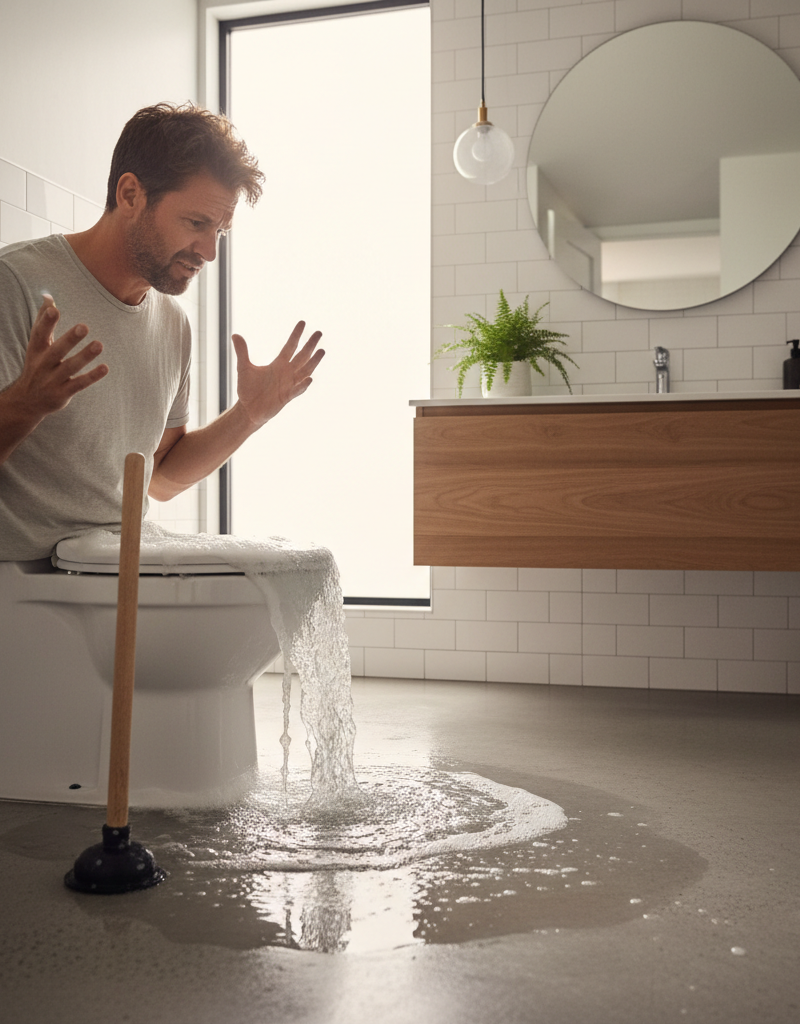
You know the routine. You flush, the water climbs, and then it just sits there staring back at you. Or worse, it spills over. You plunge, you hope, and maybe it behaves for a day or two before starting the whole ugly cycle again. That’s not just irritating; it’s a sanitation mess, and guests notice it right away. When a toilet clogs over and over, something’s off. It’s usually not some random fluke. I’ve had homeowners swear their kids were flushing toys, only to find out the real issue was plain old plumbing that couldn’t keep up.
I remember one older house in Brookhaven a few years back. The homeowner, Mrs. Henderson, was calling me almost monthly because her toilet kept clogging. She was sure the grandkids were the culprits. Nope. Her old, inefficient 1.6-gallon-per-flush toilet just couldn’t handle the thicker, plushier toilet paper she’d started using. We swapped it for a new, 1.28 GPF high-efficiency model with better flush dynamics, and that thing’s been clog-free ever since. Sometimes it really is the small stuff that bites you.
How It Works
If you want to figure out why a toilet keeps clogging, you’ve got to know what’s supposed to happen in the first place. You hit the handle, a chain lifts the flapper in the tank, and water dumps from the tank into the bowl through a big opening at the bottom. That rush sets up a siphon in the toilet’s integral trapway — the S-shaped passage built right into the porcelain, the part that holds standing water and keeps sewer gas out of your house. The pressure and the siphon are supposed to pull waste and toilet paper out of the bowl and into the drain.
From there, the waste moves through a branch drain line, usually a 3-inch or 4-inch PVC or cast iron pipe. That branch ties into the bigger main waste stack, which runs vertically through the house and eventually connects to the main sewer line outside. The vent pipe matters, too. It runs from the main stack up through the roof and lets air into the system so you don’t get a vacuum fighting the flow. If any one of those parts — the flapper, the trapway, the branch line, the main stack, or the vent — is having trouble, you’ll start seeing clogs all the time. It’s a chain reaction. One bad link, and the whole thing backs up.
Step-by-Step Fix
Here’s how I handle a toilet that keeps clogging. Start simple and work up. Don’t skip around; half the time, the cheap fix is the right one.
-
Assess the Situation — Is it just one toilet, or all of them? Before you grab anything, figure out how bad the problem really is. If only one toilet is acting up, the issue is probably in that fixture or its branch drain. If more than one toilet — or sinks and showers — are backing up, now you’re looking at a main sewer line problem, and that’s usually pro territory. Five minutes here can save you an afternoon of chasing the wrong problem.
-
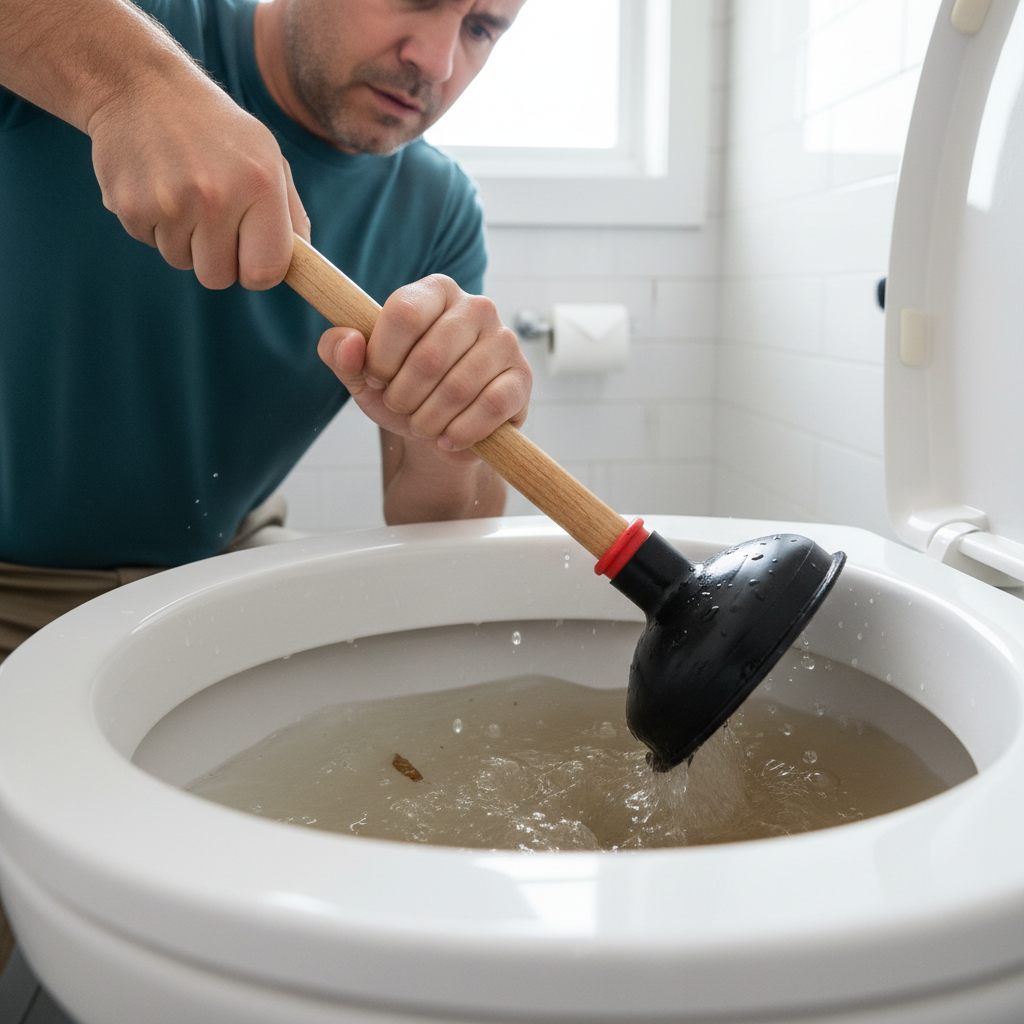
Plunge with Purpose — Use the right technique and the right tool. Skip the flat sink plunger. You want a flange plunger, the one with that extra rubber cup that folds down and makes a tight seal in the toilet opening. Set it over the drain hole and push out the air. Then work it with steady pressure — push, pull, push, pull. Don’t just stab at it. You’re trying to build suction and pressure, not splash yourself with toilet water. You want to hear that little “whoosh” when the clog breaks loose. Give it 10-15 good pumps. Sometimes that’s all she wrote.
-
Inspect the Flapper and Fill Valve — Make sure your toilet is flushing with full power. Pull the lid off the tank and watch what happens when you flush. Does the flapper lift all the way and stay open long enough for the tank to empty? If it drops too early, the bowl’s not getting enough water volume. Check the chain; it should have a little slack, about 1/2-inch. Too tight and it won’t seal right. Too loose and it can hang up. Then look at the tank water level after it refills. It should sit about an inch below the overflow tube. If it’s low, adjust the fill valve so the tank fills higher and the flush comes in stronger. I’ve seen a little mineral crust on the flapper seat cause weak flushes for months before anybody noticed.
-
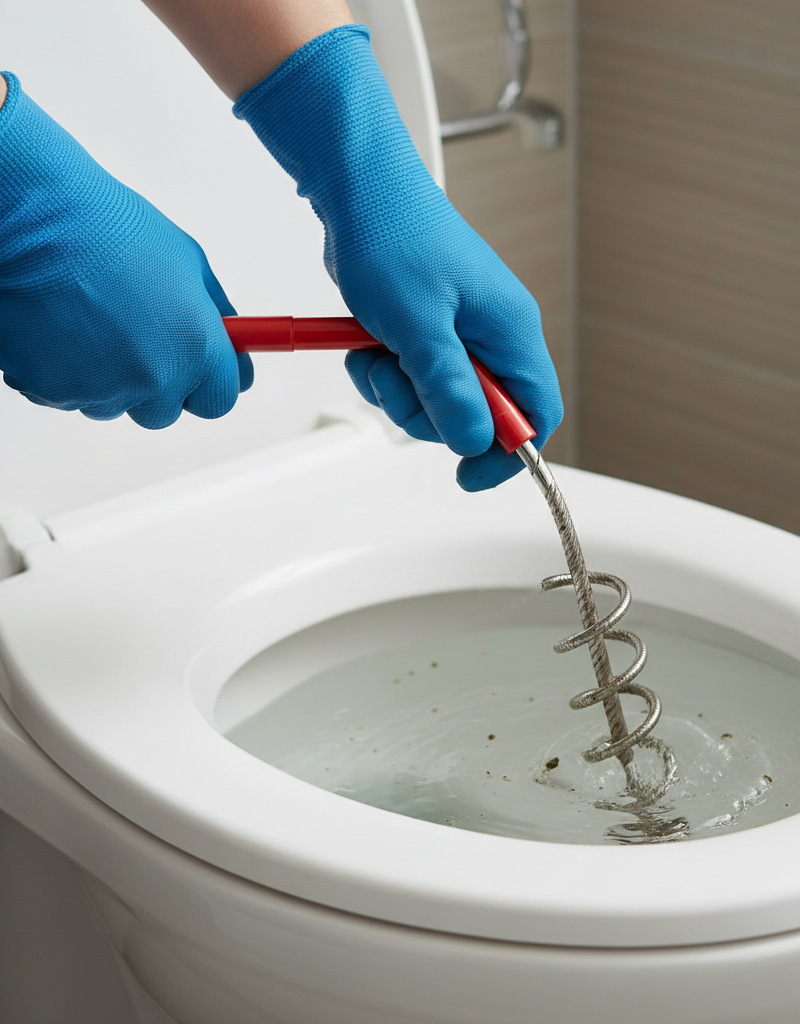
Try a Toilet Auger (Closet Auger) — Reach deeper than a plunger ever could. If the plunger doesn’t get it done, bring out a toilet auger. These are made for toilets, with a sleeve on them so you don’t chew up the porcelain. Feed it carefully into the bowl drain and crank clockwise as you push. You’ll feel it work through the trap. If you hit something solid, keep rotating and ease it forward to break up or hook the clog. Once you’ve cleared it, pull the auger back out and flush a few times to make sure the water’s moving freely. I’ve pulled out everything from “flushable” wipes to a toothbrush with one of these — no joke.
-
Check the Rim Jets — Are they providing a strong swirl? Those little holes under the rim of the bowl are the rim jets. They’re what create the swirl that cleans the bowl and helps send waste down the line. Over time, mineral buildup — especially if you’ve got hard water — can choke those jets down and leave you with a weak flush. Grab a small mirror and look under the rim. If you see white or greenish crud, clean it with a piece of coat hanger wire or a small Allen wrench. Poke and wiggle to break the deposits loose. Then pour a cup of vinegar into the overflow tube in the tank and let it sit for 30 minutes before flushing. That’ll help loosen up internal mineral buildup.
-
Consider the Toilet Itself — Is it an old, inefficient model? Older toilets, especially the ones from the 1990s and early 2000s that use 3.5 or 5 gallons per flush, often have bigger trapways and older designs. Oddly enough, a lot of the first generation 1.6 GPF low-flow toilets mandated in the US in 1994 were known for lousy flushing performance. They just didn’t have the force to move waste well, especially if the trapway geometry wasn’t great. I pulled a water heater in Frisco last month and the homeowner had the exact same complaint with an old low-flow toilet next to the laundry room — same story, different house. If your toilet’s old and you’ve checked everything else, a replacement may be the cleanest fix. Sometimes you’re better off calling it a day and upgrading.
Related Articles
Keep troubleshooting with these hand-picked guides from FixlyGuide:
- The Secret Reason Your Toilet Clogs Every Few Days (It’s Not What You Think) — Frequent toilet clogs often point to issues beyond simple blockages, from vent pipe problems to a failing flush mechanism, demanding a clos…
- The 3 Hidden Reasons Your Toilet Clogs Repeatedly (And How to Fix Each One) — Uncover the surprising culprits behind your constantly clogging toilet and learn homeowner-friendly fixes to restore flush power.
- Why Your Toilet Clogs Every Few Days (And the #1 Mistake Homeowners Make) — A toilet that clogs frequently is a frustrating problem, but often points to a few common culprits that homeowners can diagnose and fix wit…
- Why Your Toilet Clogs Every Few Days (And the #1 Mistake Homeowners Make) — A toilet that clogs frequently is a frustrating problem, often caused by easily overlooked issues like trapway obstructions or ventilation…
- The #1 Mistake Homeowners Make When Their AC Drain Clogs (And The $5 Fix) — Discover the most common error homeowners make when tackling a clogged AC drain line and learn a simple, inexpensive solution to prevent co…
- The 4 Hidden Reasons Your Entire Home Has Low Water Pressure (And the Easy Fixes) — Low water pressure throughout your entire home can be a frustrating and often misunderstood problem, with several common culprits. Learn to…
Should you do this yourself?
Answer five quick questions before you start. Safety outranks savings every time.
Your experience with work like this
How high do you have to work?
Does the job involve any of these?
Will it need a permit?
Specialty tools
Free and instant. Educational guidance only — not a quote, inspection, or professional diagnosis.
What should this project cost?
Enter your project details for a realistic cost range before you call anyone.
Common repairs run $150–$650; repipes and water-heater replacements reach $1,500–$4,500.
- Regional adjustment
- National average
- Labor share (typical)
- ~$754
- Quotes to collect
- 3 written estimates
Educational estimate based on national averages — not a binding quote. Always confirm with written local estimates.
Fixly Project Decision Box
- DIY difficulty
- Moderate
- Estimated time
- 30 minutes – half a day
- Cost level
- Moderate
Main tools / materials
- Adjustable wrench
- Plunger or drain auger
- Bucket and towels
- Thread tape
When to stop and call a pro
- Water you cannot shut off at the fixture or main
- Sewage backing up into more than one fixture
- Water near electrical panels or outlets
- Gas water heater work beyond relighting a pilot
Need professional help?
Get a Licensed PlumberBefore you start
Check the difficulty, permits, and safety risk — then decide whether to call a pro.
- Estimate this projectGet a cost range for your scope and ZIP before you call anyone.Open
- Get local estimatesSend one request and compare written estimates from vetted pros.Open
Free, no signup required. Estimates are educational guidance, not a quote or an inspection.
Get the print-ready PDF of this guide
A clean, ad-free, printable version you can keep on your phone or pin to the workshop wall. Free with a FixlyGuide account.
- Print-optimized layout
- Tools, materials & every step included
- Saved to your account
Frequently asked questions
Why does my toilet clog every few days?+
Frequent toilet clogs often point to issues like a weak flush from an older or low-flow toilet, excessive toilet paper use, flushing foreign objects, or partial blockages forming in the toilet's trapway or the branch drain line leading to the main sewer.
Can I use chemical drain cleaners in my toilet?+
I strongly advise against pouring chemical drain cleaners down your toilet. They're often ineffective on larger clogs, can damage your pipes (especially older ones), and will leave caustic chemicals sitting in your bowl if the clog doesn't clear, posing a serious safety hazard.
How do I know if my main sewer line is clogged?+
If you experience clogs or backups in multiple drains or toilets simultaneously, or if water backs up into a shower or tub when you flush a toilet, it's a strong indicator of a main sewer line blockage. This is usually beyond DIY and needs a professional.
What's the difference between a plunger and a toilet auger?+
A plunger uses suction and pressure to dislodge clogs close to the bowl's opening. A toilet auger (or closet auger) is a flexible cable with a crank that can be fed further into the toilet's trapway and branch drain to physically break apart or retrieve deeper blockages without scratching the porcelain.
Are 'flushable' wipes really flushable?+
Absolutely not. Despite what the packaging says, 'flushable' wipes do not break down like toilet paper and are a major cause of clogs in household plumbing and municipal sewer systems. Always dispose of them in the trash.
How can I improve my toilet's flushing power?+
First, ensure the water level in your tank is correct (about an inch below the overflow tube). Check the flapper for proper sealing and full lift. Clean any mineral buildup in the rim jets under the bowl's rim. If it's an older, inefficient low-flow toilet, replacing it with a modern, high-efficiency model designed for powerful flushes can make a huge difference.
What size drain pipe does a toilet use?+
Most residential toilets connect to a 3-inch (7.6 cm) or 4-inch (10.2 cm) branch drain line, which then ties into a larger main waste stack. The specific size can impact flow, especially in older homes or with long horizontal runs.
Can a clogged vent pipe cause toilet clogs?+
Yes, absolutely. A partially or fully clogged vent pipe prevents air from entering the drain system, which creates a vacuum. This vacuum can hinder the siphoning action of the flush, leading to weak flushes, gurgling sounds, and frequent clogs. Often, you'll need a pro to clear a vent stack.
How often should I replace my toilet flapper?+
A toilet flapper typically lasts about 5-7 years, but this can vary based on water chemistry and usage. If it's becoming stiff, cracked, or simply not sealing well, you'll notice ghost flushing or a running toilet, which can also contribute to weak flushes and clogs.
Discussion
Loading comments…