- The Secret Reason Your Toilet Clogs Every Few Days (It’s Not What You Think) — Discover the often-overlooked culprits behind a frequently clogging toilet and learn how to implement lasting fixes without calling a plumb…
- Why Your Toilet Clogs Every Few Days (And the 1 Mistake Homeowners Make) — A toilet that clogs frequently is a frustrating problem, but often points to a few common culprits that homeowners can diagnose and fix wit…
- Why Your Toilet Clogs Every Few Days (And the 1 Mistake Homeowners Make) — A toilet that clogs frequently is a frustrating problem, often caused by easily overlooked issues like trapway obstructions or ventilation…
- The Secret Reason Your Toilet Clogs Every Few Days (It’s Not What You Think) — Frequent toilet clogs often point to issues beyond simple blockages, from vent pipe problems to a failing flush mechanism, demanding a clos…
- The 3 Hidden Reasons Your Toilet Clogs Repeatedly (And How to Fix Each One) — Uncover the surprising culprits behind your constantly clogging toilet and learn homeowner-friendly fixes to restore flush power.
Plumbing · Clog
| Project category | Plumbing |
|---|---|
| Problem type | Clog |
| Trade required | Plumbing |
| Urgency | Soon — within weeks |
| Safety risk | Low safety risk |
| DIY suitability | DIY friendly |
| Cost category | Low cost |
| Typical timeline | Same-day DIY attempt; pro visit within a day or two |
| Contractor type | Licensed plumber |
Repair option
Plunger, hand auger, or trap cleanout before chemicals.
Replacement option
Line replacement when clogs return in the same spot repeatedly.
Common causes
- Hair and soap buildup in the trap
- Grease cooling in the branch line
- Flushed wipes or foreign objects
Relevant tools:diy difficultydiy or hire a pro
Published August 2, 2026Last updated August 17, 2026
Tools & materials you'll need
Affiliate linksAs an Amazon Associate FixlyGuide earns from qualifying purchases — at no extra cost to you. Prices and availability are accurate as of publication and subject to change.
Quick Answer
Look, a toilet that clogs every few days isn't just annoying — it's trying to tell you something's wrong. Most folks grab the plunger first, but that’s like slapping a bandage on a busted pipe. Recurring clogs usually come from a few hidden problems: a partial blockage in the trap or drain, a vent pipe that’s choked off, or hard water scale messing with the toilet’s flush parts. You've gotta find the root cause if you want that thing to quit backing up on you.
The Problem
I’ve been in plumbing for 25 years, and I can tell you straight up, not much frustrates a homeowner like a toilet that keeps clogging. It’s not just the hassle. It’s the mess, the panic about an overflow, and that same old question: why does this keep happening? You plunge it, it clears, and then a couple days later, there it is again. That usually isn’t from one heavy load of toilet paper once in a while. It’s a system issue. If you don’t handle it the right way, you’re just shoving the problem deeper or making it uglier.
I remember a call in Brookhaven last winter — guy swore his main bath toilet was cursed. He’d been plunging it every day for a month and calling it bad luck. Nope. His toddler had been dropping little toys in there for weeks, and they’d finally packed into a solid dam way down the waste line. Took me a proper snake and a few hundred bucks to get it sorted. Don’t let it get that far.
How It Works
To make sense of why a toilet starts acting up, you need the basics of how it’s built. When you flush, water dumps out of the tank, runs through the rim jets and the siphon jet at the bottom of the bowl, and that creates the suction that yanks waste through the trapway. That trapway is the hidden S-bend under the bowl. You never see it, but it matters. It stays full of water to block sewer gas from coming back into the house. After that, everything drops into the waste pipe, then into the main drain line, and eventually out to the sewer or septic tank.
The vent pipe is a big part of that setup. Every plumbing fixture needs one. Usually it’s a pipe that runs straight up and out through the roof. What’s it do? It lets air into the drain lines behind the moving water. Think about pouring water out of a soda bottle with your thumb over the top — it glugs and fights you, right? That’s because air can’t get in fast enough. A vent keeps that vacuum from happening, so waste moves clean and fast. If that vent gets blocked — leaves, bird nest, you name it — the toilet loses flush power and you start getting the same clog over and over. You might even hear gurgling in the shower or sink when you flush. It’s all tied together.
Then there’s the toilet itself. Older low-flush models from the 90s, especially some of the early 1.6-gallon per flush (GPF) units, just didn’t have much punch. They were weak. Newer toilets do a better job, with bigger trapways and a stronger siphon effect, so they clear waste with less water. But even a good toilet can get slowed down by mineral buildup in the rim jets or the siphon jet. Hard water leaves scale, little by little, until the flush gets lazy. It’s like clogged arteries for the toilet — no joke.
Step-by-Step Fix
Before you start ripping into anything, do the safe stuff first. Shut off the water supply to the toilet — that valve’s usually on the wall behind it or off to the side. If you’re reaching into the bowl, throw down some old towels. And wear gloves. Trust me.
-
Check for an Obvious Obstruction — Start with your eyes.
- Look in the bowl and down into the trapway opening. Sometimes it’s a toy, a bottle cap, or a dental floss dispenser just sitting there like it owns the place. A flashlight helps. Needle-nose pliers work well, or even kitchen tongs if the item’s small enough. If you can see it, pull it out carefully. Don’t shove it deeper.
-
Plunge with Purpose — There’s a right way to do this.
- Use a good flange plunger, not one of those cheap cup plungers. You want enough water in the bowl to cover the rubber cup. Set the plunger over the drain opening and get a tight seal. Push down slow to force air out, then pull back hard to make suction. Do that 10-15 times. You’re not just trying to ram the clog through — you’re trying to work it back and forth. If you’re pounding away for a minute or two and nothing changes, stop. You could just be packing the clog tighter.
-
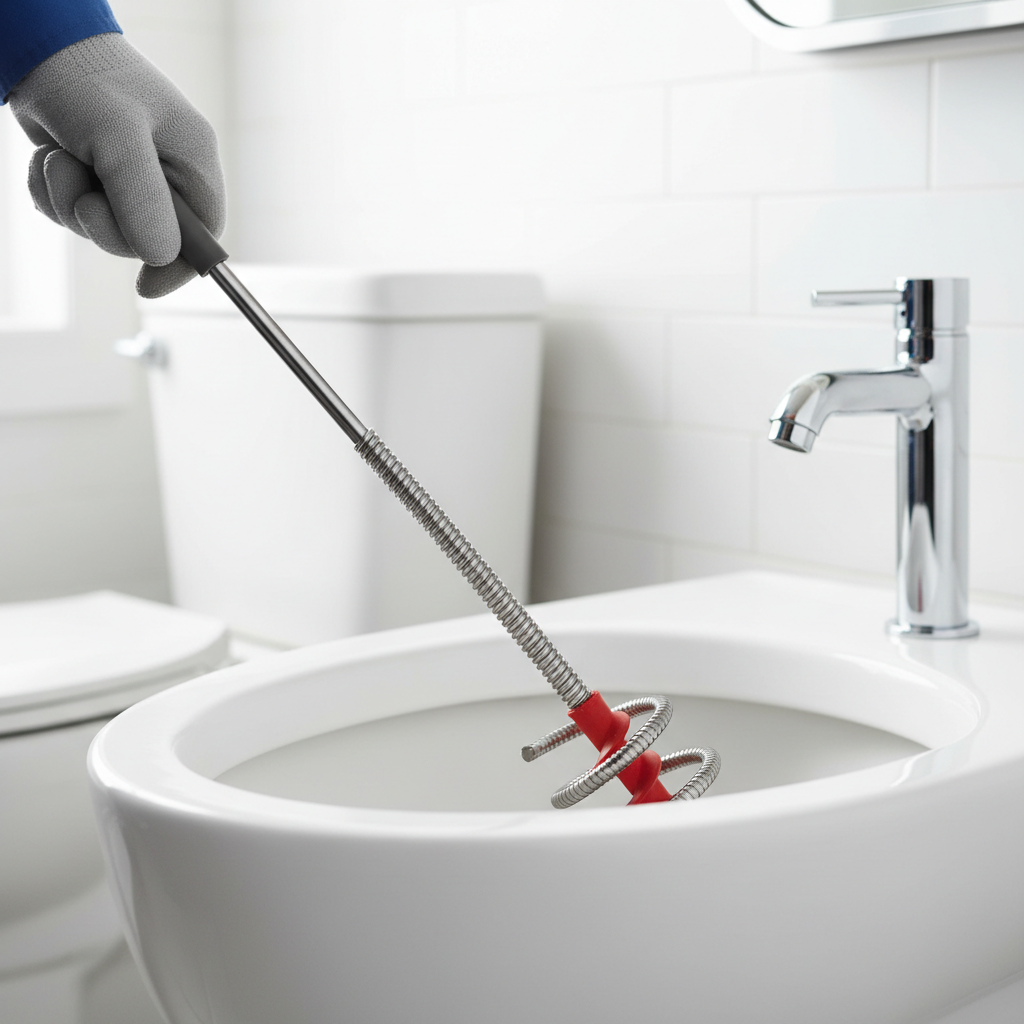
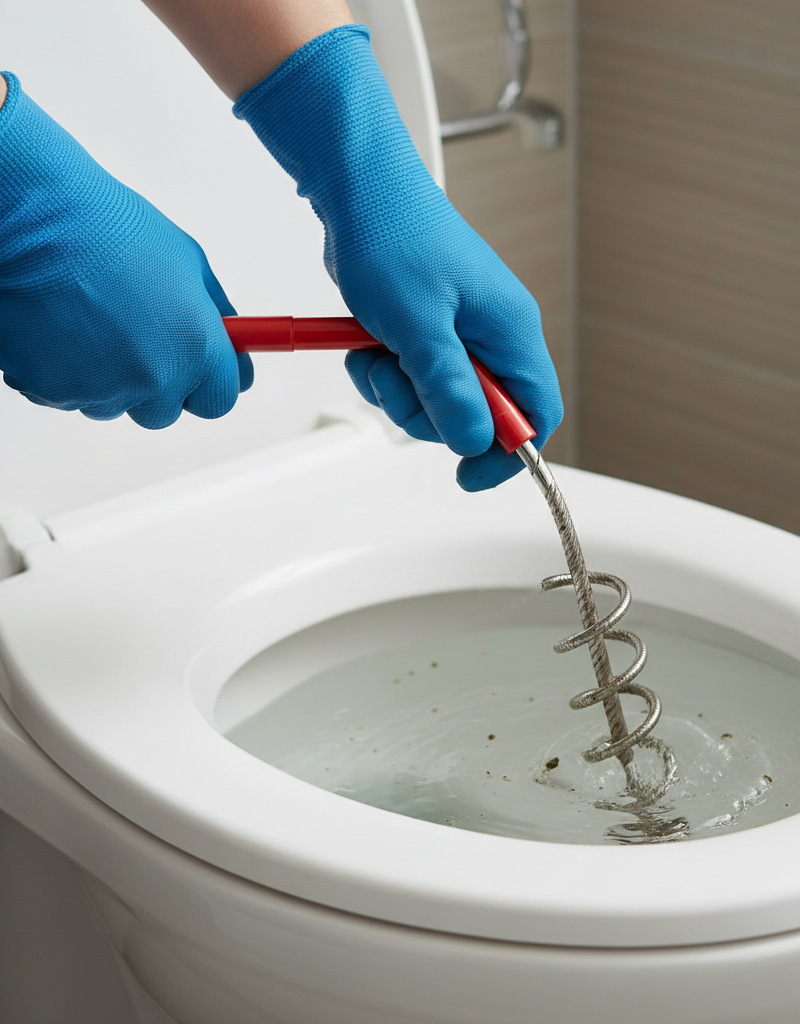
Snake the Trapway — Time to bring out the auger.
- A toilet auger, or closet auger, is made for this job. It’s got a protective sleeve so it won’t chew up the porcelain. Feed the cable into the drain opening and crank clockwise while pushing down. You’ll feel it hit the clog. Keep turning and easing forward until the cable gets through. Then pull it back slowly and see if it grabs the blockage. Sometimes you’ve gotta work it a few times to break things loose. I’ve pulled toothbrushes, toy parts, and one time a shampoo bottle cap out of traps with one of these.
-
Inspect and Clean Rim Jets — Hard water can wreck a flush.
- Look under the rim of the bowl. Those little holes are the rim jets. Over time, mineral scale builds up and chokes off the water flow. A small mirror and flashlight make this easier. Use a piece of coat hanger wire, an Allen wrench, or a small screwdriver to poke out the crud. Go easy — porcelain scratches easy. You can also pour a gallon of white vinegar into the overflow tube in the tank and let it sit for a few hours, or overnight if the buildup’s bad. Then flush a few times and see if it improved.
-
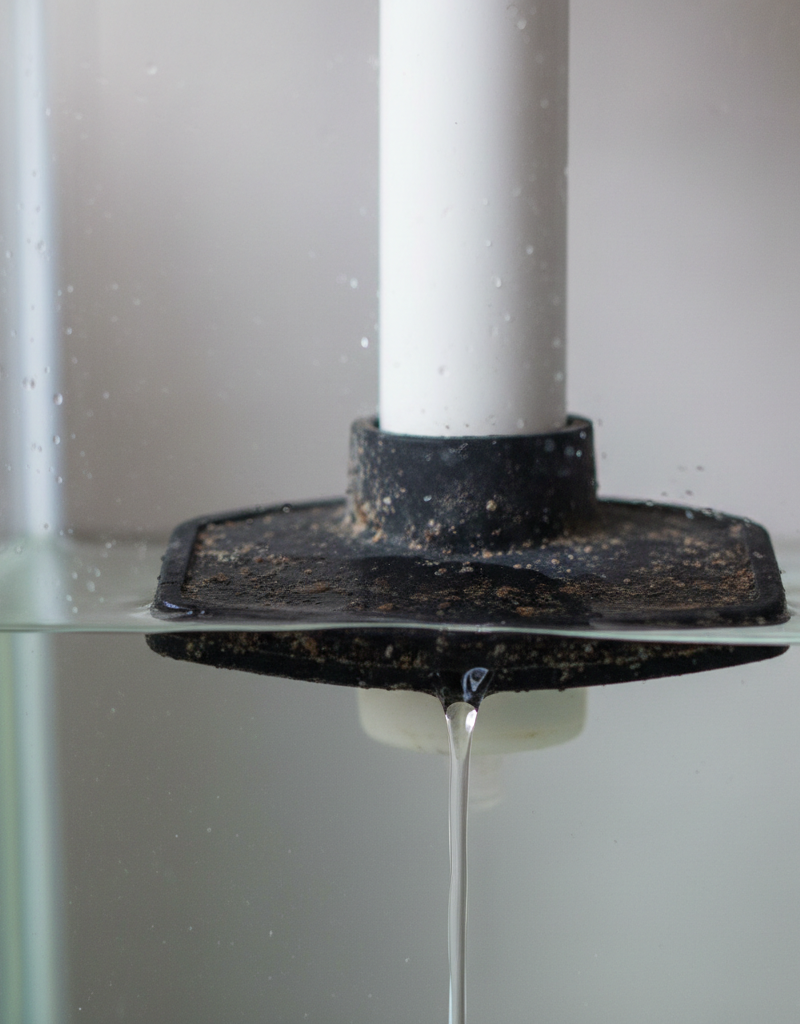
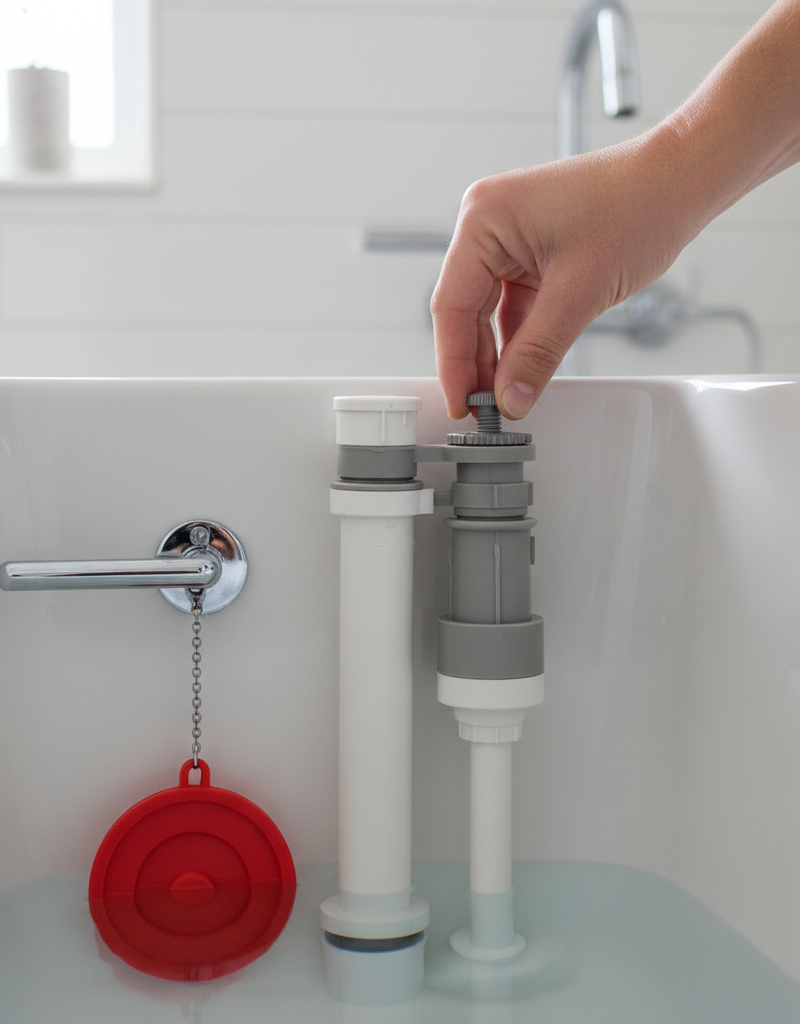
Check the Flapper and Fill Valve — A weak tank makes a weak flush.
- Pop the tank lid off. Flush it and watch the flapper. Does it lift all the way and stay up long enough? If it snaps shut too soon, the flush won’t have enough punch. Adjust the chain if it’s too tight or too loose. Then check the water level in the tank. It should be at the fill line marked inside. If it’s low, the fill valve could be acting up, or the float might be set wrong. Less water means less force, and that makes clogs more likely.
-
Clear the Vent Pipe — Easy to overlook, hard to ignore.
- This one’s tougher for most DIY folks because it means getting on the roof. If heights aren’t your thing or your ladder’s sketchy, call a pro for this. Safety first. Find the vent pipe for that bathroom — usually a 2 or 3-inch pipe sticking up from the roof, often right above or near the bathroom. Check for leaves, bird nests, or even dead critters. A strong blast from a garden hose can flush it out. Point the hose right into the pipe. If water backs up or barely moves, you’ve got a blockage. At that point, you may need a plumber with a long enough snake to run down the vent stack. I cleared a squirrel nest out of a vent on a house in Sandy Springs once, and the homeowner was shocked at how much better the toilet flushed afterward.
-
Consider the Main Drain Line — If everything else checks out, look downstream.
- If you’ve done all that and the toilet still clogs a lot, especially if other drains in the house — like a sink or shower — slow down when it happens, the problem’s probably in the main sewer line. That’s pro territory. A plumber will use a bigger motorized sewer snake or a camera to find and clear the blockage. Tree roots are a common one. They love old lines.
Common Causes
- Too much toilet paper or flushable wipes: Even though the package says otherwise, most
Related Articles
Keep troubleshooting with these hand-picked guides from FixlyGuide:
- The Secret Reason Your Toilet Clogs Every Few Days (It’s Not What You Think) — Discover the often-overlooked culprits behind a frequently clogging toilet and learn how to implement lasting fixes without calling a plumb…
- Why Your Toilet Clogs Every Few Days (And the #1 Mistake Homeowners Make) — A toilet that clogs frequently is a frustrating problem, but often points to a few common culprits that homeowners can diagnose and fix wit…
- Why Your Toilet Clogs Every Few Days (And the #1 Mistake Homeowners Make) — A toilet that clogs frequently is a frustrating problem, often caused by easily overlooked issues like trapway obstructions or ventilation…
- The Secret Reason Your Toilet Clogs Every Few Days (It’s Not What You Think) — Frequent toilet clogs often point to issues beyond simple blockages, from vent pipe problems to a failing flush mechanism, demanding a clos…
- The 3 Hidden Reasons Your Toilet Clogs Repeatedly (And How to Fix Each One) — Uncover the surprising culprits behind your constantly clogging toilet and learn homeowner-friendly fixes to restore flush power.
- The Surprising Reason Your Interior Door Sticks (It's Not Always Humidity) — Before you blame humidity, learn the common culprits behind a sticking interior door and how to fix them with simple DIY steps.
Should you do this yourself?
Answer five quick questions before you start. Safety outranks savings every time.
Your experience with work like this
How high do you have to work?
Does the job involve any of these?
Will it need a permit?
Specialty tools
Free and instant. Educational guidance only — not a quote, inspection, or professional diagnosis.
What should this project cost?
Enter your project details for a realistic cost range before you call anyone.
Common repairs run $150–$650; repipes and water-heater replacements reach $1,500–$4,500.
- Regional adjustment
- National average
- Labor share (typical)
- ~$754
- Quotes to collect
- 3 written estimates
Educational estimate based on national averages — not a binding quote. Always confirm with written local estimates.
Fixly Project Decision Box
- DIY difficulty
- Moderate
- Estimated time
- 30 minutes – half a day
- Cost level
- Moderate
Main tools / materials
- Adjustable wrench
- Plunger or drain auger
- Bucket and towels
- Thread tape
When to stop and call a pro
- Water you cannot shut off at the fixture or main
- Sewage backing up into more than one fixture
- Water near electrical panels or outlets
- Gas water heater work beyond relighting a pilot
Need professional help?
Get a Licensed PlumberGet the print-ready PDF of this guide
A clean, ad-free, printable version you can keep on your phone or pin to the workshop wall. Free with a FixlyGuide account.
- Print-optimized layout
- Tools, materials & every step included
- Saved to your account
Frequently asked questions
Why does my toilet clog every few days?+
Recurring clogs often point to issues beyond simple overuse. Common reasons include a partially blocked trap or drain line, mineral buildup in the toilet's rim jets, a clogged vent pipe restricting airflow, or even a faulty flapper causing weak flushes.
Can a clogged vent pipe cause a toilet to clog?+
Absolutely. A blocked vent pipe prevents air from entering the drain system, creating a vacuum that slows down the flush and prevents waste from being carried away efficiently. This often leads to frequent, weak flushes and recurring clogs.
How do I know if my toilet's vent is clogged?+
Signs of a clogged vent include a gurgling sound from other drains (like a shower or sink) when you flush the toilet, a slow or weak flush, and persistent bad odors coming from drains. If you suspect a vent issue, it's best to call a professional if you're not comfortable getting on the roof.
What kind of auger should I use for a toilet?+
Always use a 'closet auger' or 'toilet auger.' These are specifically designed with a protective rubber sleeve to prevent scratching your toilet's porcelain while effectively clearing clogs in the trapway. Standard drain snakes can damage the bowl.
Can hard water cause toilet clogs?+
Yes, hard water can contribute to frequent clogs. Over time, mineral deposits (scale) can build up in the toilet's rim jets and siphon jet, restricting the flow of water during a flush. This reduces the flushing power needed to clear the trapway effectively.
Is it bad to use chemical drain cleaners in my toilet?+
I strongly advise against using chemical drain cleaners in your toilet. They can damage plumbing pipes, especially older ones, and often don't fully clear tough clogs. They can also be dangerous if they splash back and are harmful to septic systems. A toilet auger is a much safer and more effective solution.
When should I call a professional plumber for a clogging toilet?+
You should call a professional if you've tried plunging and snaking with a toilet auger without success, if multiple drains in your home are slow or backing up, if you suspect a main sewer line blockage, or if you're uncomfortable performing any of the DIY steps, especially vent pipe clearing.
How often should I clean my toilet's rim jets?+
If you have hard water, I'd recommend checking and cleaning your toilet's rim jets every 6-12 months. A simple poke with a wire or an overnight vinegar soak can help maintain optimal flush performance and prevent mineral buildup from causing issues.
Discussion
Loading comments…