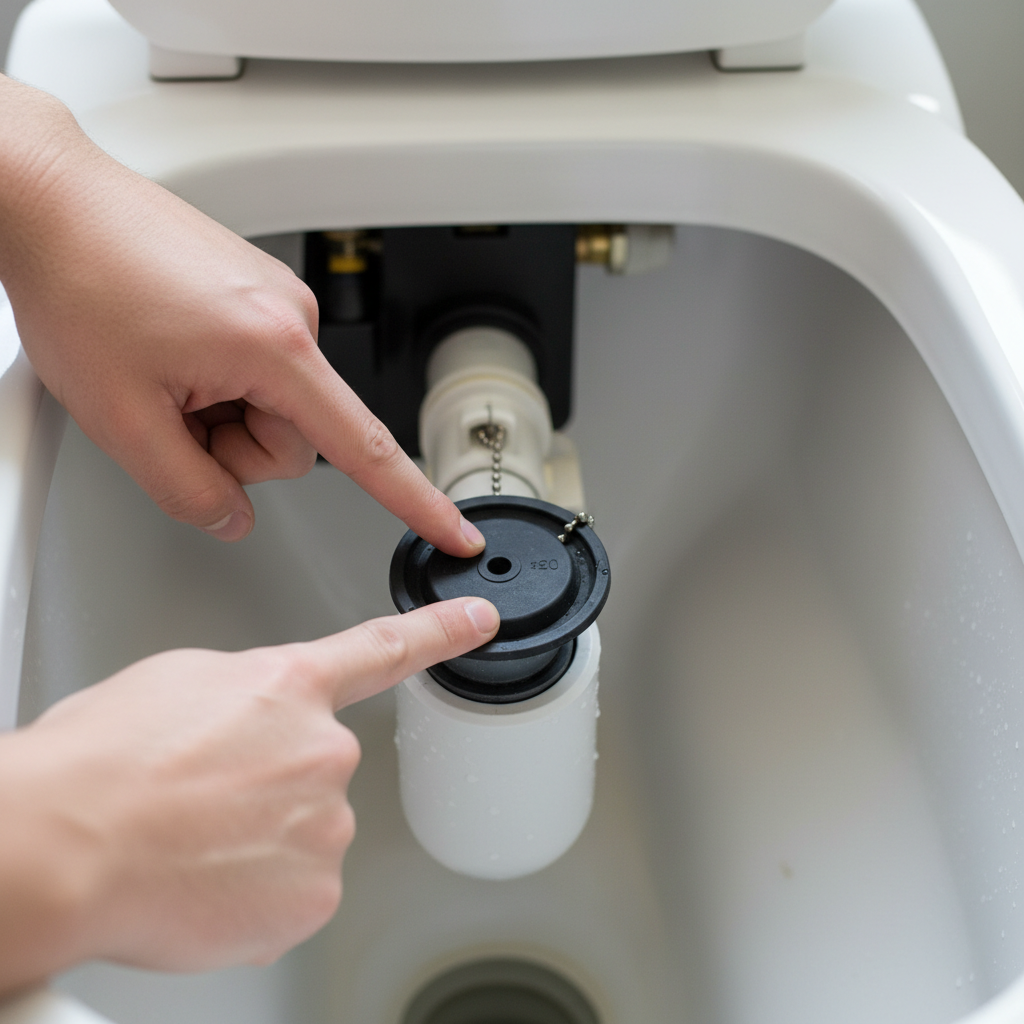
- With the water off and the tank mostly empty, unhook the old flapper from the chain and the ears on the overflow tube. Most of them just clip right off.
- Put the new flapper in, making sure it sits flat and even over the drain. Hook the chain back up with that half-inch to an inch of slack.
- Turn the water back on and give it a few test flushes.
Plumbing · Leak
| Project category | Plumbing |
|---|---|
| Problem type | Leak |
| Trade required | Plumbing |
| Urgency | Emergency — act now |
| Safety risk | High safety risk |
| DIY suitability | DIY for experienced homeowners |
| Cost category | Low cost |
| Typical timeline | Shut water off now; repair usually same or next day |
| Contractor type | Licensed plumber |
Repair option
Isolate at the shutoff, replace the failed component, and dry the cavity fully.
Replacement option
Repipe the run or the branch when corrosion is widespread.
Common causes
- Failed supply line or shutoff valve
- Worn washers, cartridges, or P-trap connections
- Pinhole corrosion in older copper
Relevant tools:emergency checklistdiy or hire a pro
Published July 25, 2026Last updated August 17, 2026
Tools & materials you'll need
Affiliate linksAs an Amazon Associate FixlyGuide earns from qualifying purchases — at no extra cost to you. Prices and availability are accurate as of publication and subject to change.
Quick Answer
That steady gurgle or hiss from your toilet isn’t just annoying — it’s money literally slipping down the drain, sometimes 200 gallons or more a day. Most of the time, a running toilet comes down to one of three things: a bad flapper, a fill valve that’s out of whack, or a float set wrong. I’ve seen it a pile of times. More often than not, the flapper’s the real troublemaker, not sealing tight and letting water leak into the bowl. The good news? None of this is some monster plumbing repair. If you’ve got a screwdriver and a little patience, you can usually knock it out in an hour or so and save yourself a decent chunk on a plumber and your water bill.
The Problem
You hear it, right? That ghost-flush sound, a constant trickle, or maybe the toilet just decides to refill itself every 15 minutes like it’s got a mind of its own. That’s a running toilet, and no, it ain’t gonna fix itself. What’s happening is water keeps moving from the tank into the bowl when it should be sitting still. That’s not just background noise; it’s a real water-waste problem. The EPA says a running toilet can quietly waste thousands of gallons a month, which shows up fast on the bill. I had a homeowner out in Stone Mountain whose bill jumped $75 in a single month because a little silt got hung up under the flapper. He swore his kids were taking marathon showers.
Before you panic, take a breath. Unless you’ve got water spraying everywhere or some funky smell, this is almost always something you can handle yourself. We’re gonna check the parts inside the tank one by one and see what’s letting that water escape. Could be a simple tweak. Could be a quick part swap. Either way, we’ll get it sorted.
How It Works
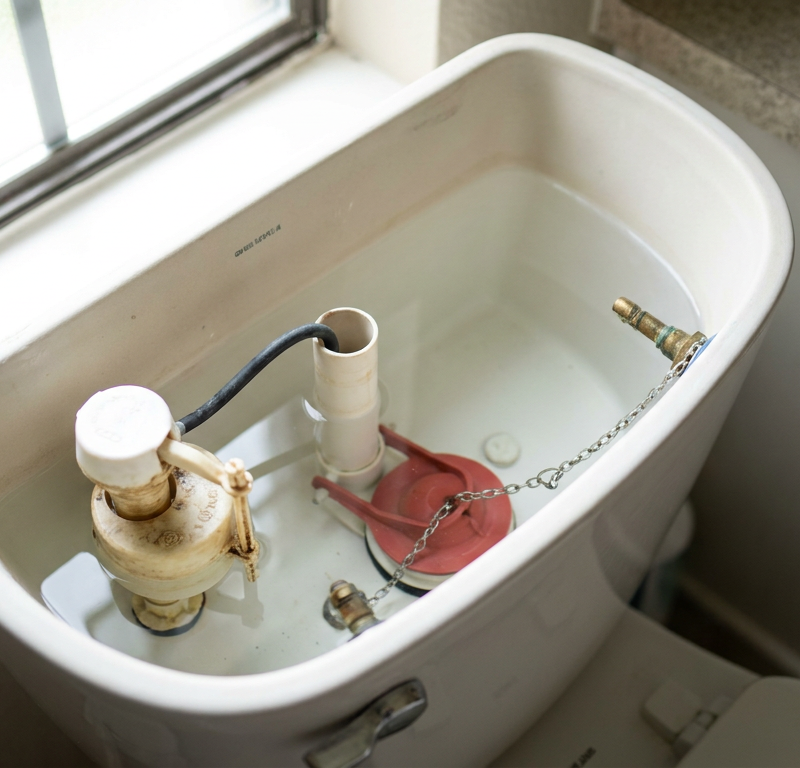
To figure out why your toilet’s running, it helps to know how it should work. When you flush, the handle pulls a chain. That chain lifts a rubber stopper — the flapper — off the drain hole at the bottom of the tank. Water rushes into the bowl, and that creates the siphon effect that drags waste down the drain.
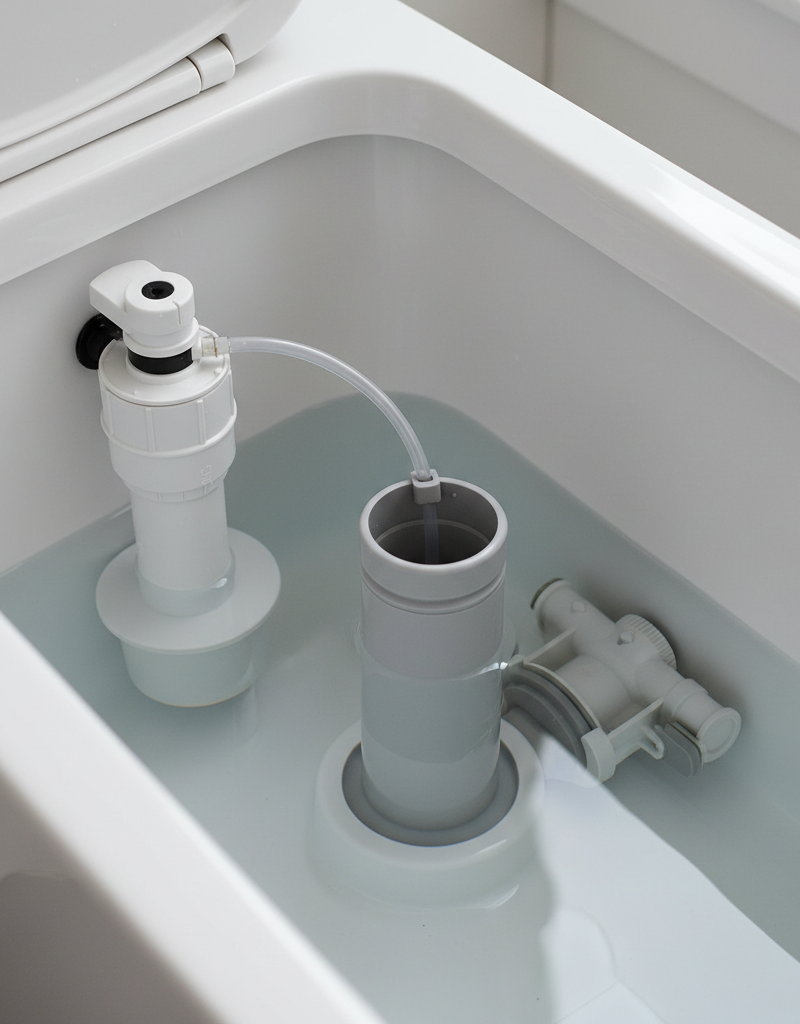
As the tank level drops, the flapper falls back into place and seals the hole. At the same time, a float drops, which tells the fill valve to kick on. Fresh water comes in from the supply line. As the water rises, the float rises with it. Once it hits the set level, the float tells the fill valve to shut off. There’s also an overflow tube, which is basically your backup plan. If the fill valve acts up and overfills the tank, extra water goes into that tube instead of onto your bathroom floor, and it ends up safely in the bowl. When everything’s working like it should, the whole cycle is pretty quiet. If one piece — the flapper, fill valve, or float — goes sideways, you’ve got a running toilet. Simple mechanical stuff. Nothing mystical.
Step-by-Step Fix
Okay, let’s crack open that tank and get after it. First thing: shut off the water to the toilet. There’s usually a small valve on the wall or floor near the base of the toilet on the left side. Turn it clockwise until it stops. Then flush the toilet to drain most of the tank. That keeps you from working in a bathtub full of toilet water. Nobody needs that.
1. Inspect the Flapper — The most common culprit, this little rubber plug often gets worn out or misaligned.
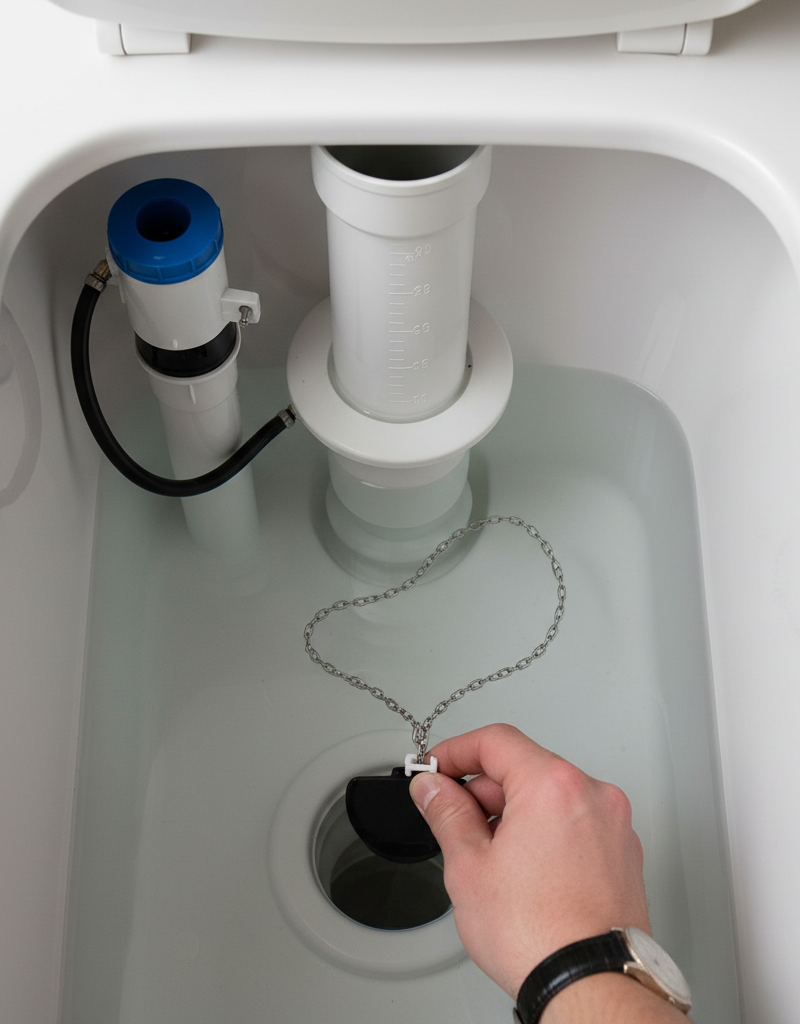
- Look at the flapper at the bottom of the tank. Is it sitting flat over the drain hole? Sometimes the chain hooked to the handle is too tight and holds the flapper a hair open, or it’s twisted up on itself. Untangle it or adjust the chain so there’s a little slack when the flapper is closed — about a half-inch to an inch of slack is about right.
- Safety Tip: Before you start, turn off the water supply to the toilet using the shut-off valve near the wall. You don’t want a surprise shower.
- If the flapper looks old, stiff, cracked, or torn, there’s your answer. Rubber doesn’t last forever. When I see one that’s twenty years old, I tell folks it’s done its time and it’s due for retirement. They’re cheap anyway, usually less than ten bucks.
2. Check the Fill Valve and Float — These two work together to control water entering the tank. If the float is set too high, water can run into the overflow tube.
- Check the water level in the tank. It ought to sit about an inch below the top of the overflow tube. If it’s higher than that, a few things could be going on.
- Is the float — maybe a ball on a rod, maybe a newer cup-style float riding up the fill valve shaft — getting stuck? Make sure it moves easy.
- If the float’s set too high, it won’t shut off the fill valve soon enough. Then you’ll see water slipping into the overflow tube. Drop the float down. On older ball-and-arm setups, you can gently bend the arm downward. On newer column-style floats, there’s usually a clip or screw adjuster on the shaft. Set it so the tank stops filling about an inch below the overflow tube when it’s full.
3. Examine the Overflow Tube — This often gets overlooked, but a worn or damaged overflow tube can lead to constant running.
- Run your fingers along the top edge of the overflow tube. Smooth, or do you feel any nicks, cracks, or rough spots? Even a tiny ding there can keep the flapper from sealing right against the drain hole.
- Sometimes the refill tube — that small flexible hose coming off the fill valve — gets shoved too far down into the overflow tube. That can create a siphon and keep pulling a little water out all the time. Pull it up so it sits just above the water line, or clip it to the side of the overflow tube so it sprays down without going underwater.
4. Perform the Dye Test — A simple way to confirm a flapper leak, even if you can't see it.
- Once the tank’s full, drop a few drops of food coloring or a toilet leak detector tablet into the tank water. Don’t flush.
- Wait 15-20 minutes. If colored water shows up in the bowl, that flapper isn’t sealing, and you’ve found your leak. That test never lies. I always tell homeowners to do this when they swear the toilet isn’t running but their water bill says otherwise.
5. Replace the Flapper — If the dye test confirmed a leak or your flapper is visibly damaged, it's time for a new one.
- With the water off and the tank mostly empty, unhook the old flapper from the chain and the ears on the overflow tube. Most of them just clip right off.
- Take the old one with you to the hardware store so you get a proper match. Sure, there are universal flappers, but a direct replacement is usually the better move if you want a clean seal. On a late 90s American Standard model, I once tried to save a few bucks with a universal flapper — cost me another trip to the store and most of an afternoon.
- Put the new flapper in, making sure it sits flat and even over the drain. Hook the chain back up with that half-inch to an inch of slack.
- Turn the water back on and give it a few test flushes.
6. Replace the Fill Valve — If the flapper is fine, but the toilet keeps trying to fill or overflows into the tube, the fill valve might be bad.
- This one’s a little bigger, but still DIY territory. Shut off the water and flush the toilet to empty the tank. You’ll probably need a sponge or some towels to get the last bit out.
- Get under the tank. Disconnect the water supply line from the bottom of the fill valve. A basin wrench or adjustable wrench helps here. Have a small bucket ready for drips.
- Unscrew the big nut holding the fill valve to the tank. It’s usually plastic, so you can often do it by hand or with channel locks.
- Pull the old fill valve out from the top. Drop the new one in and make sure the rubber washer is on the outside bottom of the tank. Hand-tighten the nut from below, then give it another quarter to half turn with your wrench — don’t over-tighten, or you’ll crack the tank!
- Hook the water supply line back up, hand-tight plus a quarter turn. Reattach the refill tube to the overflow tube. Turn the water on and adjust the float as needed. Test it.
Common Causes
- Worn-out Flapper: This is the big one. Over time, the rubber breaks down, gets stiff, or picks up mineral crud that keeps it from sealing right.
- Incorrect Float Height: If the float sits too high, the fill valve never quite shuts off and keeps sending water down the overflow tube.
- Faulty Fill Valve: The fill valve itself can fail on the inside, either by not closing all the way or by not reading the water level right.
- Too Much Chain Slack/Tension: If the chain from the flush handle to the flapper is too short, it holds the flapper open. Too much slack, and it can tangle and stop a full seal.
- Sediment Build-up: Mineral deposits or debris in the water line can get stuck under the flapper or inside the fill valve and mess up the seal.
- Damaged Handle: A sticky or badly adjusted flush handle can keep the flapper from closing all the way.
Common Mistakes
- Ignoring the problem: A running toilet isn’t some little nuisance; it’s a big water-waster. Don’t sit on it. That bill’ll keep climbing.
- Not turning off the water first: I’ve seen this one way too many times. Always hit that shut-off valve before you start messing with the tank. Saves a lot of headaches and wet floors.
- Over-tightening nuts: Whether it’s the supply line or the fill valve nut, plastic cracks easy. Hand-tighten, then go a quarter to a half turn with a wrench. That’s enough.
- Buying the wrong flapper:
Related Articles
Keep troubleshooting with these hand-picked guides from FixlyGuide:
- The $2 Trick to Stop a Running Toilet (Plumbers Don't Want You to Know) — Discover the simple, two-dollar fix that can stop your running toilet in minutes, saving water and preventing costly repairs.
- The $5 Flapper Trick Plumbers Hope You Don't Know About Your Running Toilet — Discover the secret $5 flapper trick that often fixes a running toilet, saving you money on parts and plumber call-outs.
- The 30-Second Toilet Fix Plumbers Don't Want You to Know — A running toilet can waste hundreds of gallons of water per day, but often the fix is incredibly simple and takes under a minute.
- The $5 Secret to Silencing a Running Toilet (Plumbers Hope You Don't Know) — A running toilet is usually caused by a simple issue with the flapper or its chain, leading to constant water waste and higher utility bill…
- The Secret Reason Your Toilet Clogs Every Few Days (It’s Not What You Think) — Frequent toilet clogs often point to issues beyond simple blockages, from vent pipe problems to a failing flush mechanism, demanding a clos…
- Is One Drip Emitter Starving? The Secret Culprit (It's Not Clogging) — A single drip emitter refusing to hydrate your plants can be frustrating, but the fix is often simpler than you think and rarely a clog.
Should you do this yourself?
Answer five quick questions before you start. Safety outranks savings every time.
Your experience with work like this
How high do you have to work?
Does the job involve any of these?
Will it need a permit?
Specialty tools
Free and instant. Educational guidance only — not a quote, inspection, or professional diagnosis.
What should this project cost?
Enter your project details for a realistic cost range before you call anyone.
Common repairs run $150–$650; repipes and water-heater replacements reach $1,500–$4,500.
- Regional adjustment
- National average
- Labor share (typical)
- ~$754
- Quotes to collect
- 3 written estimates
Educational estimate based on national averages — not a binding quote. Always confirm with written local estimates.
Fixly Project Decision Box
- DIY difficulty
- Moderate
- Estimated time
- 30 minutes – half a day
- Cost level
- Moderate
Main tools / materials
- Adjustable wrench
- Plunger or drain auger
- Bucket and towels
- Thread tape
When to stop and call a pro
- Water you cannot shut off at the fixture or main
- Sewage backing up into more than one fixture
- Water near electrical panels or outlets
- Gas water heater work beyond relighting a pilot
Need professional help?
Get a Licensed PlumberBefore you start
Check the difficulty, permits, and safety risk — then decide whether to call a pro.
- Estimate this projectGet a cost range for your scope and ZIP before you call anyone.Open
- Get local estimatesSend one request and compare written estimates from vetted pros.Open
Free, no signup required. Estimates are educational guidance, not a quote or an inspection.
Frequently asked questions
How much water does a running toilet waste?+
A continuously running toilet can waste anywhere from 30 to over 200 gallons of water per day, leading to a significant increase in your monthly water bill. Even a small, silent leak can add up to thousands of gallons over time.
How do I know if my toilet is running silently?+
The best way to check for a silent leak is the dye test. Put a few drops of food coloring or a leak detection tablet into the tank water. Wait 15-20 minutes without flushing. If color appears in the bowl, you have a leak, usually from the flapper.
How long does a toilet flapper last?+
Toilet flappers typically last about 5-10 years, depending on water quality and usage. Hard water, which contains more minerals, can cause them to degrade faster. Regular inspection can help catch wear and tear early.
Can I fix a running toilet without special tools?+
Many running toilet issues, like adjusting the float or securing the flapper chain, can be fixed with just your hands or a screwdriver. For replacing parts like a flapper or fill valve, you'll need basic tools like an adjustable wrench and sponge.
What if adjusting the float doesn't stop the toilet from running?+
If adjusting the float arm doesn't stop the water from running into the overflow tube, it often indicates a faulty fill valve. The internal mechanism of the fill valve may be worn out, preventing it from shutting off the water supply completely.
Is it better to repair a toilet or replace it?+
For a simple running toilet issue, repair is almost always the more economical and environmentally friendly option. However, if your toilet is very old, frequently breaks down, or uses a lot of water per flush (e.g., more than 1.6 gallons), then replacing it with a new, high-efficiency model might be a better long-term investment.
Can a running toilet cause damage besides high water bills?+
While the primary issue is water waste, a constantly running toilet can contribute to humidity in the bathroom, potentially leading to mold or mildew growth. In rare cases, a severe overflow due to a catastrophic fill valve failure could cause water damage if the overflow tube is also blocked.
How much does a new flapper cost?+
A new toilet flapper is usually quite inexpensive, costing between $5 and $15. Universal flappers are available, but it's always best to try and find a direct replacement for your toilet's make and model for the best seal.
How often should I check my toilet for leaks?+
I tell folks to do a quick visual check every few months – look inside the tank, check the water level. And definitely do the dye test once a year. It's preventative maintenance that saves you money.
Does water pressure affect a running toilet?+
High water pressure can sometimes contribute to fill valve issues or cause flappers to seal less effectively over time. If you suspect high pressure, a pressure regulator can be installed on your main water line, but that's a job for a plumber.
Discussion
Loading comments…