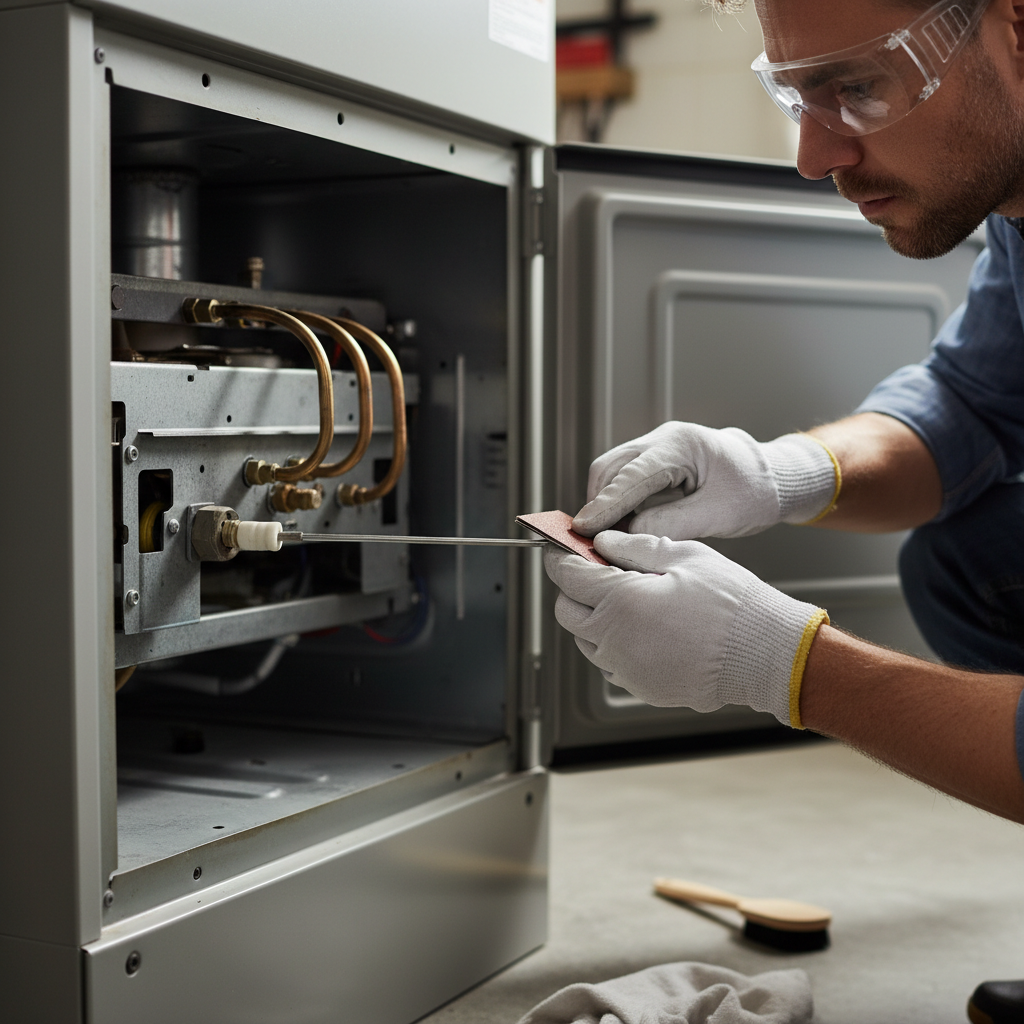
- Clean the Flame Sensor — A Tiny Rod with a Big Job
- Carefully remove the screw holding the flame sensor in place. Gently pull the sensor straight out.
- Using fine-grit sandpaper (around 400-grit) or an emery board, lightly sand the metallic rod part of the sensor—not the wiring or porcelain base—to remove any carbon buildup or oxidation. Avoid harsh chemicals or abrasive pads.
- Reinstall the sensor, ensuring it's securely fastened and the wire is reconnected. Replace the access panel, turn on the gas, and restore electrical power.
- If this doesn't work: A faulty flame sensor might need replacement. This is usually an inexpensive part (under $20-$30), but ensure you get the correct model for your furnace.
HVAC · High energy usage
| Project category | HVAC |
|---|---|
| Problem type | High energy usage |
| Trade required | HVAC |
| Urgency | Planned project |
| Safety risk | Low safety risk |
| DIY suitability | DIY for experienced homeowners |
| Cost category | High cost |
| Typical timeline | Assessment within weeks; replacement planned off-season |
| Contractor type | Licensed HVAC technician |
Repair option
Duct sealing, insulation, and a tune-up before touching the equipment.
Replacement option
High-efficiency replacement sized by a load calculation, not a rule of thumb.
Common causes
- Aging, low-efficiency equipment
- Leaking ducts losing conditioned air
- Insufficient attic insulation
- Oversized system short-cycling
Relevant tools:project cost estimatorrepair or replace
Published May 22, 2026Last updated August 17, 2026
Tools & materials you'll need
Affiliate linksAs an Amazon Associate FixlyGuide earns from qualifying purchases — at no extra cost to you. Prices and availability are accurate as of publication and subject to change.
Quick Answer
Furnace short cycling, characterized by your heating system turning on for only a few minutes before shutting off, then repeating this cycle, signals an underlying problem that wastes energy and stresses components. The most frequent causes include restricted airflow from a dirty filter, an inaccurate thermostat, or an improperly sized furnace continually overshooting the set temperature. Many short cycling issues can be resolved with basic homeowner maintenance, such as changing filters or cleaning sensors. Still, persistent or complex problems, especially those involving gas lines or electrical components, warrant a consultation with a qualified HVAC professional.
The Problem
Imagine your furnace as a marathon runner. It's designed to run steadily and continuously for a period, gradually warming your home to the desired temperature. Short cycling is like that runner sprinting for 100 yards, stopping, and repeating, rather than maintaining a steady pace. This stop-and-go action isn't just annoying; it puts immense stress on the furnace's components, particularly the igniter, blower motor, and heat exchanger. Each start-up draws a significant amount of electricity and initiates a complex sequence of operations. When this happens repeatedly and unnecessarily, it accelerates wear and tear, leading to premature breakdowns and costly repairs. Moreover, a short-cycling furnace struggles to evenly heat your home, often resulting in uncomfortable temperature fluctuations and higher energy bills as it constantly tries to catch up. Identifying and addressing the root cause is crucial for maintaining your furnace's efficiency, longevity, and your home's comfort.
How It Works
To understand why your furnace short cycles, it helps to grasp the basic operational sequence of a forced-air heating system. When your thermostat calls for heat, it sends a low-voltage signal to the furnace's control board. The control board then initiates a series of safety checks and operations. First, the inducer motor starts, pulling combustion byproducts out of the heat exchanger and venting them outside. This creates a negative pressure differential, confirmed by a pressure switch. Once the pressure switch closes, indicating proper venting, the igniter (either a hot surface igniter or a spark igniter) activates. Gas begins to flow into the burners, where it's ignited. A flame sensor, strategically placed within the flame's path, detects the presence of combustion. This tiny rod is crucial; if it doesn't sense a flame, it tells the control board to shut off the gas supply as a safety measure, preventing raw gas from pooling. Once the flame is established and confirmed, the main blower motor delays for a short period (typically 30-60 seconds) to allow the heat exchanger to warm up. Then, the blower motor kicks in, pushing heated air through your home's ductwork. The furnace continues this heating cycle until the thermostat registers that the desired temperature has been reached. At that point, the control board closes the gas valve, the flame extinguishes, the blower continues to run for a short period (this is the 'fan delay' to extract residual heat), and then the entire system shuts down until the next call for heat. Short cycling occurs when any part of this intricate sequence is interrupted prematurely, often due to a safety lockout, an airflow issue preventing efficient heat transfer, or a control fault.
Step-by-Step Fix
Here are common reasons for short cycling and how to address them:
-
Check and Replace Your Air Filter — The #1 Culprit
- Why it helps: A clogged air filter is the most common cause of short cycling. It restricts airflow over the heat exchanger. When air can't pass freely, the heat exchanger overheats rapidly, triggering the furnace's high-limit safety switch, which shuts down the burners. The blower might continue to run for a short period to cool the heat exchanger before the cycle repeats.
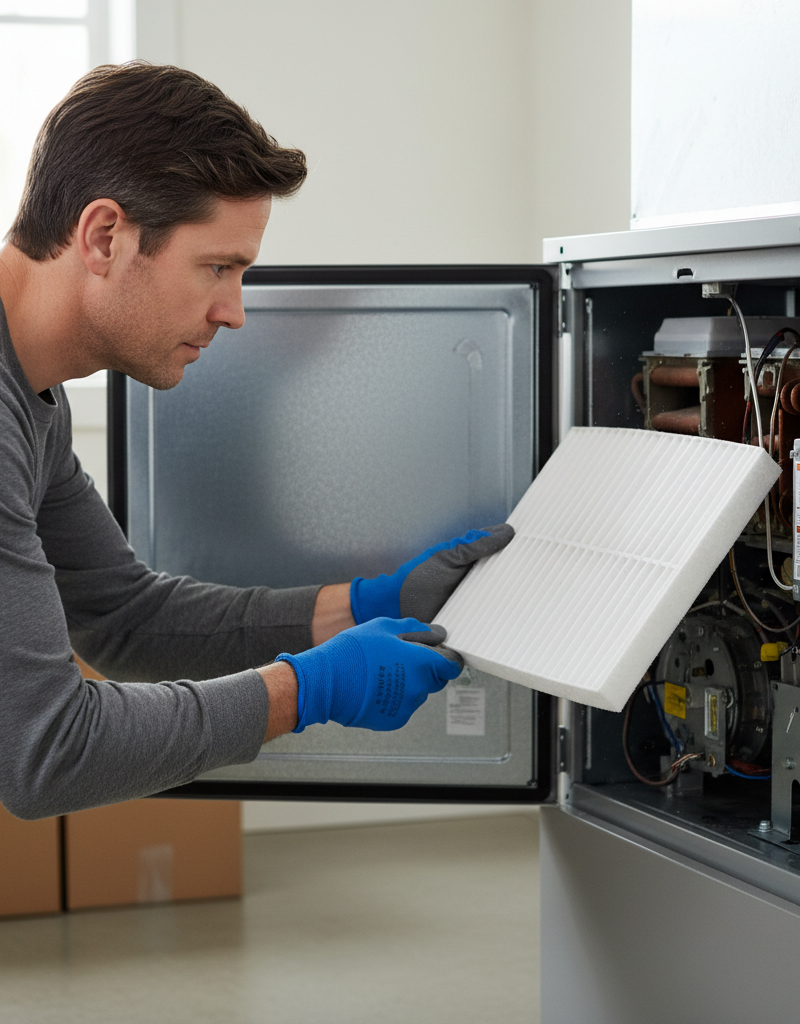
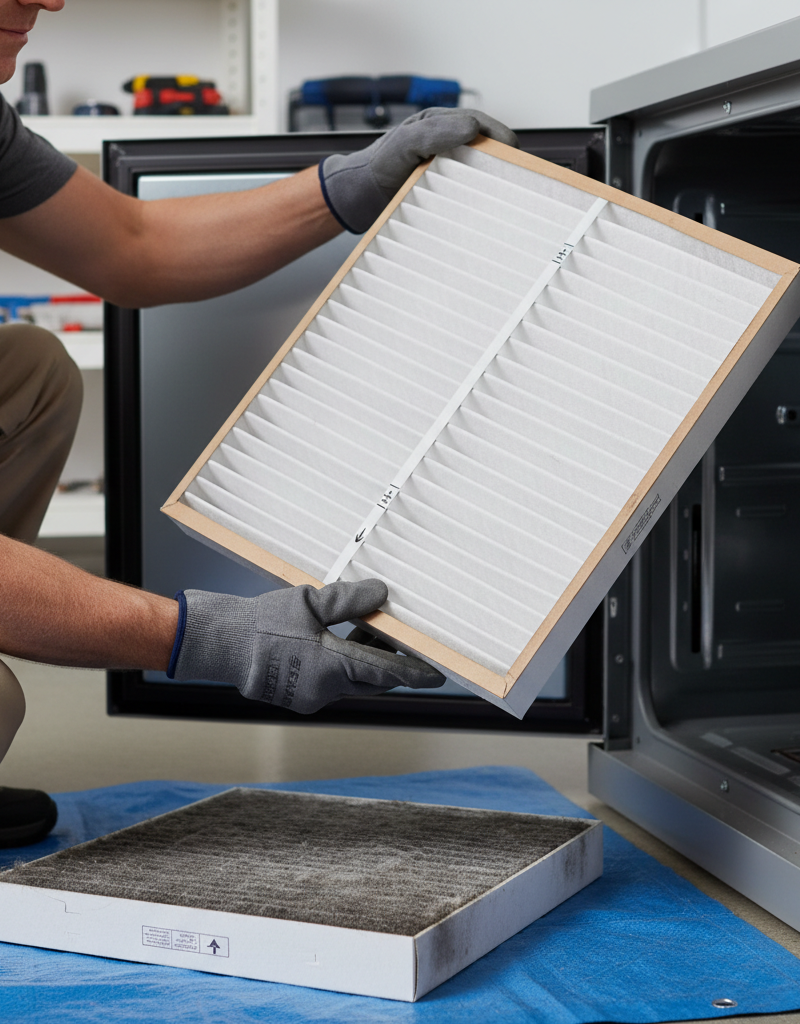
- How to do it: Locate your furnace's filter slot (usually in the return air duct right before the blower compartment or inside the furnace cabinet). Pull out the old filter. Note the size printed on its frame (e.g., 20x25x1). Insert a new filter, ensuring the airflow arrow points towards the furnace. Replace standard fiberglass filters monthly, and pleated filters every 1-3 months, depending on household conditions (pets, allergies).
- If this doesn't work: Even with a clean filter, check if the return air vents or supply registers in your home are blocked by furniture, rugs, or closed. Ensure at least 80% of your supply registers are open.
-
Clean the Flame Sensor — A Tiny Rod with a Big Job
- Why it helps: The flame sensor confirms the presence of a flame after the gas ignites. If it's coated with soot or oxidation, it can't detect the flame, causing the control board to think there's no ignition. This triggers a safety shutdown of the gas valve within seconds of ignition, leading to very short cycles or multiple ignition attempts before a lockout.
- How to do it:
- Safety First: Turn off all power to the furnace at the service switch (usually on the side of the furnace) AND at your main electrical panel. Turn off the gas supply via the shut-off valve near the furnace. Wait five minutes for any residual gas to dissipate.
- Locate the flame sensor: It's a small, thin metal rod (about 2-3 inches long) with a single wire attached, positioned in the path of the burner flames, typically opposite the igniter. You'll likely need to remove the front access panel of your furnace to see the burner assembly.
- Carefully remove the screw holding the flame sensor in place. Gently pull the sensor straight out.
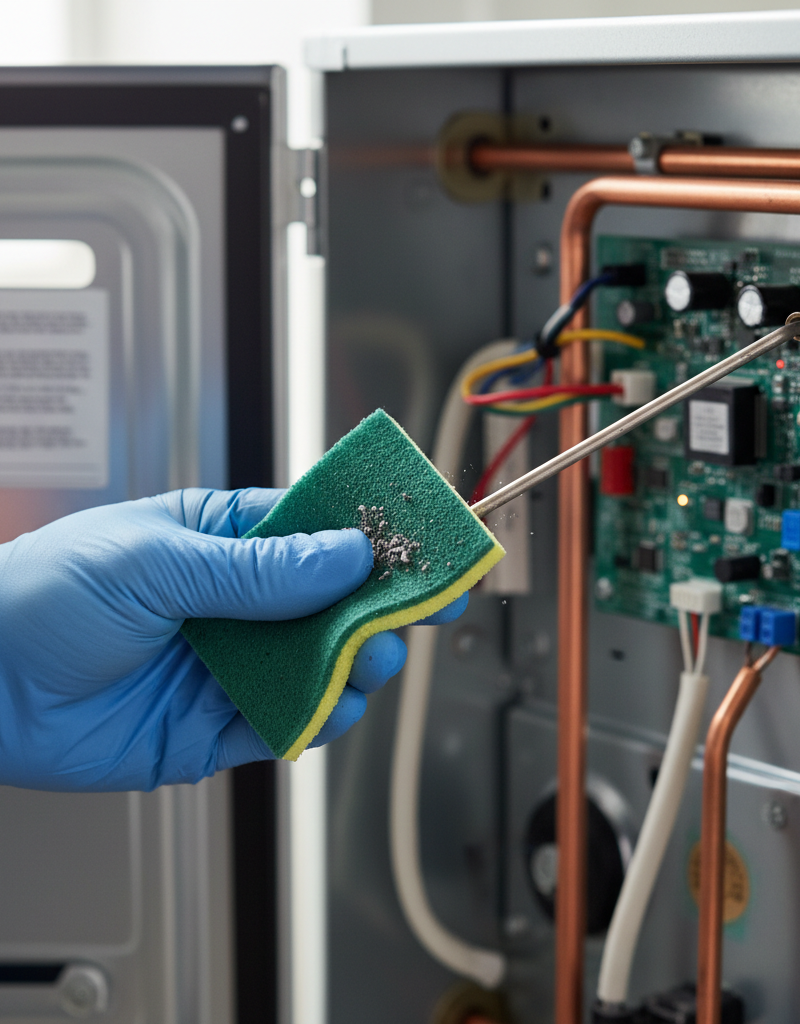
- Using fine-grit sandpaper (around 400-grit) or an emery board, lightly sand the metallic rod part of the sensor—not the wiring or porcelain base—to remove any carbon buildup or oxidation. Avoid harsh chemicals or abrasive pads.
- Reinstall the sensor, ensuring it's securely fastened and the wire is reconnected. Replace the access panel, turn on the gas, and restore electrical power.
- If this doesn't work: A faulty flame sensor might need replacement. This is usually an inexpensive part (under $20-$30), but ensure you get the correct model for your furnace.
-
Check Your Thermostat Settings and Location — Is it Getting a False Read?
- Why it helps: A thermostat that's incorrectly calibrated, placed in a drafty area, too close to a heat source (like a lamp or TV), or exposed to direct sunlight can prematurely satisfy itself, thinking the room is warmer than it is. It signals the furnace to shut off, only for the actual room temperature to drop quickly, initiating another short cycle.
- How to do it:
- Ensure your thermostat is set to 'Auto' for the fan, not 'On.' If it's on 'On,' the fan runs constantly, which can create a chilling effect that makes the furnace run more often.
- Check the battery in your thermostat (if applicable) and replace it if low. Low batteries can cause erratic behavior.
- Verify the thermostat is leveled and securely mounted. Dust inside the thermostat can sometimes interfere with temperature readings. Carefully open the cover (if it's an older model) and gently dust with a soft brush or compressed air.
- Observe your thermostat's location. Is it near an exterior door, a window, a sun-facing wall, or electrical appliances that generate heat? Relocating a thermostat is a more involved task, but temporarily shielding it from drafts or direct sun can help diagnose if placement is the issue.
- Consider investing in a smart thermostat. Many modern thermostats have diagnostic features and can learn your home's heating patterns, improving efficiency.
- If this doesn't work: The thermostat itself might be faulty or improperly wired. Consult your furnace manual for wiring diagrams or consider a professional HVAC technician for diagnosis.
-
Inspect the Condensate Drain Line (for High-Efficiency Furnaces) — The Often-Overlooked Clog
- Why it helps: High-efficiency (condensing) furnaces produce condensate (water) as a byproduct of combustion, which drains away through a PVC pipe. If this line or the condensate trap becomes clogged with algae or debris, a safety switch (float switch) will shut down the furnace to prevent water backup, causing short cycling.
- How to do it:
- Safety First: Turn off power to the furnace at the service switch and main electrical panel.
- Locate the condensate drain line: It's typically a PVC pipe originating from inside the furnace cabinet, leading to a floor drain or condensate pump. There's often a small trap in the line, resembling a 'P' trap under a sink.
- Check for visible clogs or standing water in the trap or collection pan. Some drain lines have a removable cap on top of the trap—carefully remove it.
- Clear the clog: You can try to clear minor clogs by pouring a cup of distilled vinegar (not bleach, as it can damage components) down the drain line or into the trap. Allow it to sit for 30 minutes, then flush with water. A wet/dry shop vacuum can also be used to suction out clogs from the end of the drain line.
- Empty and clean the condensate pump reservoir if your furnace uses one.
- Replace any caps and restore power.
- If this doesn't work: If the clog is severe or inaccessible, or if the float switch itself is malfunctioning, a professional should inspect it.
Common Causes
- Dirty Air Filter: Restricts airflow, leading to overheating and activating the high-limit switch. The furnace shuts down to prevent damage, then restarts once it cools.
- Malfunctioning Flame Sensor: Carbon buildup prevents it from detecting a flame, causing the furnace to shut off the gas valve almost immediately after ignition as a safety measure.
- Oversized Furnace: A furnace that's too powerful for your home will heat the space very quickly, satisfy the thermostat, and then shut off. The heat dissipates, and the furnace cycles on again, often without truly completing a full heating cycle, leading to uneven temperatures and inefficiency. This is a common issue in homes where the furnace was replaced without a proper heat load calculation.
- Faulty Thermostat: Incorrect calibration, poor placement, or internal issues can cause it to misread the room temperature, triggering premature shutdowns or calls for heat.
- Clogged Condensate Drain Line (High-Efficiency Furnaces): Backup of condensate triggers a safety float switch, shutting down the furnace to prevent water damage.
- Blocked Exhaust or Intake Vents: If the furnace can't properly vent combustion gases or draw in fresh air (for sealed combustion models), a pressure switch safety may trip, causing short cycling.
- Failing Blower Motor or Capacitor: A weak blower motor struggles to move air, leading to overheating of the heat exchanger and activation of the high-limit switch. A failing capacitor is often the culprit for a weak or slow-to-start motor.
Common Mistakes
- Ignoring the Air Filter: Many homeowners neglect to check or change their air filters regularly. This is the single easiest and most impactful piece of maintenance you can do. A dirty filter significantly reduces efficiency and can shorten the life of your furnace.
- Using the Wrong Filter Type: While higher MERV filters offer better filtration, they can also restrict airflow more. Ensure your furnace is rated for the MERV rating you choose, especially if you experience airflow issues. Don't go higher than necessary for your system.
- Assuming it's a Complex Issue Immediately: Often, the cause of short cycling is something simple like a dirty filter or flame sensor. Start with the easiest diagnostics before jumping to conclusions or calling a pro.
- Not Shutting Off Power/Gas: Attempting any internal furnace work without completely disconnecting power and gas is extremely dangerous and can lead to electrical shock, gas leaks, or fire. Always prioritize safety.
- Overlooking Thermostat Placement: Placing furniture or appliances that emit heat near your thermostat can create a microclimate that fools the thermostat into thinking the room is warmer than it actually is, leading to short cycles. Likewise, drafty locations can cause it to call for heat too frequently.
- DIYing Beyond Your Skill Level: While basic maintenance is encouraged, attempting complex electrical repairs, touching gas lines beyond the shut-off valve, or disassembling major components without proper knowledge can lead to dangerous situations and void warranties. Know when to call a professional.
Cost & Time Breakdown
| Task | DIY Cost | Pro Cost | Time (DIY) |
|---|---|---|---|
| Air Filter Replacement | $10–$30 | $0 (part of service) | 5 minutes |
| Flame Sensor Cleaning | $0 (use sandpaper) | $100–$250 | 15–30 minutes |
| Thermostat Battery/Settings | $5–$15 | $0 (part of service) | 5–10 minutes |
| Condensate Drain Line Cleaning | $0–$10 | $150–$300 | 20–40 minutes |
| New Flame Sensor | $15–$50 | $150–$300 | 30 minutes |
| Blower Capacitor Replacement | $20–$60 | $150–$350 | 45–60 minutes |
Tips & Prevention
- Regular Filter Changes: Replace your air filter every 1-3 months. Mark your calendar or set a reminder on your phone. This is the single most effective way to prevent many furnace issues.
- Annual Professional Tune-Ups: Schedule a professional HVAC tune-up every fall before the heating season begins. Technicians can spot potential issues early, clean components like the flame sensor and burners, check gas pressure, and ensure all safeties are functioning correctly.
- Keep Vents Clear: Ensure all return air grilles and supply registers throughout your home are unobstructed by furniture, rugs, or drapes. Proper airflow is critical for efficient operation.
- Monitor Your Thermostat: Keep your thermostat away from direct sunlight, heat-emitting appliances, and drafts. If you have an older, non-programmable thermostat, consider upgrading to a smart model for better control and efficiency.
- Listen and Observe: Pay attention to unusual noises, smells, or operational patterns from your furnace. Early detection of problems can prevent larger, more expensive repairs down the line.
- Check Condensate Drain: If you have a high-efficiency furnace, periodically check the condensate drain line and trap for clogs, especially during periods of heavy use. Pouring a cup of distilled vinegar through it once a year can help prevent algae buildup.
When to Call a Professional
While many short cycling issues can be resolved with DIY solutions, certain situations absolutely warrant calling a licensed HVAC professional. If your furnace is emitting a strong smell of natural gas, immediately evacuate your home and call your gas utility company and emergency services from a safe distance. Any work involving gas lines, burners, or complex electrical components should only be handled by a certified technician. If you're uncomfortable with internal furnace work, if the problem persists after trying the basic fixes, or if your furnace error codes point to internal component failures such as a pressure switch, control board, or exhaust fan motor, it's time to call a pro. Additionally, if you suspect your furnace is oversized, a professional can perform a proper heat load calculation and advise on solutions, as correcting an oversized unit often requires significant modifications or even replacement. Attempting advanced repairs yourself can lead to further damage, safety hazards, and void warranties.
Related Articles
Keep troubleshooting with these hand-picked guides from FixlyGuide:
- The Secret Reason Your Furnace Turns On and Off So Much (It's Not What You Think) — Short cycling strains your furnace and wastes energy. Learn the most common surprising causes and how to fix them to restore efficient heat…
- The 4 Hidden Reasons Your Dryer Tumbles Cold (And How to Fix Them in 30 Minutes) — Your dryer tumbles, but clothes stay cold. Discover the four most common culprits behind a dryer that won't heat, and how to troubleshoot t…
- The Secret Reason Your Thermostat Lies (And How to Fix It in Minutes) — Discover why your thermostat isn't hitting its set temperature and learn simple, actionable steps to diagnose and fix the most common culpr…
- The 3 Hidden Reasons Your HVAC Filter Needs Changing More Often (Beyond 90 Days) — Discover the crucial factors that dictate how often you truly need to change your HVAC filter, extending system life and improving air qual…
- The #1 Reason Your AC Blows Warm Air (And It's Not What You Think) — Discover the most common and often overlooked reason your AC might be blowing warm air, and how a simple capacitor fix can restore cool air.
- The 3 Hidden Reasons Your Deck Boards Warp (and How to Fix Them Forever) — Uncover the surprising culprits behind warped deck boards and learn the actionable steps to straighten them, reinforcing your deck against…
Should you do this yourself?
Answer five quick questions before you start. Safety outranks savings every time.
Your experience with work like this
How high do you have to work?
Does the job involve any of these?
Will it need a permit?
Specialty tools
Free and instant. Educational guidance only — not a quote, inspection, or professional diagnosis.
Estimate your own project cost
National averages are a starting point. Enter your details for a range that fits your house.
HVAC replacement cost
- Equipment$2,200 – $3,800
- Installation labor$1,200 – $2,500
Always insist on a Manual J load calculation — sq-ft sizing is only a rough check. Federal heat-pump rebates may reduce cost significantly.
Educational estimate only — always confirm with written local bids.
What should this project cost?
Enter your project details for a realistic cost range before you call anyone.
Service calls and common repairs run $150–$900; full system replacement typically $6,000–$12,000.
- Regional adjustment
- National average
- Labor share (typical)
- ~$1,935
- Quotes to collect
- 3 written estimates
Educational estimate based on national averages — not a binding quote. Always confirm with written local estimates.
Fixly Project Decision Box
- DIY difficulty
- Advanced
- Estimated time
- Homeowner checks 20–30 minutes
- Cost level
- Moderate
Main tools / materials
- Clean air filter
- Garden hose for condenser coils
- Shop vac for the condensate line
When to stop and call a pro
- Burning smell, smoke, or a tripping breaker
- Refrigerant lines iced over or hissing
- Any work inside the sealed refrigerant circuit (EPA-licensed only)
- Gas smell near a furnace — leave and call the utility
Need professional help?
Find an HVAC Pro Near YouBefore you start
Check the difficulty, permits, and safety risk — then decide whether to call a pro.
Free, no signup required. Estimates are educational guidance, not a quote or an inspection.
Get the print-ready PDF of this guide
A clean, ad-free, printable version you can keep on your phone or pin to the workshop wall. Free with a FixlyGuide account.
- Print-optimized layout
- Tools, materials & every step included
- Saved to your account
Frequently asked questions
What does furnace short cycling mean?+
Furnace short cycling means your heating system turns on for a very brief period, heats up, then shuts off before fully completing a normal heating cycle, and then repeats this process frequently. It's often a sign of an underlying issue causing inefficiency or triggering a safety shutdown.
How do I stop my furnace from short cycling?+
You can often stop your furnace from short cycling by cleaning or replacing the air filter, cleaning the flame sensor, checking your thermostat settings and location, or clearing a clogged condensate drain line (for high-efficiency furnaces). If these basic fixes don't work, a professional may be needed to diagnose more complex issues.
Can a dirty filter cause short cycling?+
Yes, a dirty air filter is one of the most common causes of furnace short cycling. It restricts airflow, causing the heat exchanger to overheat rapidly. When it overheats, a safety limit switch triggers, shutting down the furnace to prevent damage, only for it to restart once it cools down.
How long should a furnace run per cycle?+
A healthy furnace typically runs for 10 to 20 minutes per cycle, depending on the outdoor temperature, the size of your home, and the efficiency of your insulation. Shorter cycles (under 10 minutes) or excessively long cycles (over 25-30 minutes, especially on mild days) can indicate a problem.
When should I call a professional for short cycling?+
You should call a professional if you smell gas, if the problem persists after trying basic DIY fixes, if your furnace is displaying error codes related to internal component failures, or if you suspect issues with critical components like the control board, pressure switch, or gas valve. Any complex electrical or gas-related issues require a licensed HVAC technician.
Is short cycling bad for a furnace?+
Yes, short cycling is bad for a furnace. It causes increased wear and tear on components like the igniter, blower motor, and heat exchanger due to frequent start-ups and shutdowns. This can lead to premature breakdowns, higher repair costs, reduced system efficiency, and uneven heating in your home.
Discussion
Loading comments…