- Dog hair is constantly visible
- Dirt collects in the texture
- The color makes your rooms look darker
General remodeling · Renovation planning
| Project category | General remodeling |
|---|---|
| Problem type | Renovation planning |
| Trade required | General contracting |
| Urgency | Planned project |
| Safety risk | Low safety risk |
| DIY suitability | Pro recommended |
| Cost category | Major investment |
| Typical timeline | Design and permitting often 2–4 months before work starts |
| Contractor type | General contractor |
Repair option
Phase the work and fix the building envelope first.
Replacement option
Full renovation with permits, design, and a general contractor.
Common causes
- Space no longer fits how the household lives
- Resale preparation
- Deferred maintenance stacking up
Relevant tools:project cost estimatorcompare quoteshome improvement material prices
Published August 13, 2026Last updated August 17, 2026
Quick Answer
The renovations homeowners regret most are the ones that trade daily function for looks: removing the only bathtub, picking flooring by appearance alone, chasing trends in permanent materials, opening up walls without a plan, overspending on a "dream kitchen," and starting without a contingency budget. Before signing anything, ask what problem the project actually solves.
Introduction
Imagine spending $30,000 on a renovation you've dreamed about for years. The contractor finishes. Everything looks beautiful. Then six months later, you realize you wish you'd never done it.
Maybe the new flooring is impossible to keep clean. Maybe you removed storage you desperately needed. Maybe the trendy kitchen already feels dated. Maybe the expensive feature you thought would increase your home's value barely matters to future buyers. Or perhaps the project simply cost so much that you're now wondering whether the improvement was worth the financial stress.
Renovation regret matters more in 2026 because homeowners are becoming far more selective about where they spend their improvement dollars. The smartest renovation isn't necessarily the biggest, newest, or most impressive. It's the project that improves how you actually live in your home without creating another problem in the process.
Before starting your next project, here are 10 renovations worth thinking about very carefully.
1. Removing a Bathtub From the Only Full Bathroom
Walk-in showers are extremely popular. They're attractive, accessible, and often easier to use than a traditional tub-and-shower combination.
But removing the only bathtub in the house deserves careful consideration. A huge walk-in shower may work perfectly for you. Future buyers with young children may feel differently. And if you later need a bathtub, reinstalling one usually means another substantial bathroom renovation.
Smarter Alternative
If your house has multiple bathrooms, converting one tub into a walk-in shower may make perfect sense. If there's only one bathtub in the entire house, think carefully before eliminating it. Design for your lifestyle — but understand the tradeoff you're making.
2. Choosing Flooring Based Only on Appearance
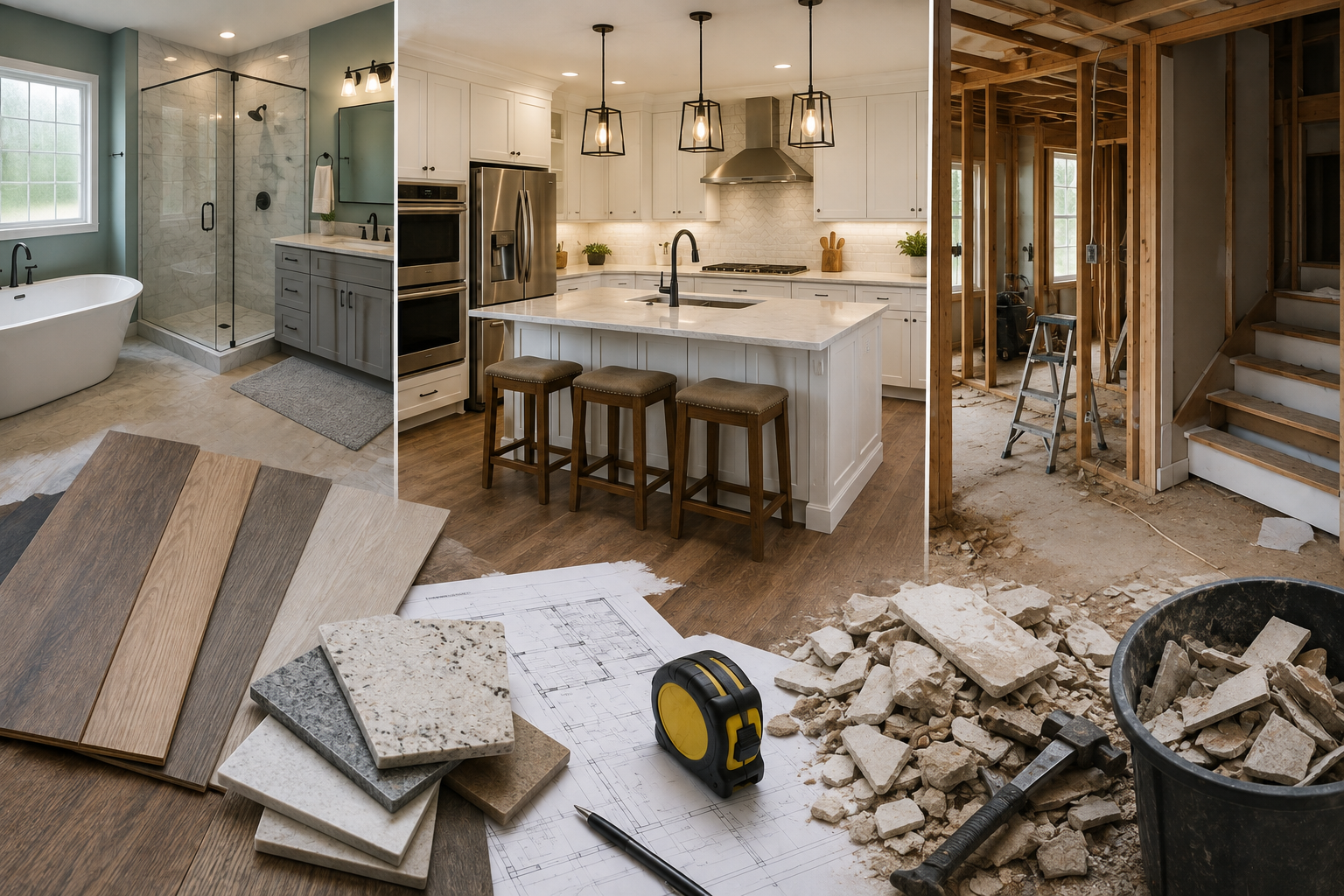
This mistake gets expensive fast. That beautiful sample looks incredible under showroom lights. Then you install 1,800 square feet of it and discover:
- It shows every footprint
- Dog hair is constantly visible
- Scratches stand out
- Water makes you nervous
- Dirt collects in the texture
- The color makes your rooms look darker
Flooring isn't wall art. You walk on it every day. Durability, moisture resistance, maintenance, pets, children, sunlight, and cleaning should influence your decision just as much as appearance.
Smarter Alternative
Take large samples home before purchasing. Look at them in morning, afternoon, and evening light. Then ask yourself: "Would I still want to clean and maintain this floor five years from now?"
3. Following a Trend Too Aggressively
There's nothing wrong with trends. The problem begins when an expensive, permanent renovation depends entirely on one.
| Easy to change later | Expensive to reverse |
|---|---|
| Paint | Flooring |
| Cabinet hardware | Tile |
| Light fixtures | Countertops |
| Decor and textiles | Custom cabinetry |
| Furniture | Major architectural changes |
That dramatic backsplash might look incredible today. But replacing it later isn't like swapping a throw pillow.
Smarter Alternative
Use expensive permanent materials as the calm foundation of the room, then introduce trends through items that can be changed easily. You can still create personality without locking the entire renovation into one moment in design history.
4. Creating an Open Floor Plan Without Thinking About Real Life
Open-concept homes can feel larger, brighter, more social, and better for entertaining. But removing walls changes more than appearance. Homeowners sometimes discover they miss privacy, quiet rooms, wall space, storage, and separation between kitchen mess and living areas. With more people working from home, separate spaces can be surprisingly valuable.
Smarter Alternative
Before removing walls, determine what the wall currently provides. Could a wider doorway accomplish what you want? Could you create partial separation? Could built-ins define the space without closing the room completely? Removing a wall is easy to imagine. Living without it is harder to visualize.
5. Spending Too Much on the "Dream Kitchen"
Kitchens sell remodeling projects. They're also the easiest place for a budget to explode. You start with new cabinets. Then countertops. Then appliances, flooring, lighting, backsplash — and then someone mentions moving the island. Suddenly a reasonable renovation has become a major financial commitment.
A dream kitchen can absolutely be worth it if you'll enjoy it for many years. The mistake is assuming every dollar spent automatically comes back at resale. It may not.
Smarter Alternative
Prioritize what improves everyday use:
- Better storage
- A functional layout
- Durable countertops
- Good lighting
- Reliable appliances
- Adequate electrical outlets
- Easy-to-clean surfaces
A kitchen that functions beautifully is worth more to your daily life than one designed mainly to impress people online.
6. Installing Features That Require More Maintenance Than Expected
This is an overlooked source of renovation regret. Some materials look amazing brand new — then reality arrives. Think surfaces that need frequent sealing, finishes that show every fingerprint, elaborate landscaping, delicate flooring, or outdoor features that demand constant upkeep.
Before installing anything, ask: "What does this look like after five years of normal use?" Not five days. Five years.
Smarter Alternative
Ask the contractor or supplier three questions:
- How often does this need maintenance?
- What happens if I don't maintain it?
- What does that maintenance actually involve?
The answers may completely change your decision.
7. Sacrificing Storage for Appearance
This happens constantly. Homeowners remove upper cabinets, closets, pantry space, bathroom storage, or built-in shelving because the room looks cleaner and larger without them. Then they have nowhere to put anything.
Beautiful rooms still need to function. If removing storage means appliances, toiletries, toys, and everyday clutter live on the countertops, the renovation can make the room feel less organized.
Smarter Alternative
Don't simply remove storage — replace it intelligently with full-height cabinets, deep drawers, built-ins, pantry systems, closet organizers, hidden storage, or an island with cabinets. Good design hides clutter without sacrificing function.
8. Choosing the Cheapest Contractor
One estimate comes in at $18,000. Another is $21,500. The third is $13,900. Saving $4,000–$7,000 sounds fantastic.
But before choosing the cheapest bid, find out why it's cheaper. The estimate may exclude permits, disposal, prep work, premium materials, cleanup, warranty coverage, or necessary repairs. Or the contractor may simply have lower overhead and offer legitimately excellent value.
The point isn't that inexpensive contractors are bad. It's that price alone doesn't tell you what you're buying.
Smarter Alternative
Compare the scope of work line by line and ask: "What is NOT included in this estimate?" That may be the most valuable question you ask during the entire renovation.
9. Starting Without a Contingency Budget
Your contractor pulls up the flooring and finds water damage. The wall comes down and old wiring appears. Bathroom demo begins and the subfloor is rotted.
Renovations uncover things nobody could see before construction started. If you've spent every dollar of your budget before demolition begins, one surprise puts the whole project under financial pressure.
Smarter Alternative
Keep money set aside outside your planned construction budget for legitimate surprises. How much depends on the home's age, the project's complexity, and how much demolition is involved. Older homes deserve extra caution.
10. Remodeling for Someone Else's House
This may be the biggest mistake of all. Homeowners sometimes design their house entirely around what they imagine a hypothetical future buyer wants.
Resale matters. But you're the person living there now. If you're staying another 10 years, that's thousands of mornings, dinners, weekends, and ordinary days spent inside your home. Your renovation should improve those days.
Smarter Alternative
Find the balance between personal enjoyment and financial practicality. Make the home work for your family without making extremely expensive or highly specialized changes you may later regret.
The Question to Ask Before Every Renovation
Before signing a contract, ask yourself: "What problem am I actually solving?"
Not "what looks cool." Not "what's trending." Not "what did I see on Instagram."
Maybe you need more storage, better lighting, more usable outdoor space, another bathroom, lower energy costs, better accessibility, a more functional kitchen, a safer roof, pet-friendly flooring, or a home office. Once you know the real problem, choosing the right project becomes much easier.
The FixlyGuide Renovation Test
Before spending thousands of dollars, answer these five questions:
- Will this improve how we use the home? If not, reconsider why you're doing it.
- Can we comfortably afford it? A beautiful renovation isn't worth financial stress.
- What maintenance will it require? Think beyond installation day.
- Is this easy or expensive to reverse? The harder it is to change, the more carefully you should choose.
- Would we still want this if social media had never shown it to us? An excellent test for trend-driven decisions.
The Bottom Line
The best home renovations aren't the ones that generate the biggest before-and-after reaction. They're the ones that make you say, "Why didn't we do this sooner?"
A successful renovation should make your home safer, more functional, more comfortable, easier to maintain, or more enjoyable — preferably several of those at once.
So before spending thousands of dollars, slow down. Compare contractors. Understand the maintenance. Think about how you'll actually use the space. And make sure you're solving a real problem, not simply buying the latest home-design trend.
Because the goal isn't the perfect house for social media. It's a better home for the people actually living in it.
What should this project cost?
Enter your project details for a realistic cost range before you call anyone.
Scope drives everything — single-room work often $10,000–$40,000; whole-home much higher.
- Regional adjustment
- National average
- Labor share (typical)
- ~$21,825
- Quotes to collect
- 3 written estimates
Educational estimate based on national averages — not a binding quote. Always confirm with written local estimates.
Recommended for DIYers & woodworkers
Sponsored
The Top 20 Tools for Workshops of Any Budget
No stationary machines or power tools required — plus 3 fundamental tools that can't be bought at any price.
Get the free guide
Ted's Woodworking — The #1 Woodworking Resource
Detailed instructions, dimensioned drawings, materials & cutting lists, and 3D schematics for every skill level.
See the plansSponsored: links above are affiliate links. FixlyGuide may earn a commission on qualifying purchases — at no extra cost to you.
Frequently asked questions
What home renovation do homeowners regret most?+
Removing the only bathtub in the house and choosing flooring based purely on looks are two of the most commonly regretted projects. Both feel great on install day and create daily friction afterward.
Which renovations don't add value at resale?+
Highly personalized or trend-heavy work — bold permanent tile, over-customized cabinetry, luxury features that outclass the neighborhood, and pools in some markets — rarely returns what it costs. Function, condition, and efficiency upgrades hold value better.
How much contingency should I budget for a renovation?+
Set aside money outside your construction budget for surprises found during demolition. Older homes and projects that open walls, floors, or plumbing deserve a larger cushion than cosmetic updates.
Is an open floor plan still worth it in 2026?+
Sometimes. Open layouts add light and sociability but remove privacy, quiet, wall space, and storage. A wider doorway or partial opening often delivers most of the benefit at a fraction of the cost and regret.
Should I always choose the cheapest contractor bid?+
No. Compare scopes line by line and ask what is not included. Low bids often exclude permits, disposal, prep, cleanup, or warranty coverage, which reappear later as change orders.
How do I avoid renovation regret?+
Define the problem you are solving before you shop. Confirm maintenance requirements, keep trends in easily changed elements, protect storage, and make sure the project improves how you actually live in the home.


Discussion
Loading comments…