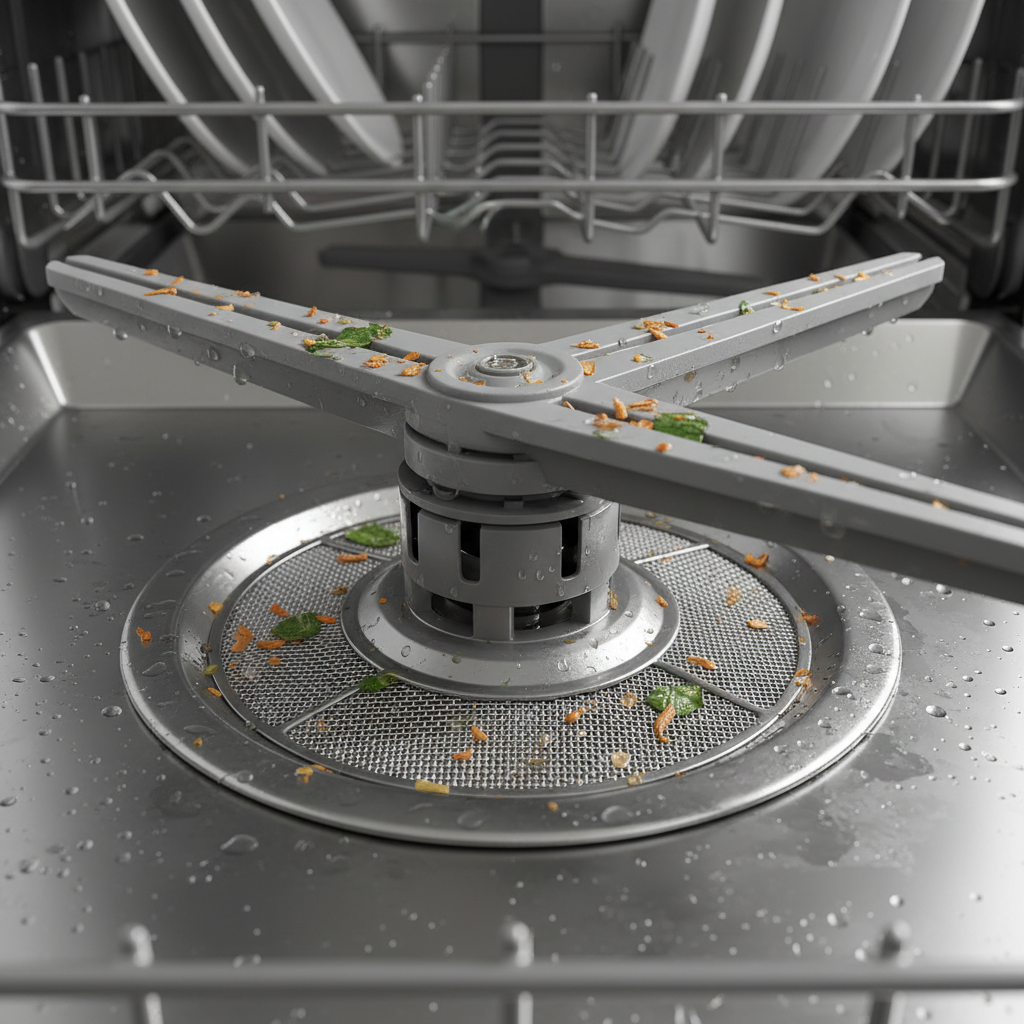
- Clear the Filter — This is probably the biggest offender. You’d be amazed what collects down there. Most newer dishwashers have a removable filter at the bottom of the tub.
- Locate it: Usually it’s a cylindrical or flat screen under the lower spray arm. Sometimes you twist it counter-clockwise to unlock it.
- Reinstall: Put it back in and twist clockwise until it locks. A loose filter can let junk get into the pump, and that thing’s a headache.
Plumbing · Clog
| Project category | Plumbing |
|---|---|
| Problem type | Clog |
| Trade required | Plumbing |
| Urgency | Soon — within weeks |
| Safety risk | Low safety risk |
| DIY suitability | DIY friendly |
| Cost category | Low cost |
| Typical timeline | Same-day DIY attempt; pro visit within a day or two |
| Contractor type | Licensed plumber |
Repair option
Plunger, hand auger, or trap cleanout before chemicals.
Replacement option
Line replacement when clogs return in the same spot repeatedly.
Common causes
- Hair and soap buildup in the trap
- Grease cooling in the branch line
- Flushed wipes or foreign objects
Relevant tools:diy difficultydiy or hire a pro
Published September 28, 2026Last updated September 28, 2026
Tools & materials you'll need
Affiliate linksAs an Amazon Associate FixlyGuide earns from qualifying purchases — at no extra cost to you. Prices and availability are accurate as of publication and subject to change.
Quick Answer
When your dishwasher quits doing the one thing it’s built for—getting your dishes clean—don’t assume it’s dead. Most of the time, I’ve found it’s one of three usual suspects: a dirty filter, clogged spray arms, or the load’s packed wrong. Check those first before you call the cavalry or go shopping for a new machine. It’ll save you a headache and a pile of money.
The Problem
You know the routine. You load the dishwasher, hit start, and a few hours later you pull out a “clean” plate with last night’s lasagna still stuck on it, or a glass that looks like it got caught in a dust storm. Spots, streaks, food bits—yeah, it’s maddening. Makes you feel like you’re paying for a fancy drying rack. But after two decades in this trade, I can tell you it’s rarely the dishwasher itself that’s toast. Usually it’s something simple. Something you can handle with a little elbow grease and maybe a screwdriver.
How It Works
Ever stop and think about how that big metal box actually gets things clean? It’s not just hot water sloshing around in there. A dishwasher uses a pump to move water, mixes it with detergent, and sends it through spray arms. Those arms—usually one in the middle and one on the bottom, sometimes a third up top—have tiny jets that blast water onto the dishes. That pressure, plus the detergent, breaks down the food.
Then a heating element warms the water to around 140°F-160°F to help sanitize and loosen the crusty stuff. After the wash cycle, the dirty water drains out and fresh water comes in for a rinse. Then the heater kicks back on to dry everything, and the inside temp can climb to over 170°F.
There’s also a filter, usually down low, that catches the bigger food scraps so they don’t get pumped back onto your plates. If any piece of that system goes sideways—the water flow, the spray pattern, the filter, the heat—your “clean” dishes come out looking pretty rough. It’s a little machine with a lot going on. One missed step, and the whole show falls apart.
Step-by-Step Fix
Alright, let’s get that dishwasher back to work. Don’t worry, this ain’t surgery. Just slow down and do it in order.
-
Safety First! — Before you crack it open, unplug the dishwasher from the wall. If it’s hardwired, flip the breaker in your electrical panel. I’ve seen plenty of homeowners skip this and get a nasty surprise. Not worth it. Shut it down first.
-
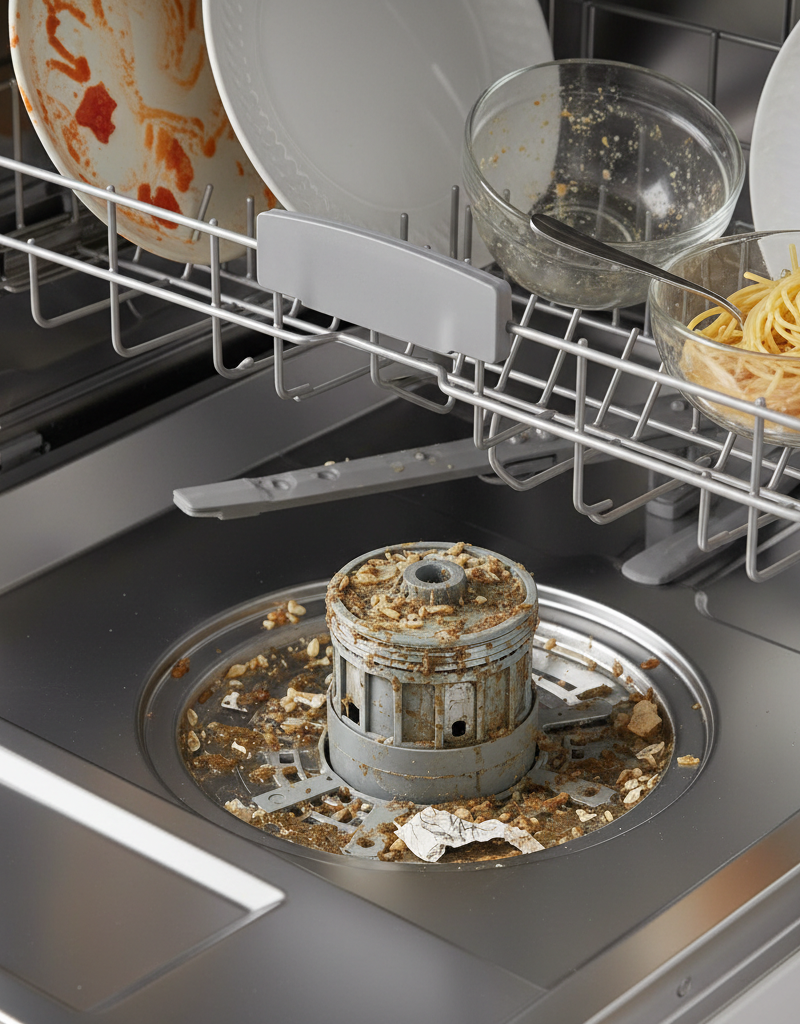
Clear the Filter — This is probably the biggest offender. You’d be amazed what collects down there. Most newer dishwashers have a removable filter at the bottom of the tub.
- Locate it: Usually it’s a cylindrical or flat screen under the lower spray arm. Sometimes you twist it counter-clockwise to unlock it.
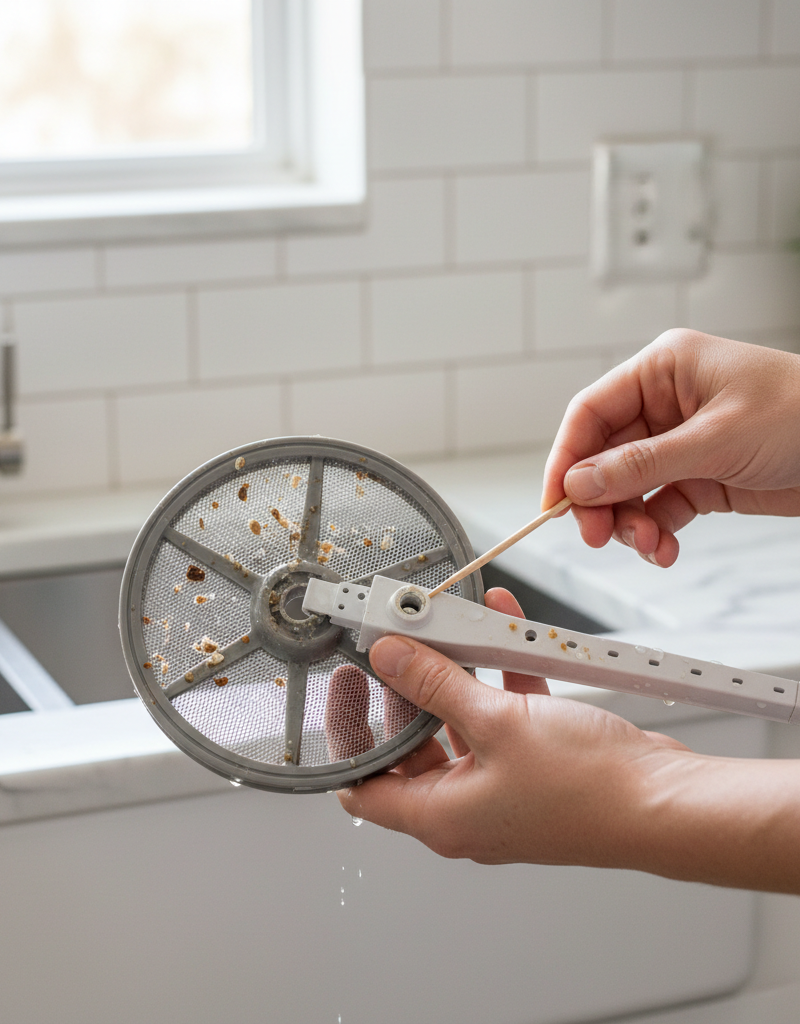
- Remove and clean: Pull it out. Odds are you’ll find food scraps, broken glass, labels, maybe a chunk of plastic. Take it to the sink and scrub it under warm running water with a stiff brush and some dish soap. Don’t go at it with anything abrasive—you can damage the mesh. Make sure water runs through it freely.
- Reinstall: Put it back in and twist clockwise until it locks. A loose filter can let junk get into the pump, and that thing’s a headache.
-
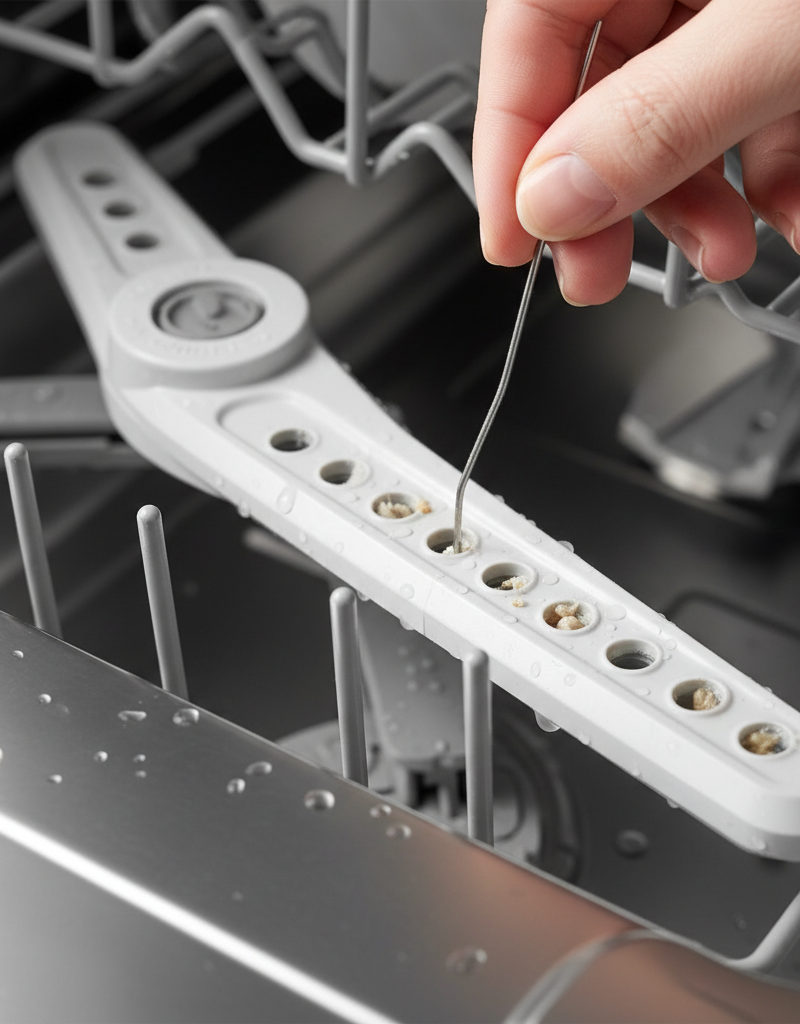
Inspect Spray Arms — These are the dishwasher’s water cannons. If the holes are clogged, the water can’t hit the dishes.
- Remove the arms: The lower one usually just lifts off the center post. The upper one might have a cap or nut you need to unscrew. Don’t force it; most just twist and lift.
- Clear the jets: Hold the arm up to a light. See any gunk in the little holes? Use a toothpick, a small piece of wire—like a straightened paperclip—or a thin pipe cleaner to poke each hole clear. I pulled a dishwasher in Frisco last month that had a dried bean stuck in one jet, and the owner couldn’t figure out why one whole side of the rack stayed dirty.
- Rinse and reinstall: Give the arms a good rinse, then snap or screw them back in. Spin them by hand to make sure they move freely.
-
Check Water Temperature — Your dishwasher needs hot water to clean well and sanitize. If the water coming into the machine isn’t hot enough, the detergent won’t do its job.
- Test at the sink: Turn on the hottest water at your kitchen faucet. Let it run for a full minute. Fill a cup and check it with a thermometer. You want at least 120°F, ideally closer to 130°F.
- Adjust water heater (if needed): If it’s low, you may need to bump the water heater thermostat a few degrees. Don’t push it past 125°F if scalding’s a concern—especially with kids in the house. Even a 10°F bump can help.
-
Evaluate Detergent and Rinse Aid — Not every detergent works the same, and rinse aid isn’t just for shine.
- Detergent choice: Try a fresh, high-quality dishwasher detergent. Liquid gels can separate and lose punch over time. Powder can cake up. Pods or tablets usually stay more consistent. Use the right amount—too little won’t clean, too much can leave residue.
- Rinse aid: Use rinse aid. Every time. It helps water sheet off the dishes, cuts spots, and helps drying. Fill the dispenser regularly—the little compartment on the inside of the door. If your machine has a “rinse aid full” light, pay attention to it.
-
Load it Right — Sounds basic, but it makes a huge difference.
- Don’t overcrowd: Leave room between dishes so water can reach everything.
- Face the spray: Put the dirty side toward the spray arms. Bowls and cups upside down. Plates facing the center.
- Avoid blocking arms: Tall items or long handles shouldn’t stop the spray arms from turning. Give them a quick spin by hand after loading, just to be sure.
-
Run a Cleaning Cycle — Once you’ve handled the basics, clean the machine itself.
- Vinegar or commercial cleaner: Set a bowl of white vinegar (about 2 cups) on the top rack. Or use a store-bought dishwasher cleaner.
- Run hot cycle: Run it empty on the hottest, heaviest cycle. That helps knock loose grease, mineral buildup, and whatever funky smell’s hanging around.
-
Check for Other Clogs — If none of that helps, the problem may be farther down the line.
- Air gap/drain hose: Check the air gap (if you’ve got one, usually a small cylinder by the faucet) for clogs. Also make sure the drain hose under the sink isn’t kinked or blocked where it hooks to the garbage disposal or drain pipe. Use a flashlight—those tight spots hide plenty. A kinked hose can keep it from draining right and let dirty water cycle back through.
Common Causes
- Clogged Filter: This is the big one. Food bits, broken glass, paper labels—it all piles up here and messes with drainage and water flow.
- Blocked Spray Arm Jets: Tiny food scraps or mineral buildup can clog the holes in the spray arms, so water never reaches every dish.
- Improper Loading: Too many dishes, or loading them wrong, keeps water and detergent from doing their job.
- Low Water Temperature: Water that isn’t hot enough (below 120°F) won’t activate detergent properly and won’t cut grease very well.
- Detergent Issues: Old detergent, the wrong detergent, or not enough of it can leave dishes dirty. Same goes for skipping rinse aid.
- Hard Water: Minerals like calcium and magnesium can leave a cloudy film or spots even if the dishes are technically clean.
- Drainage Problems: A kinked drain hose, clogged air gap, or trouble at the garbage disposal connection can keep dirty water from getting out, which leaves residue behind.
Common Mistakes
- Pre-rinsing Dishes Too Much: Most people overdo this. Modern detergents need some food particles to grab onto, so just scrape off the big chunks and move on.
- Ignoring the Filter: Out of sight, out of mind, right? But if you skip that filter regularly—I tell folks monthly—you’re asking for dirty dishes.
- Overloading the Machine: Trying to sneak in “just one more plate” means water can’t move around, and then you’re stuck washing half of it by hand anyway.
- Skimping on Rinse Aid: A lot of folks treat rinse aid like optional fluff. It isn’t. It matters for spot control and drying, especially if you’ve got hard water.
- Using Too Much or Too Little Detergent: Stick with the manufacturer’s recommendation. Too much leaves residue. Too little leaves mess. It
Related Articles
Keep troubleshooting with these hand-picked guides from FixlyGuide:
- Why That New Wood Door Still Sticks (It’s Not Just Humidity) — A sticking wood door is a common frustration, often blamed on humidity, but the real culprits are usually simpler, often involving hinge ad…
- The Hidden Culprit Behind Your Fuzzy Table Saw Cuts (It's Not Just the Blade!) — Fuzzy table saw cuts and tearout are frustrating, but often the problem isn't just your blade; hidden factors like feed rate, blade height,…
- The 3 Hidden Drywall Mistakes That Make Floating Shelves Sag (And How to Fix Them) — Prevent floating shelves from sagging in drywall by avoiding common installation mistakes like improper anchor selection and incorrect stud…
- That New Grout Is Already Cracking? Here’s the Hidden Cause — Cracked grout weeks after a renovation is often a sign of a deeper issue with your subfloor or tile installation, not just a problem with t…
- Why Your New Inductor Cooktop Won't Turn On (And the Easy Fix) — Don't panic if your new induction cooktop isn't firing up after installation; it's a common issue with a straightforward electrical cause.
- The 30-Minute Fix: Why Your Gas Burner Lights But Won't Stay Lit — Your gas stove burner lights up for a second then quickly extinguishes? It's a common, frustrating issue often due to a dirty or faulty the…
Should you do this yourself?
Answer five quick questions before you start. Safety outranks savings every time.
Your experience with work like this
How high do you have to work?
Does the job involve any of these?
Will it need a permit?
Specialty tools
Free and instant. Educational guidance only — not a quote, inspection, or professional diagnosis.
What should this project cost?
Enter your project details for a realistic cost range before you call anyone.
Cost depends heavily on which system turns out to be the source.
- Regional adjustment
- National average
- Labor share (typical)
- ~$1,620
- Quotes to collect
- 3 written estimates
Educational estimate based on national averages — not a binding quote. Always confirm with written local estimates.
Get the print-ready PDF of this guide
A clean, ad-free, printable version you can keep on your phone or pin to the workshop wall. Free with a FixlyGuide account.
- Print-optimized layout
- Tools, materials & every step included
- Saved to your account
Recommended for DIYers & woodworkers
Sponsored
The Top 20 Tools for Workshops of Any Budget
No stationary machines or power tools required — plus 3 fundamental tools that can't be bought at any price.
Get the free guide
Ted's Woodworking — The #1 Woodworking Resource
Detailed instructions, dimensioned drawings, materials & cutting lists, and 3D schematics for every skill level.
See the plansSponsored: links above are affiliate links. FixlyGuide may earn a commission on qualifying purchases — at no extra cost to you.
Frequently asked questions
How often should I clean my dishwasher filter?+
I tell homeowners to clean their dishwasher filter at least once a month, especially if you run the dishwasher frequently or have hard water. If you notice dishes getting dirty or poor drainage, check it sooner.
Can I use regular dish soap in my dishwasher?+
Absolutely not! Regular dish soap creates too many suds, which can cause leaks, damage your machine, and leave a huge mess. Always use detergent specifically designed for dishwashers.
Why are my glasses cloudy after washing in the dishwasher?+
Cloudy glasses are often due to hard water etching or mineral deposits. Using a good quality rinse aid is crucial, and you might need a dishwasher cleaner designed for hard water to remove mineral buildup periodically.
Should I pre-rinse dishes before putting them in the dishwasher?+
For most modern detergents, you should only scrape off large food particles. Pre-rinsing too much can actually make some detergents less effective, as they need a little bit of food residue to bind to and work properly.
What temperature should my hot water be for the dishwasher?+
Your hot water should be at least 120°F (49°C) for effective cleaning, and ideally around 130°F (54°C). If your water heater is set too low, your detergent won't activate fully.
How do I know if my dishwasher spray arms are blocked?+
You can usually tell if dishes on one rack are consistently dirtier than others, or if you can see visible gunk or debris in the small holes of the spray arms. Remove the arms and hold them up to a light to check for blockages.
Is it okay to run an empty dishwasher with vinegar?+
Yes, running an empty dishwasher with 1-2 cups of white vinegar in a top-rack safe bowl is a great way to clean out mineral deposits, grease, and odors. Do this once a month or whenever you notice issues.
My dishwasher isn't drying properly. Is that related to cleaning issues?+
Poor drying can definitely be related. A dirty filter or clogged spray arms can affect overall performance. Also, ensure you're using rinse aid, as it helps water sheet off dishes for better drying. Check your heating element too, though that's a different fix.
Discussion
Loading comments…