- Loose Hinge Screws: This is the big one. Screws back out over time from all the opening and closing, and the door starts sagging. Easy fix. I can’t say that enough.
- House Settling or Foundation Movement: Even a little settling can throw a frame out of square and make the door bind. If more than one door starts acting up, I start looking here.
- Seasonal Wood Movement: Wood, especially solid wood doors or older frames, expands in high humidity (summer) and shrinks in dry air (winter). Exterior doors show it more, and so do homes with sketchy climate control.
- Improper Hinge Installation: Hinges that aren’t mortised right, or shims that compress or shift, can knock the door out of alignment.
- Door Damage or Warping: If the door’s been hit, or it warped from moisture swings or a factory defect, the shape can change for good.
General remodeling · Renovation planning
| Project category | General remodeling |
|---|---|
| Problem type | Renovation planning |
| Trade required | General contracting |
| Urgency | Planned project |
| Safety risk | Low safety risk |
| DIY suitability | Pro recommended |
| Cost category | Major investment |
| Typical timeline | Design and permitting often 2–4 months before work starts |
| Contractor type | General contractor |
Repair option
Phase the work and fix the building envelope first.
Replacement option
Full renovation with permits, design, and a general contractor.
Common causes
- Space no longer fits how the household lives
- Resale preparation
- Deferred maintenance stacking up
Relevant tools:project cost estimatorcompare quoteshome improvement material prices
Published August 27, 2026Last updated August 27, 2026
The shop list for this build
Hand-picked tools & materials — shop on Amazon, ships fast.
Power tools
· The heavy hitters — buy once, use for decades.- Shop on AmazonBlock plane
Why it's here: Or belt sander with fine grit sandpaper
Hand tools & jigs
· Layout, joinery, and the everyday workbench essentials.- Shop on AmazonScrewdriver set
Why it's here: Phillips head and flathead
- Shop on AmazonPencil
Why it's here: For marking rub spots
- Shop on AmazonUtility knife
Why it's here: For trimming shims
- Shop on AmazonSafety glasses
Materials & hardware
· Lumber, fasteners, glue, abrasives — the consumables.- Shop on AmazonWood shims
Why it's here: Or cardboard from a cereal box
- Shop on AmazonWood glue
Why it's here: For stripped screw holes
- Shop on AmazonWooden toothpicks or golf tees
Why it's here: For stripped screw holes
Finishes & coatings
· Stains, dyes, top-coats, and prep products.- Shop on Amazon2.5-3 inch wood screws
Why it's here: Matching hinge finish if possible
Quick Answer
That brand new wood door, or even an old reliable one, sticking when you try to open or close it? Most homeowners just blame humidity and call it a day, but that’s usually not the whole story. More often than not, it’s something simple — loose hinge screws letting the door sag, maybe the house settling a hair, maybe both. You can usually get it moving smooth again with basic tools, a little patience, and a sharp eye for where it’s rubbing.
The Problem
You’ve got a door that’s binding, rubbing, or flat-out refusing to close right. It might catch at the top, drag on the floor, or scrape along the side of the frame. That’s not just annoying; it can chew up your paint, wear your flooring, and make the door less secure if it won’t latch. I’ve seen folks wrestle with these things for years, sure they needed a whole new frame, when the real fix was something I could knock out in 20 minutes. Usually it’s a structural issue — the door, the frame, or the hang — that’s throwing everything out of whack, not just moisture in the air making the wood swell like a sponge.
How It Works
Okay, let’s talk about how a door and frame work together. A door isn’t just a slab of wood; it’s part of a system. You’ve got the door slab itself, the frame parts — jamb, head, and stops — and the hinges tying it all together. When everything’s set right, you’ve got a consistent gap, often about an ⅛-inch, all the way around. That gap is the “reveal.” It gives the wood and the house a little room to move without the door binding up.
Here’s the deal: wood, even kiln-dried stuff, is hygroscopic. That means it takes in moisture and gives it back off. When it absorbs moisture, it expands; when it dries out, it shrinks. So, yeah, humidity matters, especially on exterior doors or in unconditioned spaces. But modern homes — the ones with decent HVAC, anyway — tend to keep indoor humidity pretty steady. So if your interior door is sticking all year long, it’s probably not just the weather. More likely, one part of that door system shifted. A loose hinge can let the whole door sag, which makes it rub at the top or on the latch side. Foundation movement, even tiny stuff, can twist a frame out of square. Or maybe a shim behind a hinge jamb compressed over time. You’ve gotta look at the whole setup, not just the wood.
Step-by-Step Fix
Before you grab a planer or start sanding, figure out why that door’s sticking. Nine times out of ten, it’s not that the door swelled up like a pufferfish; it’s the way it’s hanging. I’ve fixed a pile of these just by tightening a screw or slipping in a shim.
-
Inspect the Door and Frame – Locate the rub spot.
Open and close the door slow. Listen. Watch it. Where’s it catching? Top corner? Floor? Hinge side? Latch side? Mark the spot with a pencil. I’ll even use a scrap of paper sometimes — slide it through the gap, and where it hangs up, that’s your trouble. Check the hinges too. Are the screws loose? Is there a gap between the hinge leaf and the jamb or door? That first bit of detective work saves you a pile of hassle later. -
Tighten All Hinge Screws – The simplest fix first.
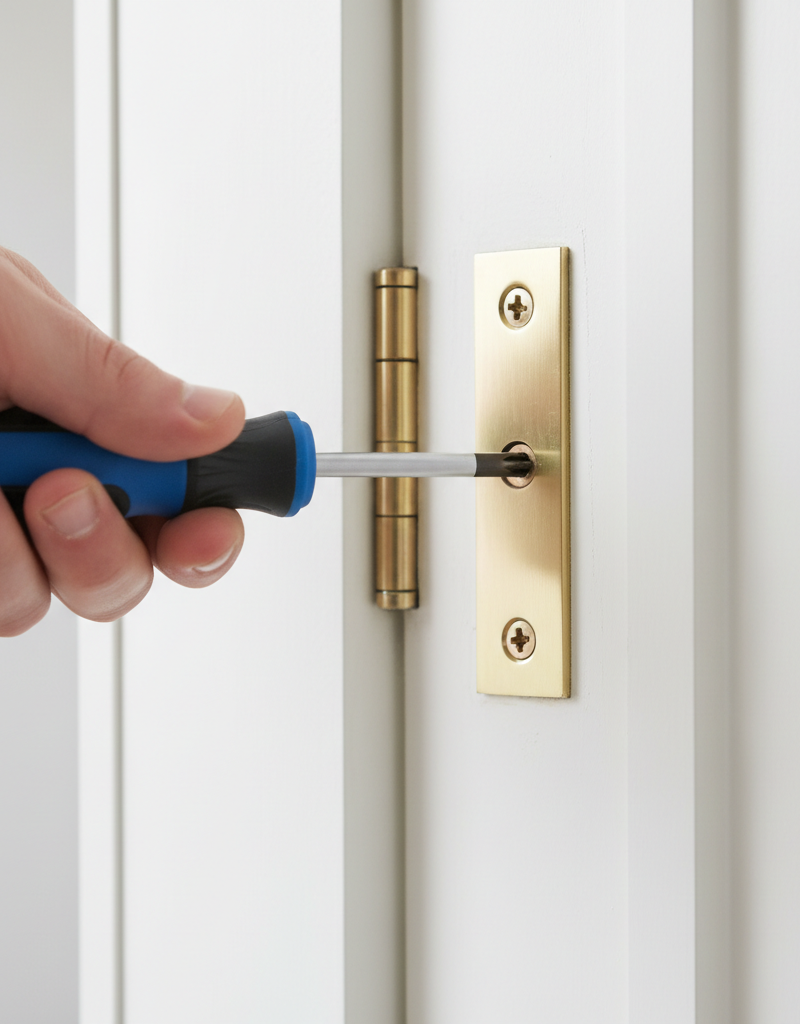
This is the first thing I try, every time. Grab a screwdriver — don’t go jamming a drill on high torque unless you really know what you’re doing, or you’ll strip the screws. Check every screw on every hinge, door side and jamb side. Tighten them firm. If one just spins in the hole, well, jackpot — that hole’s stripped. Pull the screw out, stuff in a few wooden toothpicks or a golf tee (yeah, a golf tee works great) with some wood glue, let it sit for 10 minutes, then break it off flush and drive the screw back in. I’ve seen that alone fix 75% of minor sticking doors. -
Replace Short Hinge Screws (Top Hinge) – Pulling the jamb back into alignment.
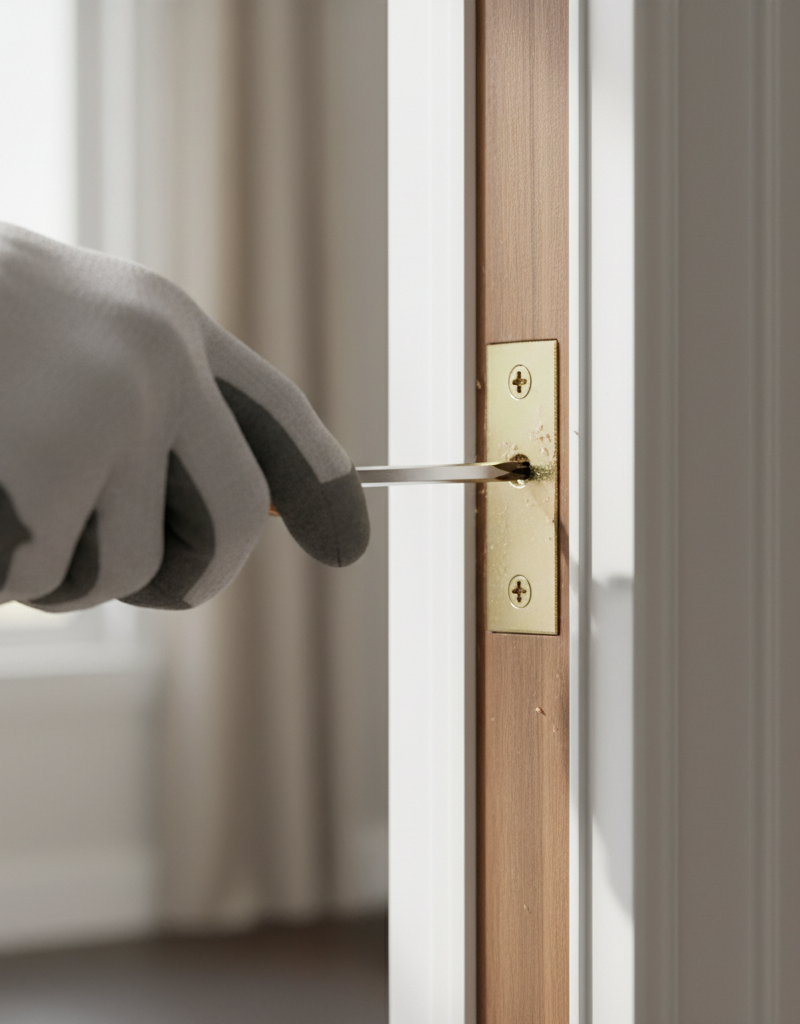
Sometimes the top hinge, especially on the jamb side, needs a little more bite. A lot of hinge screws are only about 3/4 to 1-inch long. That barely gets into the jamb, not the stud behind it. Swap one of the short screws in the top jamb-side hinge for a longer 2.5 to 3-inch wood screw. Take it slow. That longer screw goes through the jamb, through the shims, and into the stud, which pulls the frame back just a touch. This is often the trick if the door’s rubbing the latch-side top corner. -
Shim the Hinges (Opposite Problem) – Pushing the jamb out.
If the door’s rubbing on the hinge side, or the bottom of the latch side, you may need to push the hinge jamb out a bit. Add thin shims behind the hinge leaves. Pull the screws, slip a thin piece of cardboard — cereal box stuff works fine — or a hinge shim behind the leaf, then screw it back down. Start with one layer and test it. You might need one or two layers on the top hinge or middle hinge, depending on where it’s rubbing. That’s how you fine-tune the door in the frame. -
Check for Sagging Door Stop – A sneaky culprit.
The door stop is that thin strip of wood the door closes against. If it’s loose, it can sag or shift and make the door rub. Close the door slow and see if it’s hitting the stop too soon. If it is, you may need to re-nail the stop where it belongs. Hammer, finish nails, easy enough — just don’t whale on it and dent the frame. -
Plane or Sand the Door Edge – Last resort, when other methods fail.
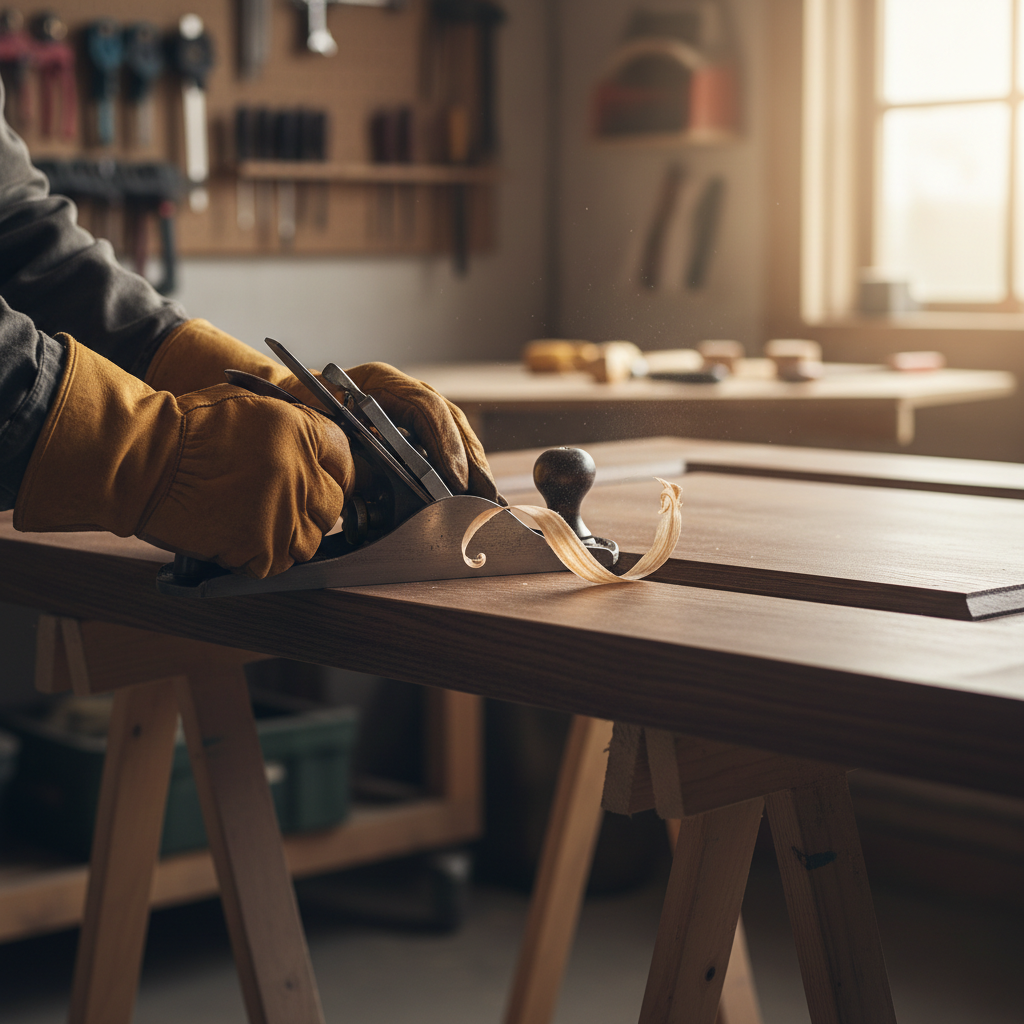
If you’ve tried everything else and it still rubs, especially on the latch side or bottom, you may need to take a little material off the door itself. Go careful here. Find the exact rub. If it’s a steady rub along the latch side, a planer or belt sander does the job. If it’s just a small spot, a block plane or sandpaper wrapped around a block works fine. Pull the door off the hinges first — way easier to handle that way. Take off just a hair at a time. I mean like 1/32nd of an inch. Hang it back up and check. Do it again if you need to. You can always remove more, but you can’t glue it back on. Once you’re done, re-seal or re-paint the exposed wood so it doesn’t drink up moisture. -
Address Floor Drag (Scribe or Trim) – For rubbing on the bottom.
If the door’s dragging on the floor or carpet, check those hinges again first — a sagging door drops. If the hinges are tight and it still drags, you’ll need to trim the bottom edge. That usually means pulling the door off. Use a straightedge and pencil to mark exactly how much you need to remove. A circular saw with a fine-toothed blade, or a track saw if you’ve got one, gives you a clean cut. For small changes, a hand plane or belt sander can work. Same rule here: take a little at a time. Don’t forget to re-finish the cut edge. -
Evaluate for Structural Issues – When it's more than a door problem.
If you’ve tried all this and the door still sticks, especially if a bunch of doors in the house are acting up or you’re seeing cracks in plaster or drywall near the frame, you may be looking at a bigger structural issue like foundation settling. That’s not a DIY patch. At that point, call in a structural engineer or a good foundation repair specialist. I remember a house in Roswell a few years back — beautiful old place, but every single interior door was sticking in a weird way. Turned out one corner of the foundation was slowly sinking. My hinge tricks were just a band-aid. We had to hand them off to a foundation guy.
Common Causes
- Loose Hinge Screws: This is the big one. Screws back out over time from all the opening and closing, and the door starts sagging. Easy fix. I can’t say that enough.
- House Settling or Foundation Movement: Even a little settling can throw a frame out of square and make the door bind. If more than one door starts acting up, I start looking here.
- Seasonal Wood Movement: Wood, especially solid wood doors or older frames, expands in high humidity (summer) and shrinks in dry air (winter). Exterior doors show it more, and so do homes with sketchy climate control.
- Improper Hinge Installation: Hinges that aren’t mortised right, or shims that compress or shift, can knock the door out of alignment.
- Door Damage or Warping: If the door’s been hit, or it warped from moisture swings or a factory defect, the shape can change for good.
- New Flooring: New carpet or thicker flooring can make the bottom edge drag.
Common Mistakes
- Grabbing the Sander Too Soon: Don’t jump straight to sanding or planing. Most sticking doors are hinge issues. You might shave off wood you didn’t need to touch.
- Ignoring Loose Screws: Skipping loose hinge screws is like trying to fix a leaky faucet without tightening the packing nut first. That’s step one.
- Not Identifying the Exact Rub Spot: Guessing where it sticks leads to useless fixes and wasted time. Mark it right.
- Over-Planing/Sanding: Taking off too much leaves you with a sloppy gap, and that looks rough and can mess with insulation. Go slow. Check often.
- Using the Wrong Screws: Too-short screws in stripped holes, or long screws in the wrong place, can make things worse.
- Neglecting to Seal Cut Edges: If you do plane or sand, seal or paint that exposed wood right away so it doesn’t soak up moisture and start moving again.
Cost & Time Breakdown
Here
Related Articles
Keep troubleshooting with these hand-picked guides from FixlyGuide:
- The Hidden Culprit Behind Your Fuzzy Table Saw Cuts (It's Not Just the Blade!) — Fuzzy table saw cuts and tearout are frustrating, but often the problem isn't just your blade; hidden factors like feed rate, blade height,…
- Your New Faucet Leaks at the Base? The 50-Cent O-Ring Fix — That brand new kitchen faucet shouldn't be dripping at the base; here's the surprisingly common reason why it's happening and the specific…
- That New Grout Is Already Cracking? Here’s the Hidden Cause — Cracked grout weeks after a renovation is often a sign of a deeper issue with your subfloor or tile installation, not just a problem with t…
- The 7 Critical Wall Prep Mistakes Most DIY Painters Make (And How to Fix Them) — Prepping your walls correctly before painting is crucial for a smooth, lasting finish. Learn to avoid common DIY mistakes and achieve profe…
- The 7 Critical Wall Prep Mistakes Most DIY Painters Make (And How to Fix Them) — Discover the common wall preparation mistakes DIY painters make and how to avoid them for a flawless finish that lasts.
- The Secret Reason Your Interior Door Sticks (It's Not Always Humidity) — Before you grab a planer, discover the real culprits behind a sticking interior door and learn simple, effective fixes.
Should you do this yourself?
Answer five quick questions before you start. Safety outranks savings every time.
Your experience with work like this
How high do you have to work?
Does the job involve any of these?
Will it need a permit?
Specialty tools
Free and instant. Educational guidance only — not a quote, inspection, or professional diagnosis.
What should this project cost?
Enter your project details for a realistic cost range before you call anyone.
Cost depends heavily on which system turns out to be the source.
- Regional adjustment
- National average
- Labor share (typical)
- ~$1,620
- Quotes to collect
- 3 written estimates
Educational estimate based on national averages — not a binding quote. Always confirm with written local estimates.
Before you start
Check the difficulty, permits, and safety risk — then decide whether to call a pro.
- Estimate this projectGet a cost range for your scope and ZIP before you call anyone.Open
- Get local estimatesSend one request and compare written estimates from vetted pros.Open
Free, no signup required. Estimates are educational guidance, not a quote or an inspection.
Get the print-ready PDF of this guide
A clean, ad-free, printable version you can keep on your phone or pin to the workshop wall. Free with a FixlyGuide account.
- Print-optimized layout
- Tools, materials & every step included
- Saved to your account
Recommended for DIYers & woodworkers
Sponsored
The Top 20 Tools for Workshops of Any Budget
No stationary machines or power tools required — plus 3 fundamental tools that can't be bought at any price.
Get the free guide
Ted's Woodworking — The #1 Woodworking Resource
Detailed instructions, dimensioned drawings, materials & cutting lists, and 3D schematics for every skill level.
See the plansSponsored: links above are affiliate links. FixlyGuide may earn a commission on qualifying purchases — at no extra cost to you.
Frequently asked questions
Why does my wood door stick more in the summer?+
Increased humidity in the summer can cause wood doors to absorb moisture and expand slightly, leading to binding. However, foundation settling or loose hinges often exacerbate this natural expansion.
Can I fix a sticking door without removing it?+
Absolutely! Many sticking door problems can be resolved by simply tightening or replacing hinge screws, or adding shims behind hinges, all without taking the door off its frame. Only resort to planing or sanding as a last step.
What kind of screws should I use for loose hinges?+
For stripped hinge holes, use longer, fatter screws of the same head type, or use the toothpick/golf tee trick with wood glue. For pulling the jamb tighter, a 2.5 to 3-inch wood screw in the top jamb-side hinge is often effective.
How much material can I safely remove from a door?+
You should aim to remove as little material as possible, typically no more than 1/16 to 1/8 of an inch in total. Go slowly, test often, and remember you can always take more off, but you can't put it back.
What if my door is still sticking after tightening hinges?+
If tightening screws doesn't work, consider adding shims behind the hinges to adjust the door's position, or replacing a short screw in the top hinge with a longer one to pull the jamb closer to the stud. If all else fails, a small amount of planing or sanding might be necessary.
Is it normal for new wood doors to stick?+
New wood doors can stick for several reasons, including minor adjustments needed after installation, slight swelling due to initial exposure to your home's humidity, or the house settling around the new frame. It's often a sign of a minor adjustment needed, not a defect.
Can painting a door cause it to stick?+
Yes, if paint builds up on the edges of the door or within the frame's reveal, it can effectively reduce the gap and cause the door to stick. Always ensure paint isn't excessively thick on these surfaces, or gently sand down any buildup.
When should I call a professional for a sticking door?+
If you've tried all the DIY adjustments and the door still sticks, or if you notice multiple doors and windows having issues, or see new cracks in your walls, it might indicate a foundation problem. In these cases, it's best to consult a structural engineer or a general contractor.

Discussion
Loading comments…