- Calculate the Total MC Change: 14% - 6% = 8% total change in moisture content.
- Calculate the Total Movement:
- Movement Coefficient: 0.00369
General remodeling · Renovation planning
| Project category | General remodeling |
|---|---|
| Problem type | Renovation planning |
| Trade required | General contracting |
| Urgency | Planned project |
| Safety risk | Low safety risk |
| DIY suitability | Pro recommended |
| Cost category | Major investment |
| Typical timeline | Design and permitting often 2–4 months before work starts |
| Contractor type | General contractor |
Repair option
Phase the work and fix the building envelope first.
Replacement option
Full renovation with permits, design, and a general contractor.
Common causes
- Space no longer fits how the household lives
- Resale preparation
- Deferred maintenance stacking up
Relevant tools:project cost estimatorcompare quoteshome improvement material prices
Published June 11, 2026Last updated August 17, 2026
The shop list for this build
Hand-picked tools & materials — shop on Amazon, ships fast.
Power tools
· The heavy hitters — buy once, use for decades.- Shop on AmazonZ-Clip Tabletop Fasteners, 20-Pack· 1
Why it's here: An easy-to-install and effective method for tabletop attachment. You'll also need a way to cut a slot, like a biscuit joiner or router.
- Shop on AmazonFreud 1/2-Inch Straight Bit (12-108)· 1
Why it's here: For router users, this is key for plunging the elongated slots in your breadboard tenons.
Hand tools & jigs
· Layout, joinery, and the everyday workbench essentials.- Shop on AmazonGeneral Finishes Moisture Meter
Why it's here: Absolutely essential for knowing the moisture content of your lumber before you build.
- Shop on AmazonFigure-8 Tabletop Fasteners, 20-Pack· 1
Why it's here: An alternative to Z-Clips that some find even easier to install. Requires a Forstner bit to create a shallow recess.
Materials & hardware
· Lumber, fasteners, glue, abrasives — the consumables.- Shop on AmazonTitebond III Ultimate Wood Glue, 16 oz· 1
Why it's here: Necessary for your panel glue-up and for gluing the center portion of your breadboard ends.
Finishes & coatings
· Stains, dyes, top-coats, and prep products.- Shop on AmazonGeneral Finishes Arm-R-Seal Urethane Topcoat, Quart· 1
Why it's here: A high-quality oil-and-urethane topcoat that creates a durable film to slow moisture exchange. Remember to coat the top and bottom equally.
Quick Answer
Solid wood expands and contracts across its grain with seasonal changes in humidity. A seemingly small project, like a 36-inch wide oak tabletop, can change in width by over an inch between a humid summer and a dry, heated winter. This wood movement is an unstoppable natural force. When a project design fails to account for this movement—by screwing a tabletop directly to its base, for instance, or gluing a solid panel into a rigid frame—the wood’s internal stresses will cause it to crack, warp, or break the surrounding joinery. To prevent this, you must use specific building techniques like slotted holes, Z-clips, figure-8 fasteners, or correctly constructed breadboard ends that secure the wood while still allowing it to move.
Why This Matters
Ignoring wood movement is the single most common reason beginner-to-intermediate woodworking projects fail. You spend $300 on beautiful walnut, invest 40 hours in milling and joinery, and apply a flawless finish. It looks perfect. In August. By February, a massive crack has appeared, running the length of your glorious tabletop. The project is ruined.
This isn't bad luck; it's physics. Wood is a hygroscopic material, meaning it absorbs and releases moisture from the air. Think of a dry sponge versus a wet one—it physically changes size. A collection of wood fibers does the same. A single board is a bundle of these fibers, and a tabletop is a collection of boards. The cumulative force is immense, easily capable of shearing glue joints, bending steel screws, and cracking a 2-inch thick slab of maple. Understanding and respecting this force is the difference between creating heirloom furniture and expensive firewood.
How It Works: The Unstoppable Math
Wood movement occurs in three dimensions, but not equally. It’s critical to understand the difference:
- Longitudinal Movement: Along the length of the grain (the direction of the tree’s growth). This movement is so infinitesimally small that for 99.9% of woodworking projects, it can be considered zero. A 10-foot board will not get measurably longer or shorter.
- Radial Movement: Across the grain, perpendicular to the growth rings. There is some movement in this direction.
- Tangential Movement: Across the grain, parallel to the growth rings. This is where the magic—and the trouble—happens. Movement along the tangential face of a board is roughly double the movement on the radial face. For flatsawn lumber (the most common type), the width of the board represents the tangential direction.
This is the key takeaway: Wood moves across its width, not along its length.
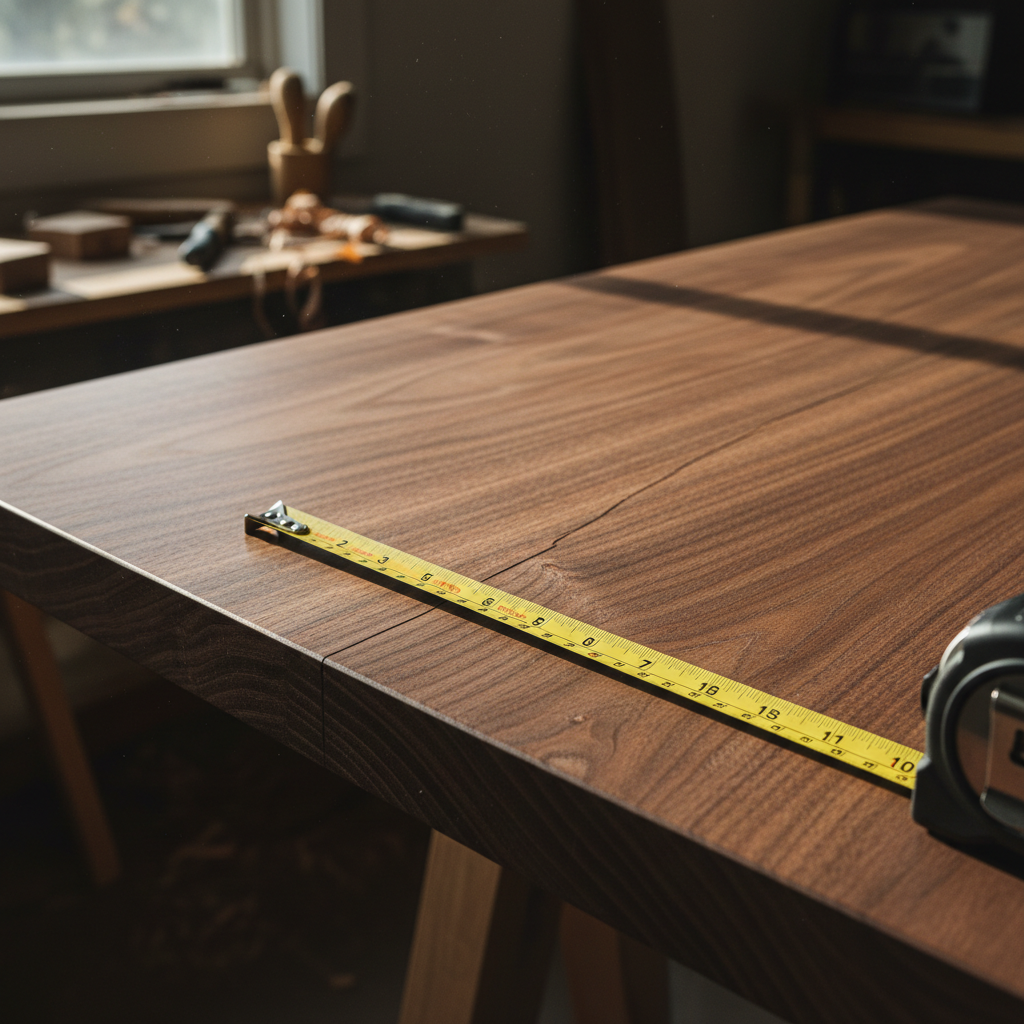
Let’s do the math for a typical 36-inch-wide Red Oak tabletop. The movement of a species is determined by its tangential movement coefficient. For Red Oak, it's approximately 0.00369 for every 1% change in moisture content (MC).
-
Establish a Moisture Swing: In a non-climate-controlled home, it's common for indoor humidity to be 75% in the summer and 30% in the winter (due to heating). This will cause the wood's internal moisture content to swing from roughly 14% MC down to 6% MC.
-
Calculate the Total MC Change: 14% - 6% = 8% total change in moisture content.
-
Calculate the Total Movement:
- Board Width: 36 inches
- Movement Coefficient: 0.00369
- MC Change: 8%
36 inches × 0.00369 × 8 = 1.06 inches
That isn't a typo. Your 36-inch tabletop will try to become 37 inches wide in the summer and 35 inches wide in the winter. If you drive a screw through the apron directly into that tabletop, you have given it nowhere to go. It will pull and pull until something gives. The wood will always win.
Step-by-Step: Building for Movement
Accommodating wood movement isn't one single technique, but a mindset applied throughout the build.
Step 1: Acclimate Your Lumber: Before you even cut a board, let your raw lumber sit in your workshop for at least two weeks. This allows its moisture content to stabilize to your shop's environment, which is a crucial baseline.
Step 2: Use a Moisture Meter: A moisture meter is not an optional tool; it's essential. Before a big panel glue-up, check the MC of each board. Ideally, they should all be within 1-2% of each other. Gluing a 12% board next to an 8% board is asking for trouble.
Step 3: Consider Grain Direction: When gluing up a panel, alternate the direction of the growth rings ("reading the end grain") for each board—smiley face, frowny face, smiley face. This helps balance the direction of cupping as the panel moves, keeping it flatter over time.
Step 4: Choose the Right Attachment Method: This is the most critical step for any wide panel, especially a tabletop. NEVER screw or glue it down tight.
- Z-Clips: These are small metal clips with a Z-profile. One end fits into a slot you cut in the apron (a biscuit joiner is perfect for this), and the other end is screwed to the underside of the tabletop. The clip holds the top down firmly but is free to slide in the slot as the top expands and contracts. Plan for one clip every 8-10 inches.
- Figure-8 Fasteners: These small, figure-8 shaped metal connectors are another great option. One loop of the "8" is recessed and screwed into the apron, while the other loop rests on top and is screwed to the tabletop. You simply pivot the fastener to align with the apron and top. The slight play in the screw holes allows for movement.
- Wooden Buttons: This is a classic, shop-made solution. A small block of hardwood has a tongue cut into one end that fits into a slot in the apron (just like a Z-clip). A screw goes through the other end of the button into the tabletop. It provides the same function as a Z-clip but is made of wood.
Step 5: Master Frame-and-Panel Construction: For cabinet doors or case sides, you can't glue a solid wood panel inside a frame. The panel will expand and blow your miter or mortise-and-tenon joints apart. The panel must "float." Cut the panel undersized—leaving about a 1/4 inch gap on each side—and let it sit loosely in the frame's dado or groove. No glue!
Step 6: Handle Breadboard Ends Correctly: The purpose of breadboard ends is to keep a wide panel flat. The common mistake is gluing the entire length of the breadboard to the end of the panel. This completely violates the rule of wood movement, as the main panel wants to expand across its width while the breadboard, whose grain runs perpendicular, does not. This will always result in a cracked panel or a broken glue joint.
- The Right Way: The breadboard is attached with a long mortise and tenon. The tenon is on the main panel, and the mortise is in the breadboard. You only glue the middle 3-4 inches of the joint. For mechanical strength, you drill holes through the breadboard and tenon for dowels. The outer dowel holes in the tenon must be elongated into ovals. This allows the panel to expand and contract, with the dowels sliding freely in their oval slots, while the glued center section keeps a stable reference point.
Step 7: Apply a Finish: A good film-forming finish (like polyurethane or lacquer) doesn't stop wood movement, but it can significantly slow the rate of moisture exchange. This helps buffer the wood against rapid humidity swings, reducing the stress on the wood fibers.
Common Mistakes to Avoid
- Picture-Framing a Solid Panel: Gluing a mitered frame around a solid wood panel is a guaranteed failure. The panel will expand across its width, but the long-grain frame pieces won't expand in length. The miters will open up in the dry season and the panel will crack in the humid season.
- Screwing Tabletops Directly to Aprons: The most common beginner error. This pins the wood in place, ensuring it will destroy itself. Cost of Z-Clips: $10. Cost of a new tabletop: $500.
- Believing Plywood Rules Apply to Solid Wood: Plywood is dimensionally stable because its layers of veneer alternate in grain direction, with each layer canceling out the movement of the next. You can screw it, encase it, and glue it down without a second thought. Do not apply this logic to solid lumber.
Cost & Time Breakdown
| Item | The Wrong Way (Ignoring Movement) | The Right Way (Planning for Movement) |
|---|---|---|
| Time | 40 hours to build, 10 hours of heartbreak and repair | 40 hours and 5 minutes to build |
| Cost | $500 in ruined lumber + 40 hours of wasted time | $10-$20 for a pack of Z-Clips or fasteners |
| Outcome | Cracked tabletop, failed joints, project in the bonfire | Heirloom furniture that lasts for generations |
Tips & Pro Notes
- Quartersawn vs. Flatsawn: Flatsawn lumber has its growth rings running roughly parallel to the face of the board, maximizing tangential (and therefore total) movement. Quartersawn lumber has its growth rings perpendicular to the face, meaning its primary movement is radial, which is about half that of tangential movement. For wide tabletops, quartersawn or riftsawn lumber is a more stable (and much more expensive) choice.
- Acclimate to the Destination: If you are building a dining table for a customer in a different climate (e.g., you're in humid Florida, they're in dry Arizona), the wood will undergo a massive change in MC upon arrival. Build with this in mind and allow for maximum movement.
- Finishing Both Sides: Always apply an equal number of coats of finish to both the top and bottom of any panel. Finishing only one side creates an imbalance in moisture exchange, which is the primary cause of cupping and warping.
When to Upgrade Tools
While you can manage wood movement with basic hand tools, a few specific items make the process more precise and reliable.
- Moisture Meter (e.g., General Finishes Moisture Meter): The single most important tool for understanding wood. It takes the guesswork out of acclimation and tells you if your boards are ready for glue-up. This is a non-negotiable tool for anyone working with solid wood.
- Jointer & Planer: While not directly related to joinery, the ability to mill your own lumber flat, straight, and to a consistent thickness is paramount. Wood that isn't stable and flat before you start is already a step behind.
- Biscuit Joiner or Router: Essential for cutting the clean, consistent slots in table aprons needed to accept Z-clips or shop-made wooden buttons. For routers, a simple Freud 1/2" Straight Bit can be used to create the elongated slots needed for breadboard tenons.
What should this project cost?
Enter your project details for a realistic cost range before you call anyone.
Cost depends heavily on which system turns out to be the source.
- Regional adjustment
- National average
- Labor share (typical)
- ~$1,620
- Quotes to collect
- 3 written estimates
Educational estimate based on national averages — not a binding quote. Always confirm with written local estimates.
Fixly Project Decision Box
- DIY difficulty
- Professional Recommended
- Estimated time
- Monitoring over 60–90 days · engineer visit 1–2 hours
- Cost level
- Major Project
Main tools / materials
- Crack monitor or pencil marks with dates
- Tape measure
- Marble or level for floor slope
When to stop and call a pro
- A crack wider than 1/4 inch or growing month over month
- Doors and windows that suddenly stick or will not latch
- Stair-step cracks in brick or block
- Separation between walls and ceilings or floors
Need professional help?
Get a Foundation EvaluationRecommended for DIYers & woodworkers
Sponsored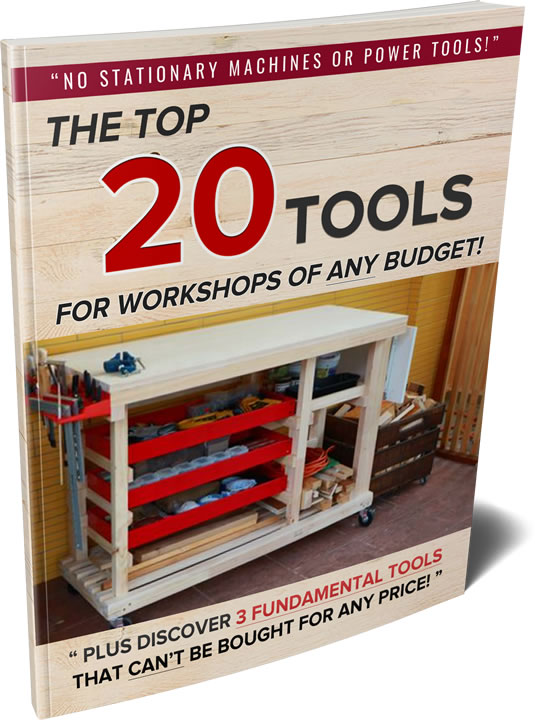
The Top 20 Tools for Workshops of Any Budget
No stationary machines or power tools required — plus 3 fundamental tools that can't be bought at any price.
Get the free guide
Ted's Woodworking — The #1 Woodworking Resource
Detailed instructions, dimensioned drawings, materials & cutting lists, and 3D schematics for every skill level.
See the plansSponsored: links above are affiliate links. FixlyGuide may earn a commission on qualifying purchases — at no extra cost to you.
Frequently asked questions
Can I stop wood movement completely with a special finish?+
No. No finish can completely stop the absorption and release of water vapor. A good, thick finish like polyurethane or epoxy can significantly slow the process, buffering the wood from rapid changes, but the wood will eventually acclimate to the ambient humidity and change size. Management, not prevention, is the key.
Does plywood or MDF have wood movement issues?+
Significantly less, which is a major advantage of engineered wood products. Plywood's alternating grain direction and MDF's composition of wood fibers and resin make them very stable in all directions. You do not need to use special techniques for wood movement with them.
What is the most stable wood to use for a tabletop?+
Generally, quartersawn lumber is about twice as stable as flatsawn lumber of the same species. Some species are also inherently more stable than others. Teak and genuine Mahogany have very low movement coefficients. However, any solid wood, no matter how stable, will still move and must be accounted for in your design.
Is it okay to use a pocket hole jig to attach a tabletop?+
Only if you modify the technique. Driving a pocket hole screw normally locks the two pieces together rigidly. However, you can drill your pocket hole and then, using a separate drill bit, manually widen the pocket hole pocket into more of a slot. When you drive the screw, don't overtighten it. The washer head of the screw will hold the top down, but the screw shank will have room to slide within your widened hole. This is essentially a shop-made version of a metal fastener.
Discussion
Loading comments…