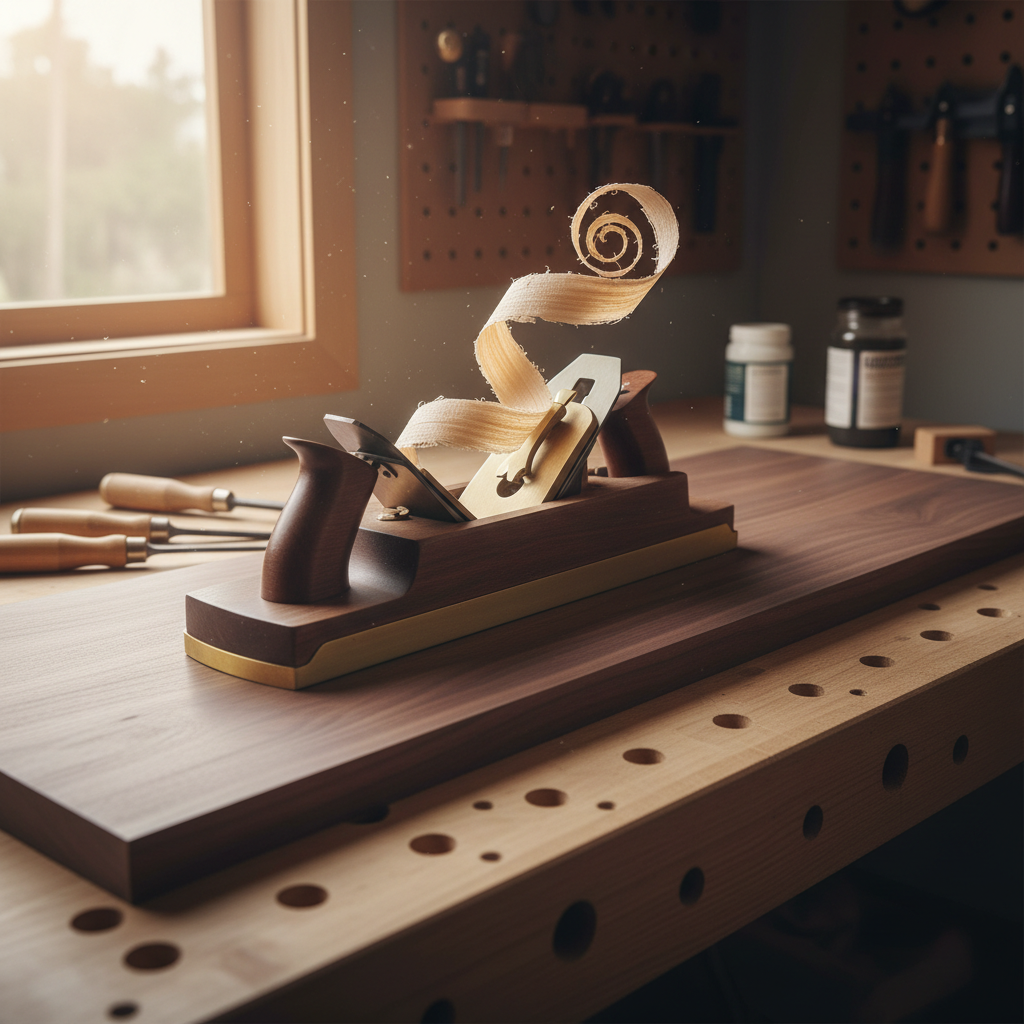
- Trying to Flatten the Whole Board at Once: The 1 mistake is planing the entire length of the board from the start. This just follows the twist and doesn't fix it. You MUST isolate and remove the high corners first.
- Planing with the Grain Too Soon: Attacking a twisted board by planing with the grain is slow and ineffective. Diagonal, cross-grain passes with a cambered iron are exponentially faster for initial stock removal.
- Not Using Winding Sticks: Guessing where the high spots are is a fool's errand. Winding sticks are non-negotiable. They are the diagnostic tool that makes this entire process work.
General remodeling · Renovation planning
| Project category | General remodeling |
|---|---|
| Problem type | Renovation planning |
| Trade required | General contracting |
| Urgency | Planned project |
| Safety risk | Low safety risk |
| DIY suitability | Pro recommended |
| Cost category | Major investment |
| Typical timeline | Design and permitting often 2–4 months before work starts |
| Contractor type | General contractor |
Repair option
Phase the work and fix the building envelope first.
Replacement option
Full renovation with permits, design, and a general contractor.
Common causes
- Space no longer fits how the household lives
- Resale preparation
- Deferred maintenance stacking up
Relevant tools:project cost estimatorcompare quoteshome improvement material prices
Published June 12, 2026Last updated August 17, 2026
The shop list for this build
Hand-picked tools & materials — shop on Amazon, ships fast.
Power tools
· The heavy hitters — buy once, use for decades.- Shop on AmazonStanley Bailey No. 7 Jointer Plane (Vintage)· 1
Why it's here: Look for a used one on eBay or at flea markets. Key is a flat sole and intact components. This is the '$18' part of the hack.
- Shop on AmazonDeWalt DW735X Thickness Planer· 1
Why it's here: For the hybrid approach. After flattening one face by hand, this machine makes thicknessing the board trivial.
- Shop on AmazonLie-Nielsen No. 8 Jointer Plane· 1
Why it's here: The ultimate upgrade. Its massive weight and perfect machining make jointing large surfaces a pleasure.
Hand tools & jigs
· Layout, joinery, and the everyday workbench essentials.- Shop on AmazonVeritas Aluminum Winding Sticks· 1 set
Why it's here: While you can make your own, these are perfectly machined, stable, and easy to read.
- Shop on AmazonDMT DuoSharp 8-inch Diamond Stone (Coarse/Fine)· 1
Why it's here: Essential for sharpening and creating the cambered iron. Model W8CX.
- Shop on AmazonVeritas Low-Angle Jack Plane· 1
Why it's here: An excellent choice for the final flattening step after the twist is removed. Its adjustable mouth is great for controlling tear-out.
Materials & hardware
· Lumber, fasteners, glue, abrasives — the consumables.- Shop on AmazonRough Sawn Poplar or Pine Board (4/4)· 1
Why it's here: About 6-8 inches wide and 3-4 feet long. Perfect for practicing the technique.
Quick Answer
Yes, for many common board sizes, an $18 jointer plane hack can absolutely flatten twisted lumber faster than setting up a $400 benchtop power jointer. The method involves using a pair of winding sticks to diagnose the twist, a marking tool to highlight high-points, and a jointer plane with a cambered (curved) iron to aggressively remove the diagonal peaks. This technique transforms a complex twist into a simple cup or bow, which is then quickly removed with a standard flat-soled plane, getting you to a glue-ready surface in minutes.
Why This Matters
For woodworkers without a large shop or a $2,000 budget for a 12-inch cast iron jointer, dealing with twisted, rough-sawn lumber feels impossible. Most DIYers either give up and buy dimensioned (S4S) lumber from big-box stores—paying a 200-300% markup and limiting their wood choices—or they buy a benchtop power jointer. While useful, a 6-inch or 8-inch benchtop jointer struggles with boards wider than its cutterhead and can be finicky to set up perfectly. The fences are often short and flexible, and the tables might not be perfectly coplanar, leading to induced errors.
This hand plane technique for flattening wood by hand is a game-changer. It sidesteps the physical limitations and setup time of consumer-grade power jointers. It's quiet, creates satisfying shavings instead of dust, and connects you intimately with the wood. Mastering this skill to dimension rough lumber is a gateway to better materials and higher-quality projects. You can buy beautiful, thick, rough-sawn walnut, cherry, or oak from a local sawmill for $5-$8 per board foot, versus $18-$25 for the thin, sterile stuff at a home center. This $18 "hack"—the cost of a decent used plane—saves you thousands in the long run and makes you a fundamentally better woodworker.
How It Works
The core challenge of a twisted board is that it rests on two opposite diagonal corners. A power jointer attempts to flatten the board by registering its surface against the machine's infeed and outfeed tables. However, with a significant twist, the board rocks, and each pass only removes a small amount of material, often without addressing the core problem efficiently. The user has to apply careful, targeted pressure, which is counterintuitive and difficult.
Our hand plane technique works by isolating and removing only the "high" corners first. Winding sticks—two perfectly straight and parallel sticks placed at either end of the board—exaggerate the twist. When you sight across them, one stick will appear angled relative to the other. This immediately tells you which two corners are high. There's no guesswork.
Once you've identified the high corners (say, front-left and back-right), you use a jointer plane with a slightly cambered iron. A camber is a subtle curve ground into the cutting edge. This convex shape prevents the plane from creating hard, defined "tracks" and allows it to scoop material away aggressively without the corners of the blade digging in. You plane only on the high spots, working diagonally across the board. You're not trying to flatten the whole board at once. You are surgically removing the peaks.
By taking down these high corners, the "twist" disappears. The board now has a new, simpler problem: it's either "cupped" (hollow across its width) or "bowed" (hollow along its length). This is a much easier issue to solve. You can now switch to a jointer plane with a traditionally sharpened flat iron and use it to flatten the entire surface. Because you're dealing with a simple curve, not a diagonal rocking motion, the plane registers firmly and removes material evenly until the board is perfectly flat.
Step-by-Step
Step 1: Get Two Winding Sticks (DIY or Buy) Obtain two straight sticks, about 1-2 inches wide, 3/4-inch thick, and slightly wider than your board. Joint and plane them so they are perfectly straight and parallel. One popular option is the Veritas Aluminum Winding Sticks, but you can make your own from stable hardwood like maple. To make them easier to read, you can add dark wood inlay to the top edge of one stick.
Step 2: Position the Board and Winding Sticks Secure your twisted board on your workbench between bench dogs or clamps. Place one winding stick across the board at the end closest to you, and the other at the far end. The sticks should be parallel to each other.
Step 3: Sight the Twist Crouch down so your eye is level with the top edge of the near winding stick. Look across it at the far stick. If the board is twisted, the far stick will not be parallel to the near one. One side will be higher. This visually confirms the high corners. For example, if the right side of the far stick is high, and the left side of the near stick is high (from your perspective), your high diagonal runs from front-left to back-right.
Step 4: Mark the High Corners Use a pencil or chalk to heavily mark the two high corners you just identified. Don't be shy—scribble over a significant area. This is your target zone.
Step 5: Prepare Your "Scrub" Jointer Plane For this step, you need a plane that can remove wood aggressively. The ideal tool is a No. 7 or No. 8 jointer plane. You will prepare its blade (the "iron") with an 8-10 inch radius camber. To do this, when honing the blade, apply more pressure to the sides of the iron on your sharpening stone, creating a gentle but visible curve. This prevents the corners from digging in. If you don't want to dedicate an iron to this, a Stanley No. 40 scrub plane or even a standard jack plane with a cambered iron works well for shorter boards. The key is the curved cutting edge.
Step 6: Scrub the High Corners Take your cambered plane and start making diagonal passes across the grain, directly over your marked high corners. The plane will feel unstable at first, but focus on removing wood only from the high areas. The shavings should be thick. Work your way from one high corner to the other. Don't plane the other two (low) corners at all.
Step 7: Check Your Progress After a dozen passes, stop. Place the winding sticks back on the board and sight across them again. The twist should be noticeably reduced. The far stick will be closer to parallel with the near one. Keep scrubbing the high spots until the winding sticks are perfectly parallel. At this point, the twist is gone.
Step 8: Flatten the Now-Cupped/Bowed Board Your board is no longer twisted, but it's not flat yet. It will be slightly concave. Now, switch to your standard jointer plane—a No. 7 or a Veritas Low-Angle Jack Plane is perfect—with a finely-honed, straight iron. Use traditional hand plane techniques. First, plane diagonally or straight across the grain to level out any remaining high spots from your scrubbing. Then, transition to planing with the grain. Use a straightedge to check for flatness across the width, length, and diagonals. Continue until you get full-length, full-width shavings. The board is now flat.
Step 9: Thickness the Board Flip the board over to its un-planed side. Use a marking gauge to scribe your desired final thickness all the way around the edge of the board, referencing the newly flattened face. Now, use your plane to remove material down to that line. For aggressive removal, the cambered iron an be used again, but stay 1/16" above your line. Finish with the fine, straight-ironed plane.
Common Mistakes
- Trying to Flatten the Whole Board at Once: The #1 mistake is planing the entire length of the board from the start. This just follows the twist and doesn't fix it. You MUST isolate and remove the high corners first.
- Planing with the Grain Too Soon: Attacking a twisted board by planing with the grain is slow and ineffective. Diagonal, cross-grain passes with a cambered iron are exponentially faster for initial stock removal.
- Using a Plane That is Too Short: Trying to flatten a 48-inch board with a 9-inch smoothing plane (No. 4) will be an exercise in frustration. You need the long sole of a jointer plane (No. 7 or 8) or at least a jack plane (No. 5) to bridge the valleys and level the surface effectively.
- Not Using Winding Sticks: Guessing where the high spots are is a fool's errand. Winding sticks are non-negotiable. They are the diagnostic tool that makes this entire process work.
Cost & Time Breakdown
| Item | Cost Estimate (Low-High) | Time Estimate | Notes |
|---|---|---|---|
| Acquiring a Jointer Plane | $18 - $150 | 1-2 hours | A used Stanley No. 7 from a flea market can be $18. A new premium plane is much more. |
| Making/Buying Winding Sticks | $0 - $60 | 30 minutes | DIY from scrap is free. Veritas aluminum pair is ~$60. |
| Sharpening Setup | $50 - $250 | 1 hour | A DMT DuoSharp 8-inch stone (Coarse/Fine) is a great start. |
| Flattening One Board (4/4, 6"x36") | $0 | 15-25 minutes | Once you are practiced. Your first time may take an hour. |
| Compared to Power Jointer Setup | $400 - $800 | 5-15 minutes | Includes machine cost, plus time for setup, cleanup, and potential troubleshooting. |
Tips & Pro Notes
- Camber is Key: Don't skip curving the iron for the initial takedown. An 8-10 inch radius is a good starting point. You can create a dedicated "scrub" iron for your jointer plane and swap it out with your finely-honed straight iron for finishing work.
- Use a Heavy Plane: A heavy jointer plane provides momentum. The mass of a Lie-Nielsen No. 8 Jointer Plane does a lot of the work for you once you get it moving.
- Read the Grain: As you get closer to a flat surface and begin planing with the grain, pay attention to grain direction to avoid tear-out. If the grain is reversing, you may need to plane in the opposite direction on that section.
When to Upgrade Tools
This hand tool method is incredibly effective for boards up to about 8-10 inches wide and 5 feet long. However, if your primary work involves dimensioning large volumes of lumber or massive slabs, a power jointer becomes a necessity for efficiency.
- Upgrade to a 12" Power Jointer/Planer Combo when you find yourself regularly working with lumber wider than 8 inches or need to dimension more than 50-60 board feet per project. The time savings at that scale are undeniable.
- Consider a Thickness Planer First: If you master flattening one face by hand, you can then use a benchtop thickness planer (like the DeWalt DW735X) to do the second face and bring the board to final thickness. This is a very popular and effective hybrid approach.
- Invest in Premium Planes: While a tuned-up vintage Stanley works, a premium plane from Veritas or Lie-Nielsen is a joy to use. The thicker blades, better adjustments, and perfect sole flatness of a Veritas Low-Angle Jointer Plane can make the process faster and more accurate.
What should this project cost?
Enter your project details for a realistic cost range before you call anyone.
Cost depends heavily on which system turns out to be the source.
- Regional adjustment
- National average
- Labor share (typical)
- ~$1,620
- Quotes to collect
- 3 written estimates
Educational estimate based on national averages — not a binding quote. Always confirm with written local estimates.
Recommended for DIYers & woodworkers
Sponsored
The Top 20 Tools for Workshops of Any Budget
No stationary machines or power tools required — plus 3 fundamental tools that can't be bought at any price.
Get the free guide
Ted's Woodworking — The #1 Woodworking Resource
Detailed instructions, dimensioned drawings, materials & cutting lists, and 3D schematics for every skill level.
See the plansSponsored: links above are affiliate links. FixlyGuide may earn a commission on qualifying purchases — at no extra cost to you.
Frequently asked questions
Can I use a shorter plane like a jack plane for this?+
Yes, for shorter boards (under 3 feet), a jack plane (No. 5) can work. However, for the initial takedown of the twist, the technique remains the same: use a cambered iron and attack the high corners first. For final flattening, a longer jointer plane is always better as it bridges low spots more effectively.
How do I make a cambered iron?+
When sharpening your plane's blade on your water stones, diamond plate, or sandpaper, apply more pressure to the left and right edges of the blade and less in the center. This will grind a slight curve into the edge. Check your progress by holding a straightedge against the cutting edge. An 8-10 inch radius is a good target.
Is this method better than an electric hand jointer?+
For flattening a wide board, this manual method is generally superior to an electric hand jointer. Electric hand jointers are narrow and better suited for tasks like shaving down the edge of a sticking door. They are very difficult to use for flattening the wide face of a board without creating divots and scallops.
What kind of wood is best for practicing?+
Start with a soft, inexpensive wood like poplar or pine. They are easy to plane and will give you a good feel for the process. Avoid heavily figured or reversing-grain woods until you have the technique down.

Discussion
Loading comments…