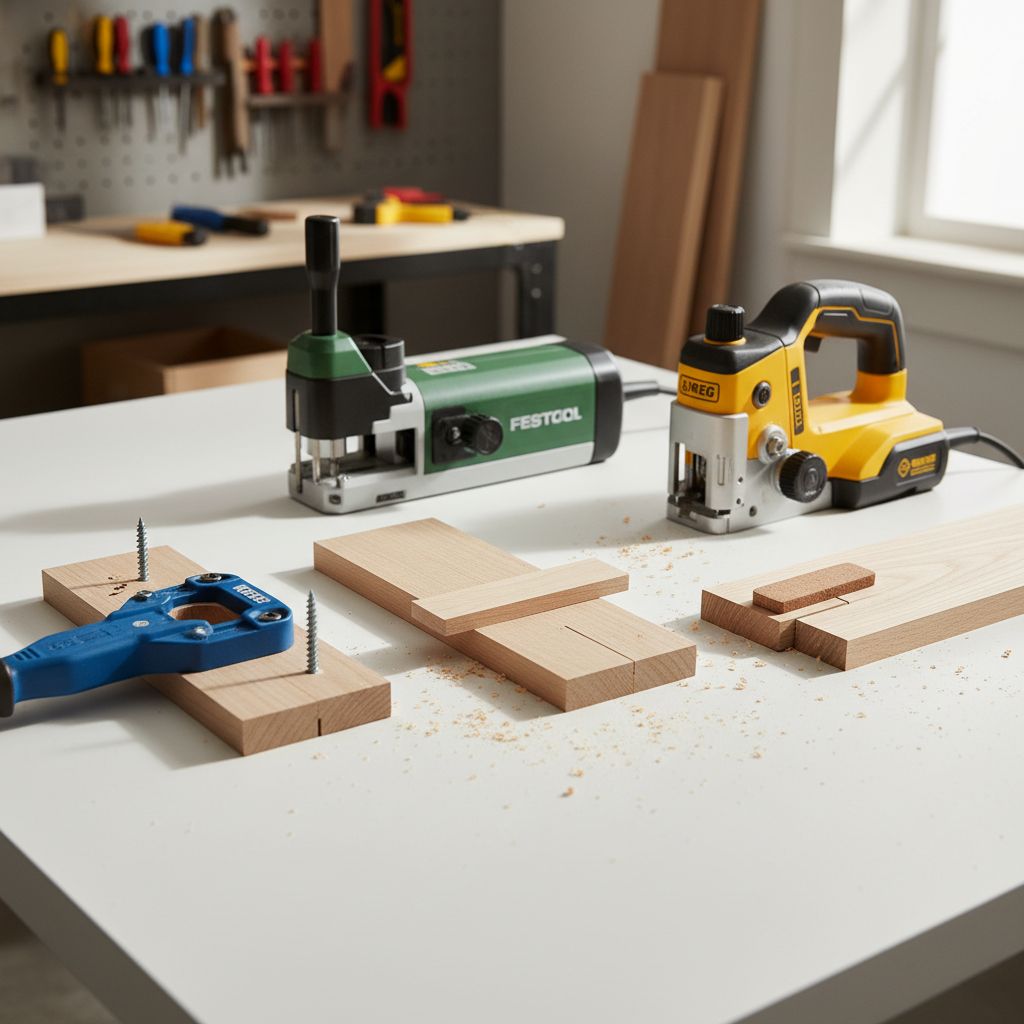
- Markup: Similar to biscuits, mark the locations for your dominos. Two dominos per joint are appropriate here.
- Plunge: Align the Domino joiner with your pencil marks and plunge the mortises into all pieces. The tool's dust extraction is superb, leaving almost no mess.
- Glue-Up: Apply glue to the mortises and the Domino tenons themselves. Insert the 5x40mm Dominos into the 15-inch boards.
General remodeling · Renovation planning
| Project category | General remodeling |
|---|---|
| Problem type | Renovation planning |
| Trade required | General contracting |
| Urgency | Planned project |
| Safety risk | Low safety risk |
| DIY suitability | Pro recommended |
| Cost category | Major investment |
| Typical timeline | Design and permitting often 2–4 months before work starts |
| Contractor type | General contractor |
Repair option
Phase the work and fix the building envelope first.
Replacement option
Full renovation with permits, design, and a general contractor.
Common causes
- Space no longer fits how the household lives
- Resale preparation
- Deferred maintenance stacking up
Relevant tools:project cost estimatorcompare quoteshome improvement material prices
Published June 11, 2026Last updated August 17, 2026
The shop list for this build
Hand-picked tools & materials — shop on Amazon, ships fast.
Power tools
· The heavy hitters — buy once, use for decades.- Shop on AmazonKreg Jig R3· 1
Why it's here: A great entry-level pocket hole jig.
- Shop on AmazonDEWALT DW682K Plate Joiner· 1
Why it's here: A solid, reliable biscuit joiner for cabinet and plywood work.
- Shop on AmazonFestool Domino DF 500 Q-Set· 1
Why it's here: The gold standard for floating tenon joinery. Expensive but unmatched.
- Shop on AmazonFreud Diablo D1050X 50T Combination Blade· 1
Why it's here: For clean, tear-out free cuts on your table saw or miter saw.
Hand tools & jigs
· Layout, joinery, and the everyday workbench essentials.- Shop on AmazonBessey-KliKlamp KLI3.008· 4
Why it's here: Light-duty clamps perfect for smaller frames and casework.
Materials & hardware
· Lumber, fasteners, glue, abrasives — the consumables.- Shop on AmazonTitebond III Ultimate Wood Glue, 16 oz· 1
Why it's here: Excellent waterproof glue with a long open time for complex assemblies.
- Shop on AmazonSipo Mahogany Dominos· 1 pack
Why it's here: Use these instead of standard beech dominos for outdoor projects.
Finishes & coatings
· Stains, dyes, top-coats, and prep products.- Shop on AmazonGeneral Finishes Gel Stain, Java· 1
Why it's here: An easy-to-apply finish to show off your perfect joints. (Not directly used in assembly but relevant for finishing).
Quick Answer
For pure speed and utility on projects where joints won't be visible, pocket holes are unbeatable. For assembling sheet goods like plywood cabinets where alignment is key, biscuits are a fast and effective choice. For creating strong, invisible, heirloom-quality joints in solid wood furniture that will last for generations, the Festool Domino system is the superior, albeit much more expensive, method.
Why This Matters
The soul of a piece of furniture isn't in its finish or even its design; it's in the joinery. The method you choose to join two pieces of wood determines its strength, its lifespan, and its visual appeal. A wobbly table or a cabinet door that sags after a year is almost always a failure of joinery, not materials. Making the right choice in this wood joinery comparison—pocket holes vs dominoes vs biscuits—is the single most important decision you'll make after selecting your lumber. It quietly defines your furniture's quality, separating a quick-and-dirty shop cabinet from a dining table you can pass down to your grandchildren.
This isn't just about strength. Using the right joint for the right application saves time, reduces frustration, and ultimately makes woodworking more rewarding. Using a Domino on a plywood shop cabinet is overkill; using pocket screws to attach the apron to the legs of a fine hardwood dining table is a structural and aesthetic compromise. Understanding the trade-offs in cost, speed, and strength allows you to build better, stronger, and more beautiful projects with the resources you have.
How It Works
Each of these three joinery methods accomplishes the same basic task—joining wood—but in radically different ways.
Pocket-Hole Joinery: This method involves drilling a hole at a steep angle (typically 15 degrees) into one workpiece, and then driving a self-tapping screw through that hole into the adjoining piece. The screw acts as an internal clamp, pulling the two boards tightly together. The "pocket" hides the screw head. The heart of this system is a Kreg Jig, which guides the special stepped drill bit at the perfect angle. The primary force is mechanical; the screw does all the work. Glue is often used, but the screw provides the vast majority of the clamping pressure and strength.
Biscuit Joinery: A biscuit joiner uses a small, 4-inch diameter carbide-tipped blade to cut a crescent-shaped slot in the edges of two mating boards. An oval-shaped, compressed beechwood "biscuit" is then coated in glue and inserted into the slots. The moisture from the glue causes the biscuit to swell, creating a tight, reinforcing bond. Unlike pocket holes, the biscuit itself provides no mechanical strength. Its primary function is alignment, keeping the faces of two boards perfectly flush while the glue dries. The strength of the joint comes almost entirely from the wood glue; the biscuit is a registration device.
Domino Joinery: The Festool Domino Joiner is a hybrid system. It uses a specialized power tool that plunges a spinning, oscillating drill bit into the workpiece to cut a precise, round-ended mortise. A solid beech "Domino" tenon, which is much thicker and stronger than a biscuit, is then glued into the mortises of the mating pieces. This creates a true floating tenon joint, which is a modern version of the classic mortise and tenon. It combines the speed of a biscuit joiner with the immense strength of traditional joinery. The Domino tenon provides a massive gluing surface and a mechanical barrier against shear and racking forces, making it vastly stronger than either biscuits or pocket screws.
Step-by-Step: Creating a Simple Frame
Let's build a basic 24" x 18" frame using 1x4 poplar boards to see the workflow for each method. This is a common task, similar to making a cabinet face frame or a small table apron.
Safety First: Always wear safety glasses. When using power tools like a Domino or biscuit joiner, hearing protection is essential. A dust extractor connected to the tool is highly recommended for managing the fine dust created.
Step 1: Mill and Cut the Lumber Cut two pieces of 1x4 poplar at 24 inches and two pieces at 16.5 inches. The 16.5-inch pieces will fit inside the 24-inch pieces, creating an 18-inch overall width (16.5" + 1.5" + 1.5" = 19.5" Wait, let's adjust. 18" - 1.5" - 1.5" = 15". So two at 24", two at 15"). Ensure all ends are cut perfectly square on a miter saw. A Freud Diablo D1050X 50T combination blade on your table or miter saw will ensure clean, tear-out-free cuts.
Step 2: Pocket Hole Method
- Setup: Set your Kreg Jig R3 for 3/4" material thickness. Clamp it to the end of one of the 15-inch boards.
- Drill: Using the stepped drill bit that came with the jig, drill two pocket holes into each end of both 15-inch boards.
- Assemble: Apply a thin layer of Titebond III wood glue (16 oz) to the end grain. Position one 15" board against the inside edge of a 24" board. Use a right-angle clamp to hold it perfectly square. Drive 1 1/4" Kreg pocket-hole screws into the pockets. The self-tapping tip makes this fast. Repeat for all four corners.
Step 3: Biscuit Joiner Method
- Markup: Lay out your frame on a workbench. Make pencil marks across the joints where you want to place your biscuits. For a 3.5-inch wide board, two biscuits per joint is ideal.
- Cut Slots: Set the fence and blade depth on your DEWALT DW682K Plate Joiner for #20 biscuits (the largest and strongest standard size). Align the center mark on the joiner with your pencil line and plunge the cutter into both mating pieces at each mark.
- Glue-Up: Squeeze a small amount of wood glue into each of the eight slots. Insert a #20 biscuit into the slots on the 15-inch boards. Then apply a bead of glue to the entire edge of the board.
- Clamp: Bring the pieces together. The biscuits will align the faces. You MUST use clamps. Use at least four Bessey-KliKlamp KLI3.008 light-duty clamps, applying firm pressure (around 300 PSI) until you see a small, even bead of glue squeeze-out along the joint line. Let it dry for at least 30 minutes before moving, and 24 hours for a full cure.
Step 4: Domino Joiner Method
- Markup: Similar to biscuits, mark the locations for your dominos. Two dominos per joint are appropriate here.
- Setup: Chuck the 5mm bit into your Festool Domino DF 500 Q-Set. Set the plunge depth to 20mm (for a 40mm long Domino). Set the mortise width to the tightest setting for the first mortise and the middle setting for the second; this allows for slight adjustment during assembly.
- Plunge: Align the Domino joiner with your pencil marks and plunge the mortises into all pieces. The tool's dust extraction is superb, leaving almost no mess.
- Glue-Up: Apply glue to the mortises and the Domino tenons themselves. Insert the 5x40mm Dominos into the 15-inch boards.
- Assemble & Clamp: Apply glue to the board edges, bring the joints together, and clamp as you would with biscuits. The mechanical fit is so precise that you need less clamping pressure than with biscuits, but it's still essential for a strong glue bond.
Common Mistakes
- Pocket Holes: Wrong Screw Length. Using a screw that's too long will cause it to poke through the other side. Too short, and you get a weak joint. Always use a screw chart for your material thickness. Over-tightening. Driving the screw with too much force can strip the wood or crack the workpiece. Poor Alignment. Not using a clamp to hold the pieces flush during assembly is the #1 reason for misaligned joints.
- Biscuits: Expecting Strength. Relying on biscuits for structural strength is a mistake. They are for alignment. The glue is the strength. If you need a strong joint, you need more than a biscuit. Bad Blade Height. If the blade isn't perfectly centered on the material thickness, the faces won't be flush. Always do a test cut on scrap.
- Dominos: Wrong Mortise Width. Cutting all your mortises on the "tight" setting can make assembly impossible if your cuts are slightly off. Use the wider settings for all but one reference mortise per joint to give yourself some wiggle room. Cost. The biggest mistake is buying a Domino if your work doesn't justify it. It is a professional-grade tool with a price tag to match.
Cost & Time Breakdown
| Joinery Method | Tooling Cost (Approx.) | Consumable Cost (per 100 joints) | Time Per Joint (Approx.) |
|---|---|---|---|
| Pocket Holes | $40 - $150 (Kreg Jig) | $8 (1 1/4" Screws) | 60 seconds |
| Biscuit Joinery | $150 - $250 | $5 (#20 Biscuits) | 90 seconds + clamp time |
| Domino Joinery | $1,100 - $1,500+ | $25 (5x40mm Dominos) | 75 seconds + clamp time |
Tips & Pro Notes
- Pocket Hole Pro Tip: For hardwoods like oak or maple, use fine-threaded pocket screws. The coarse threads are for softer woods like pine and poplar, and for plywood. Also, buy a dedicated right-angle driver attachment; it makes getting into tight corners much easier.
- Biscuit Pro Tip: Keep your biscuits in an airtight container. If they absorb ambient moisture from the air, they will swell before you even use them, making them impossible to insert into the slots. Some pros intentionally dry them in a low oven for a few minutes before a big glue-up to ensure maximum swelling in the joint.
- Domino Pro Tip: Don't just use the standard beech dominos. Festool makes Sipo Mahogany Dominos for outdoor projects, which are rot-resistant. The system is more versatile than people realize. I use my Domino for everything from face frames to breadboard ends on tabletops.
- A Word on Glue: For all methods, use a quality wood glue. Titebond III is an excellent choice as it is waterproof and has a longer open time (8-10 minutes) than Titebond I, giving you more time to assemble complex projects.
When to Upgrade Tools
Start with what you can afford. A $40 Kreg Jig R3 is one of the best values in woodworking and will open up a world of projects. Build cabinets, shop furniture, and simple frames with it. You'll know you need to upgrade when you find yourself frustrated by the limitations.
When does a biscuit joiner make sense? When you start working with expensive plywood or veneered MDF for cabinetry. Pocket screws can bulge the material and are difficult to hide on sheet goods. A biscuit joiner like the DEWALT DW682K will give you flawlessly aligned casework and save you hours of sanding and filling.
When is it time for a Domino? When your focus shifts from utility to fine furniture. When you want to build a dining table out of 4/4 walnut and you need absolute strength without visible fasteners. When your projects demand the integrity of a true mortise and tenon joint, but your time is too valuable for traditional methods. The "domino vs biscuit" debate ends here; the Domino is a strength and precision tool, while the biscuit is an alignment aid. The cost is significant, but so is the leap in joint quality. For a serious hobbyist or aspiring professional, it pays for itself in speed, strength, and perfection.
Repair or replace this system?
Plug in four numbers and see which choice holds up financially.
Free and instant. Educational guidance only — not a quote, inspection, or professional diagnosis.
Questions to ask before you sign
Ask every contractor the same questions and the cheapest bid stops looking cheapest. Check them off as you go — your progress is saved on this device.
Free, no signup. Bring this to every walkthrough so you compare bids on the same terms.
What should this project cost?
Enter your project details for a realistic cost range before you call anyone.
Cost depends heavily on which system turns out to be the source.
- Regional adjustment
- National average
- Labor share (typical)
- ~$1,620
- Quotes to collect
- 3 written estimates
Educational estimate based on national averages — not a binding quote. Always confirm with written local estimates.
Repair or replace?
Run the age, cost ratio, and repair history through the calculator before you commit.
- Estimate this projectGet a cost range for your scope and ZIP before you call anyone.Open
- Get local estimatesSend one request and compare written estimates from vetted pros.Open
Free, no signup required. Estimates are educational guidance, not a quote or an inspection.
Recommended for DIYers & woodworkers
Sponsored
The Top 20 Tools for Workshops of Any Budget
No stationary machines or power tools required — plus 3 fundamental tools that can't be bought at any price.
Get the free guide
Ted's Woodworking — The #1 Woodworking Resource
Detailed instructions, dimensioned drawings, materials & cutting lists, and 3D schematics for every skill level.
See the plansSponsored: links above are affiliate links. FixlyGuide may earn a commission on qualifying purchases — at no extra cost to you.
Frequently asked questions
Can I use pocket holes for fine furniture?+
You can, but it's not ideal. Pocket holes are strong but are considered a visual compromise. They are best used in areas that will never be seen, like the back of face frames or attaching aprons where they are hidden under a tabletop. For high-end furniture, traditional joinery or Domino joinery is preferred for both aesthetic and structural reasons.
Is a Domino really that much stronger than a biscuit?+
Yes, significantly. A biscuit is a thin, weak wafer used for alignment. A Domino is a thick, solid wood tenon that fits into a deep, precise mortise. It provides a huge amount of glue surface area and mechanical strength against racking and shear forces. In tests, a Domino joint is often as strong as the wood itself, while a biscuit adds very little structural strength.
What's the best Kreg Jig for a beginner?+
The Kreg Jig R3 is an excellent starting point. It's inexpensive (around $40), portable, and comes with everything you need to get started. It clamps to the workpiece itself. For a bit more, the Kreg Jig K4 or K5 systems offer a bench-mounted station with more features, which can be faster for batch operations.
Are there cheaper alternatives to the Festool Domino?+
Not really, as Festool holds the patents on the unique oscillating cutting mechanism. There are other tools that cut mortises, like slotting cutters for a router, but nothing combines the speed, precision, and ease of use of the Domino system. It is a unique tool in its own category.
Discussion
Loading comments…