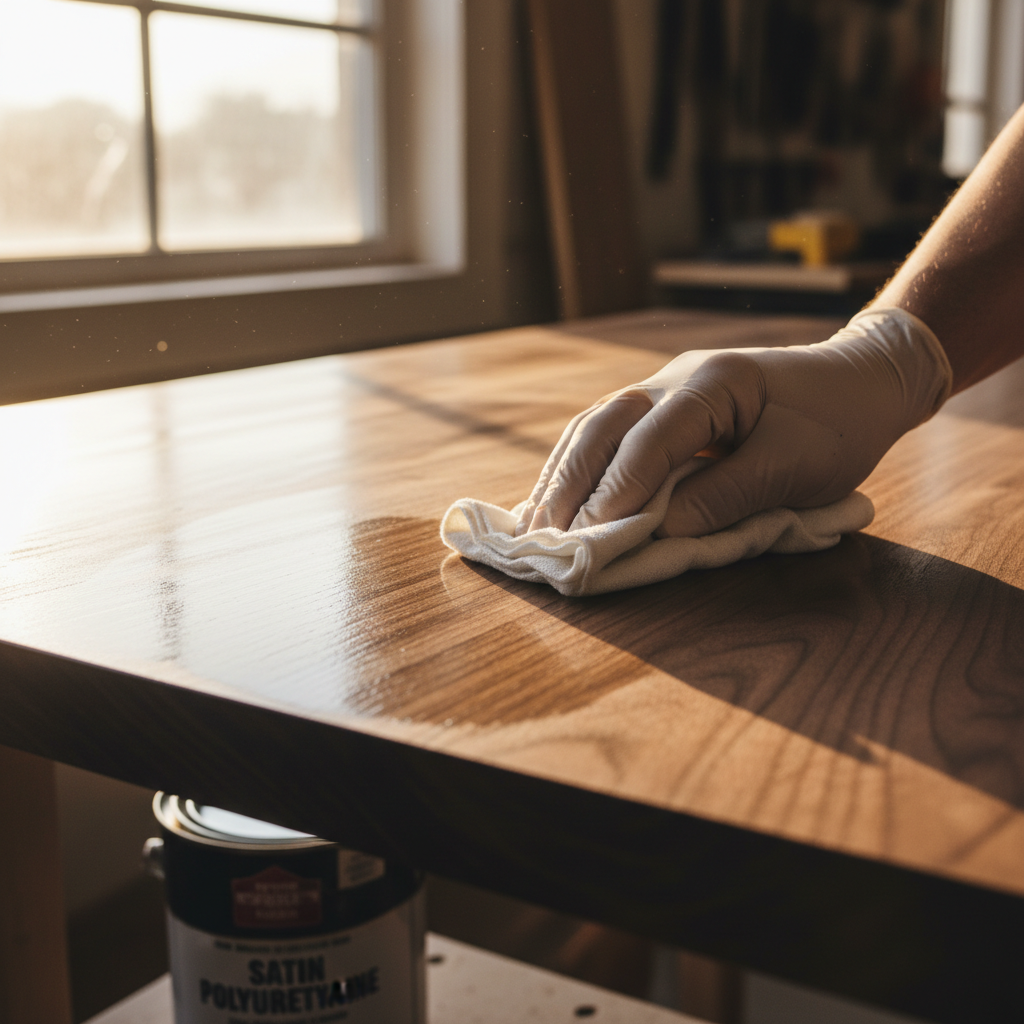
- Skipping Sanding Grits: Jumping from 120 directly to 220-grit will leave deep scratches that show up in the final finish. Follow the full 120-150-180-220 progression.
- Aggressive Sanding Between Coats: Sanding with anything coarser than 400-grit, or applying too much pressure, risks sanding through the thin layer of finish to the layer below, creating witness lines.
- Not Waiting for Full Cure: Applying a new coat on top of a tacky, uncured previous coat will result in a gummy mess that may never fully harden.
- Ignoring Dust Control: Finishing in a dusty workshop is a recipe for a gritty, rough surface. Clean the area before you start and minimize air movement during application and curing.
- Applying Thick Coats: Wiping on a heavy coat of finish defeats the purpose. It traps solvents, extends cure time, and attracts dust. Thin is always in.
Foundation · Cracks or settlement
| Project category | Foundation |
|---|---|
| Problem type | Cracks or settlement |
| Trade required | Foundation repair |
| Urgency | Soon — within weeks |
| Safety risk | High safety risk |
| DIY suitability | Licensed pro only |
| Cost category | Major investment |
| Typical timeline | Engineer report first; work typically several days |
| Contractor type | Foundation repair company with a structural engineer report |
Repair option
Drainage correction and targeted pier installation where movement is measured.
Replacement option
Full underpinning when settlement is widespread.
Common causes
- Expansive clay soil cycling wet and dry
- Poor drainage or downspouts dumping at the slab
- Plumbing leak washing out soil under the foundation
Relevant tools:compare quotesproject cost estimator
Published June 9, 2026Last updated August 17, 2026
The shop list for this build
Hand-picked tools & materials — shop on Amazon, ships fast.
Power tools
· The heavy hitters — buy once, use for decades.- Shop on AmazonRandom Orbit Sander· 1
Why it's here: Optional but highly recommended for saving time.
Hand tools & jigs
· Layout, joinery, and the everyday workbench essentials.- Shop on AmazonRespirator with Organic Vapor Cartridges· 1
Why it's here: Critical for safety with oil-based finishes.
- Shop on AmazonSafety Glasses· 1
Materials & hardware
· Lumber, fasteners, glue, abrasives — the consumables.- Shop on AmazonMineral Spirits· 1 Quart
Why it's here: For thinning and cleaning.
- Shop on AmazonSandpaper Discs/Sheets (120, 150, 180, 220, 320, 400-grit)· Assorted
Why it's here: Do not skip grits.
- Shop on AmazonLint-Free Rags· 1 Box
Why it's here: Blue disposable shop towels are ideal.
- Shop on Amazon0000 Steel Wool· 1 Pack
- Shop on AmazonTack Cloth· 1
Why it's here: Or make your own with a rag and mineral spirits.
Finishes & coatings
· Stains, dyes, top-coats, and prep products.- Shop on AmazonOil-Based Polyurethane· 1 Quart
Why it's here: e.g., Minwax Fast-Drying Polyurethane
- Shop on AmazonPaste Wax· 1 Can
Why it's here: Acts as lubricant for final rub-out.
Quick Answer
To get a perfectly smooth wood finish without spraying, pros follow a disciplined 5-step schedule. First, sand the raw wood meticulously, progressing from 120-grit to 220-grit. Second, intentionally raise the grain with a damp cloth, let it dry, and shear off the swollen fibers with a 320-grit sanding. Third, apply a 'seal coat' of oil-based polyurethane thinned 1:1 with mineral spirits. Fourth, build 3-4 more coats of this thinned wipe on poly, scuff-sanding with 400-grit between each cured coat. Fifth, after a 72-hour cure, rub out the final finish with 0000 steel wool and a lubricant like paste wax for a uniform, slick surface.
Why This Matters
A flawless finish is the ultimate mark of craftsmanship. It separates a piece that looks 'homemade' from one that feels 'handmade' and professional. An impeccable wood finishing job does more than just protect the wood; it engages the senses. It provides a tactile satisfaction—a surface that feels slick and cool to the touch. Visually, it adds depth and chatoyance, making the wood grain appear to shift and ripple under light. A poorly executed finish, on the other hand, can be a disaster, showcasing dust nibs, drips, and a blotchy, uneven sheen that ruins the hours you spent on joinery and construction. For a total material cost of under $75, this systematic sanding schedule and application process elevates a $200 lumber project into a $1,000 piece of furniture.
How It Works
Achieving a smooth wood finish isn't about a single secret product, but understanding how multiple layers interact. Each step in this schedule serves a distinct physical purpose.
1. The Initial Sanding Progression: Wood that feels smooth off the planer is actually covered in microscopic hills and valleys. Sanding with progressively finer grits—say, 120, 150, 180, then 220—is a process of replacing big scratches with smaller and smaller ones. Skipping from 120-grit directly to 220-grit is a common mistake; the 220-grit abrasive will only polish the 'peaks' of the 120-grit scratches, leaving the 'valleys' visible under a finish. A proper progression ensures a uniformly flat surface ready to accept finish.
2. Preemptively Raising the Grain: Wood contains fibers that swell when they come into contact with moisture. The first coat of any finish, even oil-based, contains enough solvent to cause this swelling. If you don't deal with it beforehand, the first coat will feel fuzzy and rough. By wiping the surface with distilled water, you intentionally force these fibers to swell and 'stand up.' Once dry, a very light pass with 320-grit sandpaper acts like a razor, shearing these hardened fibers off without affecting the surrounding wood. This ensures the surface remains stable and smooth when you apply the actual finish.
3. The Critical Seal Coat: The first coat of finish is the most important. We thin our oil-based polyurethane by 50% with mineral spirits to create a homemade wipe on poly. This dramatically lowers the viscosity, allowing it to penetrate deeper into the wood fibers. This seal coat soaks in, hardens those fibers, and creates a stable, non-porous foundation. It locks in the color from the raw wood and prepares the surface for building subsequent layers. This thin coat dries much faster than a full-strength coat and is less likely to attract dust.
4. Building with Thin Layers: The goal is to build a finish on top of the sealed wood, not just in it. Applying multiple thin coats is superior to one or two thick coats. A thick coat takes longer to cure, is prone to drips, and creates a tacky surface that acts as a magnet for airborne dust. Thin coats of wipe on poly cure quickly and hard. The light 400-grit scuff-sanding between coats serves two functions: it removes the inevitable microscopic dust nib that has settled on the surface, and it creates a microscopic scratch pattern (a 'tooth') for the next coat to mechanically bond to, ensuring superior adhesion.
5. The Final Rub-Out: After the last coat has cured for several days (at least 72 hours, ideally a week), it will be hard but may have a slightly uneven sheen due to microscopic dust and surface variations. The final rub-out is a polishing step. Using an ultra-fine abrasive like 0000 steel wool or a 1500-grit synthetic pad, combined with a lubricant like paste wax or mineral oil, you are not removing the finish, but leveling the very top of it to a uniform satin, semi-gloss, or gloss sheen. This is what creates that glassy, frictionless feel.
Step-by-Step Guide to a Flawless Finish
SAFETY FIRST: Before starting, ensure your workspace is well-ventilated. Open windows and use a box fan to exhaust solvent fumes away from you. Wear a respirator with organic vapor cartridges, not a simple dust mask, when applying finish. Eye protection is mandatory. Have a fire-safe can for oily rag disposal, as rags soaked in oil-based finishes can spontaneously combust.
Step 1: Final Project Sanding Begin with your fully assembled and prepared piece. Using a high-quality random orbit sander, sand the entire surface with 120-grit sandpaper. Move the sander at a consistent pace of about 1 inch per second. Your goal is to remove any milling marks, glue spots, and minor imperfections. Follow this with 150-grit, then 180-grit, and finally a pass with 220-grit. After each grit, vacuum the surface thoroughly. Do not press down on the sander; let the weight of the tool and the abrasive do the work.
Step 2: Raise the Grain Dampen a lint-free cloth with distilled water (tap water can sometimes contain minerals that stain certain woods like oak). Wipe a thin, even layer of water across the entire surface. Let the piece dry completely, which typically takes 1-2 hours. The wood will feel fuzzy to the touch. This is the grain you've intentionally raised.
Step 3: Shear the Raised Grain Wrap a piece of 320-grit sandpaper around a sanding block or use your random orbit sander with a 320-grit disc. With very light pressure, sand the surface just enough to remove the fuzzy feel. You are not trying to remove wood, only the raised fibers. The surface should feel smooth again.
Step 4: Final Surface Cleaning Vacuum every speck of dust from the surface. Then, take a clean, lint-free rag and lightly dampen it with mineral spirits. Wipe down the entire piece. This is called a 'tack wipe,' and it will pick up the fine dust that the vacuum misses. Let the mineral spirits evaporate completely (about 10-15 minutes). The surface is now perfectly prepped.
Step 5: Apply the Seal Coat (Coat 1)
In a clean glass jar or mixing cup, create your wipe on poly. Mix one part oil-based polyurethane (like Minwax Fast-Drying Polyurethane) with one part mineral spirits. Stir, don't shake, to avoid introducing bubbles. Fold a lint-free blue shop towel into a small square pad. Dip the pad into the finish, squeeze out the excess, and apply it to the wood in long, even strokes, going with the grain. Overlap each stroke by about 50%. The goal is a very thin, wet film. Do not try to build thickness. Let it cure according to the manufacturer's instructions, typically 4-6 hours.
Step 6: Intermediate Scuff Sand (After Coat 1) The cured seal coat will feel slightly rough. This is normal. Lightly sand the entire surface by hand with 400-grit sandpaper. You are just trying to knock down any dust nibs and create a smooth, dull surface. Clean thoroughly with a vacuum and a tack wipe of mineral spirits.
Step 7: Apply the Build Coats (Coats 2, 3, 4)
Using the same 50/50 wipe on poly mixture and a clean rag, apply your second coat exactly like the first. Let it cure for 4-6 hours. After it's cured, perform another scuff sand with 400-grit sandpaper, followed by a meticulous cleaning. Repeat this process for a third and fourth coat, always sanding and cleaning between coats.
Step 8: Apply the Final Coat (Coat 5) Apply your fifth and final coat. Be extra careful to avoid drips or runs. Once this coat is on, do not sand it. Let the piece cure in a warm, dust-free area for as long as possible. A minimum of 72 hours is required before proceeding.
Step 9: Perform the Final Rub-Out After the finish has hardened for at least 3 days (a week is even better), take a pad of 0000-grade steel wool. Apply a small amount of paste wax to the steel wool as a lubricant. Gently rub the finished surface, always moving in the direction of the wood grain. Use light, even pressure. This action polishes the very top of the finish, creating a consistent and incredibly smooth surface.
Step 10: Buff and Admire Let the paste wax haze over for about 15-20 minutes. Then, using a clean, soft cloth (like an old t-shirt or microfiber towel), buff off the wax residue. The result will be a durable, beautiful, and glass-smooth wood finish.
Common Mistakes to Avoid
- Skipping Sanding Grits: Jumping from 120 directly to 220-grit will leave deep scratches that show up in the final finish. Follow the full 120-150-180-220 progression.
- Aggressive Sanding Between Coats: Sanding with anything coarser than 400-grit, or applying too much pressure, risks sanding through the thin layer of finish to the layer below, creating witness lines.
- Not Waiting for Full Cure: Applying a new coat on top of a tacky, uncured previous coat will result in a gummy mess that may never fully harden.
- Ignoring Dust Control: Finishing in a dusty workshop is a recipe for a gritty, rough surface. Clean the area before you start and minimize air movement during application and curing.
- Applying Thick Coats: Wiping on a heavy coat of finish defeats the purpose. It traps solvents, extends cure time, and attracts dust. Thin is always in.
- Forgetting to Dispose of Rags Safely: Piling oil-soaked rags can generate heat as they cure, leading to spontaneous combustion. Always lay them flat to dry on a concrete surface or submerge them in a bucket of water before disposal.
Cost & Time Breakdown
| Item | Quantity | Estimated Cost | Notes |
|---|---|---|---|
| Oil-Based Polyurethane | 1 Quart | $25 | Minwax or Varathane are excellent choices. |
| Mineral Spirits | 1 Quart | $15 | For thinning poly and cleaning. |
| Sandpaper Assortment | 1 pack | $20 | Must include 120, 220, 320, and 400 grits. |
| Lint-Free Rags | 1 box | $10 | Blue shop towels work best. |
| 0000 Steel Wool | 1 pack | $5 | For the final rub-out. |
| Paste Wax | 1 can | $10 | Acts as a lubricant and final polish. |
| Total | ~$85 |
Time Estimate: 3-5 days. The actual working time is only a few hours. The majority of the time is spent waiting for the 5+ coats of finish to cure. Patience is the most important tool for this project.
Tips & Pro Notes
- The Fingernail Test: Not sure if a coat is cured enough to sand? In an inconspicuous spot, press your fingernail into the finish. If it leaves a dent, it's too soft. If it creates a fine, white powder, it's ready to be scuff-sanded.
- Use Raking Light: Set up a low-angle light source (a lamp on the floor works well) to shine across the surface. This 'raking light' will exaggerate any imperfections, scratches, or dust nibs, helping you spot issues before they get buried under more coats.
- Oil vs. Water-Based: This schedule is optimized for oil-based polyurethane, which offers a warmer, amber tone and is generally considered easier to work with for hand applications. Water-based poly can be used, but it dries much faster, requiring a different-viscosity thinning ratio and a quicker application. It also raises the grain more aggressively.
- Mix more than you need: For a project, mix about 25% more of the
wipe on polysolution than you think you'll need. This ensures you have a consistent mixture for all coats and don't have to remix halfway through.
When to Upgrade Tools
While this entire process can be done by hand, the right tools make it faster and more effective.
- Sanding: If you are still hand-sanding large, flat panels, your first and best upgrade is a quality random orbit sander. A Bosch ROS20VSC ($60) or DeWalt DWE6421 ($70) offers huge improvements in speed and finish quality. If you find yourself doing a lot of finishing, upgrading again to a sander with superior dust collection, like a Festool ETS 125 REQ ($250), can make the cleaning steps significantly faster and keep your workspace and lungs healthier.
- Finishing Application: This guide is focused on hand-application. The next logical step up in speed and quality for a serious hobbyist is an HVLP (High Volume, Low Pressure) turbine system. A starter system like the Fuji Semi-PRO 2 ($550) or an Earlex Spray Station 5500 ($400) allows you to apply thin, even coats much faster than by hand, though it introduces a new learning curve for proper technique and cleaning. Master the hand-rubbed finish first to understand the principles of building a finish before you make the leap to spraying.
What should this project cost?
Enter your project details for a realistic cost range before you call anyone.
Cost depends heavily on which system turns out to be the source.
- Regional adjustment
- National average
- Labor share (typical)
- ~$1,620
- Quotes to collect
- 3 written estimates
Educational estimate based on national averages — not a binding quote. Always confirm with written local estimates.
Recommended for DIYers & woodworkers
Sponsored
The Top 20 Tools for Workshops of Any Budget
No stationary machines or power tools required — plus 3 fundamental tools that can't be bought at any price.
Get the free guide
Ted's Woodworking — The #1 Woodworking Resource
Detailed instructions, dimensioned drawings, materials & cutting lists, and 3D schematics for every skill level.
See the plansSponsored: links above are affiliate links. FixlyGuide may earn a commission on qualifying purchases — at no extra cost to you.
Frequently asked questions
Can I use this method with water-based polyurethane?+
Yes, but with adjustments. Water-based poly dries much faster, so you may need to work in smaller sections. It also raises the grain more significantly, so the initial grain-raising step is absolutely critical. For thinning, it's best to use a manufacturer-recommended extender or floater rather than just water to avoid compromising the finish film.
What is the real difference between pre-packaged 'wipe-on poly' and just thinning my own?+
There is no functional difference. Pre-packaged wipe-on poly is simply standard polyurethane that the manufacturer has already thinned with mineral spirits, typically in a 50/50 or 60/40 ratio. Mixing your own from a quart of standard polyurethane is significantly more economical and gives you control over the exact thinning ratio.
How long do I need to wait before placing objects on the finished surface?+
While the surface may feel dry and hard enough for light handling after 72 hours, a full chemical cure for oil-based polyurethane can take up to 30 days. Avoid placing heavy objects, lamps, or items with sharp feet on the surface for at least 3-4 weeks to prevent marring the still-soft finish film.
Why use 0000 steel wool instead of high-grit sandpaper for the final rub out?+
0000 steel wool is more forgiving than sandpaper. Its woven structure allows it to conform to microscopic variations in the surface, polishing the finish without the risk of cutting through it. While 1500-2000 grit sandpaper also works, it requires a more practiced hand to avoid accidentally creating scratches or witness lines. For reliability, steel wool and wax is the preferred method.
Discussion
Loading comments…